Conference Proceedings vs Conference Paper: Meaning & Differences

You just got the email. Your paper was accepted. You present at the conference, answer questions from the audience, and walk away feeling like a published researcher. Then someone asks whether your work is “in the proceedings” — and suddenly you’re not entirely sure what that means, or whether what you did actually counts as a formal publication at all.

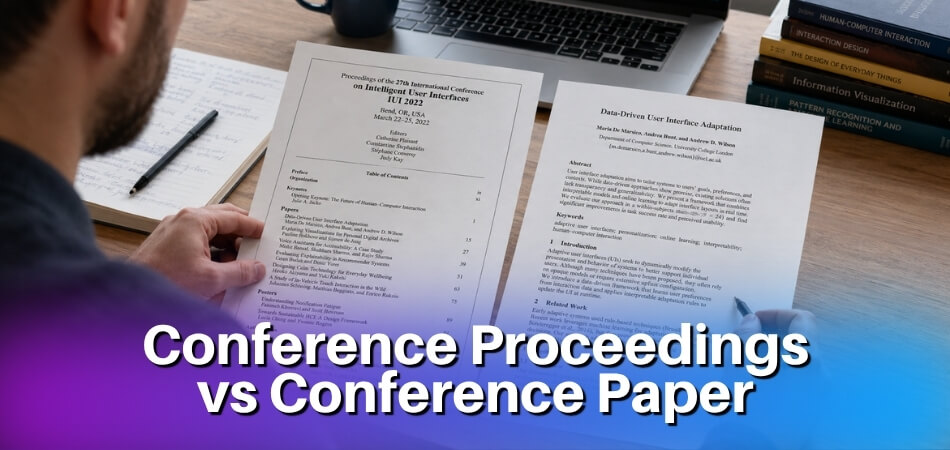
A conference paper is an individual research document written and submitted for presentation at a specific conference. Conference proceedings are a compiled, formally published collection of all accepted papers from that conference — released in print or digital format, where each paper can be cited independently. Simply put: the paper is a single piece, and the proceedings are the container that holds all those pieces. A paper can be part of proceedings, but proceedings are not themselves a single paper. The two differ significantly in publication timeline, indexing method, citation format, and academic weight.

This distinction sounds minor until it isn’t. Get it wrong on your CV and you may misrepresent your publication record to a hiring committee or grant panel. Cite a conference paper incorrectly and the source becomes untraceable. Assume your accepted paper is automatically indexed in Scopus or Web of Science and you may be surprised to find it isn’t — because indexing depends on the proceedings publisher, not the paper itself. And if you’re planning to extend your work into a full journal paper with IEEE, ACM, Springer LNCS, or Elsevier, the line between legitimate expansion and self-plagiarism or double publication is something you need to understand before you start writing, not after.

This guide covers all of it — what conference papers and conference proceedings actually are, how they get indexed in databases like IEEE Xplore, ACM Digital Library, DBLP, and others, how copyright transfer works, what ISBN and ISSN mean in this context, how open access and paywall models apply, and how to properly extend a conference paper into a journal article without running into academic integrity problems.

Conference Paper vs Conference Proceedings — Key Differences at a Glance (With Comparison Table)

A lot of people use these two terms interchangeably. They shouldn’t.

A conference paper is a single piece of research — your work, your contribution, submitted and (ideally) peer-reviewed for a specific event. A conference proceedings is the collection. Think of it like a book of short stories: your paper is one story, and the proceedings is the whole anthology.

That distinction sounds simple, but it has real consequences for how your work gets cited, indexed, and perceived on your CV or academic resume.

Conference Proceedings vs Conference Paper_ Meaning & Differences

The Core Difference

When you submit to a conference like NeurIPS, ICML, or CVPR, you’re submitting a conference paper. If it gets accepted, it ends up published inside the conference proceedings — alongside every other accepted paper from that event.

The proceedings is what gets assigned an ISBN (if it’s published as a book) or an ISSN (if it’s published as a serial/journal-style volume). Your individual paper doesn’t get its own ISBN. It lives inside the proceedings the way a chapter lives inside a book.

IEEE, ACM, Springer LNCS, and Elsevier all publish proceedings through their own platforms. IEEE papers end up on IEEE Xplore. ACM papers land in the ACM Digital Library. Springer LNCS volumes show up on SpringerLink. Some of these are behind a paywall, others are open access — depends entirely on the publisher and the specific conference agreement.

DBLP is worth mentioning separately. It indexes computer science conferences heavily and treats the proceedings as a container with individual paper entries. If your work is in a well-indexed proceedings, it’ll show up on DBLP, Scopus, or Web of Science — which matters a lot for citation tracking and academic impact.

Side-by-Side Comparison

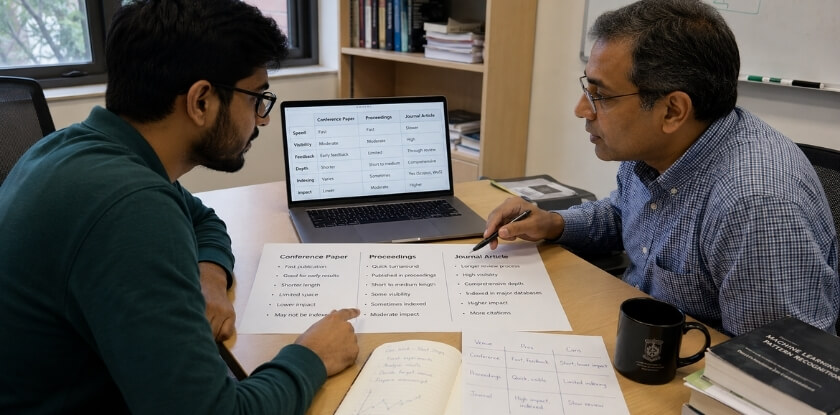
FeatureConference PaperConference Proceedings
What it isA single research paperThe full collection of accepted papers
AuthorshipOne author or a teamMultiple authors across many papers
IdentifierDOI (usually)ISBN or ISSN (plus DOI per paper)
Peer reviewVaries — can be full, light, or noneNot applicable (it’s the container)
Indexed on Scopus/WoSDepends on the proceedingsIf indexed, all papers inside are included
Citation formatAuthor(s), title, in: Proceedings of…Editors, Proceedings of Conference Name, year
LengthTypically 4–12 pagesCan run hundreds of pages
CopyrightOften transferred to IEEE, ACM, SpringerHeld by publisher of the proceedings
Extends to journal?Yes — as an extended versionNo — not applicable
Appears on CVListed under “Conference Papers”You don’t list the proceedings itself

A Few Points That Trip People Up

Peer review quality varies wildly. A paper in NeurIPS proceedings went through a notoriously competitive review process. A paper in some random proceedings from a low-tier event might have had minimal review. The proceedings format doesn’t guarantee rigor — the conference’s reputation does.

Citation format matters for clarity. When you cite a conference paper, the standard format (APA, IEEE, ACM styles all handle this differently) includes “In Proceedings of…” — that’s how readers know it’s a conference paper, not a journal article. Don’t skip that part.

Copyright transfer is real. When your paper gets accepted to an IEEE or ACM conference, you typically sign a copyright transfer agreement. That means the publisher owns the paper, and you need to check their policy before posting it on your own site or a preprint server. Many allow self-archiving of the accepted manuscript — but not the formatted PDF.

Self-plagiarism is a genuine risk. If you later write an extended version for a journal — which is completely normal and acceptable — you need to disclose that your journal paper is based on a prior conference paper. Submitting the same work twice without disclosure is double publication, and it’s a serious ethics violation. The extended version should typically add at least 30% new content, though some journals set their own thresholds.

On your CV, you list individual conference papers. Nobody lists “I was published in the proceedings of X.” You name the paper, the conference, the year. The proceedings is context, not the credential.

What Is a Conference Paper? — Definition, Characteristics, and Types

A conference paper is a piece of original research submitted to and presented at an academic conference. Simple enough. But that one sentence hides a lot of variation in quality, format, and purpose that trips up a lot of early-career researchers.

Most conference papers are short. Typically 6–12 pages, though this varies heavily by field. A NeurIPS paper runs 8–9 pages plus references. A CVPR paper is usually 8 pages. An IEEE conference paper might be 5–6 pages in double-column format. Compare that to a journal paper, which routinely runs 20–30 pages with full methodology and extended experiments. The conference paper version is tighter — it presents the core idea, enough results to be convincing, and leaves room for expansion later.

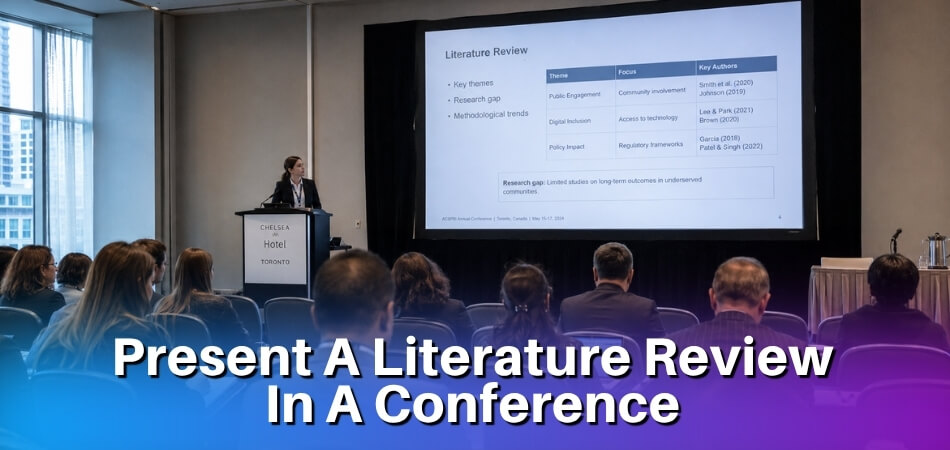
The paper gets submitted, goes through some form of review (more on that below), and if accepted, gets presented — either as an oral talk, a poster, or sometimes both. After presentation, it gets collected into the conference proceedings, which is the published volume containing all accepted papers from that event.

You write one. The proceedings holds many.

Peer-Reviewed Conference Papers vs Non-Peer-Reviewed Papers

Here’s where a lot of confusion — and honestly, a lot of academic dishonesty — lives.

Not all conference papers are peer-reviewed. This matters enormously for how you list them on your CV, cite them, and how seriously a hiring committee or journal editor will take them.

Peer-reviewed conference papers go through a genuine review process before acceptance. In fields like computer science, this is taken extremely seriously. ICML, NeurIPS, CVPR, ACL — these conferences have acceptance rates between 15% and 30%. Papers get assigned to multiple program committee members who know the field. Revisions may or may not be possible depending on the venue, but the bar is real. Getting accepted to one of these is considered publication-equivalent to a solid journal paper in many CS subfields.

IEEE and ACM flagship conferences sit in this category. Their papers get indexed in Scopus, Web of Science, IEEE Xplore, and ACM Digital Library — which means they carry actual citation weight and show up in academic databases.

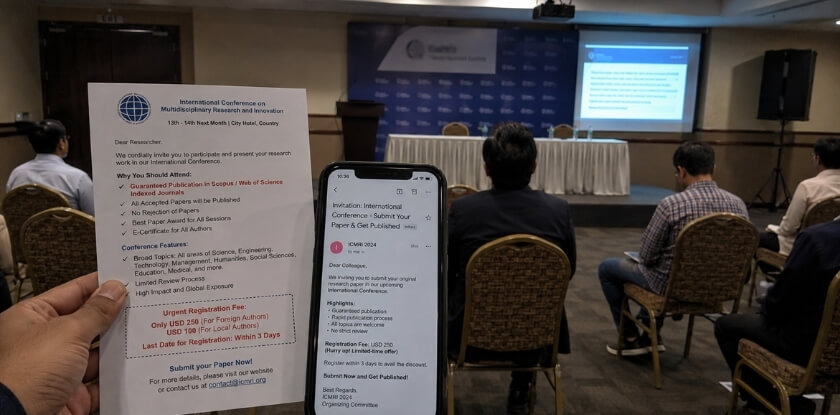
Non-peer-reviewed conference papers are a different animal. These come from workshops, symposia, smaller regional events, or frankly predatory conferences that will accept nearly anything for a registration fee. They may still end up in a proceedings volume with an ISBN or even appear on DBLP, but the lack of rigorous review means the work hasn’t been validated by field experts.

If you list a non-peer-reviewed conference paper on your CV without flagging it clearly, that’s a problem. Search committees notice. Grant reviewers notice. It’s not automatically worthless — workshop papers can be useful for sharing early-stage work — but call it what it is.

Springer LNCS (Lecture Notes in Computer Science) publishes proceedings from hundreds of conferences. Some of those conferences have rigorous review. Others are looser. The Springer branding doesn’t automatically mean peer review happened at a high standard. Always check the individual conference’s review process, not just who published the proceedings.

Peer review at conferences is almost always single-blind (reviewers know who the authors are) or double-blind (neither side knows). Double-blind is becoming more common in top-tier venues. This affects how you write and submit, since you need to anonymize your manuscript in double-blind submissions.

Conference Paper vs Research Paper vs Abstract — What Each One Actually Means

These three terms get used interchangeably and they really shouldn’t be.

  • Research paper is the broad umbrella. Any formal written account of original research — whether published in a journal, presented at a conference, or posted as a preprint — is a research paper. It’s not a specific format. It’s a category.
  • Conference paper is a specific type of research paper. It’s written for and submitted to a conference, formatted according to that conference’s requirements (IEEE template, ACM template, etc.), and — if accepted — presented at that event. The term is precise.
  • Abstract is not a paper. Full stop. An abstract is a 150–500 word summary of research, submitted separately to get onto a conference program. Some conferences run entirely on abstracts — you submit the abstract, present a poster or short talk, and nothing more gets formally published. There’s no full paper in the proceedings. This is common in medicine, biology, and social sciences.

Submitting an abstract-only to a conference and listing it as a “publication” on your CV is misleading. It happens constantly, especially among graduate students trying to bulk up their records. Calling it a “conference abstract” or “conference presentation” is accurate. Calling it a publication is not.

The distinction also matters for citation. When you cite a full conference paper, you reference the proceedings, the page numbers, the DOI, the year — the same structural metadata you’d use for a journal article. The citation format for conference papers in APA, MLA, Chicago, and IEEE style all accommodate this. Citing an abstract is different — you’re usually citing the abstract book or program, which often doesn’t have a DOI and carries far less academic weight.

One more clarification worth making: an extended abstract sits between the two. It’s longer than a regular abstract (usually 2–4 pages), goes through some review, and may appear in proceedings. NeurIPS workshops, for example, often accept extended abstracts. These are real submissions, but they’re not full papers, and the distinction should be clear on your CV.

What Are Conference Proceedings? — Definition, Structure, and How They Are Produced

Conference proceedings are the official published record of a conference. Think of them as the container — the conference paper is what goes inside. When researchers present work at a conference like CVPR or NeurIPS, their individual papers get collected, edited, and published together as a single volume. That volume is the proceedings.

What Are Conference Proceedings

The proceedings can be a physical book, a digital collection, or both. IEEE Xplore, ACM Digital Library, and Springer LNCS are probably the most common places you’ll find them in computer science. Some proceedings are open access. Many are behind a paywall.

Proceedings are assigned an ISBN (because they function as a book) and sometimes an ISSN if published as a recurring series. That distinction matters when you’re checking indexing on Scopus or Web of Science, since those databases track proceedings differently than journals.

Components of Conference Proceedings — What Is Actually Inside

A proceedings volume isn’t just a stack of papers. It has structure.

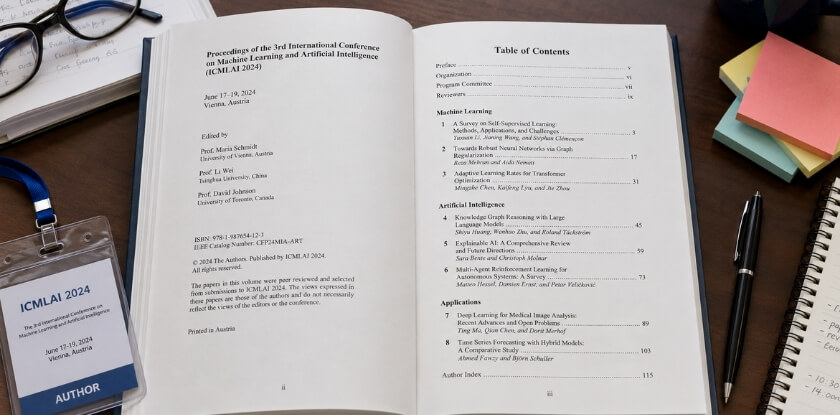
You’ll typically find a front matter section first — this includes the title page, conference name, date, location, and the names of the general chair and program committee. Then there’s usually a foreword or preface written by the organizers explaining the theme, the number of submissions, acceptance rate, and how papers were selected.

After that comes the table of contents, followed by the actual papers organized by topic track or session. A session on “object detection” might group four or five papers together. Each paper retains its own abstract, authors, affiliations, references, and often a DOI.

Some proceedings include keynote talk summaries, invited paper abstracts, or panel discussion notes. Workshop papers sometimes appear in a separate companion volume — CVPR does this, for example, where workshop papers are published as a distinct proceedings document.

At the back, many volumes include an author index. Helpful if you’re trying to track someone’s full output across a conference.

From Submission to Inclusion in Proceedings — The Step-by-Step Process

The path from submitted research paper to appearing in the published proceedings has several distinct stages.

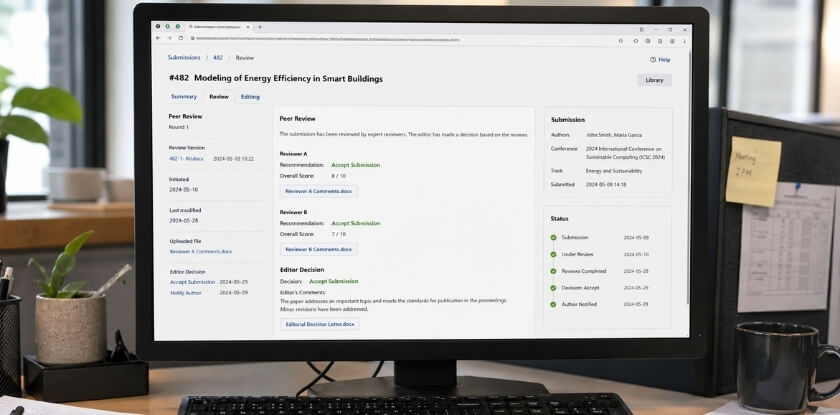
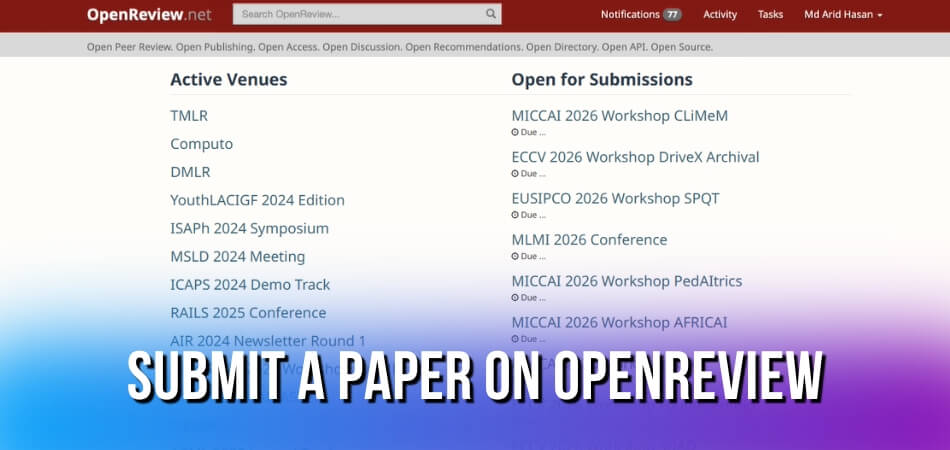
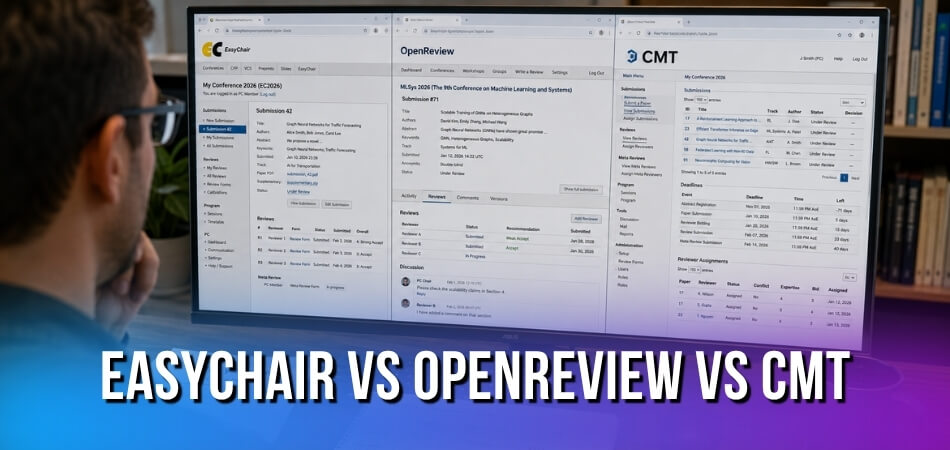
  • Submission. Authors submit their paper through a system like OpenReview, EasyChair, or HotCRP. The submission usually includes the full paper PDF, author details, and topic keywords.
  • Peer review. Program committee members are assigned papers and return scores with comments. Major venues like ICML or ICLR use double-blind review. Smaller conferences sometimes don’t. The review process typically runs 6 to 10 weeks.
  • Decision and revision. Accepted papers get a notification with reviewer feedback. Most conferences give authors a short revision window — often 2 to 4 weeks — to incorporate minor changes before final submission. This is called the camera-ready stage.
  • Camera-ready submission. Authors format the paper using the official template (IEEE two-column, ACM format, Springer LNCS, etc.) and submit the final version. This is also when copyright transfer agreements are signed. Once you sign that form, you’ve typically handed over reproduction rights to IEEE, ACM, or whichever publisher is handling the proceedings.
  • Production. The proceedings editor collects all camera-ready papers, assigns page numbers, compiles the front matter, and sends everything to the publisher. This can take weeks.
  • Publication and indexing. The final proceedings volume goes live on the publisher’s platform — IEEE Xplore, ACM Digital Library, or wherever. From there, indexing services like Scopus and DBLP pick it up, usually within a few months of publication. DBLP is particularly fast for computer science conferences.

The whole cycle from submission deadline to published proceedings usually takes four to eight months, depending on the conference. NeurIPS, for instance, publishes through the Proceedings of Machine Learning Research (PMLR), which tends to move faster than traditional print-focused publishers.

Indexing of Conference Proceedings — Scopus, IEEE, ACM, and More

Not all conference proceedings are created equal, and the difference often comes down to where they’re indexed. Indexing determines how findable your paper is, whether it shows up in database searches, and how much weight it carries in academic evaluations, hiring committees, and grant applications.

How Proceedings Indexing Works in Scopus and Web of Science

Scopus and Web of Science don’t index individual papers — they index the proceedings volumes that contain them. That distinction matters.

A publisher or conference organizer submits the proceedings to Scopus or Web of Science for evaluation. Scopus reviews the conference’s track record, editorial process, peer review rigor, and publication quality. If accepted, the entire volume gets indexed, and every paper inside it becomes searchable and citable through the database. Your paper doesn’t apply separately. It rides in on the proceedings.

Scopus indexes a significant number of computer science conference proceedings — this is actually one area where it covers conferences more thoroughly than journal literature. Web of Science is comparatively stricter. Its Conference Proceedings Citation Index (CPCI) does exist, but coverage is narrower.

Here’s what you need to check before submitting: look up the conference name directly in the Scopus source list at sources.scopus.com. Don’t take the organizer’s word for it. Some conferences claim Scopus indexing when they mean “submitted for consideration” or “previously indexed” — which are not the same thing.

Once proceedings are indexed in Scopus, your paper gets a record, an EID number, and it can accumulate citations that count toward your h-index and institutional metrics. That’s real academic currency.

Proceedings on IEEE Xplore, ACM Digital Library, and DBLP

These three platforms are the backbone of computer science proceedings access, and they each work differently.

IEEE Xplore hosts proceedings published under the IEEE umbrella. If a conference is technically co-sponsored by IEEE, its proceedings typically land on Xplore. Papers there get a DOI, an article number, and are discoverable through both Xplore’s own search and external indexers like Scopus. IEEE proceedings also carry an ISBN for the volume and sometimes an ISSN for recurring conference series. Access is often behind a paywall unless your institution has a subscription, though some proceedings are open access under IEEE’s OA agreements.

ACM Digital Library does the same for ACM-sponsored events — SIGCOMM, CHI, PLDI, and dozens more. ACM proceedings are indexed in both Scopus and DBLP. ACM also has its own open access initiative: ICPS (International Conference Proceedings Series) allows smaller, non-ACM-core conferences to publish through ACM and get into the Digital Library. The quality varies more here.

DBLP is different from both. It’s a bibliographic database, not a publisher. It doesn’t host full papers — it lists them with links to wherever the full text lives. DBLP coverage of CS proceedings is genuinely comprehensive. If your paper is in any reasonably established CS conference, it’s probably in DBLP. That’s useful for tracking citations and building your public academic profile, but DBLP listing alone doesn’t carry the same weight as Scopus or Web of Science indexing in formal evaluations.

NeurIPS, ICML, and CVPR proceedings are all indexed across these platforms. If you’re publishing in top-tier venues like those, indexing is a non-issue — the question is just whether you got accepted.

Do Unindexed Proceedings Have Any Academic Value?

Yes, but with caveats. And the answer depends heavily on your field, career stage, and what you’re trying to accomplish.

A paper in unindexed proceedings can still demonstrate that you’ve presented research, engaged with a community, and had your work reviewed — even if informally. For a PhD student early in their program, a workshop paper or small regional conference can be a legitimate first publication. It shows activity. It’s something you can present at a lab meeting or list on a CV with appropriate context.

That said, in formal evaluations — faculty hiring, grant scoring, institutional research assessments — unindexed proceedings often don’t count. Full stop. Many universities in Europe and Asia use journal and Scopus-indexed conference metrics directly to score researchers. An unindexed paper simply won’t appear in those counts.

There’s also a growing predatory conference problem. Some unindexed proceedings come from conferences that exist purely to collect registration fees, with no real peer review. Listing those on a CV can actively hurt you if a hiring committee recognizes the name.

Does the paper go through genuine peer review? Is it published by a recognized society or press — IEEE, ACM, Springer LNCS, Elsevier? Is it findable five years from now? If you can answer yes to those three, an unindexed paper has some value. If not, think carefully before investing time in it.

ISBN and ISSN in Conference Proceedings — Which One Applies and Why It Matters

Here’s something that confuses a lot of researchers: conference proceedings often carry both an ISBN and an ISSN. That’s not a mistake. Each identifier does a different job, and knowing which one applies to what — and why — actually matters when you’re citing work, listing publications on a CV, or checking whether a venue is legitimate.

ISBN and ISSN in Conference Proceedings — Which One Applies and Why It Matters

What the Two Identifiers Actually Mean

An ISBN (International Standard Book Number) identifies a specific published book or book-like volume. A ISSN (International Standard Serial Number) identifies a serial publication — something that comes out regularly in numbered issues or volumes over time.

Proceedings published as a one-time volume, say the proceedings of a specific conference in a specific year, typically get an ISBN. That volume is treated like a book. You’ll see this constantly with Springer LNCS proceedings — each LNCS volume has its own ISBN because each volume is a discrete publication.

An ISSN shows up when the proceedings are treated as part of a serial. IEEE conference proceedings are a good example. Many IEEE conferences publish their proceedings with an ISSN because IEEE tracks them as part of an ongoing publication series. The same conference, year after year, gets treated more like a recurring journal than a standalone book.

Why Some Proceedings Carry Both

It’s completely normal for a proceedings volume to have both identifiers. The ISBN identifies that specific year’s volume. The ISSN identifies the conference series as a whole. Think of it like a single issue of a journal — the journal has an ISSN, but a collected print issue might also have its own ISBN.

ACM Digital Library proceedings often work this way. The ACM International Conference on Human Factors in Computing Systems (CHI), for instance, has its own ISSN as a series alongside ISBNs for individual years’ proceedings.

Why This Matters for Indexing and Discovery

Scopus and Web of Science use ISSNs as one of the primary hooks for indexing serial publications. If a conference proceedings series has a registered ISSN and meets the quality criteria, it can be indexed at the series level — meaning every paper from every year of that conference potentially falls under that indexed umbrella.

Proceedings with only an ISBN are indexed differently. They’re treated like books. This isn’t necessarily a problem, but it does affect how your paper shows up in academic databases. A paper in an ISBN-only proceedings volume might be harder to discover through journal-focused search queries.

The Legitimacy Signal You Shouldn’t Ignore

Predatory conferences often have no legitimate ISBN or ISSN at all, or they display fake ones that don’t check out in the [ISSN Portal](https://portal.issn.org/) or ISBN registries. Before you submit anywhere, look up the identifier. Takes two minutes. An ISSN that resolves to the actual conference series is a basic but useful sanity check.

What to Use When Citing

Citation format depends on how the proceedings were published:

  • Book-style proceedings (ISBN only): Cite like a book chapter — editor(s), volume title, publisher, year, page range. Use the ISBN if your citation style asks for it.
  • Serial proceedings (ISSN): Many citation styles treat these closer to journal articles. APA 7th, for example, handles conference proceedings differently depending on whether they have an ISSN.
  • IEEE format: IEEE citations for conference papers include the conference name and year but don’t typically display the ISSN or ISBN inline — it lives in the metadata.

When you’re building your academic resume or adding publications to Google Scholar, the ISBN/ISSN metadata helps the system correctly identify the publication type. Getting this wrong can result in a conference paper being miscategorized, which affects how it shows up in citation counts.

One Practical Check Before You Submit

Pull up the proceedings from last year’s edition of the conference you’re targeting. Find the front matter — publisher page, copyright page, or volume header. If there’s no ISBN or ISSN listed anywhere, that’s a red flag. Established venues through IEEE, ACM, Springer, or Elsevier always have at least one registered identifier. No identifier usually means no indexing, and that has real consequences for your paper’s academic impact down the line.

Citation and Academic Impact — Conference Paper vs Journal Paper

Are Conference Proceedings Peer-Reviewed

How to Correctly Cite a Conference Paper

The format matters more than most people realize. A conference paper and a journal paper look completely different in a reference list, and mixing up the format is a common mistake — especially for early-career researchers.

The core difference: journal papers cite the journal name, volume, issue, and page numbers. Conference papers cite the proceedings title, conference name, location, and year.

Here’s what a standard IEEE-style citation for a conference paper looks like:

A. Zhang and B. Kumar, “Attention mechanisms in low-resource NLP,” in Proc. 2026 Int. Conf. on Natural Language Processing (EMNLP), Singapore, Dec. 2026, pp. 214–221.

And in APA 7th edition:

Zhang, A., & Kumar, B. (2026). Attention mechanisms in low-resource NLP. Proceedings of the 2026 International Conference on Natural Language Processing (EMNLP), 214–221.

A few things to get right every time:

  • Use the full proceedings title, not just the conference acronym. “CVPR 2022” alone isn’t enough for a proper citation.
  • Include page numbers if they exist. Some digital-first proceedings skip them, in which case you can use the DOI or article number (common in IEEE Xplore).
  • Publisher matters. Springer LNCS proceedings are cited with Springer as publisher. ACM conferences go through the ACM Digital Library with an ACM imprint. Don’t omit this.
  • DOI vs URL. If the paper has a DOI (and most indexed papers do), use that. A raw URL to a PDF is not a stable citation.

For BibTeX users working in LaTeX, a conference paper uses the @inproceedings entry type — not @article. That distinction feeds directly into how citation managers and reference lists render the output.

@inproceedings{zhang2026attention,
  author    = {Zhang, A. and Kumar, B.},
  title     = {Attention Mechanisms in Low-Resource NLP},
  booktitle = {Proceedings of EMNLP 2026},
  pages     = {214--221},
  year      = {2026},
  publisher = {ACL Anthology}
}

Google Scholar is decent at auto-generating citations, but it gets conference paper details wrong fairly often — especially the proceedings title and publisher. Always double-check manually against the actual IEEE Xplore, ACM Digital Library, or Springer page.

Do Conference Papers Carry the Same Weight as Journal Papers in Computer Science?

Short answer: it depends on the field. Long answer: in computer science specifically, top conference papers often carry more weight than journal papers. This is genuinely unusual compared to most other disciplines.

In fields like biology, chemistry, or medicine, publishing in a peer-reviewed journal is the gold standard. A conference abstract in those fields is almost throwaway by comparison. But computer science operates differently — and has for decades.

Venues like NeurIPS, ICML, CVPR, ICLR, and ACL are among the most competitive publication venues in the entire research world. Acceptance rates at NeurIPS and CVPR regularly sit below 25%, sometimes closer to 15-18%. These papers go through rigorous peer review, sometimes multiple rounds. Getting accepted there signals serious quality.

So when a hiring committee at a top CS department sees three NeurIPS papers on your CV, they’re not thinking “oh, those are just conference papers.” They’re thinking that’s a strong record.

That said, context still matters. Here’s how it actually plays out:

  • For tenure and promotion, many universities — especially outside North America and Western Europe — still weight journal publications higher. Scopus and Web of Science indexing of journals carries institutional credibility even where conference culture is strong.
  • For citation counts, a landmark paper at CVPR or ICML will often accumulate thousands of citations. Many of the most-cited machine learning papers ever written are conference papers — Geoffrey Hinton’s deep learning work, the original ResNet paper, the Transformer paper (“Attention Is All You Need”) — all published at conferences, not journals.
  • For grant applications, some funding agencies explicitly require journal publications in their evaluation criteria. A conference paper alone might not satisfy those requirements even if the science is identical.
  • For job applications in industry, conferences are often preferred. Industry researchers care about what’s current, and conferences move faster than journals. A paper at ECCV 2024 is more visible to industry hiring than something sitting in a journal queue for 18 months.

In CS, you should treat top-tier conference papers as first-class publications. But don’t ignore journals entirely. The strategy most researchers use is to publish the initial work at a conference, then produce an extended version for a journal — adding experiments, theory, or depth that the conference version didn’t have room for. That two-step approach maximizes both speed and visibility, as long as you handle the self-plagiarism and copyright issues correctly (more on that in the next section).

On your CV, list conference papers and journal papers in separate sections. Don’t lump them together — reviewers notice, and the distinction shows you understand academic norms.

Open Access Proceedings vs Paywalled Proceedings

Where your conference paper ends up — and whether anyone can read it without hitting a paywall — depends heavily on how the proceedings are published. This isn’t a minor detail. It directly affects citation counts, discoverability, and how much traction your work actually gets.

How Proceedings Get Behind a Paywall

Most major publishers charge for access. IEEE Xplore, ACM Digital Library, and Springer LNCS are the big three. If your paper appears in proceedings published by any of them, a reader without institutional access will typically hit a paywall. IEEE charges around $33 per article for individual purchase. ACM’s pricing is similar.

That’s a real barrier. Researchers at well-funded universities often don’t notice because their library covers it. But a grad student at a smaller institution in a developing country? They’re locked out. So is any industry practitioner without an academic affiliation.

Scopus and Web of Science index these paywalled proceedings just fine. Indexing and open access are separate questions entirely.

Open Access Proceedings — What That Actually Means

Open access proceedings are freely available online, no login required. Anyone with an internet connection can download the full paper.

Some conferences self-publish their proceedings and host them directly. Others use platforms like CEUR-WS (common in computer science and AI communities), arXiv, or institutional repositories. NeurIPS and ICML are notable examples — their proceedings are openly available through their official websites and on OpenReview or similar platforms. CVPR proceedings end up on the Computer Vision Foundation’s open access page.

This matters for citation rates. Studies consistently show open access papers get cited more often. The mechanism is simple: more people can read them.

The Hybrid Situation at IEEE and ACM

Both IEEE and ACM offer author-paid open access options. You pay an article processing charge (APC) — often $1,750 to $2,500 depending on the venue — and your paper becomes freely readable while the rest of the proceedings stay paywalled.

Whether that’s worth it depends on your funding situation and how citation-sensitive your field is. If you have grant money covering APCs, it’s an easy call. If you’re self-funded, it’s harder to justify.

Author Accepted Manuscripts and Green Open Access

Here’s something many authors miss. Even when the final published version sits behind a paywall, you can often post your author accepted manuscript (AAM) — the post-peer-review version before typesetting — in an open repository. IEEE, ACM, and Springer all allow this under their standard copyright agreements, with some conditions.

Posting to arXiv is the standard move in computer science, machine learning, and related fields. DBLP links to arXiv versions. Google Scholar picks them up. Most readers end up finding the arXiv preprint anyway and never bother with the paywalled version.

Check your copyright transfer agreement before posting. The exact version you’re allowed to share (preprint vs. AAM vs. final PDF) varies by publisher.

What Open Access Means for Your CV

Honestly, it doesn’t change much for your academic resume. What shows up on your CV is the venue — the conference name, whether it’s indexed in Scopus or Web of Science, and whether it’s a peer-reviewed publication. Open versus paywalled doesn’t appear as a line item.

The indirect effect is real though. More accessible papers get read more, cited more, and that citation count does matter when hiring committees look at your Google Scholar profile or your h-index.

Which Should You Aim For?

If you have a choice between two comparable venues and one publishes open access proceedings, lean toward open access. Everything else being equal — prestige, indexing, peer review quality — open access works in your favor over the long run.

That said, don’t sacrifice venue quality for open access. A paywalled paper at a top-tier IEEE or ACM conference beats an open access paper at an unranked venue every time.

Can You Extend a Conference Paper Into a Journal Article?

Yes, and it’s genuinely common practice — especially in computer science, engineering, and related fields. A conference paper gets your work out fast, sometimes 6–12 months before a journal would. Then you take that foundation and build something more substantial for a journal audience. Done correctly, this is a completely legitimate research workflow. Done carelessly, it can get your journal paper retracted.

The key word is extend. Not repackage. Not resubmit.

When Does Double Publication or Self-Plagiarism Become a Risk?

The risk kicks in when your journal submission is too close to the conference version — same text, same experiments, same conclusions, just reformatted. That’s what editors and publishers call double publication, and most journals have policies against it. IEEE, Elsevier, Springer, ACM — all of them explicitly prohibit submitting work that has already been substantially published elsewhere.

Self-plagiarism is a specific variant of this problem. You’re copying your own prior text without disclosure. Your previous conference paper is a published work (it sits in IEEE Xplore, the ACM Digital Library, Springer LNCS proceedings, wherever). Using chunks of it verbatim without acknowledging that is treated as a violation by most publishers, even though you wrote it.

What counts as “substantially the same”? Most publishers use a threshold around 30% textual overlap as a rough trigger for concern, but there’s no universal rule. The issue isn’t just word-for-word copying — it’s whether the scientific contribution is new. If you submit a journal paper with 25% new text but the entire experimental setup and all conclusions are identical, that’s still a problem.

What you must always do:

  • Disclose the prior conference paper to the journal editor upfront. Most journals have a field in their submission system for exactly this.
  • Cite the conference paper explicitly in your journal article — usually in the introduction with language like “This paper extends our earlier work presented at [Conference Name].”
  • Check the copyright agreement you signed when publishing the conference paper. Some proceedings transfers (especially IEEE) mean you no longer hold full rights to that text. You may need to paraphrase or get explicit permission to reuse figures or tables.

NeurIPS, ICML, and CVPR — three of the most cited venues in machine learning and computer vision — all publish proceedings that attract significant attention. A conference paper from any of these carries real weight on your CV and in citation counts. Extending it to a journal is worth doing, but not worth doing sloppily.

Don’t wait too long. If your conference paper is two years old and the field has moved on, extending it becomes harder. You’ll need to address newer related work, and your “new” contributions may look thinner against what’s been published since.

Which Journals Accept Extended Versions of Conference Papers?

Quite a few — and some actively encourage it. The key is that they want to see a meaningful extension, not just padding. A common informal benchmark among editors is 30% new content at minimum, but serious journals typically expect more: new experiments, extended proofs, additional datasets, a deeper literature review, or a broader discussion section.

  • IEEE journals are straightforward about this. IEEE has a formal policy allowing extended journal versions of conference papers, provided the journal paper contains at least 30% new material and the conference version is cited. IEEE Transactions on Pattern Analysis and Machine Intelligence (TPAMI), IEEE Transactions on Neural Networks and Learning Systems, and many other IEEE journals routinely publish extended versions of CVPR, ICCV, or other IEEE conference papers.
  • ACM journals work similarly. Venues like ACM Transactions on Graphics or ACM Transactions on Computer-Human Interaction regularly see extended versions of papers that appeared at SIGGRAPH, CHI, or other ACM conferences.
  • Elsevier journals vary by title, but many — including journals like Pattern Recognition, Computer Vision and Image Understanding, and Information Sciences — publish extended versions. Check the specific journal’s author guidelines under a heading like “Prior Publication Policy” or “Duplicate Submission.”
  • Springer publishes many journals that sit alongside their LNCS proceedings output. The same general rules apply: disclose, cite, extend.

Some journals go further and run special issues tied directly to specific conferences. This is common in engineering and computer science. The conference organizers negotiate with a journal, top-ranked papers get invited to submit extended versions, and the journal handles a dedicated peer review cycle for that batch. If you got a strong review score at the conference, watch for these invitations — they’re a straightforward path to a journal publication.

For indexing purposes, a journal version in Scopus or Web of Science will carry more weight than the conference version in many formal evaluation contexts (grant applications, promotion cases, research assessment exercises). Both versions will appear in DBLP if you’re in CS. Both are citable. But the journal version typically accumulates more citations over time, simply because it’s discoverable through more channels and is perceived as the more complete work.

Extending a conference paper is smart. Just be transparent, add substance, and read the fine print on copyright before you copy a single sentence from your own proceedings paper.

Copyright and Plagiarism — What Happens When You Submit a Paper to Proceedings

Most researchers don’t read the copyright agreement carefully before submitting. That’s a mistake that can come back to hurt you.

Warning Signs of Low-Quality or Predatory Conferences

Who Owns Your Paper After Submission?

When you submit a conference paper and it gets accepted, you’ll almost always be asked to sign a copyright transfer agreement before the final version goes into the proceedings. What that means in practice varies a lot depending on the publisher.

With IEEE, you sign an IEEE Copyright Form that transfers copyright to IEEE. Your paper then lives on IEEE Xplore, and while you retain the right to use the work in your own teaching, thesis, or future publications, you can’t just post the final PDF anywhere without checking their policy first. ACM works similarly — they use a publishing agreement that gives ACM the right to distribute the work through the ACM Digital Library. Springer LNCS proceedings also require a copyright transfer to Springer, which is why those papers often end up behind a paywall.

Some venues are different. If it’s an open-access conference or one that uses a Creative Commons license, you may keep copyright and just grant the publisher a distribution license. Always check. The two things are not the same.

The Self-Plagiarism Problem Nobody Warns You About

Here’s where people get into trouble: after your paper is in the proceedings, you want to extend it into a full journal paper. That’s completely normal and generally encouraged — see the earlier section on extended versions. But there’s a line you can cross without realizing it.

If you reuse substantial text — your abstract, your methodology description, even your experimental setup paragraphs — from your conference paper in the journal version, that can be flagged as self-plagiarism or text recycling. Journals running iThenticate or Turnitin checks will catch this. Some editors will desk-reject the paper without asking questions.

The rule of thumb most journal editors apply: the extended version should contain at least 30% new content, and overlapping text should be minimal. New results, new experiments, deeper analysis — that’s what makes it a distinct publication. Just adding a related work section and padding the discussion doesn’t cut it.

You also need to disclose the prior conference paper. Explicitly. In the cover letter and often in the paper itself. Something like “This work extends our earlier paper presented at [Conference Name], published in [Proceedings Title].” Journals at Elsevier and IEEE both require this. Hiding the prior publication is considered double publication, which is a research integrity violation.

What About Posting on arXiv or Your Personal Website?

This depends entirely on what you signed. IEEE allows posting the accepted manuscript (not the final typeset PDF) on arXiv or your personal/institutional page. ACM has a similar policy for the author-formatted version. Springer is more restrictive.

If your paper is already on arXiv before submission — which is common in fields like machine learning, where NeurIPS, ICML, and CVPR papers routinely appear on arXiv first — most major publishers explicitly allow that preprint to stay up. They just don’t want you posting the final publisher-formatted version.

DBLP indexes metadata and links to these papers but doesn’t host PDFs itself, so that’s not really a copyright concern.

Before you post anything anywhere after acceptance, spend five minutes reading the publisher’s author rights page. IEEE, ACM, and Springer all have them clearly documented. It’s not complicated once you actually look.

Does the Citation Format Change Any of This?

No, but it’s worth knowing how to cite properly. A conference paper in proceedings is cited differently than a journal paper, and that difference signals something to your reader. The citation format typically includes the proceedings title, the conference name, the year, and the page numbers — sometimes with a DOI pointing to IEEE Xplore or the ACM Digital Library. Journal papers get volume, issue, and page numbers.

On your CV or academic resume, list conference papers and journal papers in separate sections. Mixing them together or formatting a conference paper to look like a journal article is misleading and can damage your credibility in hiring committees.

The Short Version

Sign nothing without reading it. Disclose prior conference publications when submitting extended versions. Don’t copy-paste your own abstract into a journal paper and expect no one to notice. And if you want to post a preprint, check what the publisher actually permits — not what you assume they permit.

Conference Proceedings vs Journal — Core Comparison

These two formats serve different purposes, and conflating them is one of the most common mistakes early-career researchers make.

Speed vs Depth

Conference proceedings are fast. You submit, get reviewed (sometimes lightly), present, and your paper is published — often within months of doing the actual research. Journals are slow. A typical peer review cycle at a respected journal runs six months to a year, sometimes longer. That delay is frustrating, but it exists because the review process is more thorough.

If you’re working in a fast-moving field like machine learning, publishing at NeurIPS or ICML before a journal can matter enormously. Your idea gets staked. In slower fields, the calculus is different.

Review Rigor

This is where things get nuanced. Not all conference reviews are shallow, and not all journal reviews are deep. Acceptance at CVPR or ICML is genuinely harder than getting into plenty of mid-tier journals. These top venues reject 70–80% of submissions.

But structurally, journal peer review is more iterative. Reviewers ask for revisions. You revise. They come back. That back-and-forth often improves the final paper significantly. Conference reviews are usually one-shot.

Length and Scope

Conference papers are shorter — typically 4 to 12 pages depending on the venue. IEEE conference papers often cap at 6 pages. Springer LNCS proceedings usually run 12–15. Journals give you room to breathe: 20, 30, sometimes 40 pages with full experimental detail, related work, and discussion.

That space difference matters. A conference paper often presents a core idea with limited experiments. The journal version of the same work would include ablations, edge cases, failure analysis, and broader context.

Indexing and Discoverability

Both formats can be indexed in Scopus and Web of Science — but coverage varies wildly. IEEE Xplore and ACM Digital Library index their respective conference proceedings reliably. DBLP covers computer science conferences comprehensively regardless of publisher.

Journals generally have more consistent indexing. A paper in an Elsevier or Springer journal has predictable Scopus coverage. A paper in a random regional conference? You might be invisible to automated citation tracking entirely.

Citation Weight

Journal papers carry more weight in formal academic evaluation — hiring committees, grant panels, tenure review. That’s just reality. A list of ten conference papers on your CV reads differently than three strong journal publications, depending on your field.

In computer science specifically, this norm is shifting. Researchers in AI and systems fields are sometimes evaluated primarily on their top-venue conference record. But in biology, medicine, or social sciences, conference papers barely register compared to journals.

Copyright and Reuse

Conference proceedings typically require a copyright transfer to the publisher — IEEE, ACM, or whoever produced the proceedings. Journals do too, though some now offer open access options with retained rights. Once you’ve transferred copyright to a proceedings publisher, reproducing that content in a journal requires explicit permission and proper disclosure.

This isn’t a minor paperwork issue. Self-plagiarism and double publication concerns are real, and editors check. Always disclose the conference version when submitting an extended journal paper, and confirm the overlap percentage with the journal’s editorial policy before submitting.

Which One Should You Prioritize?

Depends entirely on your goals. If you need to establish priority on a new idea quickly, get it to a conference first. If you’re building a tenure dossier or applying for faculty positions outside of CS, journals carry more institutional weight. If your field runs primarily through venues like NeurIPS, ICML, or CVPR, strong conference papers are your publication record.

The honest answer is that most researchers do both — conference paper first, extended journal version later. That’s a legitimate and widely accepted path, as long as you handle the copyright and disclosure correctly.

Which Should You Choose — A Conference Paper or a Journal Paper?

Honestly, this is the wrong question to ask first. The real question is: what stage is your research at right now?

Which Should You Choose - A Conference Paper or a Journal Paper

When a Conference Paper Makes More Sense

If you have solid preliminary results but your work isn’t fully fleshed out yet, a conference is usually the right move. You get feedback from other researchers, a publication credit, and a deadline that forces you to actually finish something. In fast-moving fields like machine learning or computer vision, a conference paper at NeurIPS, ICML, or CVPR can carry more weight than a journal article anyway — people cite those proceedings heavily, and the turnaround from submission to publication is months, not years.

Conference papers also make sense when you need something on your CV quickly. That’s just the reality of PhD timelines and postdoc applications.

Some research problems are narrow enough that a 6–10 page conference paper is the appropriate format. Forcing it into a 30-page journal article just creates padding.

When a Journal Paper Is the Better Choice

Go the journal route when your work is complete and you have enough material to support a full study. A journal paper gives you space — room for detailed methodology, extended experiments, ablation studies, and thorough related work discussion. Peer review at a journal is typically more rigorous, and the indexed record in Scopus or Web of Science tends to carry more weight in certain fields like life sciences, social sciences, and engineering.

If tenure, grant applications, or departmental evaluation criteria specifically weight journal publications, you already know the answer.

The “Both” Strategy — and Its Limits

Many researchers do both: publish a short version at a conference, then extend it into a full journal article. This is completely legitimate, as long as you’re transparent about it. You need to cite your own conference paper in the journal submission, add substantial new content (not just length), and check the original publisher’s policy on extended versions.

IEEE and ACM both allow extended journal versions of conference papers, but they generally expect around 30% or more new content. Springer LNCS proceedings usually transfer copyright to Springer, so you’ll want to confirm what’s permitted before resubmitting elsewhere.

What you can’t do is submit the same paper to both a conference proceedings and a journal simultaneously without disclosure. That’s double publication, and most serious venues treat it as a serious ethics violation.

The Field Matters More Than You Think

There’s no universal answer here. In computer science, top conference papers published through IEEE Xplore or the ACM Digital Library often rank above mid-tier journals in terms of actual academic impact and citation counts. Researchers in those communities know to check DBLP for a full publication record, and a strong conference paper shows up there just as prominently as a journal article.

In chemistry, medicine, or the humanities? Conference papers are often seen as secondary. The journal article is where the real work lives.

So before you decide anything, look at how researchers in your specific field cite and evaluate work. That tells you more than any general guideline will.

Quick Decision Framework

  • Early-stage results, fast field, need feedback fast → conference paper
  • Complete study, need citations from broad indexing, applying for grants → journal
  • Already have a conference paper with strong results → extend it to a journal, with proper attribution
  • Narrow, self-contained contribution → conference is probably enough

Neither format is inherently better. They serve different purposes at different stages of a research project.

Frequently Asked Questions (FAQ)

Is a conference paper the same as a conference proceedings paper?

Not exactly. A conference paper is the individual research document you write and present. The conference proceedings is the collection — the published volume that contains your paper alongside others from the same event. Think of it like a song versus the album it appears on.

Do conference papers count as publications on my CV?

Yes. A peer-reviewed conference paper is a legitimate publication. In computer science especially — fields like machine learning, computer vision, and systems research — conferences like NeurIPS, ICML, and CVPR carry serious academic weight. That said, in fields like biology or medicine, conference papers are generally considered less significant than journal articles.

Are conference proceedings indexed in Scopus or Web of Science?

Some are. IEEE Xplore, ACM Digital Library, and DBLP index a large number of proceedings. Scopus and Web of Science are more selective — not every conference makes the cut. Always check before you submit if indexing matters to you.

What’s the difference between an ISBN and ISSN on proceedings?

An ISBN identifies a one-time publication (a book). An ISSN identifies a serial — something published repeatedly over time. Many conference proceedings use an ISBN because they’re treated as a standalone volume. Some recurring annual conferences have an ISSN if the proceedings are structured as a journal-style serial. A few use both.

Can I submit my conference paper to a journal afterward?

Yes, but you need to do it properly. You should extend the work — typically by 30% or more in new content, new experiments, or deeper analysis. Simply resubmitting the same paper to a journal is considered double publication, which most publishers prohibit. Always check the original copyright agreement you signed before proceeding.

Will Turnitin flag my own conference paper if I submit an extended version to a journal?

It might flag overlap, yes. That’s expected. The question is whether the journal editor sees it as self-plagiarism. If you disclose the prior conference version, cite it properly, and the new work is substantially extended, most editors handle it fine. Transparency is the key thing.

Does a conference paper go through peer review?

It depends on the conference. Top-tier venues like CVPR or ICML have rigorous, competitive peer review — acceptance rates can be below 25%. Smaller or lower-quality conferences may do minimal review or almost none. Check the conference’s review process before you judge the credibility of any paper.

What citation format do I use for a conference paper?

It varies by style guide. In IEEE format, you cite the author, paper title, conference name, location, year, and page numbers. In APA, you’d list it similarly to a book chapter within the proceedings. The main thing to get right is including the proceedings title and the publisher (IEEE, ACM, Springer LNCS, Elsevier, etc.) so readers can locate the source.

Is a conference proceedings a journal?

No. They’re different publication types. Journals are periodic serials with volumes and issues published on a schedule. Proceedings are event-based. Even if proceedings appear in a journal-like format through publishers like Elsevier’s Procedia series, they’re still classified as proceedings — not a journal issue in the traditional sense.

Can conference proceedings be open access?

Yes. Many are. ACM, for example, has an open access program. Some conferences self-publish proceedings without a paywall. Others sit behind IEEE Xplore or a publisher’s subscription wall. It’s not a universal situation — it depends entirely on how the organizing committee chose to publish.

Why do some proceedings have no DOI?

Smaller or self-published conferences sometimes skip DOI registration because of the cost and process involved. No DOI doesn’t automatically mean the work is low quality, but it does make citing and tracking the paper harder. If you’re submitting somewhere that requires verifiable references, a paper without a DOI or stable URL can be a headache.

Does presenting a conference paper make it published?

Presenting alone doesn’t. The paper becomes published when it appears in the official proceedings — whether print, digital, or both. Some conferences accept papers for presentation but don’t include them in formal proceedings. In that case, the paper technically isn’t a publication in the bibliographic sense.

Conclusion — Two Different Things, but Complementary to Each Other

A conference paper is what you write. Conference proceedings are where it lives. That distinction sounds simple, but a lot of researchers blur the two — and it creates real confusion when citing work, listing publications on a CV, or figuring out whether a piece of research is peer-reviewed.

They’re not competing formats. They serve different purposes at different stages of a research career.

A conference paper gets your work out fast. You present it, get feedback, network with people in your field, and build a track record. For fields like computer science — think NeurIPS, ICML, CVPR — conference papers carry serious weight. An acceptance at CVPR is not a minor line item on your resume. It’s the real thing.

Proceedings are the container. They give that work a permanent, citable, findable home. Whether it’s indexed in Scopus, Web of Science, IEEE Xplore, or ACM Digital Library changes how much reach your paper actually gets. A well-indexed proceedings means your citation count grows. A poorly archived one means the work largely disappears.

The two also connect to everything else — copyright transfer to IEEE or ACM, the ISBN or ISSN on the volume, whether it’s open access or sitting behind a paywall, and how you handle extending the work into a journal article later without running into self-plagiarism problems.

None of this is complicated once you understand the structure. The mistake is treating them as interchangeable terms.

If you’re early in your research career, submit to conferences. Get your ideas out. Get feedback. Then take the best work and develop it into a full journal paper for Elsevier, Springer, or wherever makes sense for your field. That’s not cheating the system — it’s exactly how academic publishing is supposed to work, as long as you’re transparent about what the journal paper adds over the conference version.

The conference paper starts the conversation. The journal paper deepens it. And the proceedings makes sure the conversation is preserved.

That’s the relationship. Keep it clear, and both formats will work for you.

Leave a Comment

Your email address will not be published. Required fields are marked *

Shopping Cart
Scroll to Top