

You want to present your research at a conference — but you’re still not entirely sure what a conference paper actually is. That uncertainty is more common than you might think, even among people already enrolled in a doctoral program. So here is the clearest answer possible: a conference paper is a peer-reviewed research manuscript submitted for oral presentation or poster presentation at an academic conference, written to share new research findings with the scholarly community in a timely, structured format. It is organized around a clear background, a defined methodology, results, and conclusions — and it differs from a journal paper in three important ways: it is shorter, it moves through peer review and gets published faster, and it appears in a conference proceedings volume rather than a journal issue indexed by databases like Scopus, Web of Science, or the ACM Digital Library.
Understanding that distinction matters more than most early-stage researchers realize. A journal paper in Elsevier or Springer carries a different weight in academic publishing than a proceedings paper from an IEEE conference — but that does not make conference papers less valuable. They are often the fastest way to get your work in front of the right audience, collect feedback before a PhD thesis is finalized, and begin building a citation index record under your name.
By the time you finish this guide, you will know exactly what a conference paper is and how it compares to other forms of academic publishing, how to write one from the literature review stage through to a camera-ready copy, where to find the right call for papers and meet a submission deadline, and how to present your research findings with confidence — whether you are standing at a podium or beside a poster board.
What Is a Conference Paper? (Definition and Key Concepts)
A conference paper is a research manuscript written specifically to be presented at an academic conference. Simple enough. But there’s more going on under the surface than most beginners realize.
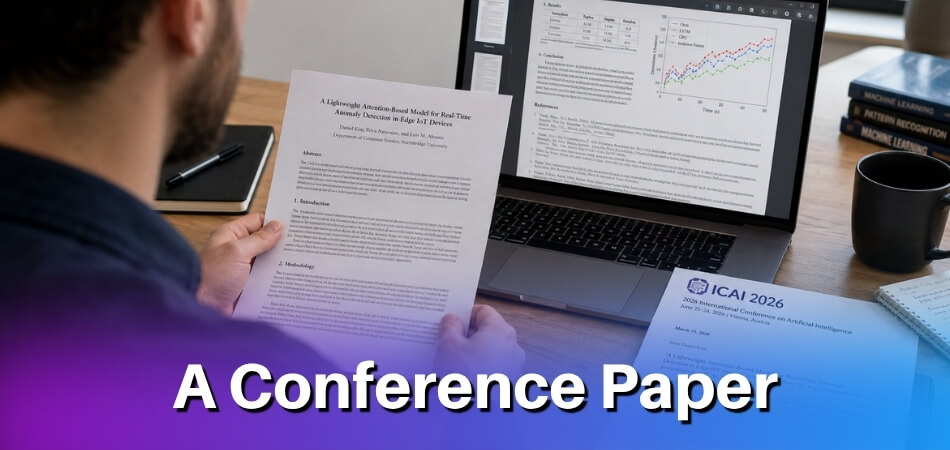
When you submit a conference paper, you’re not just sharing your work — you’re entering it into a formal academic record. Once accepted and presented, your paper gets published in the conference proceedings, which is essentially a collected volume of all accepted papers from that event. Those proceedings get indexed in databases like Scopus, Web of Science, and Google Scholar, which means your work becomes citable and traceable by other researchers worldwide.
How It Differs from a Journal Paper
This is where a lot of new researchers get confused.
A journal paper, like those published through Elsevier or Springer, goes through a longer, more rigorous peer review process — often taking months to over a year. Conference papers are reviewed faster because there’s a fixed event date. The submission deadline is real, and there’s no flexibility. Miss it, and you wait for next year.
That said, don’t assume conference papers are easier or less serious. At top-tier venues — IEEE conferences, ACM Digital Library-indexed events — the acceptance rates can be brutal. Some accept fewer than 15% of submissions.
The other key difference is length. Journal papers often run 8,000–12,000 words or more. Conference papers are typically 6–10 pages, depending on the venue’s formatting requirements.
What Goes Into a Conference Paper
Structure-wise, it follows familiar research logic:
- Abstract — a tight 150–250 word summary of your problem, approach, and findings
- Introduction — your research gap and why it matters
- Literature review — what’s already been done and where existing work falls short
- Methodology — exactly how you conducted your study
- Research findings — what you actually discovered
- Conclusion and future work
- References
The abstract deserves special attention. Program committees read hundreds of them when sifting through call for papers submissions. A weak abstract — vague, overly broad, or missing the core contribution — gets rejected before anyone reads page two.
Conference Papers and Academic Career Progression
If you’re in a doctoral program, conference papers aren’t optional extras. They’re part of how you build a research identity before your PhD thesis is complete. Presenting at an academic conference puts your work in front of people in your field — potential collaborators, future employers, and PhD examiners who might recognize your name when it counts.
Conference proceedings volumes from venues indexed in citation indexes like Scopus also add weight to your academic profile. Many universities track publication counts, and a peer-reviewed conference paper counts.
Oral vs. Poster Presentation
Once accepted, you’ll typically be assigned either an oral presentation slot or a poster presentation. Oral means you’re up at a podium or projector for 12–20 minutes. Poster means you stand next to a printed display while attendees come to you.
Neither is better. Poster sessions are often where the real conversations happen — smaller, more direct, less pressure than talking to a full room. Don’t treat a poster slot as a consolation prize.
A Note on Research Ethics
One thing that trips up first-time submitters: plagiarism and self-plagiarism. Conference venues run submissions through plagiarism detection software, and recycling large chunks of your own prior work without disclosure violates research ethics policies at most major venues. IEEE and ACM both publish explicit guidelines on this. Read them before you submit, not after you get a rejection notice.
Conference Paper vs. Journal Paper — What Is the Difference?
This is one of the most common points of confusion for early-career researchers. Both are peer-reviewed. Both contribute to your publication record. But they’re quite different animals, and understanding that difference will save you from submitting to the wrong venue — or undervaluing what you’ve already published.
The Core Distinction
A conference paper is written to be presented at an academic conference. It gets published in conference proceedings, often as a volume through publishers like IEEE, ACM Digital Library, or Springer. A journal paper is submitted directly to a journal — think Elsevier, Wiley, or any Scopus or Web of Science indexed publication — and goes through a longer, more rigorous review cycle.
That’s the short version. The details matter more.
Length and Depth
Conference papers are short. Usually 4 to 8 pages in standard formats like IEEE double-column, or up to 12 pages for some computer science venues. You’re expected to present a focused idea, a tight methodology, and early findings. There’s no room to explore every angle.
Journal papers are a different commitment entirely. Most journals expect 6,000 to 10,000+ words. You need a full literature review, detailed methodology, comprehensive results, and thorough discussion. Reviewers will ask hard questions. Revisions can take months.
If you’re writing a conference paper, don’t try to cram a journal-scale argument into it. It won’t work and reviewers will notice.
Review Timeline
This is where the practical difference hits hardest.
A conference has a fixed call for papers with a submission deadline. Reviews come back within a few weeks. Accept or reject. Maybe a short revision round. The whole cycle from submission to published proceedings can be three to five months.
Journal peer review? Expect six months minimum. A year isn’t unusual. Some research manuscripts sit in review for 18 months before a final decision. For a PhD student trying to graduate, that timeline matters enormously.
Indexing and Academic Weight
Here’s where opinions diverge, especially across disciplines.
In computer science and engineering, top conference papers — CVPR, NeurIPS, SIGCOMM — carry enormous weight. Getting into one of those is harder than publishing in many journals. Researchers cite them constantly, and Google Scholar tracks them the same as any journal article.
In biology, medicine, social sciences, and humanities, journals win. Full stop. A journal paper indexed in Scopus or Web of Science typically counts for more in grant applications, tenure reviews, and doctoral program evaluations than a conference paper from even a well-known conference.
Know your field’s norms before you decide where to aim.
Can a Conference Paper Become a Journal Paper?
Yes, and this is actually a standard academic publishing pathway. You present the early work at a conference — get feedback from the oral presentation or poster presentation — then expand it significantly into a full journal submission.
The key word is significantly. Just reformatting your conference paper and sending it to a journal is self-plagiarism. Most journals explicitly check for this using plagiarism detection tools, and the ethics are clear: the extended version needs to be a substantially new contribution, typically with 30–40% or more original content beyond the conference version.
Some journals, particularly in IEEE and Springer ecosystems, have formal “extended version” tracks that acknowledge this process openly.
A Quick Reference
| Feature | Conference Paper | Journal Paper |
|---|---|---|
| Length | 4–12 pages | 20–40+ pages |
| Review time | Weeks | Months to over a year |
| Publication format | Conference proceedings volume | Journal issue |
| Presentation required | Usually yes | No |
| Typical citation index | Google Scholar, some Scopus | Scopus, Web of Science |
| Field weight | Strong in CS/Engineering | Strong in most other fields |
The bottom line: conference papers are faster, shorter, and better for getting early research findings into the conversation. Journal papers carry more long-term academic weight in most fields. You’ll likely need both over the course of a research career.
Structure of a Conference Paper
Most rejected conference papers don’t fail because of bad research. They fail because the structure is a mess. Reviewers read dozens of submissions. If yours is hard to follow, it gets scored down — fast.
Here’s how each section works and what you actually need to put in it.
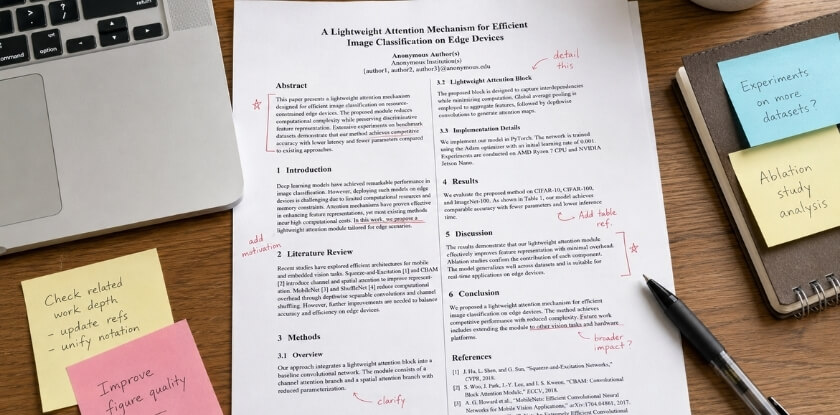
Title and Abstract
Your title does one job: tell the reader exactly what the paper is about. Not a creative headline. Not a teaser. A clear, specific description of the work. Something like “Reducing Latency in Edge Computing Networks Using Adaptive Load Balancing” beats “A New Approach to Network Performance” every time.
The abstract is 150–250 words in most venues. IEEE and ACM Digital Library both show the abstract before the full paper is accessible, so it’s often the only thing someone reads before deciding whether to download your work.
Pack four things into your abstract: the problem, your approach, the key result, and why it matters. No citations. No jargon you haven’t defined. Write it last, even though it sits first.
Introduction and Research Gap
The introduction sets up the argument for why your paper needed to exist. Start with the broader context — briefly — then narrow down to what’s missing in current work. That gap is everything.
A research gap isn’t just “this hasn’t been studied.” It needs to be specific. Maybe existing methods work well under controlled lab conditions but fail at scale. Maybe prior work focused on English-language datasets and ignored low-resource languages. Naming the gap precisely shows you’ve done the literature review properly and that your contribution is real.
End the introduction by stating clearly what your paper does. One or two sentences. Reviewers appreciate knowing what to expect.
Methodology
This section has to be reproducible. Someone reading your paper should be able to follow your steps and get comparable results. That’s not an ideal — for Scopus-indexed and Web of Science-indexed venues, it’s essentially a baseline expectation.
Describe your data sources, experimental setup, tools, and any evaluation metrics. If you used a specific dataset, name it. If you ran experiments on a particular hardware configuration, mention it. Vague methodology sections are a red flag in peer review — they suggest either sloppy work or deliberate obscuring.
Don’t write your methodology like a diary. You’re not describing what you did chronologically. You’re describing the system well enough that it can be replicated.
Results and Discussion
Results are what you found. Discussion is what it means. Keep them connected but don’t blur them together.
Present your numbers clearly — tables and figures work better than paragraphs of data. Compare your results against whatever baseline or prior method you identified in the introduction. If your approach performs better, say by how much and under what conditions. If results are mixed, say that too. Honest reporting is part of research ethics, and experienced reviewers spot overclaiming immediately.
The discussion is where you explain what the results imply for the broader field. Does this change how practitioners should approach the problem? Does it open new questions? Tie back to the research gap you identified at the start.
Conclusion and References
Keep the conclusion short. Two or three paragraphs at most. Summarize what you did, what you found, and what comes next. Avoid repeating the abstract word for word — that’s a common mistake.
For references, follow the citation style required by the conference — IEEE format for IEEE conferences, ACM format for ACM venues, Springer’s style for Springer proceedings, and so on. Get this right before you submit. Incorrect formatting in a camera-ready copy is surprisingly common and looks unprofessional.
Cite sources that are genuinely relevant. Padding references to inflate the list, or citing your own previous work more than warranted, both raise flags during peer review. Stick to what actually supports your argument. Tools like Google Scholar make it easy to find and verify citation details before the submission deadline.
How to Write a Conference Paper — A Step-by-Step Guide
Identifying the Research Gap
Before you write a single sentence, you need to know why your paper needs to exist.
A research gap is the space between what’s already been studied and what hasn’t. Finding one isn’t magic — it’s reading. Start with Google Scholar, the ACM Digital Library, or IEEE Xplore and search your topic. Read 30 to 50 recent papers if you can. Look at their “future work” sections. That’s where researchers openly say “we didn’t solve this.” That’s your opening.
Pay attention to papers from the last three to five years. Older gaps may already be filled. Also look at what assumptions everyone in your field keeps making — sometimes the gap isn’t a missing topic but a missing challenge to a common assumption.
Write your gap down in one or two sentences before you do anything else. If you can’t explain it clearly, your paper won’t be clear either. Something like: “Most existing models for X assume Y, but no study has tested this under Z conditions.” That’s a gap. That’s a paper.
Choosing the Right Target Conference
This decision affects everything — your formatting, your deadline, your audience, and eventually your CV.
Start by identifying conferences in your specific subfield. A general computer science conference isn’t the right venue if your work is narrow and technical. Look at where the papers you’ve been citing were published. If you keep seeing the same conference name, that’s a signal.
Check the conference ranking. In computer science and engineering, the CORE rankings and ERA lists are practical references. In other fields, look at whether the proceedings get indexed in Scopus or Web of Science — that matters for your citation index and for your doctoral program requirements.
Look at the call for papers carefully. Topics listed there aren’t just suggestions — reviewers check fit. If your paper is about network security and the conference is broadly about AI, it might still be accepted, but you’re taking a risk.
Also check acceptance rates when they’re published. A conference with a 15% acceptance rate carries more weight than one accepting 60% of submissions. That said, don’t only chase prestige early in your career. Getting published at a solid mid-tier conference is better than collecting rejections from top venues while your work sits unpublished.
Note the submission deadline and work backward. Conference papers usually take four to eight weeks to write properly from a draft stage. Add time for peer review inside your own lab or with a supervisor.
Writing the Draft and Revising Effectively
Get the structure right before worrying about the writing. You already know the sections — abstract, introduction, literature review, methodology, results, discussion, conclusion. Fill those in rough notes first. Know what goes where before you write full sentences.
Your abstract is written last, not first. It’s a summary of what’s already done, not a plan.
When writing the draft, don’t edit as you go. Write the full rough draft, then revise. Self-editing mid-draft kills momentum and usually makes the paper worse because you haven’t seen the whole thing yet.
The methodology section needs to be reproducible. Someone else should be able to read it and replicate your setup. If they can’t, a reviewer will flag it. Be specific — what dataset, what sample size, what tools, what parameters.
For the literature review, don’t just summarize papers. Show how they connect to your research gap. The point isn’t to demonstrate that you’ve read things — it’s to show that your work fits into a conversation and advances it.
Revise in passes, not all at once. First pass: logic and structure. Does each section flow into the next? Second pass: paragraph level. Does each paragraph make one clear point? Third pass: sentence level. Cut anything that doesn’t add information.
Get someone else to read it. Not just for grammar — for clarity. If a colleague who knows your field can’t follow your argument, a reviewer won’t either.
Check the conference’s page limits. If the limit is eight pages and you’ve written twelve, cut. Don’t shrink the font or reduce margins. Reviewers notice, and some will reject on formatting alone. Cutting is hard, but it usually makes the paper sharper.
Once accepted, you’ll receive instructions for the camera-ready copy. Follow them exactly. At conferences like those using IEEE or Springer templates, formatting errors in the final file can delay inclusion in the conference proceedings volume.
Plagiarism, Research Ethics, and Academic Integrity
This isn’t optional reading.
Plagiarism in academic publishing isn’t just copying someone else’s sentences. It includes paraphrasing too closely, using your own previously published text without disclosure (self-plagiarism), and misrepresenting data. All of these are treated seriously.
Most conferences now run submissions through plagiarism detection tools before peer review even begins. A similarity score above 15 to 20 percent — depending on the venue — will often trigger a review or outright rejection. Run your own check before you submit. iThenticate is the most common tool used by conferences and journals. Turnitin is another. Use one.
Cite everything you build on. Not citing a source because you’ve “reworked” it is still plagiarism. If an idea came from somewhere, it needs a citation.
Data fabrication and manipulation are career-ending. If your research findings don’t support your hypothesis, that’s a result — report it honestly. Negative results are publishable. Fabricated results are retracted, and retractions follow you permanently in Scopus and Web of Science records.
If your research involves human subjects, make sure you have ethics board approval before you collect data. Many conferences in health, social science, and education fields require this documentation. Some will ask for it during submission.
Co-authorship also has rules. Everyone listed as an author should have contributed meaningfully — to the concept, the methodology, the writing, or the analysis. Listing someone as a courtesy, or excluding someone who actually contributed, both violate research ethics standards as defined by organizations like COPE (Committee on Publication Ethics).
If you’re working on a PhD thesis and submitting parts of it as a conference paper, disclose that relationship to your supervisor and check whether your institution and the conference both allow it. In most cases it’s fine — in some cases it isn’t.
Get these things right from the start. Your academic reputation compounds over time, in both directions.
Where to Submit Your Conference Paper
How to Choose the Right Type of Conference
Not all conferences are equal. A PhD student submitting to a local symposium is making a very different move than a senior researcher targeting an IEEE flagship event — and both can be the right call depending on where you are in your career.
Start by asking yourself what you actually want from the submission. Visibility? Feedback on early-stage work? A publication that counts toward your doctoral program milestones? A line on your CV that will hold up during a tenure review? The answer changes which conference makes sense.
Here’s a practical breakdown of the main types:
Tier-1 flagship conferences — think IEEE International Conference on Computer Vision (ICCV), ACM SIGCOMM, or NeurIPS — are highly competitive, have rigorous peer review, and carry real weight on your academic record. Acceptance rates can be brutal, sometimes below 20%. Papers accepted here often end up indexed in Scopus, Web of Science, and Google Scholar, which matters if you’re building a citation index footprint.
Mid-tier and regional conferences are easier to get into and often more useful for early-stage research. You can test ideas, get structured feedback through peer review, and actually talk to people working in adjacent areas. Don’t underestimate this. A conversation after an oral presentation has launched more than a few collaborations.
Workshop and symposium tracks within larger conferences are worth considering if your work is interdisciplinary or exploratory. They’re typically lower-stakes but still produce legitimate entries in conference proceedings.
To find the right venue, check the call for papers carefully. Does the scope match your research? Look at what ACM Digital Library, Springer, or Elsevier proceedings they publish in. Check whether past proceedings are indexed — this matters for citation tracking later. Tools like CORE Conference Rankings and Scimago can help you gauge a conference’s standing. If you’re in engineering or CS, IEEE’s own portal lists affiliated events by category.
One concrete thing to do: look at the last two or three years of accepted papers from any conference you’re considering. If the quality of published work is clearly below yours, you’re probably aiming too low. If it’s significantly above, either aim for it anyway or use a middle-tier venue to publish and strengthen your work first.
Also — watch out for predatory conferences. They mimic legitimate academic publishing, charge high fees, and accept almost everything. If a conference has no discernible program committee, sends you unsolicited emails with vague flattery, and has a submission-to-acceptance turnaround of three days, walk away.
The Submission and Peer Review Process Explained
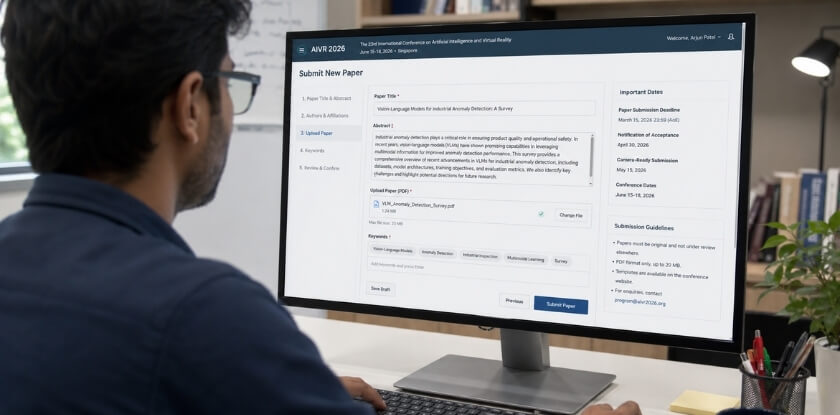
Once you’ve identified your target venue, find the call for papers. Most major conferences post this 6–12 months before the event. The call will tell you the submission deadline, formatting requirements, page limits, topics of interest, and whether they want an abstract submission before the full paper.
Step 1: Abstract submission (if required) Some conferences ask for a 200–300 word abstract a week or two before the full paper deadline. This isn’t just a formality — it locks you in and sometimes triggers early desk screening.
Step 2: Full paper submission You’ll upload your research manuscript through a system like EasyChair, HotCRP, or CMT. Make sure your PDF matches the conference template exactly. IEEE, ACM, and Springer all have their own LaTeX and Word templates. Using the wrong one is an avoidable mistake.
Most top conferences use double-blind review, meaning neither the authors nor the reviewers know each other’s identities. That means stripping your name, institution, and any self-identifying references from the submitted document. Check the submission guidelines. Missing this step can get your paper desk-rejected before a single reviewer reads it.
Step 3: Peer review Your paper typically goes to two to four reviewers who are active researchers in the area. They assess originality, clarity, methodology, and contribution. This process usually takes 6–10 weeks. Reviewers often flag issues with your literature review, question your research gap justification, or push back on methodological choices.
Decisions usually come back as: accept, accept with minor revisions, major revisions, or reject. “Accept with revisions” is common. You’ll get a rebuttal window in some conferences — a short text response to reviewers before the final decision. Use it to address specific concerns directly. Don’t be defensive. Don’t pad it.
Step 4: Camera-ready copy If accepted, you’ll have a tight window — sometimes as few as 10 days — to submit the camera-ready copy. This is the final, clean version that goes into the conference proceedings volume. Double-check formatting, fix any issues reviewers flagged, run a final plagiarism check (tools like iThenticate are standard in academic publishing), and make sure your figures are high resolution.
Step 5: Registration and presentation Most conferences require at least one author to register and present. You’ll be assigned either an oral presentation slot or a poster presentation. Oral presentations are typically 12–20 minutes plus Q&A. Poster sessions run longer but are more conversational. Both have real value — don’t treat a poster slot as a consolation prize.
After presentation, your paper officially becomes part of the conference proceedings, often archived in ACM Digital Library, IEEE Xplore, Springer’s digital library, or Elsevier’s platform, depending on the organizing body. At that point it’s citable, indexable, and part of the permanent academic record.
What Happens After Your Conference Paper Is Published?
Getting your paper accepted feels like the finish line. It isn’t. Publication is actually where the work starts paying off — if you do the right things next.

Your Paper Appears in the Conference Proceedings
Once you’ve submitted your camera-ready copy and the conference has wrapped up, your paper gets compiled into the conference proceedings volume. Depending on the conference, this might be published by IEEE, ACM Digital Library, Springer, or Elsevier. Some proceedings land in Scopus or Web of Science within weeks. Others take months, or never get indexed at all — which is why checking the indexing status before you submit matters so much.
Once it’s indexed, your paper becomes citable. That’s the whole point.
Make Sure Your Paper Is Findable
Don’t just wait for people to stumble onto your work. Upload a preprint or the accepted manuscript version to Google Scholar, ResearchGate, or your institutional repository. Check your conference’s copyright policy first — most IEEE and ACM conferences allow you to share the author’s accepted version even if the final formatted PDF is behind a paywall.
Create or update your Google Scholar profile so the paper links to your name. It sounds minor. It directly affects whether other researchers can find and cite you.
Track Your Citations
Set up a Google Scholar alert for your paper title. When someone cites you, you want to know. Not out of vanity — because citations tell you who’s building on your work, which can open doors to collaboration, invitations to review papers, or clues about where your research gap is still unsolved.
A paper sitting at zero citations after two years isn’t necessarily a failure, but it’s a signal to think about visibility.
Present It — Even After the Conference
If you gave an oral presentation or a poster presentation at the event, that wasn’t the only audience you’ll ever reach. Post your slides to SlideShare or your lab website. Record a short walkthrough of your findings and put it on YouTube or your department’s channel. Share the abstract on LinkedIn or X (formerly Twitter) with a link to the full paper.
Researchers increasingly find papers through social media. It’s not unprofessional. It’s practical.
Extend It Into a Journal Paper
A conference paper is usually 6–10 pages. The full story behind your research rarely fits in that space. Many researchers take their conference paper as the foundation and expand it into a full journal submission — deeper literature review, more experiments, richer discussion of the methodology, and a proper response to limitations.
This is a completely standard practice in academic publishing. IEEE, ACM, and Springer all have affiliated journals where extended versions of conference papers are explicitly welcomed. Just make sure you’re expanding substantially — adding 30% more content isn’t enough for most journals. You need new experiments, new analysis, or a significantly broader scope. And you must disclose the prior conference paper in your submission letter to avoid any plagiarism or research ethics issues.
Use It to Strengthen Your Academic Profile
If you’re in a doctoral program or building toward a PhD thesis, each published conference paper does real work for you. It demonstrates that your research can survive peer review. It gives you something concrete to reference in grant applications. It shows a hiring committee or PhD supervisor that you’re already producing.
Add the paper to your CV immediately — with the full conference name, year, page numbers, and DOI. Don’t abbreviate or leave details vague. Specificity signals credibility.
Engage With the Research Community
Respond to emails from people who read your paper. If a researcher cites you and you notice it, reach out. Attend the same conference next year. Review papers when the program committee asks — and they will start asking once you’re a published author.
Academic careers are built on relationships as much as publications. Your paper is an opening, not an endpoint.
Conference Paper Presentation Strategies — Oral and Poster Sessions
Getting your paper accepted is only half the battle. You still have to stand in front of a room full of researchers — or stand next to a poster board for two hours — and actually communicate your work. Most first-timers underestimate this part.
Oral Presentations
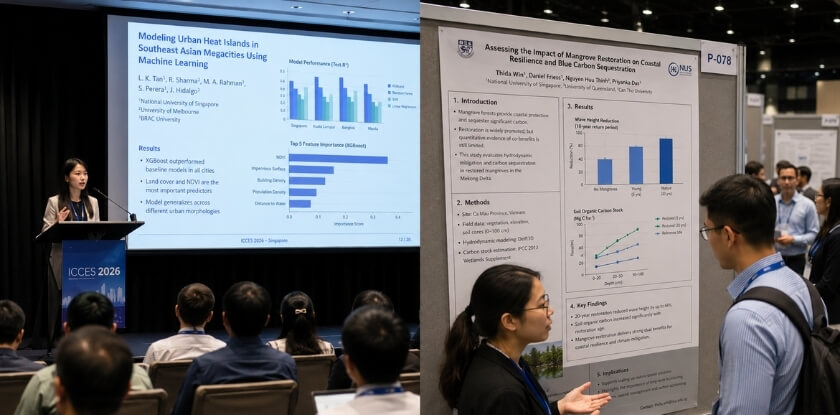
An oral presentation at an academic conference is usually 12 to 20 minutes long, followed by 5 to 10 minutes of Q&A. The slot varies by conference, so check your acceptance email carefully. IEEE and ACM conferences often run tighter schedules than humanities-focused ones.
Your slides are not your paper. This is the biggest mistake new presenters make. Don’t copy paragraphs from your research manuscript onto slides. Nobody can read dense text while also listening to you talk. Use visuals, diagrams, and short bullet points — the kind of thing that supports what you’re saying, not duplicates it.
A rough structure that works:
- Slide 1–2: Problem and why it matters. Make the research gap obvious fast.
- Slide 3–4: What others have tried (brief literature review — one or two sentences per approach).
- Slide 5–7: Your methodology. This is where figures and flowcharts pay off.
- Slide 8–10: Key research findings. Use graphs, not tables of numbers.
- Slide 11: Limitations and future work. Don’t skip this — reviewers respect honesty.
- Slide 12: One clean summary slide. That’s it.
Practice out loud. Seriously — not in your head, out loud. Time yourself. If you’re running 25 minutes for a 15-minute slot, cut something. Cutting a slide feels painful; going over time is worse.
The Q&A is where reputations get made or lost. Senior researchers in the audience will ask hard questions. If you don’t know the answer, say so directly: “That’s outside the scope of this study, but it would be a good direction for follow-up.” Don’t bluff. Don’t argue. If someone raises a legitimate criticism, acknowledge it. Defensiveness reads as insecurity.
One practical tip: bring your slides on a USB drive and have them in cloud storage. Conference AV setups fail more than you’d expect.
Poster Presentations
A poster session is different in almost every way. Instead of speaking to a crowd, you’re having individual conversations, sometimes with three people at once, sometimes with nobody for 20 minutes.
Your poster needs to communicate your core idea in under 60 seconds for a stranger who’s walking by. If they stop and read, great — that’s your cue to start talking.
Poster design basics:
- Standard size is usually A0 portrait (84 × 119 cm) or 36 × 48 inches. Confirm with the conference before you print anything.
- Title at the top, large enough to read from 3 meters away.
- Sections should follow a logical flow — problem, methodology, results, conclusions — but use visuals heavily. A well-designed figure communicates faster than a paragraph.
- Leave white space. A cluttered poster makes people walk past.
What you say matters as much as what you print. Prepare a 90-second spoken summary — your “elevator pitch” for the work. After that, let the conversation go where the other person wants it to go. Some visitors want methodological details. Others care only about implications. Read what they’re asking for.
Poster sessions are actually valuable networking opportunities that oral sessions aren’t. You can have a genuine 10-minute conversation with a senior researcher from a lab you respect. That doesn’t happen when you’re one speaker in a session of eight. Bring printed business cards or a QR code linking to your preprint on arXiv or your institutional page.
Handling Nerves
This is real and worth addressing. Most experienced researchers still feel nervous before presentations. The difference is they’ve learned that nerves before a presentation are normal and don’t actually affect performance the way your brain tells you they will.
What helps:
- Arrive early. Get in the room, check the microphone, figure out where the clicker is. Unfamiliarity drives anxiety.
- Know your first 60 seconds cold. If you nail the opening, the rest flows.
- Slow down. Nervous presenters speed up. If you think you’re speaking too slowly, you’re probably at the right pace.
If you’re in a doctoral program or early in your PhD thesis work, treat every presentation — including smaller departmental ones — as practice for the real thing. The researchers who present confidently at major Scopus and Web of Science indexed conferences didn’t get there overnight. They presented badly a few times first, figured out what went wrong, and got better.
That’s the only way it works.
The Role of Conference Papers in Doctoral Programs
If you’re doing a PhD, conference papers aren’t optional extras. They’re part of how you build a research identity from scratch.
Most doctoral programs expect you to publish — or at least attempt to publish — before you finish. Conference papers are usually the first real outlet available to you. Journal papers take months, sometimes years. A conference paper can go from draft to published proceedings in three to six months. That timeline matters when you’re trying to show progress.
Building Your Publication Record Early
Your PhD thesis might take four or five years. Your publication record starts now.
Supervisors often push students to submit conference papers in the second or third year, once there’s enough preliminary data to say something useful. Even a paper based on early-stage findings can get accepted if the research gap is clearly identified and the methodology is sound.
Getting something indexed in Scopus, Web of Science, or the ACM Digital Library — even one paper — changes how your CV reads. It signals to hiring committees and grant bodies that you can produce work that survives peer review. That matters more than people admit.
How Conference Papers Feed Into the Thesis
A common pattern: you write a conference paper, present it, get feedback, revise the work, and that revised version eventually becomes a chapter in your doctoral program thesis. Or it becomes the foundation for a full journal paper submitted to Elsevier or Springer later.
This isn’t padding. It’s a legitimate research development cycle.
Some universities formally allow you to submit a thesis by publication — where a set of accepted or published papers (including conference papers, depending on the program) constitutes the dissertation itself. If your institution allows this, conference proceedings volume entries can count directly toward your degree requirements. Check your program’s specific rules early.
Conference Presentations as Training
Standing in front of 40 researchers and explaining your work is uncomfortable the first time. That discomfort is the point.
Oral presentation practice prepares you for your thesis defense. Poster presentation sessions teach you to explain your research in under two minutes. Both force you to identify where your argument is weak, because the questions from the audience will find those gaps fast.
The feedback you get at an academic conference is often more direct and specific than what you get in a supervision meeting. Experienced researchers in your field will push on your assumptions. That’s genuinely useful, even when it stings.
Avoiding Common Mistakes PhD Students Make
Don’t submit the same content to a conference and a journal simultaneously and wait to see what happens. That’s a research ethics violation — duplicate submission. If you’re expanding a conference paper into a journal manuscript, disclose that in your cover letter and make sure the journal paper is substantially new work. Most journals in IEEE publications networks and elsewhere are explicit about this requirement.
Watch plagiarism carefully when you reuse sections of your own conference paper in a journal paper or thesis chapter. Self-plagiarism is real, and text-matching tools will flag it. Rewrite, don’t copy-paste.
Also, be selective about where you submit. Not every call for papers leads to a legitimate venue. If an academic conference has no program committee listed, no institutional affiliation, and guarantees acceptance within 48 hours — skip it. Predatory conferences look good until they don’t, and a citation index search will show your paper going nowhere.
The Citation Dimension
Conference papers do get cited. In fast-moving fields like machine learning or human-computer interaction, a conference paper published through ACM or IEEE proceedings can accumulate hundreds of citations before any journal version exists.
Google Scholar tracks these citations, and they show up in your h-index. That number follows you through your career. A strong showing in conference papers — published in legitimate, indexed venues — contributes to it just like journal papers do.
If you’re just starting out, submit to the best conference you can realistically get into. Aim slightly above your comfort zone. The peer review feedback alone, even if you get rejected, is worth the submission effort.
Limitations of Conference Papers
Conference papers are useful. But they’re not without real drawbacks, and going in blind about those drawbacks can cost you time, credibility, or both.
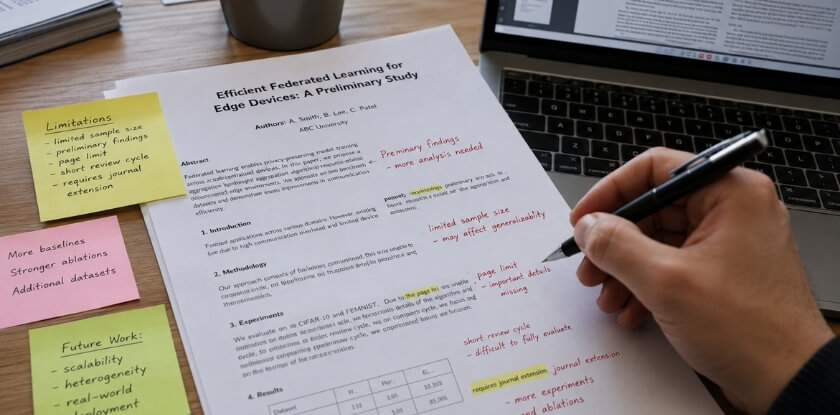
Page Limits Restrict Depth
Most conferences cap papers at 6–10 pages. IEEE and ACM conferences are notorious for strict formatting templates that leave almost no room to breathe. That means your methodology section might end up compressed, your literature review gets trimmed to a handful of citations, and nuanced findings get flattened into bullet points.
This isn’t always a problem — concise writing is a skill. But if your research genuinely requires space to explain, a conference paper format will fight you the whole way.
Peer Review Is Often Lighter
This is the one nobody likes to say out loud, but it’s true. Conference peer review varies wildly. Some top-tier venues like CVPR or SIGCOMM run rigorous double-blind review processes that rival any journal. Many others send your paper to two or three reviewers with a two-week window and minimal oversight.
Compared to a Scopus-indexed journal paper where reviewers might spend months checking your methodology and statistical analysis, a conference peer review can be thin. That doesn’t make the work invalid — but it does mean published conference papers carry less automatic credibility than journal papers indexed in Web of Science or Elsevier’s major journals.
Citations Come Slower
Conference proceedings don’t always get indexed quickly. If your paper ends up in a proceedings volume that isn’t picked up by Google Scholar, Scopus, or the ACM Digital Library within a few months, it’s essentially invisible to citation tracking tools.
Journal papers, especially those in established Springer or Elsevier titles, are indexed fast and stay discoverable for years. Conference papers can disappear into obscure PDFs on a university server if the organizing body doesn’t manage archiving properly.
The Work Is Rarely “Done”
A conference paper is usually a snapshot — your research at a specific moment, often before you’ve finished collecting data or stress-tested your conclusions. That’s fine in fast-moving fields like computer science, where presenting early results at ACM conferences is standard practice. In fields like clinical research or social sciences, presenting incomplete findings publicly can actually create problems, especially around research ethics and pre-publication disclosure.
You also can’t just submit the same conference paper to a journal afterward without significant work. Most journals consider a paper that appeared in conference proceedings to be previously published. You’ll need to expand it substantially — usually to at least 30% new content — to avoid plagiarism flags and editorial rejection.
Prestige Gaps Are Real
Not all conferences are equal, and the gap between a top-ranked IEEE conference and a predatory pay-to-publish event is enormous. Some researchers, especially early in a doctoral program, get burned by submitting to conferences that look legitimate but have no real review process, no meaningful proceedings, and no indexing. The paper gets “published,” costs you a registration fee, and does nothing for your academic record.
Always check whether a conference is listed in recognized databases. If the call for papers promises acceptance within 48 hours with no review details, walk away.
It Doesn’t Replace a Journal Paper
For most PhD committees and hiring panels, conference papers count — but they don’t substitute for peer-reviewed journal publications. A PhD thesis supported only by conference papers, with no journal paper in progress, is going to raise questions during your defense. Conference papers are building blocks. Strong ones, done right. But they’re not the finish line.
Frequently Asked Questions (FAQ)
Is a conference paper considered a publication?
Yes. Once your paper appears in a conference proceedings volume, it counts as a formal publication. It has a title, authors, page numbers, and usually a DOI. Most universities and funding bodies accept it as a legitimate research output. That said, the weight it carries varies by field — in computer science, a top conference paper can be more prestigious than many journal papers, while in life sciences, journals still tend to dominate.
Can I publish a conference paper and then a journal paper on the same topic?
Usually yes, but with conditions. You’re expected to substantially extend the work — typically 30% or more new content, new experiments, or deeper analysis. You also need to disclose the prior conference version to the journal editor. Submitting without disclosure is a research ethics violation and can get both papers retracted. Always check the journal’s policy first.
How long is a typical conference paper?
Depends on the venue. Many IEEE and ACM conferences cap papers at 4 to 8 pages. Springer proceedings often allow 10 to 12. Some workshops accept 2-page extended abstracts. Read the call for papers carefully — going over the limit usually means automatic rejection.
What’s the difference between an abstract and a conference paper?
An abstract is a 150–300 word summary. Some conferences only ask for an abstract initially, then request the full paper later. A conference paper is the complete research manuscript — introduction, methodology, results, everything. They’re not interchangeable.
How hard is it to get a conference paper accepted?
It genuinely varies. Top venues like NeurIPS or CVPR have acceptance rates under 25%. Smaller regional conferences might accept 50–60% of submissions. Don’t assume a high acceptance rate means low quality, though — some niche conferences are highly respected in their specific subfields.
Does a conference paper go through peer review?
Most do, yes. Reviewers — usually two to four experts — evaluate your work before acceptance. That said, the review process is often shorter and less exhaustive than journal peer review. Some smaller conferences have lighter review standards, so where you publish matters.
Can a conference paper be found on Google Scholar or Scopus?
Papers from indexed proceedings appear on Google Scholar almost automatically. Scopus and Web of Science are more selective — they index proceedings from major publishers like IEEE, ACM Digital Library, Springer, and Elsevier, but not every conference makes the cut. If indexing matters for your career or institution’s metrics, check whether the conference is listed in Scopus before submitting.
What is a camera-ready copy?
After your paper is accepted, you revise it based on reviewer feedback and submit a final, formatted version. That’s the camera-ready copy. It needs to meet the publisher’s exact template requirements — margins, fonts, figure resolution, reference style. Mess up the formatting and your paper might get pulled from the proceedings.
Do I need to attend the conference to get my paper published?
Most conferences require at least one author to register and present — either as an oral presentation or a poster presentation. If nobody shows up, the paper often gets removed from the proceedings. Virtual attendance options have expanded since 2020, so check the conference’s policy.
Can a conference paper help me during a PhD?
Absolutely. A published conference paper during your doctoral program shows your research is ready to face external scrutiny. It feeds directly into your PhD thesis as evidence of contribution. Some programs formally require at least one conference or journal publication before you can defend. Beyond requirements, the feedback from reviewers genuinely sharpens your thinking.
How do I find the submission deadline for a conference?
Check the official conference website under “Call for Papers” or “Important Dates.” Sites like WikiCFP aggregate calls for papers across fields and are worth bookmarking. Deadlines are usually firm — most conferences don’t grant extensions.
Can undergraduate students publish conference papers?
Yes, and it happens more than people think. If you’re doing original research and your work addresses a real research gap with proper methodology, your academic level doesn’t automatically disqualify you. Co-authoring with a supervisor is common and can smooth the process considerably.
Conclusion — Is a Conference Paper the Right Choice for You?
Honestly, it depends on where you are in your research journey and what you’re trying to accomplish.
If you’re early in your PhD and you have preliminary findings — something interesting but not yet publication-ready at journal level — a conference paper is probably your best next move. It gets your work out there. You get feedback from people who actually work in your area, and you start building a presence in your field before your doctoral program is finished.
If you’re an established researcher sitting on a complete, polished study, a journal paper in a Scopus or Web of Science indexed outlet will almost always carry more weight. Citations accumulate faster in journals, and peer review at that level tends to be more rigorous. That matters for tenure, grants, and academic hiring committees.
But don’t make the mistake of treating conference papers as second-tier. Some of the most cited work in computer science appeared first in IEEE or ACM Digital Library conference proceedings. In fast-moving fields, conference papers are how ideas circulate — journals are too slow. Context matters enormously.
A few practical questions to ask yourself
Do you have a real research gap identified and addressed? If the answer is vague, you’re not ready for either format yet.
Is there an upcoming call for papers that fits your topic? Check the submission deadline carefully. Many researchers rush a paper and miss the camera-ready copy requirements because they didn’t read the formatting guidelines from Springer or Elsevier until the last minute. Don’t do that.
What’s your goal — speed or prestige? Conference proceedings volume publication can happen within months. A journal can take a year or more.
Does your institution count conference papers toward your output metrics? Some don’t, or count them at a lower rate. Know this before you invest the time.
One thing that catches newer researchers off guard: conference papers can still be built into a PhD thesis, but check your institution’s rules. Some require the work to be substantially expanded before it counts as a thesis chapter. Others are fine with the paper as-is with a framing commentary.
On plagiarism and research ethics — this applies regardless of format. If your conference paper contains data, results, or text that you later want to publish as a journal article, that’s dual publication. It’s a real issue. Be transparent with editors and know where your institution and target venues stand on this.
The citation index question matters too. A paper buried in an obscure proceedings volume that isn’t indexed in Google Scholar or Web of Science might as well not exist for the purposes of your academic record. Before you submit anywhere, verify the venue is indexed somewhere that counts.
Here’s the short version: a conference paper is a legitimate, valuable piece of academic publishing — not a stepping stone you’re embarrassed by, not a shortcut, and not a substitute for journal work when journal work is what the situation calls for. Use it deliberately, choose your venue carefully, and write the research manuscript like it’s going to be read by someone who will cite it for the next decade.
Because if it’s good enough, they will.
