
Opening a conference is a small job with a lot riding on it. People are still finding seats, and your first words shape the mood for the rest of the day. A plan and a few ready lines make it much easier to stand up and begin.
Quick answer: A good conference welcome speech greets the audience, states the event’s purpose in a sentence or two, thanks the key guests and organizers, covers a few logistics, and hands over to the next speaker. Guides commonly suggest two to five minutes, shorter for student and online events. Pick the sample below that matches your conference, replace the bracketed details, and read it aloud once before the day.
Below you will find full welcome speech samples for general, academic, corporate, virtual, international, science and technology, healthcare, sports and culture, and student conferences. After them come a fill-in-the-blank template, ready opening lines (including question and fact hooks), closing lines, speaker handoff phrases, length guidance, common mistakes, and delivery tips.
What Should a Welcome Speech for a Conference Include?
A conference welcome speech covers five things: a greeting, the purpose of the event, recognition of key guests or speakers, brief housekeeping, and a handoff to the next speaker or agenda item. Guides commonly suggest two to five minutes, which is long enough to set the tone and short enough to hold attention before the main program begins.
| Element | What to say | Typical length |
|---|---|---|
| Greeting | Name the audience and the event, and say who is welcoming them | One or two sentences |
| Purpose | The theme and why this gathering matters now | A short paragraph |
| Recognition | Hosts, sponsors, organizers, keynote speakers (collectively, not a roll call) | Two or three sentences |
| Housekeeping | Schedule, breaks, rooms, conduct, where to get help | Two or three sentences |
| Handoff | Name the next speaker or session and say what comes next | One or two sentences |
The opening lines should acknowledge who is in the room and why they are there. The closing lines should create forward momentum instead of trailing off. In between, name the theme, thank the organizers or sponsors if relevant, and pass the microphone cleanly. A welcome speech for a women’s conference follows the same order and adds a short nod to the range of careers in the room.
Tone matters as much as content. A formal register suits an academic or international conference, while a warmer, more conversational style fits a student event or a corporate kickoff. A virtual conference or webinar needs different pacing, because you are talking to a camera and not to a room.
General Conference Welcome Speech (Full Sample)
This sample suits a broad, mixed audience, so it works for an academic, corporate, or professional gathering of any size. Read it as written, or use it as a base and swap in your own details.
Good morning, everyone.
On behalf of [Organization/Institution Name], it is my pleasure to welcome you to [Conference Name], here in [City/Venue] on [date].
We have delegates, speakers, and guests with us from [mention regions, countries, or departments, for example “across the country” or “more than 20 countries”]. That reach shows how much shared interest brought this event together, and it sets the tone for the next [one day / two days].
This year’s theme, “[Conference Theme],” reflects where our field is heading. The sessions, workshops, and panels on the agenda are meant to share what we know and also to work through what we are still figuring out. That is where the most useful conversations tend to happen.
A quick note on logistics. Your program guide has the full schedule, room assignments, and speaker bios. [Add housekeeping items here: Wi-Fi, breaks, registration desk location, and so on.]
Our keynote today is [Speaker Name], [title and affiliation], whose work on [brief topic] has shaped how many of us think about [subject area]. I will hand the floor over shortly.
To everyone who helped organize this conference, including the planning committee, our sponsors, and the volunteers running things behind the scenes, thank you. These events depend on a lot of invisible work.
And to you, our attendees: thank you for being here. You may have traveled far or come from down the road, and your presence is what makes this worth doing.
Please enjoy the conference. We hope you leave with new ideas, useful connections, and a few things worth taking back to your own work.
Without further delay, it is my honor to introduce our keynote speaker, [Speaker Name].
Short Welcome Speech for a Conference (Under 2 Minutes)
A short welcome speech runs about 90 seconds, which is roughly 180 to 225 words at 120 to 150 words per minute, and it suits a half-day workshop, a student conference, or a fast-moving corporate session. The three samples below are shorter still, at about 95 to 130 words each. Sometimes a full three-minute welcome is not what the room needs, and a tight, focused opening does the job better.
Sample 1: Professional / Corporate Conference
Good morning, everyone, and welcome.
My name is [Your Name], and on behalf of [Organization Name], I’m glad to have you here for [Conference Name].
We have a packed agenda ahead, including [name one or two highlights, for example “two keynote sessions and a focused roundtable on supply chain resilience”]. Everyone in this room brings something to that conversation, and that is what makes gatherings like this worth having.
Before we start, a few notes: [logistics such as Wi-Fi, lunch break, session format]. Our first speaker, [Speaker Name], joins us right after this.
Thank you for making time to be here. Let’s make the most of it.
Spoken word count: about 105 words | Estimated delivery time: 40 to 55 seconds
Sample 2: Academic or Science and Technology Conference
Good morning. Welcome to [Conference Name]. We’re glad you’re here.
I’m [Your Name], [Title/Role], and I’m honored to open what I expect to be two productive days.
This conference brings together researchers, practitioners, and students from [mention fields or regions] to share work that matters. If you are presenting, or attending to learn, your presence strengthens the conversation we all need to be having.
Housekeeping: [session times, Q&A format, any platform details for hybrid or virtual attendees]. Our opening keynote begins in just a moment.
Thank you for coming. Now, let’s get to work.
Spoken word count: about 95 words | Estimated delivery time: 40 to 50 seconds
Sample 3: Virtual or Online Conference / Webinar Welcome Speech
Hello, everyone, and welcome to [Conference/Webinar Name].
I’m [Your Name] from [Organization], and I’m glad to see so many of you joining from [locations or time zones if relevant].
Before we begin: microphones stay muted during presentations, questions go in the chat, and we’ll pause for live Q&A after each session. About [X] participants have joined so far, and the session will run roughly [duration]. Questions can also wait until the [30-minute mark / end of the session], when [Host/Speaker Name] will answer them. [Name/Team] is watching the support chat if anything goes wrong technically.
Today we’ll cover [one or two topics]. It’s a strong lineup, and we want you to get the most out of the next [X hours].
Our first presenter is ready. Let’s start.
Spoken word count: about 125 words | Estimated delivery time: 50 to 65 seconds
Academic / Seminar Welcome Speech
An academic welcome speech should be formal enough to honor the occasion, specific enough to feel relevant, and short enough to get the program moving. The audience has read the papers, often traveled far, and arrived with real expectations, so the register has to match.
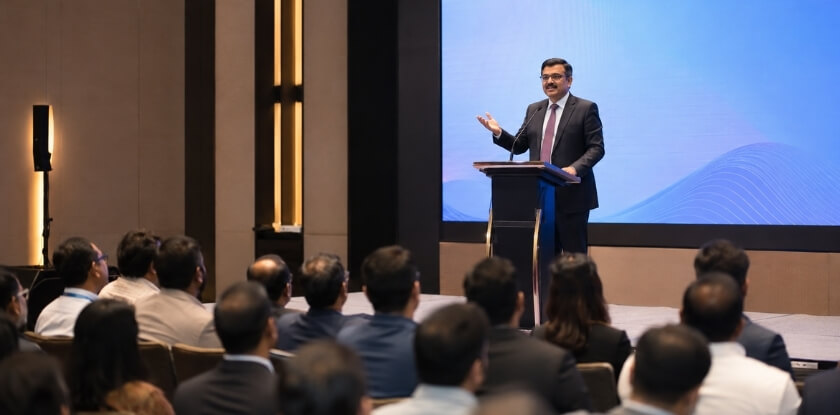
Below are two full samples: one for a larger academic conference and one for a smaller seminar or departmental gathering.
Full Sample: Academic Conference Welcome Speech
This version suits a multi-day academic conference with invited speakers, paper presentations, and an international or multi-institutional audience. Adjust the bracketed fields to fit your event.
Good morning, distinguished guests, colleagues, and delegates.
On behalf of [Institution/Organizing Committee Name], I am honored to welcome you to [Conference Name], our [edition, for example 12th Annual] gathering on [conference theme or field].
With us today are researchers and scholars from [number] countries and [number] institutions, which speaks to the breadth of interest in this field and to the quality of the work on offer. We received [number] abstract submissions this year, and the program committee worked carefully to select the [number] papers and sessions in your schedule.
This conference exists because the questions we are asking about [specific theme 1], [specific theme 2], and [specific theme 3] do not have simple answers, and they are not answered well in isolation. The conversations in the corridors, over lunch, and at the poster sessions matter as much as the formal presentations. I encourage you to make time for them.
Our keynote speaker, [Name], will open the scientific program immediately after these remarks. I will say more about [his/her/their] work at the formal introduction, but I did not want to begin without acknowledging how fortunate we are to have [him/her/them] here.
A few logistical notes. The program schedule, session rooms, and presenter guidelines are in your conference booklet and on the event app. Lunch is provided each day in [location]. The organizing team is wearing [color] lanyards, so please find any one of us with questions.
Thank you for being here. This is the kind of gathering the field needs. I declare [Conference Name] officially open.
Short Sample: Seminar or Departmental Welcome Address
This version works for a one-day seminar, a workshop, or a college conference where the tone can be warmer and the audience already knows the field.
Welcome, everyone, and thank you for making time for today’s seminar.
I’m [Name], [Title] at [Department/Institution], and I’ll be opening this morning’s session on [topic].
We have a focused program today: [number] presentations and a roundtable discussion in the afternoon. The speakers have been asked to leave time for questions, so please do engage directly. That dialogue is the point of an event like this.
A few of you have come from other departments or institutions, and we’re glad you made the trip. For those joining online through [platform], welcome as well. The session will be recorded and shared with registered participants.
Coffee is available at the back, and the first presentation begins in five minutes.
Corporate / Business Conference Welcome Speech
A corporate welcome should be confident, purposeful, and short, usually two to three minutes at most. The audience is busy and results-focused, so open crisply, acknowledge the right people without overdoing it, and get to the purpose of the event quickly. Any longer and you risk losing a room full of people who have three meetings after this one.
What Sets a Corporate Welcome Apart
You are not trying to impress anyone with ceremony. You are framing the day so attendees know exactly why they are in the room and what they will get out of it.
Full Sample: Corporate Conference Welcome Speech
Good morning, everyone.
Welcome to the [Company Name / Industry Name] Annual Conference. I’m [Your Name], [Your Title], and on behalf of [the organizing company / committee], I’m glad you’re here.
We’ve gathered to [state the core theme or objective, for example “talk honestly about where our industry is heading and what that means for the decisions we make this year”]. People came from across the country and from the next office over, and the fact that all of you made time says something about how seriously we take this work.
Over the next [one day / two days], you’ll hear from [number] speakers, take part in [workshops / breakout sessions / panels], and meet peers who are working through many of the same challenges you are. We’ve balanced structured sessions with real space for conversation, because some of the most useful exchanges at a conference happen between sessions.
A word of thanks to [sponsor name or key supporter], whose support made this event possible. And to our speakers: each of you invested significant time to prepare something useful, and we’re grateful.
One last ask before we start. Please silence your phones, and pick up your conference materials at the registration desk if you haven’t already.
Let’s make today worth the room. [First Speaker’s Name] will open with [brief description of their talk or role], so please give [him/her/them] a warm welcome.
Virtual / Online Conference Welcome Speech
A virtual welcome should be shorter than an in-person one, name the online format directly, and give a one-sentence technical orientation. You cannot read the room, late joiners trickle in during your first thirty seconds, and the energy that builds naturally in a ballroom has to be created through your words and pacing.
What to Do Differently for a Virtual Format
A few adjustments make a real difference when people join from home offices, coffee shops, and three different time zones.
- Open by naming the online format. “Welcome, everyone, wherever you’re joining from today” acknowledges the distributed audience and shows you have thought about their experience, not just your own delivery.
- Keep the intro shorter than you would in person. Attention tends to drop faster on screen. If your in-person welcome runs two and a half minutes, aim for around ninety seconds online and reach the first speaker sooner.
- Give a quick technical orientation. One sentence is enough: where the chat is, how Q&A will work, or where to find the schedule. Attendees who feel oriented early are less likely to leave.
- Watch your pacing. On a screen, silence reads as a technical problem. Keep the energy up slightly and pause a beat shorter than you would in a live room.
- Keep gestures and slides camera-friendly. A Toastmaster magazine article (July 2025) advises framing the camera so your torso is visible and keeping gestures inside the frame, because viewers may see only your fingertips. It also suggests finding out how people join, since phone viewers need larger, simpler visuals.
- Close with a clear handoff. Virtual audiences need a stronger cue that the welcome is ending. Name the next speaker, say what is coming up, and transition deliberately.
Sample Virtual Conference Welcome Speech
Use this for a virtual corporate conference, an online academic conference, or a longer webinar. Change the bracketed fields to suit your event.
Good [morning/afternoon/evening], everyone, and welcome to [Conference Name].
If you’re joining from [City/Country] or logging in from halfway across the world, we’re glad you’re here. My name is [Your Name], and I’ll be your host for today.
[Conference Name] brings together [describe your audience, for example researchers, industry leaders, educators, healthcare professionals] for a full day of [talks, workshops, and panel discussions] on [main theme]. This year we have participants from [number] countries, which says a great deal about the shared interest in what we’re here to discuss.
A few quick notes. The chat is open, so feel free to introduce yourself or share questions as we go. Q&A for each session will happen [at the end of each talk / in a dedicated session / via the Q&A panel on your screen]. You’ll find today’s full schedule under the “Agenda” tab of the event platform.
Today’s speakers have put together sessions that are [brief, honest descriptor, for example practical, thought-provoking, useful for anyone working in this field]. We’ve kept the format tight so you get the substance without the fatigue of back-to-back screens all day.
We’re recording the sessions, and they’ll be available to all registered attendees within [timeframe, for example 48 hours].
Now, let’s get into it. I’m pleased to hand over to [First Speaker’s Name], who will open with [brief description of their talk]. [First Speaker’s Name], the floor is yours.
International Conference Welcome Speech
An international welcome should acknowledge the effort attendees made to be there, set a tone of real hospitality, and use plain, clear language. People may have crossed time zones, handled visa requirements, and traveled significant distances, and many are working in their second or third language.
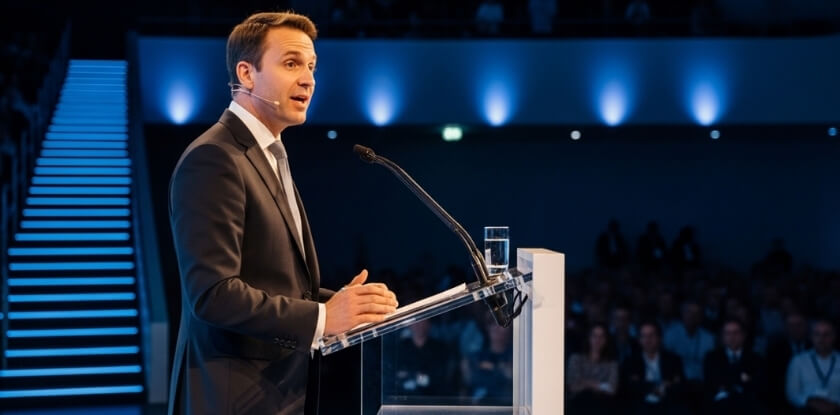
The register is formal, but warmth still matters. Avoid cultural references that will not translate across the room.
What to Keep in Mind Before You Write
- Acknowledge the international reach explicitly. Attendees from abroad want to feel their presence was anticipated and valued. Name the countries or regions represented if you have that information.
- Use plain, precise English. If English is the working language, remember that many attendees are using their second or third language. Avoid idioms, slang, and sentences that rely on shared cultural knowledge.
- Keep a measured pace. Some listeners are following carefully or using interpretation, so build in natural pauses and do not rush.
- Acknowledge the host city or institution. A brief line welcoming guests to the city or country is expected, and it lands well.
Sample Welcome Speech for an International Conference
This sample runs about three minutes, which suits a large international gathering before the first speaker.
Distinguished guests, colleagues, and friends from around the world, welcome.
It is my honor to open [Name of Conference], hosted by [Institution or Organization Name] here in [City, Country] from [Date] to [Date]. We are gathered from [number] countries, representing some of the strongest work in [field or discipline]. That this gathering is possible at all reflects years of collaboration, correspondence, and shared commitment to [purpose of the conference].
To those who have traveled from abroad: thank you. We do not take lightly the distance you have covered, the time you have given, or the trust you have placed in this event. We hope the next [number of days] justify every hour of the trip.
This conference is built around a central question: [State the core theme or question]. Over the program, we will hear from researchers, practitioners, and policymakers who are approaching it from different cultural, scientific, and professional contexts. That diversity of perspective is the point. No single country or institution holds all the answers, which is exactly why we meet internationally.
I would like to thank [key sponsors, organizing committee, or co-hosts] for making this event possible. Planning a conference of this scale takes an extraordinary amount of quiet work, and it deserves to be named.
Our host city, [City], is proud to welcome you. Please take some time outside the conference hall to explore it. The conversations over dinner and between sessions often shape collaborations that outlast the conference itself.
[Name of next speaker or session chair] will now walk you through the agenda and introduce our opening keynote. If you need assistance at any point, approach any member of our organizing team.
Once again, welcome. We are glad you came.
Science & Technology Conference Welcome Speech
A science and technology welcome should be grounded, name the specific themes of the event, and reach the substance quickly. The audience is detail-oriented, skeptical of fluff, and excited about the work being presented.
Full Sample Welcome Speech
Good morning, everyone. Welcome to [Conference Name], [Year Edition].
Researchers, engineers, and practitioners are all in one place today, and that is good to see. Attendees are joining from [number] countries, which shows how broadly this field has expanded in recent years.
This year’s conference focuses on [main theme, for example applied machine learning, next-generation biomedical devices, or quantum computing systems]. Over the next [two/three] days, you will hear from [number] speakers across [number] sessions, covering everything from foundational research to the practical problems of deployment.
Two logistics points. Lunch is in [location], and the poster session starts at [time] in [hall/room]. All session slides will be on the conference platform by the end of the day. If you are attending a workshop track, check the updated room assignments at the registration desk, because two sessions have moved.
Particular thanks go to our keynote speakers, [Name] and [Name], who have agreed to take questions after their talks. That is not always the case, and we are glad they made the time.
I also want to recognize our sponsors: [Sponsor Names]. Their support made the in-person component of this event possible.
Our program chair, [Name], will now walk you through the structure of the day. Please make the most of the time here, because the hallway conversations often matter as much as the sessions.
Thank you, and welcome.
[Speaker’s Name], [Title] [Conference Name]
Short Version (Under 90 Seconds)
Good morning. Welcome to [Conference Name].
Researchers and practitioners from across the field are here, many from considerable distances, and we’re delighted you came.
This year’s program covers [main theme], with [number] sessions and two keynote addresses. The full schedule is in your program booklet and on the event app.
A brief note on logistics: lunch is in [location], and the poster session begins at [time] in [hall/room].
I’ll now invite [Name], our program chair, to open the first session. Have a productive conference.
Healthcare / Medical Conference Welcome Speech
A healthcare welcome should be warm but serious, and it should acknowledge both the profession and the purpose of the event. The audience deals with real consequences every day: clinicians, researchers, public health officials, and administrators.
Full Healthcare Conference Welcome Speech Sample
Good morning, and welcome to the [Name] Healthcare Conference.
My name is [Your Name], and I’m [your role/title] at [Organization]. On behalf of our organizing committee, our sponsors, and our host institution, I’m glad you’re here.
This year’s conference brings together over [number] professionals from [number] countries, representing specialties from [list key fields, for example oncology, public health, emergency medicine, and primary care]. That breadth matters, because the challenges we are here to discuss do not belong to any single discipline. They need all of us in the same room.
The theme is [theme]. We chose it because [one or two sentences on why it is timely or urgent, for example “patient outcomes in underserved communities have become an increasingly pressing policy and clinical concern”].
Over the next [number] days, you will hear from [number] speakers, take part in [number] workshops, and meet colleagues whose work may directly inform your own. We have also set aside time for open discussion, since some of the most useful conversations at events like this happen outside the formal sessions.
Before we begin, I want to acknowledge the work everyone in this room does. Healthcare is demanding in ways that are hard to describe to people outside it. That you took time away from your practice, your lab, or your institution to learn, share, and push this field forward means a great deal.
I’ll now hand over to [Name of Next Speaker], who will deliver our opening keynote on [topic]. Please welcome [him/her/them].
Short Version (Under 90 Seconds)
Good morning, everyone. Welcome to the [Name] Medical Conference.
I’m [Your Name], [role], and I’m honored to open this year’s event on behalf of [Organization].
This conference brings together professionals from across [specialty areas or regions] to address [the conference theme or core challenge]. Over the next [number] days, sessions will cover [two or three topic areas], with time for collaboration and discussion.
Thank you for being here. The work you do matters, and so does the conversation we’re about to start.
I’ll now turn the floor over to [Speaker Name] for our opening keynote.
Sports & Culture Conference Welcome Speech
A sports and culture welcome sits between a corporate event and a community gathering: professional enough to respect the speakers and agenda, and warm enough to reflect what sport and culture mean to people. The room may hold athletes, coaches, administrators, historians, journalists, and policymakers at once.
Full Sample: Sports & Culture Conference
Good morning, and welcome to the [Name] Sports and Culture Conference.
I’m [Your Name], [Your Role/Organization], and it’s my honor to open this conference on behalf of [organizing body or host institution]. Some of you traveled across the country and some came from down the road, and your presence matters either way.
Sport and culture have always been connected. They shape identity, build communities, and reflect the values of the societies they come from. That is why conversations like the one we’re starting today are worth having. The speakers, panelists, and delegates here bring expertise from athletics, policy, heritage, media, and research, and the next [two days / sessions] give us a chance to learn from that range.
Our program covers [key themes, for example athlete welfare, cultural exchange programs, the role of sport in youth development, preservation of indigenous games]. We have left real time for discussion, because the exchanges between presentations are often as valuable as the presentations.
A few practical notes: [restrooms, registration, lunch arrangements, emergency procedures]. Your conference materials include the full schedule, and if anything is missing, our team at the [information desk / registration table] can help.
We open the formal program with a keynote from [Keynote Speaker’s Name], who will [brief one-line description of their talk]. Please take your seats and give a warm welcome to our first speaker.
Thank you again for being here. Let’s make these two days productive and interesting.
Short Version (Under 90 Seconds)
Good morning, everyone. Welcome to the [Name] Sports and Culture Conference.
I’m [Your Name] from [Organization], and on behalf of the organizing committee, I’m glad you’re here.
Sport and culture shape who we are as communities, and this conference gives us two days to examine that relationship seriously, with people who know it from the inside. Our speakers and panelists come from a wide range of fields, and the program reflects that breadth.
We start shortly with an opening keynote from [Speaker Name]. Please review the schedule in your materials, and reach out to any of our team if you need help.
Welcome, and let’s begin.
Student / College Conference Welcome Speech
A student conference welcome should be warm, accessible, and about two minutes or less. The audience is younger, the room is less formal, and the speaker is often a fellow student, a faculty coordinator, or a department head who does not want to sound stiff.
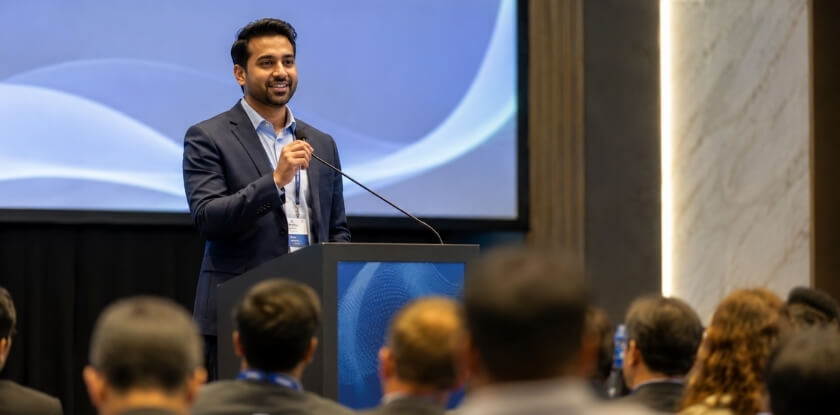
What Makes This Format Different
A college welcome sits between casual and professional. You want students to feel included and excited, and you also want to signal that what happens in the room matters. Striking that balance is the main challenge.
Keep the language accessible. Long formal constructions tend to fall flat with a student audience. Shorter sentences, a conversational register, and visible enthusiasm work far better than ceremonial phrasing. Get the room oriented, welcome the speakers and attendees, state the purpose of the day, and hand things off.
Full Sample Speech
Good morning, everyone. Welcome to the [College/University Name] Annual Student Conference on [Theme or Topic].
It’s great to see so many of you here: students, faculty, and guests from across the department. Today is about you, your research, your ideas, and the conversations that come from putting them in the same room.
This conference was built by students, for students. Every paper, panel, and presentation you’ll see today was submitted, reviewed, and selected by people who study what you study. That’s worth appreciating.
Over the next few hours, we’ll hear from [number] presenters covering topics from [broad topic area] to [broad topic area]. There’ll be time for questions after each session, and I’d encourage you to use it. Some of the best moments at events like this come from the discussion.
A few quick notes. Please put your phones on silent. Session rooms are [location details]. If you have questions during the day, [name or team] will be at the registration desk.
I also want to thank everyone who submitted work, helped organize, and showed up today. It has been months in the making, and it’s great to see it come together. We have a strong lineup, so I won’t keep you from it. Please welcome our first speaker, [Name], who will be presenting on [topic].
Thank you, and let’s get started.
Fill-in-the-Blank Welcome Speech Template
A fill-in-the-blank template gives you a solid structure without starting from scratch: swap the bracketed parts for your own names, themes, and details. It works for almost any conference type, and each piece below can also be borrowed on its own, whether you need the opening, the handoff, or the closing lines.
Opening Lines
These set the tone immediately. Use formal language for international or academic conferences, and a slightly warmer register for student or internal corporate events.
[Good morning / Good afternoon / Good evening], everyone.
Welcome to [name of conference], 2026. My name is [your name], and I’m [your title/role] at [organization or institution]. On behalf of [organizing body, committee, or host institution], it’s my pleasure to welcome you here today.
We have [number] delegates joining us [in person / online / from across X countries], and that alone tells you something about the importance of what we’re here to discuss.
Body: Context and Purpose
After the greeting, tell attendees why the event matters and what to expect. Two short paragraphs is usually enough.
Today’s [conference / seminar / summit] focuses on [core theme or topic]. Over the next [duration], you’ll hear from [brief description of speakers, for example leading researchers, senior industry professionals, student innovators] across [number] sessions covering [two or three key sub-themes].
This year’s event builds on [previous edition / the growing conversation around / recent developments in] [relevant field or issue]. We’ve designed the program to give you both [practical takeaways] and [time for discussion / networking / collaboration], so please use both.
Acknowledgments
Keep acknowledgments short, because long lists of names lose the audience fast.
Before we begin, I’d like to thank [key sponsor, institution, or partner] for supporting this event. I’d also like to acknowledge [a specific person or group, for example the organizing committee, keynote speakers, or host venue] for their work behind the scenes.
[If applicable: A special welcome to our international delegates joining us from [regions/countries]. We’re glad you’re here.]
Introducing the Program and Speaker Handoff
This is where you move from the welcome to the main agenda. The audience needs to know what is coming next.
Our program begins with an opening keynote from [speaker name], [title and organization], who will speak on [topic]. After that, we move into [brief description of the next session or agenda block].
To introduce our keynote speaker and get us formally underway, I’d like to hand over to [name of MC / chair / next speaker]. [His / Her / Their] experience in [relevant field] makes [him/her/them] the right person to set the stage for today’s discussions.
Please join me in welcoming [name].
Closing Lines for a Welcome That Ends Before the Handoff
If your welcome is standalone instead of leading straight into a handoff, close with something brief that sends people into the program with the right mindset.
We hope today gives you new ideas to take back, new connections to build on, and a clearer sense of [the field / the challenge / the opportunities] ahead. We’re glad you’re here. Now let’s get started.
Ready Opening Lines (Copy and Use)
The best opening line names the audience and the occasion at once, and the lines below are grouped by context so you can copy one and adjust the name or event. The first sentence sets the tone, signals your confidence, and tells people whether to lean in.
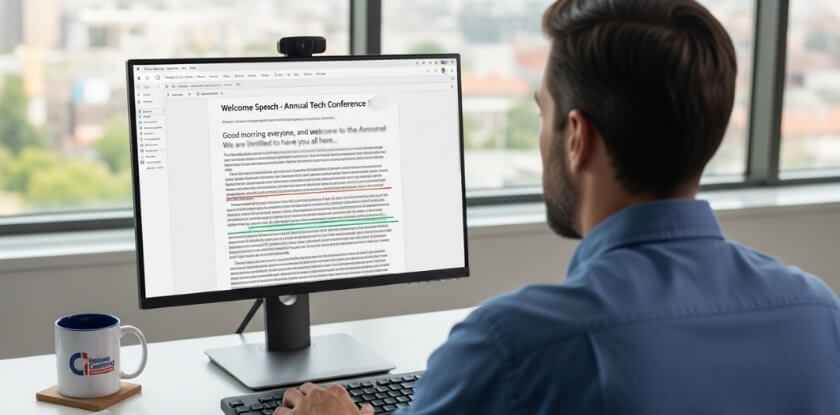
Formal Conference Openings
These work for academic conferences, international gatherings, corporate summits, and any event where the audience expects polished language.
- “Good morning, and welcome to the [Year] [Conference Name]. On behalf of [Organization], it is my pleasure to greet each of you here today.”
- “Distinguished guests, colleagues, and delegates, welcome. We have brought together some of the strongest minds in [field], and I am honored to open this conversation.”
- “To our speakers, our sponsors, and everyone who traveled to be here: thank you. This conference exists because of your commitment, and we do not take that lightly.”
- “It is my privilege to declare the [Conference Name] officially open. Over the next [number] days, we will examine questions that matter deeply to our field and to the communities we serve.”
- “Welcome to what I expect will be one of the most thought-provoking gatherings in [field] this year. We are glad you are here.”
Warm but Professional Openings
These suit corporate and healthcare conferences, where you want to be approachable without being casual.
- “Good morning, everyone. If you’ve just walked in and found your seat, that’s exactly right. We’re about to get started.”
- “Welcome, all of you. This room holds an impressive amount of expertise, and I’m looking forward to seeing what happens when we put it to work.”
- “Thank you for being here. You may have flown in yesterday or come from across the building, and either way your presence makes this event what it is.”
- “I want to start simply: welcome. We’ve worked hard to put together something useful for you over the next [hours/days], and I hope it delivers.”
Informal and Student Conference Openings
These fit college conferences, student seminars, and events with a younger or more relaxed audience.
- “Hey, everyone, welcome. I know some of you are running on three hours of sleep, so let’s make sure today is worth it.”
- “Good morning, and welcome to [Conference Name]. I’m [Name], and I’ll kick things off before handing over to people who have far more interesting things to say than I do.”
- “We’ve got a great day planned. Before we get into it, I just want to say it’s exciting to see this many people in one room who care about [topic].”
Virtual and Webinar Conference Openings
Online openings need a small acknowledgment of the format, because ignoring it feels odd to people watching on a screen.
- “Welcome, everyone, and good [morning/afternoon/evening] wherever you’re joining from. We have attendees logged in from [number] countries today, which tells you something about why this topic matters.”
- “Thanks for being here online. I know it takes a different kind of focus to attend a conference through a screen, and we’ve designed today with that in mind.”
- “You are now officially at [Conference Name]. Go ahead and drop your location in the chat. I always like knowing where in the world we’re gathered.”
International Conference Openings
- “On behalf of [Organization], I extend a warm welcome to our international delegates. You’ve brought different perspectives and experiences into this room, and that diversity is what makes this conference worth attending.”
- “To our guests who have joined us from abroad: we are honored by your presence and grateful for the distance you’ve traveled to be part of this dialogue.”
Science and Technology Conference Openings
- “Good morning. We are here because the questions in [field] don’t wait for us to catch up, and the work presented over the next [days] suggests we might finally be closing the gap.”
- “Welcome to [Conference Name]. The research in this room represents years of effort, and it deserves an audience that takes it seriously. I believe you are that audience.”
Openings That Start With a Question or a Fact
A short hook can work if it ties directly to the theme and the greeting follows within a sentence or two. Several speech guides suggest opening with a question or an eye-catching fact, and the lines below keep that to one sentence before the welcome.
- “Raise your hand if [a situation your audience will recognize]. That is why we are all here, and welcome to [Conference Name].”
- “[One fact about your field, taken from a source you can name]. That is the reason [Conference Name] exists, and I’m glad you are here to talk about it.”
- “A quick question before we begin: what is the one problem in [field] you hope someone in this room can help you with? Keep it in mind. Welcome, everyone.”
Ready Closing Lines and Speaker Handoffs
A confident closing line and a named handoff keep the momentum moving, while a weak trailing sentence such as “so, yeah, let’s get started” deflates the energy you just built. Adjust the name, topic, or speaker title in any line below.
Closing Lines You Can Use Directly
For a formal conference:
- “On behalf of the organizing committee, I welcome each of you warmly and wish us all a productive and memorable [conference name]. Let’s begin.”
- “Thank you for being here. The conversations that start today will matter well beyond this room. Please join me in welcoming our first speaker.”
For an academic or research conference:
- “The work represented in this hall is exactly the kind of thinking our field needs right now. I’m proud to open this conference and look forward to the next [two days / week].”
- “We’ve come together to ask hard questions and, with any luck, find some useful answers. Let’s get to it.”
For a corporate or business conference:
- “The agenda ahead is strong, the speakers are prepared, and the timing couldn’t be better. Let’s make this day count.”
- “Thank you for making the time. Now let’s put it to good use.”
For a virtual or webinar-style conference:
- “You might be joining from across the street or across twelve time zones, and we’re glad you’re here. Let’s get started.”
- “Thank you for carving time out of your day to be with us online. I’ll hand things over now and let the program speak for itself.”
For a student or college conference:
- “This is your platform. Use it well. We’re proud of every one of you for showing up, and I can’t wait to see what this day produces.”
- “Let’s make this a day worth talking about. Welcome, everyone.”
Speaker Handoff Lines
A speaker handoff is a short bridge that closes your welcome and introduces the next person on stage. Keep it specific, with name, title, and topic, instead of a vague “please welcome our next speaker.”
- Standard handoff: “It’s now my pleasure to introduce our keynote speaker, [Full Name], [Title] at [Organization], who will open with [topic or session title].”
- For a panel or multi-speaker session: “I’d like to invite [Name] to the stage to walk us through the opening session on [topic]. [Name], the floor is yours.”
- For a virtual conference: “I’ll now hand over to [Name], who’ll be guiding us through the first session. [Name], go ahead.”
- After a formal welcome at an international conference: “With that, I’m honored to introduce our distinguished keynote speaker, [Name], whose work in [field] has shaped how we think about [topic]. Please join me in welcoming [Name].”
- Inviting the speaker to set the themes: “I am now pleased to invite [Name], [Title], to address us on the themes that will guide our work over the coming days.”
- Passing to the program chair: “Without further delay, I will hand over to our program chair, [Name], who will walk us through what lies ahead.”
These lines signal a clean handoff and keep the formal register that international and academic audiences expect, where abrupt transitions can feel careless.
How Long Should a Conference Welcome Speech Be?
Guides commonly suggest two to five minutes for a conference welcome, and shorter often works better than you expect. A welcome is not a keynote: your job is to open the room, not to fill it. The right length depends on the conference type and the formality of the occasion, so treat the figures below as typical, and follow your program slot and the chair’s instructions if they differ. Jaarbeurs, a Dutch events company, puts a welcome at 2 to 5 minutes when you have no other important announcements to make (2025); if you do have announcements, ask the organizers how much time you have.
Quick Reference by Conference Type
| Conference type | Typical length | Why |
|---|---|---|
| Corporate | 2 to 3 minutes | A business audience is ready for the agenda, and a long welcome drains the room before the first session |
| Academic or seminar | 3 to 5 minutes | Audiences expect context on the theme, the organizing body, and key speakers, but 7 minutes feels slow |
| International | Up to 5 minutes | You may welcome guests from many countries or institutions, so keep it from becoming a roll call |
| Virtual or online | About 90 seconds to 2 minutes | No room presence is working for you, and attention tends to drift sooner on screen |
| Student or college | 2 minutes or less | Students respond to energy, not length |
| Healthcare or medical | 3 to 4 minutes | Acknowledgments of professional bodies or sponsors add a minute, but the audience is busy |
| Sports and culture | 2 to 3 minutes | The tone is often lighter, so a brief, warm welcome lands cleanly |
Word Count as a Practical Guide
If you write your speech out in full, use these rough counts. They assume a speaking pace of about 120 to 150 words per minute. Published figures differ: Jaarbeurs (2025) uses 120 to 140, and VirtualSpeech (2026) gives 100 to 150 as a comfortable pace for presentations. Real pace varies by speaker, room size, and nerves, so time your own reading.
| Speaking time | Approximate words |
|---|---|
| 1 minute | 120 to 150 |
| 2 minutes | 240 to 300 |
| 3 minutes | 360 to 450 |
| 5 minutes | 600 to 750 |
A two to three minute welcome is therefore roughly 240 to 450 words. If your draft is longer than your slot allows, look for repetition or context the audience already has.
How Long Are the Full Samples in This Article?
At the 120 to 150 words per minute pace above, the full samples run as follows. Placeholders such as [Speaker Name] count as words, and your final version will change slightly.
| Sample | Approximate words | Approximate speaking time |
|---|---|---|
| General conference | 280 | 1.9 to 2.3 minutes |
| Academic conference | 260 | 1.7 to 2.2 minutes |
| Corporate conference | 230 | 1.5 to 1.9 minutes |
| Virtual conference | 230 | 1.5 to 1.9 minutes |
| International conference | 290 | 1.9 to 2.4 minutes |
| Science and technology | 230 | 1.5 to 1.9 minutes |
| Healthcare conference | 250 | 1.7 to 2.1 minutes |
| Sports and culture | 240 | 1.6 to 2.0 minutes |
| Student conference | 220 | 1.5 to 1.8 minutes |
These samples are written as complete, usable openings, so most land under the three-minute mark. To stretch one toward three or four minutes, add a short paragraph on the theme or a line thanking international delegates, not more agenda detail.
Signs Your Welcome Speech Is Too Long
You do not always need a timer. Read your draft and check for these:
- You are summarizing the whole agenda in detail, which belongs in the printed program or a separate MC announcement
- You have thanked the same sponsor or organizer more than once
- You have more than one paragraph of background on the conference history or theme
- Your closing lines drift into content that belongs to the first speaker
The welcome exists to set the tone and hand off attention. Once you have done that, stop.
Common Mistakes to Avoid
Typical mistakes are reading from a script, talking about yourself, staying vague, and ending without a handoff. Each can happen at corporate conferences, academic seminars, and international events alike.
- Reading word for word. Audiences notice at once when your eyes are glued to the page. Use notes as a reference, not a crutch. If you wrote it yourself, you already know most of it.
- Making the opening about yourself. One sentence on who you are is fine. Three minutes of credentials loses the room.
- Running too long. Most guides keep a welcome to five minutes or less, so cut anything that does not serve the audience or the event.
- Being vague about the event. Phrases like “this wonderful gathering” and “today’s exciting program” say nothing. Name the theme, the key sessions, or the specific reason this conference matters this year.
- Skipping logistics. Delegates need to know the schedule, the platform, and who to contact for help. If you leave it out, someone else has to say it awkwardly after you sit down.
- Getting the tone wrong. Formal language at a student event feels cold, and casual language at a medical conference can feel unprofessional. The formal vs informal section below helps you decide.
- Forgetting the handoff. A welcome does not end with “enjoy the conference.” It ends by introducing what comes next: the keynote speaker, the first session, or the chairperson.
- Thanking too many people by name. One or two acknowledgments are enough. A list of every sponsor, committee member, and department head turns a welcome into an acceptance speech. Use a collective thanks (“our sponsors and organizing committee”) and move on.
From our experience at MS International: All our conferences are held in person in the Greater Toronto Area, and the moderator introduces each speaker. Presentation lengths may vary, so your speaker confirmation and the final conference programme are the official sources for your time slot. Speakers cover their own travel, accommodation, visa, and personal expenses unless MS International has agreed otherwise in writing, so do not promise travel support in a welcome unless it has been confirmed in writing.
Formal vs Informal Language: Which to Use?
Use formal language for academic, scientific, international, and large corporate conferences, and informal language for student events, internal company days, and online sessions. The register you choose shapes how the audience receives you before you finish your first sentence, and a mismatch makes even a well-structured speech feel off.
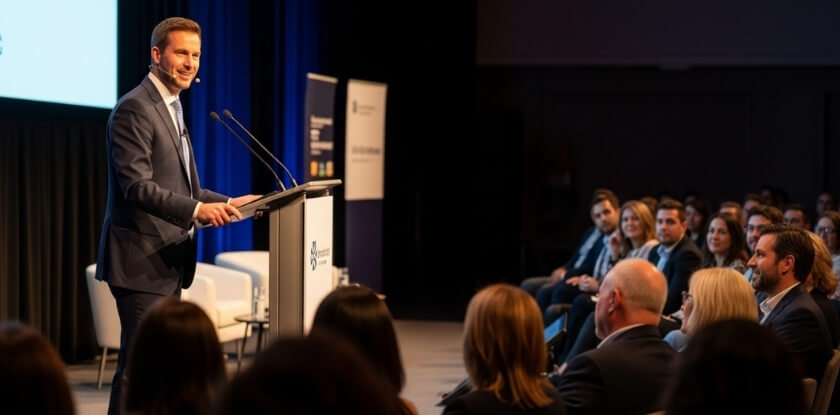
When Formal Language Is the Right Call
Some conferences expect a degree of ceremony, and departing from it reads as unprepared instead of refreshingly human.
- Academic and scientific conferences call for formal language as a baseline, whether the field is medicine, healthcare, or science and technology. Attendees have peer relationships, institutional affiliations, and sometimes career reputations in the room.
- International conferences warrant the same treatment. When the audience includes speakers of English as a second or third language, formal phrasing is often more accessible, not less. Idioms, slang, and casual contractions can confuse people whose English is strong in formal registers but thinner in conversation.
- Large corporate conferences with senior leadership, investors, or external stakeholders also lean formal, because the welcome sets an organizational tone.
Formal does not mean stiff or robotic. It means complete sentences, no slang, measured pacing, and respectful address: “Distinguished guests,” “Ladies and gentlemen,” “Esteemed colleagues.”
When Informal Language Works Better
- Student and college conferences are the clearest case for a lighter register. Students respond to warmth and energy, and a stiff welcome creates distance when the goal is participation.
- Internal corporate events such as team offsites, internal sales conferences, and company culture days suit informal language. People already know each other, and ceremony would feel performative.
- Webinar welcomes and online conference openings often benefit from a conversational tone, because screens already create distance and an overly formal welcome can feel cold.
Informal does not mean unprofessional. You can say “Thanks for being here” instead of “We extend our gratitude for your attendance,” use contractions, and make a small joke if the moment supports it.
Reading the Room Before You Write
A few practical checks before you decide:
- Look at the conference’s own promotional materials. If they use formal language in their copy, mirror it.
- Consider the seniority and professional background of your expected audience.
- Ask the organizers how much time you have and whether you are expected to make any announcements.
- Ask the organizer how previous welcome speeches were received. If last year’s went long and formal and people tuned out, adjust.
- For a seminar address with a mixed audience of academics and practitioners, a semi-formal register usually works best: respectful but not stiff, structured but not wooden.
A useful test is to draft in formal language first, then read it aloud. If it sounds like a legal document, pull back. If it sounds like a casual chat, tighten it. The right register sounds like a competent, warm person who belongs in that room.
Delivery Tips
The mechanics of delivery are the same at an academic, corporate, or virtual conference: practice aloud, slow the opening, look at the audience, and rehearse the handoff. What you say is only half the job, because how you say it decides whether the room warms up.
Practice Out Loud, Not Just in Your Head
A sentence that looks fine on paper can feel awkward the moment it leaves your mouth. Read your welcome aloud at least twice before the event and time yourself. You will catch the clunky phrases you would otherwise stumble over in front of an audience.
Don’t Rush the Opening
Nerves push most speakers to talk faster than they should, especially at the start. Take a breath before you begin and let the opening lines land. A brief pause after your greeting, even two seconds, signals confidence and gives the audience a moment to settle.
Make Eye Contact With the Room, Not the Page
Keep your speech as a reference, not a script. Know your opening and closing lines well enough to deliver them looking up. The middle can be glanced at, but those two moments should feel direct and personal.
At a virtual conference or webinar, look at the camera. That is the equivalent of eye contact online. Looking at your own video feed or at faces on screen reads as looking down to your audience. A small reminder near the lens, such as a sticky note, helps you stay consistent.
Adjust Your Energy to the Venue
- A large auditorium needs more projection. Not shouting, but deliberate volume, slower pacing, and slightly longer pauses. Sound gets absorbed in a big space, and a pause that feels natural to you may barely register in the back row.
- A smaller seminar room allows a conversational tone. You can ease off the presentation energy and speak as you would to a group of colleagues. Formal language does not require stiff delivery.
- An international audience needs extra clarity. If listeners include non-native English speakers, slow down on key phrases, avoid idioms, and resist filling silences with rapid asides.
Handle the Speaker Handoff With Intention
The moment you introduce the next speaker or hand back to the chair is easy to fumble. Write out your handoff line word for word and practice it, for example “I’ll now invite [Name] to take us through the first session.” Trailing off, shuffling papers, or repeating yourself as you leave the podium undercuts the impression you just built.
Check Names, Titles and Pronunciation
Confirm the spelling, title, and affiliation of every guest you name, and ask how each name is pronounced. If you open with a greeting in another language, check it with someone who speaks it. Say the names aloud at least once before the event.
Know Where the Microphone Is
This sounds obvious, but it trips up experienced speakers. With a fixed lectern microphone, stay close and do not turn your head toward the slides behind you. With a handheld or lapel microphone, test the distance beforehand. A clearly heard welcome beats a beautifully written one that half the audience cannot follow.
Use Your Notes Without Apology
There is nothing unprofessional about speaking from notes. Trying to memorize a welcome and then blanking halfway through is far worse than glancing at a card. Print your notes in larger type than a normal document, because small print forces you to squint or hold the page close. The Speech Lab at Grand Valley State University advises typing notes in a size you can easily see, adding legible section headings, and using bulleted phrases rather than full sentences or single words; it also says not to be afraid to increase the font size. Mark the phrases you want to emphasize. The goal is controlled delivery, not a performance.
Frequently Asked Questions
Staring at a blank page? Start with the opening line, a good welcome statement, the right length and whether one speech can work for a webinar as well as a live room.
What is a good short welcome speech?
A good short welcome speech runs about 60 to 90 seconds, and some guides allow up to three minutes. It covers a greeting, a one-line statement of why everyone is gathered, and a quick handoff. Resist listing every agenda item or acknowledging every sponsor when time is short.
What is the best opening line of a speech?
The best opening line names the audience and the occasion directly, such as “Good morning, and welcome to [Conference Name]. We’re glad you’re here.” It suits formal and informal events. A question or a striking fact can work too if it ties to the theme, but the greeting should follow within a sentence or two.
What is a good welcome statement?
A good welcome statement is one or two sentences that name the event, acknowledge who is in the room, and set the tone, for example: “Welcome to [Conference Name]. We are glad to have researchers, practitioners, and students from [places] with us.” Keep it clear and suited to the audience.
Can the same speech work for a webinar and an in-person conference?
Mostly yes: the greeting, purpose, and handoff can stay the same, while the logistics and delivery change. Name the online format early, say where the chat and Q&A are, mention muting and time zones, and use vocal emphasis and camera-friendly gestures, because you cannot see whether viewers are paying attention.
How long should a conference welcome speech be?
Guides commonly suggest two to five minutes, roughly 240 to 750 words at 120 to 150 words per minute; the samples in this article sit near the short end. Corporate and student events usually need less, and academic and international events can use a little more. Follow the time slot in your program if it is shorter.
Final Thoughts
A conference welcome speech does not need to be long, complex, or perfect. It needs to be warm, clear, and right for the room: acknowledge who is there, set the tone, and hand over cleanly.
Use the samples and templates here as a starting point, then adjust the language, formality, and length to your event. Read it aloud once, time it, and you are ready.