

You may have heard of Springer, but many researchers are still unsure about what it is, how its publishing platforms work, and how they can use its resources effectively. Understanding Springer is important because it publishes thousands of peer-reviewed journals, books, and research materials across Science, Technology, Medicine, Humanities, and Social Sciences. Knowing how to navigate its platforms can help researchers find relevant studies, identify suitable publishing opportunities, and avoid unnecessary Article Processing Charges (APCs).
Springer is one of the world’s oldest and most established academic publishers. It was founded in Berlin in 1842 by Julius Springer and operated for many years under the name Springer-Verlag. Following several mergers and acquisitions, Springer Nature was formed in 2015 through the merger of Springer Science+Business Media and Nature Publishing Group, part of the Holtzbrinck Publishing Group. Today, the Springer publishing ecosystem includes SpringerLink, its main platform for accessing journals, books, and book chapters; SpringerOpen, which publishes fully open-access research; and a wide range of subscription-based and hybrid journals.
This guide explains what researchers need to know about using Springer for academic research and publication. You will learn how to search for and access journal articles and book chapters through SpringerLink, as well as what options may be available when your institution does not provide full access, including institutional access, interlibrary loan services, open-access repositories, and author-shared research copies. The guide also explains how Springer’s Article Processing Charges compare with those of publishers such as Elsevier and Wiley, how waiver and discount programmes may support eligible researchers, and how to submit a manuscript step by step. It also covers author guidelines, peer review, journal selection, publication ethics, and the key issues that early-career researchers should consider before submitting their work.
What Is Springer? — A Brief Introduction and History
If you’ve spent any time doing academic research, you’ve almost certainly landed on a Springer page. Maybe you hit a paywall. Maybe your institution had access and you downloaded a PDF without thinking twice about who published it. Either way, Springer is one of the oldest and most influential names in academic publishing — and understanding what it actually is will save you a lot of confusion later.
Julius Springer and the Story of Its Founding
It starts in Berlin. 1842. A 24-year-old bookseller named Julius Springer opened a small bookshop and publishing house. He had no particular advantage — no family publishing dynasty, no institutional backing. What he did have was a sharp sense of which subjects were growing in importance.
Science and medicine were exploding in mid-19th century Germany. Julius leaned into that. He began publishing technical and scientific texts at a time when most publishers were still focused on literature and theology. That early bet on STEM content shaped everything that came after.
By the time Julius died in 1877, the company had already grown into a serious scientific publisher. His son Ferdinand kept it going, and successive generations of the Springer family expanded the catalog and the geographic reach. By the early 20th century, Springer-Verlag (Verlag is simply the German word for “publishing house”) had become the go-to publisher for mathematics, physics, chemistry, and medicine across Europe.
The company survived two world wars, split briefly after WWII due to Germany’s division, and reunified its operations after 1990. That’s 180+ years of continuous publishing. Not many houses can say that.
From Springer-Verlag to Springer Nature — How the Name Evolved
For most of the 20th century, the name you’d see on book spines and journal covers was Springer-Verlag. That changed in 2015.
Holtzbrinck Publishing Group — Springer’s parent company — merged Springer Science+Business Media with Nature Publishing Group, Palgrave Macmillan, and Macmillan Education. The combined entity became Springer Nature. That’s the corporate name you’ll see today if you look at any formal publishing agreement or press release.
In practice, the brand works like this: Springer Nature is the parent company. Springer is the main imprint for journals and books in science and technology. Nature, obviously, is its own brand within that group — and a hugely prestigious one. SpringerLink is the online platform where you actually access the content. SpringerOpen is the fully open access arm.
People still say “Springer” casually to mean the whole thing. That’s fine. But if you’re submitting a manuscript or reviewing an APC invoice, you’ll be dealing with Springer Nature as the legal and administrative entity.
Springer Nature went public on the Frankfurt Stock Exchange in 2024, ending decades as a privately held company. That IPO changed nothing immediately for researchers, but it does signal that external financial pressures — and scrutiny over things like APC pricing — are going to be more visible going forward.
STM and HSS — Which Subject Areas Does Springer Publish In
Springer is primarily an STM publisher. That stands for Science, Technology, and Medicine. That’s where the catalog is deepest — think biomedicine, chemistry, engineering, computer science, physics, mathematics, environmental science, and clinical medicine. The journal count runs into the thousands. The book catalog is enormous.
But Springer also publishes in HSS — Humanities and Social Sciences. Economics, law, political science, education, linguistics, philosophy. Not as dominant in those fields as in STM, but the presence is real. Palgrave Macmillan, which is now part of Springer Nature, handles a lot of the HSS side, particularly in social sciences and humanities monographs.
For most researchers reading this, the distinction matters for one practical reason: open access policies, APC costs, and waiver programs often differ between STM and HSS journals, even within the same publisher. An APC for a high-impact STM journal from Springer can easily exceed €2,000–€3,000. HSS journals tend to be lower, but the variation is wide.
If you’re an early career researcher figuring out where your work fits, start by identifying whether your field falls into STM or HSS — that’ll determine which Springer imprint is most relevant and what your publishing cost expectations should realistically be.
SpringerLink and the Springer Database — How to Use Them
SpringerLink is Springer Nature’s main platform for accessing published research — journals, books, book chapters, conference proceedings, and reference works. It’s one of the largest academic databases in STM and HSS publishing, sitting alongside Elsevier’s ScienceDirect and Wiley Online Library. If you’re doing any serious academic research, you’ll end up here eventually.
Creating an Account and Logging In to SpringerLink
Go to [link.springer.com](https://link.springer.com) and click “Log in” in the top-right corner. You’ll see two options: log in through your institution, or create a personal Springer Nature account.
A personal account is free. You register with an email address, set a password, and that’s it. With a free account, you can save searches, set up content alerts for new issues, and access anything that’s open access. You cannot access paywalled content through a personal account alone — that requires institutional access on top of it.
If your university or research institution has a subscription, logging in via your institution is the better route. Look for the “Access through your institution” link. You’ll typically be redirected to your institution’s single sign-on (SSO) page — the same login you use for your university email or library portal. Once authenticated, SpringerLink recognises your institution’s subscription and unlocks the paywalled content automatically.
Some institutions use IP-range authentication instead of SSO. If you’re on campus or connected via VPN, SpringerLink may detect your institutional access without any login at all. Off-campus without VPN, you’ll usually need to log in manually.
Your personal Springer Nature account and your institutional access are separate layers. You can be logged into your personal account but still hit a paywall if your institution’s access isn’t linked. Always verify which account context you’re in before assuming content is available.
How to Search for Journals, Books, and Chapters
The search bar on SpringerLink’s homepage handles all content types. Type a keyword, author name, title fragment, or DOI, and hit search. Simple enough.
The results page is where most researchers waste time if they don’t use the filters. On the left sidebar, you can filter by:
- Content type — Articles, Books, Book Chapters, Conference Papers, Reference Works
- Discipline — Broad subject areas like Medicine, Computer Science, Economics, Physics
- Language
- Publication date range
- Access type — Open Access only, or all content
If you’re looking for a specific journal, use the “Publications” tab at the top rather than the general search. You can browse journals by subject or search by journal title directly. From a journal’s landing page, you can browse issues by volume and year, which is useful when you’re chasing a specific article you already know exists.
For books and book chapters, the same logic applies. Springer publishes a massive volume of academic books under various imprints — many under the original Springer-Verlag name. A single book might have individual chapters behind separate paywalls if your institution’s subscription doesn’t cover the full book series. Check the padlock icon next to each item. Open padlock means freely accessible. Closed padlock means you need institutional access or you’ll have to pay per-item.
DOI search is the fastest method when you already have a citation. Paste the DOI directly into the search bar or into the URL as https://doi.org/[DOI] — SpringerLink will resolve it directly.
If you can’t access an article through SpringerLink, check ResearchGate. Many authors self-archive their accepted manuscripts there, which is generally permitted under Springer Nature’s author posting policies. Interlibrary Loan is another solid fallback — request the article through your library, and they’ll source it from a partner institution, usually within a few days.
Springer Nature Login and Institutional Access
Springer Nature is the parent company formed in 2015 when Springer-Verlag merged with Macmillan Publishers’ academic division. The Springer Nature login system (accounts.springernature.com) now serves as the unified identity layer for SpringerLink, SpringerOpen, and the submission platforms used by journals in the Springer Nature portfolio.
If you’re an author submitting a manuscript, a reviewer, or an editor, you’ll use your Springer Nature account across these systems. The same credentials work for Editorial Manager (the submission system used by many Springer journals) and for the open access portal.
For researchers primarily accessing content, institutional access is what matters most. Your library or IT department controls this. If you’re unsure whether your institution subscribes to a particular journal or book series, check your library’s A-Z journal list or ask the subject librarian directly. Don’t assume a Springer Nature subscription covers everything — packages vary, and some titles may be excluded from your institution’s deal.
Early Career Researchers at institutions in lower-income countries should look into the Research4Life program, which Springer Nature participates in. It provides subsidised or free access to a significant portion of the Springer content catalogue. Eligibility is country-based and institution-based, so check the Research4Life website to see if your institution qualifies.
If you’re accessing SpringerLink through a library proxy, bookmark the proxied URL rather than the direct springerlink.com URL. Direct links sometimes bypass the proxy and drop your institutional authentication, leaving you staring at a paywall for content you should have access to.
How to Download Papers and Books from Springer
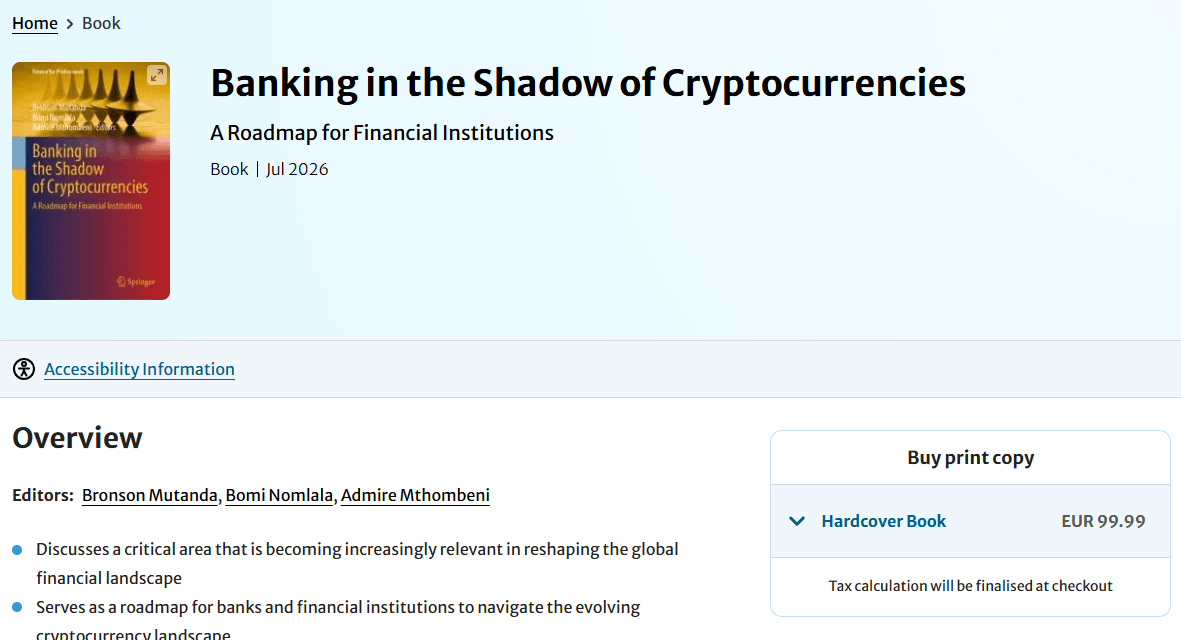
Free Access and Open Access Content
Not everything on SpringerLink sits behind a paywall. A meaningful chunk of content is freely available — you just need to know where to look.
Springer Nature has been expanding its Open Access catalog steadily. Thousands of journal articles published under Open Access licenses are fully downloadable as PDFs without any institutional login. On SpringerLink, look for the gold open padlock icon next to an article title. That’s your signal the full text is free. No account needed, no proxy server, no workarounds.
Books are trickier. Most Springer eBooks require institutional access. But there are exceptions. During the COVID-19 pandemic, Springer Nature temporarily opened over 500 textbooks to the public — that window is closed now, but it showed what’s technically possible. Some older titles in the Springer-Verlag archive have also moved into open access as their commercial value has declined.
A few specific content types tend to be free by default:
- Springer Protocols — selected methods chapters
- SpringerBriefs — shorter monographs, some published open access
- Book chapters where the author paid the APC (Article Processing Charge) to make only their chapter open
If you’re browsing SpringerLink without institutional access, sort or filter by “Open Access” in the left sidebar. That filters out everything paywalled and saves you the frustration of clicking through dead ends.
SpringerOpen and Opportunities to Access Content at No Cost
SpringerOpen is Springer Nature’s dedicated open access publishing arm. Every article it publishes is immediately free to read, download, and share. The model flips the traditional paywall — authors (or their funders) pay the APC upfront, and readers get permanent free access.
The APC on SpringerOpen journals typically ranges from around $1,190 to $2,890 USD, depending on the journal. That’s generally lower than equivalent fully open access journals at Elsevier or Wiley, though the gap has narrowed in recent years.
For readers, SpringerOpen is a goldmine. Go directly to springeropen.com rather than hunting through SpringerLink. The full catalog is open by default. You can download PDFs, access supplementary data, and read articles without any login.
There’s also BioMed Central — technically a separate brand now under Springer Nature — that operates on the same fully open model and covers a wide range of STM (Science, Technology, Medicine) fields.
One underused resource: Springer Nature’s SharedIt initiative. Authors can generate a shareable link to any Springer article that gives read-only access to the full text, even for paywalled content. If you find a paper you need and can’t access it, check whether the author has shared it via SharedIt — the link shows up on the article page itself or on the author’s profile.
For Early Career Researchers and researchers from lower-income countries, Springer Nature runs Waiver and Discount programs under the Research4Life initiative. These cover nations listed by the UN as low-income or lower-middle-income economies, giving free or deeply discounted access to SpringerLink’s full subscription database. If you’re affiliated with an institution in one of those countries, it’s worth checking directly with your library whether your institution is enrolled.
Alternatives for Paid Content — Interlibrary Loan, ResearchGate, and Author Copies
If a Springer paper is paywalled and you can’t access it through your institution, you have real options. None of them involve doing anything legally questionable.
- Interlibrary Loan (ILL) is the most reliable route. Almost every university library offers it. You submit a request for the specific article or book chapter, your library contacts a library that holds access, and you receive a PDF — usually within 24 to 72 hours for articles. It’s slower than instant download, but it works, and it’s completely above board. Many researchers underestimate how fast modern ILL systems have gotten.
- ResearchGate is genuinely useful here. A large proportion of Springer authors upload their accepted manuscripts or even final PDFs directly to their ResearchGate profiles. It’s not always the version of record, but the content is the same. You can also send a direct “Request full-text” message to the author through the platform. Most researchers respond. The response rate is high enough that it’s worth trying before giving up.
- Emailing the author directly is even simpler and more direct. Find the corresponding author’s email — it’s listed on almost every Springer article page — and send a short, polite request. Authors are almost always happy to send their own paper. They retain the right to share the Accepted Manuscript version under Springer’s standard author agreements.
- Author’s institutional repository is another option that gets overlooked. Many universities require researchers to deposit accepted manuscripts into their open institutional repository. A quick Google search for the paper title plus “preprint” or “repository” often turns up a freely accessible version hosted on the author’s university site or on a platform like Europe PMC.
What you shouldn’t do is assume that because SpringerLink shows a paywall, the paper simply isn’t accessible. Between ILL, ResearchGate, SharedIt links, and author emails, the actual barrier to getting almost any Springer paper is lower than it looks.
How to Publish a Research Paper in Springer
Getting published in a Springer journal isn’t mystical, but it does require some upfront homework. The submission process is fairly standardized across Springer Nature’s portfolio, but the details vary enough between journals that skipping the prep work almost guarantees delays or rejection.
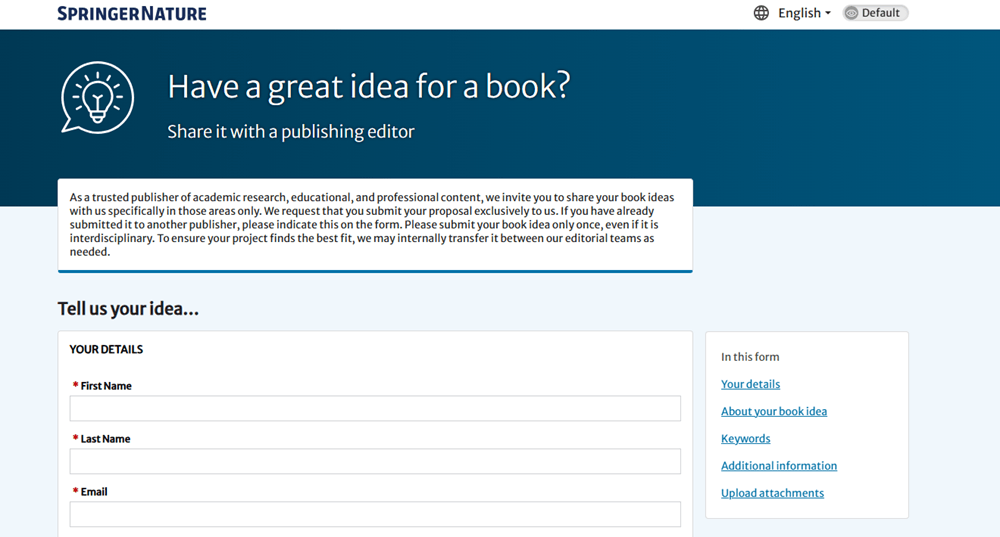
Choosing the Right Journal and Checking Impact Factor
Start by being honest about your paper’s scope. Springer Nature publishes over 3,000 journals across STM and HSS disciplines, so the options can feel overwhelming. Use the [Springer Journal Suggester](https://journalsuggester.springer.com/) — you paste your abstract, and it returns a ranked list of journals that match your topic. It’s not perfect, but it’s a solid starting point.
Once you have a shortlist, check the Impact Factor for each journal. Springer doesn’t publish these itself; you’d pull them from Clarivate’s Journal Citation Reports or Scopus. An IF of 3–5 is competitive for many applied sciences fields. Above 10 is elite territory. For early career researchers, submitting to an IF-heavy journal with low acceptance rates (some Springer flagship journals sit below 10%) can be a risk if your work is solid but incremental. Matching the journal’s scope matters more than chasing the highest IF.
Also check whether the journal is subscription-based or open access. Journals under SpringerOpen are fully open access. Hybrid journals — the majority of Springer’s catalog — accept both models. Knowing this upfront affects your cost planning, especially if Article Processing Charge (APC) funding is limited.
Author Guidelines and Manuscript Submission
Each journal has its own Author Guidelines page. Read them. Seriously — not the general Springer guidelines, but the specific journal’s page. Font size, reference format, figure resolution, word count limits — these vary. Submitting a paper with APA references to a journal that requires Vancouver style wastes everyone’s time, including yours.
Most Springer journals now use Editorial Manager as their manuscript submission system. You’ll create an account, select your article type (original research, review, letter, etc.), upload your files, and fill in metadata including keywords, suggested reviewers, and a cover letter. The cover letter matters more than many authors think. It should state clearly why the paper fits that specific journal — not a generic “we believe our findings are significant” boilerplate.
Keep your figures as separate high-resolution files. Minimum 300 DPI for most journals, higher for certain medical imaging work. Combine your manuscript into a single anonymized file if the journal uses double-blind peer review — and check whether it does, because not all Springer journals do.
If you’re applying for an APC waiver or discount — Springer has programs for researchers from developing countries and some institutional agreements — you need to flag this before or during submission, not after acceptance. Trying to negotiate the APC after you’ve received an acceptance email is awkward and often unsuccessful.
The Peer Review Process and Editorial Decision
After submission, your manuscript goes through a technical check first. If the formatting is wildly off or the paper is clearly outside the journal’s scope, you’ll get a desk rejection without peer review. This usually happens within a few days to two weeks.
If it passes the desk check, the editor assigns it to at least two peer reviewers — experts in your specific subfield. Springer journals mostly use single-blind or double-blind review. The timeline here is genuinely unpredictable. Eight weeks is common. Sixteen weeks is not unusual. Some reviews drag past six months, especially in fields with a small pool of qualified reviewers.
The editorial decision comes in four forms: accept, minor revision, major revision, or reject. A major revision decision isn’t a rejection — respond to every reviewer comment individually and methodically. Use a point-by-point response letter. Don’t dismiss any criticism without explaining why.
Rejection with an invitation to resubmit is different from outright rejection. Read the decision letter carefully before assuming the worst.
If you disagree with a decision — especially a rejection you think is based on a misreading of your methodology — Springer does have an appeals process. It’s rarely successful, but if a reviewer made a factual error that drove the decision, it’s worth using. The editor has final authority, but appeals do occasionally result in the paper going to a new reviewer.
One thing worth knowing: Springer’s editorial decisions aren’t centralized. The editors of individual journals are typically academic researchers themselves, not Springer employees. The editorial independence varies significantly between journals, which is part of why turnaround times and reviewer quality aren’t uniform across the portfolio.
Article Processing Charge (APC) and Springer’s Publication Costs
Publishing with Springer isn’t free — and understanding exactly what you’re paying for (and when you might not have to pay at all) can save you a lot of frustration down the line.
How Much Does APC Cost for Open Access
Springer Nature charges APC fees when you want your article published Open Access, meaning anyone on the internet can read it without a subscription. The cost varies significantly depending on the journal.
For most Springer Nature hybrid journals — traditional subscription journals that allow optional Open Access — the APC typically runs between $2,200 and $3,500 USD. Fully Open Access journals under SpringerOpen tend to be somewhat lower, often ranging from $1,000 to $2,500, though high-prestige titles push toward the top of that range and sometimes beyond it.
A few concrete examples help here. BMC Biology, a fully OA journal under the Springer Nature umbrella, charges around €2,190. Scientific Reports, one of the highest-volume OA journals in the world, sits at approximately $2,090 USD as of recent pricing. Nature-branded journals are a different story entirely — publishing OA in Nature itself costs €9,500, which caused genuine controversy when it was announced.
These numbers shift. Springer Nature updates APC pricing periodically, so always check the specific journal’s page on SpringerLink before budgeting. Don’t rely on figures you read in a three-year-old forum post.
Compared to the competition: Elsevier’s APC range is broadly similar, generally $150 to $9,900 depending on the journal, with most landing between $1,800 and $3,500. Wiley’s hybrid journal APCs typically fall in the $3,000–$3,800 range, making Springer’s fully OA offerings somewhat more affordable than Wiley on average — though the difference shrinks fast for high-impact titles.
Subscription-Based vs Open Access Model
Springer still runs a large part of its business on the traditional subscription model. Under that setup, institutions pay annual fees to access journal content, and readers at institutions without a subscription hit a paywall. Individual article purchases typically cost $39.95 per paper on SpringerLink — which adds up quickly for independent researchers.
The Open Access model flips the payment direction. Instead of readers paying to access, authors pay upfront (the APC) so the final published article carries a Creative Commons license and is freely available to everyone. This matters a lot for publicly funded research, where many funders now require OA publication as a condition of the grant.
Springer Nature also operates transformative agreements (sometimes called “read and publish” deals) with universities in several countries. Under these deals, researchers at a participating institution can publish OA in qualifying journals without paying an APC out of pocket — the institution covers it through a bundled agreement. If your university has one of these deals with Springer Nature, you may have access you don’t know about. Check with your library.
For researchers without institutional access, the options are: pay the per-article fee, request the paper through Interlibrary Loan, contact the author directly, or look for a preprint on ResearchGate or the author’s institutional repository. Many papers also have preprint versions on arXiv or bioRxiv that are freely accessible even when the final published version isn’t.
The subscription model isn’t going away overnight. A huge portion of Springer’s catalog — especially older content — remains behind a paywall. Open Access is growing, but it’s not the default.
Waivers and Discounts — Benefits for Early Career Researchers and Developing Countries
This is the part many researchers miss entirely, and it’s worth knowing about before you assume you can’t afford to publish Open Access.
Springer Nature has formal Waiver and Discount programs for authors in lower-income countries. Researchers based in countries classified under the World Bank’s low-income or lower-middle-income categories may qualify for a 100% APC waiver — meaning they pay nothing. Researchers in upper-middle-income countries often qualify for a 50% discount. The eligibility is based on the corresponding author’s country of affiliation, not the institution’s prestige.
The full list of qualifying countries is published on the Springer Nature website and follows the Research4Life framework, which also covers programs like HINARI and OARE. If your country is on the list, you apply for the waiver at the time of manuscript submission. It’s not automatic — you have to request it.
For Early Career Researchers, the picture is less consistent. Springer Nature doesn’t have a universal ECR waiver program the way some smaller publishers do. However, some individual journals within the Springer portfolio offer case-by-case discretionary waivers based on financial hardship. The Author Guidelines for each journal will say whether this applies. If you’re a PhD student or postdoc with no grant funding and you need OA publication, it’s worth emailing the editorial office directly and asking — the answer isn’t always no.
Institutional agreements also benefit early career researchers indirectly. If your university has a transformative agreement with Springer Nature, it usually covers all researchers at that institution, regardless of career stage. Your library is the first place to check.
Waiver requests need to be submitted before peer review completes in many cases. Don’t wait until acceptance to figure out funding. Sort it out early in the submission process.
Springer vs Elsevier vs Wiley — A Comparative Analysis
If you’re trying to decide where to publish, or just trying to understand which database to use for your research, you’ll run into these three names constantly. Springer, Elsevier, and Wiley dominate STM publishing. They’re not interchangeable, though. Each has a different culture, pricing structure, and reputation depending on your field.
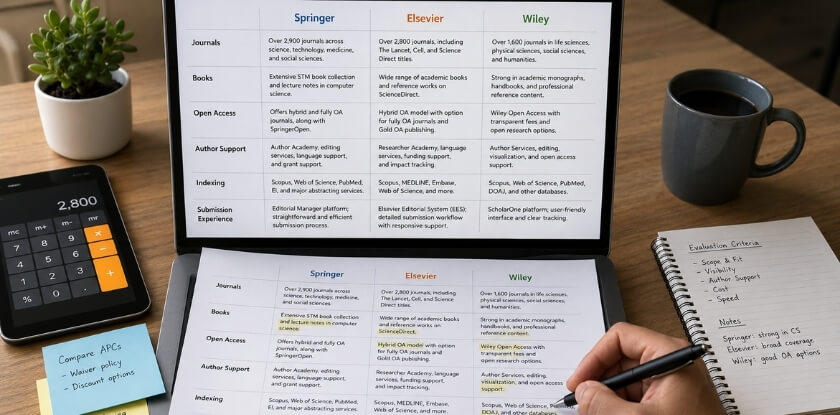
Here’s a grounded look at how they actually compare.
Scale and Coverage
Elsevier is the largest of the three by volume. It publishes over 2,500 journals and hosts them on the ScienceDirect platform. The coverage skews heavily toward medicine, life sciences, and engineering. If your field is clinical research or pharmacology, you’ll find Elsevier journals everywhere.
Wiley sits in the middle. It publishes around 1,700 journals and has strong roots in HSS — Humanities and Social Sciences — alongside solid STEM coverage. Wiley-Blackwell (its imprint after the 2007 merger with Blackwell Publishing) particularly dominates in ecology, psychology, and social sciences.
Springer, through Springer Nature and the SpringerLink platform, covers over 3,000 journals. The Springer-Verlag legacy gives it particular depth in mathematics, physics, computer science, and engineering. Springer Nature also controls Nature-branded journals, which are a category apart in terms of prestige.
APC Costs: What You’ll Actually Pay
This is where the differences get real and expensive.
| Publisher | Typical APC Range (Open Access) | Notes |
|---|---|---|
| Elsevier | $1,800 – $5,200 USD | Varies widely by journal; Cell Press titles are at the top end |
| Wiley | $1,500 – $4,500 USD | Hybrid journals can run higher |
| Springer Nature | $1,490 – $4,690 USD | Fully OA journals via SpringerOpen tend to be lower |
These are ballpark figures. The actual Article Processing Charge depends on the specific journal, not just the publisher. A Springer Nature flagship journal will cost you more than a niche SpringerOpen title.
One practical difference: Springer has historically been more transparent about APC pricing upfront. Elsevier’s pricing can feel scattered — you sometimes have to dig into individual journal pages on ScienceDirect to confirm what you’ll pay.
Wiley has a similar issue. Their hybrid open access pricing isn’t always front-and-center, which frustrates Early Career Researchers trying to budget before submission.
Waiver and Discount Programs
All three offer some form of support for researchers in lower-income countries, but the details matter.
Elsevier runs a program called Research4Life, which gives institutions in eligible developing countries free or low-cost access. It’s legitimate and widely used. But APC waivers for authors from those same countries are less automatic — you often have to apply and wait.
Wiley participates in similar initiatives and has its own waiver program for authors in low-income countries. Coverage varies by journal.
Springer Nature has one of the more straightforward waiver systems for developing countries. Authors from countries on their eligible list can apply for full or partial APC waivers, and the process is documented clearly in the Author Guidelines. SpringerOpen journals — the fully open access imprint — also tend to have lower base APCs to begin with, which makes waivers go further.
None of these programs are automatic. You have to apply. Apply early, before you finalize submission.
Institutional Access and the Subscription Model
Most researchers access content through Institutional Access — their university library pays a subscription fee and you get in through your campus credentials. All three publishers use this subscription-based publishing model, and all three have been criticized for the cost of those subscriptions.
The “Big Deal” problem — where publishers bundle hundreds of journals into a single expensive package — affects all three equally. Several major universities have publicly canceled their Elsevier contracts over pricing, including the University of California system in 2019 (before negotiating a new deal). Similar standoffs have happened with Springer Nature in Germany and with Wiley in various European countries.
For researchers without institutional access, the options are the same across all three: Interlibrary Loan, author-shared preprints on ResearchGate or institutional repositories, or emailing the corresponding author directly. That last option works more often than people expect.
Peer Review and Manuscript Submission Experience
The peer review process is broadly similar — all three use double-blind or single-blind review depending on the journal, and turnaround times vary enormously by field and journal, not by publisher.
That said, the manuscript submission systems differ in usability.
Elsevier uses Editorial Manager and Evise (now largely consolidated back into Editorial Manager). It works, but it’s not elegant. Formatting requirements can be nitpicky before you even know if the paper will go to review.
Wiley uses ScholarOne for most of its journals. It’s functional. Not great, not terrible.
Springer uses its own system — Editorial Manager on the backend for many journals, with a front-end branded per journal. The experience is reasonably consistent. One thing Springer does well: clear formatting guidelines upfront. Author Guidelines are usually specific about reference styles, figure formats, and word limits before you invest time reformatting.
Impact Factor and Journal Prestige
Impact Factor isn’t everything, but it’s what hiring committees and grant panels look at. All three publishers have high-IF journals and low-IF journals. Publisher name alone doesn’t signal prestige.
Nature (Springer Nature) has an Impact Factor that most journals can’t touch. But most Springer journals are not Nature. Similarly, Elsevier’s The Lancet and Cell are elite; the average Elsevier journal is not.
The honest picture: journal selection matters far more than publisher. A well-matched, well-regarded journal from Springer will serve your career better than an inappropriate submission to a high-prestige Elsevier title that desk-rejects you in 48 hours.
Which One Should You Choose?
For mathematics, theoretical computer science, and physics — Springer is genuinely the better fit by tradition and catalog depth.
For clinical medicine, life sciences, and anything that intersects with hospital practice — Elsevier has the density.
For ecology, psychology, social sciences, and interdisciplinary HSS work — Wiley is worth looking at seriously.
Budget-wise, if you need Open Access and have limited funding, start with SpringerOpen or Wiley’s lower-tier OA journals, and apply for a waiver the moment you start preparing your manuscript. Don’t wait until acceptance to figure out how you’ll pay.
Springer Resources for Early Career Researchers
If you’re a PhD student, postdoc, or someone just starting to publish research, Springer has more to offer than just a place to submit manuscripts. Knowing where to look makes a real difference.
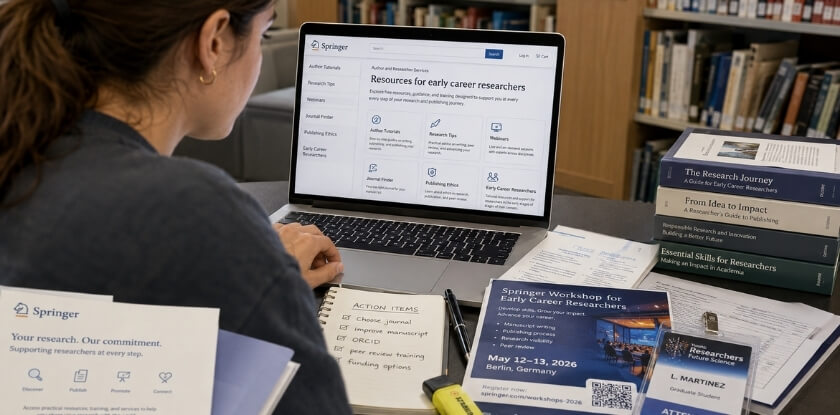
The Springer Nature Author Academy
Springer Nature runs a free online training platform called the Springer Nature Author Academy. It covers the entire publication process — writing a manuscript, responding to peer review, understanding copyright, and choosing the right journal. The modules are short, practical, and genuinely useful if you’ve never published before.
It’s not a marketing brochure. It’s actual instructional content. Worth bookmarking early in your PhD.
Finding the Right Journal
One common mistake early researchers make is picking a journal based on name recognition alone. Springer publishes over 3,000 journals, spanning STM and HSS disciplines, so there’s no shortage of options — but not all of them are right for your work.
Use the Springer Journal Suggester tool. You paste in your abstract, and it suggests journals based on scope and fit. It’s not perfect, but it narrows things down fast. After that, check the Impact Factor, look at recent issues to confirm the scope matches yours, and read the Author Guidelines carefully before you touch the submission system.
Manuscript Submission — What to Expect
Most Springer journals use an online submission portal, usually Editorial Manager or a journal-specific system. You’ll create an account, upload your manuscript files (typically a cover letter, main manuscript, and figures separately), and assign suggested reviewers if the journal asks for them.
Peer review timelines vary a lot. Some journals respond within 4–6 weeks. Others take four months. Check community forums like ResearchGate or ask in your field’s networks to get a realistic picture for a specific journal before you submit.
Open Access and APC Waivers
If you’re based at an institution in a low- or middle-income country, Springer Nature has waiver and discount programs specifically for you. The Research4Life initiative gives researchers in qualifying developing countries free or heavily discounted access to SpringerLink content.
On the publishing side, SpringerOpen journals and fully open access journals in the Springer Nature portfolio often have APC waiver schemes for authors from eligible countries. You apply at submission. Approval isn’t guaranteed, but rejection rates for qualifying applicants are low.
If your institution has a Transformative Agreement with Springer Nature, your APC may already be covered — your library will know. Ask before you assume you need to pay out of pocket.
SpringerOpen for Open Access Publishing
SpringerOpen is Springer’s dedicated open access imprint. Every article published there is immediately available to anyone, with no paywall. For early career researchers who want maximum visibility for their work — and whose funders may require open access — it’s a practical route.
The trade-off is the APC, which typically ranges from around €1,000 to €2,500 depending on the journal. Budget for this if you’re self-funding, or check your institution’s open access fund first.
Institutional Access and What to Do Without It
If your institution subscribes to SpringerLink, you can access most content directly through your library login. If it doesn’t, your options are straightforward: use Interlibrary Loan through your library, check ResearchGate (many authors upload their accepted manuscripts there legally), or look for the paper’s pre-print on arXiv or the author’s institutional repository.
Cold-emailing an author for a copy still works. Most researchers will send their paper within a day or two.
Practical Habits Worth Building Early
Read the rejection letters carefully. Springer journals include reviewer comments even on desk rejections sometimes, and that feedback is free professional advice on your writing.
Set up journal alerts on SpringerLink for keywords in your field. You’ll catch relevant new papers before they circulate on social media. And if a paper you need is paywalled, always check whether it has a freely available version before assuming you need your library’s help.
The infrastructure Springer provides for early researchers is genuinely solid. The researchers who get the most out of it are simply the ones who know it exists.
Frequently Asked Questions (FAQ)
Is Springer and Springer Nature the same thing?
Not exactly. Springer Nature is the parent company, formed in 2015 when Springer Science+Business Media merged with Holtzbrinton Publishing’s Nature Publishing Group. Springer — often still called Springer-Verlag in older references — is now one of the major imprints operating under that umbrella. When researchers talk about “publishing in Springer,” they usually mean journals or books under the Springer imprint specifically, though the infrastructure (including SpringerLink) covers the broader Springer Nature portfolio.
Can I access Springer papers for free?
Some, yes. Open Access articles on SpringerLink are free to anyone. SpringerOpen hosts fully open journals with no paywall at all. But the majority of Springer’s content sits behind a subscription. If your institution has an Institutional Access agreement, you get through automatically. No institutional access? Try Interlibrary Loan, check ResearchGate (authors often self-archive there legally), or email the corresponding author directly — most are happy to share.
What is the APC for Springer journals?
It varies quite a bit. Springer’s Article Processing Charge for making a paper Open Access typically runs between $1,000 and $3,000 USD depending on the journal. High-impact journals in STM fields tend to sit at the upper end. HSS journals are often cheaper. Always check the specific journal’s page on SpringerLink — the APC is listed there before you submit anything.
Does Springer offer APC waivers?
Yes. Springer Nature runs Waiver and Discount programs for researchers from low- and middle-income countries. If you’re based in a qualifying country, you may get a full waiver or a significant discount — sometimes 100% off. Early Career Researchers at eligible institutions may also qualify for partial support. Check the journal’s Author Guidelines before assuming you’ll pay full price.
How long does Springer’s peer review take?
Realistically, anywhere from six weeks to six months. It depends on the journal, the field, and how quickly reviewers respond. Some Springer journals publish average review times in their journal information pages. If you’re submitting time-sensitive work, look for that data before choosing your target journal.
Is publishing in Springer prestigious?
Depends on the specific journal. Springer publishes thousands of journals across STM and HSS — quality varies. Impact Factor matters here. A paper in Nature Medicine (Springer Nature) carries enormous weight. A paper in a lower-tier Springer journal in a niche subfield? Less so. Check the Impact Factor, the editorial board, and whether it’s indexed in major databases. The Springer name alone isn’t enough.
How does Springer compare to Elsevier and Wiley for researchers?
All three are major subscription-based publishing model players. Elsevier’s ScienceDirect database is broader in sheer volume. Wiley tends to be strong in life sciences and social sciences. Springer has particular depth in mathematics, physics, computer science, and engineering. For APC costs, all three are in a similar range — Elsevier and Wiley can actually be higher for premium journals. None of the three is dramatically cheaper across the board.
Can I submit the same manuscript to Springer and another journal simultaneously?
No. Springer, like virtually every serious publisher, requires that your Manuscript Submission be exclusive. Submitting the same paper to multiple journals at once is considered a serious ethical violation. If your paper is rejected, then you submit elsewhere.
What is SpringerOpen?
SpringerOpen is Springer Nature’s fully Open Access publishing platform. Every article published there is free to read immediately upon publication. Authors pay an APC; readers pay nothing. It’s separate from the main Springer imprint, which operates a hybrid model where most content is subscription-based but individual articles can be made Open Access for a fee.
I’m an early career researcher with no funding. What are my options?
A few realistic ones. First, check if your institution has a read-and-publish agreement with Springer Nature — many universities have these now, and they sometimes cover APCs for affiliated researchers. Second, apply for a waiver through Springer’s program if you’re in a qualifying country. Third, consider publishing in a subscription-based journal with no APC, where peer review and publication cost you nothing upfront. Not every good paper needs to be Open Access from day one.
Conclusion — Is Springer the Right Platform for Your Research?
Honestly? It depends on what you’re trying to do.
If you’re a researcher looking for peer-reviewed content in STM fields, SpringerLink is one of the most comprehensive databases you’ll find. The depth of coverage — from journals to book chapters to conference proceedings — is hard to match. But institutional access matters here. Without it, you’re either paying per article, relying on Interlibrary Loan, or hunting for preprints on ResearchGate.
For authors choosing where to publish, the calculus is a bit more complicated.
Springer Nature’s Impact Factor range varies wildly across its portfolio. Some journals sit at the top of their fields. Others are mid-tier. Before you submit anything, check the specific journal’s metrics, scope, and peer review track record — don’t just assume the Springer brand means prestige across the board.
APC costs are real. For fully Open Access journals through SpringerOpen or Springer Nature’s OA options, you’re often looking at €1,500 to €2,800 depending on the journal. That’s comparable to Wiley and slightly lower than some Elsevier titles, but still a significant number for Early Career Researchers or teams without grant funding. If that’s your situation, check the waiver and discount programs first — Springer does offer them for researchers in developing countries, and it’s not as hard to apply as people assume.
The subscription-based publishing model still dominates much of Springer’s catalog. That’s a practical reality. If your institution has a solid agreement with Springer Nature, you’re in good shape. If not, access gaps will slow your work down.
Compared to Elsevier and Wiley, Springer isn’t dramatically different in structure. All three are large commercial STM publishers with similar strengths and similar criticisms. The honest answer is that your field, your institution’s existing subscriptions, and your target journal’s specific reputation matter far more than the publisher’s name on the masthead.
Springer-Verlag’s legacy — going back to Julius Springer founding the house in 1842 — gives the publisher genuine depth in certain disciplines, particularly mathematics, physics, and biomedical sciences. In HSS fields, the coverage thins out, and you may find other platforms serve you better.
So run through these before you decide:
- Publishing? Check the specific journal’s scope, Impact Factor, peer review timeline, and APC. Use the Author Guidelines early — not after you’ve written the paper.
- Accessing content? Confirm your institutional access first. If you don’t have it, ResearchGate and preprint servers should be your second stop before paying out of pocket.
- Comparing publishers? Don’t pick Springer over Elsevier or Wiley in the abstract. Pick the right journal first. The publisher follows from that decision.
Springer is a solid, well-established platform. It’s not perfect, and it’s not always the best fit. But if the journal is right and the access is there, it does what a major academic publisher should do — connects research to readers, and authors to a credible publication record.
That’s really all you should be asking it to do.
