Applied for a Canada visitor visa weeks ago and still no decision? You are not alone. Many applicants refresh their IRCC account every day and wonder whether something went wrong with their Temporary Resident Visa (TRV). Most of the time nothing has gone wrong. The file is waiting on a step, a queue or a request you may not have noticed yet.
Quick answer: A Canada visitor visa takes long when your file needs more than the standard estimate allows. The usual causes are heavy application volume, biometrics not yet given, an Additional Document Request (ADR), a medical exam or police certificate, security checks, and extra review of weak documents. Check the processing-times tool for your country, confirm biometrics are done, and use the IRCC web form only after your time has passed.
Fact-checked by the MS International Editorial Team. Last verified against official sources: October 2026.
This article covers what slows a TRV down, what the official processing time does and does not tell you, and the steps that help: a complete application, quick biometrics, one well-written web form inquiry, and knowing when to ask a licensed professional. This one focuses on delays, while how long a Canada conference visa takes without them depends on document gathering, biometrics, IRCC’s review and the passport stage.
Why Is Canada Visitor Visa Taking So Long? (7 Real Reasons)
Short answer: delays rarely come from one cause. Volume, missing steps and extra checks usually stack on top of each other, which is why one applicant hears back in days and another waits months.
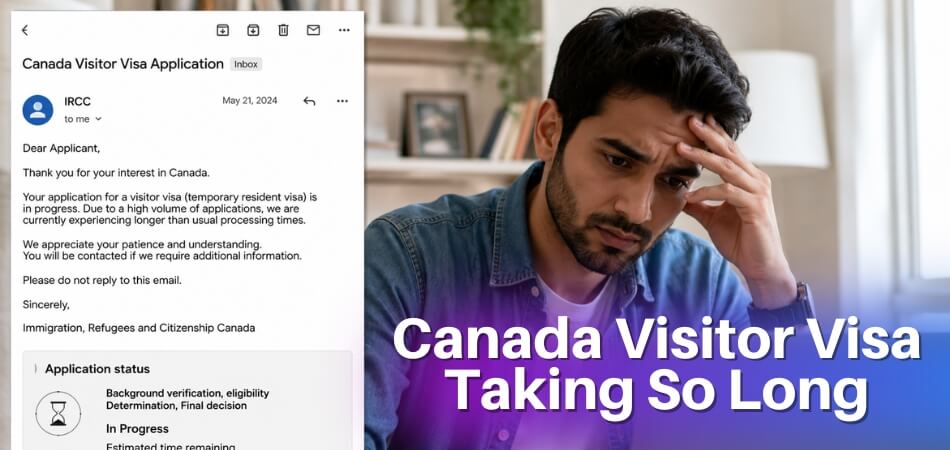
High Application Volume and IRCC Backlog
IRCC handles a very large number of temporary resident applications every year, and demand from high-volume countries such as India, Pakistan and the Philippines keeps queues long. IRCC says processing times depend on the visa office handling your file, so the same application can move at different speeds in different places. When applications arrive faster than officers can review them, even a straightforward file waits. Visa application centres (VACs) in busy cities add their own queues for document collection and biometrics.
Biometrics Not Done or Not Booked
Most applicants must give fingerprints and a photo. IRCC advises booking your appointment as soon as you can to avoid processing delays, so a file with biometrics still outstanding can sit. The biometrics instruction letter (BIL) arrives after you pay, and you have 30 days from the time you get it to give them. Where appointments are scarce, book the first slot you can. If you cannot make it before the letter expires, use the IRCC web form to explain why you need more time, and include your appointment date and a screenshot of the booking confirmation. Biometrics are valid for 10 years, so if you gave them for an earlier Canadian application, IRCC will tell you whether you need to give them again.
Incomplete or Inconsistent Documents
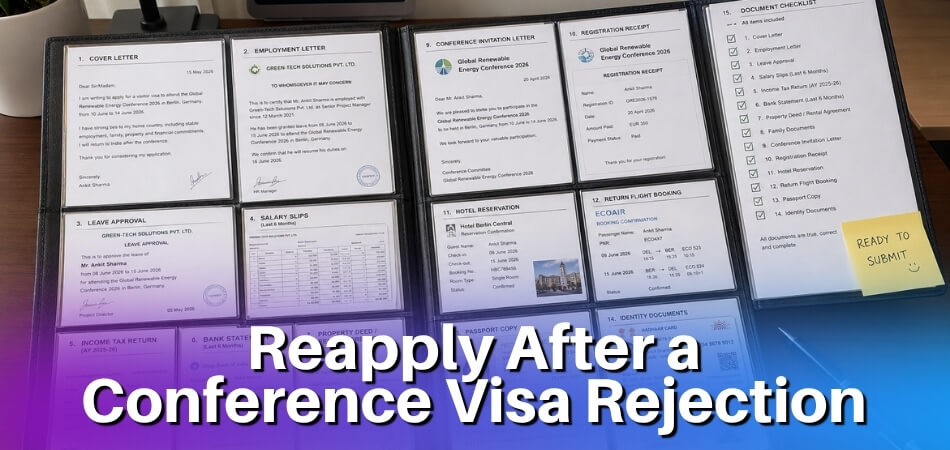
This is the most preventable cause. Missing documents, a bank statement that does not match what you declared, a travel history that conflicts with your passport, or a vague purpose-of-visit letter all make an officer slow down, ask for more, or refuse. Large unexplained deposits just before applying are a common credibility problem.
Additional Document Request (ADR)
An ADR means an officer opened your file and needs more information, such as newer bank statements, a clearer itinerary or proof of ties to your home country. IRCC says you must send the documents by the deadline in the request. An ADR is not a refusal, but your file waits for you and then goes back into the officer queue. Files with gaps, previous refusals or inconsistent details are more likely to draw one.
Medical Exam and Police Certificate
Most visitors do not need a medical exam. One may be required if you plan to stay more than six months and have lived in certain countries, or will work in certain jobs. A police certificate is requested only when IRCC asks for it, and how long it takes depends on the issuing country. IRCC names these extra steps as a reason processing can take longer than the estimate. If you are asked for either, start the same day.
Busy Seasons
Applications rise before summer travel and the year-end holidays. A perfectly complete file sent in a peak month can wait longer than the same file sent in a quiet one. If you have a fixed date, such as a wedding or a conference, apply well before the peak.
Security and Background Checks
IRCC names security checks among the reasons an application can take longer than the estimate, and complex files take longer too. You cannot see or speed up this step. What you can control is the file itself: keep every document consistent, declare any previous refusal, and answer any request from IRCC quickly.
Official Canada Visitor Visa Processing Times in 2025–2026
Short answer: the IRCC estimate is not a deadline. IRCC says published times are estimates, not guarantees, and your application may take longer than shown. IRCC says it works them out from how long it took to process 80% of that type of application in the past, and that they are “not a maximum or a guarantee”. Use the tool as a guide when you plan, and check it for your country before you fix travel dates.
How to Read the IRCC Processing-Times Tool
Choose the visitor visa (TRV) from outside Canada and select the country where you applied. IRCC says your processing time starts on the day it receives your complete application and ends when a decision is made. Extra steps such as an ADR, a medical exam or a police certificate can make your wait longer than the estimate. The table below shows what each situation usually means and what to do.
| Your situation | What it usually means | What to do |
|---|---|---|
| Inside the posted time, status “in progress” | File is in the normal queue | Wait. A web form now will not speed things up |
| No biometrics given yet | An unfinished step can hold the file | Book the VAC appointment and give biometrics within 30 days of getting the letter |
| ADR, medical or police certificate request | An officer is actively reviewing the file | Respond completely, before the deadline in the request |
| Past the posted time, no request | Slower file or heavier workload at your office | Send one web form inquiry (see below) |
| Months past the time, no answer to the web form | Possible extra review or a stuck file | Speak to a licensed consultant or lawyer |
Does Your Country Change the Wait?
Yes. IRCC shows processing times by country of application, so the same visa can have different estimates for applicants in Delhi, Manila, London or Lagos. These estimates change month by month, so the tool is a better guide than any number in an article. Citizens of the United States are visa-exempt for short visits and do not use this process, and citizens of the United Kingdom need only an eTA to fly in.
Also check for temporary measures. IRCC’s Ebola measures run until 27 November 2026. If the last country of residence on your application is the Democratic Republic of the Congo, South Sudan or Uganda, IRCC says it keeps processing the application but will not finalize it while the measures last, and you should not send your passport to a VAC until they end. The measures follow your last country of residence, not your citizenship, and IRCC can extend them. If you live in Uganda, the Canada conference visa processing time in Uganda now depends on when these measures end.
Single-Entry vs. Multiple-Entry Visa: Is the Wait Different?
No. IRCC publishes one estimate per country for a visitor visa, not separate times for single and multiple entry, so asking for a multiple-entry visa is not shown as adding wait by itself. Officers look at your ties, travel history and funds either way. A visa can be valid for up to 10 years or until your passport or biometrics expire, whichever comes first, so a thin file can draw more questions, and that can lead to an ADR.
Is Canada Rejecting More Visitor Visas in 2025–2026?
Short answer: yes, refusals are high compared with 2023. IRCC reports a global refusal rate for temporary resident visas (the visitor visa) of 39% in 2023, 54% in 2024 and 51% in 2025. A long wait is not a sign of refusal, but a weak file is.

Why the Refusal Rate Is High
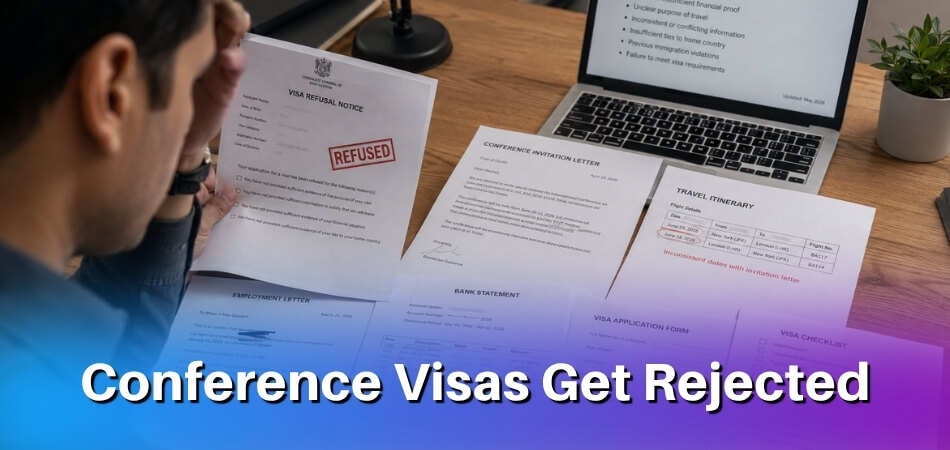
Every officer has to be satisfied that you are a genuine temporary visitor who will leave Canada at the end of your stay. IRCC says the vast majority of visitor visa refusals are because the officer was not satisfied of this. Missing proof of funds, a vague purpose of travel or weak ties to your home country (job, family, property) tip the decision.
Does Slow Processing Mean a Refusal Is Coming?
No. A long wait says nothing about the outcome. IRCC says processing time depends on the visa office and on any extra steps, and a medical exam or police certificate request adds time without changing your odds. What raises refusal risk is an incomplete or unconvincing application, and time will not fix that. Answering an ADR promptly is your chance to address concerns before the decision.
If You Are Refused
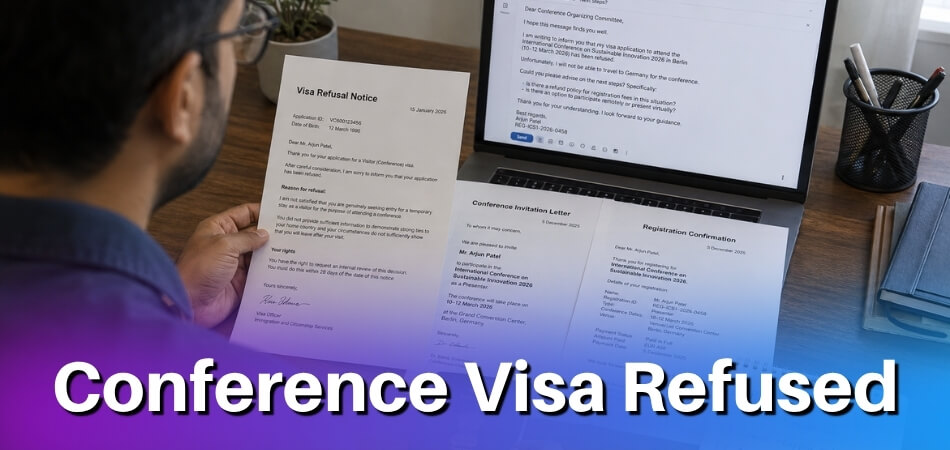
Do not resubmit the same package. Since 29 July 2025, IRCC sends an officer decision note with the refusal letter for most temporary resident applications, including visitor visas, and the note explains why the application was refused. Read both. IRCC says applying again with the same information is unlikely to change the result, even with a representative, and that a new application makes sense when your situation has changed, for example a new purpose of visit or changed work or finances. You must declare a previous refusal on any new application. Hiding it is treated as misrepresentation, which can lead to a five-year ban from entering Canada, far more serious than the original refusal.
How to Speed Up Canada Visitor Visa Processing
Short answer: you cannot force IRCC to move faster, but you can remove every reason to slow down. Most avoidable delays come from incomplete applications and late biometrics.

Submit a Complete and Strong Application from Day One
- Fill every field. Leaving sections blank because they seem not to apply is a common mistake. Explain gaps in employment, previous refusals and unusual travel history.
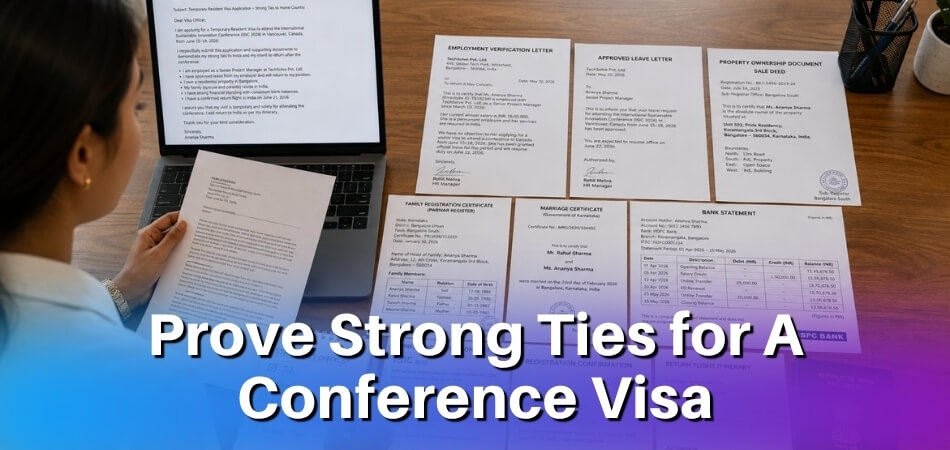
- Make the money story consistent. Bank statements, an employment letter and proof of ties should all point the same way: you can afford the trip and you have reasons to return.
- Add a short cover letter if your file is not simple. It is optional, but a clear factual letter on purpose, ties and itinerary helps an officer who has little time.
- Check your country’s requirements first. Confirm on IRCC’s checklist whether you need a medical exam or police certificate, and do them before you submit if they apply.
Give Biometrics as Soon as the Letter Arrives
Book your VAC appointment the day the instruction letter arrives, and read the deadline on the letter. Where VACs are far away, allow for travel time. The fee is CAD 85 per person, or up to CAD 170 for a family, and children 13 and under and adults 80 and over are exempt.
Can a Consultant or Lawyer Speed Things Up?
Not directly. IRCC says a consultant or agent does not improve your chances of approval, and no one can make the file move faster. What a good professional does is reduce errors, ADRs and refusals. For a simple application from a low-risk country, you probably do not need one. Help is worth paying for after a refusal, with a complicated history, or when a high-refusal country makes the documentation bar higher.
Check that the person is authorized. Immigration consultants must be registered with the College of Immigration and Citizenship Consultants (CICC), and lawyers with a provincial law society. Anyone who promises guaranteed approval or a special contact at IRCC is a red flag.
From our experience at MS International: Our invitation letter is issued within 3 to 5 business days after payment clears, and it supports your application but does not guarantee a visa. The decision stays with IRCC, and our refund policy does not refund registration fees if a visa is delayed or refused. Our conferences are held in person in the Greater Toronto Area, so give the visa enough time before you commit to travel, check the processing-times tool for your country, and read the refund policy before you pay.
When and How to Follow Up on a Delayed Canada Visitor Visa
Short answer: wait until your time has passed, then send one web form inquiry. IRCC says you may use the web form if your processing time has passed, and that sending another one will not speed things up.
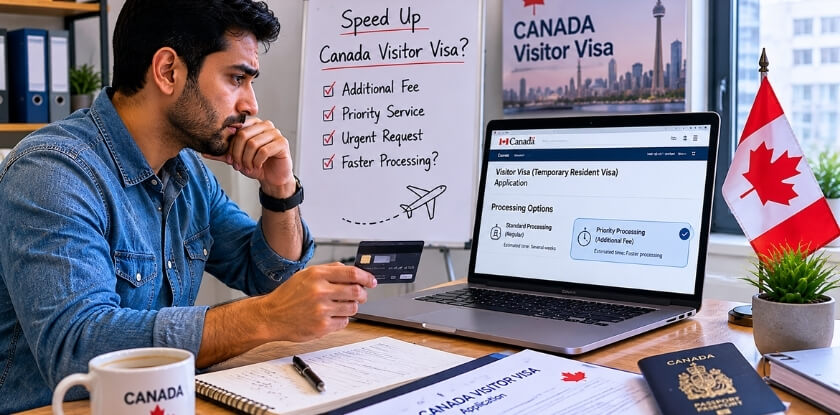
Step 1: Check the Tool and Your Account
Compare your wait with the processing-times tool for your country, and check your IRCC account for requests. If you are inside the posted time, an inquiry gets a generic reply at best. Also make sure biometrics are complete, because an unfinished step can hold the file.
Step 2: Use the IRCC Web Form Once
On the form, choose the option to ask about your application when it is over the normal processing time. When asked what application you submitted, select “Temporary Resident Visa”. Do not select eTA, visitor record or temporary resident permit. Give your application number, UCI, the date you applied, the date you gave biometrics and the office you applied through. Ask for a status update and whether any documents are outstanding. Keep it to a short paragraph.
After you submit, IRCC sends an acknowledgement of receipt. If you hear nothing more, IRCC says this usually means the application is still being processed. Do not send repeat messages or call, as IRCC says neither will make your application move faster.
If You Receive an ADR
Respond quickly and completely, because the file moves only after you do. If it asks for a medical exam, use a designated panel physician, as exams from other doctors are not accepted. If it asks for a police certificate, start the same day, since some countries take weeks to issue them.
Urgent Travel Situations
IRCC’s web form page says it cannot speed up an application unless you are already eligible for urgent processing, and it does not publish a fast-track process for visitor visas. For a genuine emergency, such as serious illness or the death of a close relative, you can explain it in the web form and attach proof such as a hospital letter or death certificate, but results vary and a plain wish to travel sooner does not qualify. Do not rely on this when a flight is booked. If an urgent request is refused, your application usually stays active under standard review, which is what happens if an expedite request is denied.
When to Bring in a Professional
If you are well past the posted time, have no ADR and the web form brought no useful answer, speak to a licensed consultant or lawyer. They can check whether the file is flagged and advise on a mandamus application, which asks the Federal Court to order IRCC to decide. It is a legal proceeding with costs, the court itself has backlogs, and it is not guaranteed to work. Ask for the fee in writing before agreeing.
What About the Visa Application Centre?
Once your biometrics are collected, the VAC’s part is largely finished. It cannot see IRCC’s internal review, so contacting it for a decision update usually tells you nothing.
Frequently Asked Questions (FAQ)
Delays past the estimate leave applicants weighing late Additional Document Requests, emergency decisions, whether a multiple-entry visa or a police certificate slows things down and if the Ebola measures play a part.
How long is a Canada visitor visa taking right now?
It depends on the country where you apply. IRCC’s processing-times tool shows a separate estimate for each country and updates it often. IRCC says the estimate is not a maximum or a guarantee, so your file may take longer.
Why does IRCC send an Additional Document Request so late?
Because an officer may open your file only after weeks in the queue. An ADR can arrive at any point, and your file waits until you respond. Answer completely and before the deadline in the request.
Does applying online make a visitor visa faster than paper?
Online is the standard route and the one to use. IRCC accepts paper applications only if you cannot apply online, for example because of a disability. Paper adds mailing and data entry time, so use the portal when you can.
Will giving biometrics sooner speed up my application?
It can. IRCC advises booking your biometrics appointment as soon as you can to avoid processing delays, and you have 30 days from getting the letter. Book your VAC appointment the day the letter arrives.
My application is past the estimate. What should I do?
Send one IRCC web form inquiry, using the option for applications over the normal processing time. Choose “Temporary Resident Visa”, and include your application number, UCI, application date and biometrics date. IRCC says repeat forms will not speed anything up.
Can I travel to Canada while my visa is being processed?
No. If a visa is required, you cannot travel until it is placed in your passport. Citizens of visa-exempt countries need an eTA instead if they fly, and that is a separate application.
Can I get a faster decision in an emergency?
Possibly, but it is not guaranteed. IRCC does not publish a fast-track process for visitor visas. Explain a genuine emergency in the web form with proof, such as a hospital letter or death certificate. A plain wish to travel sooner is not an emergency.
Does a multiple-entry visa take longer than single-entry?
No. The tool lists no separate time by entry type. The difference is what you can do once approved: enter once, or several times while the visa is valid.
Do I need a medical exam for a Canada visitor visa?
Usually not. IRCC tells you if you need one, and only a designated panel physician can do it. Longer stays and recent residence in certain countries are the typical triggers.
Should I hire an immigration consultant or lawyer?
Not for a simple file. Consider one after a refusal or for a complicated history. Hire only a CICC-registered consultant or a lawyer in good standing with a provincial law society.
Do the Ebola measures delay Canada visitor visa decisions?
Yes, for some applicants. People whose last country of residence is the DRC, South Sudan or Uganda get no final decision while IRCC’s Ebola measures last, currently to 27 November 2026.
Does a police certificate affect processing time?
Yes, if IRCC requests one. The wait depends on how fast the issuing country produces it, and your file waits meanwhile. Start the request on the day you are asked.
Final Thoughts
Most Canada visitor visa delays follow predictable patterns: biometrics not done, an open request from IRCC, a thin file or a busy office. Look up your country in the tool, finish biometrics early, and wait for the posted time to pass before you write to IRCC. With a complicated file, talk to a licensed professional before you apply.
A delayed visa is not a refused visa. Keep checking your IRCC account and email for requests, and do not assume the file is lost because it is quiet.
Disclaimer: This article is general information, not legal or immigration advice. Fees, processing times and rules change, so confirm them with IRCC at canada.ca before you apply or travel.