
Giving a small gathering the wrong name can bring the wrong crowd, or leave the right people unsure what to expect. The word on the poster is a promise about what will happen in the room.
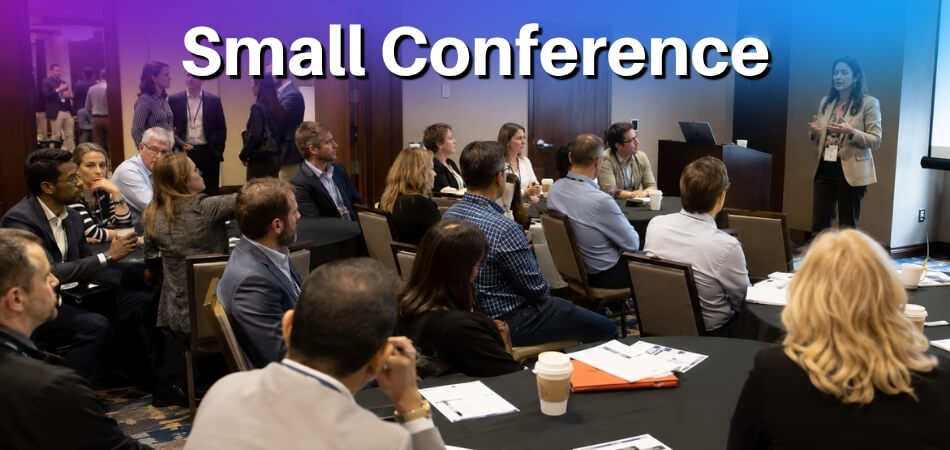
Quick answer: A small conference is usually called a seminar, workshop, symposium, roundtable, forum, colloquium, or meetup, depending on what attendees do: listen, practise, present research, discuss, or network. There is no official size cutoff, so the best name describes the format and purpose, not the headcount.
Common Names for a Small Conference
A small conference does not have one single name. Pick the term that matches how the event is structured, starting with the five below.
Seminar
A seminar is a small educational or professional session focused on one topic. It is usually led by a speaker, instructor, or subject expert who explains ideas, shares knowledge, and answers questions.
A small conference is best called a seminar when:
- The event is speaker-led.
- The goal is learning or professional development.
- The audience wants a clear explanation of one subject.
- The format includes questions but not heavy hands-on activity.
For example, a session explaining business trends, academic findings, or workplace policies may be called a seminar.
Workshop
A workshop is a small event built around active participation. Instead of only listening, attendees practise a skill, complete exercises, join activities, or work through a task.
A small conference is best called a workshop when:
- Participants learn by doing.
- The event includes exercises or demonstrations.
- The goal is skill-building or practical training.
- Attendees are expected to create, practise, or solve something.
For example, an event where attendees write research abstracts, practise public speaking, or build a marketing plan is better described as a workshop.
Symposium
A symposium is a formal meeting where experts discuss a specific academic, scientific, professional, or policy-related topic. Merriam-Webster gives the same plain meaning. It often includes several speakers who present related ideas before a discussion.
A small conference is best called a symposium when:
- The subject is specialized.
- Multiple experts or researchers are involved.
- The tone is formal and knowledge-based.
- The audience expects deeper insight into one theme.
For example, a university event on healthcare innovation or climate research may be called a symposium.
Roundtable
A roundtable is a small discussion-based event where participants share ideas more equally. It usually has a moderator, but no single speaker controls the entire session.
A small conference is best called a roundtable when:
- The main activity is discussion.
- Participants exchange views or solve problems.
- The group is small enough for everyone to contribute.
- The purpose is collaboration, planning, or decision-making.
For example, business leaders discussing hiring challenges may attend a roundtable discussion.
Meetup
A meetup is an informal gathering of people with a shared interest, profession, or goal. It is usually more casual than a seminar or symposium and often focuses on networking.
A small conference is best called a meetup when:
- The atmosphere is relaxed.
- People attend because of a shared interest.
- Networking is a major purpose.
- The schedule is simple and flexible.
For example, software developers, startup founders, or creative professionals may organize a meetup to exchange ideas and connect with peers.
Other Small Conference Names
Some events use more specific names:
- Micro-conference: A small-scale conference where researchers present and discuss their work. Wikipedia places it between a seminar and a full academic conference, and says the talks are short and usually chosen from reviewed abstracts.
- Forum: An open discussion on a public, professional, or community issue.
- Colloquium: An academic discussion session, often used in universities or research settings, and smaller and more focused than a full conference. Dictionaries describe it as a meeting where specialists give talks on a topic and then take questions.
- Briefing: A short session designed to share updates or important information.
- Working session: A collaborative meeting where participants produce a plan, decision, or output.
- Summit: A meeting of senior leaders or decision-makers on a major issue. The word usually signals status, not a small group.
- Retreat: A planning or team event held away from the usual workplace, often with a mix of discussion and working sessions.
Each term signals a different experience, which is why one small event can reasonably have several names.
Small Conference Terms Compared
The easiest way to choose the correct term is to compare the event’s purpose, format, attendee role, and the kind of group it suits. The group column is a general tendency, not a rule, because no body sets size limits for these words. Wikipedia’s article on academic conferences says the same about the whole family of terms: there are no commonly shared definitions, even within one discipline.
| Term | Format | Main Purpose | Group Tends to Be | Best Use |
| Seminar | Speaker-led | Explain a focused topic | Small to mid-sized audience | Education, training, professional updates |
| Workshop | Hands-on | Build or practise a skill | Small enough for the leader to help each person | Training, exercises, applied learning |
| Symposium | Formal expert presentations | Share specialized knowledge | Varies; the speakers matter more than the headcount | Academic, research, scientific, or professional topics |
| Roundtable | Guided group discussion | Exchange ideas equally | Small enough for everyone to speak | Planning, problem-solving, leadership discussion |
| Meetup | Informal gathering | Build connections | Open-ended, often drop-in | Networking and shared interests |
| Forum | Open discussion | Address an issue | Varies; often open to the public | Public, professional, or community dialogue |
| Colloquium | Academic exchange | Present and discuss research | Usually a department or research community | University and scholarly settings |
| Briefing | Short information session | Deliver updates | Whoever needs the update | Business, policy, project, or organizational communication |
| Working session | Collaborative meeting | Produce an outcome | Small, so the group can decide together | Strategy, planning, or project development |
Size and Length: What Published Guides Say
Guides give different figures, which is why this article does not set a cutoff. INOMICS, a site for economics academics, describes a seminar as often five to ten people in one institution lasting an hour or two, a workshop as one or two days, a symposium as usually a single day, and a conference as roughly 50 to thousands of attendees over a few days to a week. Cvent, an event-software company, puts seminars at often 15 to 50 participants and a few hours to one day, and conferences at hundreds or thousands over several days. Both describe tendencies, and the seminar figures do not match.
Seminar vs. Workshop
Use seminar when the event mainly teaches through explanation. Use workshop when attendees are expected to participate actively.
A speaker explaining new workplace rules is leading a seminar. A trainer asking employees to practise communication techniques is running a workshop. The main difference is involvement: a seminar informs, while a workshop trains through action.
Symposium vs. Roundtable
Use symposium when experts present formal ideas on a specialized topic. Use roundtable when the event depends on shared conversation.
Researchers presenting studies on healthcare policy may join a symposium. Healthcare managers discussing service challenges may join a roundtable. A symposium highlights expert knowledge, while a roundtable encourages balanced discussion.
Meetup vs. Forum
Use meetup when the tone is casual and networking-focused. Use forum when the event is organized around a specific issue or public discussion.
A group of local entrepreneurs meeting casually may call the event a meetup. A community discussion about public health or education may be called a forum.
What Makes an Event a Small Conference?
An event is usually considered a small conference when it has limited attendance, a focused topic, and enough space for interaction. It may still be formal and professionally organized, but it avoids the scale and complexity of a large convention. People value small events because they are focused, easier to manage, and more interactive.

Limited Attendance
A small conference brings together fewer people than a major industry event. There is no universal number (see the size guides above), but the key feature is manageability. The group should be small enough for people to ask questions, recognize each other, and join conversations.
Limited attendance helps create:
- Better access to speakers
- More useful discussions
- Easier networking
- Less crowd pressure
- A more personal event experience
Focused Topic or Theme
A small conference usually centers on one clear topic, theme, industry, skill, or challenge. Instead of offering many unrelated sessions, it goes deeper into a specific subject.
For example, a large business conference may cover leadership, marketing, finance, and technology. A small conference may focus only on digital marketing for small businesses or leadership in nonprofit organizations. A focused theme helps organizers choose relevant speakers, build a clear agenda, and attract the right audience.
Higher Interaction
Small conferences are often more interactive than large events. Attendees may ask questions, join discussions, take part in activities, or speak directly with presenters.
Interaction may happen through:
- Question-and-answer sessions
- Breakout discussions
- Group tasks
- Peer feedback
- Networking breaks
- Panel conversations
This makes small conferences useful for people who want practical answers, direct feedback, and stronger professional connections.
Simpler Schedule
Small conferences usually have fewer sessions and fewer overlapping activities, so attendees are not rushing between rooms or choosing between too many sessions.
A small event may include a keynote, panel, workshop, break, discussion, and networking session. The format can still be rich, but it should remain easy to follow.
Clear Learning or Collaboration Goal
A small conference works best when it has a clear purpose. The goal may be to teach a subject, train attendees, discuss research, solve a problem, plan a project, or build a network.
The event name should match that goal. If the purpose is learning, seminar may fit. If the purpose is practice, workshop is better. If the purpose is discussion, roundtable may be the right choice.
Types of Small Conferences by Purpose
Small conferences can be grouped by what they are designed to achieve. This helps organizers choose the right format and helps attendees understand what to expect.
Educational Small Conferences
An educational small conference helps attendees learn about a subject in a structured way. These events may be hosted by schools, colleges, universities, training centers, or learning organizations.
They may include lectures, short talks, guided discussions, student presentations, or expert sessions. Depending on the format, they may be called seminars, colloquiums, or symposiums.
Professional Development Sessions
A professional development session helps attendees improve work-related knowledge or skills. These events are common in companies, industry groups, and professional associations.
Topics may include leadership, communication, project management, technology tools, workplace policy, compliance, or industry trends. If the session is speaker-led, it may be a seminar. If it includes practice, it is better called a workshop.
Research-Focused Meetings
A research-focused small conference brings together scholars, researchers, students, or specialists to share findings and discuss ideas. These events are common in academic, scientific, healthcare, technical, and policy fields. They may be called symposiums, colloquiums, research seminars, or research workshops. Their value comes from focused discussion, peer feedback, and subject-specific exchange.
Business and Corporate Gatherings
A business small conference supports training, planning, updates, product communication, or decision-making. Companies may organize these events for employees, managers, clients, partners, or industry contacts. Strategy meetings and product sessions are typical. The best name depends on whether the event teaches, updates, discusses, or produces a result.
Community-Based Events
A community-based small conference is organized around a local issue, public interest, or shared social goal. Nonprofits, clubs, schools, local groups, and community organizations may host these events.
Topics may include health, education, environment, youth development, small business support, cultural activities, or public awareness. These events may be called forums, meetups, seminars, or roundtables.
Networking and Interest-Based Meetups
A networking-focused small conference brings people together around a shared career, hobby, industry, or goal. The most natural term is often meetup, especially when the event is casual.
Meetups are common among entrepreneurs, freelancers, students, developers, artists, startup founders, and local professional groups. Their main purpose is connection, conversation, and community building.
Who Organizes Small Conferences?
Small conferences are usually organized by educational institutions, professional associations, companies, research groups, community organizations, nonprofits, or event management teams.

Universities, Colleges, and Schools
Educational institutions organize small conferences to support learning, research, and academic exchange. These may include academic seminars, student presentation events, department colloquiums, research workshops, and faculty-led symposiums.
A university may host a small symposium on healthcare research, while a college may arrange a seminar on business communication or digital skills.
Professional Associations
Professional associations organize small conferences for people in the same career or industry. These events help members learn, stay updated, and build professional relationships. They may include industry seminars, certification workshops, expert panels, member roundtables, and continuing education sessions.
Companies and Business Teams
Companies organize small conferences for training, planning, internal communication, product updates, and client education. These events may be formal or informal depending on the purpose. Examples include sales briefings, leadership roundtables, staff workshops, product demonstrations, and department planning sessions.
Research Groups and Academic Committees
Research groups use small conferences to present findings, review ideas, collect feedback, and connect with peers. These events are common in science, medicine, business, engineering, technology, social science, and environmental studies. A research group may organize a colloquium, symposium, or research seminar before presenting at a larger event.
Community Organizations and Nonprofits
Community organizations and nonprofits often host small conferences around awareness, public needs, and local concerns. Their events may focus on health, education, environment, safety, culture, youth programs, or social services. These events work well when participants can ask questions, share experiences, and discuss practical next steps.
Event Planners and Conference Management Teams
Event planners help manage the practical side of small conferences. They may coordinate the venue, registration, speakers, schedule, technical setup, catering, and on-site support. Organizations may use event planners when they want a professional event experience without managing every detail themselves.
How Organizers Plan a Small Conference
Organizers plan a small conference by defining the goal, audience, topic, budget, venue, speakers, agenda, registration process, promotion plan, and follow-up.
Define the Goal and Audience
Every small conference should begin with a clear reason for existing. The goal may be to teach, train, discuss, connect, solve a problem, share research, or make a decision.
The audience should also be specific. A workshop for employees will look different from a symposium for researchers or a meetup for entrepreneurs. The audience affects the tone, speakers, schedule, and promotion.
Choose a Clear Theme
The theme gives the event direction. It should be specific enough to attract the right people and broad enough to allow useful discussion.
For example, “business growth” is broad. “Digital marketing strategies for small business owners” is clearer and more useful. A strong theme helps attendees understand the value before they register.
Set a Realistic Budget
Even small conferences need a budget. Costs may include venue rental, speaker fees, food, event materials, audio-visual equipment, registration tools, promotion, staff support, and backup expenses. A realistic budget helps organizers decide whether the event should be free, paid, sponsored, or internally funded.
Select the Venue or Online Platform
The venue should match the size and format of the event, which is why conference centers suit workshops, seminars and retreats. For in-person events, organizers should consider seating, location, accessibility, Wi-Fi, parking, equipment, breakout space, and comfort.
For online events, the platform should support the format. A seminar may need screen sharing and chat. A workshop may need breakout rooms and interactive tools.
Invite Speakers or Facilitators
Speakers, trainers, panelists, and moderators shape the quality of the event. Organizers should invite people who understand the topic and can communicate clearly with the audience.
A seminar needs a strong presenter. A workshop needs a facilitator who can guide activities. A roundtable needs a moderator who can keep the discussion balanced and focused.
Build a Simple Agenda
A small conference agenda should be clear and easy to follow. It may include check-in, opening remarks, presentations, panels, workshops, breaks, networking, discussions, and closing remarks. The schedule should leave enough time for questions and transitions. Too many sessions can make even a small event feel rushed.
Set Up Registration and Promotion
Registration helps organizers manage attendance and communicate with participants. A simple form may collect names, emails, organizations, session choices, accessibility needs, and payment details if needed.
Promotion should target the most relevant audience. Useful channels include email, websites, social media, professional groups, academic departments, community networks, and partner organizations.
Prepare Materials and Follow Up
Before the event, organizers should prepare agendas, slides, badges, sign-in sheets, feedback forms, certificates, Wi-Fi details, equipment, and online links.
After the event, follow-up may include thank-you messages, presentation materials, feedback forms, certificates, photos, or invitations to future events. Good follow-up extends the value beyond the event day.
When Should You Choose a Small Conference Over a Large Conference?
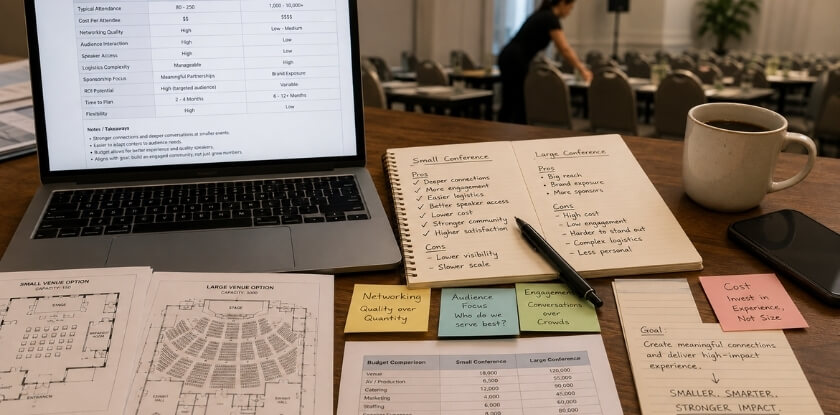
Choose a small conference when you want focused learning, direct access to speakers, easier networking, and a calmer event experience. Large conferences offer more variety, but small ones often provide deeper interaction.
When You Want Direct Access to Speakers
Small conferences make it easier to ask questions and speak with presenters. Because the audience is smaller, speakers are often more approachable during sessions, breaks, and networking periods. This is useful when you want feedback, clarification, or a conversation related to your own work or goals.
When You Prefer Focused Learning
A small conference is a good choice when you want to study one subject in more depth. Instead of moving between many unrelated sessions, attendees can focus on a clear theme. This is helpful for training, academic learning, professional updates, research discussion, and skill development.
When Networking Quality Matters
Small conferences may offer fewer contacts, but the conversations are often stronger. Attendees usually share similar interests, making it easier to start useful discussions. This is useful for finding collaborators, meeting peers, exchanging ideas, and building relationships that continue after the event.
When You Want a Calmer Experience
Large conferences can feel crowded and hard to find your way around. Small conferences are usually simpler, quieter, and easier to follow. A calmer setting helps attendees focus, ask questions, move between sessions, and participate without feeling lost in a crowd.
When Budget or Time Is Limited
Small conferences can be more practical for attendees with limited time or budget. They may have lower registration fees, shorter schedules, local venues, or fewer travel costs. This can be helpful for students, early-career professionals, small business owners, and local participants.
When You Want to Participate
Small conferences are often better when you want to be involved instead of only listening. Workshops, roundtables, forums, and working sessions all encourage participation.
If your goal is to share ideas, practise a skill, solve a problem, or join a discussion, a small conference may offer more value than a large lecture-style event.
How to Join a Small Conference as an Attendee
To join a small conference, find a relevant event, review the details, register, prepare for the sessions, and take part actively.
Find Relevant Events
Look for events that match your interests, profession, academic field, or goal. You can search conference websites, university pages, professional association listings, newsletters, social media groups, community pages, and event platforms.
Choose based on both topic and format. A workshop is better for practice, while a seminar or symposium may be better for expert learning.
Review the Event Details
Before registering, check the topic, date, time, location, format, speakers, agenda, fee, refund policy, attendance limit, and participation requirements. Also confirm whether the event is in-person, virtual, or hybrid, because each format requires different preparation.
Register Early
Small conferences may have limited seats, so early registration helps. Save your confirmation email, receipt, event link, ticket, or invitation letter. During registration, you may need to provide your name, email, organization, role, session choice, payment details, dietary needs, or accessibility requirements.
Plan Travel and Documents
If the event is outside your city or country, arrange travel and accommodation early. Choose a location that makes it easy to reach the venue on time. For international events, check whether you need a visa, travel authorization, invitation letter, passport, hotel booking, or other supporting documents.
Prepare for the Sessions
Review the agenda before attending. Note the sessions, speakers, discussion topics, breaks, and networking times. Preparing a few questions can help you participate more confidently. Bring useful materials such as a notebook, pen, laptop, charger, business cards, identification, registration confirmation, and presentation materials if you are speaking. For online events, test your camera, microphone, internet connection, meeting link, and workspace before the event starts.
Participate and Follow Up
Small conferences are most valuable when attendees take part. Ask questions, join discussions, introduce yourself, listen carefully, and respect the session guidelines.
After the event, connect with people you met, send short follow-up messages, review your notes, and apply what you learned. Many useful professional relationships begin with a simple post-event conversation.
Small Conference Examples by Scenario
The same small size can carry different names. The table below matches common situations to the term that fits best.
| Scenario | Best Term | Why It Fits |
| A trainer teaches a practical skill with exercises | Workshop | Attendees learn by doing |
| A speaker explains one professional topic | Seminar | The format is educational and speaker-led |
| Several experts present on one research theme | Symposium | The event is formal and knowledge-based |
| A university group discusses research | Colloquium | The setting is academic and discussion-focused |
| Business leaders exchange views on a challenge | Roundtable | Participants contribute as equals |
| A company shares important updates | Briefing | The goal is clear information delivery |
| A team creates a plan or strategy | Working session | The group produces an outcome |
| Local professionals gather casually | Meetup | The purpose is networking and shared interest |
| A community discusses a public issue | Forum | The event invites open discussion |
Common Mistakes When Naming a Small Conference
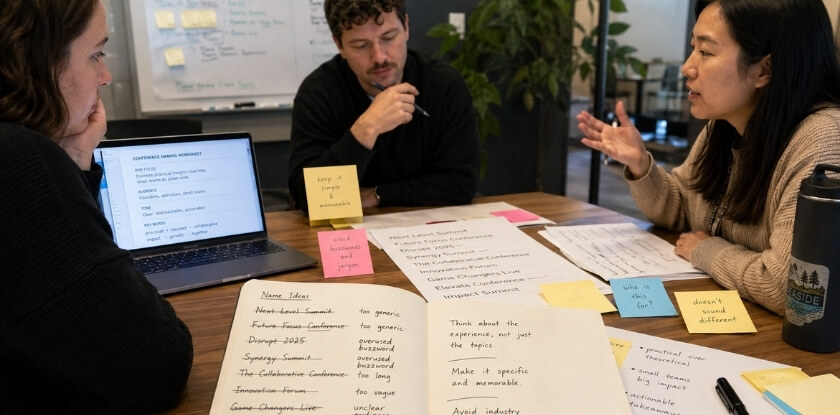
A small conference should be named according to its format, audience, and expected participation. A confusing name creates the wrong expectations.
Calling Every Small Event a Seminar
A seminar is common, but it is not always accurate. Use seminar only when the event is mainly educational and speaker-led.
Avoid it for hands-on training, open discussion, casual networking, or collaborative planning. In those cases, workshop, roundtable, meetup, or working session may be better.
Using “Workshop” for a Lecture
A workshop should involve action. If attendees only listen to a presentation, the event is not really a workshop.
A true workshop includes practice, exercises, demonstrations, group tasks, peer review, or guided application. If the format is mostly explanation, call it a seminar, briefing, or presentation instead.
Using “Symposium” for a Casual Event
Symposium has a formal tone. It usually fits academic, scientific, professional, or expert-led discussions.
Avoid it for casual networking or informal community gatherings. Use meetup for relaxed events, a forum for open discussion, and a roundtable for focused group conversation.
Ignoring Audience Expectations
The best event name tells people what to expect. Before choosing a name, ask:
- Will attendees listen, discuss, practise, or network?
- Is the tone formal or informal?
- Is the audience academic, professional, community-based, or general?
- Will there be one speaker, multiple experts, or an equal discussion?
- Is the goal learning, training, planning, awareness, or connection?
A clear name builds trust and helps the right people decide whether to attend.
From our experience at MS International: our events are held in person at venues in the Greater Toronto Area, and you do not have to present to take part. A registered listener is a valid attendee category. Presenting authors follow a different route: they submit their work, go through double-blind review, and register after acceptance. If you need an invitation letter, it is issued within 3 to 5 business days after payment clears. The letter supports a visa application but does not guarantee a visa. Check the event page for the exact format before you register.
FAQs About Small Conferences
Seminar, workshop or symposium? Picking the right label for a small gathering also touches on typical headcount, online formats and whether such events help with networking.
What is another name for a small conference?
Another name for a small conference is a symposium, seminar, workshop, roundtable, or meetup. Micro-conference, forum, colloquium, briefing, working session, summit, and retreat also appear. The best choice depends on the event’s purpose and format.
Is a seminar the same as a small conference?
No, a seminar is one type of small conference, not a synonym. Guides describe a seminar as a smaller, expert-led session on one topic, often lasting hours, while conferences usually run for days with several sessions. The line blurs in practice.
What is the difference between a workshop and a small conference?
A workshop is a hands-on type of small conference. Attendees practise, complete exercises, or work through tasks. “Small conference” is the broader term that can include workshops, seminars, symposiums, roundtables, forums, and meetups.
Can a small conference be held online?
Yes, a small conference can be held online. Virtual events may include live talks, breakout rooms, group discussions, online workshops, chat-based questions, and digital networking. Always check the event page, since some organizers run in-person events only.
How many people usually attend a small conference?
There is no fixed number, and published guides disagree. One academic guide puts conferences at roughly 50 to thousands of attendees, while an event company describes seminars as often 15 to 50 participants. A small conference simply stays focused, manageable, and interactive.
What is a small academic conference called?
A small academic conference is usually called a symposium, colloquium, workshop, seminar, or micro-conference. The best term depends on whether the event is speaker-led, research-based, discussion-focused, or activity-based.
What is a small business conference called?
A small business conference is usually called a business seminar, workshop, briefing, roundtable, forum, or working session. A training event may be a workshop, an update session a briefing, and a leadership discussion a roundtable.
Are small conferences good for networking?
Yes, small conferences are often good for networking because attendees have more chances to speak directly, remember each other, exchange contact details, and continue conversations after the event.
Final Answer: Which Term Should You Use?
Match the name to what happens in the room: seminar for speaker-led learning, workshop for hands-on practice, symposium for formal expert talks, roundtable for equal discussion, and meetup for casual networking. The comparison table above covers the rest.
Focus on the event’s purpose, format, audience, and level of participation. When the name matches the actual experience, attendees know what to expect and organizers look more professional.