
Book the wrong kind of venue and you either pay for ballrooms nobody needed or end up with a quiet meeting room and nowhere for your guests to sleep. The two names are often used as if they mean the same thing, but the buildings are made for different jobs.
Quick answer: The primary difference between convention hotels and conference centers is purpose. A convention hotel is hospitality-first: guest rooms plus large ballrooms, exhibit space, and catering. A conference center is meeting-first: rooms, technology, meals, and staff are arranged for focused sessions, and lodging is optional. Choose a hotel for large, social, multi-day events and a conference center for training, workshops, and retreats.
Last verified against official sources: October 2026.
Convention Hotel vs. Conference Center: Side-by-Side Comparison
A convention hotel gives attendees a place to stay, eat, meet, and socialize. A conference center gives participants a place to think, learn, discuss, and work. The table shows where that shows up in practice.
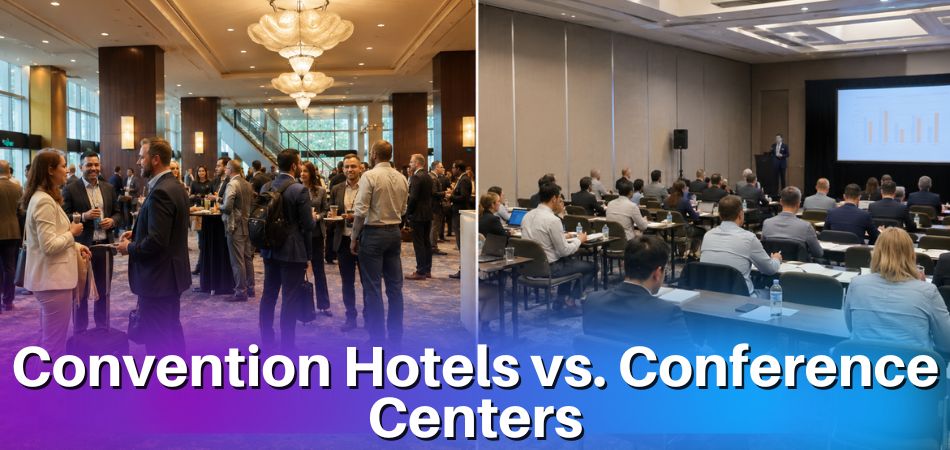
| Comparison Point | Convention Hotel | Conference Center |
| Main purpose | Combines lodging, events, dining, and guest services | Designed mainly for meetings, training, and collaboration |
| Accommodation | Full-service guest rooms and suites | May have limited lodging or no lodging |
| Meeting spaces | Ballrooms, banquet halls, exhibit areas, breakout rooms | Classrooms, boardrooms, seminar rooms, training spaces |
| Guest focus | Serves event attendees, tourists, business travelers, and social guests | Focuses mostly on meeting participants |
| Food service | Restaurants, bars, room service, catering, banquet menus | Group meals, coffee breaks, working lunches, package-based dining |
| Technology | Standard AV, often with vendor support for advanced needs | Built-in meeting technology and on-site support |
| Atmosphere | Active, social, and multi-purpose | Quiet, structured, and productivity-focused |
| Best for | Conventions, exhibitions, weddings, galas, multi-day events | Training, workshops, retreats, seminars, executive meetings |
What Is a Convention Hotel?
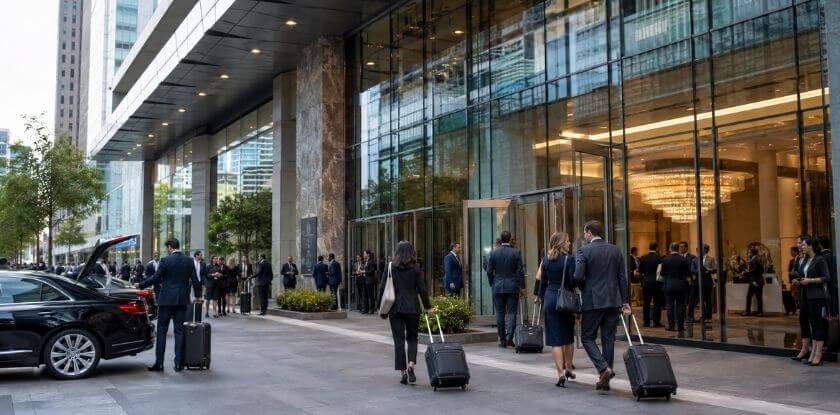
A convention hotel is a full-service hotel with large event facilities for conferences, conventions, trade shows, banquets, and group gatherings. It combines accommodation with meeting and event space, which suits attendees who are traveling or staying for several days.
A regular hotel may have a few meeting rooms, but a convention hotel is built to handle larger groups. It usually includes ballrooms, event halls, catering teams, registration areas, breakout rooms, group room blocks, and event coordination support.
Key Features of Convention Hotels
Convention hotels usually offer:
- Guest rooms and suites for attendees, speakers, vendors, and organizers
- Large ballrooms for keynote sessions, dinners, ceremonies, and receptions
- Breakout rooms for smaller sessions or private meetings
- Exhibit areas for booths, product displays, or trade shows
- Catering services for meals, snacks, banquets, and coffee breaks
- Restaurants and lounges for informal networking
- Front desk and concierge services for overnight guests
- Event staff and AV support for setup, timing, menus, presentations, and logistics
The biggest advantage is convenience. Attendees can check in, attend sessions, eat meals, meet other guests, and return to their rooms without leaving the property.
Why Convention Hotels Work Well for Large Events
Convention hotels are useful when an event has many moving parts. A single program may include a general session, sponsor displays, breakout meetings, group meals, evening receptions, and overnight stays, and one property can support all of them. That is why association conventions, corporate annual meetings, industry conferences, and multi-day business events often land in hotels.
Because the hotel also serves overnight guests, travel planning gets easier. Organizers can reserve room blocks, speakers can stay near the event space, and attendees do not need separate transportation between a hotel and a venue.
What Is a Conference Center?
A conference center is a venue designed mainly for meetings, training programs, workshops, seminars, retreats, and structured group sessions. Its purpose is to create an environment where people can focus, communicate, learn, and make decisions.
Some conference centers are standalone facilities. Others may be part of a campus, business complex, resort, or hotel property. What defines them is not just the building, but the meeting-first design. Rooms, seating, technology, meals, and staff support are organized around productivity.
IACC, the industry body for meeting and conference venues, gives a useful yardstick in its Quality Standards guide. It does not require guest rooms: it recognises non-residential “day” centres and says a quality meeting venue does not need rooms on site. It does expect an all-inclusive, flexible package that includes basic presentation equipment, high-speed internet in meeting rooms, and a dedicated conference planner. It also describes its members as venues designed for small to medium-sized meetings. Standards are updated from time to time, so check IACC for the current version.
IACC also says what does not count. A hotel can qualify only when its meeting rooms are dedicated and separate from living and leisure spaces. A hotel whose main purpose is filling guest rooms and selling food and beverage does not, and neither does a banquet venue that also holds meetings.
A third term is easy to mix up. The Events Industry Council glossary defines a convention centre as a facility that hosts trade shows, public shows, and conventions and combines exhibition space with a substantial number of smaller meeting and event spaces. That is why large trade shows with big exhibit floors usually go to a convention center, while a convention hotel suits smaller or mid-sized shows that also need rooms.
Key Features of Conference Centers
Conference centers usually include:
- Meeting rooms for presentations and discussions
- Training rooms for instructor-led learning
- Boardrooms for executive meetings
- Breakout rooms for small group work
- Built-in AV equipment for slides, audio, and video
- Reliable internet access for presenters and participants
- Technical support for setup and troubleshooting
- Group meal service arranged around the agenda
- Quiet common areas for breaks or informal discussion
Why Conference Centers Support Focused Meetings
Conference centers are built to reduce distractions. Participants are usually there for the same meeting, training, or group program, which gives a more controlled atmosphere than a busy hotel where tourists, wedding guests, and restaurant visitors move through the property.
They are strong choices for corporate training, leadership retreats, strategic planning, professional development, board meetings, certification programs, and team-building sessions. The main benefit is focus: people stay connected to the agenda, move easily between sessions, and use meeting tools without unnecessary delays.
How Accommodation Differs Between Convention Hotels and Conference Centers
Accommodation is one of the clearest differences between the two venue types. A convention hotel is built around guest rooms. A conference center may offer lodging, but it is not always the main feature.
Accommodation in Convention Hotels
Convention hotels provide full-service guest rooms for many types of visitors. Attendees may book rooms individually, or planners may reserve a room block for the group. Housekeeping, room service, luggage storage, concierge help, restaurants, and front desk support come with the rooms.
On-site rooms work especially well when:
- Attendees are traveling from other cities or countries
- The event lasts more than one day
- Sessions begin early or end late
- Speakers need quick access to meeting rooms
- Networking continues outside the formal agenda
For conventions and large events, staying in one building reduces stress, and organizers can keep the schedule tighter.
Accommodation in Conference Centers
Conference centers do not always include guest rooms. Some are day-use venues focused only on meeting space, meals, and technology. Others offer simple on-site lodging for retreats, residential training, or multi-day business programs.
When lodging exists, it is usually tied to the meeting program and is practical rather than luxury-focused. The goal is to keep participants close to the meeting environment, not to provide a broad hotel experience with leisure amenities.
A conference center can still work well without lodging if attendees are local, the event is short, or nearby hotels are easy to access. Event planners should confirm accommodation early because it affects transportation, meals, arrival times, and the full attendee experience.
How Meeting Spaces Are Designed Differently
Convention hotels design meeting spaces for flexibility, while conference centers design meeting spaces for concentration. This affects room size, layout, lighting, sound, seating, and technology.
Meeting Spaces in Convention Hotels
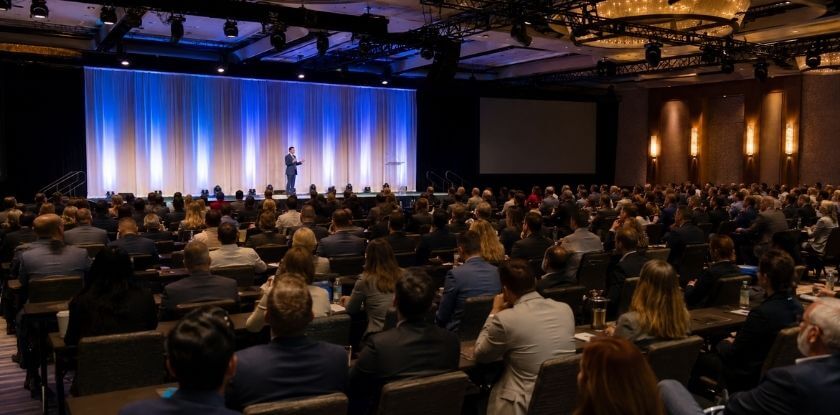
Convention hotels usually offer large, adaptable event areas. A ballroom might host a keynote in the morning, a banquet in the evening, and a reception the next day. Hotels often have pre-function spaces for registration, networking, coffee breaks, and sponsor displays, along with banquet halls, exhibit areas, private dining rooms, and reception areas.
The strength of these spaces is versatility. They can support business meetings, social events, exhibitions, and formal meals. However, very large rooms may not suit smaller training sessions or focused group work.
Meeting Spaces in Conference Centers
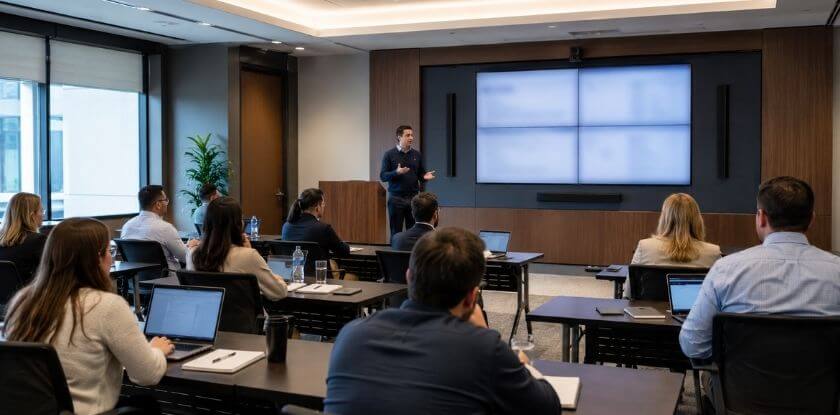
Conference centers design rooms around how people learn and collaborate. Seating, visibility, acoustics, lighting, and presentation tools are planned for longer working sessions. Typical spaces are training rooms, classrooms, boardrooms, seminar rooms, workshop rooms, breakout rooms, and quiet lounges.
These rooms are often better for discussion, note-taking, presentations, and group exercises. Participants can usually see the presenter clearly, hear well, reach power or internet, and move into smaller group work without disrupting the agenda.
A convention hotel is better when the event needs space variety and scale. A conference center is better when the room itself must support attention, comfort, and participation.
Event Types Best Suited for Convention Hotels
Convention hotels are best for events that need accommodation, large event spaces, catering, and a complete guest experience. They are especially useful when attendees are traveling or when the event mixes formal and social activities.
Conventions and Association Events
Conventions bring together many attendees, speakers, sponsors, vendors, and organizers. A convention hotel can provide guest rooms, ballrooms, registration areas, dining spaces, and breakout rooms in one property, so opening sessions, panels, sponsor meetings, and evening receptions run without moving people between venues.
Trade Shows and Exhibitions
Trade shows need open spaces, booth layouts, registration areas, vendor access, food service, and nearby accommodation. Convention hotels can support smaller and mid-sized trade shows by combining exhibit space with guest rooms and meeting areas. Exhibitors stay close to their booths, and attendees can visit displays, attend sessions, and network in the same building.
Corporate Galas and Banquets
Convention hotels already have banquet halls, catering teams, service staff, and event coordination, which makes them strong choices for award ceremonies, fundraising dinners, company celebrations, and client receptions. These events often need stage setup, lighting, formal table service, guest check-in, speeches, and entertainment, and the hotel can also house guests who need rooms.
Weddings and Social Events
Convention hotels are common venues for weddings and large social gatherings. They offer ceremony space, reception rooms, catering, guest rooms, parking, and planning support. Families and guests can stay on-site, which makes multi-day celebrations easier.
Multi-Day Events With Mixed Guest Needs
Some events include business sessions, meals, social programs, sponsor meetings, and leisure time. A convention hotel handles this mix well because it is designed for both events and hospitality. It can serve business travelers, VIP guests, speakers, exhibitors, families, and general hotel guests at the same time.
Event Types Best Suited for Conference Centers
Conference centers are best for events where focus, structure, and participation matter more than broad hospitality amenities. They are useful when the outcome depends on learning, planning, discussion, or collaboration.

Corporate Training Programs
Training programs often need classroom layouts, clear screens, reliable sound, breakout rooms, and scheduled meals. Conference centers are designed for this use and offer fewer distractions and more meeting-ready spaces than a typical hotel.
Workshops and Seminars
Workshops and seminars need rooms where people can listen, ask questions, discuss ideas, and complete group activities. Conference centers often provide flexible meeting rooms, whiteboards, projectors, refreshments, and technical support. This makes them effective for professional development, internal company sessions, nonprofit workshops, and educational programs.
Executive Meetings
Executive meetings often need privacy, comfort, and a controlled setting. Conference centers can provide boardrooms, private dining, quiet surroundings, and staff who understand meeting schedules. They suit strategic planning, leadership discussions, budget reviews, client presentations, and confidential decision-making.
Team Retreats
Team retreats work well in conference centers because the setting helps participants step away from daily office interruptions. The venue can support planning sessions, team-building activities, group meals, breakout discussions, and informal conversations. A retreat does not always need luxury amenities. It needs a place where people can reconnect, think clearly, and work toward shared goals.
Location Differences: City Access vs. Quiet Focus
Location can strongly influence the choice. Convention hotels are often selected for travel convenience. Conference centers are often chosen for calm surroundings and fewer distractions.
Convention Hotels and City Access
Convention hotels are often located near airports, highways, downtown districts, business areas, or tourist attractions. This helps attendees arrive easily and gives them access to restaurants, shops, entertainment, and transportation. It matters most for international attendees, out-of-town guests, large conventions, trade shows, and programs with leisure or city activities. A central location can improve the guest experience, especially when attendees want to explore the area after sessions.
Conference Centers and Quiet Settings
Conference centers are often located in quieter areas or designed to feel removed from busy surroundings. This supports meetings that need attention, privacy, and structure, such as training, strategy meetings, executive retreats, workshops, and long working sessions.
Not every conference center is remote, and not every convention hotel is downtown. Still, the general difference holds: convention hotels prioritize access and hospitality, while conference centers prioritize focus and meeting flow.
Transportation and Parking Factors
Before choosing either venue, planners should compare:
- Distance from airports or train stations
- Parking availability
- Public transportation access
- Traffic patterns
- Nearby hotels, if lodging is not on-site
- Accessibility for attendees
- Safety and convenience of the surrounding area
Cost and Package Differences
Convention hotels often offer flexible but more complex pricing, while conference centers often provide simpler meeting packages. This affects how planners compare budgets.
| Cost Point | Convention Hotel | Conference Center |
| Pricing style | Many services priced separately | Often a package for the main meeting services |
| Typical items | Guest rooms, meeting rooms, ballroom, catering, coffee breaks, AV, internet upgrades, staging, lighting, parking, service charges, taxes, extra staffing or security | Meeting room, basic AV, Wi-Fi, coffee breaks, lunch, room setup, on-site support, sometimes lodging |
| Main benefit | Customization for large events with detailed needs | Easier budgeting and fewer forgotten items |
| Main risk | A low room rental can hide the final cost once food, AV, fees, and room requirements are added | Paying for package services the event will not use |
Convention Hotel Pricing
Because a hotel prices services separately, the proposal needs a careful read. Compare the full quote, not the room rental line.
Conference Center Packages
Package pricing groups the main services, which makes budgeting easier. It may still not be cheaper: if the package includes services the event will not use, the value drops.
What Planners Should Compare
The best comparison is total event cost, not just the starting price. Planners should ask:
- What is included, and what costs extra?
- Are meals, AV, Wi-Fi, and breakout rooms included?
- Are there service charges or taxes?
- Is parking included?
- Are outside vendors allowed?
- Are guest rooms required?
- What are the cancellation terms?
A convention hotel may be better value for events needing rooms, dining, and large spaces. A conference center may be better value for focused meetings with package-based services.
Technology and Event Support Differences
Convention hotels usually support general event needs, while conference centers focus on meeting technology and smooth session delivery.

Technology in Convention Hotels
Convention hotels commonly provide basic AV tools such as microphones, speakers, screens, projectors, podiums, staging, lighting, and internet access. For advanced needs, hotels may use an in-house AV partner or approved outside vendors. This works well for large events, entertainment, banquets, and keynote sessions, but planners should confirm what is included and what costs extra.
Technology in Conference Centers
Conference centers often have meeting technology built into the rooms: screens, sound systems, video conferencing tools, strong Wi-Fi, presentation controls, microphones, whiteboards, and technical staff. Because the equipment is part of the meeting setup, sessions may be easier to start and manage. This helps most with training, hybrid meetings, seminars, and multi-room workshops.
Staff Support
Convention hotels usually have broader teams, including front desk staff, banquet teams, catering staff, housekeeping, event managers, and AV partners. Conference centers usually have staff focused on meeting setup, room changes, meal timing, and technical support.
Before booking, ask whether support is available during the event, whether presenters can test equipment, and whether the venue can handle hybrid or virtual participation.
Atmosphere and Guest Experience
Convention hotels feel active and social, while conference centers feel calmer and more focused. The right atmosphere depends on what attendees are expected to do.
Atmosphere in Convention Hotels
Convention hotels are lively because many things happen at once: guests check in, weddings take place, restaurants and lounges fill up, and other events run alongside yours. That energy helps networking, receptions, trade shows, galas, and social programs. The downside is distraction, which can reduce attention in quiet training or detailed planning.
Atmosphere in Conference Centers
Conference centers are usually more controlled. Most people are there for meetings or group programs, so the setting feels professional and structured, which suits training, workshops, executive meetings, and confidential discussions. The venue supports the agenda rather than competing with it, with breaks, meals, room setups, and technology arranged around the group’s work.
How to Choose Between a Convention Hotel and a Conference Center
Choose based on the purpose of the event, not just the size of the room or the price. The question that settles most cases: is the event built around guest experience or meeting performance?
Choose a Convention Hotel If
A convention hotel is the better choice if:
- Attendees need overnight rooms
- The event includes a large audience, or large conventions and trade shows
- You need ballrooms or exhibit space
- The schedule includes banquets, galas, weddings, or receptions
- Guests need restaurants, lounges, or leisure amenities
- Networking and social activity are important
- The event mixes several formats, with business and hospitality needs together
Choose a Conference Center If
A conference center is the better choice if:
- The event is focused on training or learning, such as corporate training, seminars, or strategy sessions
- Participants need a quiet environment
- The agenda includes workshops, retreats, or breakout sessions
- Built-in meeting technology is important
- Meals should follow a structured schedule
- The planner wants package-based services
- Productivity matters more than leisure amenities
Questions to Ask Before Booking
Before choosing a venue, ask:
- What is the main goal of the event?
- Do attendees need accommodation?
- How many people will attend?
- What room layouts are required?
- What food service is needed?
- What technology is required?
- What is included in the price?
- How easy is the venue to reach?
- Will the atmosphere support the event goal?
- What support will be available during the event?
Common Mistakes When Comparing Convention Hotels and Conference Centers
The biggest mistake is treating the two as the same type of venue. The other common ones are short:
Assuming Both Venues Serve the Same Purpose
Choosing without understanding the difference can lead to the wrong atmosphere, unnecessary costs, or a poor attendee experience.
Ignoring Accommodation Needs
If many attendees need rooms, a venue without lodging creates extra transportation and planning work. If the event is local or day-based, paying for a hotel environment may not be necessary.
Overlooking Package Inclusions
A hotel quote and a conference center package may look very different, because one separates food, AV, and room rental while the other bundles them. Compare the full list of inclusions before deciding.
Choosing Based Only on Price
The cheapest venue is not always the best value. A low-cost space may become expensive if it requires outside catering, rented equipment, transportation, or extra staffing.
From our experience at MS International: our conferences are held in person only, at venues in the Greater Toronto Area. Participants receive the venue details through official email updates and website announcements before the conference, and should arrange their own travel, accommodation, and transportation in advance. Because venues differ in whether rooms are on site, read those venue details as soon as they arrive.
FAQ: Convention Hotels vs. Conference Centers
Picking a convention hotel or a conference center rests on lodging on site, cost, the kind of event, such as training or a trade show, and international guests.
Can a convention hotel also function as a conference center?
Yes, if it has dedicated, well-equipped meeting rooms, AV support, and event staff. IACC accepts hotels only when meeting rooms are separate from guest and leisure areas, not when the main business is filling rooms. Expect more guest activity than in a dedicated center.
Do all conference centers provide lodging?
No, not all conference centers provide lodging. IACC recognises non-residential “day” centres, which sell meeting space, meals, and technology without guest rooms, so ask about rooms before you book.
Which option is better for corporate training?
A conference center is usually better for corporate training because it provides focused rooms, meeting technology, breakout spaces, and fewer distractions.
Which option is better for trade shows?
A convention hotel is usually better for trade shows because it can offer larger event spaces, guest rooms, catering, and flexible layouts for exhibitors and attendees.
Are conference centers cheaper than convention hotels?
Conference centers can be easier to budget for, but they are not always cheaper. Their packages may include meals, AV, and support. Convention hotels may cost more or less depending on room blocks, catering, technology, and service fees.
Which venue is better for international attendees?
A convention hotel is often better for international attendees because lodging, meals, event space, and guest services are available in one location. A conference center can also work if it has nearby lodging and convenient transportation.
What should planners compare before making a final decision?
Compare total cost, not just the quoted price. Then check event goals, attendee needs, accommodation, location, room layout, food service, technology, staff support, and package inclusions.
Final Takeaway: Which Venue Type Fits Your Event Best?
If the event involves travel, accommodation, networking, banquets, exhibitions, or social activities, a convention hotel is usually the better fit. If it involves training, planning, workshops, retreats, or executive discussion, a conference center is usually the smarter choice. Matching the venue to the event goal makes planning easier and gives attendees a better experience.