
You’ve had your US visa interview, handed over your passport, and now you keep checking your inbox. A day passes, then two, and nothing arrives. Is that a bad sign? Usually not. Here is how US visa decisions are actually communicated, and where to look instead of your email.
Quick answer: Usually no. US embassies and consulates do not send an automatic “your visa is approved” email. Check your status yourself on the CEAC status page (ceac.state.gov). “Issued” means the visa was approved and is in final processing. The only email many applicants get is a courier or pickup notice when the passport is ready. “Refused” can be a final denial or a 221(g) hold for administrative processing, so read the letter the officer gave you.
Fact-checked by the MS International Editorial Team. Last verified against official sources: October 2026.
Does the US Embassy Send an Email When Your Visa Is Approved?
Not as a rule. There is no universal policy of sending approval emails, and what you receive depends on the embassy or consulate, the visa category and how your case is processed.
The emails you may realistically get after a nonimmigrant visa interview are:
- A courier or pickup notice when your passport is dispatched or ready to collect. It comes from the delivery or appointment service, not from the consular officer, but it usually follows an approval. A courier message can also ask you to send in your passport, which is not an approval yet, so read it closely.
- A request for more documents if the officer needs something else. Some posts, such as the US Embassy in Japan, say they may contact you by email or phone in that case, so check the address you used on your DS-160.
- NVC or KCC messages if you are an immigrant visa or Diversity Visa applicant. These cover document requests, fees and interview scheduling, not the final decision.
The decision itself shows up on the CEAC status page, and the visa foil in your returned passport is the actual proof of approval. If you are refreshing your inbox after the interview, check the CEAC visa status page first.
How the Notification Process Differs by Visa Type
The visa category decides who contacts you and when. Here is the short version for each main route.
Visitor and Student Visas (B1/B2, F1, J1)
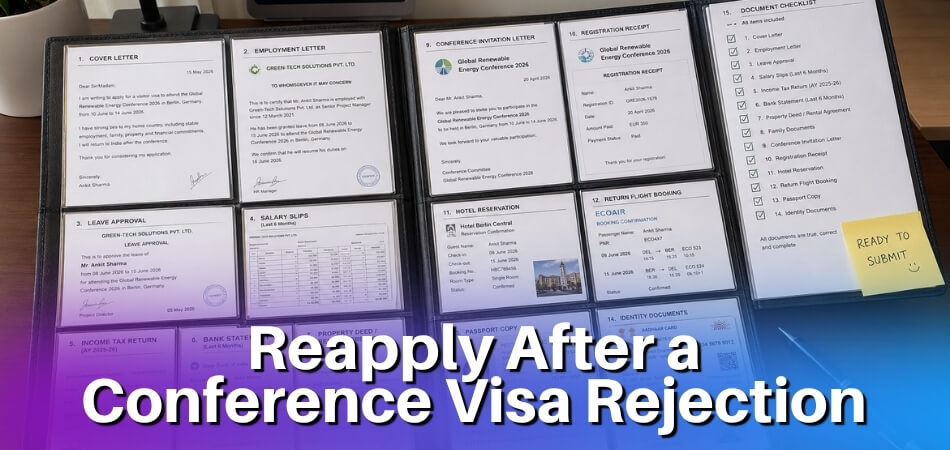
You complete the DS-160, book your appointment and attend the interview at the embassy or consulate. After that, the CEAC status and the courier or pickup notice are normally the only updates. Conference delegates usually follow this same path, since the visa required for a US conference is a B-1 or B-1/B-2 visitor visa unless your country is in the Visa Waiver Program.
H1B and Other Petition-Based Work Visas
The H1B has an extra stage before the interview. Your employer files Form I-129 with USCIS, and USCIS sends the I-797 approval notice to the petitioner (your employer or its attorney), not to you. For consular processing, the approved petition is forwarded to the Department of State through the Kentucky Consular Center (KCC), not the National Visa Center. You then complete the DS-160 and attend the interview like any other nonimmigrant applicant.
After the interview, the H1B works the same way as a visitor visa: no automatic approval email, status on CEAC, then a courier notice. Petition-based cases are placed in administrative processing more often, and if an attorney handles your case, they often hear about changes first.
Immigrant Visas (NVC Process)
Immigrant visa cases have more email contact. After USCIS approves a petition such as Form I-130 or I-140, the case moves to the National Visa Center (NVC). The NVC posts messages in your CEAC account and emails you about fees, documents and the interview appointment. Once you have been interviewed, the decision is again made by the consulate, and the NVC does not send a separate “visa issued” email.
In CEAC, immigrant cases pass through statuses such as “At NVC,” “In Transit” and “Ready.” “Ready” means the embassy or consulate has your file. It does not mean the visa has been approved.
Diversity Visa (DV) selectees are handled by the Kentucky Consular Center instead of the NVC and use the Entrant Status Check on the E-DV website.
How to Check Your Visa Status on the CEAC Portal
Go to the CEAC status page, choose the visa type and enter your case details. You do not need an account, and the check is free. All nonimmigrant cases created within the past year are available.
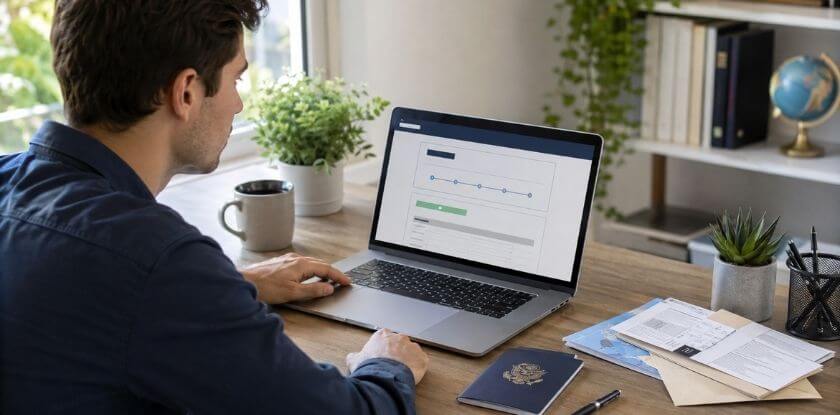
Step-by-Step: How to View Your Status on CEAC
For a nonimmigrant visa (B1/B2, F1, H1B and others):
- Open ceac.state.gov/CEACStatTracker/Status.aspx and select Nonimmigrant Visa (NIV).
- Choose the location: the embassy or consulate you selected on your DS-160.
- Enter your Application ID (the DS-160 barcode, which starts with “AA”) or the case number the embassy gave you.
- Enter your passport number and the first five letters of your surname.
- Complete the code check and click Submit.
For an immigrant visa, select Immigrant Visa (IV) and enter your NVC case number. Your invoice ID is used to log in to your NVC account in CEAC, not for this quick status check.
If you have just had your interview, the US Embassy in Japan’s guidance is to check again after two business days. An unchanged status on the evening of your interview means nothing yet. Even if the officer told you at the window that your visa was approved, confirm “Issued” on CEAC yourself, because the status is the record you can check.
What Do the Statuses Mean?
| CEAC status | What it means | What to do |
|---|---|---|
| Application Received | Your case is open. After an interview, it may show this for a day or two before updating. | Check again after two business days. |
| Administrative Processing | The case needs more review. Some posts also use this status while an approved visa is waiting to be printed. | Follow any instructions from the officer and keep checking CEAC. |
| Issued | Approved. The visa is being finalized. It does not mean your passport is already in your hands. | Watch for the courier or pickup notice. |
| Refused | Either a final denial (for example under INA 214(b)) or a 221(g) refusal while administrative processing or missing documents are pending. | Read the letter you received at the interview to see which one applies. |
| Ready (immigrant visas) | The embassy or consulate has your file and can schedule or hold your interview. Not an approval. | Wait for your interview appointment. |
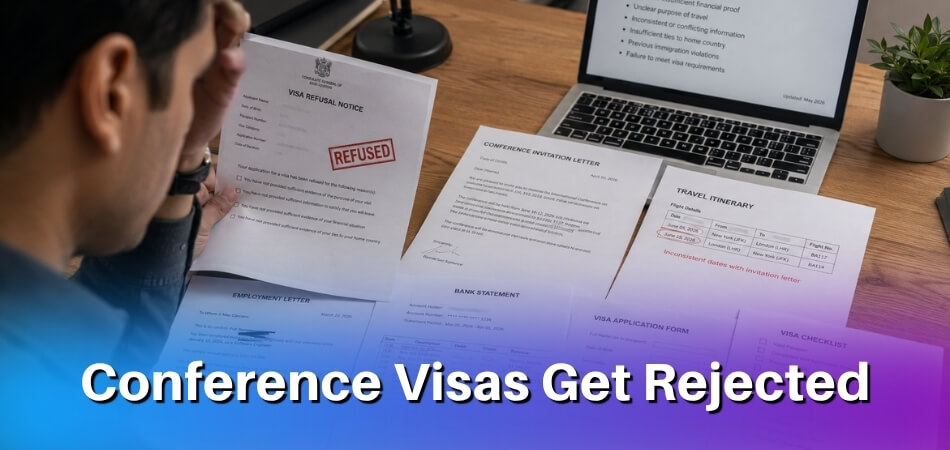
The “Refused” label confuses many people. In March 2020, the State Department changed CEAC so that cases in administrative processing show “Refused” instead of “Administrative Processing.” These are 221(g) refusals, and they can still end in a visa once the open issues are resolved. A 221(g) letter usually lists the documents you need to send or says your case needs administrative processing. A 214(b) letter means the officer found you did not qualify for that visa category.
Your Status Hasn’t Changed After the Interview: What Should You Do Now?
For most applicants, the right move is to wait patiently and recheck CEAC now and then. CEAC does not use “In Process” or “Under Review” as nonimmigrant statuses, so if you see that kind of wording, your case is most likely in “Application Received,” “Administrative Processing” or a 221(g) “Refused” status.

How Long Should the Wait Be?
Straightforward visitor and student cases often move to “Issued” within a few business days of the interview. Administrative processing has no fixed timeline. The State Department says the length varies with the circumstances of each case. Some posts note that most cases are resolved within 60 days, while security reviews can take several months.
What You Should Do While You Wait
- Check CEAC every few days. Refreshing several times a day will not surface anything new.
- Watch the email address on your DS-160, including the spam folder. A document request or courier notice may come there.
- If your 221(g) letter asked for documents, send exactly what was requested, in the way the letter describes. One post (Ankara) notes you have one year from the refusal date to submit them before you would need to reapply and pay the fee again.
- For an immigrant visa, check your CEAC account for any open NVC requests.
- For an H1B, confirm with your employer or attorney that the petition is still valid.
When Should You Contact the Embassy?
For administrative processing, the State Department’s general guidance is to wait at least 180 days from the interview or from the date you submitted supplemental documents, whichever is later, before asking about your case. The exception is an emergency, such as a serious illness, injury or death in your immediate family. Some posts publish a shorter period (Dublin says 60 days, Panama City 90 days), so check the instructions page for your embassy or consulate.
When you do write, use the inquiry form on that embassy or consulate’s website and include your full name, date of birth, interview date, visa category and Application ID or case number. Send one clear message, not repeat inquiries.
If your immigrant visa case has shown “Ready” for a long time without an interview appointment, contact the NVC through its Public Inquiry Form. A “Refused” status under 214(b) will not change with time. Your options there are to accept the decision or reapply with stronger evidence of your ties.
If your trip has a fixed date, such as a conference presentation, ask the embassy about its expedite rules. A visa expedite request letter from the event organizer can support that request, though the decision is always the consulate’s.
When and How Will You Get Your Passport and Visa Back?
After the status changes to “Issued,” your passport comes back by courier or is made available for pickup, using the method set up when you booked your appointment. The consular officer usually explains the return method at the interview.

Courier Tracking Notifications
The delivery or pickup notice is sent by SMS or email to the contact details in your appointment profile. Some systems send one message when the passport leaves the embassy and another when it is out for delivery or ready to collect. Others send only one. If you chose pickup at a document collection point, you will get a “ready for pickup” message rather than a tracking number.
Check that a notice comes from the embassy, its appointment service or the courier named in your appointment profile. Treat an unexpected email that asks for payment or personal data with caution, and confirm it through the embassy’s official website.
How Long Does It Take to Receive Your Passport After Approval?
There is no single official number. Each embassy or consulate publishes its own estimate, and the State Department points applicants to the visa processing time for their post to see when passports are generally ready for pickup or courier delivery. Distance from the collection point also matters.
If several business days have passed since “Issued” and you have no tracking notice, contact the appointment service or the embassy through the channel it lists for passport returns.
What to Do If Your Address Has Changed After Submitting Your Visa Application
Update your delivery details with whoever holds your passport, as early as possible. Resubmitting the DS-160 does not change the courier address.
If Your Visa Hasn’t Been Decided Yet
Update the delivery address in your visa appointment account, or contact the embassy’s appointment service. Include your full name, date of birth, interview date, Application ID and both addresses. Immigrant visa applicants should update their details with the NVC as well.
If Your Visa Has Already Been Approved
Once the status is “Issued,” the passport may already be with the courier. Contact the courier with your tracking reference and ask whether it can be redirected. If it has already gone to your old address, contact the embassy or the appointment service for the next steps.
H1B and Other Petition-Based Applicants
Tell your employer’s immigration attorney or HR team about the change too, so they can raise it through their own channel.
What Are the Next Steps After Your Visa Is Approved?
Check the visa itself, understand what it does and does not allow, and then plan your travel.
Check Every Detail on the Visa
When the passport arrives, check your name, date of birth, passport number, visa category (B1/B2, F1, H1B and so on), number of entries and expiration date. If anything is wrong, contact the embassy or consulate straight away rather than close to your travel date.
The visa expiration date is not how long you can stay. According to the State Department, a Customs and Border Protection (CBP) officer decides your admission and length of stay at the port of entry each time you travel, and your Form I-94 record shows the date you must leave by.
For Immigrant Visas
If you receive a sealed envelope with your visa, do not open it. Carry it in your hand luggage and give it to the CBP officer when you arrive. Some posts now send the file electronically, in which case you get no packet. An immigrant visa is usually valid for up to six months from issuance, or less if your medical exam expires sooner, and it cannot be extended. You also need to pay the USCIS Immigrant Fee online after the visa is issued, because USCIS will not produce your Green Card until it is paid.
For H1B and Other Petition-Based Visas
Check that the visa matches your I-797 approval notice, including the employer name and validity dates. Raise any mismatch with your employer’s immigration counsel before you travel.
Plan Your Travel
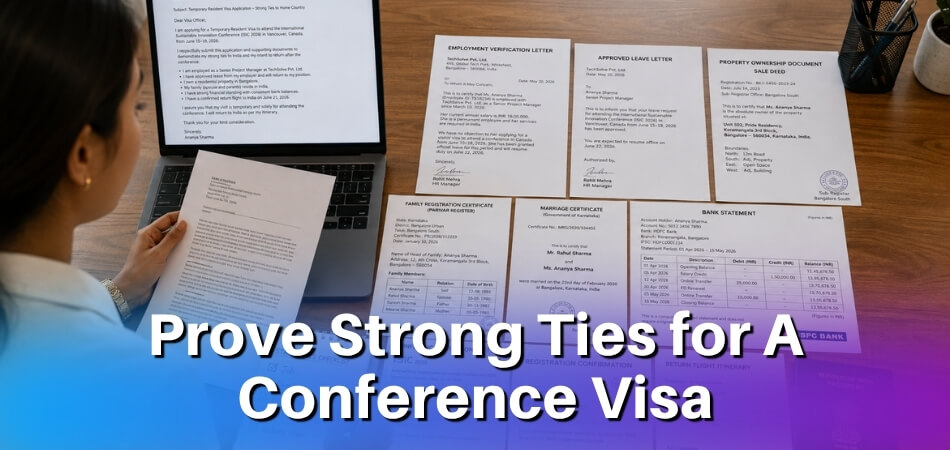
A visa allows you to request entry; it does not guarantee admission. Leave a buffer before fixed commitments such as a university orientation, a job start date or a conference session. Carry copies of the documents you used for the application, such as your DS-160 confirmation, financial records and, for conference travel, your invitation letter and registration confirmation.
From our experience at MS International: we tell attendees who are waiting on a US visa not to rely on email. Check the CEAC status page every few days, and book non-refundable travel only once your passport is back with the visa inside.
Frequently Asked Questions (FAQ)
CEAC labels cause much of the confusion here, from Ready changing to Issued and Administrative Processing to a courier notice or a case number with no result, with H1B and NVC immigrant visa cases raising their own notification doubts.
Will I get an email when my US visa is approved?
Usually not, so do not wait on your inbox. Look up your case on the CEAC status page with your DS-160 Application ID (nonimmigrant) or your NVC case number (immigrant), and make sure the email address on your DS-160 is one you can still open.
What does “Issued” mean on the CEAC portal?
It means the visa has been approved and is in final processing. It does not mean your passport is already back with you: it is returned by courier or made available for pickup, depending on the arrangement at your post.
How long after my visa interview will the status change on CEAC?
Check after two business days. Simple visitor or student cases often update within a few business days. Cases in administrative processing can take weeks or months, and there is no fixed deadline.
What is Administrative Processing, and how long does it take?
It is extra review that some cases need after the interview. The State Department sets no fixed timeline. Many cases clear within about 60 days, but some take longer. CEAC may show it as “Refused” under 221(g) while the review is pending.
My status changed from “Ready” to “Issued.” Does that mean I’m approved?
Yes. “Ready” (used mainly for immigrant visas) only means the embassy had your file. “Issued” means the visa was approved.
Can I call the Embassy to ask about my visa status?
Embassies generally direct applicants to CEAC first, and phone access varies by post. For administrative processing, the general guidance is to wait at least 180 days before inquiring, unless there is an emergency. Some posts set a shorter period on their own instructions page.
I got a courier notification. Does that mean my visa was approved?
Usually, but not always. A courier message can also ask you to send in your passport or documents, and a passport can be returned without a visa, for example in some 221(g) cases. Check CEAC for “Issued” to be sure.
My visa was refused. Will the Embassy email me to explain why?
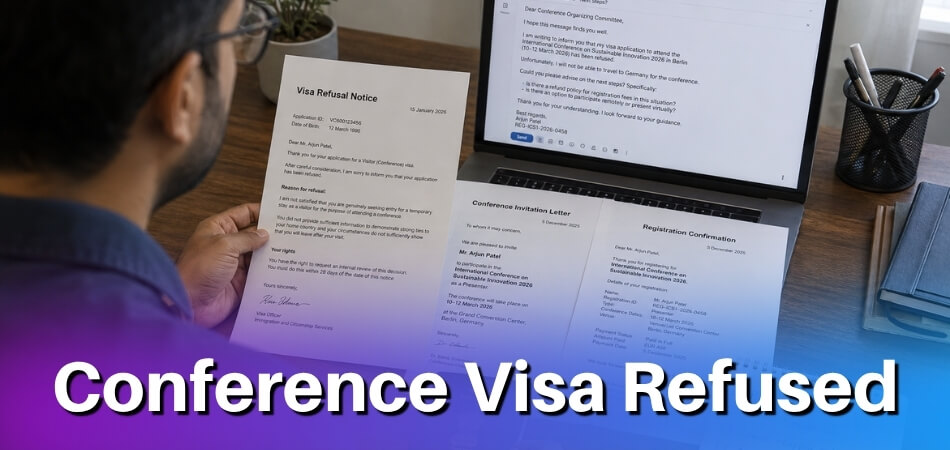
Normally no. The officer gives you a refusal letter at the interview that states the section of law, such as 214(b) or 221(g). CEAC will show “Refused.”
Does the H1B visa process work differently for email notifications?
Only at the petition stage. USCIS sends the I-797 approval notice to the petitioner. The consular stage works like other nonimmigrant visas, with no automatic approval email.
I applied for an Immigrant Visa through the NVC. Will they notify me by email?
The NVC emails you and posts messages in your CEAC account about documents, fees and scheduling. The final decision comes from the consulate after your interview, so check the CEAC status for “Issued.”
What if CEAC shows no result for my case number?
Check that you selected the right visa type (NIV or IV) and location, and that you entered the DS-160 barcode, passport number and first five letters of your surname correctly. If it still fails, try again a few days after your interview.
Conclusion: No Email? Don’t Panic. Here’s Exactly Where to Check
No email after your US visa interview does not mean your application was rejected, because most embassies and consulates do not send approval emails. Check CEAC: “Issued” means approved, and a courier or pickup notice usually follows. If you see “Refused,” read your interview letter to find out whether it is a final 214(b) denial or a 221(g) hold, and keep your contact and delivery details up to date while you wait.
Disclaimer: This article is general information, not legal or immigration advice. Visa rules, fees, and processing times change. Confirm the current requirements on the official U.S. Department of State website (travel.state.gov) or with the U.S. embassy or consulate handling your case before you apply.