
Anyone planning a conference trip to Canada wants to know whether the visa will come through. Online forums are full of stories from both sides, which makes it hard to know what to believe. The picture gets clearer once you separate general statistics from your own file.
Quick answer: The odds are about even on average. IRCC reported a 54% visitor visa refusal rate for 2024 and a 51% refusal rate for all temporary resident visas in 2025, so roughly half of applications are approved. Your own chance depends on your purpose of visit, funds, ties to your home country, honest answers and consistent documents, not on the average.
Fact-checked by the MS International Editorial Team. Last verified against official sources: October 2026.
Getting a Canada visitor visa is not only about luck. A well-prepared application can do much better than the average, while a weak or incomplete file can be refused even when the reason for travel is genuine. The real question is not “What is the approval rate?” but “Does my application give the officer enough confidence?”
What Do the Odds of a Canada Visitor Visa Really Mean?
The odds are the general chance of approval, but a visitor visa is not a lottery. An officer reviews each file separately and decides whether your visit looks temporary, affordable and genuine. IRCC’s own test is that you must convince the officer you will leave Canada at the end of your visit. This article is for people who need a visitor visa. If your passport is visa-exempt, you apply for an eTA instead, which is a separate and simpler process.

Two people from the same country can get different results. One application is complete and convincing, while the other leaves doubts about the purpose, the money or the plan to return. Officers look at the full picture: job, income, family ties, travel history, documents and any earlier immigration record. Submitting the required forms is not enough, because the evidence must also make sense together.
Your odds are usually higher with stable employment, clear financial records, earlier international travel and a clear reason to return home. They are lower when funds are unclear, the purpose is vague, documents contradict each other or an earlier refusal is not explained.
The officer is mainly asking these questions:
- Why are you visiting Canada, and for how long?
- Can you afford the trip?
- Where will you stay?
- What proof shows you will return home?
- Are your documents complete and consistent?
Canada Visitor Visa Approval and Refusal Trends by Year
Approval was easier in 2023 and has been tighter since. IRCC briefings to Parliament show the refusal rate rising from 39% in 2023 to 54% for visitor visas in 2024.
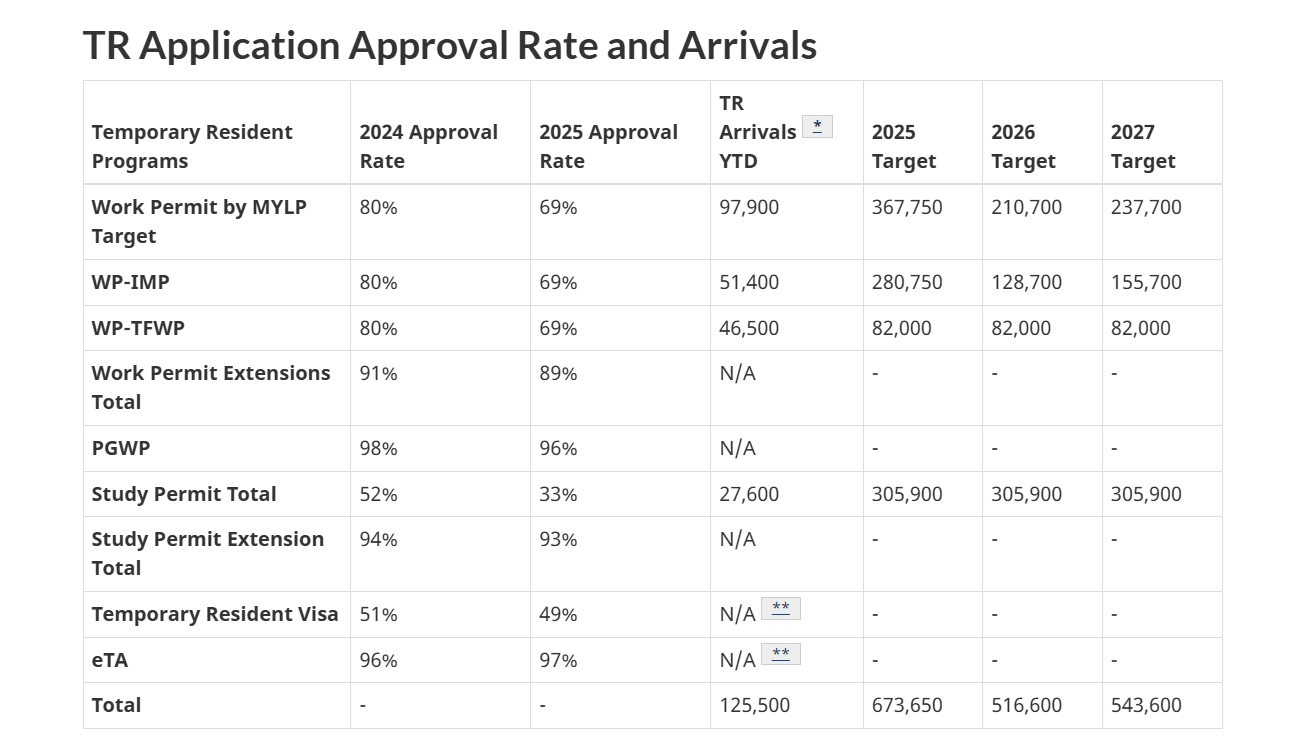
| Year | Refusal rate reported by IRCC | What it means for you |
| 2023 | 39% (all temporary resident visas) | Easier year, but approval was never automatic |
| 2024 | 54% (visitor visas) | Closer review of funds, home ties and purpose |
| 2025 | 51% (all temporary resident visas) | Close to the middle, still competitive. This is the figure for all temporary resident visas, not visitor visas alone |
| 2026 (January to February) | 54% approval for temporary resident visas as of 28 February 2026, against 48% in the same months of 2025 | A slightly better start than 2025, but two months is not a full year, so keep your file document-sensitive |
Applications with vague explanations, weak bank records or missing documents became the most vulnerable. A complete file is important, but not enough on its own. Tourism, family visits, business meetings, conferences and short events all need documents that match the stated purpose, so the officer can understand the trip without guessing.
Rates move because of application volume, immigration policy, fraud concerns, global travel patterns and temporary resident planning. That is why old rates should not be your only guide. Because officers pay close attention to whether you will leave after your authorized stay, small weaknesses weigh more heavily now. A missing explanation, a sudden bank deposit, an unclear plan or a mismatched document can create doubt, so avoid rushed submissions.
Numbers online often look contradictory because they measure different things. Some pages quote a refusal rate and others an approval rate, some count visitor visas and others all temporary resident visas, and some cover a full year while others cover only the first months. A 54% refusal rate and a 54% approval rate are opposite results, so check the label before you compare.
Canada Visitor Visa Approval Rates by Country
Approval rates differ by country, but a country trend does not decide your case. Your own profile counts for more.
Rates differ because of travel patterns, refusal history, document reliability, economic conditions, overstay concerns and visa integrity reviews. In practice, countries fall into three loose groups:
- Higher approval: applicants often have stronger travel records, clearer financial documents or lower overstay concerns. They still have to prove their case.
- Near the global average: results are mixed and small details matter. A clear explanation letter, stable bank records, proof of employment and a realistic itinerary can tip the decision.
- Higher refusal: officers raise concerns about return intent, document credibility, asylum trends or earlier non-compliance. Applicants need stronger proof of home ties and funds. Refusal is not certain.
A weak application from a high-approval country can still be refused, and a strong one from a high-refusal country can still be approved. IRCC’s briefings publish overall rates, not a table by country, so the country percentages you see online are third-party estimates. Use them as a rough pattern at most, and not as a prediction for your file.
Main Factors That Decide Your Canada Visitor Visa Chances
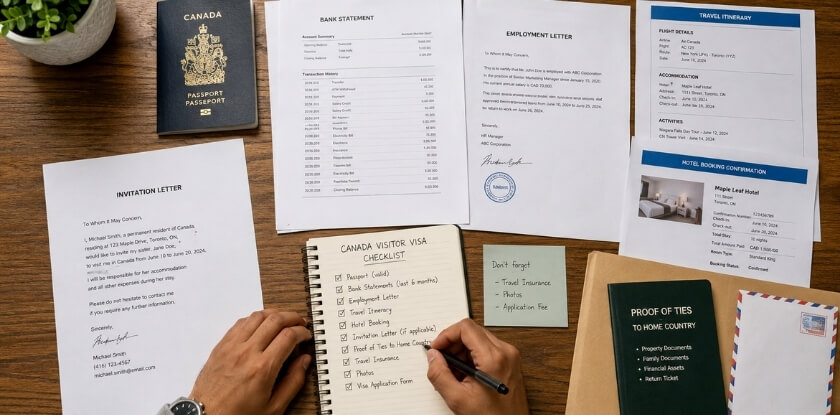
The strongest applications connect all documents into one clear story. Six factors matter most.
Purpose of Visit and Travel Plan
Explain clearly why you want to visit Canada and what you will do there. Saying only “tourism” or “visit” is not enough without supporting details. A strong plan names the reason, travel dates, cities, accommodation, the event, meeting or family visit, and estimated expenses. For a conference, seminar or business meeting, add registration proof, invitation details and the schedule if available.
Home Ties and Reasons to Return
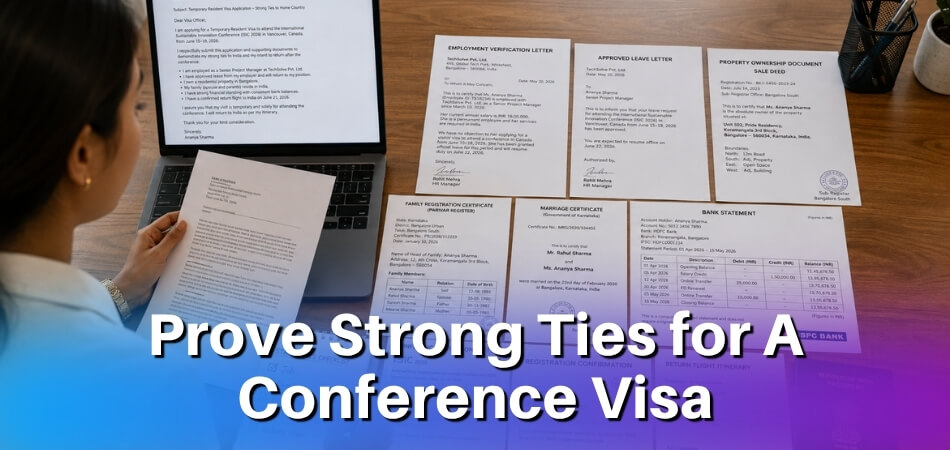
Officers want to know whether you will leave Canada after your stay. Good evidence includes a stable job, a registered business, ongoing studies, close family responsibilities, property, financial commitments and community or professional obligations. The stronger your responsibilities at home, the easier it is to show the visit is temporary. A recent job letter, leave approval, business registration or school enrollment letter should match your application details.
Proof of Funds
Show that you can pay for travel, accommodation, food, local transport, insurance and the return trip. Bank statements, salary slips, tax records, business income or sponsorship documents all work. IRCC sets no fixed dollar amount: what you need depends on how long you stay and whether you pay for a hotel or stay with friends or relatives. Officers prefer stable, explainable funds, and sudden large deposits without explanation create concern.
Travel History and Past Visa Compliance
Visiting other countries and returning on time shows you respect visa rules. IRCC treats earlier visas as helpful evidence, not a requirement. Having no travel history does not mean automatic refusal, because new travellers can be approved with strong home ties, finances and purpose.
Invitation Letters and Supporting Evidence
An invitation letter helps but does not guarantee approval. It should say who is inviting you, why you are visiting, where you will stay and how long you will remain. For event travel, add registration confirmation, tickets or official communication.
Previous Visa Refusals and Updated Evidence
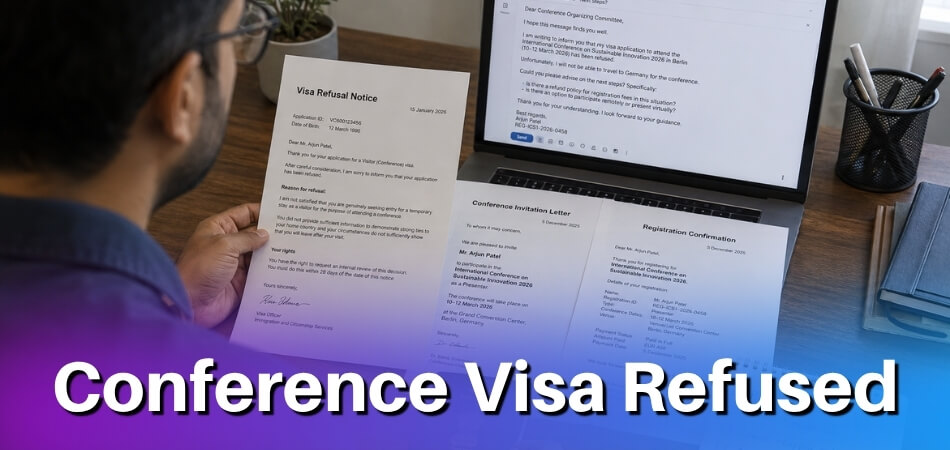
A previous refusal does not mean you will always be refused, but you must address the old concerns. If the reason was weak funds, an unclear purpose or poor home ties, show what has changed. Hiding a refusal damages your credibility, and resubmitting the same documents achieves nothing. IRCC states the reason for a refusal, and since July 2025 it has released officer decision notes automatically after most temporary resident refusals. Read them first, because they show which concern the officer had.
Why Canada Visitor Visa Applications Get Refused
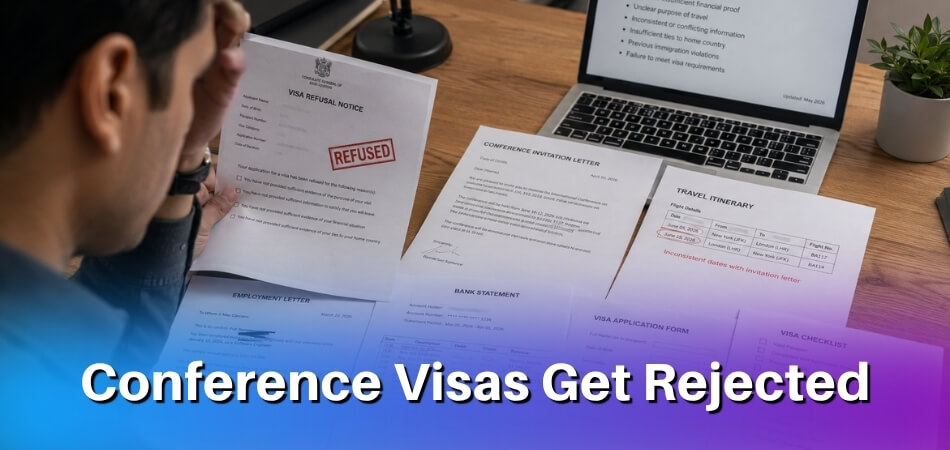
The main reason is that the officer is not satisfied you will leave Canada at the end of your authorized stay. IRCC says the vast majority of refused temporary resident visa applications fall into this group, which is why home ties, funds and a clear purpose matter so much. The same doubt about going home is also the top reason conference visas get rejected.
Other refusal causes add to that doubt:
- Financial records that do not match the trip: an expensive trip with thin records raises questions about your ability to support yourself.
- Incomplete forms or missing documents: unsigned documents, outdated photos or missing information cause delays or refusal. Check every form, date, name spelling and passport detail.
- Inconsistent information: a form that says one travel date while the itinerary shows another creates confusion. Your explanation letter, bank records, employment letter, invitation and travel plan must support the same details.
- Assuming an invitation letter is enough: you still must prove your own funds, home ties, travel purpose and temporary intent.
- Misrepresentation: IRCC reported that 7.1% of visitor visa refusals in 2025 were for misrepresentation, up from 4.6% in 2024. A misrepresentation finding can mean a five-year ban from Canada, so never submit false or altered documents.
Canada Visitor Visa Document Checklist
A complete checklist reduces mistakes. Exact requirements vary by country and application type, but most applications need documents in these areas.
| Area | Typical documents |
| Identity and application | Valid passport, completed forms, recent passport-size photo, family information form if required, fee receipt, biometrics confirmation if required, previous passports if available |
| Financial | Recent bank statements, salary slips, tax documents, business income records, savings proof, sponsor documents and a support letter if someone else pays |
| Employment, business or study | Employment letter, leave approval, business registration, trade license, tax records, student enrollment letter |
| Travel purpose | Itinerary, family invitation, business meeting invitation, medical appointment proof if relevant, a letter explaining your visit |
| Accommodation and itinerary | Hotel booking or host address and a simple day-by-day plan |
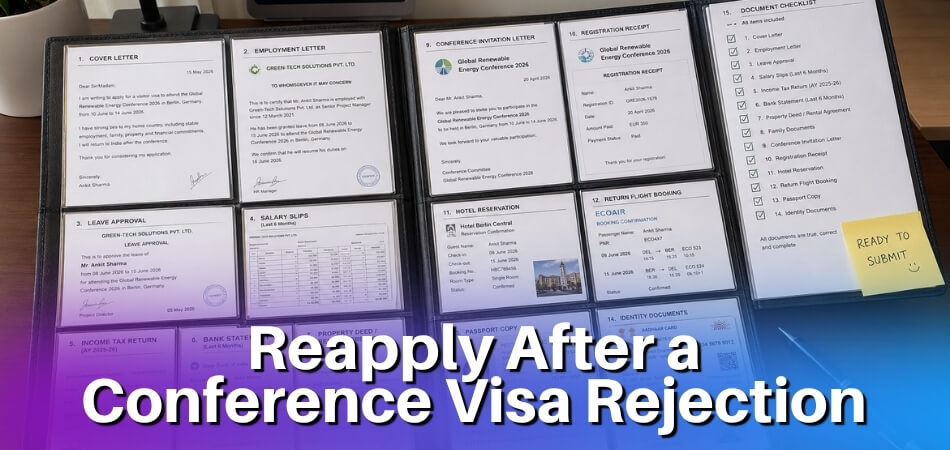
| Conference or event travel | Invitation letter, registration confirmation, event schedule, payment receipt, employer letter if your company is sending you, proof the event matches your profession |
Your passport should be valid for the planned travel period, and all personal details must match your forms. Flight reservations can help, but be careful about buying non-refundable tickets before approval. Conference documents show that the visit is time-bound and genuine.
Strong vs Weak Canada Visitor Visa Applications
A strong application tells a clear, believable story. A weak one leaves the officer with unanswered questions, even when the applicant has a real reason to travel.

| Area | Strong Application | Weak Application |
| Purpose | Clear and supported | Vague or unsupported |
| Funds | Stable and enough | Low, sudden, or unclear |
| Home ties | Strong proof provided | Little return evidence |
| Documents | Complete and consistent | Missing, mismatched or poorly organized |
| Travel history | Shows compliance | Not explained or weak |
| Previous refusal | Addressed honestly | Ignored or hidden |
Officers do not review documents in isolation. They look at how your forms, letter, bank records, job proof, invitation and itinerary connect. If the story is clear, the application is stronger. If it is confusing, it can be refused even when some documents are present.
How to Improve Your Odds of Getting a Canada Visitor Visa
You cannot guarantee approval, but a complete, honest and well-supported application raises your chances.
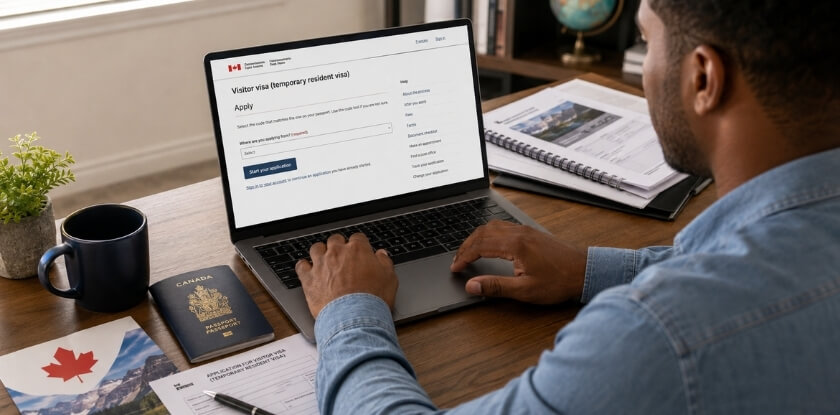
Match Every Document With Your Purpose
If you are visiting family, include relationship proof and an invitation. If you are attending a conference, include registration and event details. For tourism, include a practical itinerary and accommodation plan. Leave out random documents that do not help explain the trip.
Write a Clear Explanation Letter
Keep it simple, direct and specific: why you are visiting, how long you will stay, who pays and why you will return home. Do not make it too emotional or too long.
Explain Large Deposits
Stable income and regular transactions are stronger than sudden deposits. If a large deposit arrives, explain where it came from and include proof.
Be Honest and Give Yourself Time
Answer visa history questions honestly, because officers can compare your answers with earlier records. If you had a refusal, explain it briefly and show what improved. Rushed applications contain mistakes, so leave time to collect documents and compare all dates, names, financial details and travel information.
Check the Official Requirements Before Applying
Requirements and fees change, so read the current IRCC instructions before submitting. The visitor visa fee is CAD 100 and the biometrics fee is CAD 85 per person, with a family maximum of CAD 170 for biometrics. Biometrics stay valid for 10 years.
From our experience at MS International: our invitation letter confirms your registration and the event details, and nothing more. We issue it within 3 to 5 business days after payment clears, and it supports your application but does not guarantee a visa. Treat it as one document among many. Check that the dates in the letter, your leave approval and your bank statements agree, and check your name and passport details as soon as it arrives, because corrections after issue cost US$50. Our conferences are held in person in the Greater Toronto Area, and registration fees are non-refundable if a visa is refused, so apply with enough time before the event.
FAQs About the Odds of Getting a Visitor Visa for Canada
Judging your chances of a Canadian visitor visa means looking at country of citizenship, thin travel history, a past refusal, bank balance and an invitation letter, plus the 2026 approval rate and AI decisions.
What Are the Average Odds of Getting a Visitor Visa for Canada?
About half of applications are approved. IRCC reported a 54% refusal rate for 2024 and 51% for 2025, so approval is realistic but never guaranteed. Your personal odds depend on your documents, purpose, funds, home ties and travel history.
Does My Country Affect My Canada Visitor Visa Chances?
Yes, country-level trends affect overall refusal and approval patterns. Your application is still judged individually, so strong documents can improve your chances even if your country has a higher refusal rate.
Can I Get Approved Without Previous Travel History?
Yes, you can be approved without previous travel, and IRCC does not list past travel as a requirement. Strengthen the other parts of your file, especially financial proof, home ties, employment and travel purpose.
Does a Previous Refusal Mean I Will Be Refused Again?
No, a previous refusal does not automatically lead to another one. Read the refusal reasons and officer notes, then address those concerns with stronger evidence and disclose the earlier refusal.
How Much Bank Balance Improves My Canada Visitor Visa Odds?
There is no fixed amount: it depends on your trip length and on who pays for your stay. Keep a balance that covers the whole trip. Stable, explainable funds matter more than a random large balance.
Is a Canada Visitor Visa Decided by AI?
No, the final decision is made by a visa officer. Digital tools may help organize applications, but your documents still need to prove you meet the requirements for a temporary visit.
What Is the Canada Visitor Visa Approval Rate in 2026?
IRCC reported a 54% approval rate for temporary resident visas for January to February 2026, with data to 28 February. This covers two months only, so it is a start and not a full-year rate.
Does an Invitation Letter Improve My Chances?
It can help, but it does not guarantee approval. The letter must support a genuine reason for travel, and you still need to prove your own finances, home ties and temporary intent.
Can Attending a Conference Improve My Visitor Visa Application?
It can support your purpose of travel if the event is genuine and related to your professional, academic or business background. Include registration proof, invitation details, the event schedule and documents showing why you need to attend.
Bottom Line
Your real chances depend on the strength of your application, not only on the average approval rate. Focus on clear purpose, strong home ties, stable financial proof, complete documents and honest answers. If your file shows that the visit is genuine, affordable and temporary, your chances are stronger.
Disclaimer: This article is general information, not legal or immigration advice. Visa rules, fees and approval rates change. Confirm the current requirements on the official IRCC website before you apply.