
An officer cannot read your mind, so your file has to speak for you. Plenty of honest applicants feel unsure what counts as proof of returning home, and they fear a modest background will work against them. A clear, well-supported story can change that.
Quick answer: You prove you will leave Canada by showing an officer real ties to your home country and a plan that fits a temporary stay: a job with approved leave or an active business, funds with a clear source, family and housing commitments, and a specific purpose with an end date. Students add a personal study plan. No single document is enough, so your file must tell one consistent story.
Fact-checked by the MS International Editorial Team. Last verified against official sources: October 2026.
When you apply for a Canadian visitor visa, study permit, or temporary work permit, the officer must be satisfied that your stay will be temporary. This does not mean your profile must be perfect. Many applicants do not own property, have little travel history, or are young and single. What matters is how clearly you explain your situation and how well your documents support your return plan.
Below are 9 ways to prove that you will leave Canada at the end of your stay or studies, with examples, document ideas, and the mistakes that weaken a file.
What Does It Mean to Prove You Will Leave Canada?
It means showing temporary intent: your application must convince the officer that you will follow the conditions of your visa or permit and leave on time. IRCC tells visitors they must convince an officer that they have ties, such as a job, home, financial assets or family, that will bring them back home, and that they will leave Canada at the end of the visit. The same test applies to students: IRCC says a study permit can be refused if you do not convince the officer that you will leave Canada at the end of your study period, or that your main purpose in Canada is to study.

A strong application answers three questions:
- Why are you going to Canada?
- How will you pay for your stay?
- Why will you return afterward?
Officers look at your full situation, not one document. A return ticket, bank statement, or invitation letter helps, but purpose, dates, funds, ties, and explanation must all support the same message. An employed applicant may rely on a job letter and approved leave, while a student may rely on academic records and career plans outside Canada.
What Strong Ties Usually Mean
Strong ties are real obligations that connect you to your home country or country of residence. Common examples are stable employment, an active business, family responsibilities, ongoing studies, property or housing commitments, regular income, career goals outside Canada, and earlier travel compliance. Not every applicant has all of these. Present the strongest evidence that fits your actual situation.
Best Evidence That Shows You Will Leave Canada
The best evidence combines employment or business proof, financial stability, family responsibilities, residence ties, a clear travel purpose, previous travel history, and an explanation letter. Students should also include a study plan explaining why the Canadian program fits their background and how it supports career goals outside Canada.
Strongest Proof Categories at a Glance
| Proof Category | Examples of Documents | What It Shows |
| Employment | Job letter, leave approval, payslips | You have work responsibilities to return to |
| Business | Registration, tax records, invoices | Your business needs your continued involvement |
| Financial | Bank statements, income proof | You can afford the trip or studies |
| Sponsor | Sponsor letter, income proof | Someone credible covers the costs |
| Family | Marriage, children, dependent records | You have personal responsibilities outside Canada |
| Residence | Property deed, lease, bills | You maintain a home outside Canada |
| Travel purpose | Itinerary, registration, invitation | Your visit has a reason and a clear end point |
| Study | Acceptance letter, study plan | Your education supports future goals |
| Travel history | Visas, entry and exit stamps | You followed visa rules before |
Use several relevant proof types together instead of depending on one document. Submit recent, genuine, and easy-to-read files, and leave out documents that do not support your case.
9 Practical Ways to Prove You Will Leave Canada
Use the ways that match your own situation; you do not need all nine.
1. Show Stable Employment and Approved Leave
A stable job ties your income and professional future to your country of residence. Useful documents: employment confirmation letter, approved leave letter, recent payslips, employment contract, tax documents, and a workplace ID if relevant.
IRCC asks for the employer letter on official letterhead and dated no earlier than 3 months before you apply. Your letter should include your job title, salary, start date, approved leave period, and expected return-to-work date. A general letter that only says you are employed may not be strong enough.
Example explanation: I am currently employed as an Accounts Officer. My leave has been approved from July 5 to July 18, and I am expected to resume work on July 19. This works because it connects your travel period to a clear work obligation.
2. Prove Active Business or Professional Obligations
If you own or manage a business, officers may consider whether it is active, produces income, and needs you back. Useful documents: business registration certificate, trade license, tax records, business bank statements, client contracts, invoices, supplier agreements, payroll records, and an office lease or utility bills. Do not submit only a business license. Explain what you actually do in the business and why your absence must be short.
Example explanation: I operate a registered service business and manage client communication, payments, and project delivery. I must return after my visit to continue scheduled business operations.
3. Demonstrate Financial Stability and Clear Income Sources
Funds show that you can afford your stay without unauthorized work or overstaying, but officers also ask where the money came from. Useful documents: bank statements, salary deposits, business income records, tax returns, savings certificates, and fixed deposit records. IRCC says at least 6 months of account details, including balances, helps the officer understand your financial situation.
Your funds should match your purpose and stay length. A short visit needs realistic travel funds, while a study permit needs stronger proof for tuition, living costs, and return travel. If you received a large amount recently, explain it with a sale receipt, bonus letter, loan record, sponsor transfer proof, or business income record.
If someone else is funding your trip, include a sponsor letter, the sponsor’s bank statements and income proof, proof of your relationship, and a note on which expenses they cover. Your financial documents should tell a clear money story.
4. Document Family Responsibilities Outside Canada
Family responsibilities support your return when people depend on you emotionally, financially, or practically. Useful documents: marriage certificate, children’s birth certificates and school records, proof of dependent care, medical documents for dependent relatives, family registration documents, and financial support records.
Be specific about your role instead of only saying you have family. Example explanation: My spouse and children live in my home country, and I support their household expenses. I will return after my visit to continue my family and financial responsibilities. If you care for elderly parents or dependents, explain the support you provide, honestly and factually.
5. Show Property, Housing, or Residence Commitments
Housing documents show roots outside Canada. Useful documents: property deed, land registration, mortgage records, lease agreement, utility bills, residence certificate, property tax receipts, or proof that you live in a family home.
You do not need to own property. A long-term rental agreement, family residence, or household responsibility also supports your case. Example explanation: I live in a long-term rented apartment and continue to pay rent and utility bills. My residence and personal commitments remain in my country of residence.
6. Provide Ongoing Education or Academic Commitments
If you are studying outside Canada and applying for a visitor visa, for a conference, short training, tourism, or a family visit, your education shows why you must return. Useful documents: enrollment letter, student ID, exam schedule, academic calendar, tuition payment receipt, and a letter from your school or university.
Your travel dates should fit your academic calendar. If classes or exams resume soon after the trip, say so. Example explanation: I am enrolled in the final semester of my bachelor’s program. My exams begin shortly after my planned visit, so I must return to continue my studies.
7. Present a Specific and Time-Limited Travel Purpose
A clear purpose explains why you are going and why the stay has a natural end date. Vague plans create doubt. Useful documents: itinerary, hotel booking, invitation letter, conference registration, event agenda, meeting schedule, tourism plan, and return travel plan.
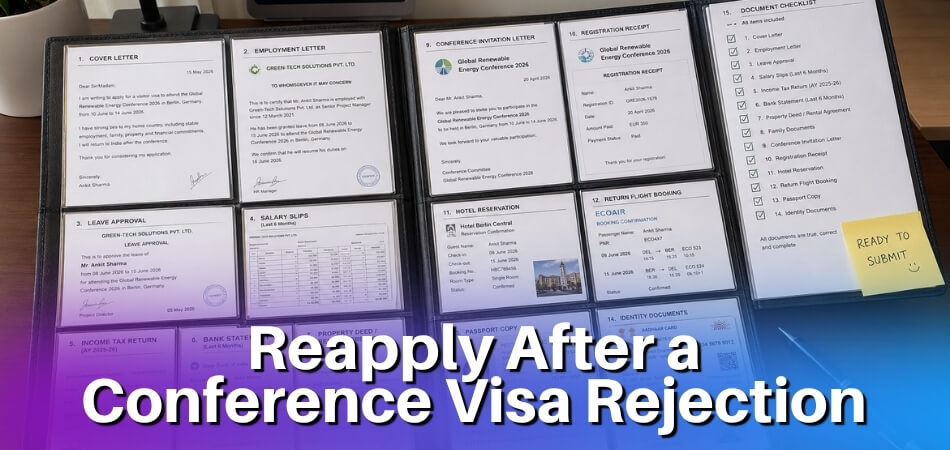
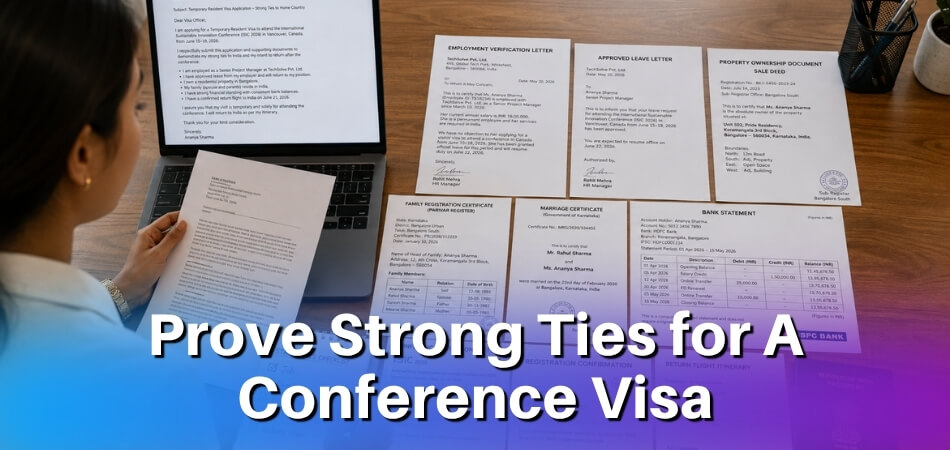
For a conference, include the event name, dates, venue, registration proof, and why it matters to your work, studies, or business. To prove strong ties for a conference visa, add an employer letter with your return date and a return ticket that matches the event dates. Example explanation: I plan to attend a three-day business conference in Toronto from August 10 to August 12. I will return after the event because my approved leave ends shortly afterward. This is stronger than “I want to visit Canada.”
If you attend as a business visitor, IRCC describes the activities as business meetings, special events or training for a few days or weeks. You must plan to stay less than 6 months, not enter the Canadian labour market, and keep your main business and income outside Canada.
8. Use Previous Travel History to Show Compliance
Earlier trips help if they show you entered and left other countries within the allowed time. IRCC recommends copies of previous passports or visas, entry and exit stamps, or study or work permits, and says they show you have been able to get a visa in the past. Useful documents: previous visas, entry and exit stamps, old passports, previous residence permits, and travel records.
Example explanation: I have previously travelled internationally and returned within the authorized period each time. Copies of my previous visas and passport stamps are included. Never exaggerate or create records. Limited travel history is not automatically negative, so strengthen the file with employment, family, financial, residence, and purpose documents.
9. Build a Study Plan With a Clear Career Path Back Home
For study permit applicants, the study plan is where you show why studying in Canada is a temporary step. IRCC lists a letter of explanation as recommended for a study permit, covering why you want to study in Canada and that you understand your responsibilities as a student, and many visa offices also ask for a separate study plan in their checklists.
A strong plan covers your previous education, your chosen program and institution, why they fit your background, how you will pay tuition and living costs, your career plan after graduation, and your ties outside Canada. Avoid generic statements that could apply to anyone.
Example explanation: I selected this postgraduate program because it builds on my previous education in business administration. After completing the program, I plan to return home and pursue management roles in my local industry.
Best Proofs by Application Type
The core message is the same for every application type, but the supporting documents differ. The table lists what is specific to each type; the general documents above still apply.
| Applicant | Documents that fit best | Point to explain |
| Visitor visa (TRV) | Invitation letter, hotel booking, itinerary, employment or business proof, family or lease documents | Why you visit, how long you stay, who pays, why you return |
| Conference or event visitor | Conference registration, event invitation and agenda, venue details, proof of professional relevance, employer leave approval, accommodation plan | The event is genuine, relevant to your job, business, research or studies, and limited in time |
| Study permit | Letter of acceptance, tuition payment proof, proof of funds, study plan, transcripts, sponsor documents if sponsored | Why the program makes sense and why returning home afterward is reasonable |
| Work permit | Job offer letter, employment contract, qualifications, end date or project timeline, previous immigration compliance | The work is authorized and temporary; include the job’s end date or project length |
| Living outside your passport country | Residence permit, employment contract, lease, utility bills, business registration, tax records, school enrollment | Why you return to the country where you legally live, work, study, or support family |
How to Organize Your Evidence for a Stronger Application
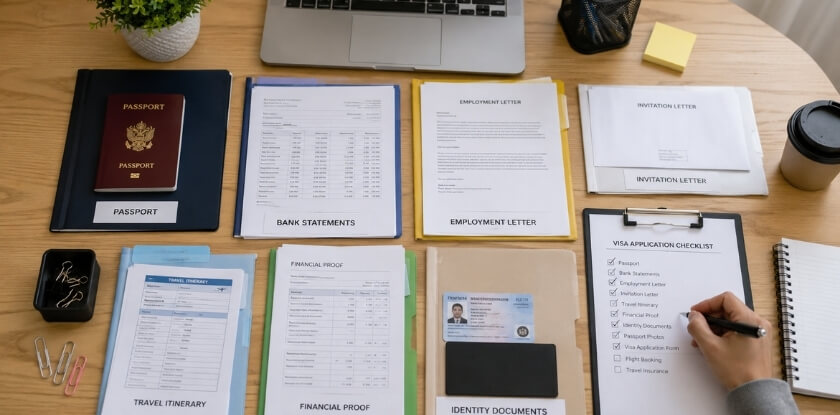
Match every document to your purpose, funds, ties, or return plan, and make the file easy to review. Good evidence loses value when it is disorganized or unexplained.
Step 1: Match Your Travel Purpose With Your Stay Duration
A short conference or family visit should have a reasonable travel period. A three-day conference can justify a few extra days for arrival, rest, and return travel, but a much longer stay needs stronger reasoning and financial proof.
Step 2: Select Documents That Directly Support Your Return Plan
Do not submit documents only because you have them. If employment is your main tie, include job and leave documents. If business is your main tie, include business activity proof. If family is your main tie, include relationship and responsibility documents. Then connect each one to a real obligation: a job letter to your return-to-work date, a lease to your residence, a bank statement to how you will fund the stay and how the savings were built.
Step 3: Review for Consistency
Inconsistencies create doubts about credibility. Before submitting, check that forms and documents match on:
- Travel dates and leave dates
- Job title and employer or school details
- Address and passport information
- Bank balance and sponsor information
- File names and document order
Sample Letter of Explanation Structure for Temporary Intent
A Letter of Explanation helps the officer see how your documents fit together, and it should stick to facts. A visitor visa letter can often be one page. A study permit letter may be longer because it explains program choice, funding, and career goals.
What the Letter Should Explain
Every major claim should be backed by a document where possible. Cover these points:
- Application type and why you are going to Canada
- Planned travel dates and how long you will stay
- Who will pay and the source of funds
- Your main ties outside Canada
- When and why you will return
- Which documents support your explanation
Suggested Structure for Visitor Visa Applicants
Keep the letter simple and focused on the temporary nature of the trip.
Subject: Letter of Explanation for Temporary Resident Visa Application
Dear Visa Officer,
I am applying for a visitor visa to travel to Canada for [purpose]. My planned travel dates are from [date] to [date].
My expenses will be covered by [salary/savings/business income/sponsor support]. Supporting financial documents are attached.
I have strong reasons to return to [country], including [employment/business/family/studies/residence]. I have included documents to support these ties.
I understand that my stay in Canada is temporary, and I will leave Canada at the end of my authorized visit.
Sincerely,
[Full Name]
Suggested Structure for Study Permit Applicants
Explain both the study purpose and your plan after graduation.
Subject: Study Plan and Letter of Explanation
Dear Visa Officer,
I have been accepted into [program name] at [institution name]. I selected this program because it connects with my previous education and supports my career goal in [field].
My tuition and living expenses will be funded by [source of funds]. Financial documents are attached.
After completing my studies, I plan to return to [country] and pursue opportunities in [career/industry]. My family, financial, and career ties remain in [country].
I understand the temporary nature of a study permit and will comply with the conditions of my stay.
Sincerely,
[Full Name]
From our experience at MS International: we issue invitation letters to attendees applying for Canadian visitor visas. The letter only proves the event, dates and venue. Your leave approval, funds and home ties still have to come from you, so ask for a letter whose dates match your leave letter and travel plan. We cannot promise any outcome; the visa officer decides.
What to Do If Your Return Evidence Is Weak
One weak area does not mean refusal. Explain the weakness honestly and support the file with other credible evidence.
If You Do Not Have a Job
Focus on education, family responsibilities, financial support, upcoming employment, business plans, or residence commitments. Do not pretend to have a job or submit documents that cannot be verified.
If You Do Not Own Property
Property is helpful but not required. Show a lease, utility bills, family home documents, or household responsibilities, and explain why you will return to where you live.
If You Are Young and Single
You may need to show stronger education, career, financial, or family ties. A clear purpose and a realistic travel plan matter most. Use enrollment records, employer letters, family support proof, savings records, or career plans.
If Someone Else Is Funding Your Trip
Include the sponsor’s documents and your own return evidence. A sponsor’s money explains how you will pay, not why you will leave.
Common Mistakes That Can Weaken Your Application
Beyond the points above (unexplained documents, mismatched details, unexplained deposits, a copied study plan), two mistakes do the most damage.

- Hiding Relatives or Previous Refusals: If you have relatives in Canada or a previous refusal, disclose it honestly and explain your situation clearly.
- Submitting False Documents: IRCC says that if you send false documents or information, your application will be refused, you could have a permanent record of fraud, and you could be banned from Canada for at least 5 years. If your profile is weak, explain it honestly instead.
What Happens If the Officer Is Not Convinced You Will Leave?
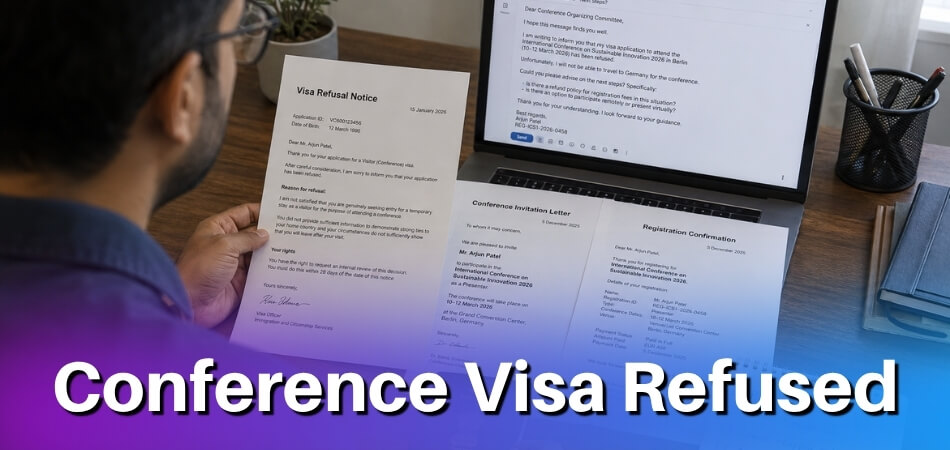
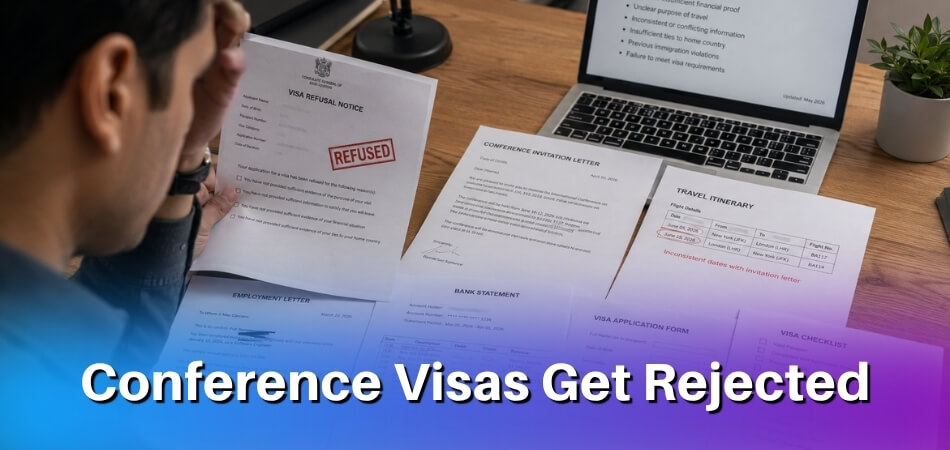
You get a refusal letter, and for visitor visa and study permit refusals IRCC has attached an officer decision note explaining the reasons since 29 July 2025. Read both before you plan anything else. IRCC may remove parts of the note to protect sensitive information.
IRCC says applying again with the same information is unlikely to change the decision, but you can apply again if you have new information or documents that address the refusal reasons. A new application does not guarantee approval. If the note says your ties were not shown, add the employment, family, residence or financial evidence it found missing, and explain it in a short letter.
FAQs About Proving You Will Leave Canada
Proving you will go home is harder with no travel history, family already in Canada or one weak area in the file, and students also weigh explaining their return plans and adding a letter of explanation.
How Many Documents Do I Need to Prove I Will Leave Canada?
There is no fixed number. A few strong, relevant documents are better than many unrelated ones. Focus on quality, consistency, and clear explanation.
Does a Return Ticket Prove I Will Leave Canada?
No. A return ticket supports your plan but does not prove you will leave. IRCC names flight details as one example of itinerary documents, and officers weigh purpose, funds, ties, and credibility together.
Can I Get Approved With No Travel History?
Yes, it is possible. IRCC lists travel history as a recommended document, not a requirement, so limited history does not automatically mean refusal. Strengthen your application with employment, family, finances, residence, and a clear travel plan.
Does Having Family in Canada Hurt My Application?
Not automatically. The issue is whether the officer believes you will leave after your authorized stay. Be honest about relatives and show strong ties outside Canada.
Can Strong Finances Replace Home-Country Ties?
Not completely. Finances show you can afford the stay, but ties show why you would return. A balanced application includes both.
Should Students Explain Why They Will Return Home?
Yes. Explain how the Canadian program supports career goals outside Canada, in a realistic way that fits your background.
What If My Application Has One Weak Area?
One weak area does not automatically ruin the application. Explain it clearly and support the rest of the file with stronger evidence.
Is a Letter of Explanation Necessary?
Not always, but it is recommended. IRCC labels a letter of explanation recommended for study permits, where it should explain why you want to study in Canada and show you understand your responsibilities as a student. It also helps officers see how your documents support your temporary intent.
How Recent Should My Employer Letter Be?
It should be dated no earlier than 3 months before you apply. IRCC also asks for official letterhead, and the letter should confirm your job and that you will return to it.
Will I Be Told Why My Application Was Refused?
Yes. The refusal letter gives the reasons, and an officer decision note explains why the application was refused. Some parts of the note may be removed.
Conclusion
Proving that you will leave Canada is about clarity, honesty, and consistency. The 9 ways to prove that you will leave Canada at the end of your stay or studies work best when used together, and you do not need a perfect profile, only a believable one. Choose documents that match your real situation, explain weak areas honestly, and make every part of the file support the same return plan.
Disclaimer: This article is general information, not legal or immigration advice. Visa rules, fees, and processing times change. Confirm the current requirements on the official IRCC (Immigration, Refugees and Citizenship Canada) website before you apply.