
Getting an invitation to a conference in Canada is exciting, but for Ethiopian applicants the real work starts afterwards. The visa application has to be built carefully, and a small gap in the file can cost you the trip.
Quick answer: Ethiopians apply for a Canadian visitor visa (Temporary Resident Visa) online through IRCC, because Canada has no separate conference visa. The fee is CAD $100, plus CAD $85 for biometrics, which you give at the Canada Visa Application Centre in Addis Ababa. Upload your invitation, purpose letter, bank statements and proof of ties, then wait for a decision.
Fact-checked by the MS International Editorial Team. Last verified against official sources: October 2026.
Conference travel falls under the visitor visa category. You apply and explain that you are travelling to attend a specific conference, seminar, workshop, trade show or professional meeting.
An invitation letter alone will not win the application. The officer also looks at your finances, work or business background, travel history, ties to Ethiopia and overall credibility. Every document should tell the same story: a short conference trip, then a return home.
From our experience at MS International: We issue conference invitation letters, and the letter is not enough on its own. Our letter is issued within 3 to 5 business days after payment clears, and it supports your application but does not guarantee a visa. Treat the invitation as one page of a complete file and check that its dates, the spelling of their name and their role match everything else they upload. Our conferences are held in person in the Greater Toronto Area. Registration fees are non-refundable, and a visa refusal does not automatically entitle you to a refund, so read the refund policy before you pay.
Canada Conference Visa for Ethiopian Applicants: What It Really Means
A “Canada conference visa” is a regular visitor visa application where the reason for travel is a conference. The officer must be satisfied that you are a genuine temporary visitor who will leave when your authorized stay ends.
Is There a Separate Canada Conference Visa?
No. Your application should clearly show:
- The event: a real conference that an officer can look up and verify
- Your role: attendee, delegate, speaker, presenter, researcher, or business participant
- Your reason for attending: professional development, academic exchange, research presentation, or business networking
- Your return plan: evidence that you will leave Canada after the conference
Visitor Visa for Conference Travel
A visitor visa suits short conference trips where you are not entering the Canadian labour market. IRCC says business visitors must plan to stay under 6 months and have their main business and income outside Canada.
The conference should fit your background. A lecturer at an academic event, a business owner at an entrepreneurship conference, or a nurse at a medical seminar can explain the purpose far more convincingly than someone with no link to the topic.
Allowed and Not Allowed Activities
You may attend sessions, join discussions, meet professionals, take short workshops, network, and present unpaid research. You may not work for a Canadian employer, take a paid job, start a long-term study program, stay beyond your authorized period, or use the conference as cover for another purpose.
Eligibility Requirements for Ethiopian Conference Attendees
You must show the officer a genuine purpose, enough money, strong reasons to return, and an honest immigration history.

Valid Temporary Travel Purpose
Do not say only that you want to visit Canada. Presenting research, joining a business summit or representing your employer are all valid purposes, and the purpose letter section below shows how to explain yours.
Money and Reasons to Return
You must show you can pay for the trip without working in Canada, and that your life is based in Ethiopia. The funds and ties sections below cover the evidence.
Honest Immigration History
Declare any earlier refusals, overstays or immigration problems. A past refusal does not automatically block approval, but hiding it can seriously damage your credibility. If you have travelled before and followed the rules, include relevant visas and stamps. If your travel history is limited, make your purpose, funds and ties especially clear.
Required Documents for a Canada Conference Visa from Ethiopia
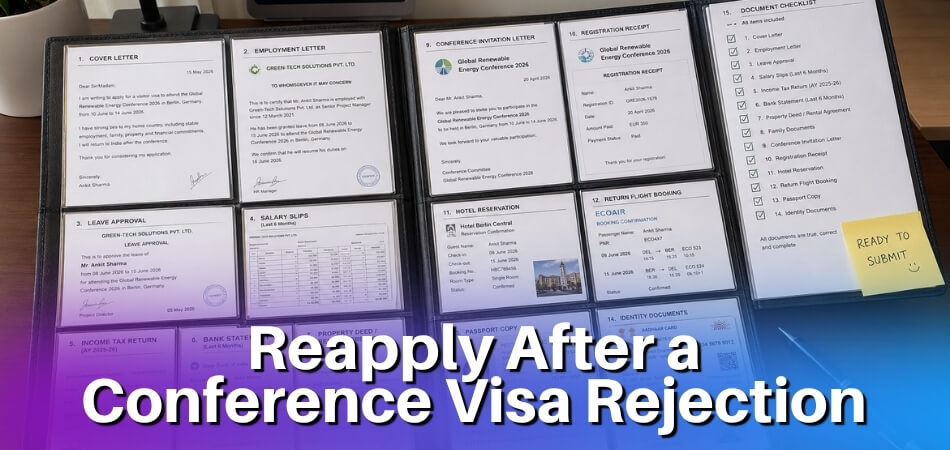
You need documents that prove your identity, the conference, your finances and your intention to return. The online checklist in your IRCC account lists exactly what applies to you.
Ethiopian Passport and Identity Documents
IRCC advises that your passport be valid for at least 6 months from your planned travel date, and it needs blank pages for the visa. Check your name, date of birth, passport number and expiry date before applying. Include copies of older passports that show travel history.
Conference Invitation or Registration Proof
The invitation shows that the event is real and that you have a reason to attend. It should include:
- Conference name, event dates, city and venue in Canada
- Organizer name and contact details
- Your full name and your role at the event
- Registration or acceptance confirmation
- Event agenda, if available
Speakers and presenters should add abstract acceptance, speaker confirmation or the program listing. If the organizer has registered the event with IRCC, it gives you an event code, and IRCC asks you to include that code in your application.
Purpose Letter, Funds and Ties
Write the purpose of travel letter in your own words. Proof of funds and proof of ties each have their own section below.
Travel History and Translations
Include earlier visas and entry or exit stamps where useful. If you were refused before, add an explanation and the improvements you made. Documents not in English or French need a complete translation attached to the original.
How to Apply Online Through IRCC from Ethiopia
Apply online through the IRCC portal or your IRCC secure account: complete the forms, upload documents, pay by card and follow the instructions IRCC sends. Paper applications are only allowed in limited cases, such as disability.

Step 1: Confirm Your Conference Travel Purpose
Before you start, have the event name, organizer, dates, location, invitation, agenda and your role ready.
Step 2: Create or Access Your Online Account
Start the visitor visa application in the official IRCC system. Use an email address you check daily, because IRCC messages appear in your account.
Step 3: Complete the Application Forms
Check your passport details, travel dates, employment history, family information and previous refusal answers. Do not guess or hide anything; wrong answers cause delays and refusals.
Step 4: Upload Supporting Documents
Upload readable files with simple names such as “Passport,” “Conference Invitation,” “Purpose Letter,” “Bank Statements,” “Employment Letter” and “Proof of Ties.” Avoid blurry scans, missing pages and password-protected files.
Step 5: Pay the Required Fees
Pay the visitor visa fee and the biometrics fee by card at the end of the application. Save the receipt.
Step 6: Receive the Biometrics Instruction Letter
If biometrics are required, IRCC sends a Biometrics Instruction Letter. You need it to book your appointment, so print it and keep it with your passport.
Step 7: Attend Biometrics
Your fingerprints and photo are collected at the centre. The biometrics section below lists what to bring.
Step 8: Track the Application
Check your account regularly. IRCC may ask for more documents or clarification, and a quick, clear reply helps.
Step 9: Submit Your Passport After Approval
If approved, IRCC tells you how to submit your passport for the visa.
Biometrics for Ethiopian Applicants
Most Ethiopian applicants must give biometrics (fingerprints and a digital photo) after applying and receiving the instruction letter. Always follow the instructions in your own account.
Who Usually Needs Biometrics?
Many visitor visa applicants must give biometrics unless they are exempt or already have valid biometrics from an earlier Canadian application. Biometrics you gave for an earlier Canadian visitor visa, work or study application stay valid for 10 years.
Canada Visa Application Centre in Addis Ababa
Biometrics are collected at the Canada Visa Application Centre in Addis Ababa, operated by VFS Global for IRCC. VFS has stated that an appointment is mandatory for biometric enrolment. Its Ethiopia page has posted 2026 notices about phone-line problems and an election-day closure, so confirm the current address and opening days on the VFS page before you travel to the centre. The centre only handles administrative steps; Canadian immigration officers make the decision.
What to Bring
- Valid passport
- Biometrics Instruction Letter
- Appointment confirmation
- Any extra documents requested during booking
- Service payment receipt, if applicable
Book soon after you receive the letter. IRCC gives you 30 days from the date on the letter, and late biometrics delay the whole application.
Canada Conference Visa Fees from Ethiopia
The government fee is CAD $100 for the visitor visa and CAD $85 for biometrics, per person. Expect extra costs on top.

Main Visa Costs
| Cost | Amount (IRCC, October 2026) |
|---|---|
| Visitor visa (TRV), per person | CAD $100 |
| Visitor visa, family of 5 or more applying together | CAD $500 maximum |
| Biometrics, per person | CAD $85 |
| Biometrics, family of 2 or more applying together | CAD $170 maximum |
| VFS service charge, passport courier, translation, printing | Varies; check the VFS Ethiopia page |
Some applicants are exempt from some fees. Fees can change, so check the IRCC fee page before paying and keep every receipt.
Extra Costs to Consider
Budget also for conference registration, hotel, travel insurance, transport to the centre, document review and courier services. A self-employed applicant may need more business papers translated, while a student may need stronger sponsorship proof.
Processing Time for Canada Conference Visa Applications from Ethiopia
There is no fixed processing time. IRCC publishes current estimates by country in its online processing-times tool, and they change often, so check it for Ethiopia on the day you apply. IRCC describes the estimate as how long it expects to take if it received your complete application today, including the time to give biometrics. It is not a maximum or a guarantee, and calling IRCC does not speed up a file. Because conference dates are fixed, apply early. The steps that add up to the wait are covered in how long a Canada conference visa takes.
Why Timelines Vary and What Causes Delay
Time depends on how complete your file is, background checks, travel history, seasonal volume and how fast you answer document requests. The usual causes of delay are late biometrics, blurry uploads, missing financial proof, unexplained deposits, inconsistent dates, an unclear purpose and previous refusals. Missing or inconsistent documents slow the process.
2026 IRCC Measures: Does Ethiopia Count?
Not if you live in Ethiopia. IRCC’s temporary Ebola measures apply to people whose last country of residence is the Democratic Republic of the Congo, South Sudan or Uganda, and Ethiopia is not on that list. Under the measures, which run to 27 November 2026 unless extended, IRCC keeps processing applications from those three countries but does not finalize them. If you live in one of them, check the IRCC special measures page before you apply.
When to Apply
Start as soon as your invitation or registration is available, and prepare several months before the conference. That leaves time for documents, translations, biometrics, review and passport stamping. Even strong applications can take longer than expected.
How to Write a Strong Purpose of Travel Letter
A good purpose letter is direct, personal and supported by documents. It explains why you are visiting, what you will do and why you will return to Ethiopia.
What the Letter Should Explain
- Which conference you are attending, where and when
- Your role at the event
- How the event relates to your work, studies, business or research
- Who pays, and where you will stay
- When you will return, and what responsibilities require it
How to Connect the Conference to Your Background
If you are employed, explain how the event supports your duties. Business owners should link it to their industry or partnerships, and students or researchers to their field. Avoid generic statements; the officer should see why this conference matters to you. A vague line such as “to gain exposure” says little. Name a session, speaker or topic that connects to what you actually do, and keep the claim modest enough to prove.
Mistakes to Avoid
Do not copy a template, tell an emotional story, give vague reasons, mention plans that sound like work or a long stay, ignore previous refusals, or use dates that conflict with other documents. A good letter is simple, factual and easy to verify.
Proof of Funds: What Ethiopian Applicants Should Show
Show realistic funds that match your income and your itinerary, backed by bank statements.

What Funds Should Cover
Funds should cover registration, flights, accommodation, meals, local transport, emergencies and the return ticket without working in Canada. Canada sets no fixed minimum amount, so the budget must make sense for the length of your stay: a five-day conference needs a smaller budget than a month-long stay.
Bank Statements and Income Evidence
Use recent bank statements, salary slips, business bank statements, tax documents, invoices, contracts, savings records or paid registration receipts. IRCC suggests a bank statement showing at least 6 months of activity and balances, with the bank’s name and contact details. Salary deposits should match your employment documents, and business records should explain your income.
Sponsorship or Employer Funding
A sponsor should send a letter plus financial proof. An employer should confirm your job, approved leave, covered expenses and why you are sent. A sponsor with no clear relationship to you can weaken the application.
Unexplained Deposits
Large recent deposits raise questions. Explain the source with evidence, such as salary arrears, business income, a property sale, a savings transfer, family support or employer funding.
Proof of Ties to Ethiopia
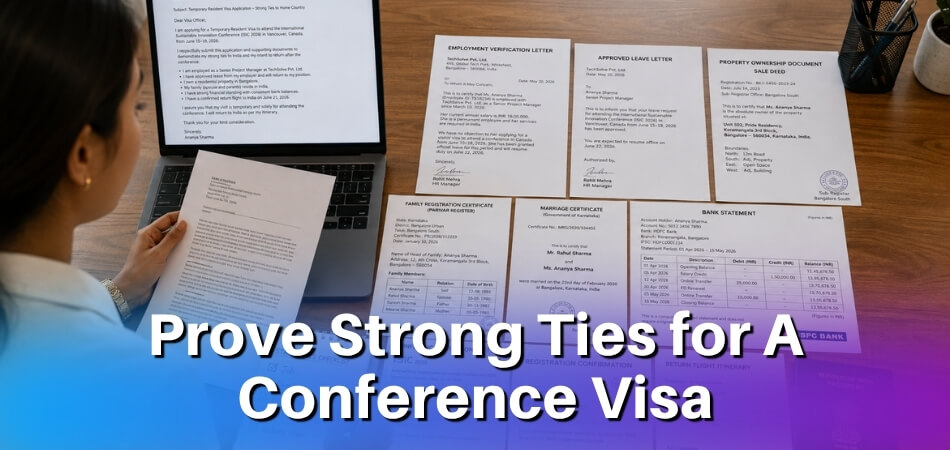
Ties are the professional, academic, financial, family or property reasons that make your stay in Canada temporary. Choose documents that reflect your real situation and show that your life is based in Ethiopia.
Employment Ties
Submit a letter with your job title, salary, start date, approved leave, employer contact details and expected return date. IRCC says an employer letter should be on official letterhead and dated no earlier than 3 months before you apply. The leave dates should match your travel plan.
Business Ties
Show an active business with registration, trade license, tax records, invoices, contracts, business bank statements, an office lease or employee records.
Student Ties
Provide an enrollment letter, student ID, transcripts, academic calendar, leave approval or supervisor letter, and explain the link between the conference and your field.
Family and Property Ties
Family documents may include marriage and children’s birth certificates or care responsibilities. Property documents may include land records, ownership papers, leases or rental income evidence. The goal is not to submit every paper you own, but to prove meaningful reasons to return.
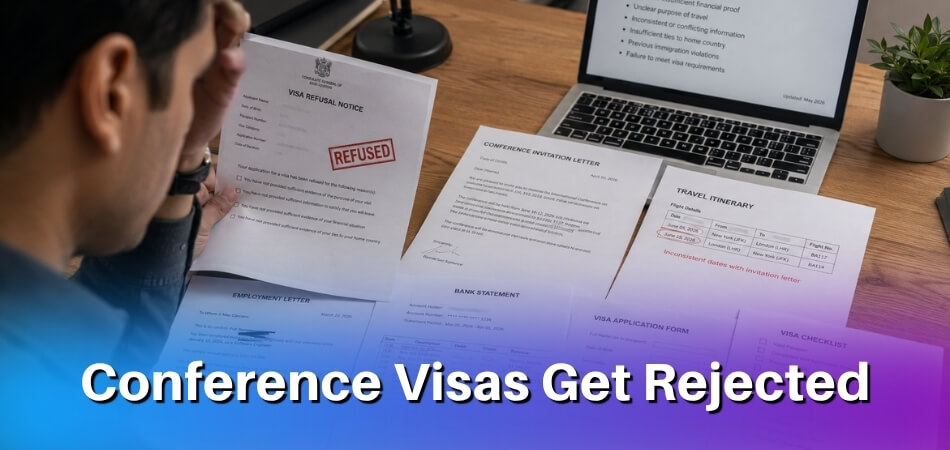
Common Reasons Canada Conference Visas Are Refused
Refusal usually happens when the officer is not satisfied about the purpose, funds, ties or credibility of the application.
Weak Travel Purpose
Signs include no clear link between you and the topic, a missing agenda, a vague invitation, an unclear role or mismatched dates.
Insufficient Funds
Funds that are too low, irregular, unsupported or out of line with the trip cost can lead to refusal, as can unexplained deposits and weak sponsor documents.
Limited Ties to Ethiopia
Weak employment evidence, unclear business activity, no approved leave or poor student documents make the officer doubt that you will leave.
Inconsistent Information
Different dates, job titles, income figures, name spellings, passport details or refusal history damage credibility.
Poor Conference Documentation
An invitation without organizer contact, dates, venue, your name, agenda or role makes the event look weak.
Previous Refusals Not Addressed
Declare and explain earlier refusals, and show what is stronger this time.
How to Improve Approval Chances
No one can guarantee approval, but careful preparation lowers the risk of refusal.
Keep Documents Consistent
Your forms, invitation, bank statements, employment records, itinerary and purpose letter must match. Check names, dates, passport details, job titles, bank records and refusal answers. Conference dates should match your travel dates, your bank balance should support your planned costs, and your return date should fit your work or study commitments. Inconsistent details can raise doubts even when the mistake was unintentional, so review every line before submitting.
Provide a Realistic Itinerary
Dates should fit the conference schedule. A stay near the event city that ends shortly after the event is easier to explain than a long stay without purpose.
Avoid Risky Non-Refundable Bookings
Do not buy expensive non-refundable flights before approval. A reservation or planned itinerary carries less financial risk.
What Happens After Visa Approval?
After approval you submit your passport for the visa, but the border officer still decides your entry to Canada.
Passport Request Letter
Follow the instructions you receive and include every required form, receipt and courier detail.
Visa Counterfoil Stamping
When your passport comes back, check your name, passport number, validity, visa type and number of entries. Report errors before you travel.
Visa Validity Versus Allowed Stay
Validity shows when you may use the visa to travel to Canada. The border officer sets how long you may stay when you enter. A visitor visa can be issued for up to 10 years or until your passport or biometrics expire, whichever comes first, but a conference trip is short.
At the Canadian Border
Carry in your hand luggage your passport, visa, invitation, registration proof, agenda, accommodation details, return itinerary, proof of funds and employment or student letter. Answer honestly; your answers should match your application.
After the Conference
Leave on or before the date your authorized stay ends. Following the rules protects future applications.
What to Do If Your Canada Conference Visa Is Refused
A refusal means the officer was not satisfied with that application. It does not mean you can never attend a conference in Canada.
Read the Refusal Letter
It may cite your travel purpose, funds, ties to Ethiopia, employment, travel history or document credibility.
Reapply With Improvements
Do not resubmit the same file. Add stronger proof, clearer explanations, better financial evidence or more convincing return-tie documents.
When Professional Advice May Help
Consider help after several refusals, unclear refusal reasons, misrepresentation concerns, complex business documents or a very urgent case. Use only authorized professionals, and avoid anyone who promises guaranteed approval or suggests false documents.
Sample Templates for Conference Visa Applicants
Use these only for structure. Each letter must reflect your real profile and documents.
Conference Invitation Letter Structure
[Organizer Letterhead]
Date: [Day/Month/Year]To Whom It May Concern,
This letter confirms that [Applicant Name], passport number [Passport Number], has been invited to attend [Conference Name] in [City, Canada] from [Start Date] to [End Date].
The applicant will participate as a [attendee/speaker/presenter/delegate]. The event focuses on [main topic] and includes sessions related to [relevant topics].
No employment in Canada is being offered through this invitation. For verification, please contact [email/phone].
Sincerely,
[Name]
[Title]
[Organization]
Purpose of Travel Letter Structure
Dear Visa Officer,
I am applying for a Canadian visitor visa to attend [Conference Name] in [City, Canada] from [dates].
I am currently [job title/business owner/student/researcher] in Ethiopia. This conference is relevant to my background because [explain connection].
My trip will be funded by [personal funds/employer/sponsor]. I have included documents showing that I can cover travel, accommodation, daily expenses, and return travel.
I will return to Ethiopia after the conference because [job/business/studies/family/property responsibilities]. My planned return date is [date].
Sincerely,
[Full Name]
Explanation Letter After Refusal Structure
Dear Visa Officer,
I am submitting this letter to address my previous visa refusal dated [date]. The refusal mentioned concerns about [reason].
In this new application, I have provided stronger evidence, including [list improvements]. My purpose remains to attend [Conference Name] in [City, Canada] from [dates].
I will return to Ethiopia after the event due to [return ties]. I have attached documents to support this.
Sincerely,
[Full Name]
FAQs About Canada Conference Visa Applications from Ethiopia
Applicants in Ethiopia often hit specific snags: settling the full registration fee first, being self-employed, changing travel dates, presenting research, a near conference date and the 2026 Ebola measures.
Can I Apply Before Paying the Full Conference Registration Fee?
Yes. An invitation, acceptance letter or conditional registration is enough to apply. Paid registration strengthens the file if you have it.
Do I Need a Medical Exam?
Not for a normal conference trip. IRCC requires a visitor exam only if you plan to stay more than 6 months and have lived in a listed country, which includes Ethiopia, for 6 months or more in the past year. Some public-health jobs also need one.
Can Self-Employed Ethiopians Apply?
Yes. Provide business registration, bank statements, tax documents, invoices, contracts and a clear explanation of how the conference relates to your business.
Is Travel Insurance Required?
No, it is not required for a visitor visa. Only the Super Visa for parents and grandparents requires medical insurance. For a conference trip it is still useful protection.
Can I Change Travel Dates After Applying?
Minor changes are usually fine if the conference purpose stays the same. Explain major changes that affect your itinerary.
Does Property Ownership Help?
It supports your ties to Ethiopia but guarantees nothing. It works best alongside employment, business, family or financial evidence.
Can I Attend More Than One Conference?
Yes, if the events fit within your authorized stay and the plan is realistic. Explain each event in your purpose letter.
Should I Buy Flight Tickets Before Approval?
Avoid non-refundable tickets. A reservation or planned itinerary is less risky.
Can I Present Research or Speak at a Conference?
Yes, if the activity stays temporary and is not paid employment. Your invitation should state your role.
What If My Conference Date Is Near?
Apply now, with every document ready, because no standard fast route for visitor visas is published. Ask the organizer whether it has an IRCC event code, and reply quickly to any request in your account.
Do Canada’s 2026 Ebola Measures Affect Ethiopian Applicants?
Not if you live in Ethiopia. The measures cover people whose last country of residence is the Democratic Republic of the Congo, South Sudan or Uganda, and run to 27 November 2026 unless extended. IRCC does not finalize applications from those countries during that time.
Closing Remarks
Because conference travel falls under the visitor visa, your file must prove that the event is genuine, the trip is temporary, your funds are enough and your reasons to return to Ethiopia are strong. If you are refused, read the letter, fix the weak points and reapply only with stronger proof. The best application is not the longest one but the clearest and most truthful.
Disclaimer: This article is general information, not legal or immigration advice. Visa rules, fees, and processing times change. Confirm the current requirements on the official Government of Canada (IRCC) website before you apply.