Planning to attend a conference in Canada but can’t find a clear breakdown of what the visa will actually cost you? You’re not alone. Most Ghanaian applicants spend hours bouncing between outdated blog posts, conflicting forum answers, and the IRCC website — only to end up more confused than when they started. This guide cuts through all of that.
Here’s the direct answer: Canada does not issue a separate “Canadian Conference Visa.” What you’re actually applying for is a Temporary Resident Visa, commonly called a Visitor Visa, administered by IRCC (Immigration, Refugees and Citizenship Canada). As a Ghanaian applicant, your total cost will be approximately CAD $230 — broken down as CAD $100 for the Temporary Resident Visa application fee, CAD $85 for biometrics, and roughly CAD $45 for the VFS Global Ghana service charge. At current exchange rates, that works out to somewhere between GHS 3,500 and GHS 4,200, depending on when you apply.
This article gives you everything in one place. You’ll find the exact fees in both CAD and GHS, a clear explanation of what VFS Global Ghana charges and why, the biometrics requirements you need to know before booking your appointment in Accra, and a full cost summary table you can reference when budgeting your trip. Whether this is your first Canadian visa application or you’ve had a previous visa refusal and want to get it right this time, the breakdown ahead will help you plan your application with complete confidence.
What is a Canadian Conference Visa? (and Which Category It Falls Under)
There’s no visa category specifically labeled “Conference Visa” in Canada’s immigration system. That surprises a lot of people.
What you’re actually applying for is a Temporary Resident Visa (TRV) — sometimes called a Visitor Visa — with your conference attendance as the stated purpose of travel. IRCC (Immigration, Refugees and Citizenship Canada) handles this under the broader temporary resident framework. The conference doesn’t get you a special visa. It gets you a strong reason to justify your application.

How the Category Works
A Temporary Resident Visa allows you to enter Canada for a temporary period — typically up to six months unless the border officer specifies otherwise. Conference attendees, business travelers, tourists, and people visiting family all fall under this same category. Your purpose of travel is declared in your application, and the Conference Invitation Letter you submit is what differentiates your file from a leisure trip.
This matters because your documentation strategy changes depending on what you’re attending. A professional conference signals ties to your field, an employer, a home institution — all things an IRCC visa officer looks at when deciding whether you’re a genuine temporary visitor or someone likely to overstay.
Single-Entry vs. Multiple-Entry
When you apply, you can receive either a single-entry or a multiple-entry TRV. Canada typically issues multiple-entry visas now, valid for up to 10 years or one month before your passport expires — whichever is shorter. For a conference trip, a single-entry is usually enough. But if you’re transiting through a third country or plan future Canada trips, a multiple-entry is the better outcome.
You don’t choose which one you get. The visa officer decides based on your profile, travel history, and ties to home country.
What “Ties to Home Country” Actually Means Here
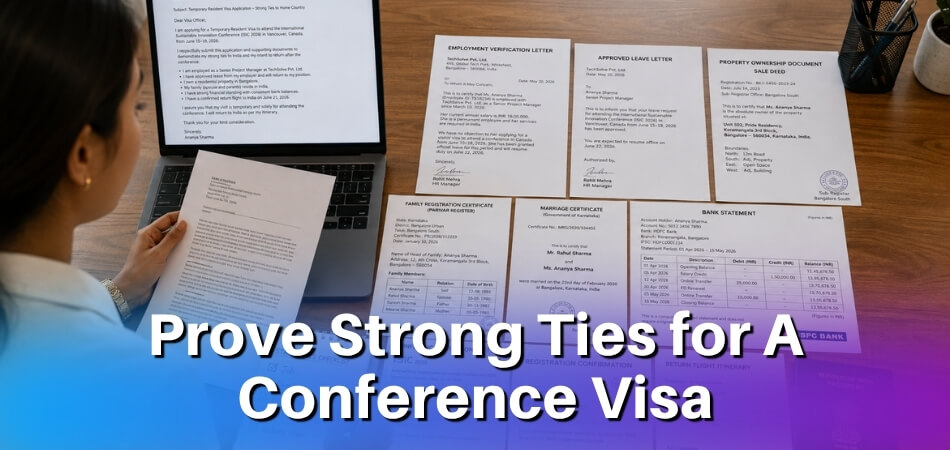
This phrase shows up constantly in Canadian visa guidance. For Ghanaian applicants, it means evidence that you have strong reasons to return — a job, a family, property, an ongoing academic position. Conference travel is inherently short-term, so you need your application to reflect that clearly. A letter from your employer or institution confirming your role and your expected return date carries real weight.
Your passport, your financial documents, and that Conference Invitation Letter are the three things that form the core of your application. Get those right, and the rest of the process becomes much more straightforward.
Total Cost of a Canadian Conference Visa from Ghana — At a Glance
Before you start pulling documents together, you need to know exactly how much money you’re setting aside. The costs come from three separate sources, and missing any one of them will catch you off guard.

Visitor Visa (Temporary Resident Visa) Application Fee
The IRCC charges CAD 100 for a single Temporary Resident Visa application. This is the standard fee whether you’re applying for a vacation, a business trip, or a conference — there’s no special conference category with a different price tag.
You pay this directly through the IRCC Portal when you submit your online application. The fee is non-refundable. Even if your visa gets refused, IRCC keeps the money. That’s worth understanding before you apply, especially if your travel history is thin or your ties to home country are not strongly documented.
At current exchange rates (mid-2025), CAD 100 converts to roughly GHS 750–800, though this shifts daily. Always check the Bank of Ghana’s rate or a reliable converter the day you’re paying.
Biometrics Fee
If you haven’t given biometrics to Canada in the last ten years, you’ll pay an additional CAD 85. That’s fingerprints and a photo, collected in person at the VFS Global Ghana application centre in Accra.
Biometrics isn’t optional. IRCC requires it for most Ghanaian passport holders applying for a Visitor Visa. The fee converts to approximately GHS 638–680 at current rates.
If you’re applying as part of a group — say, a delegation attending the same conference — the group biometrics fee is capped at CAD 170 for families, but that family rule doesn’t apply to unrelated conference attendees. Each person pays separately.
VFS Global Ghana Service Charge
VFS Global Ghana acts as the official application submission partner for IRCC in Accra. They charge a service fee on top of the government fees.
The current VFS service charge is approximately CAD 40 (around GHS 300–320). This covers handling your application package, forwarding it to IRCC, and returning your passport once a decision is made. It’s paid directly to VFS, not to IRCC.
VFS may also offer optional add-ons — things like courier return of your passport or premium lounge access. These are not required. Skip them unless you have a specific reason.
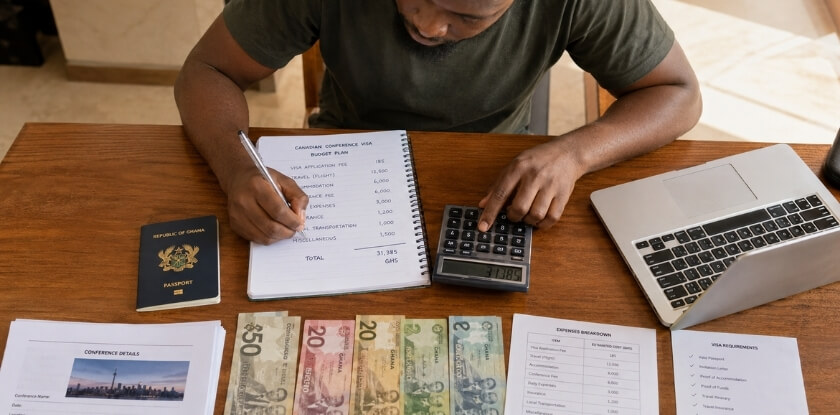
Total Cost Summary in GHS (Conversion Breakdown)
Here’s everything laid out cleanly:
| Fee | Amount (CAD) | Approx. Amount (GHS) |
|---|---|---|
| Temporary Resident Visa Application Fee | CAD 100 | GHS 750–800 |
| Biometrics Fee | CAD 85 | GHS 638–680 |
| VFS Global Ghana Service Charge | CAD 40 | GHS 300–320 |
| Total | CAD 225 | GHS 1,688–1,800 |
So you’re looking at roughly GHS 1,700–1,800 all in, depending on the exchange rate on the day you pay. Budget closer to GHS 1,900 to give yourself a small buffer.
A few things to add to this budget: travel insurance is not an official IRCC requirement for a Canadian Visitor Visa, but having it strengthens your application and is strongly recommended for conference travel. Good travel insurance for a 10–14 day Canada trip from Ghana typically runs GHS 300–600 depending on the provider and coverage level. Factor it in.
Also keep in mind that document translation, notarization, or obtaining a Conference Invitation Letter through your institution may carry minor administrative costs. These vary and aren’t paid to VFS or IRCC, but they’re real costs that applicants often forget until the last minute.
How to Obtain a Conference Invitation Letter
The invitation letter is probably the single most important document in your Canadian conference visa application. IRCC officers want to see it. Without it, your application looks weak — and weak applications get refused.
Here’s exactly what you need and how to get it.
Who Should Issue the Letter
The invitation letter must come from the organization hosting the conference in Canada. That could be a university, a professional association, a government body, or a private company. It cannot come from a friend, a travel agent, or anyone unaffiliated with the event.
The issuing body needs to have a verifiable presence — a Canadian address, a website, and ideally an established reputation. An obscure-sounding organization with no online footprint raises red flags.
What the Letter Must Contain
This is where a lot of applicants get it wrong. The letter can’t just say “we invite you to attend.” It needs to cover specific details:
- Full name of the invitee — exactly as it appears on your passport
- Conference name, dates, and physical location (city, venue address)
- Purpose of your attendance — are you a speaker, a panelist, a delegate, a researcher?
- Who is covering your costs, if anyone — accommodation, registration fees, flights
- Name, title, and contact details of the signatory
- Official letterhead with the organization’s logo and address
Some conferences also include your registration confirmation or a receipt for the registration fee. Attach that too.
How to Request It
Email the conference organizers directly. Be straightforward about what you need. A short, professional message works better than a long one.
Tell them you’re a Ghanaian national applying for a Canadian Temporary Resident Visa (Visitor Visa) and that IRCC requires a formal invitation letter on official letterhead. Most legitimate conference organizers have dealt with this before and know what to send.
If they haven’t, you can send them a brief list of what the letter must include — use the bullet points above. Don’t assume they’ll figure it out.
When to Request It
Early. Request it the moment your attendance is confirmed. Canadian visa processing times from Ghana can run anywhere from a few weeks to over two months, and you need the letter before you can submit your application through the IRCC Portal.
Waiting until a month before the conference is a mistake. Give yourself at least 10–14 weeks of lead time from the day you submit your application.
If the Conference Is Virtual or Hybrid
If the event is fully virtual, you won’t get a Canadian conference visa. Full stop. IRCC issues Temporary Resident Visas for physical presence in Canada. A hybrid event where you’re attending online from Accra doesn’t qualify you for a visa either.
Your letter needs to confirm in-person attendance at a Canadian venue. If that isn’t the case, there’s no application to make.
Keep a Digital Copy
Once you receive the letter, save a high-resolution digital copy. You’ll upload it as a supporting document through the IRCC Portal. Also bring a printed copy with you when you travel — immigration officers at the port of entry may ask to see it.
Step-by-Step Application Process for a Canadian Conference Visa from Ghana
The application is done online through the IRCC Portal. There’s no paper option for most Ghanaian applicants. Here’s exactly what the process looks like from start to finish.

Step 1 — Create an IRCC Portal Account and Complete the Application Form
Go to the official IRCC Portal at ircc.canada.ca and create a new account if you don’t have one. Use a valid email address you actually check — IRCC sends all correspondence there.
Once you’re in, click “Apply to come to Canada” and work through the eligibility tool. It’ll determine you need a Temporary Resident Visa (also called a Visitor Visa). Select that, start the application, and fill in the IMM 5257 form.
Be accurate. The form asks about your travel history, employment, family ties in Ghana, and previous visa refusals. Don’t skip the travel history section — officers use it to assess how likely you are to return home after the conference. If you’ve traveled to the US, UK, or Schengen countries before, list every trip. It actually helps.
For the “Purpose of Visit” field, state clearly that you’re attending a conference. Mention the event name, location, and dates.
Step 2 — Gather and Upload the Required Documents
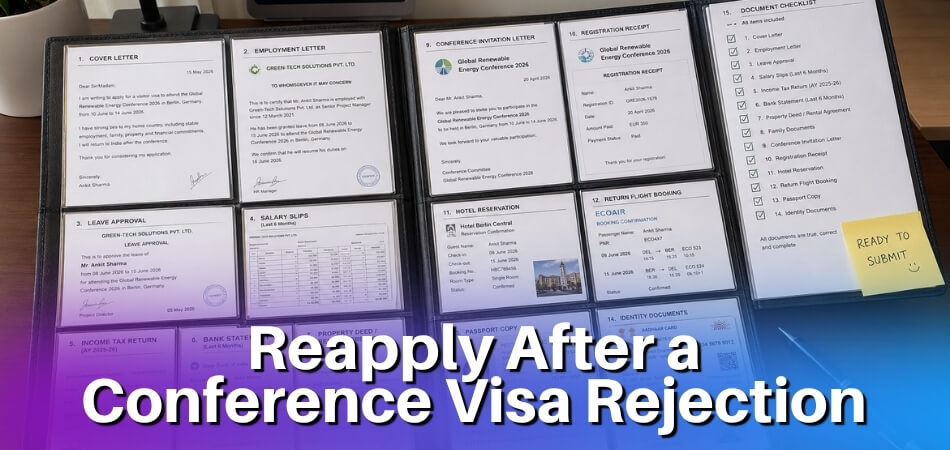
This is where most applications either get strong or fall apart. The standard document list for a Canadian Conference Visa from Ghana includes:
- Valid Ghanaian passport (minimum 6 months validity beyond your intended stay)
- Conference Invitation Letter from the Canadian organizer
- Proof of registration or acceptance from the conference
- Bank statements — last 3 to 6 months, showing you can fund your trip
- Proof of employment or business — employment letter, business registration, payslips
- Travel insurance covering the full duration of your stay in Canada
- Proof of ties to Ghana — property ownership, family responsibilities, job contract, anything that shows you’ll come back
- Recent passport-size photographs meeting IRCC’s specs
- Previous visa copies if applicable
Scan everything clearly. IRCC rejects blurry or cut-off documents. Upload in PDF where possible. Label your files sensibly — “bank_statement_april2025.pdf” is better than “scan0034.pdf.”
Your Conference Invitation Letter carries real weight here. It should be on official letterhead, include the event name and dates, confirm your participation, and ideally state that the organizer is based in Canada.
Step 3 — Submit Biometrics at VFS Global Ghana
If you’re between 14 and 79 years old and haven’t given biometrics to Canada in the last 10 years, you’ll need to do this. After you submit your application online, IRCC sends a Biometric Instruction Letter (BIL) to your email — usually within a few days.
Take that letter to VFS Global Ghana in Accra. That’s the only authorized collection point in the country. Book your appointment at vfsglobal.com/canada/ghana. Walk-ins aren’t accepted.
The biometrics fee is CAD 85 (roughly GHS 650–700 depending on the exchange rate). Pay it during your online application. At the VFS center, they’ll scan your fingerprints and take a photo. The whole thing takes under 30 minutes once you’re there.
Bring your passport and the BIL printout. That’s it.
Step 4 — Pay the Fees and Submit Your Application
The Temporary Resident Visa application fee is CAD 100 per person. You pay this directly on the IRCC Portal using a credit or debit card. Visa and Mastercard work. Make sure you have a card that supports international transactions — some Ghanaian cards block foreign payments, so check with your bank first.
Other costs you’ll pay separately:
- Biometrics: CAD 85 (paid on the IRCC Portal)
- VFS Global service fee: approximately CAD 37 (paid at or through VFS Ghana)
- Travel insurance: varies, typically USD 30–80 for a short conference trip
Once all fees are paid and documents are uploaded, review everything once more, then hit submit. You’ll get a confirmation with an application number. Save it.
Step 5 — Processing Time and Passport Return
Current processing times for a Temporary Resident Visa from Ghana sit around 15 to 45 business days, though it can go shorter or longer. Check IRCC’s live processing time tool — it updates regularly and gives you a realistic current estimate.
Don’t book non-refundable flights until you have the visa in hand. Seriously. Conference dates are fixed, but visa timelines aren’t guaranteed.
Once a decision is made, IRCC instructs you (through the portal) to send your physical passport to VFS Global Ghana. You mail it in or drop it off, they forward it to the visa office, and the visa stamp gets placed in your passport. VFS then returns it to you via courier or you pick it up at the Accra office.
Check your IRCC Portal account regularly for status updates. The system doesn’t always send email alerts for every change.
Visa Validity and Conditions You Should Know
Getting approved is only half the story. The stamp in your passport comes with specific conditions, and if you don’t understand them upfront, you can run into serious problems at the Canadian border.

How Long Will Your Visa Be Valid?
Canada doesn’t issue a fixed-length visa based on your conference dates. The IRCC officer decides the validity period based on their assessment of your application — your travel history, ties to Ghana, and the purpose of the visit all factor in.
For first-time applicants from Ghana, a single-entry visa valid for the duration of your trip (plus a short buffer) is common. Multiple-entry visas are also possible, sometimes valid for up to 10 years or until your passport expires — whichever comes first. But don’t assume you’ll get multiple entry just because you want it.
Important distinction: the visa validity date is not how long you can stay in Canada. It’s just the window during which you can use the visa to enter the country.
How Long Can You Actually Stay?
When you land in Canada, the border officer determines your authorized stay — typically up to 6 months per entry. They’ll stamp your passport or issue an entry record. Your conference might be 3 days long, but you’re technically allowed to stay longer if the officer permits it.
That said, your stay should align with what you declared in your application. If you told IRCC you’re attending a 4-day conference in Toronto and you end up staying 5 months, that’s a problem. Consistency matters.
Single Entry vs. Multiple Entry
With a single-entry Temporary Resident Visa, once you leave Canada (including brief trips to the US or other countries), your visa is used up. You’d need a new one to return. If your conference schedule involves any cross-border travel, a multiple-entry visa is the safer option — but you’ll need to make a case for it in your application.
Conditions Attached to the Visa
Your Visitor Visa for conference attendance comes with clear restrictions:
- You cannot work or do paid activities in Canada
- You cannot study for more than 6 months
- You must leave before your authorized stay expires
Attending a conference, giving a presentation, or participating in professional sessions — that’s all fine under a Visitor Visa. Receiving payment from a Canadian source during your visit? That crosses into work permit territory.
What If the Conference Gets Cancelled?
It happens. If the event is cancelled after your visa is approved, the visa itself doesn’t automatically become invalid. You could still travel to Canada for tourism purposes within the validity window. However, if you haven’t travelled yet and your purpose has fundamentally changed, it’s advisable not to misrepresent that to border officials.
Visa Refusal and Reapplying
A refusal from IRCC isn’t a permanent ban. You can reapply. But reapplying with the exact same documents almost never works. The refusal letter will indicate the specific reasons — weak ties to Ghana, insufficient proof of conference participation, unexplained travel gaps. Fix those exact issues before submitting again.
Keep the refusal letter. It’s useful documentation for your next attempt and for any future visa applications to other countries as well.
Common Reasons for Visa Refusal and How to Avoid Them
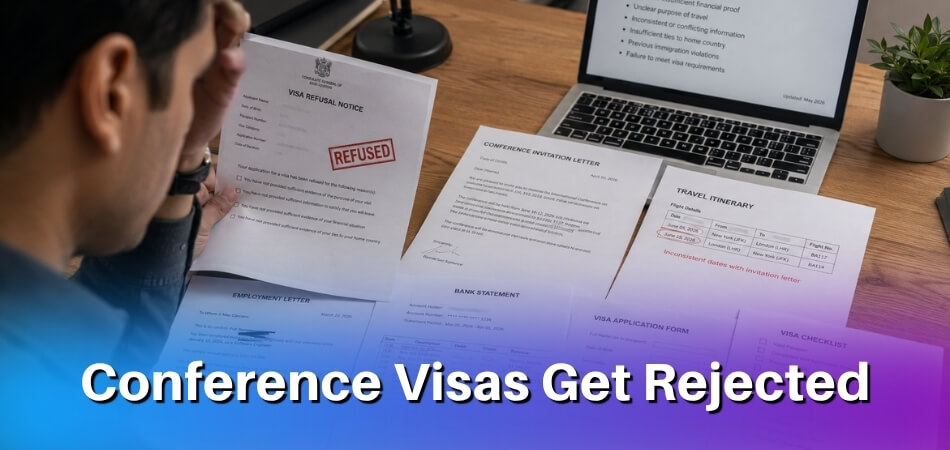
Canadian visa refusals from Ghana are more common than people expect. IRCC officers are looking for very specific things, and if your application raises doubts — even small ones — you’ll get a refusal letter. Here’s what typically goes wrong.

Weak Ties to Ghana
This is the single biggest reason applications fail. The officer needs to believe you’ll actually return home after the conference. If you’re young, unmarried, unemployed, or have no property in Ghana, that’s a red flag.
Don’t just attach a salary slip and hope for the best. Submit a letter from your employer confirming your leave approval and return date. If you own land or a business, include documentation. Family ties — kids, dependents — also count. Make it obvious why Ghana is where your life is.
Insufficient Financial Evidence
You need to show you can fund your entire trip without working in Canada. That means bank statements, ideally covering the last 3 to 6 months. A balance that shot up two weeks before you applied looks suspicious.
Your statements should show steady, consistent income. If someone else is sponsoring your trip, you need a signed sponsorship letter plus their financial documents — not just yours.
Vague or Missing Conference Details
A Temporary Resident Visa application for conference travel lives and dies on documentation. If your Conference Invitation Letter doesn’t clearly state the conference name, dates, location in Canada, and your role as an attendee or speaker, expect problems.
Make sure the letter is on official letterhead, signed by an authorized person at the organizing body, and that the conference itself is verifiable online. Officers will check.
Travel Insurance Gaps
Some applicants skip travel insurance or buy a cheap policy with minimal coverage. IRCC doesn’t technically mandate it for a Visitor Visa, but including it strengthens your application. It signals you’ve planned responsibly. A policy with at least $100,000 CAD coverage is the standard you should aim for.
Incomplete or Inconsistent Application
Missing a single document can trigger a refusal. So can inconsistencies — like your passport showing a trip you didn’t mention, or dates that don’t line up with your employment history. Go through your application twice before submitting through the IRCC Portal.
If you’ve previously had a visa refusal — Canadian or otherwise — disclose it. Hiding it is worse than declaring it.
No or Limited International Travel History
Applicants with no travel history outside Ghana are viewed as higher risk. It’s not a dealbreaker, but you’ll need to compensate with stronger financial and employment documentation. If you’ve traveled to the UK, US, Schengen area, or elsewhere, include those visa stamps prominently in your application package.
Biometrics Issues
If you’ve never given biometrics to Canada before, you’ll need to do so at VFS Global Ghana in Accra before your application is processed. Missing or delayed biometrics stalls everything. Book your biometrics appointment early — don’t assume walk-ins are available.
One honest thing to keep in mind: a refusal isn’t always about you doing something wrong. Sometimes the officer simply isn’t satisfied with the overall picture. If you do get refused, read the refusal letter carefully. IRCC is usually specific enough that you can identify what was missing before you reapply.
Frequently Asked Questions (FAQ)
How much does a Canadian Conference Visa cost in Ghana?
The base Temporary Resident Visa application fee is CAD 100 (roughly GHS 1,100–1,200 depending on the exchange rate). Add biometrics at CAD 85, and you’re looking at around CAD 185 before any service charges from VFS Global Ghana. Budget extra for document prep, travel insurance, and transport to the VFS office in Accra.
Is a Canadian Conference Visa different from a regular Visitor Visa?
Not really. Canada doesn’t issue a separate “conference visa.” You apply for a Temporary Resident Visa — the same one tourists use. The difference is in what you submit. Your conference invitation letter, event details, and proof that you’re returning home after the event are what tell IRCC the purpose of your visit.
Can I get the visa fee refunded if my application is refused?
No. The CAD 100 application fee is non-refundable, full stop. Biometrics fees are also non-refundable once collected. This is exactly why you want to submit a clean, well-documented application the first time.
How long does processing take from Ghana?
It varies. IRCC’s current estimates run anywhere from 4 to 16 weeks for Visitor Visa applications. Ghana isn’t always the fastest processing location. Apply at least 3 months before your conference date. Don’t book non-refundable flights until you have the visa in hand.
Do I need to submit my actual passport to VFS Global Ghana?
Yes. You submit your physical passport at the VFS Global office in Accra. They forward it to the visa processing centre. Keep this in mind if you have upcoming travel — your passport will be out of your hands for weeks.
What exchange rate should I use to estimate costs in GHS?
Use the current Bank of Ghana rate as a baseline, but VFS and payment platforms often apply a slightly different rate. Check the IRCC Portal and VFS Global Ghana’s website on the day you pay. CAD/GHS fluctuates, so don’t lock in a budget from a quote you got two months ago.
Does having a US or UK visa help my Canadian application?
It can. Strong travel history — especially to high-income countries — signals to IRCC that you’ve respected visa conditions before. It won’t guarantee approval, but it does strengthen your profile, particularly if your ties to home country documentation is thin.
What if the conference gets cancelled after I apply?
Notify IRCC if the visa hasn’t been issued yet. If you’ve already received the visa, you don’t have to travel — but you should avoid applying again with the same event as justification. Trying to reuse a cancelled conference’s invitation letter in a future application is a bad idea.
Is travel insurance mandatory for the application?
Canada doesn’t legally require travel insurance for a Visitor Visa application. That said, including proof of travel insurance in your documents shows IRCC you’ve planned responsibly. Many applicants include it. It also protects you if something goes wrong during the conference. Worth getting regardless.
Can I extend my stay in Canada after the conference?
Technically yes — you can apply to extend your status from within Canada before your authorized stay expires. But IRCC will want a solid reason. “I want to stay longer” isn’t one. If your conference ends and you have no legitimate reason to extend, leave on time. Overstaying is one of the fastest ways to get a visa refusal on every future application.
Conclusion — Where to Start Your Canada Conference Visa Application Right Now
You’ve got the full picture now. The visa itself costs CAD 100 (roughly GHS 1,450 depending on exchange rates), biometrics adds CAD 85, and when you stack in VFS Global service charges, document preparation, travel insurance, and medical checks if required, you’re realistically looking at GHS 2,500 to GHS 3,500 in total out-of-pocket costs before you even book a flight.
That’s not a small amount. Plan for it early.
The single most important thing you can do right now is get your Conference Invitation Letter locked down. Without it, nothing else moves. The letter needs to come directly from the Canadian conference organizer on official letterhead, confirming your name, your role, the event dates, and the venue in Canada. Once that’s in hand, everything else — your IRCC Portal application, your biometrics appointment at VFS Global Ghana in Accra, your document bundle — follows a clear sequence.
Don’t wait until four weeks before the conference. IRCC processing times from Ghana typically run anywhere from three to eight weeks, sometimes longer during peak periods. Submit at least ten to twelve weeks out if you can. That buffer also gives you room to respond if IRCC requests additional documents.
Your Actual Next Steps
- Secure your invitation letter from the conference organizers.
- Create your IRCC Portal account at canada.ca/en/immigration-refugees-citizenship and start a Temporary Resident Visa (Visitor Visa) application.
- Book your biometrics appointment through VFS Global Ghana — don’t leave this step late, slots fill up.
- Gather your supporting documents — bank statements showing at least three months of history, your passport with valid pages, proof of employment or business ties to Ghana, travel history, and your travel insurance policy.
- Pay your fees through the IRCC Portal (CAD 100 application fee + CAD 85 biometrics) and keep your receipts.
Strong ties to Ghana matter more than people realize. A stable job, property ownership, family responsibilities — these signal to the visa officer that you’re attending a conference, not planning to stay. Build that case clearly in your application.
One last thing: if you’ve had a visa refusal before, address it. Don’t ignore it and reapply hoping for a different result. Understand why it happened and fix that specific gap before submitting again.
Start with the IRCC Portal. That’s step one.