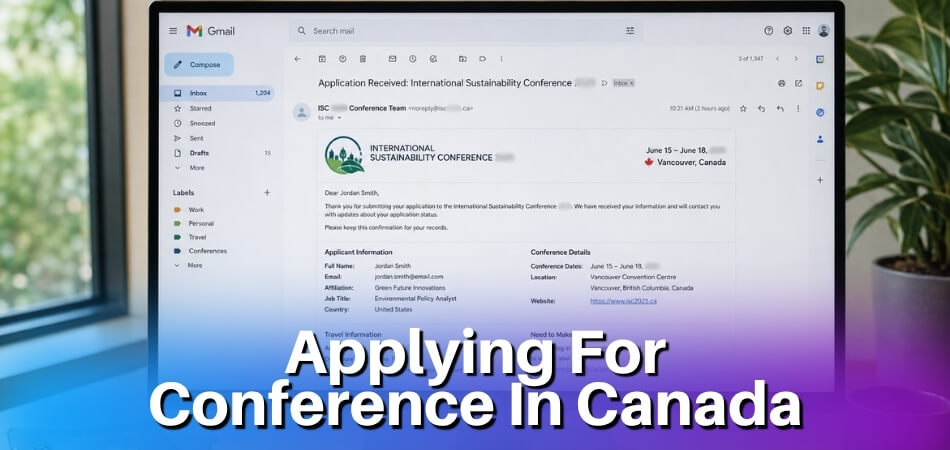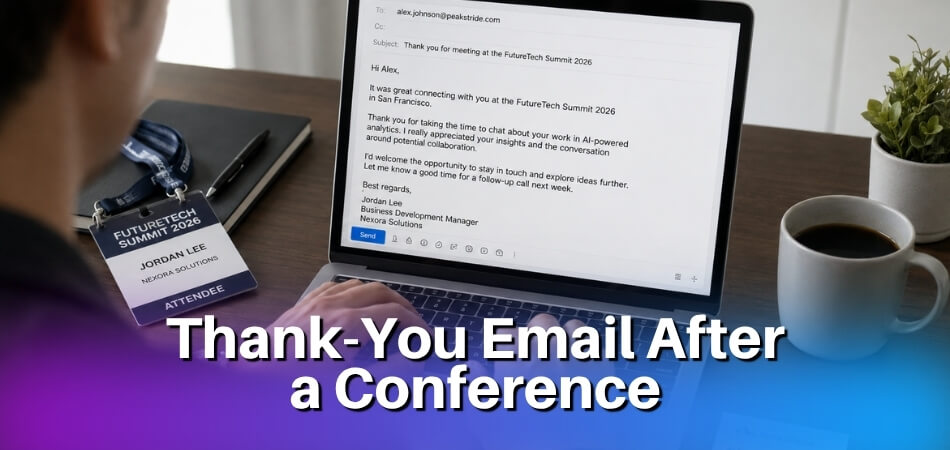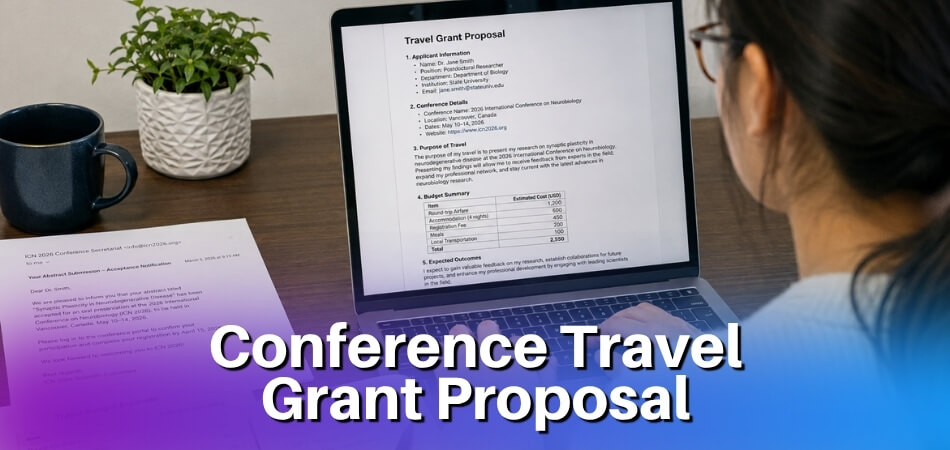

Applying for a conference in the USA means making two separate applications: one to the organizer and one to the U.S. government. Doing them in the wrong order can leave you with a paid registration and no way to travel.
Quick answer: To apply for a conference in the USA, register with a genuine organizer, get an invitation letter, then apply for a B-1 or B-1/B-2 visa (DS-160 form, fee, interview). If your passport is eligible for the Visa Waiver Program, get ESTA approval instead. Book non-refundable travel only after approval. The invitation letter supports your application but never guarantees entry.
Last verified against official sources: October 2026.
Who This Guide Is For
This guide is for international attendees planning to join a conference, seminar, convention, workshop, academic meeting, research event, trade show, or professional gathering in the USA. A conference trip is usually treated as a temporary business visit, even when you are a student, researcher, or academic. Canada treats conference attendees as business visitors in the same way. Your application should show why you are attending, how you will pay, where you will stay, and why you will return home.
It is especially useful for:
- Students and researchers attending academic events.
- Speakers and paper presenters joining conference sessions.
- Business professionals attending industry or networking events.
- Panelists, moderators, and invited guests preparing official documents.
- First-time visa applicants who need a clear process.
- ESTA-eligible travelers checking whether they can attend without a visa.
Step-by-Step Process to Apply for a Conference in the USA
Follow this order: choose the conference first, register properly, collect event documents, and then complete the visa or ESTA process.
Step 1: Find a Legitimate Conference
Start with a conference that matches your profession, research area, academic subject, business field, or industry interest. A good conference gives clear information about the organizer, venue, dates, topics, speakers, registration process, and contact details. The full checklist is in the section on checking whether a conference is genuine, further down.
Avoid conferences with vague details, copied content, unrealistic promises, or pressure to pay quickly. A weak or questionable event can damage your visa application and waste your money.
Step 2: Check Eligibility, Dates, and Deadlines
Once you select an event, review every deadline. Conference deadlines and visa timelines must work together. If the event starts soon but visa appointments are delayed in your country, you may not have enough time.
Check:
- Registration deadline
- Early-bird fee deadline
- Abstract or paper submission deadline
- Invitation letter processing time
- Visa interview availability
- Conference start and end dates
- Hotel and travel booking deadlines
If you are presenting, confirm whether your paper or abstract must be accepted before you can request an invitation letter.
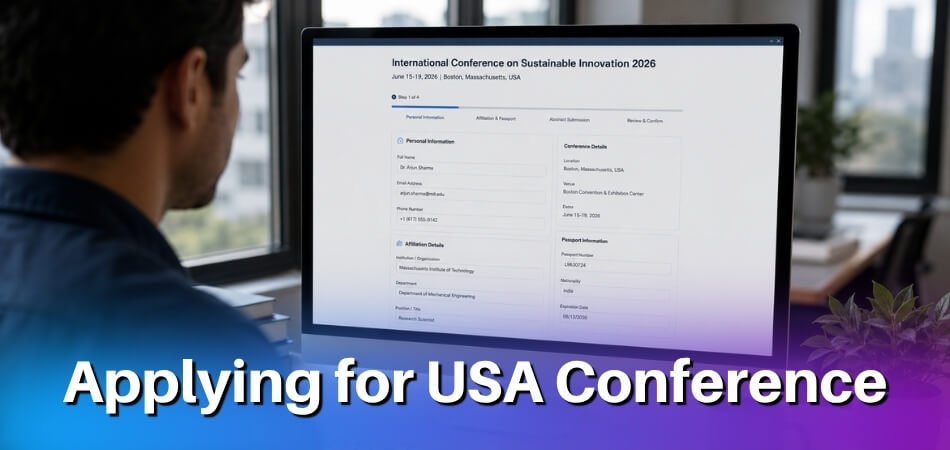
Step 3: Register Through the Official Conference Website
Register only through the organizer’s official website or approved platform. Use the same personal details shown on your passport. Your name, email, nationality, institution, and role should be accurate.
After registration, save:
- Registration confirmation
- Payment receipt
- Participant ID
- Abstract acceptance letter, if applicable
- Speaker or presenter confirmation
- Conference agenda or event page
These records help prove that you are a genuine participant.
Step 4: Request a Conference Invitation Letter
After registration, ask the organizer for an official conference invitation letter. It confirms that you are expected at the event. Check it carefully: wrong dates, spelling errors, or unclear details can create confusion during your visa process. What the letter should contain is listed in the invitation letter section below.
Step 5: Choose the Correct U.S. Entry Option
Conference travelers generally use a B-1 or B-1/B-2 visa, or ESTA if their country is eligible. Each route is compared in the next section. If you plan to work, study full-time, receive U.S. wages, or stay long-term, you may need a different visa category.
Step 6: Complete the DS-160 Form if a Visa Is Required
If you need a visa, complete the DS-160 non-immigrant visa application form online. It asks for your identity, passport details, travel purpose, work or study history, previous travel, and security information. Use accurate answers and keep them consistent with your conference documents. After submission, save the DS-160 confirmation page with the barcode.
Step 7: Pay the Visa Application Fee
Follow the payment instructions for your country. Payment methods and receipt rules vary by location, and fees can change, so take the amount from the official U.S. embassy or State Department page for your country. The current application fee for a visitor visa is in the table of 2026 rules below. Keep the receipt because it may be required to book or attend your interview.
Step 8: Schedule a U.S. Visa Interview
Since 1 October 2025, almost all nonimmigrant visa applicants need an in-person interview, including children under 14 and adults over 79. The main waiver left is for renewing a B-1, B-2, or B-1/B-2 visa within 12 months of its expiry, when the old visa was issued at full validity, you were at least 18 when it was issued, and you have no unresolved refusal. Consular officers can still require an interview for any applicant, so check your embassy’s website before assuming you can skip it. The State Department also advises scheduling the interview in your country of nationality or residence.
Choose an available date that gives you enough time before the conference. Before booking, confirm:
- Embassy or consulate location
- Appointment availability
- Required documents
- Photo rules
- Passport return process
- Security instructions for embassy entry
Print or save your appointment confirmation.
Step 9: Prepare for the Visa Interview
The interview should show that your visit is temporary, conference-related, and financially supported. Be ready to explain your travel purpose in simple terms.
Common questions may include:
- Why are you attending this conference?
- What is your role at the event?
- Who is paying for your trip?
- How long will you stay?
- What do you do in your home country?
- Why will you return after the conference?
Answer honestly and consistently. Your documents should support what you say.
Step 10: Finalize Travel After Approval
Between the interview and the decision, you can check your visa status on the CEAC portal. After visa approval, wait for your passport to be returned before booking major travel. If you are using ESTA, confirm approval before departure. Then book flights and hotel, plan local transport, review the conference schedule, and consider travel insurance. The final checklist is near the end of this guide.
Which Visa Do You Need to Attend a Conference in the USA?
International conference attendees generally need a B-1 Business Visitor Visa or a B-1/B-2 Visitor Visa, or can use ESTA if their country is in the Visa Waiver Program.
| Route | Best for | Key limit |
| B-1 visa | Short business visits: conferences, seminars, meetings | No regular employment in the USA |
| B-1/B-2 visa | A conference plus a short stay for sightseeing or visiting friends | Conference purpose must still be clear |
| B-2 visa alone | Tourism, family visits, medical treatment | Poor fit when the conference is your main reason |
| ESTA (Visa Waiver Program) | Eligible passports, stays of 90 days or less | No U.S. employment; approval does not guarantee entry |
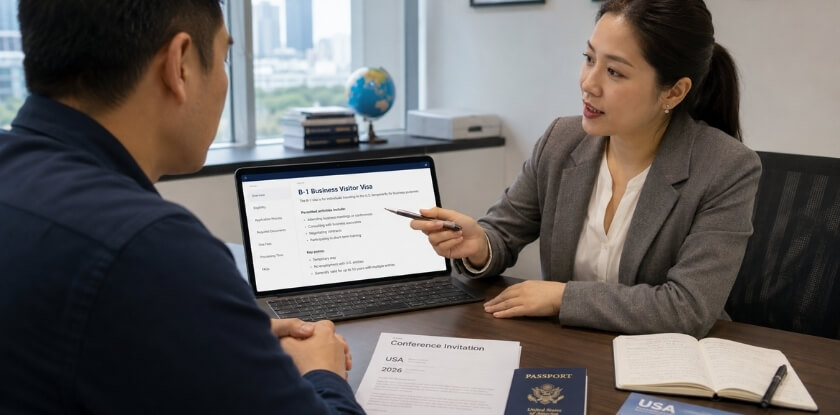
B-1 Business Visitor Visa
The B-1 visa is commonly used for short business-related visits, including conferences, seminars, conventions, meetings, and professional events. The U.S. State Department lists attending a scientific, educational, professional, or business conference among the permitted activities.
It may be suitable if you plan to:
- Attend a conference
- Present a paper
- Join a workshop
- Take part in business discussions
- Network with professionals
- Represent your company, university, or organization
A B-1 visit should remain temporary. It does not allow regular employment in the United States, and you generally cannot be paid a salary from a U.S. source. If a U.S. organizer offers you an honorarium or a fee for speaking, ask the embassy or an immigration lawyer before accepting, because extra conditions apply.
B-1/B-2 Combined Visa
A visitor visa is often issued as a combined B-1/B-2 visa, which covers both business and tourism visitor purposes. This is useful if your main reason is the conference but you also plan a short stay for sightseeing or visiting friends. Your application should still make the conference’s purpose clear. Registration proof, invitation letter, event details, and travel plans should all match.
Why a B-2 Tourist Visa Alone May Not Be Suitable
A B-2 visa is generally linked to tourism, vacations, family visits, or medical treatment. If your main reason for traveling is a conference, presenting the trip as tourism may create confusion. Conference travel is usually business-related, even if you are not being paid. Your visa purpose should match your documents and interview answers.
ESTA for Visa Waiver Program Travelers
ESTA is for eligible citizens of Visa Waiver Program countries. It allows short business or tourism visits without applying for a visa. Details are in the next section.
Can You Attend a U.S. Conference Without a Visa?
Yes, some travelers can attend a U.S. conference without a visa if they qualify for ESTA under the Visa Waiver Program. Everyone else generally needs a visitor visa.
Who Can Use ESTA for Conference Travel
ESTA may be suitable for eligible travelers attending a short conference, seminar, meeting, or professional event. The trip must be temporary and limited to permitted visitor activities. The Visa Waiver Program allows stays of 90 days or less, and you need ESTA approval before boarding a flight or ship to the USA. An approved ESTA is generally valid for two years or until your passport expires, whichever comes first, so check its status before each trip.
You may use ESTA if you:
- Are from a Visa Waiver Program country
- Have an eligible passport
- Will stay within the allowed time
- Are not taking U.S. employment
- Have approved travel authorization
Apply early on the official CBP ESTA website. Visa Waiver travelers generally cannot extend their stay or change status after arriving.
ESTA Stay Limit and Business Activity Rules
Conference attendance, meetings, professional discussions, and networking may fit within permitted business travel when there is no unauthorized work.
ESTA is not suitable for:
- Taking a paid U.S. job
- Enrolling in full-time study
- Staying beyond the allowed period
- Moving to the USA for work
- Performing regular services for a U.S. employer
ESTA approval does not guarantee entry. Border officers decide on arrival, so carry your conference documents.
When You Still Need a Visa Instead of ESTA
You may need a visa if you are not eligible for ESTA, if your ESTA is denied, if you want a longer stay, or if your activities go beyond normal visitor rules. If there is uncertainty, check early so you do not miss the conference timeline.
2026 U.S. Visa Rules to Check Before You Pay Anything
Check your nationality against the current State Department rules before you pay a registration or visa fee. Some 2026 rules can add a bond, block a visitor visa, or change how fast you get an interview, and they apply on top of the steps above.
| Rule | What it means for a conference trip | Who it affects |
| Visa application fee | US$185 for a B-1, B-2, or B-1/B-2 visa, paid before the interview and not refunded if the visa is refused. A separate issuance fee may be charged after approval, depending on nationality. | Every visitor visa applicant |
| Visa bond | A consular officer may require a bond of US$10,000, US$15,000, or US$20,000 before issuing the visa. The program became permanent on 3 August 2026. | B-1/B-2 applicants from countries on the State Department’s visa bond list |
| Proclamation 10998 | Since 1 January 2026, B-1/B-2 visa issuance is partly suspended for nationals of 19 listed countries. People who already held a valid visa on that date are not affected. | Nationals of the listed countries |
| Paid expedited appointment | An optional US$750 fee buys an earlier interview slot at select posts until 31 December 2026. It is not refundable and does not guarantee a visa. | B visa applicants at posts that offer the pilot |
The country lists for the bond and the proclamation change during the year, so check them on travel.state.gov on the day you apply.
Required Documents for a U.S. Conference Visa Application
A strong application includes identity documents, conference proof, visa records, financial evidence, travel plans, and home country ties.
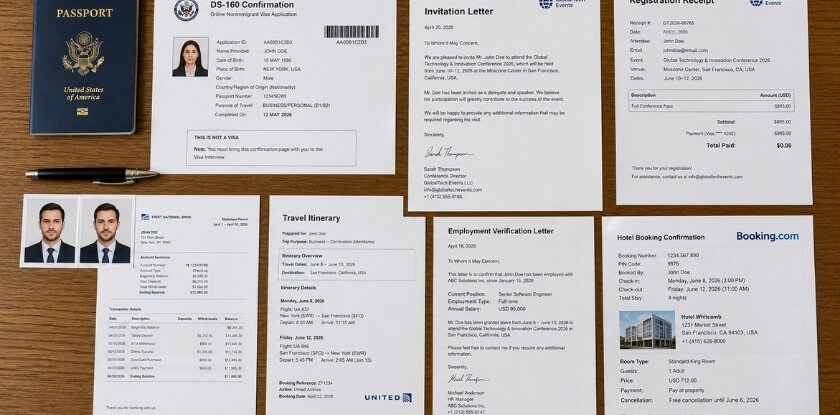
Personal Identity and Travel Documents
Prepare:
- Valid passport
- Passport-size photo
- Previous passports, if useful
- National ID or residency document, if required
- Copies of passport and previous visas
Your name and passport details should match across all documents.
Conference Registration and Invitation Documents
Prepare:
- Registration confirmation
- Payment receipt
- Invitation letter
- Conference agenda
- Venue details
- Speaker or presenter confirmation, if applicable
- Abstract acceptance letter, if applicable
- Organizer contact information
These documents show why you are traveling.
Visa Application and Embassy Appointment Documents
For a visa interview, carry:
- DS-160 confirmation page
- Visa fee receipt
- Appointment confirmation
- Required photo, if applicable
- Country-specific embassy instruction sheet
- Passport delivery information, if needed
Financial Proof and Sponsorship Documents
Financial documents show that you can pay for the trip. Useful records include:
- Bank statements
- Salary slips
- Employment income proof
- Business income records
- Tax records, if available
- Sponsor letter
- Sponsor bank statements
- University, employer, or grant funding letter
If someone else is paying, the sponsor letter should explain the relationship and covered expenses.
Home Country Ties and Return Evidence
You should be ready to show that you will return after the conference. The documents are listed in the home-ties section below. Choose the ones that match your actual situation.
Backup Copies and Digital Document Safety
Keep printed and digital copies of important records. Save copies on your phone, email, and secure cloud storage. Keep originals in your carry-on bag during travel, not checked luggage.
Why a Conference Invitation Letter Matters
A conference invitation letter confirms that you are expected to attend a real event. It supports your visa or entry process by connecting your trip to a specific conference.
How It Supports Your Visa Application
The letter helps confirm:
- Event name
- Dates and location
- Your participant role
- Organizer identity
- Purpose of travel
It does not replace financial proof, home ties, or interview answers. It is one part of the full application.
What the Invitation Letter Should Include
A useful invitation letter should include:
- Organizer letterhead or official details
- Date of issue
- Applicant’s full name
- Conference title
- Event dates
- Venue and city
- Participant role, such as attendee, presenter, speaker, or panelist
- Registration confirmation
- Organizer contact information
- Sponsorship details, if any
If the organizer is not funding your trip, the letter should not imply sponsorship.
Who Can Request an Invitation Letter
Invitation letters may be issued to:
- Registered attendees
- Speakers
- Paper presenters
- Poster presenters
- Panelists
- Moderators
- Session chairs
- Sponsored guests
- Workshop participants
Organizers commonly issue the letter only after registration and payment. For a U.S. conference, the letter must come from that conference’s own organizer.
What an Invitation Letter Does Not Guarantee
An invitation letter does not guarantee a visa, ESTA approval, or entry into the USA. Final decisions depend on your complete application, eligibility, documents, interview, and border review.
Sample Conference Invitation Letter Types
Invitation letters should match the participant’s role. A general attendee, presenter, panelist, and sponsored participant need different details.
Invitation Letter for Registered Participants
This letter confirms that the person has registered and is expected to attend. It should include the participant’s name, conference name, dates, venue, registration status, organizer details, and travel purpose.
Invitation Letter for Speakers or Paper Presenters
This letter should mention the presentation title, accepted paper or abstract, session name, and presenter role. It helps show why the applicant’s presence is required at the event.
Invitation Letter for Panelists or Moderators
This letter should confirm the person’s role as a panelist, moderator, or session chair. It may include the panel topic, session date, and organizer contact details.
Invitation Letter for Sponsored Attendees
A sponsored attendee letter should explain who is paying and what costs are covered. It may mention registration, airfare, hotel, meals, or local transport. Any costs not covered should be supported by the applicant’s own financial documents.
How to Prove Strong Ties to Your Home Country
Strong ties show that your visit is temporary. These ties may include employment, business ownership, studies, property, family responsibilities, financial commitments, or professional obligations.
Employment or Business Proof
Employees can provide:
- Job confirmation letter
- Approved leave letter
- Salary slips
- Company ID or appointment letter
- Return-to-work confirmation
Business owners can provide:
- Business registration
- Trade license
- Tax records
- Client contracts
- Business bank records
- Office lease or ownership papers
Students can show university enrollment proof, and researchers can show evidence of an ongoing project.
Property, Assets, or Long-Term Commitments
Property and assets can support your return plan. Examples include land papers, apartment leases, mortgage records, vehicle ownership, or business asset documents. Use only relevant records. Too many unrelated papers can make your file harder to review.
Family Responsibilities
Family ties may support your application when they reflect real responsibilities. Documents may include a marriage certificate, children’s birth certificates, school records, or dependent care records.
Previous Travel History
Previous travel can help if it shows that you followed visa rules and returned on time. Useful proof includes old passports, previous visas, entry and exit stamps, and past conference records.
Where to Find Upcoming Conferences in the USA
You can find upcoming U.S. conferences through official event websites, universities, professional associations, academic directories, social media, and organizer announcements.
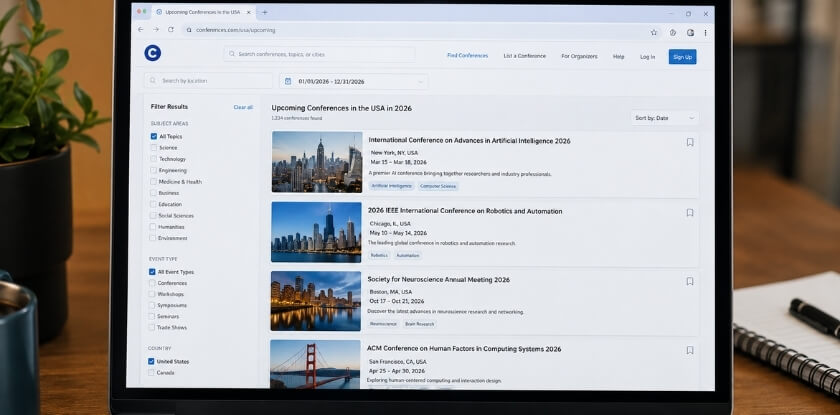
Official Conference Websites
Official websites are the best place to confirm dates, venue, fees, agenda, registration rules, and invitation letter policy. Always verify the organizer before paying.
University and Research Institution Event Pages
Universities and research centers often list academic conferences, symposiums, seminars, call-for-paper events, and workshops. These sources are useful for students, researchers, and academic professionals.
Professional Associations and Industry Groups
Industry associations organize many credible events in business, healthcare, engineering, technology, education, finance, marketing, HR, and public policy. Membership may also provide event updates or reduced fees.
Academic and Business Event Directories
Directories help you search by topic, date, city, or profession. Use them for discovery, but verify the final details on the official conference website.
Social Media and Organizer Announcements
Organizers may share updates through social media, newsletters, and professional platforms. These channels are useful for deadline reminders and speaker announcements, but they should not replace official verification.
How to Check Whether a Conference Is Genuine
Before registering, check:
- Event name, city, and dates
- Organizer name, history, and background
- Venue details
- Conference tracks or themes, and the full agenda
- Speaker or committee list
- Professional contact email or support information
- Registration fee, payment method, and a secure payment process
- Refund or cancellation terms
- Invitation letter policy
- Past events or participant feedback
- Two or three listed speakers mention the event on their own university or company pages
- No promise of guaranteed acceptance or publication, and enough time between submission and the event for a real review
Avoid events that promise guaranteed visas, use unclear names, or provide weak organizer information.
When to Start Applying for a Conference in the USA
A sensible plan is to start 3 to 6 months before the conference, especially if you need a visa. Interview wait times differ by embassy, so check the current wait time for your city in the State Department’s visa appointment wait times tool before you set your dates.
6 Months Before the Conference
Research events, compare topics, review credibility, estimate costs, check visa or ESTA eligibility, and look for funding. If you are presenting, prepare your abstract or paper early.
3 to 4 Months Before the Conference
Register, request the invitation letter, collect financial documents, complete the DS-160 if needed, pay the visa fee, and schedule the interview.
1 to 2 Months Before the Conference
Prepare for the visa interview, organize documents, review the agenda, confirm hotel options, and prepare presentation materials if you are speaking.
Final Week Before Travel
Confirm your passport, visa or ESTA, flight, hotel, registration, invitation letter, event schedule, transport plan, and document backups.
Cost Breakdown for Attending a Conference in the USA
The total cost depends on registration, airfare, accommodation, meals, local transport, optional sessions, and emergency funds. The figures below are rough planning ranges, not official prices. Check real prices for your event and dates, and add the visa or ESTA fee from the official source. Multiply the nightly and daily rows by your number of days to get a total.
| Cost Category | Rough planning range |
| Conference registration | $500–$2,500 |
| Travel or airfare | $200–$1,000+ |
| Accommodation per night | $100–$300+ |
| Meals per day | $30–$100 |
| Local transport per day | $20–$50 |
| Optional workshops or events | $100–$500+ |
| Emergency buffer | $100–$300+ |
Conference Registration Fees
Registration may include access to sessions, materials, coffee breaks, certificates, or selected meals. Check whether workshops, gala dinners, printed proceedings, or extra certificates cost more.
Flights and International Travel
Flight prices depend on season, route, airline, and booking time. Compare options early, but avoid non-refundable bookings before visa approval unless you accept the risk.
Accommodation Near the Venue
Hotels near the venue are convenient but may cost more. Budget hotels, shared stays, university housing, or short-term rentals can reduce expenses. Balance price with safety, transport, and cancellation policy.
Meals and Daily Expenses
Plan for meals, snacks, water, coffee, tips, taxes, mobile data, printing, and small personal expenses. A daily spending limit helps control costs.
Local Transportation
Budget for airport transfers, daily travel to the venue, networking events, and city movement. Staying near public transport can save money.
Optional Workshops, Networking Events, and Add-Ons
Some events charge extra for workshops, training sessions, certificates, field visits, dinners, or special networking programs. Review the event website before budgeting.
Emergency Budget and Travel Insurance
Keep a backup fund for delays, medical needs, lost luggage, extra hotel nights, or transport changes. Travel insurance can also help reduce risk, depending on the policy.
Ways to Reduce Costs
You can save money by registering early, sharing accommodation, choosing hotels with breakfast, comparing nearby airports, and using public transit instead of taxis.
When to Look for Sponsorships, Grants, or Funding
Funding may come from universities, employers, research groups, associations, conference organizers, or sponsors. Some grants are open only to students or to people with an accepted talk or poster. Look for a “travel grant” page on the conference website, note its deadline, which can fall weeks before the event, and keep written proof of any support you receive.
How to Prepare for a U.S. Conference as a Presenter
Presenters should prepare submission materials, slides, timing, backup files, and answers for audience questions.
Review Submission Rules and Prepare Your Abstract
Check word limits, topic tracks, author format, file type, deadlines, and review timelines. Your abstract should clearly explain the topic, purpose, method, and value.
Create Clear Presentation Slides
Use simple slides with short headings, readable fonts, clean visuals, and limited text. Slides should support your speech, not replace it.
Rehearse Your Talk and Manage Timing
Practice the full presentation, time yourself, reduce unnecessary slides, and prepare a shorter version in case the session runs late.
Save Backup Copies of Your Presentation
Keep your file on a laptop, USB drive, email, cloud storage, and a PDF version. If possible, share a backup with a co-presenter.
Prepare for Audience Questions and Networking
Review likely questions, weak points, data, examples, and future applications. Prepare a short personal introduction and a simple way to exchange contact details.
Common Mistakes to Avoid When Applying
Mistakes that can hurt an application include late registration, inconsistent forms, weak documents, and ignoring local embassy rules.
- Registering too late: It can delay your invitation letter and leave too little time for visa processing.
- Inconsistent forms: Your passport, DS-160, invitation letter, hotel booking, and interview answers should match. Check names, dates, passport numbers, and funding details.
- Weak financial or travel documents: Avoid unclear bank statements, incomplete sponsor letters, missing proof of payment, or travel plans that do not match the conference schedule.
- Ignoring embassy-specific instructions: Each embassy may have its own payment, photo, appointment, document, and passport return process.
- Unclear travel purpose: Be able to explain the conference, your role, trip length, funding source, and return plan.
- Skipping the refund terms: Some organizers do not refund registration if your visa is refused or delayed, so read the cancellation policy before you pay.
What to Do if Your U.S. Visa Is Refused
A refusal does not always mean the process is over. Read the refusal reason, identify weak evidence, and reapply only when your application is stronger.
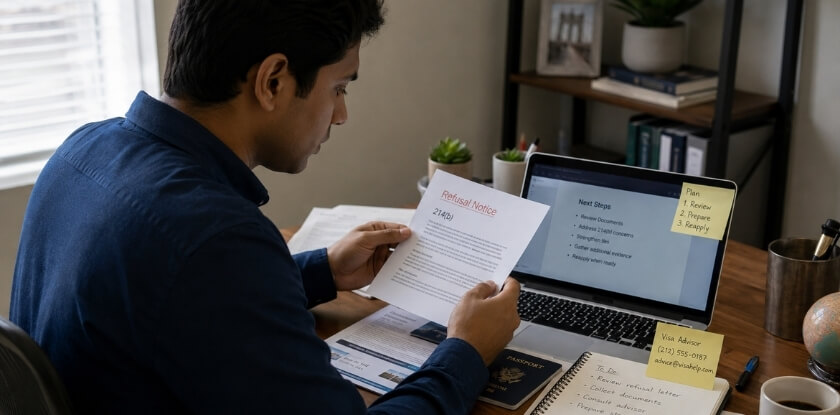
Read the Refusal Notice Carefully
The refusal notice may show the reason or legal section. Review it before taking the next step.
Identify Missing or Weak Evidence
Look for gaps in conference proof, financial evidence, home ties, travel purpose, or interview answers.
Correct the Application Before Reapplying
Update incorrect information, strengthen your documents, request a better invitation letter if needed, and prepare clearer answers. If the conference date has passed, use a future event.
Stay Consistent and Honest in Future Applications
Do not hide previous refusals or change your story without reason. Keep all answers consistent.
When to Seek Professional Guidance
Professional guidance may help if you have repeated refusals, a complex travel history, unclear sponsorship, or difficulty understanding the refusal reason.
Final Pre-Travel Checklist for Conference Attendees
Before leaving, confirm your documents, bookings, materials, funds, communication access, and emergency plan.
Documents to Carry
Carry:
- Passport
- Visa or ESTA approval
- Invitation letter
- Registration confirmation
- Payment receipt
- Hotel booking
- Return travel details
- Financial or sponsor proof, if needed
- Emergency contacts
- Copies of important documents
Bookings to Confirm
Check flight time, baggage allowance, airport terminal, hotel address, check-in time, venue address, registration desk hours, and return flight.
Conference Materials to Prepare
Bring the agenda, session list, name badge confirmation, slides, poster files, business cards, notebook, tablet, and copies of your abstract or paper if needed.
Items to Keep Accessible During Travel
Keep your passport, visa or ESTA, invitation letter, hotel address, charger, payment cards, medicine, and emergency contacts within easy reach.
From our experience at MS International: We run in-person conferences only in the Greater Toronto Area in Canada, so our invitation letters are for our own Canadian events and cannot be used for a U.S. conference. For a U.S. event, ask that event’s organizer. On our side, the letter is issued within 3 to 5 business days after payment clears, registered attendees (listeners) and presenters are both eligible, and a US$50 fee may apply to corrections after issue, so check your passport details first. Registration fees are non-refundable and non-transferable, so keep visa timing in mind before paying for any conference.
FAQs About Applying for a Conference in the USA
For a U.S. conference trip, planning hinges on visa interviews and processing time, checking that the event is real, travel insurance and when to book flights and hotels.
Is a visa required to enter the USA for a conference?
Usually yes, unless your passport is from a Visa Waiver Program country and you get ESTA approval. Conference visitors generally use a B-1 or B-1/B-2 visa. Check your eligibility on the official State Department and CBP websites.
Do I always need a visa interview?
Almost always, for a visa. Since 1 October 2025, the main exception is a B visa renewal within 12 months of expiry, and an officer can still ask for an interview. ESTA travelers have no embassy interview. Your embassy’s website says whether a waiver applies to you.
How long does it take to get a U.S. visa for a conference?
It depends mostly on the interview wait time at your embassy, which differs widely between cities. Check the State Department’s wait times tool for your city, and start 3 to 6 months before the event.
Can I use an MS International invitation letter for a conference in the USA?
No. MS International holds in-person events only in the Greater Toronto Area, and its letters are for those events.
What is the best time of year to attend conferences in the USA?
It depends on your field, because event calendars differ. Choose the event based on relevance, credibility, and schedule rather than season alone.
How do I know whether a conference is real?
Check the organizer, venue, agenda, speakers, contact details, payment process, refund policy, and past event history. Avoid events that promise guaranteed visas.
Can I apply for more than one conference?
Yes, but avoid overlapping dates and unclear travel plans. Your visa application should focus on the conference you genuinely plan to attend.
Do I need travel insurance?
Travel insurance is not always mandatory, but it is useful for medical issues, delays, baggage problems, or trip interruptions.
What should I wear to a U.S. conference?
Business casual or professional clothing is a safe choice. Academic and technology events may be more relaxed, but neat professional dress is safest.
Can family members travel with me?
Yes, if they meet U.S. entry requirements. Your conference invitation usually applies only to you, so family members need their own documents and travel purposes.
How early should I book flights and hotels?
Start checking early, but avoid non-refundable bookings before visa approval if you need a visa. After approval, book quickly for better options.
Will I receive a certificate after attending?
Some conferences provide certificates, but policies vary. Check with the organizer before registering if a certificate is important.
Can I get funding or a scholarship?
Yes, some universities, employers, associations, and organizers offer travel grants or scholarships. Some are limited to students, early-career researchers, or presenters, and grant deadlines can close before registration does.
How can I network effectively during the conference?
Review the agenda, prepare a short introduction, attend networking sessions, ask useful questions, exchange contact details, and follow up after the event.
Conclusion
Applying for a conference in the USA is manageable when you follow a clear order: pick a legitimate conference, register, get the invitation letter, and confirm whether you need a B-1 visa, B-1/B-2 visa, or ESTA.
Keep your documents consistent, show your conference purpose, funding, and return plan, and start early. Then you can focus on learning, presenting, and networking.
Disclaimer: This article is general information, not legal or immigration advice. U.S. visa and ESTA rules, fees, and interview requirements change and differ by country and embassy, so confirm the details on travel.state.gov, cbp.gov, and your local U.S. embassy website before you apply.