
The interview is over, but the wait is not. What happens next depends on what the officer tells you at the end: your case is approved, put on hold for documents, or sent for extra review.
Quick answer: If your US visa is approved at the interview, you usually get your passport back with the visa in about 1 to 2 weeks (roughly 5 to 10 working days), including visa printing and pickup or courier delivery. A 221(g) notice or administrative processing has no fixed timeline and can take a few weeks or several months.
Fact-checked by the MS International Editorial Team. Last verified against official sources: October 2026.
This guide covers the time after your interview, not the wait for an appointment. Those are two separate timelines. Someone can wait months for an interview date and still get the passport back within a week of approval, while someone else gets a quick appointment and then waits much longer because of extra checks.
How Long Does It Usually Take to Get a US Visa After Interview?
For a straightforward approval, plan on about 5 to 10 working days from the interview to having your passport back. The exact time depends on the embassy or consulate, the delivery method you chose when booking, and local holidays.
Each post publishes its own figures. The US Embassy in London, for example, says visas approved at interview take on average 3 to 5 working days to process, plus about 5 working days for delivery. Check the website of the embassy where you applied for its current numbers.
What Happens Between Approval and Passport Return
When the officer approves your visa, the passport usually stays with the embassy. The officer’s “approved” at the window is not the end of the process. In a normal case the steps are:
- Interview completed and visa approved
- Embassy completes final checks and prints the visa
- CEAC status changes to “Issued”
- Passport is handed to the courier or pickup center
- You collect the passport or it is delivered to you
You are ready to travel only when the passport is in your hands with the visa inside. The State Department’s visitor visa page advises applicants not to make final travel plans or buy tickets until they have the visa.
Passport Pickup and Courier Delivery
Passport return runs through the scheduling and courier system used in your country. Depending on the location, you either collect the passport at a pickup point or pay for delivery to your address, and you usually get an email or SMS when it is ready. Weekends, local holidays, a wrong address or phone number, and busy courier periods can each add a few days.
Common Reasons US Visa Processing Takes Longer After Interview
A case takes longer when the officer cannot finish it at the interview: documents are missing, the case needs administrative processing, or a waiver of ineligibility is required. Some delays need action from you; others only need time.
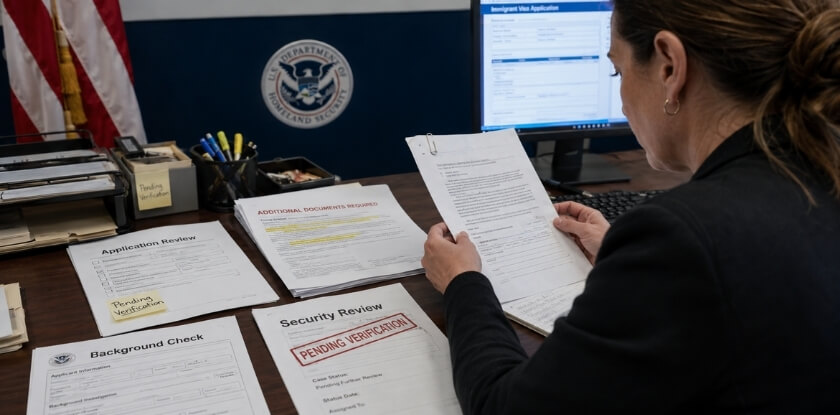
The usual causes are:
- 221(g) document request: the officer asks for something you did not bring, such as financial records, employment proof or event documents. The clock restarts when you submit them.
- Administrative processing: extra review after the interview, often linked to security checks, field of study or work, or travel history. No action is needed from you unless the embassy asks.
- Waiver of ineligibility: if the officer tells you a waiver is needed, the London embassy warns this can take up to 9 months from the interview date.
- Embassy workload and closures: peak seasons, staffing limits, public holidays and system outages slow even simple cases.
- Printing or courier delays: the visa is issued, but the passport is held up on its way back to you.
A delay is not a refusal. Many delayed cases end with the visa being issued.
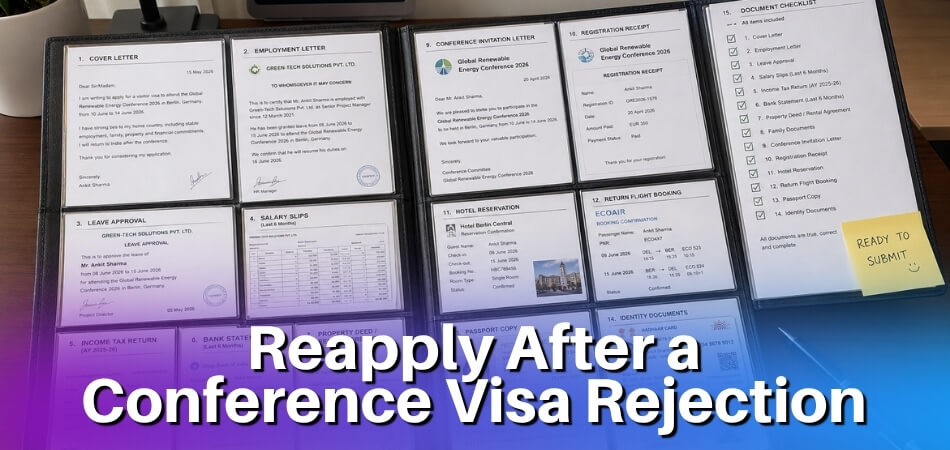
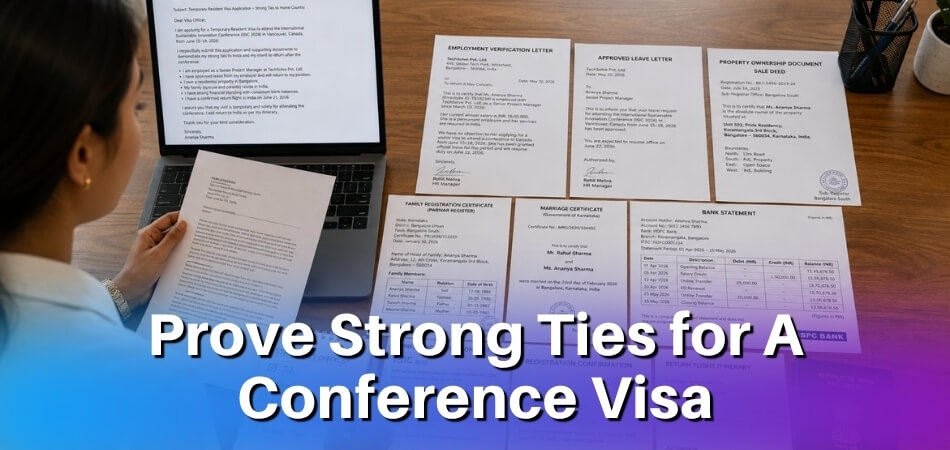
For conference travellers, the most common avoidable delay is a vague purpose of travel. An invitation letter that clearly states the event name, dates, venue and your role helps the officer finish the case at the interview. A conference invitation letter should also include who pays for what and an authorized signature on letterhead.
What Does 221(g) Mean After a US Visa Interview?
A 221(g) notice means the officer could not approve your application at the interview, either because more documents are needed or because the case needs administrative processing. Technically it is a refusal under section 221(g) of the Immigration and Nationality Act, but it is not final: the case can be reconsidered once the missing step is complete.
The notice tells you what to do. Read it carefully, because the written instructions matter more than anything else on the form. Some posts hand out coloured 221(g) slips, but the colours are not standardised across embassies, so do not try to read your result from the colour.
Documents Commonly Requested Under 221(g)
Officers usually ask for one or more of these:
- Financial proof or tax records
- Employment, academic or research details (often a CV or project description)
- Invitation letter, conference registration or event documents
- Travel itinerary
- Additional forms or a written explanation
Send only what the notice asks for, in the format and through the channel it names. Clear, complete and readable files avoid a second round of requests.
How Long 221(g) Processing Takes
There is no fixed time. A simple document request can be resolved within days or a few weeks of submission. Cases that also need administrative processing take longer.
One deadline does matter. According to the State Department’s administrative processing page, you have one year from the date of refusal to submit the requested information. If you miss it, you have to reapply and pay the application fee again.
What Does Administrative Processing Mean for a US Visa?
Administrative processing is extra review that happens after the interview and before the officer makes a final decision. The officer tells you at the end of the interview if your case needs it. The State Department says the duration varies with the circumstances of each case and does not give a standard timeline.
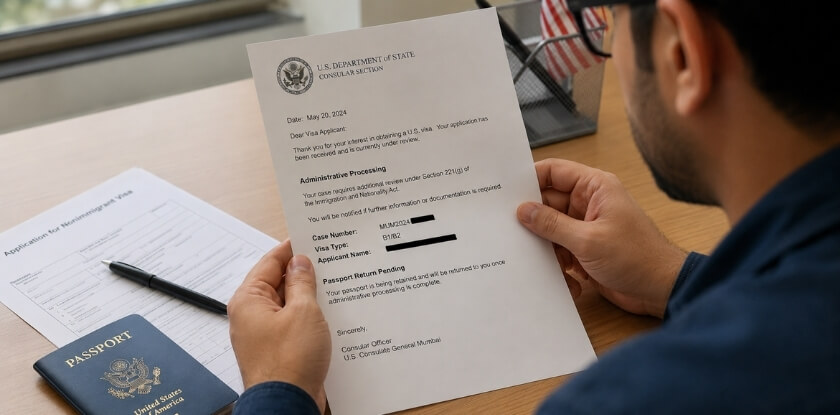
It can be triggered by identity or security checks, the applicant’s field of work or research, travel history, or a need for clearance from another office. When it is complete, the officer either finds you qualified and issues the visa or confirms that you remain ineligible.
Why CEAC Shows “Refused” During Administrative Processing
Cases in administrative processing now show as Refused on the CEAC status page. The State Department changed this display in 2020 and stated that the change did not affect the cases themselves. If you received a 221(g) notice with instructions, a “Refused” status usually means your case is on hold, not finally denied. If the officer instead told you the application was refused under section 214(b), that is a decision on that application, not a hold. The written notice you were given says which one applies.
When You Can Ask About Your Case
The State Department asks applicants to wait at least 180 days from the interview or from submitting the requested documents (whichever is later) before asking about administrative processing. The exception is an emergency, such as serious illness, injury or death in the immediate family. Sending inquiries before then rarely speeds anything up.
How Long Does US Visa Dropbox or Interview Waiver Processing Take?
There is no official national timeline for Dropbox (interview waiver) cases; each post sets its own. More importantly, very few applicants still qualify for it.
Under the State Department’s interview waiver update, effective 1 October 2025, almost all nonimmigrant visa applicants, including children under 14 and adults over 79, need an in-person interview. The main exceptions are certain diplomatic and official visa categories and some renewals of B-1/B-2 visas or Border Crossing Cards, where the previous full-validity visa expired within the last 12 months and the applicant was at least 18 when it was issued. Consular officers can still call any applicant for an interview.
If you do qualify, track two things after submitting your documents: the visa case on CEAC and the passport on your local scheduling or courier portal. The officer can still issue a 221(g), ask for more documents or call you in for an interview, and each of those adds time.
Country-Specific US Visa Processing Time After Interview
Post-interview times differ by country because each embassy has its own workload, delivery system and holidays. Most embassies do not publish one guaranteed figure, so treat any number you see online, including on forums, as a rough guide only.
The most reliable place to check is the visa section of the US embassy where you were interviewed:
| Country | Official embassy website | Typical causes of local delay |
| India | in.usembassy.gov | 221(g) document requests, high volume, pickup location |
| Bangladesh | bd.usembassy.gov | seasonal workload, document verification, public holidays |
| Pakistan | pk.usembassy.gov | administrative processing for technical, research or work-related cases |
| Nigeria | ng.usembassy.gov | administrative processing, courier delays |
| Philippines | ph.usembassy.gov | missing documents, delivery timing |
| United Kingdom | uk.usembassy.gov | published average: 3 to 5 working days processing plus 5 working days delivery |
The State Department’s wait-times page publishes processing estimates for some posts, but its figures leave out administrative processing and the time needed to return the passport. Your own timeline depends on your visa type, your case and whether extra review is needed. CEAC, embassy emails and the local passport tracking portal are the only sources specific to your application.
How to Check Your US Visa Status After Interview
Check your visa status on the CEAC Visa Status Check page with your DS-160 confirmation number. The passport itself is tracked separately, on the scheduling or courier portal used in your country.
- Open the CEAC Visa Status Check page.
- Choose “Nonimmigrant Visa (NIV)” and the location where you were interviewed.
- Enter your DS-160 confirmation number (the barcode number starting with AA).
- Read the status, then check your email for instructions from the embassy.
- Once the status is “Issued”, track the passport on your local delivery portal.
If CEAC says Issued but the passport has not arrived, the hold-up is usually with printing, the pickup center or the courier, so contact the visa appointment service or courier rather than the consular section.
What CEAC Status Updates Mean After a US Visa Interview
CEAC shows the stage of your case, but the labels are short and can mislead you. The table gives the usual meaning after an interview.
| CEAC Status | What It Usually Means |
| Issued | The visa has been approved and printed; passport return should follow. |
| Refused | Either a final refusal or a temporary 221(g) hold or administrative processing. Your refusal notice tells you which. |
| Administrative Processing | The case needs extra review before final action (many such cases now display as Refused). |
| Ready | The case is with the embassy and waiting for its next action. |
| Application Received / No Status | The record has not been updated yet or is still being entered. |
A status alone does not tell the full story, especially in 221(g) cases. Your written notice and any embassy emails come first.
What to Do If Your US Visa Is Delayed or Stuck
Confirm what is actually pending: check CEAC, read the embassy’s emails and see whether any documents were requested. Then respond to anything you were asked for and otherwise wait.
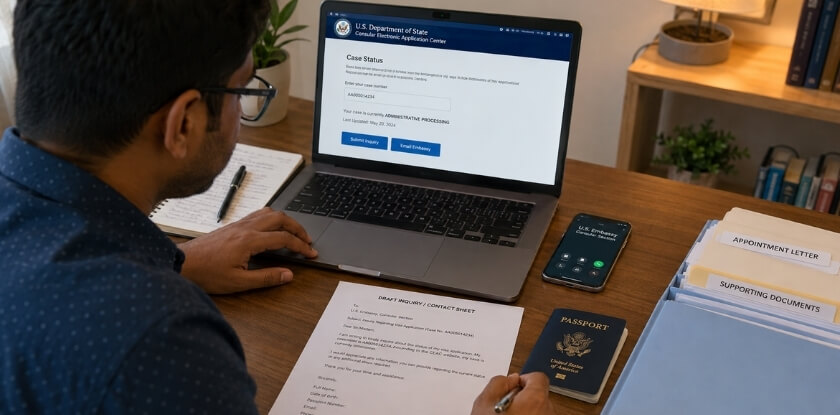
- Check CEAC every few days, not many times a day. Updates are not instant.
- Watch your inbox, spam and promotions folders. Missing a 221(g) document request is one of the easiest ways to lose weeks.
- Send requested documents correctly the first time. Check the file format, size, readability, your name and passport number, and the deadline in the notice.
- Contact the right office at the right time. For a passport stuck with the courier, contact the visa appointment service after several working days without an update. For administrative processing, hold off until the waiting period described above has passed. Include your full name, passport number, DS-160 number, interview date and visa type.
- Do not file a new application while the old one is pending, unless the embassy tells you to. It does not speed up the first case and can cause confusion.
If you have a fixed date, such as a conference, ask the embassy whether it accepts expedite requests, because rules differ by post. The US Embassy in London, for example, says no expedite service is available for administrative processing.
From our experience at MS International: Our conferences are held in person in the Greater Toronto Area. For registered participants we issue invitation letters, usually within 3 to 5 business days after payment clears, and visa expedite request letters on request. These letters only support a visa case by confirming your event. They do not guarantee a visa or faster processing, and the embassy makes every decision. A US$50 fee may apply to corrections after a letter is issued, so check your name and passport number before you submit your details.
Mistakes to Avoid While You Wait
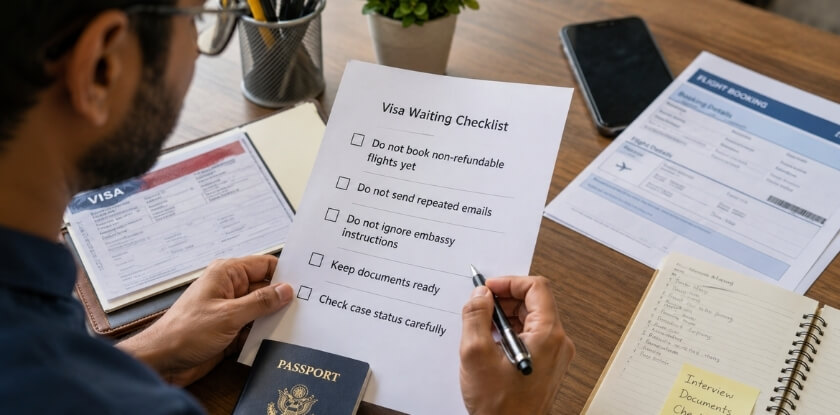
- Buying non-refundable flights before the passport is back.
- Relying only on forums and social media. Other people’s timelines are not your case; use CEAC, the embassy website and the official courier portal.
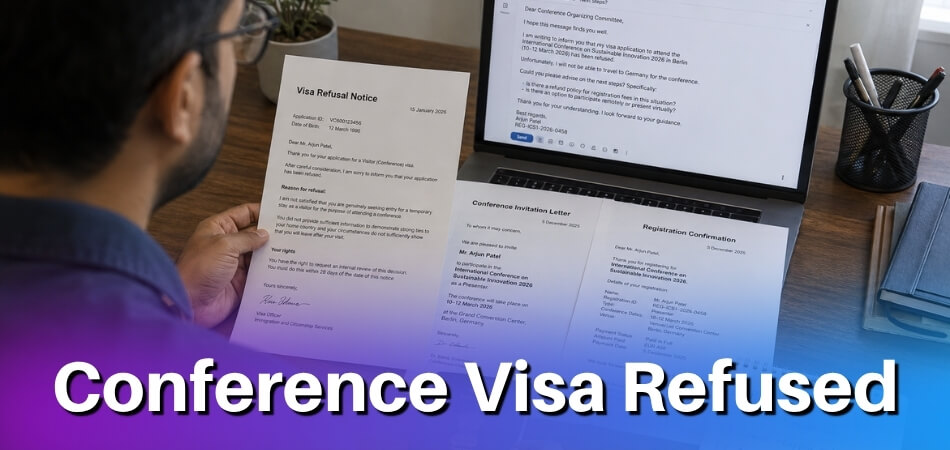
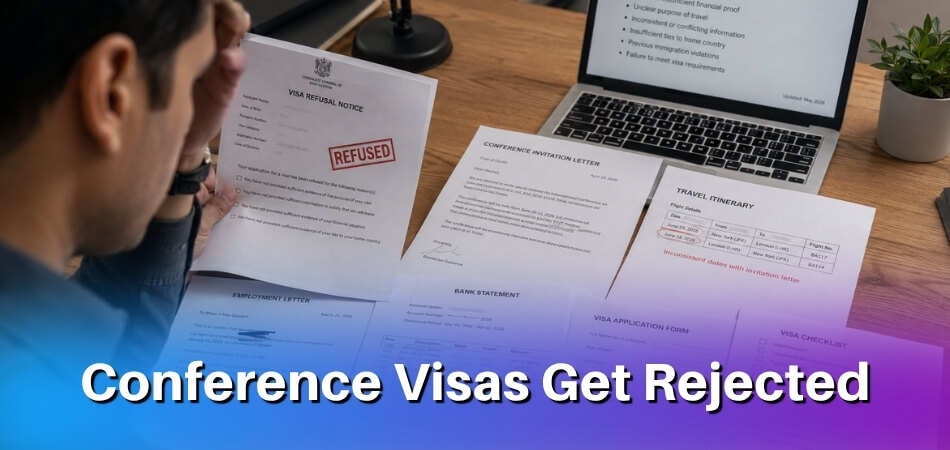
If the final answer is a refusal, reapplying after a conference visa rejection works best once you fix the stated reason with new evidence.
What to Do After Your US Visa Is Approved
Wait for the passport, check the visa page for errors, keep copies of your documents, and only then book travel.
When the passport arrives, check your full name, passport number, date of birth, visa category, validity dates, number of entries and any annotation. Report errors to the embassy straight away, before you travel.
Keep printed and digital copies of your passport bio page, visa page, DS-160 confirmation, appointment confirmation, invitation letter and event registration, and hotel and travel details.
A visa lets you travel to a US port of entry; the officer there decides on admission. Carry your passport with visa, return or onward ticket, US address, conference invitation or registration proof, relevant financial or employment documents, and your host’s contact details. Your answers should match the purpose in your application.
US Visa Timeline After Interview: Quick Comparison Table
Most approved cases finish within about 1 to 2 weeks; 221(g) and administrative processing cases have no fixed end date.
| Stage or Case Type | Common Timeline | What It Means |
| Approved at interview, total time to passport in hand | About 5 to 10 working days | Visa printed (a few working days), then pickup or courier delivery (a few more). |
| 221(g) document request | Days to several weeks after you submit | The case is on hold until the requested documents are reviewed. You have one year to respond. |
| Administrative processing | No fixed time; can be several months | Extra review before a final decision. Wait 180 days before inquiring, except in emergencies. |
| Waiver of ineligibility | Up to about 9 months (London embassy guidance) | The officer must request a waiver before the visa can be issued. |
| Dropbox / interview waiver | Set by each post | Available only to limited categories since October 2025. |
Frequently Asked Questions About US Visa Processing After Interview
Between the interview and the returned passport, CEAC may read Refused or show Administrative Processing, and you may wonder about 221(g) timing, delayed delivery, pickup readiness and contacting the embassy.
How Long Does It Take to Get a Passport After US Visa Approval?
Roughly 5 to 10 working days after the interview, which is about 1 to 2 weeks. Holidays, courier delays or extra review can make it longer.
Why Does CEAC Show Refused After the Interview?
Because the State Department shows cases on a 221(g) hold or in administrative processing as “Refused” on CEAC. That is not always a final denial. Your written notice tells you whether more documents or review are needed.
Does Administrative Processing Mean My Visa Is Denied?
No. It means the review is not finished, and the officer can still issue the visa or find you ineligible. Until then the case stays refused under 221(g), which is a hold, not a final decision.
How Long Does 221(g) Processing Take?
There is no fixed time. Document-only requests often move within days or weeks of submission; cases with administrative processing can take months. You have one year from the refusal date to submit what was asked for.
Can I Travel Before My Passport Is Returned?
No. You cannot travel internationally without your passport, and the State Department advises against buying tickets before you have the visa.
How Do I Know If My Visa Is Ready for Pickup?
You usually receive an email or SMS, and the status appears on the scheduling or courier portal used in your country.
What Should I Do If My Passport Delivery Is Delayed?
If CEAC shows Issued but the passport has not arrived after several working days, contact the visa appointment service or courier with your passport number, DS-160 number and appointment details.
Can I Contact the Embassy About My Visa Status?
Yes, but for administrative processing wait at least 180 days from the interview or document submission, whichever is later, unless it is an emergency such as serious illness or a death in the immediate family. For documents you were asked to send, follow the notice’s instructions.
Conclusion
An approved US visa usually means about 1 to 2 weeks until your passport is back. If you are in 221(g) or administrative processing, plan around your own notice rather than any general estimate. Track CEAC and your local courier portal, answer any document request quickly and within the one-year deadline, and book travel only once the visa is in your passport.
If you are applying for a Canadian visa instead, the time to get a Canada visa after interview depends on the visa office, and IRCC processes most visitor visas in a few weeks or less.
Disclaimer: This article is general information, not legal or immigration advice. Visa rules, fees, and processing times change. Confirm the current requirements on the official U.S. Department of State website (travel.state.gov) or with the U.S. embassy or consulate handling your case before you apply.