
Is a letter of support the same as an invitation letter, and do you even need one for your visa?
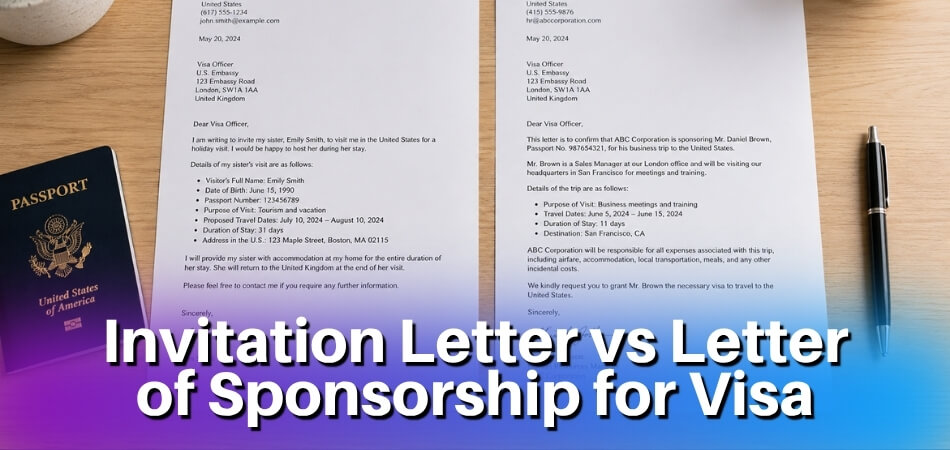
Quick answer: A letter of support for a visa is a signed letter from a host, employer, university, event organizer or sponsor that explains why you are travelling, who is backing the trip and who pays for what. It supports your application but is not required for every visa and never guarantees approval. An invitation letter is narrower: it confirms the invitation and nothing more.
Fact-checked by the MS International Editorial Team. Last verified against official sources: October 2026.
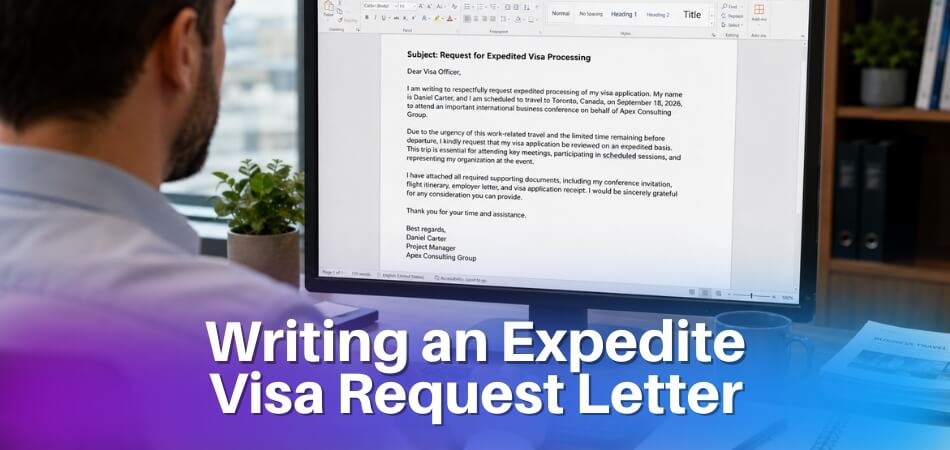
This guide is the overview. It explains what the letter is, who writes it, when embassies want one and how it differs from an invitation letter or an affidavit. It should not sound like a sales pitch or a personal appeal. It should answer the questions a visa officer is likely to have: who is involved, what is the purpose, when will the visit happen, where will the applicant stay and who is responsible for support.
What a Visa Letter of Support Means
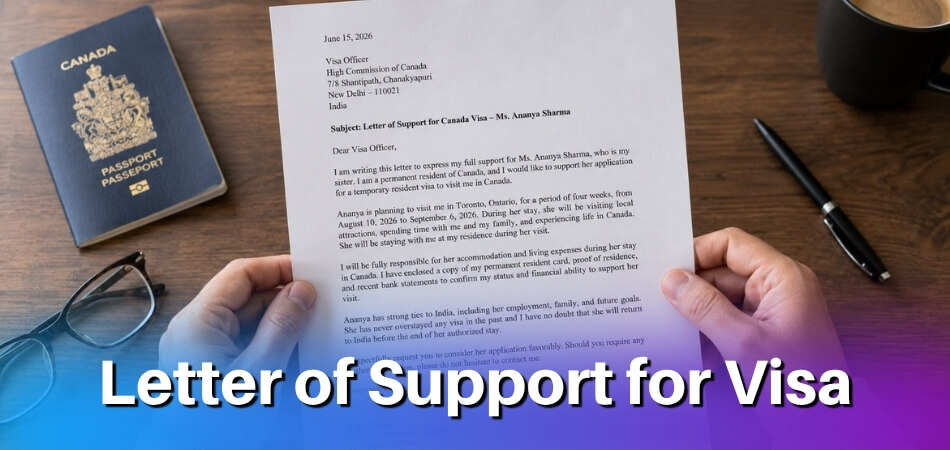
A visa letter of support is a written statement in which a person or organization confirms their support for your visit. The support may be financial, practical, professional, academic, personal or accommodation-related. The letter usually answers three questions: why you are travelling, who is supporting the visit and how you will manage the stay. It is commonly used for visitor visas, business trips, conference travel, academic programmes, family visits, sponsored trips and medical travel. It should be clear, factual and professional, and its details must match your passport, visa form and other documents.
What It Does and Does Not Do
A support letter does not replace the visa application form, passport, financial proof, invitation letter, itinerary or any other required document. It connects them with a short explanation, so the visa file is easier to review when the details match. It also does not guarantee approval. The decision depends on your eligibility, documents, travel history, finances, home-country ties and the rules of the destination country. If the embassy asks for bank statements, employment proof or official forms, you must still provide them.
Why a Letter of Support Matters in Visa Applications
A support letter matters because it gives the visa officer one clear explanation that ties your documents together. The letter gives the officer the story behind the documents.
| Your document shows | The letter adds |
| Bank statement with money in it | Who will pay, and for which costs (travel, accommodation, meals, local transport, insurance, event fees, emergencies) |
| Conference registration | Why you are travelling, with the event name, venue, dates and your role |
| Hotel or host address | Where you will stay and who arranged it |
| Employment or study proof | Why the visit is temporary and when you return |
A specific purpose (attending a conference, visiting family, joining business meetings, studying, receiving treatment or training) shows that the trip is planned and temporary. For conference travel it also helps show a fixed purpose. The letter can also explain details that are not obvious elsewhere, such as unusual travel dates, limited travel history or sponsored expenses, and it should say clearly whether you pay personally or a sponsor, host, employer or institution covers some or all costs. It must never hide weak information or add unsupported claims. A letter adds credibility only when it is honest, specific, properly signed, easy to verify and backed by documents.
When You May Need a Letter of Support for a Visa
You may need one when your trip involves an invitation, sponsorship, accommodation from a host, professional activity, a study programme, an event or financial help from another person or organization. It is often useful even when it is not mandatory. Rules differ by country, so read what the official source for your destination says before you ask anyone to write a letter.
| Destination | What the official source says | What it means for your letter |
| Canada (IRCC) | A letter of invitation does not guarantee a visa. IRCC may ask for one, and its apply page lists a letter from the person or business in Canada who invites you, with proof of your relationship such as a birth or marriage certificate. IRCC says its guide is only a guide, that the host must write the letter themselves, and that it must be written in good faith and be truthful | The Canadian host gives their full name, date of birth, Canadian address, job title and status (citizen or permanent resident), with a photocopy proving that status. The letter gives your name, date of birth, address, relationship to the host, purpose, length of stay, planned departure date, where you will stay and how you will pay |
| United States (State Department) | A letter of invitation is not required for a visitor visa | A letter may still explain the trip, but it does not replace the interview or your own documents |
| United Kingdom (GOV.UK) | Conference attendees should provide a letter of invitation from the organiser of the event. If someone else provides your travel, maintenance or accommodation, show what support they give, whether it covers dependants, how it is provided, that they have enough funds, your relationship to them and, where it applies, their lawful UK status. Notarial certificates are listed among documents that are less useful as evidence | A sponsor’s letter should state exactly what is covered and come with the evidence behind it, and a notarized copy is not a substitute for that evidence |

| Situation | Typical writer | What the letter should confirm |
| Conference, seminar, workshop, trade show or exhibition | Organizer, employer, institution or sponsor | Event name, dates, venue, your role, registration status and any support provided |
| Business meetings or professional visit | Employer, client, partner or host company | Business reason, meeting dates, company details, who funds the trip and that you will return to work |
| Family or personal visit | Relative or host | Relationship, reason, stay period, address and any financial help (especially when you stay with a relative or friend instead of a hotel) |
| Short study, research, exchange, exam or training | School, university, training provider or supervisor | Academic purpose, programme dates, institution details and support arrangement |
| Medical or emergency travel | Hospital, doctor, sponsor, caregiver or relative | Treatment purpose, appointment dates, expected stay, payment responsibility and accommodation, all matching the medical reports and financial documents |
| Official invitation | Government office, public institution, embassy, international body or recognized organization | The invitation, purpose, your role, dates, location and a responsible contact person |
Who Can Write a Visa Letter of Support?
The best writer is someone directly connected to your travel purpose, and the writer decides the type of letter. Choosing the correct type helps the officer understand the application quickly, so match it to who is supporting you.
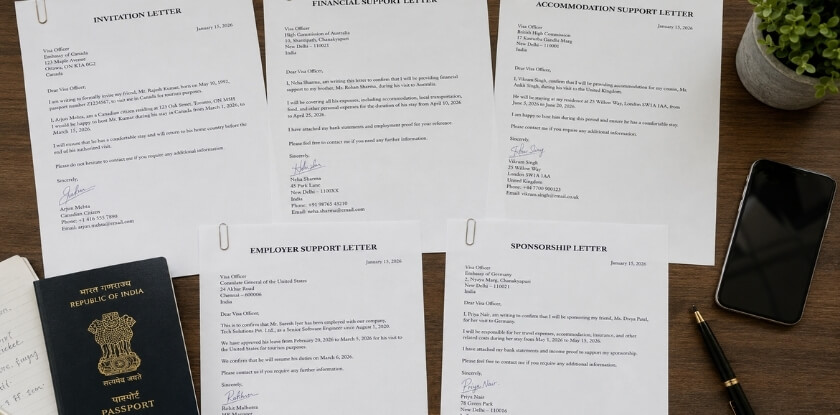
| Writer and letter type | Used for | Must cover |
| Family member or relative (family sponsorship letter) | Family visits, weddings, graduations, holidays, medical support | Relationship, reason, dates, accommodation, financial help and the temporary nature of the trip; proof of relationship and financial documents may be needed |
| Friend or host (personal support letter) | Short visitor visas, personal trips, informal hosting | How they know you, where you will stay, what help is provided and contact details; keep it factual, a long personal story is not needed |
| Employer or business (business support letter) | Meetings, training, company visits, trade fairs, conferences | Job title, employment status, travel purpose, dates, company details, approved leave, cost coverage and expected return to work |
| University, school or training provider (academic support letter) | Students, researchers, teachers, trainees, speakers, exchange participants | Enrollment, admission, research purpose, training schedule, programme dates or academic role |
| Conference or event organizer (event support letter) | Attending, speaking, presenting, exhibiting or sponsoring | Event name, date, venue, registration status, your role and organizer contact details; a registration receipt or schedule can back it up |
| Financial sponsor (sponsorship letter) | Parents, spouses, employers, companies, scholarship providers, institutions paying for the trip | Exactly which costs are covered (airfare, accommodation, meals, insurance, local travel, registration fees), backed by bank statements, salary proof, company approval or scholarship documents when required |
| Doctor, hospital or clinic (medical support letter) | Treatment, consultation, surgery, recovery or urgent care | Medical reason, appointment dates, treatment period, support arrangement and payment responsibility |
If the writer is an organization, the letter should be on official letterhead with an authorized signature.
Letter of Support vs. Affidavit of Support
A letter of support explains your trip and the supporter’s role, an invitation letter confirms an invitation and the purpose of the trip, a sponsorship letter shows who pays for it, and an affidavit of support is a formal sponsor commitment that may carry legal weight.
| Point | Letter of support | Invitation letter | Affidavit of support |
| Main job | Explains purpose, hosting or financial help | Confirms you were invited to a visit or event | Sponsor accepts financial responsibility |
| Legal weight | Usually an informal supporting document | Supporting document, not a visa or sponsorship agreement | May be a formal document; some countries require official forms, certification, notarization or financial evidence |
| Financial detail | May state that the supporter provides accommodation or covers costs | Usually none, unless the organizer states what it covers | Sponsor may need to prove income and accept legal responsibility for your needs during the stay |
A letter of support is often enough for short visits, conference travel, business meetings, academic events, family visits or tourism, as long as it is backed by invitations, registration proof, accommodation confirmation, bank statements or employment letters. An affidavit may be required for visa categories with formal sponsorship rules, family-based cases, long-term visas or applications where you depend heavily on a sponsor. Check whether the visa office asks for a simple letter, a notarized sponsorship letter, an official affidavit form, a host declaration or financial sponsorship documents.
What to Include in a Visa Letter of Support
A good letter includes your details, the supporter’s details, their relationship to you, the purpose, dates, accommodation, who pays, your return plan and a signed, dated close. Keep it to one organized page in this order: writer introduction, your details, purpose, support, dates, accommodation, return plan, contact details and signature.
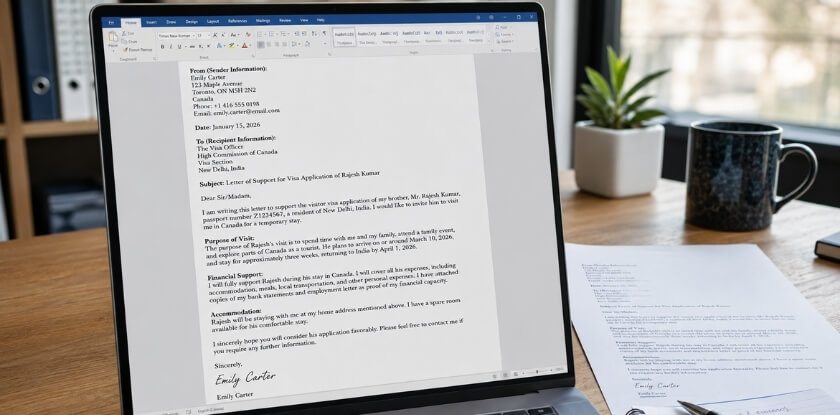
| Part | What to put in it |
| Opening | Who the writer is, that the letter supports your visa application, your name, destination, dates and purpose |
| Applicant details | Full name, passport number, nationality, date of birth, address if relevant; these must match the passport and form exactly |
| Supporter details | Full name, address, phone, email, occupation or organization, legal status in the destination country if applicable, and the relationship to you |
| Purpose and dates | Reason for travel, destination, arrival and departure dates, length of stay; for conferences, the event name, venue, dates and your role |
| Accommodation | Hotel, host residence, rented place, university housing or employer housing, with the full address |
| Financial support | Who pays and what is covered; if you pay personally, say so |
| Return plan | Realistic reasons to go home, such as employment, approved leave, studies, family responsibilities, business, property or a return itinerary |
| Closing | Polite close, full name, signature, date, phone, email, address, and letterhead or stamp for organizations |
A few habits make the difference. Use plain wording and one direct sentence, for example:
I am supporting [Applicant Name]’s visit to [Country] from [Date] to [Date] for [Purpose].
Check that names, dates, passport numbers, addresses and sponsor details match every attachment, because even accidental inconsistencies create doubt. Give active phone numbers, emails, addresses and an official website so the visa office can verify the letter. Avoid emotional pressure, long background stories and claims such as guaranteed approval or no risk.
The mistakes that weaken a letter are easy to avoid:
- Missing travel dates or purpose, which makes the letter too vague.
- Vague money wording such as “I will help if needed” or “expenses will be managed” instead of naming the costs covered.
- Details that differ from the passport, invitation, itinerary, hotel booking or bank statement.
- A copied or reused letter that does not reflect your real trip.
- Fake sponsorship, false income, misleading accommodation, invented relationships or incorrect travel reasons.
- Sending the letter without the documents that prove it.
Documents to Attach With a Visa Letter of Support
A letter is stronger when attached documents prove what it says. The exact set depends on the visa type, the destination country and your situation.
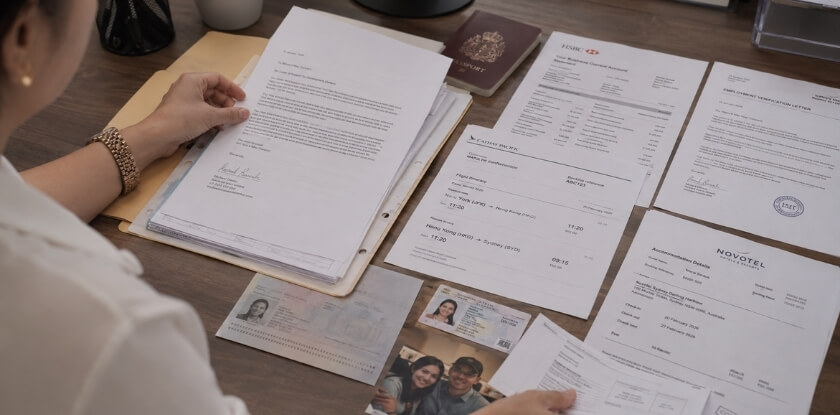
| Document | What it proves |
| Passport copy (bio-data page, signature page, relevant earlier visa pages) | Identity; details must match the letter and form |
| Proof of relationship (birth or marriage certificate, family records, employment letter, enrollment proof, business invitation, conference registration) | Why the supporter is involved |
| Bank statements, salary slips, tax records, company funding approval, scholarship or sponsorship letters | That you or the sponsor can cover the trip. IRCC’s apply page asks for at least 6 months of account details with balances, showing your name and address. If someone else is paying, add their signed letter and proof of their funds, and follow your visa office’s checklist for the exact documents |
| Conference invitation, registration receipt, speaker confirmation, meeting invitation, training confirmation, admission letter, workshop schedule or medical appointment | The purpose of the trip |
| Hotel booking, host address confirmation, rental papers, housing or hospital stay details | Accommodation; the address should match the letter |
| Employment letter, approved leave, enrollment proof, business ownership, property records, family responsibility documents, return ticket | That the visit is temporary. IRCC’s employer letter is on official letterhead, dated no earlier than 3 months before you apply, and gives your full name and date of birth, start date, brief job description, current salary and your manager’s contact details, signed with the manager’s printed name |
| Travel itinerary or official event schedule | The timeline: arrival, departure, cities, event, meeting and hotel dates |
| Translation of any document that is not in the language the visa office accepts | That the officer can read it. GOV.UK asks for a full translation that can be independently verified, with the translator’s confirmation of accuracy, the date, their full name and signature, and their contact details |
FAQ: Visa Letters of Support
Before someone vouches for your trip in a support letter, it helps to settle who signs it, whether several people can write one, notarization and reuse for multiple applications.
Is a Letter of Support Required for Every Visa?
No, a letter of support is not required for every visa. The US State Department says a letter of invitation is not required for a visitor visa, while IRCC may ask for one. Check your visa office’s document list.
Is a Letter of Support the Same as an Invitation Letter?
No. The invitation covers only the invitation itself, while a support letter may also explain financial help, accommodation, your relationship to the supporter, the travel purpose or your return plan.
Does a Letter of Support Guarantee a Visa?
No. IRCC says a letter of invitation does not guarantee a visa. The officer decides on your eligibility, documents, finances, travel history and ties to your home country.
Can More Than One Person Write a Support Letter?
Yes, if each letter covers a different part of the trip. An employer may confirm the business travel while a host confirms accommodation. Avoid repeating the same details in several letters.
Does the Letter Need to Be Notarized?
Usually not, unless the embassy, consulate or visa office asks for it. GOV.UK lists notarial certificates among documents that are less useful as evidence for UK visit applications. Some countries ask for certified sponsorship documents or affidavits for certain visa categories.
Can a Weak Letter Hurt a Visa Application?
Yes. Wrong dates, vague funding, missing contact details or unsupported claims create doubt instead of removing it. The letter should make the application easier to understand.
Can the Same Letter Be Used for Multiple Applications?
No, update it for each application. Dates, destination, sponsor information, purpose and attachments change, and a customized letter looks more accurate and reliable.
Who Should Sign the Letter?
The person or authorized representative providing the support signs it. That may be a family member, host, employer, university official, event organizer, sponsor, doctor or company representative.
Conclusion
A letter of support explains your purpose, your supporter and your plan to return, in one place. It can come from a host, sponsor, employer, university, organizer, medical provider or relative. Check every detail against your other documents, attach the proof, and remember that it never guarantees approval.
From our experience at MS International: a conference letter is not a sponsorship letter. Our invitation letter is prepared on MS International Conferences Inc. letterhead for eligible registered participants and is issued within 3 to 5 business days after payment clears. It confirms your connection to the conference and does not confirm financial support, accommodation or travel sponsorship. Enter your name exactly as it appears on your passport, because we may contact you if details are missing or names do not match, and a US$50 correction fee may apply to changes requested after the letter is issued. A notarized version is optional, costs US$100, is non-refundable and typically takes up to 10 business days after payment verification. The letter supports an application but does not guarantee a visa.
Disclaimer: This article is general information, not legal or immigration advice. Visa rules, fees and document requirements change, so confirm them with the embassy, consulate or official government website that handles your application.