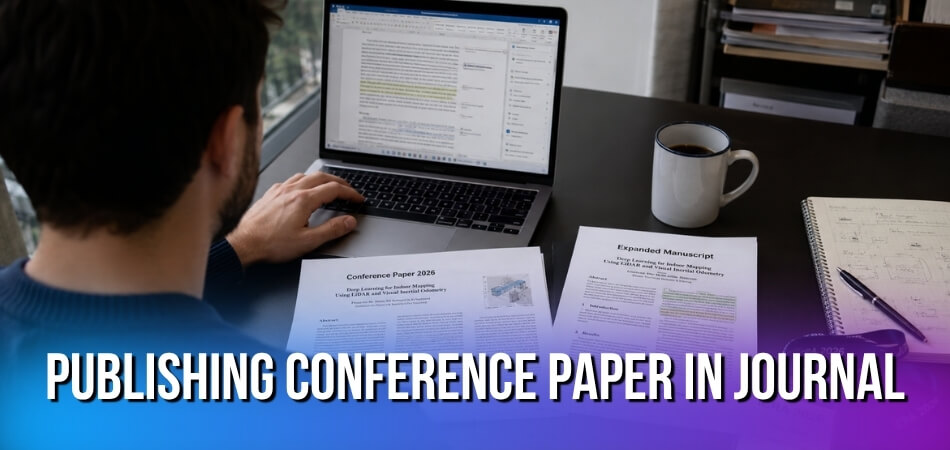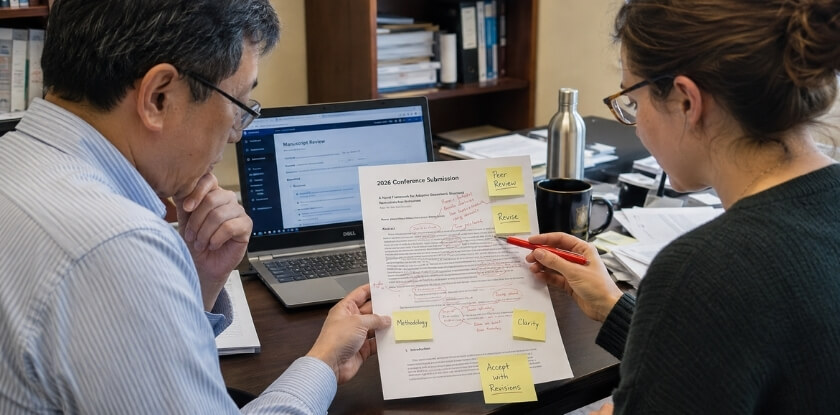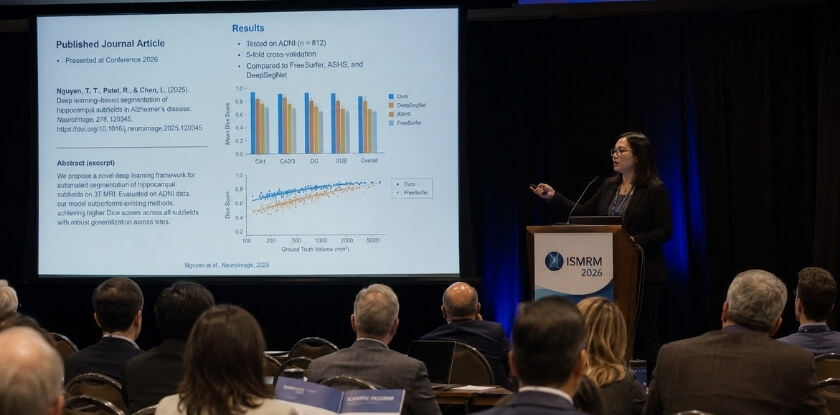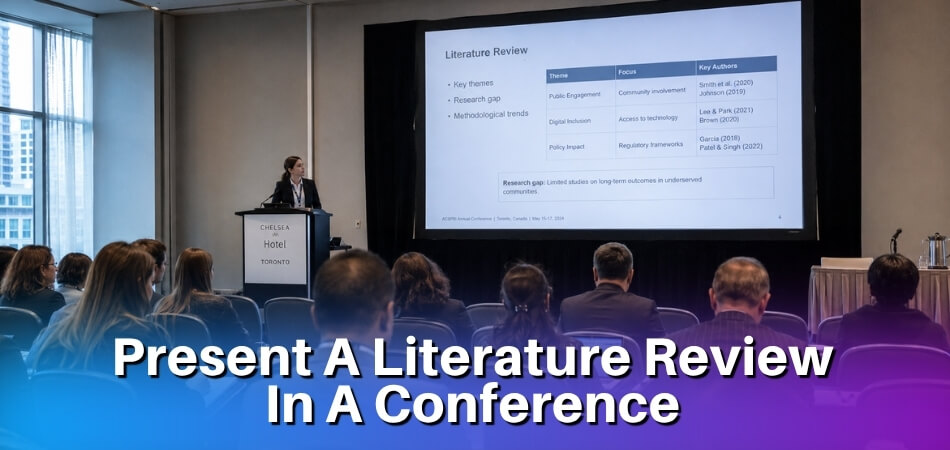
You just presented a paper at a conference — now you’re wondering whether you can also submit it to a journal. Maybe your session went well, the feedback was encouraging, and you have more data sitting on your hard drive that never made it into the original submission. Or maybe you simply want the work indexed in Scopus or Web of Science, tied to a proper DOI, and carrying the weight of a peer-reviewed journal article behind it. Thousands of researchers face this exact question every year, and most of them spend hours piecing together fragments of policy documents, forum threads, and publisher FAQs without ever finding a complete, reliable answer in one place.
Yes, a conference paper can be published in a journal — but it typically requires significant expansion, usually 30% or more new content, along with a fresh title, a revised abstract, disclosed prior publication to the editor, and explicit permission from all co-authors. Simply resubmitting the same paper is considered duplicate publication and is treated as a serious ethical violation by publishers including Elsevier, Springer, Wiley, and IEEE. The process itself is widely accepted in most fields, especially Computer Science, where conferences like NeurIPS, CVPR, and ACM SIGCOMM regularly serve as the first stop before a journal submission — but the rules shift considerably depending on your discipline and your target journal.
What makes this genuinely complicated is that there is no single universal standard. IEEE handles it differently than MDPI. The expectations at the ISPRS Journal of Photogrammetry and Remote Sensing are not the same as those at the Journal of Hydrology. Fields like Remote Sensing and Hydrology carry their own norms around prior publication disclosure, copyright transfer agreements, and what “new contribution” actually means. This guide walks you through the full process — the ethical steps you cannot skip, the field-specific differences across Computer Science, Remote Sensing, and Hydrology, and a working list of journals that actively welcome expanded versions of conference papers.
Quick Answer: Yes — But There Are Conditions
A conference paper can absolutely become a journal article. Thousands of researchers do it every year across Computer Science, Hydrology, Remote Sensing, and virtually every other field. But “yes” comes with a list of conditions that catch people off guard if they don’t check them first.

Journals will consider your expanded conference paper, provided you disclose the prior publication, get co-author sign-off, clear the copyright situation with whoever owns your proceedings, and submit something that is genuinely new — not just the same 8 pages reformatted to 12.
What “Conditions” Actually Means in Practice
Most journals don’t automatically reject papers that originated at a conference. What they reject is undisclosed duplicate submission. There’s a real difference between those two things.
If you presented at NeurIPS, CVPR, or ACM SIGCOMM, your proceedings paper is already indexed — likely on arXiv, in the ACM Digital Library, or in IEEE Xplore. A peer reviewer or editor will find it. So you tell them first. You put it in the cover letter. You say: “This manuscript is an extended version of a paper presented at [Conference], [Year]. The original proceedings paper is available at [DOI]. The current submission includes X, Y, and Z that were not in the conference version.”
That’s it. That’s the disclosure. Most journals have a specific line in their submission system asking whether prior versions exist — you check yes, you explain, you move on.
The Overlap Threshold Problem
Here’s where researchers run into trouble. Journals don’t all agree on how much new content an extended version needs. Some are explicit:
- IEEE Transactions on Geoscience and Remote Sensing typically expects around 30% new content minimum
- The ISPRS Journal of Photogrammetry and Remote Sensing has published extended versions but expects substantial methodological or empirical additions
- Elsevier’s Journal of Hydrology follows Elsevier’s general policy on prior publication, which requires disclosure and significant expansion
- MDPI journals ask authors to confirm the work is original and unpublished, but their editorial guidelines allow extended conference papers when disclosed properly
“Significant expansion” isn’t just a longer word count. It means new experiments, new datasets, deeper theoretical development, or additional case studies. Changing the abstract and adding a related works section doesn’t qualify.
Copyright Is a Separate Question
Don’t confuse “can I expand this” with “do I own enough of it to publish it elsewhere.” They’re different issues.
When you published your conference paper, you likely signed a copyright transfer agreement. IEEE and ACM, for example, typically take copyright but allow authors to publish extended journal versions — as long as you cite the original, include a disclosure statement, and the journal version contains substantial new material. Springer and Wiley have similar provisions.
If your proceedings were published under a Creative Commons license (common in open access venues), the situation is usually more flexible. But you still need to check the specific license terms. CC BY doesn’t mean you can republish verbatim — it just controls how others can use it.
Go back to the proceedings publisher’s author rights page. IEEE’s is explicit. ACM’s is explicit. Read it for your specific case before you submit anywhere.
One Thing That’s Non-Negotiable
Every co-author has to agree to the journal submission. That’s not a formality — it’s an intellectual property issue. If someone contributed to the conference version, they have standing in any extended version. Get written confirmation from everyone on the author list before you submit. Email is fine. But get it.
Conference Paper vs. Journal Article: What Are the Key Differences?
These two formats are not interchangeable, and treating them as such is where a lot of researchers get into trouble. Understanding the structural and academic differences between them is the first step before you even think about submitting anywhere.
Differences in the Peer Review Process
Conference papers typically go through a faster, lighter review cycle. A program committee at something like NeurIPS or CVPR might review hundreds — sometimes thousands — of submissions in a compressed window, often with two to three reviewers per paper. The review is competitive but time-constrained. At top venues like ICCV or ECCV, acceptance rates hover around 25–30%, which sounds selective, but the actual depth of revision feedback rarely matches what you’d get from a journal.
Journal peer review is slower. Deliberately. Reviewers at outlets like IEEE Transactions on Geoscience and Remote Sensing or the Journal of Hydrology are expected to read your work closely, request revisions across multiple rounds, and evaluate methodology in detail. Double-blind review — where neither author nor reviewer knows the other’s identity — is standard at Elsevier and Springer journals, as well as MDPI’s broader portfolio. Some Wiley journals use single-blind. Nature Portfolio journals have their own hybrid approach depending on the title.
A journal will catch things a conference reviewer missed. That’s actually useful if you’re expanding a paper, because it means you’ll genuinely improve the work rather than just add pages.
Comparing Impact Factor and Citation Weight
Impact Factor, tracked through Web of Science, measures how often articles in a journal are cited over a two-year window. A high Impact Factor signals that papers in that journal tend to get picked up by other researchers. The ISPRS Journal of Photogrammetry and Remote Sensing, for example, consistently sits above an Impact Factor of 10 — which is strong for a specialized field. Conference papers generally don’t carry an Impact Factor because they live in proceedings volumes, not journals.
That said, citation count and H-index calculations through Google Scholar do pick up conference citations. In some fields, a highly cited CVPR paper will outperform many journal articles in raw citation numbers. Scopus indexes many conference proceedings too, so the lines blur depending on how citation metrics are being evaluated.
One practical point: for tenure, promotion, or grant applications in most fields outside Computer Science, a peer-reviewed journal article still outweighs a conference paper. Full stop. A DOI from a recognized journal, indexed in Web of Science or Scopus, carries institutional weight that a proceedings entry often doesn’t.
How the Conference vs. Journal Debate Differs in Computer Science Versus Other Fields
This is the single biggest source of confusion for researchers crossing disciplines.
In Computer Science — especially in areas like machine learning, computer vision, and networking — top conferences are often considered more prestigious than journals. Getting into NeurIPS, CVPR, ACL, or ACM SIGCOMM is genuinely harder and more career-defining than publishing in many mid-tier journals. The field moves fast, and conference publication cycles match that pace. A journal paper can take 18 months to two years from submission to print. By then, the landscape has shifted.
Other fields work differently. In Hydrology, Remote Sensing, or Environmental Science, the journal article is the primary research output. Conferences are for networking and sharing preliminary work — not for establishing priority or building your publication record. Researchers in those fields submitting to journals like the Journal of Hydrology or IEEE Transactions on Geoscience and Remote Sensing are expected to have work that goes well beyond anything previously presented at a conference.
This distinction matters practically when you’re deciding whether to expand a conference paper at all. If you’re a Computer Scientist, your conference paper might already be your definitive publication on that idea, and a journal version is optional — something you do to reach a different audience or include results that didn’t fit in the page limit. If you’re in hydrology or geospatial science, the conference paper is often just the beginning, and the journal article is where the actual scientific contribution lives.
Know your field’s norms before you decide anything else.
Are Conference Papers Peer-Reviewed?
Yes — but the process looks quite different from what journals do, and that distinction matters a lot when you’re thinking about converting your work.

Most conference papers do go through peer review. At top-tier venues in Computer Science — NeurIPS, CVPR, ICCV, ECCV, ACM SIGCOMM — submissions are reviewed by multiple experts in the field. The same applies to engineering conferences under IEEE and ACM. So it’s not accurate to say conference papers skip peer review entirely. They don’t.
But “peer-reviewed” isn’t a single standard. It’s a spectrum.
The Review Process Is Usually Shorter and Less Demanding
A journal submission at, say, IEEE Transactions on Geoscience and Remote Sensing or Journal of Hydrology might go through two or three rounds of review over six to eighteen months. Reviewers expect comprehensive methodology, thorough literature coverage, detailed results, and sometimes additional experiments if they’re not convinced.
Conference review cycles are compressed. Reviewers typically have days, not weeks, to assess each paper. Acceptance decisions happen on a fixed schedule because the conference has a date. That time pressure affects depth. A reviewer might flag a weak section as “acceptable for a conference” but would demand significant revision if the same work appeared in an Elsevier or Springer journal.
Some smaller or regional conferences barely review submissions at all — a few have acceptance rates above 80%, which should tell you something. When journals ask whether your work has been previously reviewed, this context matters.
Double-Blind Review Is Not Universal in Conferences
Many journals — including those indexed in Scopus and Web of Science — use double-blind review, where neither author nor reviewer knows the other’s identity. This is standard at Wiley and Taylor and Francis journals, and increasingly at MDPI.
Conferences are more varied. Some use double-blind (CVPR does), some are single-blind, and some don’t enforce anonymity at all. If your conference paper was on arXiv before or during review — which is common in machine learning and related fields — reviewers likely knew who you were regardless of the official policy.
This isn’t a quality judgment on your work. It’s just context you should understand before claiming your paper was “peer-reviewed” in a submission cover letter to a journal.
What This Means for Your Journal Submission
Journals won’t reject your work because it was conference-reviewed rather than journal-reviewed. That’s not how it works. What they care about is whether the submitted version is substantially different from the published conference version — more on that in later sections — and whether you’re being transparent about the prior publication.
The peer review your conference paper received doesn’t count toward the journal’s own review process. Your extended version will go through a full, fresh review. Expect that. Plan for it.
If your field is Remote Sensing, for example, reviewers at the ISPRS Journal of Photogrammetry and Remote Sensing will know the ISPRS conference proceedings well. They may have attended the same conference where you presented. Trying to obscure the connection is both pointless and risky.
Be upfront. Journals have seen this before. Most handle it fine, as long as you handle it honestly.
Step-by-Step Guide to Converting a Conference Paper into a Journal Article
Converting a conference paper into a journal article isn’t just a copy-paste job with extra paragraphs. Done wrong, it can get your submission rejected, flagged for duplicate publication, or worse — retract a paper you worked months on. Here’s how to do it properly.
Step 1 — Verify Copyright and Intellectual Property Before Journal Submission
Before you write a single new paragraph, check who actually owns your conference paper.
Most major venues require you to sign a copyright transfer agreement at submission or camera-ready stage. IEEE, ACM, and Springer-published proceedings typically transfer copyright to the publisher. That means you don’t fully own the text anymore — even though you wrote it.
Pull up the exact agreement you signed. Read it. Don’t assume.
IEEE, for example, generally allows authors to publish an extended version in a journal, but requires you to cite the original conference paper and ensure the journal version contains “substantial new content” — often interpreted as at least 30% new material. ACM’s policy is similar but varies by venue. Some workshops under the ACM umbrella have different terms than flagship conferences like ACM SIGCOMM.
If your conference was published by Elsevier, Wiley, or Taylor and Francis, the rules differ again. Some Elsevier proceedings use Creative Commons licenses, which actually make reuse easier. Others don’t.
Proceedings posted to arXiv before conference publication add another layer. If you posted a preprint, that’s generally fine — arXiv preprints aren’t considered prior publication by most journals. But confirm this with your target journal’s policy directly.
If you’re unsure, email the conference publisher and ask in writing. Get their response in writing too. Keep it.
Step 2 — Get Permission from Your Supervisor and All Co-Authors
This step gets skipped more than it should. Every co-author listed on the original paper has intellectual property rights in that work. You can’t submit an extended version to a journal without their knowledge and agreement.
This isn’t just professional courtesy. It’s an ethical requirement. Most journal submission systems — including those used by Nature Portfolio, Wiley, and MDPI — require you to confirm that all co-authors have approved the submission.
Send a clear email to every co-author. Spell out which journal you’re targeting, what new content you plan to add, and your rough timeline. Give them enough time to respond — at least two weeks. If someone wants off the author list for the journal version (it happens), sort that out before submission, not after.
If you’re a PhD student, your supervisor’s input matters here for another reason. They may know field-specific norms you don’t. In some fields, submitting a conference-to-journal extension without discussing it with your supervisor first creates problems that go beyond the paper itself.
Step 3 — How Much Do You Need to Expand the Content?
The minimum is usually around 30% genuinely new content, but “new content” means something specific. Adding padding doesn’t count. Expanding the introduction by three paragraphs doesn’t count. You need substantive additions.
What actually counts as significant expansion:
- New experiments or datasets
- Additional analysis, ablations, or comparisons
- Broader literature review covering work published after the conference
- A new application or case study
- Theoretical proofs or derivations that weren’t in the original
- New sections addressing limitations or future work with real depth
In Computer Science fields like computer vision — think NeurIPS, CVPR, ICCV, ECCV — the community norm is that journal extensions run nearly twice as long as the conference paper and include meaningful new experiments. Reviewers at journals like IEEE Transactions on Geoscience and Remote Sensing know what a conference paper looks like. They’ll spot thin expansions immediately.
For fields like Remote Sensing or Hydrology, journals such as the ISPRS Journal of Photogrammetry and Remote Sensing or Journal of Hydrology often expect more complete methodology sections, additional validation datasets, and deeper discussion of uncertainty — things conference papers routinely omit due to page limits.
Don’t invent new experiments just to hit a percentage target. Extend the work in directions that actually make the research more complete.
Step 4 — Should You Change the Title and Abstract?
Yes. Not necessarily drastically, but the title and abstract of your journal submission should reflect the expanded scope of the work.
If your conference paper was “A Fast CNN Approach for Urban Flood Mapping,” the journal version might become “Rapid Urban Flood Extent Mapping Using CNN-Based Classification: Extended Analysis Across Multi-Temporal Sentinel-1 Datasets.” The change signals to editors and reviewers that this is a substantively different document.
The abstract needs a rewrite regardless. Journal abstracts are typically longer and more structured than conference abstracts. More importantly, they need to accurately represent the new contributions. If your abstract is 90% identical to the conference version, a plagiarism check — and journals run them — will flag it. Tools like iThenticate are standard at Springer, Elsevier, Wiley, and most other major publishers.
Keep the core research question recognizable. Just make sure the abstract honestly represents what’s new.
Step 5 — Disclose the Prior Publication to the Journal Editor
This is non-negotiable. You must tell the editor that this paper is based on a previously published conference paper.
You do this in the submission cover letter. Write it plainly — something like: “This manuscript is an extended version of a paper originally presented at [Conference Name, Year], published in [Proceedings Title]. The conference paper has been significantly expanded to include [briefly describe new contributions]. We have confirmed with [Publisher Name] that such extended submissions are permitted under their copyright policy. The original conference paper is cited in the manuscript.”
That’s it. No hedging, no burying it in footnote 47. Say it directly in the cover letter.
Failing to disclose is how otherwise good researchers end up with duplicate publication flags on their record. Journals take this seriously. Scopus and Web of Science track it. It affects citation count attribution and can create DOI-level integrity issues that follow you for years.
Some journals — particularly those indexed in Web of Science with a high Impact Factor or strong H-index trajectory — have explicit prior publication disclosure fields in their submission system. Fill them in accurately.
Step 6 — Choose the Right Target Journal
Picking the right journal matters as much as writing the extension itself. A poor fit wastes months.
Start with scope. A paper from CVPR on image segmentation might suit IEEE Transactions on Pattern Analysis and Machine Intelligence, but probably not the Journal of Hydrology. Match the subject matter precisely, not broadly.
Check the journal’s explicit policy on extended conference papers. Many journals actively welcome them. IEEE Transactions journals do. Several MDPI journals do. Some Nature Portfolio journals accept them under specific conditions. Others prohibit them entirely. This information is usually in the “Instructions for Authors” or “Editorial Policies” section. Read it before submitting.
Consider the journal’s peer review process. Double-blind review is standard at many CS venues — if anonymity matters to you and your conference paper is publicly indexed, check whether the journal’s process handles this. Some journals allow reviewers to see author identities; others don’t.
Acceptance rate is worth factoring in honestly. A journal with a 10% acceptance rate will scrutinize your extension harder. An MDPI journal with open access and faster turnaround might be a better fit for certain work. Neither is inherently wrong — it depends on your career stage, your field’s norms, and how complete the extension genuinely is.
Finally, check whether the journal is indexed in Scopus or Web of Science. For most academic career trajectories, those two databases are the ones that matter for visibility and citation tracking. Google Scholar picks up almost everything, but it’s Scopus and Web of Science indexing that typically counts toward institutional metrics and grant evaluations.
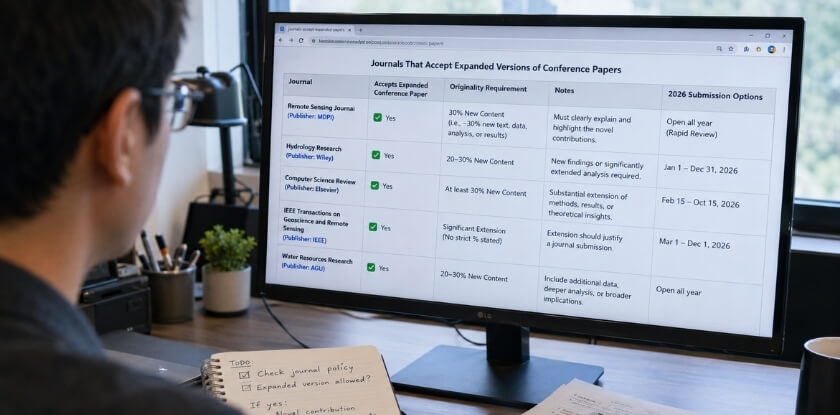
Which Journals Accept Expanded Versions of Conference Papers?
Not all journals treat conference-derived submissions the same way. Some actively welcome expanded versions. Others have a firm no. And a few sit somewhere in the middle, accepting them only under specific conditions — like a minimum 30% new content or a mandatory prior publication disclosure in your cover letter.

Here’s a breakdown by field and publisher, so you’re not guessing.
Computer Science and Engineering
This is probably the field most comfortable with the conference-to-journal pipeline. That’s partly because top CS conferences like NeurIPS, CVPR, ICCV, ECCV, and ACM SIGCOMM are genuinely prestigious — in some cases more competitive than journals. Publishers know this.
- IEEE explicitly allows extended journal submissions from conference papers in most of its transactions and journals. IEEE Transactions on Geoscience and Remote Sensing, for example, states in its author guidelines that at least 30% of the content must be new compared to the conference version. You’re also expected to cite the original proceedings and explain what was added. IEEE’s copyright transfer agreement usually covers the journal version separately from the conference version, but you need to check whether IEEE already holds rights to the conference paper — and it often does.
- ACM has a similar stance for many of its journals. ACM SIGCOMM, for instance, has a well-established tradition of top papers being invited or submitted to IEEE/ACM Transactions journals afterward. ACM’s rights management policies do allow authors to self-archive on arXiv, which matters if you want your work visible during the review period.
- Elsevier journals in CS — think Journal of Parallel and Distributed Computing or Pattern Recognition — generally accept extended conference papers, but the policy varies by journal. Always check the specific journal’s author instructions page, not just the publisher’s general page.
Remote Sensing and Geoscience
- ISPRS Journal of Photogrammetry and Remote Sensing (published by Elsevier) is one of the top venues in this space. It explicitly accepts extended versions of conference papers, including those from ISPRS congresses and symposia. You must disclose the prior publication and submit a cover letter explaining the new contributions. Given its Impact Factor sits around 10–12 and it’s indexed in both Scopus and Web of Science, it’s a meaningful upgrade from a conference proceedings citation in terms of H-index contribution.
- IEEE Transactions on Geoscience and Remote Sensing follows standard IEEE policy. Extended versions are accepted with the 30% new content rule in practice, even if it’s not always spelled out word-for-word in every journal’s submission page.
Hydrology and Environmental Science
- Journal of Hydrology (Elsevier) does accept extended journal papers, but the editors look carefully at whether the journal version genuinely advances the science — not just adds more figures. If your conference paper was a preliminary result, that’s fine. If it was already comprehensive, expect scrutiny.
- Taylor and Francis publishes several hydrology and environmental journals. Their standard policy is that previously published conference papers can be considered if the journal submission is “substantially different” — which is vague but usually interpreted as significant additional data, analysis, or theoretical development.
Multidisciplinary and Open Access
- MDPI journals — Remotely Sensing, Water, Applied Sciences, among others — are generally open to extended conference papers. They’re also fully open access under Creative Commons licenses, which simplifies rights issues if you already posted a preprint on arXiv. MDPI journals are indexed in Scopus and Web of Science, though their Impact Factor and academic reputation vary quite a bit across titles. Do your own check before submitting.
- Springer journals follow an author-rights framework that permits prior conference versions, provided you disclose them. Springer’s copyright transfer agreement usually requires assignment of rights for the journal paper specifically, not the earlier conference version — but again, read it carefully.
- Wiley has a similar structure. Many Wiley journals in engineering and environmental science accept extended submissions. Their onlinelibrary.wiley.com author guidelines page lists journal-specific policies.
- Nature Portfolio is where things get stricter. Most Nature Portfolio journals consider any prior publication — including conference proceedings — as a potential duplicate publication concern. Some, like Scientific Reports, are more flexible than Nature itself. Check each journal’s FAQ directly. Nature’s policies around prior disclosure are notably more conservative than IEEE or Elsevier.
How to Find Out If a Specific Journal Accepts Extended Versions
Go to the journal’s homepage and look for “Author Guidelines” or “Instructions for Authors.” Search that page for the words “conference,” “prior publication,” or “previously published.” If nothing shows up, that’s not a green light — email the editor directly before submitting. A one-paragraph inquiry email can save you months of wasted review time.
You can also search the journal’s published articles on Google Scholar or its own archive and filter for papers with phrases like “extended version of” or “originally presented at” in the abstract. If you see that pattern in multiple papers, the journal clearly accepts this type of submission. That’s real-world evidence, not just policy language.
Always check the DOI record for the conference version before submitting. If the proceedings are behind a paywall with a full copyright transfer to the conference organizer, you may need written permission before that work can form the basis of a new journal submission. This step gets skipped a lot. It shouldn’t be.
What Is Duplicate Publication and Why Is It Unethical?
Duplicate publication means submitting the same — or substantially similar — work to more than one journal without disclosing the prior version. It sounds simple enough to avoid, but the line gets blurry fast when you’re working from a conference paper.
The core ethical problem isn’t really about copying your own words. It’s about misrepresenting originality. When you submit to a journal, you’re implicitly telling the editors that this work hasn’t been formally published elsewhere as a peer-reviewed contribution. If it has, and you don’t say so, you’re misleading them. Peer review takes real time from real people. Journals have limited publication slots. Editors who discover undisclosed prior publication — and they do discover it, especially with DOI tracking and tools like iThenticate — will retract the paper. That retraction shows up on your record permanently.
Self-Plagiarism: The Specific Risk for Conference-to-Journal Submissions
Self-plagiarism is a subset of duplicate publication. It happens when you reuse your own previously published text, data, or figures without attribution. Even though you wrote it, the copyright may no longer be yours.
This is where IEEE, ACM, Elsevier, and Springer copyright transfer agreements become very relevant. When you published that conference paper, you likely signed over the intellectual property to the publisher. Lifting three paragraphs from your IEEE conference proceedings into a journal submission — without a license or permission — is a copyright violation, not just an ethical slip.
MDPI and some open access venues publish under Creative Commons licenses, which can give you more flexibility to reuse your own material. But you still need to cite the original conference paper. The license type doesn’t erase the disclosure obligation.
What Counts as “Too Similar”
There’s no universal percentage threshold. A 30% text overlap might be fine if the journal explicitly invites extended versions of conference papers. The same overlap could get a paper rejected or retracted at a journal that expects entirely original submissions.
What editors actually assess:
- Are the research questions identical or just related?
- Does the journal article include new experiments, datasets, or analysis beyond the conference version?
- Are the conclusions meaningfully different or just re-worded?
- Was the prior publication disclosed in the cover letter and the manuscript itself?
For fields like Computer Science, where NeurIPS, CVPR, ICCV, ECCV, and ACM SIGCOMM proceedings are highly influential, the community norm is fairly tolerant of journal extensions — provided the added content is substantial and the original is cited. In Hydrology or Remote Sensing, journals like the Journal of Hydrology or the ISPRS Journal of Photogrammetry and Remote Sensing tend to be stricter. They want to see genuinely new data or analysis, not just an expanded literature review and a few extra figures.
Why This Damages More Than Just the Paper
A retraction doesn’t stay quiet. It shows up in Google Scholar, gets flagged on Retraction Watch, and affects your citation count and H-index retroactively. If the retracted paper was indexed in Scopus or Web of Science, the record persists. Co-authors take the hit too — which is exactly why co-author permission before any journal submission isn’t optional.
Beyond your own record, duplicate publication distorts the literature. Other researchers might cite both the conference and journal versions, treating them as independent studies. In fields like Remote Sensing or Hydrology where meta-analyses pull from Scopus and Web of Science, that inflates apparent research consensus in ways that actually matter.
Disclose everything, add genuinely new content, and get explicit approval from every co-author before you submit. That’s not bureaucracy. That’s just how the process is supposed to work.
Can a Rejected Conference Paper Be Submitted to a Journal Later?
Yes — and honestly, a rejection might be the best thing that happened to it.
Conference acceptance rates at top venues are brutal. NeurIPS, CVPR, and ICCV regularly sit below 25%. ACM SIGCOMM accepts somewhere around 15% of submissions in a typical year. Rejection doesn’t mean the work is bad. It often means the paper didn’t fit the program committee’s priorities that cycle, or it needed more experimental depth — which is exactly what a journal submission gives you room to add.
A Rejected Paper Has No Copyright Complications
This is the clean case. If a paper was rejected, it was never published in any conference proceedings. There’s no DOI assigned to it, no copyright transfer agreement signed, no prior publication to disclose. You own the work entirely. You can submit it to any journal you choose without needing to mention the conference submission at all.
That said, be honest with yourself about why it was rejected. Reviewer comments from conferences are often sharper and more direct than journal peer review — use them. Reviewers at CVPR or ECCV know the field. If three of them said your evaluation methodology was weak, fix it before you send the paper to IEEE Transactions on Geoscience and Remote Sensing or anywhere else.
When Reviewers Overlap
Here’s an uncomfortable reality: the research community in specialized fields is small. A reviewer who rejected your paper at a domain-specific conference might end up reviewing the same work at a journal — especially in fields like Remote Sensing or Hydrology, where the pool of qualified reviewers is narrow.
You can’t control that. What you can do is make sure the journal version is substantively different enough that it stands on its own merits. If you’ve added new data, extended the methodology, or addressed the original weaknesses, the work is stronger. A reviewer who rejected version one might accept version two. That’s how science is supposed to work.
Should You Disclose the Rejected Submission?
You don’t have to. There’s no ethical obligation to tell a journal editor that the paper was previously submitted and rejected elsewhere — that’s standard academic practice and completely normal. Journals like Elsevier, Springer, and Wiley don’t require disclosure of prior rejections, only prior publication.
Where people get confused is conflating rejection with publication. They’re not the same thing. A preprint posted on arXiv, on the other hand, is a form of prior disclosure — and some journals want to know about that. But a rejected conference submission that never appeared in proceedings? Keep it simple: revise the work and submit.
What If You Presented the Work at the Conference?
Sometimes papers get rejected from the proceedings but are still accepted as poster presentations, or accepted for a workshop rather than the main track. This is where you need to pay closer attention.
If your work appeared in any published form — a workshop paper, a short paper, an abstract in a proceedings volume with a DOI — that changes things. Even a two-page abstract indexed in Scopus or Web of Science can trigger duplicate publication concerns at certain journals. Check whether that workshop paper has a DOI. If it does, treat it the same way you’d treat a full conference publication: disclose it in your cover letter and expand the journal version substantially.
If the presentation was purely oral or a poster without a published companion document, you’re fine.
Use the Extra Time Wisely
A rejected paper going to a journal isn’t just a consolation route. Journal articles get indexed differently, carry more weight in citation count and H-index calculations, and are often the format that hiring committees and grant reviewers actually scrutinize. The Impact Factor of the journal matters more in most fields than the conference tier.
Treat the revision seriously. Add the experiments reviewers asked for. Extend the literature review. Write a proper related work section — conference papers often skimp on this due to page limits. A 6-page CVPR rejection can become a strong 14-page paper in a journal like the ISPRS Journal of Photogrammetry and Remote Sensing or the Journal of Hydrology. That’s not a downgrade. That’s a different product.
Can a Published Journal Article Be Presented at a Conference?
Yes, and it’s actually quite common. The direction here is reversed from what most people worry about — instead of conference-to-journal, you’re taking finished journal work and presenting it to a live audience.

Most conferences are fine with this. In fact, some fields actively expect it.
Why This Is Generally Acceptable
A journal article already has a DOI, a publication date, and a public record. There’s no ambiguity about what came first. Presenting that work at a conference doesn’t create a new competing publication — it just expands the audience.
In fields like Computer Science, this happens constantly. Researchers publish on arXiv, get the work into a journal, then present findings at venues like NeurIPS or CVPR. The conference presentation is essentially a talk, not a new submission. No one’s claiming originality twice.
The key distinction: you’re not submitting the work as a paper to the conference proceedings. You’re presenting it as a talk, a poster, or a demo.
When a Conference Requires a Proceedings Submission
Some conferences — particularly IEEE and ACM events — require an accompanying paper in the proceedings even for presentations. This is where you need to be careful.
If the journal holds copyright through a copyright transfer agreement, you may need explicit permission to republish any portion of the text. IEEE, for example, has a policy that allows authors to use their own material in conference presentations, but republishing substantial text in a separate proceedings paper is a different matter.
Check two things before submitting anything:
- What rights did you retain when you signed the journal’s copyright agreement?
- Does the conference proceedings constitute a separate publication in Scopus or Web of Science?
If yes to both, you’re dealing with a potential duplicate publication issue — same rules apply as going in the other direction.
Field-Specific Norms
- In Remote Sensing and Hydrology, the conference-then-journal pipeline dominates. Presenting journal work at a conference afterward is normal but less celebrated. ISPRS Journal of Photogrammetry and Remote Sensing and IEEE Transactions on Geoscience and Remote Sensing papers do get presented at follow-up symposia, usually as invited talks or summary presentations.
- In hydrology, presenting a Journal of Hydrology paper at the American Geophysical Union meeting? Completely standard. Nobody bats an eye.
- In Computer Science, the line between conference papers and journal articles is blurrier than in most disciplines. NeurIPS, CVPR, ICCV, and ECCV proceedings are indexed, carry significant weight, and sometimes have higher citation counts than journal articles in the same subfield. Presenting a journal version of conference work, or vice versa, is routine — but you still need to disclose the relationship.
What You Should Actually Do
Tell the conference organizers upfront. A one-line note in your submission — “This work was published in [journal name], [DOI], 2026” — handles 90% of the issue.
Get your co-authors on board. They signed the same copyright transfer agreement you did, so they need to know what you’re doing with the work.
If you’re presenting a poster or talk without a proceedings paper, most publishers including Elsevier, Springer, Wiley, and Taylor and Francis have no objection. Sharing slides, presenting findings, and discussing results doesn’t transfer copyright to the conference.
Where people get into trouble is submitting a lightly reworded version of the journal abstract as a conference proceedings paper — especially at MDPI-linked events or smaller indexed venues — and not disclosing that a full journal version already exists. That’s the version of this that causes retractions.
Present your journal work at conferences freely. Just don’t submit it as a new paper without disclosure and permission.
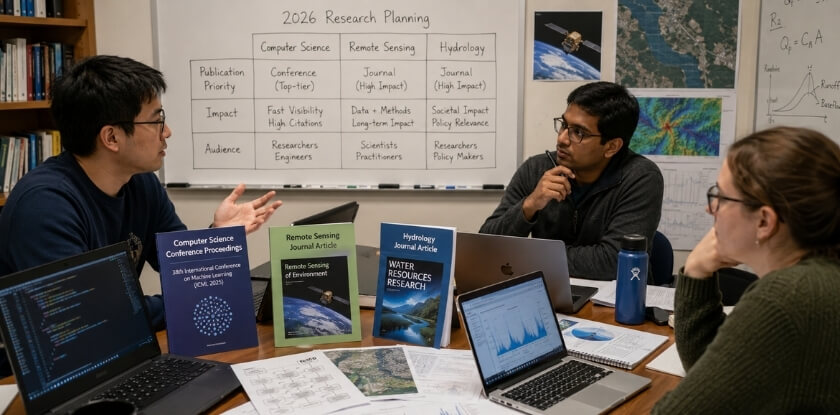
Field-by-Field Differences: Conference vs. Journal Importance in Computer Science, Remote Sensing, and Hydrology
Not every field treats conferences and journals the same way. This matters a lot when you’re deciding whether to convert your conference paper — and how urgently you need to do it.

Computer Science: Conferences Often Matter More
In CS, top-tier conferences are where the real action happens. A paper at NeurIPS, CVPR, ICCV, ECCV, or ACM SIGCOMM carries serious weight — sometimes more than a mid-tier journal publication. The reason is speed. ML and computer vision move fast, and waiting 12–18 months for journal peer review can make your work feel dated before it even appears.
Hiring committees at top universities know this. A NeurIPS acceptance on your CV signals rigorous review just as much as a journal paper would in other fields.
That said, journal publications still matter in CS — especially for tenure cases, grant applications, and comprehensive survey work. IEEE Transactions journals, ACM journals, and venues indexed in Scopus and Web of Science carry long-term citation weight that conference papers sometimes don’t accumulate as consistently.
The extended journal version is common practice in CS. IEEE explicitly allows authors to submit expanded versions of conference papers to its Transactions journals, provided the new version adds substantial content — typically 30% or more new material. ACM has similar policies. If you published at CVPR and want a journal record, the IEEE Transactions on Pattern Analysis and Machine Intelligence is the standard destination many researchers aim for.
One thing to watch: the CS community is also heavily tied to arXiv. Most researchers post preprints before or immediately after conference acceptance. This doesn’t usually block journal submission, but check the target journal’s policy on preprints first. Most IEEE and ACM venues are fine with arXiv preprints. Elsevier and Springer policies vary by journal title.
Remote Sensing: Journals Dominate, But Conferences Still Contribute
Remote sensing is a different world. Here, journals sit at the top of the prestige hierarchy, full stop. The ISPRS Journal of Photogrammetry and Remote Sensing and IEEE Transactions on Geoscience and Remote Sensing are where career-defining papers land. Your citation count and H-index in this field are built almost entirely through journal work.
Conference proceedings in remote sensing — including ISPRS Congress and IEEE IGARSS — are respected but seen as preliminary. They’re where you share work-in-progress, get feedback, and network. Publishing a conference paper and then developing it into a full journal article isn’t just acceptable here; it’s the expected career path.
The journals know this too. Both ISPRS and IEEE TGRS have published extended versions of conference papers for years. The key requirement is disclosure — you state in your cover letter and sometimes in the manuscript itself that the work builds on a prior conference paper, with the DOI of the proceedings paper included.
Impact Factor matters a lot in remote sensing grant applications and institutional evaluations. A paper in a journal indexed by Scopus and Web of Science with a high Impact Factor will be weighted far above any conference paper when your output is assessed.
Hydrology: Journals Are Everything
In hydrology, Earth sciences, and related environmental fields, conferences are almost purely networking events. Nobody’s tenure case gets built on conference papers. The Journal of Hydrology, Water Resources Research, Hydrology and Earth System Sciences — these are where the field’s scientific record lives.
Conference abstracts and presentations at EGU or AGU are common, but they’re rarely peer-reviewed in any meaningful sense. They don’t appear in Scopus or Web of Science. They don’t carry a DOI that feeds into citation metrics.
If you’ve presented at a hydrology conference, converting that work into a full journal submission isn’t optional for career purposes — it’s the whole point of the conference presentation. You went to EGU to get early feedback. Now you write the real paper.
Elsevier, Wiley, and Taylor and Francis publish most of the major hydrology journals. Each has its own copyright transfer agreement and policies on prior publication disclosure. Elsevier’s policy, for instance, generally considers a conference paper with less than the final journal content as a “prior publication” that needs to be disclosed but doesn’t automatically disqualify the journal submission — provided the journal article is substantially expanded and original in scope.
The Practical Takeaway
Your field determines how much urgency you should feel about converting conference work. In CS, a strong conference paper can stand on its own for years. In remote sensing, you should be planning the journal version before the conference proceedings are even published. In hydrology, the conference was just the preview.
Know your field’s norms before you decide whether to convert, where to submit, and how to frame the relationship between your conference paper and the journal manuscript you’re building from it.
Frequently Asked Questions (FAQ)
Can I submit my conference paper to a journal without changing anything?
No. Submitting an identical or near-identical paper is considered duplicate publication, which violates the editorial policies of virtually every serious journal — including those indexed in Scopus and Web of Science. Most journals expect at least 30% new content, though many want significantly more. You need to expand the methodology, add experiments, update the literature review, and reframe the contribution for a journal audience.
How much new content do I need to add?
There’s no universal rule. IEEE and ACM venues often cite 30% as a rough minimum for computer science papers. Journals like the ISPRS Journal of Photogrammetry and Remote Sensing or IEEE Transactions on Geoscience and Remote Sensing typically expect a genuinely extended study — not just a padded version of the original. A good target is treating the conference paper as a foundation, not a draft. New data, deeper analysis, or additional experiments are the real markers.
Do I need to disclose the conference version when submitting?
Yes, always. This is called prior publication disclosure, and it belongs in your cover letter. Be direct about it — name the conference, the year, the DOI of the proceedings paper, and explain how the journal submission differs. Hiding this is a serious ethical breach. Editors check. Tools like Crossref and iThenticate flag prior versions routinely.
Do all co-authors need to agree before I submit?
Absolutely. Every co-author has intellectual property rights over the work. You can’t unilaterally submit an extended version to a journal. Get written confirmation from all co-authors before submitting, and make sure everyone agrees on the authorship order for the journal version, which sometimes changes from the conference version.
What happens to the copyright from the conference proceedings?
That depends on what you signed. If you submitted to an ACM or IEEE conference, you likely signed a copyright transfer agreement giving them ownership. Some agreements allow journal reuse with attribution; others restrict it. Read what you signed. If you’re unsure, contact the conference publisher directly. For IEEE proceedings, there’s usually a blanket rule allowing reuse in a substantially extended journal article, but you must still disclose it.
Can I post my conference paper on arXiv while expanding it for a journal?
Generally yes, but check the target journal’s preprint policy first. Many journals — including those in the Nature Portfolio, Elsevier, and Springer — allow preprints on arXiv and don’t consider them prior publications. Wiley and Taylor and Francis have similar policies, though specifics vary by journal. MDPI journals are typically preprint-friendly. Always verify before posting.
Will the journal send my expanded paper through full peer review?
Yes. Even if the conference version was peer-reviewed, the journal submission goes through its own independent process. Many journals use double-blind review, meaning reviewers won’t know who you are. Don’t assume the conference review shortcuts anything. Plan for a full review cycle — typically several months, sometimes longer at high-Impact Factor journals.
Does converting a conference paper to a journal article affect my H-index?
The journal article will be a separate publication with its own DOI and citation count on Google Scholar, Scopus, and Web of Science. If the journal version is indexed and gets cited, those citations count independently. The conference paper may continue accumulating citations too. So yes, done properly, it can help your H-index — but only if the journal article actually gets read and cited. Padding doesn’t help with that.
Which fields treat conference papers as equivalent to journal articles?
Primarily Computer Science, particularly venues like NeurIPS, CVPR, ICCV, ECCV, and ACM SIGCOMM. Papers from these conferences carry weight comparable to journal publications in tenure and grant decisions. In Remote Sensing and Hydrology, journals dominate. The Journal of Hydrology, for instance, carries far more weight in that community than any conference proceedings paper. Know your field’s norms before assuming either way.
Is open access required for the journal version?
Not automatically, but it depends on your funding. Many research councils — including those in the EU and UK — mandate open access for funded work. If your research was externally funded, check whether an open access or Creative Commons license requirement applies. Some journals charge APCs (article processing charges) for open access; others offer hybrid models. Factor this into which journal you target.
Conclusion: Moving from Conference to Journal — The Right Way Forward
Publishing a journal article built on a conference paper is completely legitimate. Researchers do it constantly across Computer Science, Remote Sensing, Hydrology, and dozens of other fields. The key is doing it correctly — not cutting corners on disclosure, not recycling text wholesale, and not treating the journal version as a copy-paste job with a longer introduction.
Here’s the short version of what you actually need to do.
Check copyright first. If you published with IEEE, ACM, Elsevier, Springer, or any major publisher, read the copyright transfer agreement before you write a single new paragraph. Some agreements restrict what you can reuse. Others explicitly allow extended journal versions. Know exactly where you stand before you start.
Disclose everything. When you submit, your cover letter should name the conference paper, its DOI, where it appeared in the proceedings, and what percentage of new content you’ve added. Most editors expect at least 30–50% new material. Some journals, particularly IEEE Transactions journals, spell this out in their author guidelines. Don’t make the editor go looking for the connection — surface it yourself.
Add real substance. Not just padding. New experiments, new datasets, deeper theoretical analysis, additional case studies — whatever genuinely extends the original contribution. If you’re working in Remote Sensing and your conference version used one study area, adding three more sites with comparative results is a legitimate extension. Rephrasing the same results in longer sentences is not.
Get your co-authors aligned early. Everyone on the author list from the original conference paper needs to agree on the journal submission. Co-author permission isn’t a formality — it’s an ethical and legal requirement. One disagreeing co-author can derail the whole submission.
Pick the right journal. If your conference work appeared at NeurIPS, CVPR, or ICCV, look at whether journals like IEEE Transactions on Pattern Analysis and Machine Intelligence or ACM journals have explicit policies for accepting extended versions. In Remote Sensing, the ISPRS Journal of Photogrammetry and Remote Sensing and IEEE Transactions on Geoscience and Remote Sensing both publish extended work. In Hydrology, the Journal of Hydrology is the obvious target. Match the scope — don’t submit a computer vision paper to a water resources journal just because the acceptance rate looks friendlier.
Think about indexing. Make sure your target journal is indexed in Scopus or Web of Science. A journal article that doesn’t show up in those databases will have a limited effect on your citation count, your H-index, and your research profile — regardless of how strong the work is. Check the Impact Factor too, but don’t chase it obsessively at the expense of fit.
Open access is worth considering. If your institution has an agreement with Wiley, Springer, Taylor and Francis, or MDPI, you may be able to publish open access without paying out of pocket. Open access articles tend to get more downloads and, over time, higher citation counts. If you posted a preprint on arXiv, make sure the journal’s policy allows that — most do, but confirm it.
One thing that trips up a lot of researchers is self-plagiarism detection. Turnitin and iThenticate will flag text that appears in conference proceedings. If your original paper is indexed anywhere — Google Scholar, Scopus, the ACM Digital Library — expect the similarity report to show overlap. This isn’t automatically a problem, but you need to disclose the prior publication so the editor understands the context. Unexplained overlap looks dishonest. Explained overlap with a strong extension looks professional.
The whole process takes longer than people expect. Between revising the manuscript, getting co-author sign-off, going through double-blind peer review, and handling revisions, you’re often looking at six to eighteen months from submission to publication. Start early. Don’t wait until a grant deadline is looming.
Done right, a conference-to-journal publication strengthens your record rather than creating problems for it. The conference paper showed the idea had merit. The journal article shows you developed it fully. That’s not duplicate publication — that’s how research is supposed to work.