
Summer conference dressing has one trap: you leave the heat in your lightest outfit and then spend eight hours in a session room cooled like a fridge. Getting the fabrics, layers, and dress code right before you pack fixes the problem.
Quick answer: For a summer conference, wear lightweight, breathable fabrics such as linen blends, light cotton, or moisture-wicking weaves, at the formality the dress code asks for, and carry one thin layer for cold session rooms. If no dress code is listed, business casual is the safe default. Pack with the 3-3-3 rule and choose your first-day outfit in advance.
Summer Conference Dressing for Both Men and Women
Choose breathable, wrinkle-resistant pieces in neutral or muted colours, add one removable layer, and match the formality to the dress code. You are dressing for air conditioning that can feel like a meat locker, for heat that hits the moment you step outside, and for a professional setting where first impressions still count. In my view, fabrics and silhouettes that work in both environments matter more than any single outfit.
For Women
A summer conference outfit for women works best when it is built around one anchor piece: a fitted dress, a blouse-and-trouser combination, or a midi skirt with a structured top. Linen blends and breathable cotton handle heat well, though pure linen creases faster than either.
For Men
For men, summer comes down to fit and fabric more than anything else. A well-fitting dress shirt in breathable cotton or a cotton blend, paired with chinos or dress trousers, handles most business casual rooms. If you are sweating through your shirt by the second panel session, that is a fabric problem, so switch to a moisture-wicking blend made for warm conditions.
Summer Conference Dress Code: Which Level Fits Where
Confirm the dress code before you pack, and if there is none, wear business casual and go slightly more formal on day one. Some conferences state a code, so I would check the event website or email the organisers if it is unclear. A colleague who attended the previous edition is another good source, and expectations differ by field, so a finance or legal event can read more formal than a tech meetup. Summer adds a twist, because what looks polished in October can look overdressed or wilted in July. The venue also matters: a resort business casual event at a beachside venue calls for something different from a business formal conference in a city hotel.
| Dress code | Women | Men |
|---|---|---|
| Business casual (for example industry summits, tech, marketing, and HR events) | Sleeveless blouse with wide-leg or linen trousers, a structured shirt dress, or a fitted blazer over cropped dress trousers. Loafers, block-heeled sandals, or leather flats read as intentional | Dress chinos or well-cut trousers with a tucked button-down shirt. A lightweight sports jacket is optional but useful when the air conditioning is aggressive. Leather loafers or oxfords |
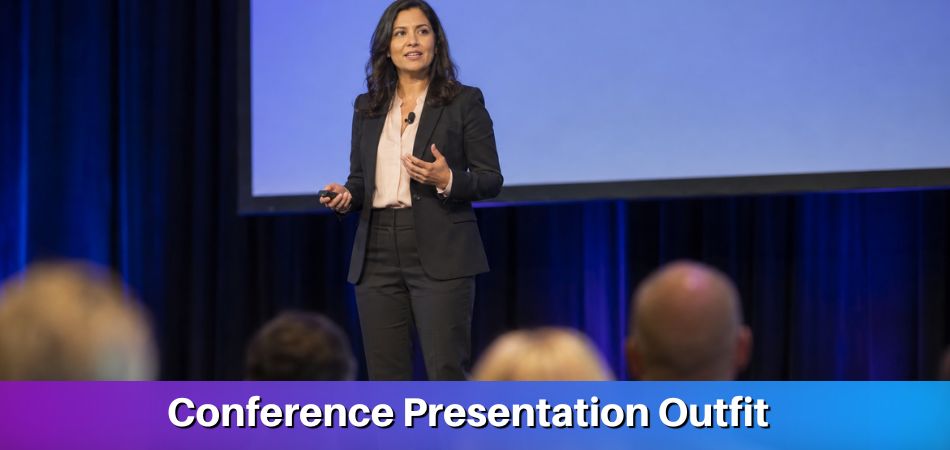
| Business formal (executive, legal, finance events, awards dinners) | Structured sheath dress in a dark or muted shade with a matching blazer, or a trouser suit in a summer-weight fabric | Two-piece suit in a light or mid-grey tropical wool, linen blend, or moisture-wicking fabric. A navy or slate linen-blend suit holds its shape better than pure linen and still breathes. Skip the heavy wool suit: it looks wrong in summer and feels worse |
| Resort business casual (beach resorts, golf clubs, warm-weather venues, for example in Florida, Hawaii, or the Caribbean) | Wrap dress, tailored shorts with a structured blouse, or a casual-chic jumpsuit in a natural fabric | Linen trousers with a quality short-sleeve linen shirt |
In business casual, the word “business” still applies. Flip-flops, athletic shorts, novelty tees, large graphics, cargo pockets, and heavily distressed details stay out, however hot it is outside. Resort business casual is the most forgiving tier: colour and print open up, so subtle florals, earth tones, and relaxed patterns fit, but it is still far from beachwear. To tell resort casual from regular business casual, look at the setting. If the venue has a pool, a beachfront, or a golf course as part of its grounds, the relaxed version is probably intended.
With no code to go on, your first impression outfit sets the tone, and at formal events a sloppy outfit in an otherwise formal room is hard to recover from. Once you see how other attendees dress, you can adjust.
Best Fabrics for Summer Conference Outfits
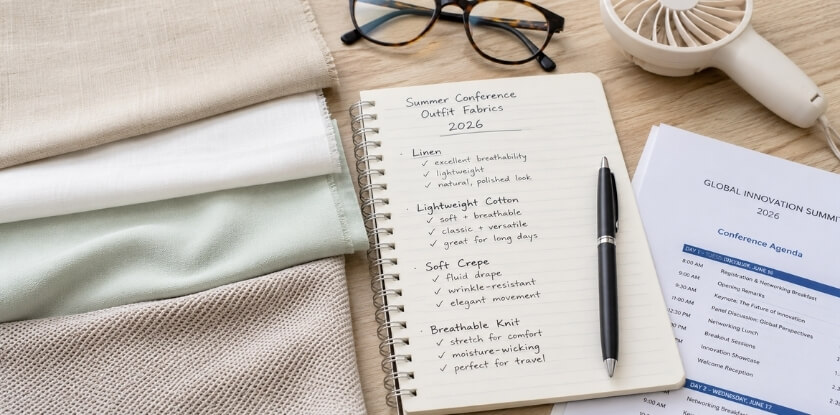
Linen blends, light cotton, and moisture-wicking weaves handle summer best, and fine lightweight wool is the surprise performer indoors. Fabric decides whether you look polished at 9 a.m. and still presentable at 4 p.m. For me, it does most of the heavy lifting, more than cut or colour. Health Canada’s extreme heat guidance (2026) advises loose-fitting, light-coloured clothing made from breathable fabric, which is a sound starting rule for the walk between venues.
| Fabric | Why it works | What to watch |
|---|---|---|
| Linen | Lightweight and breathable, the classic summer choice | Wrinkles easily. A slightly rumpled linen blazer reads relaxed-professional at a resort event but underprepared at a formal financial services conference. Linen blends with cotton or viscose hold their shape through a long day better than pure linen. Some dress advice for academic economics conferences (INOMICS, 2020) says to avoid linen because it wrinkles, so a blend is the safer pick for a strict room |
| Breathable cotton (poplin, chambray) | Presses well, looks clean, and does not cling when you move between heat and cold rooms | Skip thick cotton twill and heavy canvas: they trap heat and dry slowly if you sweat |
| Moisture-wicking fabric | Moisture-wicking has moved well beyond gym wear: many dress shirts, blouses, and trousers now have wicking built into the weave. Practical for rooftop receptions, outdoor keynotes, or walking between buildings | Brands label it differently (performance stretch, travel fabric, cool-dry weave), so read the fabric description. Athletic-style wicking looks sporty as an outer shirt, so choose dress-shirt weaves or wear it as a base layer |
| Fine wool (wool crepe, tropical-weight wool, merino) | In a cold session room, a lightweight wool blazer or trousers can regulate body temperature better than cotton alone. It also resists wrinkles on days two and three. Merino manages moisture, tends to resist odour, and looks refined | Choose fine-gauge or tropical weights only |
| Tencel (lyocell) and bamboo blends | They feel soft, drape well, and breathe. Tencel is often compared with linen for summer wear and wrinkles less. Bamboo blends are light and moisture-managing | Check the label for the real blend |
| Polyester and nylon blends | Resist wrinkles and pack flat, which is why they show up in affordable outfits | They can trap heat. Choose them only if labelled moisture-wicking or performance fabric; plain polyester in direct sun is uncomfortable, and shiny blends can look cheap under conference lighting |
Fabrics to Avoid
Heavy fabrics cause visible discomfort, but a few light ones cause problems too. Silk looks excellent but needs dry cleaning and shows sweat marks almost instantly. Velvet and heavy brocade are obvious mismatches for heat, and sheer fabric without a proper lining creates professional problems at any dress code. Heavyweight denim, whether a jacket or dark jeans, is dense and slow to cool down, so if there is any outdoor segment, choose lighter chambray or stretch cotton instead. Items sold mainly as wrinkle-free often give up breathability, so hold the fabric against your inner arm: if it feels warm and close right away, it will feel worse after hours in a chair. Heavy synthetic blends are the worst of both worlds, because they trap heat outside and stay clammy once you sit down in a cold room.
Outfit Ideas for Women: Day-by-Day Summer Conference Looks
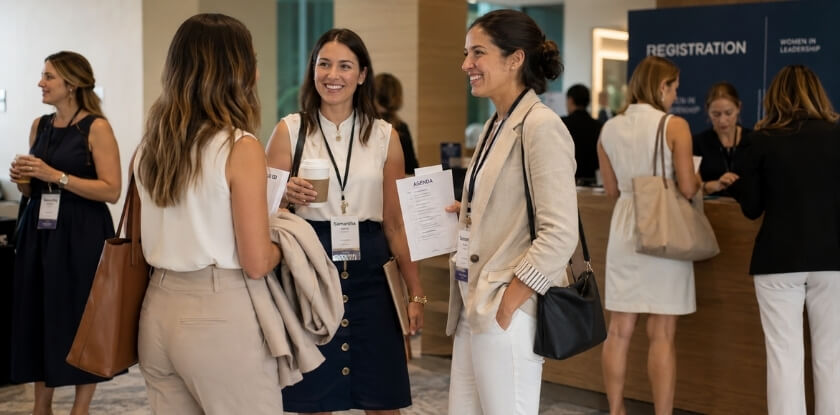
Build day one around one polished dress or trouser set, then mix separates on the days that follow. I find that planning outfits by day means you are not wondering at 6 a.m. whether your blouse is wrinkled or your shoes will survive a full afternoon of panels.
Day 1: First Impression Look
Your day one look carries more weight than any other. You are meeting people for the first time, your photo might end up on event social media, and first impressions stick in professional settings.
Opt for a polished silhouette. A fitted midi dress in a solid, deep colour works well. Navy, forest green, burgundy, or charcoal read as confident without trying too hard. Pair it with pointed-toe flats or closed low block heels, comfortable enough for a day of standing and sharp enough for a keynote room.
Keep accessories considered. A structured tote or small crossbody bag signals that you are organised. One statement piece, such as a geometric earring or a simple chain necklace, is enough. The same polished-basics-plus-one-detail rule works when you decide what to wear to a beauty conference. Skip anything that makes noise when you move or clashes with your neckline.
Choose fabric that holds its shape. A ponte knit or structured cotton-blend dress stays crisp through a long day, so save the pure linen for day two or three when the pressure is lower. Add a light blazer or linen-blend cardigan for the cold rooms, as described in the layering section below.
Day 2 and Beyond: Comfortable but Polished
By day two you know the vibe. You have seen how formally people really dress compared with what the dress code said, and your feet have told you whether your shoes were a mistake.
Trousers and a soft blouse go a long way. Wide-leg linen trousers with a tucked-in breathable cotton blouse look nothing like your day one outfit but still suit a business casual room. Add simple mules or low leather sandals.
Wrap dresses earn their reputation. They suit many body types, pack well, and move from a morning workshop to an evening networking dinner without a full change. A subtle floral or tonal stripe also helps you avoid two common summer colour mistakes: head-to-toe white in a humid outdoor setting, and neon tones that look harsh under fluorescent lighting.
Reuse your layers. The blazer from day one can reappear on day three over a different outfit, and a neutral scarf works as a wrap in cold rooms and as an accessory at dinner.
Read the venue. At a resort-style venue, a flowing midi skirt with a structured blouse, or well-cut shorts with a blazer, can work without looking underdressed.
Outfit Ideas for Men: Summer Conference Essentials
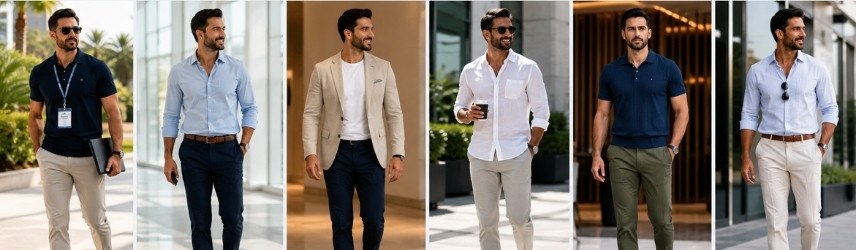
Chinos, a fitted Oxford or linen shirt, and leather loafers cover most summer conference rooms. The margin between polished and visibly uncomfortable is narrow in summer, and the goal is to look put-together without sweating through your shirt by 10 a.m.
The Core Outfit Formula
You do not need a dozen outfits. I would rather pack a few well-chosen pieces that cover a multi-day conference without overpacking.
Trousers. Chinos in khaki, navy, or stone are the most flexible option. They read business casual, pair with almost anything, and dry faster than dress trousers when you move between heat and heavy air conditioning. Fine wool trousers suit formal sessions in cold rooms, while lightweight cotton or linen-blend chinos are the easier pick for business casual.
Shirts. A well-fitted Oxford button-down in white or light blue handles most conference rooms. For a resort business casual setting, such as outdoor venues, rooftop networking, or warm-climate conferences, a short-sleeve linen shirt in a muted solid colour is appropriate. Avoid short sleeves in business formal contexts.
Shoes. Leather loafers or clean leather derbies are the default. Skip sneakers unless the dress code leans casual. Loafers without socks can work at a resort-style event, but for standard business casual wear thin no-show socks and a closed shoe.
Day-by-Day Breakdown for a Multi-Day Conference
Each day should feel distinct without you packing a full suitcase.
Day one is your sharpest look. Navy chinos, a crisp white button-down, and leather loafers set a clean, reliable tone. Add a lightweight unstructured blazer in linen or a cotton-linen blend if the opening session is formal.
Day two. Khaki chinos, a light blue Oxford, and the same shoes. Keep the blazer in your bag rather than on, since you have already established yourself. A moisture-wicking undershirt helps if you are presenting or running between sessions.
Day three. Stone chinos with the day-one white shirt, freshly pressed, look professional but more relaxed, which usually matches the tone of a final day.
Layering Strategy: Handling Indoor AC vs. Outdoor Summer Heat
Dress for the indoor temperature and carry one light layer you can put on and take off in seconds. Good layering keeps you comfortable all day without carrying half your wardrobe, and it is the one part of summer dressing I would never skip.

Why the AC Problem Is Worse Than You Expect
Hotels, convention centres, and corporate offices can set the air conditioning cold in summer. Even rooms with hundreds of people can feel chilly. Elsevier’s conference support FAQ tells attendees of conferences in hot climates to expect an air-conditioned room and to bring a sweater or jacket for indoors. Open shoes also leave your feet and ankles exposed to cold air, so closed shoes help in a room that runs cold. In a sleeveless dress or a light short-sleeve shirt with no backup plan, you will spend half the morning distracted by the cold.
Outside it is the opposite. Registration queues, walks between venues, and outdoor lunch breaks all happen in full summer sun, and a thick blazer that felt essential inside becomes unbearable.
What to Carry as Your Layer
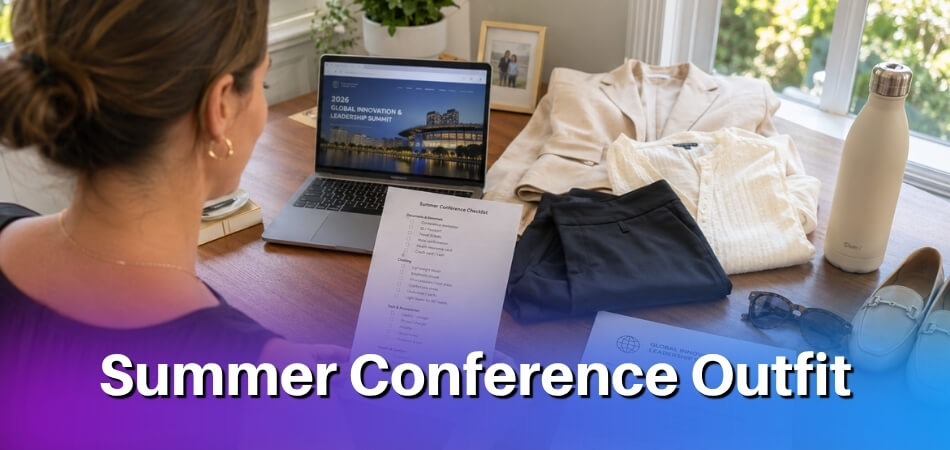
For women, a lightweight blazer in linen or a ponte blend is the most versatile option. It looks polished over a sleeveless blouse or a fitted dress and folds flat enough for a tote. In cream, navy, or light grey it works across business casual and business formal without looking overdressed.
For men, an unstructured sport coat is the best tool. It folds into a bag without wrinkling badly, turns any shirt into a business-ready look, and comes off when you step outside. A long-sleeve shirt in breathable cotton or wicking fabric also works, and so does a thin merino crewneck or cardigan at a relaxed conference. Do not rely on a suit jacket as your layer in summer unless the dress code calls for it, because the weight works against you when you move around. At a strictly resort business casual event you can skip the jacket and wear a lightweight button-down over a crew-neck tee.
Cardigans suit both. A fine-knit cardigan in a neutral tone is easy to tie around your shoulders or stuff in a bag, and it does not look casual.
Managing the Transition
Sessions happen indoors, so look polished during them; the walks outside are short, so the heat is brief. Keep the layer in your bag outside and put it on in the lobby or entrance area before you enter the main session space.
If outdoor programming is a big part of the schedule, such as outdoor keynotes or walking tours, plan at least one day where the base layer is the outfit. A structured sleeveless top for women, or a short-sleeve dress shirt in a wicking fabric for men, looks complete without the outer layer. Dark fabric absorbs heat fast in direct sun, so wear lighter colours (white, soft blue, khaki) as the base and keep charcoal and navy for the outer layer you can remove.
If sessions run long, keep your layer in your bag every day, so you are never in a cold room without it. Running out of layers on day three is uncomfortable in a way that is entirely avoidable.
What to Avoid in Summer: Colour and Style Mistakes
Most summer mistakes come from colours that show sweat or soak up heat, and from clothes and shoes that fail halfway through the day. Fabric mistakes are covered in the fabrics section above; the ones below are about colour, fit and styling.
Colour Mistakes
For me, all black in heat is a trap. Black is an easy default because it reads professional and hides sweat, but it absorbs heat faster outdoors and can look flat under strong conference lighting. Navy, charcoal, or deep teal give you the same formality, and worn as a layer they come off when you step outside.
Colours that show sweat patches. Solid light grey and pale lavender in thin, smooth fabric look great standing still and are unforgiving by mid-afternoon. If you perspire in the heat, choose patterns, textured weaves such as Oxford cloth, or deeper solid tones.
Neon and high-contrast prints at formal events. At a business formal or corporate event an aggressive print or electric colour reads as inattention to context. Save bolder choices for a casual networking day.
White trousers. They look sharp until the first seat, coffee, or outdoor surface. Chinos in neutral but forgiving tones are the safer call.
Too much beige. An all-khaki outfit of khaki trousers, tan shirt, and desert boots disappears into itself. Anchor it with a navy or white top, or swap one piece for a deeper colour.
Competing patterns. A check shirt with plaid trousers does not read as personality in a conference room. Keep patterns to one piece per outfit and the rest solid.
Style and Fit Mistakes
Clothes that fit your static body, not your moving one. Summer days involve sitting, walking, carrying bags, and reaching. If your blazer barely closes when you sit or your trousers pull across the seat when you walk, you will notice by lunch. Try any outfit seated before you pack it.
Ignoring shoe practicality. Shoes that look sharp in a mirror can fail after four hours on conference centre flooring. Very high heels or dress shoes with no cushioning will wreck your focus by the afternoon. Comfort and polish are not mutually exclusive, so choose footwear that can do a full day, and break in any new shoes for several days before you travel.
Overly casual footwear. Boat shoes and flat casual sandals feel right in summer but often read as underdressed at anything above resort business casual. Check the dress code before packing shoes.
Wrinkled clothing. Clothes that crease in the suitcase and go straight onto your back on day one look unprepared. Roll or flat-fold depending on the fabric, and hang everything as soon as you arrive if your hotel allows it.
The 3-3-3 Rule for Packing a Multi-Day Conference
Pack 3 tops, 3 bottoms, and 3 accessories for a standard three-to-four day conference, and make every piece work with at least two others. Overpacking means dragging a heavy suitcase through hotel corridors, and underpacking means rewearing a wrinkled shirt on day three. In my view, the rule works because it gives you combinations instead of separate complete outfits.
| Piece | Women | Men |
|---|---|---|
| 3 bottoms | Two pairs of trousers in navy, charcoal, or stone, plus one midi skirt or a versatile dress | Three pairs of chinos or light trousers, for example navy, khaki and stone |
| 3 tops | Two blouses in solid or subtle print, plus one lightweight blazer that works as a top on its own | Two button-down dress shirts plus one lightweight unstructured blazer (swap in a polo for a casual breakout day) |
| 3 accessories | Belt, watch or statement bracelet, and a scarf | Belt, watch, and a pocket square |
Before you pull anything from the wardrobe, spend two minutes mapping combinations on paper. If a top works with only one bottom, it does not make the cut.
Why This Works for Summer
Summer needs outfits that work in two environments on the same day. Stone, navy, white, and soft blue mix across all three bottoms and tops without clashing, and the blazer in your bag handles the cold keynote hall and comes off for lunch outside. Count that layer among your three tops so you are not packing extra clothes for the temperature shift.
Day-One Priority: Your First Impression Outfit
The registration desk or networking breakfast can be where you meet the people you will keep seeing for days. Pack your strongest outfit at the top of the bag so it is the first thing you pull out, and hang it separately so you are not deciding at 7 a.m. A fitted blazer over a solid blouse with trousers in a deep neutral works for women at business casual and formal events, and a pressed white or light blue shirt with dark chinos and clean leather shoes works for men at business casual; for business formal, men switch to the summer-weight suit. Keep the relaxed pieces, like the polo or the printed blouse, for days two and three once you have read the room.
The supporting items that do not count toward the nine (shoes, bags, socks, care kit) are listed in the packing list below. Resist “just in case” outfits: they stay in the suitcase and add weight.
Budget Guide: Affordable vs. Premium Conference Outfits
You do not need to spend heavily to look polished; spend on fit, fabric, and shoes, and save on basics. The right balance depends on how often you attend, and my rule is simple: nothing here requires looking underdressed.
If You Attend a Conference Once or Twice a Year
A very expensive blazer makes little sense if you will wear it twice, so budget and mid-range retailers both work well if you pay attention to fabric and fit.
Prioritise fit over brand. A well-fitted budget chino looks sharper than an expensive pair that bunches at the knees. Fit varies by cut, so try chinos on in both slim and straight styles.
Invest in one good pair of shoes. Budget tops and trousers are easy to find. Budget shoes that look professional and stay comfortable through an eight-hour day are harder, so spend more here than anywhere else.
For women, a linen-blend midi dress from a budget or mid-range retailer with a structured cardigan for the air conditioning covers the summer outfit. Chain and department stores sell chinos, Oxford shirts, and lightweight blazers that pack and wash easily, which suits a multi-day trip.
If You Attend Regularly
If you attend three or more events a year, think in cost per wear. A pricier linen blazer worn a dozen times costs less per use than a cheap one that pills after a few washes.
Build a core capsule. For men: two dress shirts, one blazer, three pairs of trousers. For women: two blouses, one structured dress, one blazer or jacket, two bottoms.
Quality fabrics hold up better in heat. Cheaper synthetic blends tend to trap sweat and lose shape faster. Linen, breathable cotton, and good wicking fabric age better through repeated wear and washing. Wool-blend chinos or a linen blazer from a higher-tier line hold their shape across long days.
Premium does not have to mean designer. What you pay for at the premium level is cut precision, fabric weight, and durability.
| Tier | Where the money goes | Best for |
|---|---|---|
| Budget | Basics from chain retail or department store clearance, with fit and neutral colours as the priority, plus one quality pair of shoes | One or two events a year |
| Mid-range | Better fabric and cleaner construction, pieces that last several seasons | Regular attendees |
| Premium | Investment pieces with long lifespans, often from sustainable brands or a tailor | Frequent attendees who wear the same pieces many times |
The difference between budget and premium at a summer conference is mostly longevity and fabric comfort, not whether you meet the dress code.
Outfit Suggestions by Body Type and Skin Tone
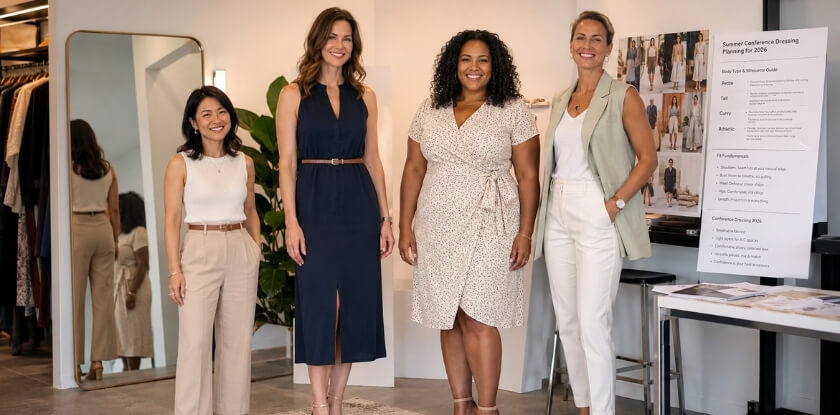
Treat these as starting points: pick cuts that balance your frame and colours that sit well against your skin. Dressing for a conference is not only about the dress code. Summer fabrics are lighter and less forgiving, so I would let structure do more work than usual.
| Build | What works | What to skip |
|---|---|---|
| Women: wider hips | A-line skirts and wide-leg trousers; a fitted blouse or structured blazer on top | Thin linen midi skirts that cling and wrinkle |
| Women: fuller midsection | Wrap dresses and empire-waist styles; a breathable cotton wrap dress in a solid colour is a good summer choice | Cuts that cling at the midsection |
| Women: petite | One colour from top to bottom for a longer visual line; cropped blazers | Long blazers that sit low on a shorter torso |
| Women: tall | The most flexibility: structured midi dresses, wide-leg trousers with a tucked blouse, two-piece suits in linen or ponte | Boxy, oversized cuts in lightweight fabric, which can look unintentionally casual |
| Men: slimmer build | Slightly structured garments: a blazer with some shoulder structure, a well-cut shirt that is not too loose | Unstructured linen shirts in very pale colours at business formal events, which can look creased by midday |
| Men: broader build | Vertical lines and medium-weight fabrics that hold shape; a shirt in wicking fabric that is cut close without being tight | Very tight trousers or slim-cut suits in summer-weight material, which can pull and crease when you sit |
| Men: shorter | Trousers that hit at the natural waist with a clean, tapered leg | Trousers that bunch at the ankle |
Skin Tone and Colour Choices
The wrong colours are easy to pick in summer, when people drift toward brighter palettes.
Warm skin tones (yellow, golden, or olive undertones) look best in camel, terracotta, warm white, olive green, burnt orange, and navy. Very cool colours like stark white, icy blue, or lavender can wash out the complexion.
Cool skin tones (pink, red, or bluish undertones) suit cobalt, emerald, true red, charcoal, and crisp white. Soft pastels in the blue and purple family also work. Muddy or yellowed tones, like some khakis or mustard, can look dull.
Neutral skin tones have the most flexibility. Watch contrast: very dark colours head-to-toe can overpower a lighter complexion, and very light colours can fade into a deeper one. One grounding element, such as a belt, bag, or slightly deeper blazer, usually solves it.
Sustainable Conference Fashion: Eco-Friendly Choices on a Small Budget
The most sustainable summer outfit is one you already own and rewear; when you do buy, choose natural fibres you will wear for years. For me, it is less about a curated capsule wardrobe and more about smarter choices with what you have.
Why Fabric Choice Already Puts You Ahead
The fabrics that suit summer best, linen and breathable cotton, are also durable. A well-made linen blazer or pair of trousers can last through several conference seasons, and organic cotton breathes much like standard cotton. When buying new, check the product page for the fibre content and for any certification the seller names.
Shop Secondhand Before You Shop New
Thrift shops, consignment stores, and online resale platforms carry blazers, trousers, blouses, and dress shirts in good condition, sometimes barely worn. A secondhand wool-blend blazer can outlast a cheap new alternative.
Build Around Pieces That Earn Repeat Use
Stick to neutrals and muted tones. Neutral and muted tones do not date quickly, and a neutral linen trouser that pairs with three tops means fewer garments made per outfit worn. Trend-driven pieces are the ones donated after two seasons.
Choose natural fibres when buying new. Synthetic blends are often cheaper upfront, but a slightly pricier cotton shirt that lasts years is the more sustainable choice in practice.
Avoid dry-clean-only items. They cost more to maintain, while linen and cotton wash at home, which helps if you need to refresh something mid-trip.
The Rental Option for Formal Days
If your conference includes a formal dinner, awards evening, or a keynote where you need business formal, consider renting. Local formalwear rental shops offer single-event rentals. This is especially practical if you need a formal look for only one day of a multi-day conference.
Small Habits That Add Up
Wash on a cold cycle, air-dry instead of tumble-drying, and hand-rinse a linen shirt mid-trip rather than doing a full wash. A small mesh laundry bag lets you separate worn items and air them out in your hotel room, so you can rewear more across a conference week and pack less in the first place.
Packing List for a Multi-Day Summer Conference
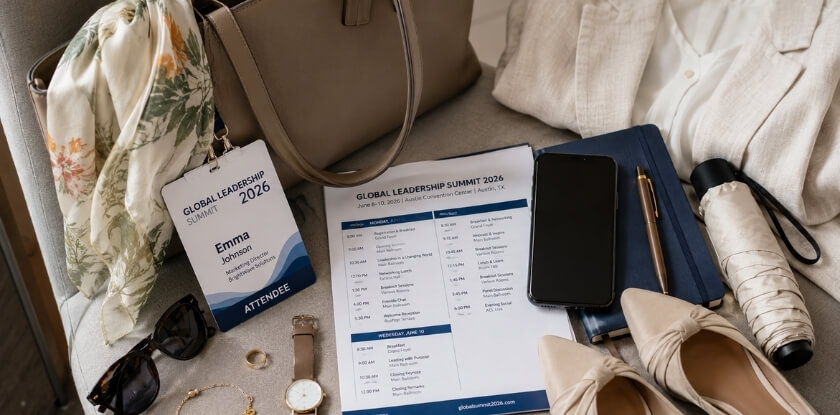
Plan one outfit per day plus one backup piece, not extra outfits. A good list lets you leave your hotel room every morning without second-guessing, and covers a formal keynote, a casual networking dinner, and an outdoor reception.
| Category | What to pack |
|---|---|
| Clothing | Three coordinated outfits (four for longer events) that swap pieces across days. Three bottoms, which are easier to rewear than tops. Tops you can rotate across the days, counting the lightweight blazer or structured cardigan for the air conditioning as one of them |
| Shoes | Two pairs minimum: one polished for the main sessions and one comfortable pair you can walk in between venues, since conference venues cover more ground than you expect. Blisters mid-conference derail your focus |
| Socks and undergarments | One set per day plus one extra. Packing fewer causes laundry stress you do not need. Add a few pairs of no-show or ankle socks in neutral tones |
| Accessories | Belt, and a tie if the code is business formal. They weigh almost nothing and lift an outfit from almost there to polished. A scarf or light wrap for cold sessions and outdoor evenings |
| Care and grooming | Deodorant and blotting papers for outdoor humidity between sessions. A compact travel steamer or wrinkle-release spray, because even linen-blend garments crease in a suitcase. A stain remover pen for fast conference lunches and coffee |
| Bags | A structured tote or laptop bag for notebooks, a laptop, and a spare layer: a backpack works for travel but reads less polished in a keynote room. A small crossbody or clutch for a networking dinner or cocktail hour, where a full work bag looks out of place |
My advice: keep the list honest. For a three-day business casual conference you do not need a tuxedo or five pairs of shoes. Pack what the schedule requires, and clothes stop eating your attention.
From our experience at MS International: Our conferences are held in person in the Greater Toronto Area, and our event pages set no dress code. The confirmation email states your check-in time, and you collect your conference badge at check-in. Presenters meet the session coordinator or moderator before presenting. Our speaker guidance also says to keep a backup copy of your slides on a USB drive.
FAQ: Summer Conference Attire
Summer heat and chilly air conditioning pull conference outfits in two directions, so blazers, sandals, linen and packing for a 3-day event get practical attention.
Do I need to wear a blazer to a summer conference?
Only for business formal, where it is expected; at business casual it is optional. A well-fitted one is still a smart layer for cold indoor sessions, so keep one on hand unless the event is strictly resort business casual.
Can I wear sandals to a summer conference?
Yes, at business casual and resort events, if they are clean and structured, such as block-heeled or leather strap styles. Skip flip-flops and casual slides, and choose closed shoes for formal events, for presenting, or for rooms that run cold.
Is linen too casual for a conference?
No, well-cut linen is professional, and a linen blazer, trousers, or sheath dress suits most business casual rooms. Wrinkles are the main risk, so choose a linen blend for strict rooms and leave untucked linen shirts outside the conference room.
How do I handle the temperature gap between outdoor heat and indoor AC?
Carry one thin layer you can add or remove quickly. A light cardigan or a structured blazer works, and keeping it within reach makes the shift easy.
What colours are safest for a summer conference?
Navy, slate, taupe, soft white, and muted earth tones read as polished without showing sweat. Avoid very light grey, which shows sweat, and neon shades at formal events.
How many outfits should I pack for a 3-day conference?
Three outfits built from the 3-3-3 rule: three tops, three bottoms, and three accessories, plus two pairs of shoes. Choose pieces that work across several days to avoid overpacking.
Does the day one conference look actually matter?
Yes. First impressions form fast, and your day one outfit can be what people associate with you for the rest of the event, so wear your most polished, best-fitting look on the opening day.
Are jeans ever acceptable at a summer conference?
Only sometimes. Dark, well-fitted jeans in a lighter-weight denim, with no distressing, can work at a casual event with no outdoor segment, but if the invitation lists business casual or formal, leave them at home.
What is the best fabric for outdoor summer heat?
Breathable cotton and moisture-wicking fabric are the two most practical choices. Linen handles heat well too, but it wrinkles faster if you move between sessions all day.
Can I build an affordable conference wardrobe without it looking cheap?
Yes. Fit and fabric matter far more than price tags, so a few well-fitted affordable outfits in neutral colours will outperform expensive pieces that do not fit properly.
Does MS International set a dress code?
No, our event pages set no dress code. Our conferences are in person in the Greater Toronto Area, so use the business casual default, and check your confirmation email for your check-in time.
Final Thoughts
You do not have to choose between looking professional and staying comfortable. Confirm the dress code, pick breathable fabrics, carry one thin layer for the cold rooms, and settle your day one outfit before you leave. Pack pieces that work across several outfits and dress for the work you came to do.