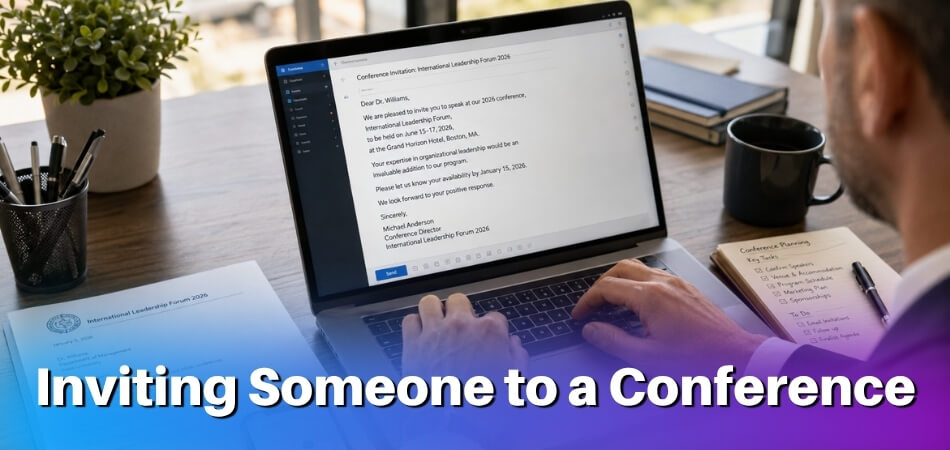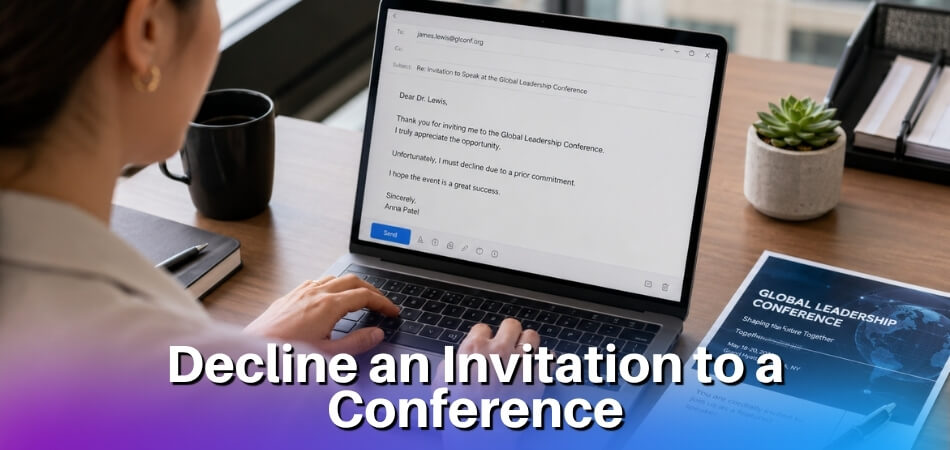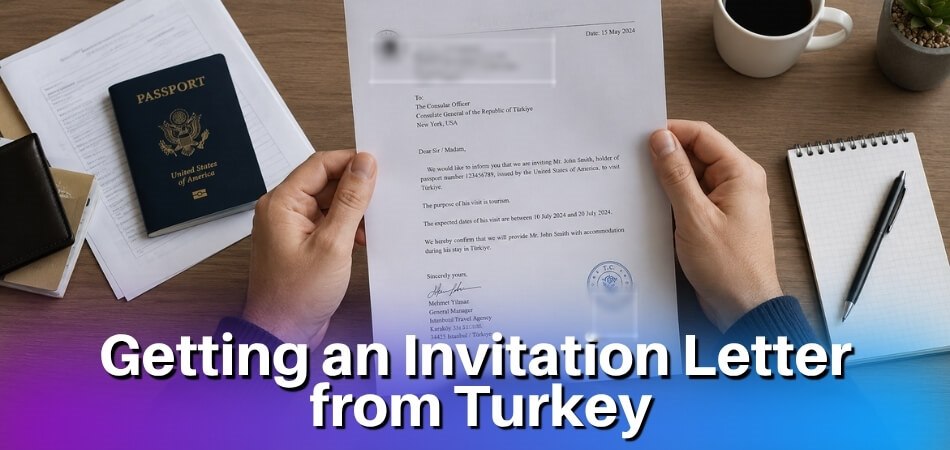

Someone has asked you to speak, and you are glad to say yes, but the reply still has to be written. A clumsy answer can make an organizer wonder how the event will go. A clear, courteous one settles things and starts the working relationship well.
Quick answer: A good sample letter accepting an invitation to speak thanks the organizer, says yes in plain words, repeats the event name, date and your topic, and asks what you need to prepare. Keep it to one to four short paragraphs and end with your contact details. Below you will find a ready letter, three more versions for different situations, subject lines and the details worth confirming first.
Use this guide when you have been asked to give a keynote, join a panel, run a workshop or present at a conference, seminar or webinar, and you want your reply to be clear and polished.
What Is a Letter Accepting an Invitation to Speak?
It is a short formal or semi-formal message that confirms you agree to speak at an event. You send it to the organizer, host, program coordinator or conference chair, and in most cases an email is fine unless they ask for a signed letter.
A good letter does five jobs:
- Thanks the organizer for the invitation.
- Confirms that you accept.
- Repeats the event name, date, time and place so nothing is misread.
- Confirms your speech title, session topic or panel role.
- Asks about anything still missing, such as slide deadlines or technical needs.
Organizers need a reply they can act on quickly, so keep it short. Writing only “Yes, I can attend” works, but “I am pleased to accept your invitation to speak at [Event Name]” sounds more reliable and takes no extra time.
Quick Sample Letter Accepting Invitation to Speak
Copy this letter, replace the brackets and send it. It works for a conference, seminar, workshop, panel or webinar.
Subject: Acceptance of Invitation to Speak at [Event Name]
Dear [Organizer’s Name],
Thank you for inviting me to speak at [Event Name]. I appreciate the opportunity to be part of this program and to contribute to the discussion on [Topic or Theme].
I am pleased to accept your invitation to speak on [Date] at [Time] at [Venue/Platform]. I understand that my session will focus on [Presentation Topic or Session Title], and I look forward to sharing useful insights with the attendees.
Please let me know if there are any guidelines, presentation requirements, slide deadlines or event materials I should prepare in advance. I can also send a short biography, headshot or session description if you need them.
Thank you again. I look forward to taking part.
Sincerely,
[Your Full Name]
[Your Designation]
[Organization Name]
[Email Address]
[Phone Number]
How to Accept an Invitation to Speak Professionally
Thank the organizer, accept clearly, confirm the event details and topic, ask what you still need, and close with your contact information. The same structure works for a letter and for an email.

Each part has a job, and none needs complicated wording:
| Part | What to do | Example |
|---|---|---|
| Subject line | Say exactly what the message is | Acceptance of Invitation to Speak at [Event Name] |
| Greeting | Use the organizer’s name; “Dear Event Organizer” only if you cannot find it | Dear Dr. [Last Name], or Dear Conference Committee, |
| Thank-you | One sincere sentence, no pile of compliments | Thank you for considering me for this speaking opportunity. |
| Acceptance | Make the yes direct | I am honored to accept your invitation. |
| Event and topic | Repeat what you know; mention online or in-person format | I understand my session on [Topic] is on [Date] at [Time]. |
| Questions | Ask for missing details or offer materials | Please share any presentation guidelines or slide deadlines. |
| Closing | Polite sign-off, then name, title, organization, email, phone | Best regards, Kind regards, Respectfully |
Phrases and Signature
For the thank-you you can write “Thank you for inviting me to speak at [Event Name]” or “I appreciate your kind invitation to participate as a speaker.” For the yes, “I am pleased to accept the invitation” or “I would be happy to speak at the event” both work. Greetings can use Dr., Ms. or Mr. with the last name, or “Dear Conference Committee” for a group.
In the signature, list your full name, job title or designation, organization, email address and phone number. Add a website or professional profile only if it is relevant to the talk. Even when the organizer already has your email, the extra details save them a search later.
If the topic has not been finalized, say so and ask which theme or title the organizer prefers. If you want to suggest a different topic, keep it within the event theme, explain briefly why it suits the audience and let the organizer decide.
Key Details to Confirm Before Accepting a Speaking Invitation
Before you say yes, check that you are free on the date and can speak with authority on the topic, then confirm the schedule, audience, format, session length, technical setup and any travel or payment arrangements. A short check now prevents problems later, and asking politely is part of professional planning. If you are not free or the topic is not yours, decline the invitation to speak early and politely.

| Detail | What to ask or confirm |
|---|---|
| Event and organizer | Full event name, who hosts it, official website or event page, your main contact person |
| Date and time | Event date, your speaking time, session duration, time zone, whether the schedule may change |
| In-person venue | Venue name, full address, room or hall, arrival time, entry or parking instructions |
| Online platform | Meeting platform, login link, rehearsal time, backup contact, internet and camera requirements |
| Format | Your role (keynote, panel, workshop, moderator), presentation length, Q&A time, slides expected, recording, co-speakers |
| Technical setup | Microphone, projector, screen, laptop, clicker, internet, speaker system, video access, technical support person |
| Materials | Slides, biography, headshot, abstract or handouts, and their deadlines |
| Travel and payment | Travel support, accommodation, local transport, meals, honorarium, reimbursement process, invoices needed |
Time Zone and Format
For international or online events, a time zone mistake causes real confusion, so write the time zone in your reply. A 10-minute talk is also very different from a 45-minute keynote, so confirm the length before you start preparing.
Topic and Audience
Make sure your topic matches the event theme. If the organizer gave you one, repeat it in your reply; if not, ask whether they want you to suggest one. A talk for students, researchers, business leaders or general attendees needs a different tone and level of detail, so ask who will attend, what background they have, how much they already know and what the organizer hopes the talk will achieve.
Travel, Accommodation and Honorarium
For out-of-town or formal events, clarify practical arrangements early and in writing. Do not assume that an honorarium, travel reimbursement, accommodation or a free registration is included unless the organizer confirms it in writing. If none of this applies, leave it out.
If You Need a Visa to Travel
Say so in the acceptance reply, so the organizer can plan for it. Ask whether they issue invitation letters for speakers and what they need from you. Organizers set their own conditions, and some issue the letter only after registration or payment is complete, so ask which applies to you. Give your name exactly as it appears on your passport, with your travel dates. An invitation letter supports a visa application, but it does not guarantee a visa. The embassy or immigration authority makes that decision. You can add a line like this to your reply:
I will need a visa to travel. Could you tell me whether you can issue an invitation letter for speakers, and what details you need from me? My name as it appears on my passport is [Full Name].
From our experience at MS International: our conferences are held in person in the Greater Toronto Area, and the invitation letter for eligible registered participants is issued within 3 to 5 business days after payment clears. A speaker who needs a visa should therefore raise it in the first reply and give the name exactly as on the passport, because a correction after the letter is issued may carry a US$50 administrative fee.
Professional Tone Tips for a Speaker Acceptance Letter
Sound polite, direct, warm and organized. Your tone shows the organizer how you communicate, and a thoughtful reply builds the relationship before the event begins.

Keep It Polite and Direct
Use respectful language, but do not write a long paragraph about how grateful you are. This is balanced enough:
“I appreciate being asked to speak at [Event Name]. I would be glad to accept and look forward to contributing.”
Use Formal but Natural Language
Your letter should not sound stiff or robotic. Good phrases include:
- “I appreciate the opportunity.”
- “I look forward to speaking with the audience.”
- “Please let me know if any additional information is required.”
Avoid casual lines such as “Sure, I’m in,” “Sounds cool” or “No problem, I’ll be there.” They are fine in a friendly text but not in a professional acceptance.
Do Not Overexplain
You do not need to share your full schedule or personal reasons unless asked. If you must mention availability, one line is enough: “I have checked my schedule and am pleased to confirm my availability for the session.”
Match the Tone of the Invitation
A university conference invitation calls for a formal reply. A community webinar invitation allows a warmer, more conversational one. Either way, stay clear and respectful.
Reply on Time
A delayed reply makes planning hard and can look like lack of interest. If you need time to check your calendar, say so at once and give a date, for example: “Thank you for the invitation. I am reviewing my schedule and will confirm my availability by [Date].”
Personalize the Template and Proofread
Templates help, but they should not feel copied. Add the organizer’s name, event title and topic. Before sending, check for spelling errors, the wrong event name, a wrong date or time, a missing attachment, an unclear topic and incorrect contact details.
More Sample Templates for Accepting an Invitation to Speak
Pick the version that matches the situation, then personalize the event name, date, topic and contact details. The first letter above already covers a typical conference email, so here are the three cases that need a different shape.
Short Acceptance Reply for a Speaking Invitation
Use this when the organizer has already sent most of the details and only needs your confirmation.
Subject: Re: Your Speaking Invitation for [Event Name]
Dear [Organizer’s Name],
Thank you for the invitation to speak at [Event Name]. I am happy to accept and will be there on [Date].
Please send any speaker instructions or schedule details whenever convenient.
Best regards,
[Your Name]
It is short but still polite, which suits a quick reply in an existing email thread.
Formal Acceptance Letter for a Guest Speaker Invitation
Use this for academic conferences, official programs, institutional events, corporate functions and other high-level gatherings.
Subject: Formal Acceptance of Guest Speaker Invitation
Dear [Organizer’s Name],
I sincerely thank you for inviting me to serve as a guest speaker at [Event Name]. I am pleased to formally accept and appreciate the opportunity to contribute to this important program.
I understand that the event is scheduled for [Date] at [Time] and will be held at [Venue/Platform], and that my presentation will focus on [Speech Topic or Session Theme]. I will prepare a talk that fits the purpose of the event and the interests of the audience.
Kindly share the relevant guidelines, program schedule, audience details, technical requirements and deadlines for speaker materials. If helpful, I can provide my professional biography, headshot, presentation title or abstract for promotion.
Thank you once again for your confidence. I look forward to taking part as a guest speaker.
Respectfully,
[Your Full Name]
[Designation]
[Institution/Organization]
[Email Address]
[Phone Number]
Acceptance Email Asking for More Event Details
Use this when you are ready to say yes but cannot prepare until some details are confirmed.
Subject: Accepting Your Invitation, With Questions About [Event Name]
Dear [Organizer’s Name],
I am delighted to accept your invitation to speak at [Event Name].
So that I can prepare properly, could you confirm the final schedule, session duration, audience profile, presentation format and any technical requirements? Please also tell me whether you need slides, a biography, a headshot or a session description before the event, and by what date.
I understand that the proposed topic is [Topic], and I would be happy to adjust my presentation to the event theme and what your audience expects.
Thank you for your help. I look forward to your answers and to joining the program.
Kind regards,
[Your Full Name]
[Designation]
[Organization]
[Email Address]
[Phone Number]
Accepting first and asking afterwards keeps the organizer’s planning moving, and your questions show you intend to prepare well.
Subject Lines for Accepting a Speaking Invitation
The subject line should show at once that you are accepting, so the organizer can find your reply quickly. Choose by situation:
| Situation | Subject line |
|---|---|
| Standard reply | Acceptance of Invitation to Speak at [Event Name] |
| Conference | Speaking Invitation Acceptance for [Conference Name] |
| Guest speaker | Acceptance of Guest Speaker Invitation, or Confirmation of Guest Speaker Participation |
| Existing email thread | Re: Your Speaking Invitation for [Event Name] |
| Date-specific | Confirmation of Speaking Engagement on [Date] |
| Session-specific | Acceptance and Confirmation for [Session Title] |
| Short and general | Speaker Participation Confirmation, or Thank You for the Speaking Invitation |
For formal events, use the direct standard line. In an ongoing thread, replying with “Re:” is usually fine.
FAQs About Accepting an Invitation to Speak
Once you decide to say yes to a speaking slot, details remain: mentioning your topic, asking questions first, requesting a visa letter and how long the acceptance should be.
How do you respond to an invitation to speak?
Thank the organizer, accept clearly, confirm the event details and topic, and ask for any preparation requirements. Keep the reply polite, direct and professional.
How do you write a formal acceptance letter for a guest speaker invitation?
Begin with a respectful greeting, thank the organizer, state that you accept, confirm the event name and topic, ask for needed details and close with your full contact information.
What should I include in a speaker acceptance email?
Include a thank-you, a clear acceptance, the event name, date, time and topic, your preparation questions and your contact details. Add your designation and organization if relevant.
Can I ask questions before accepting a speaking invitation?
Yes, if important details are missing. Ask about the date and session length, venue or online platform, audience, topic, technical setup, speaker materials, and whether travel or fees are covered. Get any promised costs confirmed in writing.
Should I mention my speaking topic in the acceptance letter?
Yes, mention the topic or session title, even if it was already in the invitation. It confirms that you and the organizer expect the same session.
How long should a speaker acceptance letter be?
Usually one to four short paragraphs. A formal letter may run slightly longer if you need to confirm several details.
What if I need more time before accepting?
Thank the organizer, say you are checking your availability and give a date by which you will confirm. Do not leave the invitation unanswered.
Can I suggest a different topic after receiving the invitation?
Yes, if it still fits the event theme. Be polite, explain why the new topic suits the audience and let the organizer make the final decision.
Can I ask for a visa invitation letter in my acceptance email?
Yes. Say you need a visa, ask whether the organizer issues speaker invitation letters and what details they need, and give your name exactly as on your passport.
Should I include my phone number in the reply?
Yes, especially for formal events, last-minute updates or travel coordination. If you prefer email, still show your email clearly in the signature.
Is it okay to use a template for accepting a speaking invitation?
Yes, as long as you personalize it. Replace every placeholder with the right event name, organizer name, date, topic and your details.
Final Thoughts
A good acceptance letter is respectful, specific and easy for the organizer to process. Send it promptly, make sure the event name, date, time and topic are right, and personalize the sample before you click send. A clear reply starts the speaking engagement on the right note and builds trust before the event begins.