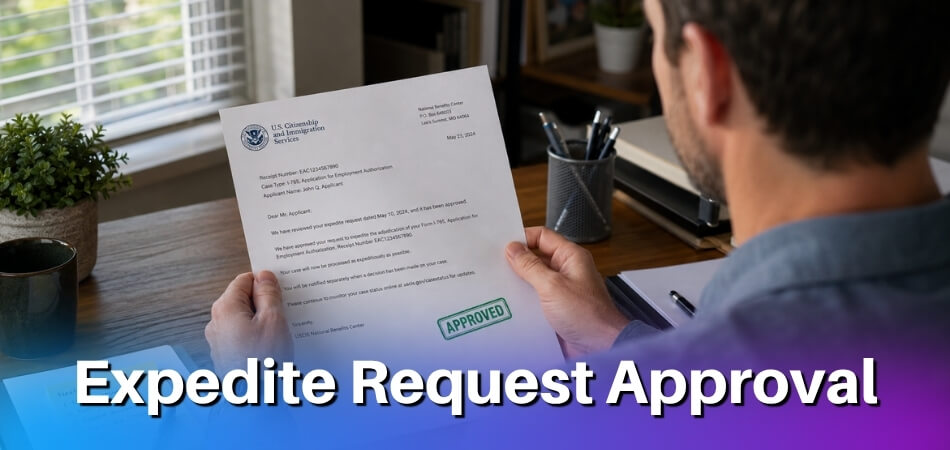

A conference date is getting close, your visitor visa is still pending, and you start wondering if anyone can speed things up. Plenty of applicants end up in this spot, and the internet is full of confident but conflicting advice. Here is what actually applies.
Quick answer: Sometimes, but rarely for a conference. Canada has no paid fast track for visitor visas, and IRCC says its web form cannot speed up processing unless you are already eligible for urgent processing. Spouses or partners with a pending sponsorship application, and applicants who qualify under CAN+, get faster handling automatically. A planned conference trip is not an emergency.
Fact-checked by the MS International Editorial Team. Last verified against official sources: October 2026.
| Question | Answer |
| Can a Canada visitor visa be expedited? | Sometimes, in urgent and well-documented cases |
| Is there a paid express visitor visa service? | No |
| Can IRCC review a file faster? | Only in urgent cases at officer discretion, or through an automatic stream such as CAN+ |
| Does urgent review guarantee approval? | No |
| Is CAN+ faster processing? | Yes if you are eligible, and it applies automatically, but approval is never guaranteed |
Expedited review is not automatic approval. The applicant must still meet every visitor visa requirement, including funds, temporary purpose, identity checks, biometrics, admissibility and proof of leaving Canada after the visit. A Canada visitor visa is also called a temporary resident visa (TRV).
What Expedited Processing Means for a Canadian Visitor Visa
Expedited processing means IRCC may give earlier attention to a file because of an urgent situation, not that it skips any checks. Officers still review the purpose of visit, funds, travel history, ties to the home country, previous refusals and background information.
No Paid Priority or Premium Visitor Visa Service
Canada does not sell faster processing for visitor visas. Nobody can pay IRCC, a visa application centre, a consultant, a travel agent or a third-party service to move a file ahead in the queue. Be wary of sites that advertise a special IRCC portal or a fixed fast-track timeline for visitor visas, because IRCC’s visitor visa pages list no such route.
A representative can help prepare a stronger application, but cannot guarantee faster approval or force a decision. Be careful with claims of “guaranteed fast visa approval”, because IRCC decisions are made by visa officers. A Member of Parliament may be able to ask for a status update in some situations, but cannot order approval or skip required checks.
Urgent Review Is Based on Exceptional Circumstances
A close travel date alone is not enough. The applicant must show why travel cannot wait and why presence in Canada is necessary, using dated official documents rather than long emotional statements. A request that exaggerates urgency can damage credibility and may lead to closer review.
Residents of DR Congo, South Sudan or Uganda: Current IRCC Measures
If your last country of residence is the Democratic Republic of the Congo, South Sudan or Uganda, IRCC is processing your application but not finalizing it until 27 November 2026, unless the measures are extended. The test is the last country of residence on your application, not your citizenship. IRCC also says existing visas, permits and eTAs of affected residents are suspended and cannot be used to travel to Canada while the measures last.
IRCC says exemption requests are reviewed case by case. You must explain why you should be exempt, give evidence and show that you pose no public health risk. Humanitarian or compassionate reasons are among the exceptional circumstances it lists. An exemption is a separate request and approval is not guaranteed.
Situations Where IRCC May Consider Urgent Visitor Visa Processing
IRCC may consider faster review for a genuine emergency or an exceptional time-sensitive reason, and an officer decides each case. IRCC’s visitor visa application pages list no urgent grounds and no urgent option. The examples below follow the pattern IRCC uses for other urgent services, so treat them as typical cases rather than guaranteed ones. The eTA is different: its application asks you to describe any urgent or compelling reason for travel, and most eTA applicants get a confirmation within minutes.
Serious Medical Emergencies Involving Close Family
A medical emergency may support an urgent request when an immediate family member in Canada is seriously ill and the applicant’s presence is needed, for example emergency surgery, intensive care or a life-threatening diagnosis. The document should show the patient’s condition, the urgency, the dates and why the applicant must travel. A vague note saying someone is unwell is usually too weak.
Death or Funeral of an Immediate Family Member
A death or funeral of a close family member in Canada may support an urgent request if the applicant gives reliable proof of the death, the scheduled service and the relationship. If the official death certificate is not ready yet, submit other reliable documents first and say that further proof can follow if requested.
Official Government or Diplomatic Travel
Time-sensitive official duty, such as a diplomatic mission, government delegation or official state-level meeting, may qualify. The letter from the department, embassy, consulate or authority should show the applicant’s role, purpose, location in Canada, required dates and why the trip cannot be delayed. Routine government invitations or optional events may not be enough.
Critical Business Travel With Major Consequences
Urgent business travel is considered only in rare cases. Normal meetings, training sessions, trade shows and networking events usually do not qualify. A request is stronger when the applicant can prove that absence would cause serious financial, contractual or operational harm, and that no replacement can attend. “This meeting is important” is weak; the specific consequence of missing the trip is what counts.
Situations That Usually Do Not Qualify
Many important plans still do not meet an urgency standard. These usually do not qualify:
- Tourism or vacation
- Family visits without an emergency
- Weddings, birthdays or graduation ceremonies
- Routine conferences and standard business meetings
- Training sessions
- Non-refundable tickets and hotel bookings
- Short travel windows
Expedited Visitor Visa Review for Spouses or Partners With PR Sponsorship
Spouses and partners being sponsored for permanent residence may get faster visitor visa processing, and IRCC says it applies automatically. This is different from emergency-based urgent processing, and you do not need to request it.
The aim is to help families stay together while the permanent residence file is being processed. It applies when the applicant is the spouse, common-law partner or conjugal partner of a Canadian citizen or permanent resident and has submitted a family sponsorship application. The Acknowledgement of Receipt (AOR) confirms that IRCC received the sponsorship application, and including it helps IRCC connect the visitor visa request with the sponsorship file.
Helpful documents include:
- AOR letter
- Marriage certificate or relationship proof
- Sponsor’s Canadian passport, PR card or citizenship certificate
- Invitation letter from the sponsor
- Proof of financial support
- Temporary travel plan
Faster handling is still not a guarantee, and the visa is temporary: the officer still needs to be satisfied that you will leave Canada at the end of the authorized stay. The applicant must meet visitor visa requirements, and the file can take longer if biometrics are late, relationship evidence is unclear, or there are previous refusals.
CAN+ and Visitor Visa Speed: What Applicants Often Misunderstand
CAN+ is a faster-processing route that applies automatically if you are eligible, but it is not an urgent request and does not guarantee approval. IRCC says you may be eligible if you held a Canadian visa in the last 10 years or hold a valid US non-immigrant visa. You do not need to ask for it, and a holder of a US non-immigrant visa should include a copy of that visa.

The main practical benefit of CAN+ is that eligible applicants may be assessed as lower risk and may not need the same level of financial or travel-history documents, depending on the situation and the instructions for their country. You must still meet every visitor visa requirement. Do not assume CAN+ removes biometrics or background checks, and expect that an officer can ask for more documents if the file is unclear. For a genuine emergency, CAN+ does not replace a separate urgent request with direct proof.
Conference Travellers: Can an Event Help Your Visa Application?
A conference in Canada usually does not qualify for urgent visitor visa processing. An event has fixed dates, but conference attendance is normally treated as planned travel, not an emergency.

What a conference letter can do is prove your purpose of visit. If the organizer gives you a Special Event Code, include it in your application exactly as provided. IRCC says the code allows it to coordinate the processing of an event’s visa applications, but its organizer page states no priority commitment, so do not count on a faster decision. An event needs at least 10 delegates from visa-required countries and a registration request made at least 6 months before it starts, so not every event has a code. IRCC also says a letter of invitation does not guarantee a visa.
Conference applicants should include:
- Registration confirmation and payment receipt
- Invitation or acceptance letter
- Speaker approval, if presenting
- Event agenda
- Employer or institution letter
- Financial proof and evidence of return ties
Some organizers also issue a separate visa expedite request letter for registered delegates. An organizer’s expedite letter confirms your participation and the event details. Treat it as supporting evidence only: the embassy or immigration authority decides whether any request is justified, and the letter does not turn planned conference travel into an emergency.
A strong explanation states the event name, city, dates, your role, who pays and why you will return home. Delegates should apply as early as possible, because an event date alone does not create priority. The goal is not to make the conference sound like an emergency, but to make the purpose clear, credible and easy to verify.
Canada Visitor Visa Processing Times: What Affects the Timeline
Processing times vary by country, visa office workload, biometrics, background checks and application quality, so no single timeline fits everyone. IRCC updates estimated processing times regularly, so check its official processing time tool before planning travel. IRCC says its estimate includes the time to give biometrics and is not a maximum or a guarantee, and that calling IRCC will not make a file move faster. If your file is past the posted time, the IRCC web form has an option to ask about your application. The table shows what slows a file and what you can control.

| Cause of delay | Why it slows the file | What you can do |
| Visa office workload | Volumes rise before holidays, summer, major events and academic seasons; similar profiles can get different timing | Apply early |
| Biometrics | Limited slots or high demand at the nearest centre; the file cannot move properly until they are done (fee CAD 85 per person) | Book as soon as you get the instruction letter |
| Background and identity checks | Complex travel history, multiple countries of residence, inconsistent information or documents needing verification; urgency does not remove these checks | Answer consistently and disclose everything |
| Missing or unclear documents | Missing forms, unreadable scans, missing pages, untranslated documents | Check every scan and attach translations |
| Weak proof of funds | Sudden balance changes, incomplete statements, income that does not match trip cost, unclear sponsorship | Show stable funds and a realistic budget |
| Unclear purpose of visit | Vague reason, stay length, accommodation or payer | Explain the purpose with matching documents |
| Inconsistent travel history | Dates that do not match passport stamps, undisclosed refusals, different answers across applications | Match your passport and old applications |
| Previous refusals | The new file must address the earlier concerns; repeating weak information may lead to delay or refusal | Fix the reason for the earlier refusal first |
| Passport submission and visa placement | If approved, you may get a passport request; courier time, holidays and local workload can add days | Do not book non-refundable travel before the passport is back with the visa |
How to Request Urgent Processing for a Canada Visitor Visa
Submit the visitor visa application first, then contact IRCC through the official web form with proof of urgency. IRCC cannot prioritize a file it cannot identify. It says the web form cannot speed up a file unless you are already eligible for urgent processing, and that submitting another web form will not speed things up. It publishes no separate urgent form for visitor visas, so a request is never certain to work.
Step 1: Submit a Complete Application and Keep Your Details
Include the required forms, purpose of visit documents, funds, invitation letter if applicable, travel history, proof of ties and anything connected to the urgent reason. Do not rely on an urgent request to fix an incomplete file, because missing information can delay the application even when the travel reason is serious. After submission, note your application number and keep these ready: full name, date of birth, passport number, email used in the application, planned travel date and reason for urgent travel.
Step 2: Use the IRCC Web Form
Choose the option for an existing application and select “Temporary Resident Visa” as the application type, not visitor record, temporary resident permit or eTA. Enter details exactly as in the application and begin with a clear phrase such as “Urgent visitor visa processing request”. Send one web form with relevant documents, because conflicting repeated messages make a file harder to assess.
Step 3: Upload Proof and Write a Short Explanation
The documents matter most. They should show names, dates and official sources that match your message. Keep the message short and evidence-based:
- State that you are requesting urgent review.
- Explain the emergency in one or two sentences.
- List the documents attached.
- Give your applicant details.
- Thank IRCC for reviewing the request.
After submitting, watch your IRCC account and email, and respond quickly to document requests, biometrics instructions or passport requests. If the reply asks for a missing document, send exactly what was asked for in the same thread rather than a new explanation.
Documents That Support an Urgent Visitor Visa Request
The strongest urgent requests include official, date-specific documents that show what happened, when, who is involved and why you must be in Canada. Relevant, clear evidence works better than many repetitive pages.
| Situation | Useful documents |
| Medical emergency | Hospital admission letter, doctor’s note, medical report, surgery schedule, ICU or critical care confirmation, patient’s identity and proof of relationship |
| Death or funeral | Death certificate, funeral home letter, burial or cremation schedule, obituary, memorial notice, proof of relationship |
| Government or diplomatic travel | Letter from the authority showing your role, official purpose, location in Canada, required dates and why attendance is urgent |
| Critical business travel | Employer letter, contract or agreement, meeting confirmation, deadline proof, letter from a Canadian partner, why you are essential and why no replacement can attend |
Send relevant documents only, and put the most important proof first so the officer sees the emergency quickly. Every request should also state your full name, date of birth, passport number, application number, country of residence, planned travel date and contact email. Check that documents are readable, correctly named and consistent with your explanation.
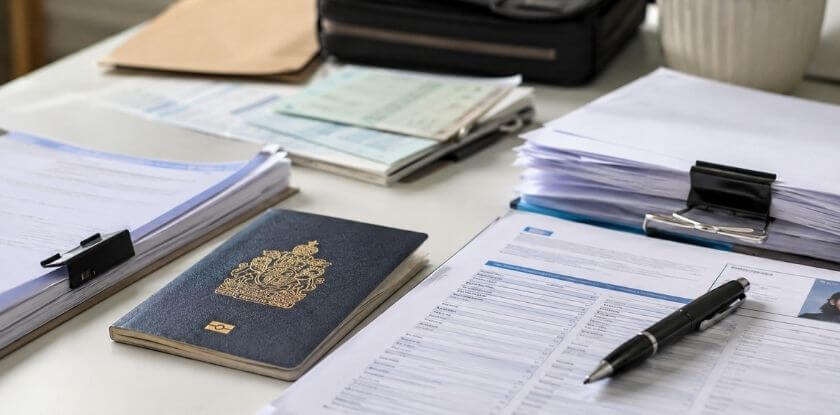
Sample IRCC Webform Messages for Urgent Visitor Visa Processing
A good web form message is brief, factual and supported by documents. Use these samples as starting points and replace the placeholders with accurate information. Do not mention documents you did not attach.
Medical Emergency Request Template
Subject: Urgent Visitor Visa Processing Request, Medical Emergency
I am requesting urgent review of my visitor visa application because my immediate family member in Canada is facing a serious medical emergency.
My [relationship], [name], is receiving urgent medical care at [hospital name] in [city, province]. My presence is needed because [brief reason]. I have attached the medical letter, hospital document, proof of relationship and planned travel details.
Applicant details:
- Full name: [Name]
- Date of birth: [DD/MM/YYYY]
- Application number: [your application number]
- Passport number: [Passport number]
- Planned travel date: [DD/MM/YYYY]
Thank you for considering this request.
Death or Funeral Request Template
Subject: Urgent Visa Request: Funeral in Canada
I am writing to ask for urgent review of my visitor visa application. My immediate family member in Canada has passed away.
My [relationship], [name], passed away on [date]. The funeral or memorial service is scheduled for [date] in [city, province]. The attached file contains the death-related document, funeral confirmation, proof of relationship and my planned travel details.
My name, date of birth, application number, passport number and planned travel date are listed below, in the same format as my application.
[Name] | [DD/MM/YYYY] | [application number] | [Passport number] | [travel date]
Thank you for reviewing my request.
Government or Business Urgency Template
Subject: Urgent Visitor Visa Processing Request, Time-Sensitive Travel
I must travel to Canada for [official government duty / critical business matter] on [date], so I am asking IRCC to review my visitor visa application urgently.
My attendance is required for [brief purpose] in [city, province]. The attached documents explain why my presence is necessary and why the matter cannot be delayed or handled by another person.
Please find my identifiers below, along with the name of my [organization or company]:
[Name] | [DD/MM/YYYY] | [application number] | [Passport number] | [organization] | [travel date]
I appreciate your consideration.
How to Avoid Delays Without Relying on Expedited Processing
The best way to improve your timeline is to avoid preventable delays from the start. You cannot control IRCC workload, but you can control how clear and accurate your application is.
Apply well before your travel date. Do not wait until a conference, family event or business meeting is close, because last-minute applications create pressure, but they do not create priority. Submit complete, readable documents: clear scans, every page included, translations attached and file names organized.
Use the web form only for meaningful updates, such as urgent proof, correction of an important mistake, updated passport information or documents requested by IRCC. Repeated follow-ups without new information rarely help.
Avoid non-refundable bookings before approval. A booked flight does not speed up processing and may create financial risk. If someone else is paying, explain the relationship and include their proof of funds.
Review forms carefully before submission, including names, dates, passport numbers, travel history, employment information and previous refusal disclosures. Keep the travel explanation short: why you are visiting, how long you will stay, where you will stay, who will pay and why you will return home.
Canada Visitor Visa Expedite FAQ
Facing a close travel date for Canada? Family emergencies, CAN+, calling IRCC, bank balances and buying flights early are the urgent-request topics dealt with here.
Can a Canada Visitor Visa Be Expedited for a Family Emergency?
Possibly. IRCC lists no urgent grounds for visitor visas, but an officer may consider a serious family emergency, such as critical illness or the death of an immediate family member, if you send dated proof through the IRCC web form. Nothing is guaranteed.
Does IRCC Offer Paid Fast-Track Visitor Visa Processing?
No. Canada has no paid fast-track, express or premium route for visitor visas. The fee is CAD 100 for the visa and CAD 85 for biometrics, and neither buys speed.
Can CAN+ Make My Visitor Visa Faster?
Yes, if you are eligible for the CAN+ stream. It applies automatically, so you make no separate request, and it never guarantees approval. A copy of a valid US non-immigrant visa should go with the application.
Can a Conference Invitation Speed Up My Visa?
Not by itself. An invitation supports your purpose of visit but does not create priority. If the event is registered with IRCC, its Special Event Code lets IRCC coordinate delegates’ applications, though IRCC states no priority commitment on its organizer page.
Will Calling IRCC Make My Visitor Visa Faster?
No. IRCC says calling will not help your application get processed faster, and submitting another web form will not speed things up either. Check the processing time tool, and write to IRCC only with urgent proof or a real update.
Are Visitor Visas Being Finalized for Residents of DR Congo, South Sudan or Uganda?
No, not at the moment. IRCC is processing but not finalizing applications from people whose last country of residence is one of these three, until 27 November 2026 unless extended. Exemptions are reviewed case by case.
Does a Strong Bank Balance Speed Up Processing?
No. Strong finances can reduce concerns and prevent delays, but they do not place the file in a faster queue.
Can Urgent Medical Letters Guarantee Priority?
No. Medical letters support the request, but IRCC still decides whether urgent review is justified.
Does Submitting Extra Proof Help?
Only relevant proof helps. Too many unrelated or repetitive documents make the application harder to assess, so send clear, dated evidence that matches your explanation.
Should I Buy Flights Before My Visitor Visa Is Approved?
No, it is usually safer to avoid non-refundable bookings before approval. A flight ticket does not speed up the application.
What Should I Do If My Travel Date Is Close?
If the reason is a genuine emergency, submit a web form request with proof. If the trip is routine, complete biometrics quickly and keep the application accurate.
Final Takeaway: The Best Way to Improve Your Chances
A Canada visitor visa can be expedited only in limited urgent situations, and the request needs strong evidence. Urgent processing is not a shortcut; it is a request for earlier attention when the facts justify it.
For most applicants, including conference delegates, the best strategy is a complete, accurate application submitted as early as possible, with biometrics done quickly.
From our experience at MS International: Our Visa Expedite Request Letter for registered delegates costs US$100 and is non-refundable. It is supporting evidence only and does not guarantee faster processing, a visa or entry, and the decision stays with the immigration authority. Our conferences are held in person in the Greater Toronto Area. The invitation letter is issued within 3 to 5 business days after payment clears, and a US$50 fee may apply to corrections after issue, so check that your name and passport details are right before you apply. The letter supports an application but does not guarantee a visa.
Disclaimer: This article is general information, not legal or immigration advice. Rules, fees and processing times change, so confirm them on the official IRCC website or with a licensed immigration professional before you apply.