A rejected abstract is common and rarely says your research is weak. Large, competitive conferences turn away most submissions: NeurIPS 2025, for example, accepted 5,290 of 21,575 main-track submissions, an acceptance rate of 24.52%, according to its own program chairs. Rejection means you are submitting your work, which puts you ahead of everyone who never tried.
Quick answer: After a conference abstract rejection, wait a day or two, ask for reviewer feedback if none came, and check the abstract against the call for papers. Then decide whether to rework it or move on, appeal only for a clear factual error, revise, and send it to a better-fitting conference or a poster track. Resubmit only after the first decision is final.
Last verified against official sources: October 2026.
This guide covers each step in order: how to read feedback without taking it personally, when an appeal is justified, how to write a short rebuttal, and how early career researchers can use the review process to strengthen the next submission.
What to Do After a Conference Abstract Rejection
Take three things from the first week: pause, ask for comments, and compare your abstract with the call for papers. A rejection is usually a redirection, not a final verdict on your research. The table below gives the full path, and the sections that follow explain each step.

| When | What to do |
|---|---|
| Day 1 to 2 | Pause, then read the notice and work out what kind of rejection it is |
| Within one week | Ask the program chair for reviewer comments if none were sent |
| Week 1 to 2 | Decide: rework, appeal (rare), or move on |
| Week 2 to 4 | Revise the abstract and get a colleague to read it cold |
| After the decision is final | Pick a new conference, or a poster or other format, and resubmit |
Read What Kind of Decision It Is
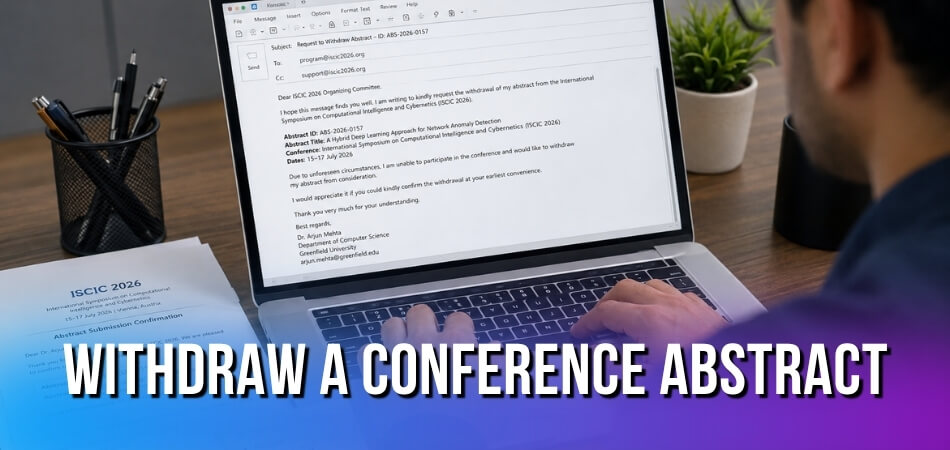
Not every notice is a flat no. Some conferences offer a different format instead, such as a poster, and some ask for a revised version. Read the notice twice and look for a line about another track before you treat it as a full rejection. If the wording is unclear, a short email to the program chair settles it. If you turn down a poster offer to try another conference, formally withdraw the conference abstract first.
Wait Before You React
Give yourself 24 to 48 hours before doing anything. Reading reviewer feedback in the first hour, when frustration is highest, leads to defensive decisions you will regret. A conference abstract rejection is also different from a paper rejection. Abstracts are short, often a few hundred words, and reviewers decide quickly with limited information, so a single comment is less final than it feels.
Audit the Rejection Against the Submission Guidelines
Before assuming the research is the problem, go back to the original call for papers. Check whether your abstract matched the conference scope, word count, formatting rules and topic areas. A mismatch with what the program committee was looking for can be enough to cause a rejection. A methods-heavy abstract sent to a conference about applied outcomes is a fixable framing issue, not a research problem.
Keep Going With a Record
One rejected abstract is not a reason to drop a line of research. Committees manage tight slots and competing priorities, and the same abstract can land very differently at a conference with a slightly different audience. Track your submissions, keep each revised version, and keep submitting. Researchers who build a steady presence in their field are rarely the ones accepted everywhere. They are the ones who kept going after a no.
How Common Is Abstract Rejection? (Rejection Rates by Conference Type)
Rejection is the normal outcome at selective conferences, and acceptance rates vary widely by field and event, so find the rate for your specific conference. One published example: NeurIPS 2025 accepted 24.52% of its main-track submissions (5,290 of 21,575), a rate its program chairs describe as on par with previous years. Many selective venues publish their numbers in a similar way.

Where to Find a Conference’s Acceptance Rate
The rate is not always printed in the call for papers. Look at the conference website, the preface of past proceedings, or a program chairs’ report, which large events often publish after the review cycle. Smaller events may simply tell you if you ask the organisers. A few minutes of searching is usually worth it. Do not rely on third-party summaries, because they sometimes disagree with the chairs’ own figures.
Why Knowing the Rate Changes How You Read Feedback
A rejection from a conference that accepts about one submission in four says something different from a rejection at one that accepts most. Reviewers are asked to score and critique, not to encourage, so written comments can sound harsh even when the decision was largely about capacity. Poster tracks often have higher acceptance rates than oral slots at the same event, so it is worth checking whether yours offers one, and whether poster abstracts are included in the proceedings.
Rates also move. A smaller conference in a niche subfield may accept most submissions one year and become noticeably more selective the next if a trending topic drives a spike in submissions. In practice, a rejection from a conference that accepts roughly 18% of submissions says something very different about your abstract than one from a conference that accepts roughly 55%. In the second case, the reviewer comments deserve more targeted work. In the first, the same abstract might be accepted elsewhere with minimal changes.
A Rough Guide by Selectivity
These bands are a working guide, not published statistics.
| Selectivity | What a rejection usually means |
|---|---|
| Highly selective (low acceptance rate) | Routine, even for experienced researchers. Strong work gets cut for lack of slots, and committee makeup can matter. |
| Moderately selective | Feedback more likely reflects real content concerns worth fixing before resubmission. |
| Open or lightly selective | Often a specific mismatch with the theme, or a submission that needs substantive reworking. |
Step 1: Request Feedback from the Reviewers
Ask the program chair politely, within about a week, for any reviewer comments that exist. Some rejection notices are sparse, perhaps one line saying the abstract did not meet the threshold. Reviewer feedback is the most direct signal you can get, so it is worth the mild discomfort of asking.
What to Say When Asking for Feedback
Send a brief, professional email to the program chair or submissions coordinator. Be specific enough that they understand what you are asking, without being demanding or suggesting you are contesting the decision. Introduce yourself, name the submission, include your abstract title and submission ID, and say you would welcome any feedback that can help you strengthen the work. Something like this works:
Subject: Feedback Request: [Your Abstract Title], Submission #[ID]
Dear [Program Chair’s Name],
Thank you for the opportunity to submit to [Conference Name]. I understand my abstract was not selected for this year’s program. If any reviewer comments are available, I would genuinely appreciate the chance to review them. I hope to revise and resubmit to future venues and would find the feedback very useful.
Thank you for your time.
[Your Name]
That is the whole email. Do not apologise repeatedly, explain your research again, or hint at frustration. Some computer science and engineering conferences build a formal rebuttal stage into the review, so read the submission guidelines first and check whether that window is still open.
What to Do If No Feedback Is Provided
Some conferences do not return comments for abstracts at all, for example because of the volume of submissions. Some chairs will share notes and others will not. If you ask and hear nothing, that is logistics, not a second rejection, and it does not mean your work is beyond help. Some conferences also publish their acceptance criteria or reviewer rubrics in previous years’ proceedings. Without official comments you are doing the diagnostic work yourself:
- Read accepted abstracts from past years, if the conference publishes them, and compare length, specificity, framing and methodological detail.
- Ask a colleague, ideally someone who has submitted to that conference or similar ones, to read your abstract cold and say where they got confused or wanted more.
- Use your institution’s research office, writing centre or graduate school support, which often has staff who have reviewed conference abstracts.
Step 2: Evaluate the Rejection: Rework or Abandon?
Rework the abstract if the feedback points to fixable framing; move on if it points to a problem with the research direction itself. Not every rejected abstract deserves the same response, and an honest read of the comments is the best guide.

Signs the Abstract Is Worth Reworking
Comments such as “the contribution is not clearly stated” or “the research question needs sharpening” are structural problems you can fix. They suggest the work may be sound but the abstract did not communicate it. Other good signs:
- Reviewer comments are specific and consistent, pointing to the same gap.
- The research has moved on since you submitted: new data, a clearer finding, a tighter argument.
- The conference is highly competitive and the feedback does not suggest any fundamental flaw.
- Another relevant call for papers is open, at a venue with a closer thematic fit or a less competitive review.
- The abstract tried to cover too much and read as unfocused. That is a writing problem, not a research problem.
Signs It May Be Time to Move On
If reviewers across different submissions raise the same core concern, such as unclear contribution, thin literature engagement or gaps in method, take the pattern seriously. One reviewer can miss the point; three saying the same thing is harder to dismiss. Other signs:
- The research question has been superseded by newer work in your field.
- You no longer find the project compelling. Enthusiasm shows in the writing.
- The feedback is vague and the conference is not where your work is heading, so chasing a fit that was never there wastes submission cycles.
- The abstract was a stretch, sent to a conference well outside your scope because the deadline was convenient.
Moving on is not failure. Channelling the same research into a journal article or a poster at a smaller venue may serve it better than repeated resubmission of the same text.
Step 3: Revise the Abstract Using What You Learned
Fix what the committee actually flagged, not just what bothers you on re-reading. Even vague feedback such as “insufficient novelty” or “unclear contribution” tells you how the abstract reads to someone outside your subfield. Start by mapping each comment to a specific line of your original abstract, side by side if that helps.
Diagnose Before You Rewrite
Reviewer comments usually fall into four groups:
- Clarity problems. Reviewers understood the field but could not follow the argument. Reorder sentences, state the research question earlier and cut jargon that does not earn its place.
- Scope problems. The abstract promised too much for one session, or the contribution looked too narrow for a full slot. Reframe what you are actually claiming, which sometimes means adjusting the design you describe.
- Fit problems. The theme moved on, or your work sat awkwardly between two tracks. If the fit is poor, a different conference is the better answer.
- Evidence problems. Reviewers wanted preliminary results, a clearer method or a sign the work is complete enough to present. Include what you have now.
Revising the Structure and Language
Many conference abstracts run between 200 and 500 words, but your call’s limit is the only number that counts. Open with your specific research question or finding, not broad context such as “In recent years, interest in X has grown”. Then check that the abstract answers four things in order:
- What question you address.
- Why it matters to this research community.
- How you approached it.
- What you found or expect to find.
An abstract that buries the “so what” after 400 words of method can score lower, even when the research is solid. Tighten wording too: “this paper aims to explore the potential implications of” can become “this paper examines”. Before you send anything, three quick checks help: is the question in the first two sentences, can a reviewer judge the contribution without your full paper, and does the language match the conference’s stated themes?
Matching the New Call for Papers
Re-read the guidelines from scratch, even for the same conference. Themes and track priorities shift between cycles, and an abstract that fit perfectly a year ago may need reframing. Look at the specific track you are targeting and at past accepted abstracts if the proceedings are public. Check word limits and formatting again: an abstract that accidentally exceeds the limit may be rejected before it reaches review.
Getting a Second Set of Eyes
Have at least one colleague who was not involved read the revised abstract cold, then ask what they think the central contribution is. If their answer matches your intent, the abstract is clear. If not, keep working. This step feels like a delay, but it usually saves time by catching problems before reviewers do.
Step 4: Should You Appeal or Write a Rebuttal?
Appeal only when you can point to a clear, specific factual error in the review. Disagreeing with a reviewer’s taste or judgment is not grounds. Program committee members review dozens of submissions under time pressure, so misreadings do happen, and a calm, factual note can earn a second look.
When Appealing Makes Sense
The clearest case is a factual mistake about your work: a methodological flaw you did not have, a finding dismissed as unsupported when your abstract cited the data, or a mix-up with another submission. A second reasonable case is feedback so thin or generic that it offers no real evaluation of your abstract.
An appeal is not warranted when the reviewer disliked your topic, your framing was not to their taste, or you simply disagree. A rebuttal built on “I think my abstract is good” accomplishes nothing. Before writing, check the conference’s appeal policy. Some allow a rebuttal period; others say decisions are final. Follow whatever the call for papers states.
How to Write a Polite Rebuttal Email (With Sample)
Keep it short, factual and professional. The aim is to correct one specific error, not to argue your case from scratch.
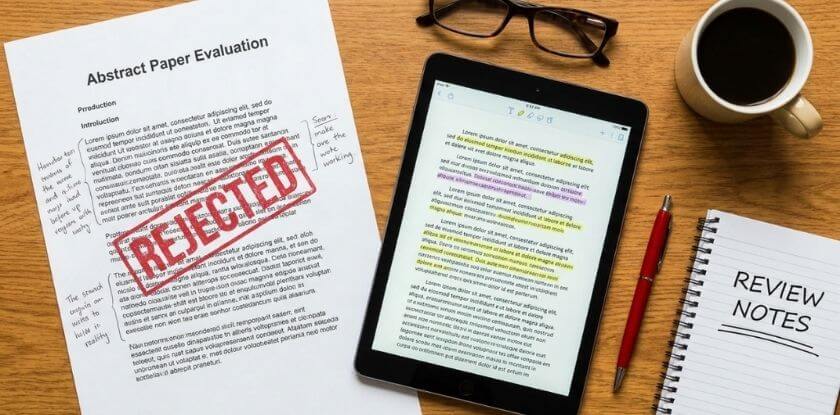
Address it to the program chair or review coordinator named in the notice. Put your submission title and ID at the top, explain in two or three sentences what the error was and what the correct information is, and point to the line in your abstract that contradicts the reviewer’s claim. Here is a sample you can adapt:
Subject: Query Regarding Review of Abstract [ID/Title]
Dear [Program Chair’s Name],
Thank you for considering my abstract, “[Abstract Title],” submitted for [Conference Name]. I wanted to raise one point from the reviewer comments, and I hope you will have a moment to consider it.
Reviewer 2 noted that my methodology lacked a control condition, which was the basis for their recommendation to reject. I believe this may reflect a misreading of the submission: the abstract describes the matched control group in the third paragraph, and the design is a randomized controlled trial. I would be grateful if this point could be reviewed, as it appears central to the evaluation.
I fully respect the program committee’s process and understand that decisions may not change. I simply wanted to ensure the review reflected the submitted work accurately.
Thank you for your time.
Sincerely, [Your Name, Institution]
Handling Unfair or Rude Reviewer Comments
Read a harsh comment once for the emotion, set it aside, then read it again for content. Even a badly worded comment sometimes hides a legitimate concern, and if so, take it. If a comment uses discriminatory language or is completely disconnected from your submission, many conferences have a way to report reviewer misconduct. Contact the program chair, keep it brief and factual, and quote the exact wording.
Do not reply emotionally, post the comments publicly, or send a long rebuttal answering every criticism. If the comments were blunt but not abusive and the rejection stands, put that energy into the revision.
Step 5: Submit to Another Conference
Choose the next conference deliberately and send the revised abstract only after the first decision is final. A rejection from one program committee is rarely the end for a piece of research, but firing the same text at the nearest open call wastes months.
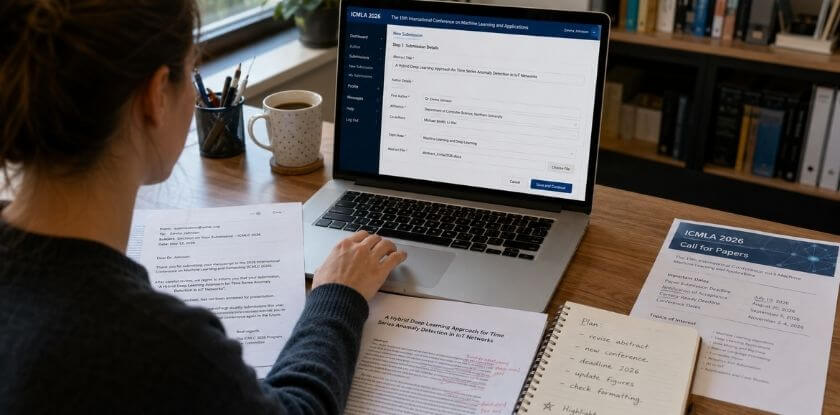
How to Choose the Right Alternate Conference
- Scope alignment. Read the stated focus, not just the name. A conference on “educational technology” may be aimed at K-12 practitioners, a weak fit for higher education research. Check what the last two or three years of proceedings actually accepted.
- Audience fit. A specialised workshop can produce more useful dialogue for early career researchers than a large generalist event where someone outside your subfield reviews you.
- Selectivity. If a highly competitive conference turned you down, the problem is not necessarily fatal. The same abstract may do well at a solid mid-tier conference where review is still rigorous but fewer submissions compete.
- Presentation formats. Check for poster tracks as well as oral sessions. For early-stage work, a poster is a legitimate route in.
- Timeline. Check the deadlines now. Some are only weeks apart, and you can submit while your revisions are fresh.
- Venue rules. Many conferences, including MS International Conferences, require that work is not published or under review elsewhere, so do not send the same abstract to two venues at once. SPE, for example, allows an abstract at only one conference at a time, says it must be declined by a program committee before it goes to another conference, and removes every copy if it finds duplicates.
Abstract Rejection vs. Paper Rejection: Does It Affect Resubmission?
A rejected abstract can be revised and sent elsewhere without any ethical or procedural complication: nothing was published, and nothing needs disclosing. A rejected full paper has had a more detailed review, sometimes double-blind, but resubmitting to another venue is still acceptable because rejection is not prior publication. Use the reviewer comments meaningfully first, since an unchanged paper tends to get the same result.
An abstract that only appeared in a program or abstract book is generally seen as a minor prior appearance, not a full publication. If it was included in formal proceedings with a DOI, check the policy of your next target, because practices differ by field.
Step 6: Consider a Poster Presentation or Alternative Format
A poster is often the most practical path when an oral slot is not available. Many conferences offer more than one track, and a rejected abstract does not necessarily close the conference to you.
Why a Poster Slot Is Worth Taking Seriously
Poster sessions put your work in front of a concentrated audience of specialists, and the one-to-one conversations at your poster can go deeper than the few minutes of Q&A after a talk. A poster still puts your work in the community’s hands, generates conversation and counts as research dissemination, and at some events it is also a path into the proceedings. Early career researchers especially benefit from not treating a poster as a lesser outcome. Some programs run a separate poster call with a later deadline; others let authors of rejected oral abstracts request a poster slot. Email the program committee to ask, especially if the feedback was positive about the research but critical about fit or scope.
Other Format Options to Consider
| Format | Best for |
|---|---|
| Workshop or panel | Social sciences and humanities work that connects to a broader theme and suits discussion |
| Short paper or extended abstract | Fields such as computer science and linguistics, reviewed separately from full papers with different thresholds |
| Demo or industry track | Research built around a tool, dataset or system, where theoretical framing matters less |
| Doctoral consortium or early career workshop | PhD students and postdocs with work in progress who want built-in feedback |
When to Submit to a Different Venue Instead
Sometimes your work simply belongs in another research community. Look at where the papers you cite most were published. If your work keeps landing in the references of papers from one venue, that venue’s committee is probably the right audience for yours.
For Early Career Researchers: What Rejection Means (and Doesn’t)
For a researcher in the first few years, rejection means this submission, in this form, did not make this program at this time. That is a narrow data point. It does not judge your methodology, your findings or your potential.
Why It Feels Bigger Than It Is
Early career researchers sometimes confuse abstract rejection with paper rejection. A rejected abstract means the committee did not select your topic for the programme. A rejected paper, after full review, is a more detailed evaluation of the work itself. A committee with, say, 400 submissions and room for 80 talks has to turn away plenty of solid work, and a reviewer whose expertise does not quite match the topic can also pull a score down. Reviewer bias is a recognised issue in peer review, so experienced authors are rejected too.
What to Do With the Feeling
Disappointment is a legitimate response. Give yourself a day or two, then switch to diagnosis: was the abstract unclear, did it match the guidelines, was the conference right for the work?
Build the Habit Early
Requesting feedback, revising and handling resubmission are skills that compound. Treat the process as training. A poster is also not a consolation prize: conversations with people who care about your area often matter more for a career than whether your name appeared in the proceedings.
Illustrative Examples: Rejected Abstracts That Were Reworked
The four scenarios below are illustrative composites, not documented individual cases. They show how each type of problem is usually solved.
The Abstract That Was Too Broad
A public health PhD candidate tried to cover three interventions across two countries in 250 words. Reviewers called it unfocused. After asking for feedback, the candidate narrowed it to one intervention and one country, led with the primary finding and resubmitted to a regional conference. The rejection forced a clarity the first version lacked.
The Abstract That Missed the Conference’s Scope
A computer science researcher sent a paper on algorithmic bias to a software engineering conference focused on systems architecture and benchmarking. It read as policy-adjacent, not technical. Reframed for a conference on fairness and accountability in computing, with the same findings, it fit.
The Abstract That Needed One More Round of Data
A cognitive psychology researcher submitted before data collection was finished, and the hedged preliminary results lost the reviewers’ confidence. Waiting, finishing the study and rewriting around the complete dataset was the right call, even though it felt slow.
The Abstract That Appealed
A reviewer assumed a study used a small convenience sample when the abstract described a stratified random sample of over 800 participants. A calm rebuttal pointing to that sentence is the kind of appeal that can succeed, because it corrects a verifiable error.
What These Cases Have in Common
Each researcher identified the specific problem (scope, framing, timing or a reviewable error) and answered it directly, instead of treating the rejection as a verdict.
From Our Experience at MS International
From our experience at MS International: We use double-blind review, and most review decisions are returned within about 10 working days. The decision arrives by email as an acceptance, a revision request or a rejection, with reviewer comments where applicable. If revisions are requested, authors get a set window to resubmit. Reviewers look at topic fit, clarity, methodology, structure and APA formatting, and submitted work must not be published or under review elsewhere. A rejected paper can be improved and submitted again only if it fits the scope and deadlines of another suitable event.
FAQ
After a rejection notice lands, the next decisions are practical ones: whether to appeal, how long to wait before resubmitting, what to do with no reviewer feedback and whether the work can become a journal article.
Can I resubmit the same abstract to the same conference next year?
Often yes, but check that conference’s call for papers, because resubmission rules differ. Many committees treat each cycle independently, though some limit repeat submissions of unchanged work. Revise the abstract meaningfully rather than sending identical text.
Does a rejected abstract hurt my academic record?
No. A rejection is not added to your CV or publication record unless you list it yourself, and only accepted work appears in proceedings.
What’s the difference between an abstract rejection and a paper rejection?
An abstract rejection means the committee declined your proposal before you wrote the full paper. A paper rejection follows full peer review of a manuscript. Abstract rejections usually cost less, since months of writing are not yet invested.
Should I mention a previous rejection in my next submission?
No, not in the abstract itself. If the conference allows a cover note, you can briefly say you revised the work in response to earlier feedback. Some reviewers appreciate the transparency, but it is not expected.
How long should I wait before resubmitting?
Long enough to actually revise. If you have reviewer feedback, allow a few weeks to act on it. A cosmetically tweaked version rushed into the next call rarely changes the outcome.
Is it worth appealing a rejection?
Rarely. Appeal only for a clear, verifiable factual error such as a misread methodology. Disagreeing with the reviewer’s judgment does not meet that bar, and committees have limited capacity to revisit decisions.
What if I received no feedback at all?
Some conferences do not send comments, so ask politely through the submission system or the conference email. If nothing comes back, re-read the call for papers critically and ask a trusted colleague to assess the abstract cold.
Can a rejected abstract become a journal article?
Yes. The ICMJE recommendations do not treat an abstract or poster shown at a scientific meeting as a bar to later full publication, but each journal sets its own rules, so read its instructions to authors. A journal article also tends to last longer in the literature than a conference talk.
Final Thoughts
A rejected conference abstract is a setback, not a verdict on your research. Take the feedback seriously, rework what needs work, and find the next call for papers that genuinely fits.