
You have been asked to open a women’s conference, and the blank page feels heavier than it should. The tone has to be warm but professional, personal but inclusive, and short enough to respect a packed agenda. It is easy to end up reading stiff, forgettable lines that set the wrong mood.
Quick answer: A good welcome speech for a women’s conference or Women’s Day program runs two to five minutes, or about one minute for a short opening. It greets the room warmly, names the theme and purpose, thanks the people who made the day possible, honours the speakers and hands off cleanly to the next item. At church, it usually follows the opening prayer, gives honour to God and then greets the pastor and guests. Adapt the samples below instead of reading them word for word.
I have written complete samples for general, corporate, Women’s Day, academic, short, virtual, STEM, entrepreneurship, empowerment and community events, plus a Women’s Day program section with the usual order of the program, a church welcome address, a one-minute church version, a women’s ministry retreat welcome, a school or workplace welcome and a 30-second version. The guide also covers male hosts, inclusive wording, honouring speakers, ready opening lines and handoffs, personalization, common mistakes and the difference between opening remarks and a welcome address.
What a Women’s Conference Welcome Speech Should Include
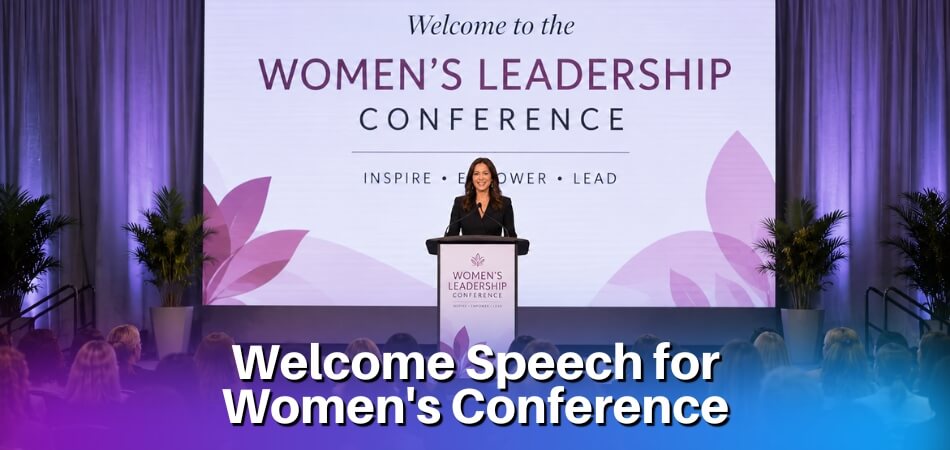
A welcome speech does one job above all: it tells every person in the room (or on the screen) that they are in the right place, with the right people, for a purpose worth their time. The elements below make that happen, whether you speak for two minutes or five.
The Core Components
I build every welcome from the same parts, in roughly this order.
- A warm, direct greeting. Acknowledge who is in the room: attendees, panelists, sponsors, the keynote speaker. If dignitaries attend, greet the most senior first, then the other guests, then the audience as a whole. A women’s conference draws guests from different industries, career stages and sometimes countries, and a short nod to that range shows you know who came.
- Your name and role. Do not assume everyone knows you. If you are the organizer, a chapter president or a department head hosting a corporate event, say it plainly in the first thirty seconds.
- The conference name and theme. State both clearly. If the theme is “Leading Without Limits” or “Voices That Shape the Future,” say it out loud early, so everyone knows what the day is about.
- A brief statement of purpose. One or two sentences on why this event exists and what it should do for the women attending.
- Thanks, kept short. Name the organizing committee and lead sponsors as groups. Do not turn the welcome into a credits roll.
- A housekeeping note, only if needed. In person, that may be where the washrooms are, when the first break falls or how Q&A works. Online, it means telling people how to use the chat, raise a hand or find the recordings. Thirty seconds is enough.
- A quote or a moment of reflection. Not mandatory. One well-chosen quote, or one sentence on why this gathering matters, can lift the room. Skip it if nothing fits; the speech works without one.
- The closing handoff. End by passing the floor to whoever comes next: the keynote introduction, the first panelist or the emcee.
What to Leave Out
A welcome is not the place for the full history of the organization or a personal story that runs past a minute. The audience is ready for the conference to begin.
How Length Affects What You Include
A comfortable speaking pace is roughly 120 to 150 words per minute, and this table uses 130 to 150 as a planning range. Nerves often make speakers talk faster on stage, so time your draft at a slow, deliberate pace, and confirm your slot with the organizers first, because the printed program decides how long you actually have.
| Length | Approx. words | What fits |
|---|---|---|
| 2 minutes | 260 to 300 | Greeting, role, conference name and theme, one line of purpose, short thanks, handoff |
| 3 to 4 minutes | 400 to 600 | All of the above plus a fuller theme line and a short audience-specific line |
| 5 minutes | 650 to 750 | Fuller purpose statement, a quote, warmer acknowledgments, a keynote setup |
| 6 minutes or more | 780+ | Starts to sound like a keynote, so cut unless the program asks for it |
The samples below run from under a minute to about two minutes, so for a longer slot add the parts in the lower rows of the table.
Adjusting the Parts to Your Role
Who you are changes which part carries the most weight. An organizer speaking to a returning audience can spend a line on what has changed since last year. A sponsor representative should keep the company to one sentence and give the rest to the attendees. A student host at a campus event can say she is attending for the first time too, if that is true.
Full Sample Welcome Speech for a Women’s Conference (General / Formal)
This sample is written for a formal conference with a mixed professional audience. It is complete, so you can cut it down or swap in your own theme, edition and speaker names. It opens warmly, acknowledges the room, states the purpose, points to the program and hands off.
Sample: Formal Welcome for a Mixed Professional Audience
Good morning, and welcome.
I am [Your Name], speaking for [Organization Name], and it is a pleasure to see you all at [Conference Name], [edition, for example our fifth].
This year’s theme, [Theme], was chosen because [one sentence on why it matters now]. We designed the day to [what participants will take away, such as practical tools, new perspectives, a stronger network].
To those who travelled from out of town, welcome. To those from this city and this community, we are glad you are here. And to every woman here who made room in a full week to attend: it is good to see you.
We built this conference on one belief. When women gather with intention, they do more than listen. They connect, challenge each other’s thinking, and leave with something they did not have when they walked in.
Today’s program brings together [number] speakers, [number] sessions and conversations on [topic areas, such as leadership, entrepreneurship, policy, health].
Now, a word of thanks. Our organizing committee, our sponsors, and the volunteers who have been here since [time] this morning made today possible.
To our speakers: thank you for your time and your honesty. These conversations need both.
To our attendees: you are not here to watch. Ask questions. Introduce yourself to the person next to you. Write things down. The best conversations at events like this often happen in the hallway between sessions.
One more thing. Some will call a women’s conference too niche or too focused. We disagree. [One sentence on what past attendees have done after this event, if you know it.]
Please join me in welcoming our keynote speaker, [Keynote Speaker Name].
More Sample Speeches by Conference Type
Every women’s conference has its own tone and audience, and I would pick the sample by the room, not by the title of the event. A corporate summit sounds different from a university symposium, and a virtual gathering needs different energy from an in-person one.
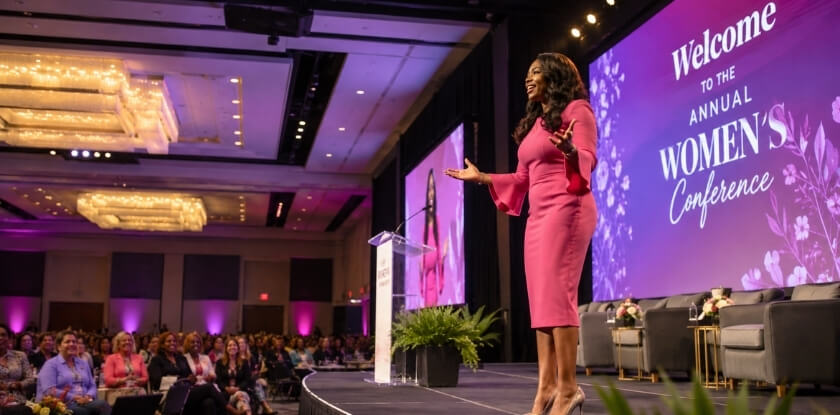
Corporate / Professional Women’s Conference
Make this one direct and purposeful. Your audience gave up a working day to be here, so get to the point and ground the opening in the work they came to do.
Good morning, everyone.
Welcome to the [Company / Organization Name] Women’s Leadership Summit. I am [Your Name], [role], and I am pleased to start the day with you.
This room holds [number] people from [departments / regions / industries]. That mix is deliberate. The most useful professional growth tends to happen when we stop talking only to people who already think like us.
The agenda rests on three things: honest talk about what is working, strategies you can take back to work, and time to meet people outside your own department. We will hear from [Keynote Speaker Name], who leads [brief descriptor], and from a panel of women whose combined experience spans [X] years and [X] industries.
A few housekeeping notes before we start: [washrooms, breaks, session timing].
Let’s get to work. Please welcome [Keynote Speaker Name].
Women’s Day Conference
A Women’s Day welcome carries more emotional weight than a standard professional gathering. People expect to feel something as well as learn something. Acknowledge the occasion without drifting into platitudes.
Good morning, and welcome.
Today is International Women’s Day, and you chose to spend it in this room with these people.
I am [Your Name], [role], and I am honoured to open [Conference Name]. Every year we mark this day, and every year I notice how easy it is to treat it as an entry in the calendar. Today we want to spend part of it on [one issue that matters to this room].
This year’s theme is [Conference Theme]. We picked it because [one or two sentences on why it fits this year]. We hope it stays with you in the weeks after today.
[Keynote Speaker Name] will open our main session, and then we move into roundtables where you will hear from women working at [specific levels, sectors or regions] on [specific issues].
Thank you for being here, and happy International Women’s Day. Please welcome [Keynote Speaker Name].
International Women’s Day falls on 8 March, according to the United Nations. The UN has also published a theme for the day; the 2026 theme was “Rights. Justice. Action. For ALL Women and Girls.” If your event is on or near the date, check the UN page for the current year’s theme and decide whether to echo it or use your own conference theme. Name one of the two in your opening, not both.
Academic or University Women’s Conference
At a university event the audience is often a mix of students, faculty and researchers. Aim for a tone that is serious about ideas but welcoming to people early in their careers who may be attending for the first time. The sample below follows the usual order of a welcome speech for an academic conference: greeting, a line of history, theme, thanks and handoff.
Good morning, and welcome to [Conference Name] at [University Name].
I am [Your Name], [Title / Department], and I am glad to open these [two days] of papers and discussion.
The conference began [X years ago / in year X] as a small gathering of faculty and graduate students interested in [founding focus area]. This year it brings [number] registered attendees from [number] institutions, which says something about how the conversation has grown.
Our theme, [Conference Theme], sits where [academic discipline] meets lived experience, and that is where much of the most interesting scholarship happens. The program has paper presentations, keynote sessions and a doctoral colloquium. Move across disciplines as much as you can. Some of the most useful questions come from someone outside your own field.
A special welcome to our undergraduate and first-year graduate attendees. You belong in this room.
We are grateful to [Faculty Name or Department Name] for [specific contribution: funding, organizing, hosting], and to our keynote speaker, [Name], whose work on [specific topic] has shaped how many of us think about [field or issue]. She speaks this afternoon.
Let’s get started. Please welcome our first presenter, [Name].
Short Welcome Speech (about one minute)
When the schedule is tight or the event is small, a short welcome can still set the right tone if it is efficient. This one is about 115 words, so it fits a one-minute slot.
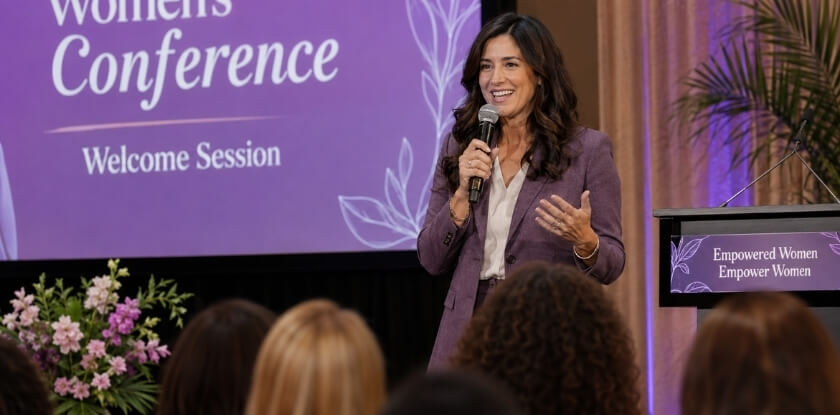
Welcome, everyone.
I am [Your Name] from [Organization Name], and I am happy to see you at [Conference Name].
We will move quickly today because there is a lot to cover. This conference exists because [one sentence on the purpose or origin, for example “we believed women in our industry needed a space built for their leadership challenges”]. That purpose has not changed.
You will hear from [Keynote Speaker Name] on [topic], and sessions cover [two or three topics]. Every session is practical, so come ready to take part.
Thanks to our sponsors, the organizing committee and, most of all, each of you for showing up.
Please welcome our first speaker, [Name].
Virtual / Online Women’s Conference
Opening a virtual conference means acknowledging the format honestly without apologizing for it. People join from different time zones and environments with different levels of distraction, so keep the speech warm but short enough for a screen.
Good morning, afternoon or evening, depending on where you are joining us from.
Welcome to [Conference Name]. I am [Your Name], [role], and our whole organizing team thanks you for making this time.
Attendees are logging in from [number] countries today. When we run this conference in person, geography and travel budgets limit who can come. Today they do not.
The program runs until [end time] in [reference time zone], with a break at [time]. All sessions are recorded and available to registered attendees within [X] days. If you are watching a replay, welcome to you too.
The chat is open throughout. Our moderators are watching it and will pass your questions to speakers during Q&A. If you hit a technical problem, [support email or chat link] is staffed all day.
Thank you for being here. We begin with [Keynote Speaker Name], who joins us from [location]. [Keynote Speaker Name], over to you.
As the host of an online event, test your audio and video before you start, build in more pauses than you think you need and check the chat regularly. You cannot rely on room energy online, so the chat and the pauses have to do that job.
Welcome Address for a Women’s Day Program (Church, School or Work)
A Women’s Day program can be held at church, at school or at work, and the welcome changes with the setting. At church it sounds different from a conference welcome: it usually follows the opening prayer, gives honour to God and greets the church leadership first, may include a short scripture, and thanks the choir, the ushers and everyone who prepared the day. It is often given by a member of the women’s ministry. I have kept the samples below simple so they suit most congregations; swap in your own church’s forms of address. The verse in the church sample is quoted from the NIV (Proverbs 31:25), and the Psalm 118:24 opening line further down is from the ESV, so use the wording of the translation your church reads from.
Where the Welcome Comes in the Program
The order differs from church to church, so follow your printed program. A common pattern is:
| Order | Item |
|---|---|
| 1 | Opening prayer or devotion |
| 2 | Welcome address |
| 3 | Occasion or purpose of the day |
| 4 | Music from the choir or praise team |
| 5 | Guest speaker |
| 6 | Vote of thanks |
| 7 | Closing prayer or benediction |
Sample Welcome Address for a Women’s Day Program at Church
Giving honour to God, who makes all things possible, to our pastor, [Name], to our first lady, [Name], to the ministers and church leaders, to our guest speaker, [Name], and to every brother, sister and visitor with us today: good morning, and welcome.
On behalf of the women’s ministry of [Church Name], it is my joy to welcome you to our Women’s Day program. Our theme this year is “[Theme],” and it reminds us of the words of Proverbs 31:25: “She is clothed with strength and dignity; she can laugh at the days to come.”
Today we celebrate the women of this church: the mothers, daughters, teachers, prayer warriors and quiet helpers who keep this ministry going, often without being noticed. Thank you for everything you give.
We are grateful to our choir, our ushers and everyone who prepared this day, and we are blessed to have [Guest Speaker Name] with us to bring the word.
To our visitors: you are not strangers here. Please make yourselves at home, and stay for the fellowship after the program.
Again, welcome. May God bless this time together.
This runs about 80 seconds at a comfortable pace.
One-Minute Women’s Day Welcome at Church (about 130 words)
Giving honour to God, to our pastor, [Name], to our first lady, [Name], and to all our guests: good morning, and welcome to [Church Name]’s Women’s Day program.
I am [Your Name], speaking for the women’s ministry. We are glad you chose to spend this day with us. Our theme, “[Theme],” calls us to [one line on the theme].
Today we celebrate the women of [Church Name], who [one line on their service, for example teach our children, visit the sick and keep this ministry running].
Thank you to our choir, our ushers and every hand that prepared today, and welcome to our guest speaker, [Name].
If this is your first visit, we are especially glad you are here; please stay for the fellowship after the program. Welcome, and God bless you.
Welcome for a Women’s Ministry Conference or Retreat
A ministry conference or retreat runs over a day or a weekend, with sessions, worship and small groups, so the welcome also tells women how the time is organized. My suggestion is one verse for the theme, with the teaching left to the speakers.
Good [evening / morning], sisters, and welcome to [Retreat or Conference Name].
I am [Your Name], and on behalf of the women’s ministry of [Church or Organization Name], thank you for setting aside this [weekend / day]. Some of you came with friends and some of you came alone; either way, you are among family here.
Our theme is “[Theme],” taken from [scripture reference]. Over the next [number] sessions, [Speaker Name] and [Speaker Name] will open the word with us, and each session ends with time in small groups.
A few practical notes: meals are in [location], a quiet prayer room is in [room], and [Name] at the welcome table can help with anything you need.
Thank you to [Pastor’s Name], our planning team and everyone who prayed for this time. Let’s open with worship, led by [Name].
Welcome Address for a Women’s Day Program at School, Work or in the Community
For a Women’s Day program outside church, such as an assembly, an office event or a community gathering, keep the same order without the religious elements.
Good morning, everyone, and welcome to our Women’s Day program.
I am [Your Name], [role] at [school / company / organization]. Today, as we mark [International Women’s Day / our Women’s Day], we recognize the women in this [school / workplace / community] and the work still ahead.
This morning you will hear from [Speaker Name] about [topic], followed by [second item, for example a panel of students or a short awards presentation].
Thank you to [organizing team] for preparing today, and to every woman here whose work keeps this [school / workplace / community] running. Please join me in welcoming [Speaker Name].
30-Second Women’s Day Welcome (about 55 words)
Good morning, and welcome to our Women’s Day program. I am [Name], and on behalf of [organizer], thank you for being here. Today we honour the women who [one line, for example lead, teach and care for this community]. [Name] will talk about [topic] in a moment. Please give her a warm welcome.
Welcome Speech by a Male Host
If you are a man hosting a women’s conference, that is not unusual, but it calls for a slightly different approach to framing your role. The structure is the same as any welcome: greet the audience, introduce the theme, hand off to the program. The difference is positioning. You are there to set the stage, not to be the centre of it.
Getting the Tone Right
The instinct is sometimes to over-explain or over-affirm. My advice is to avoid that. You do not need two minutes to justify standing at the podium. Open with warmth, acknowledge the occasion directly and move into the program.
- Ask what the organizers want. Find out what the opening should cover, so your remarks fit the program.
- Keep the focus on the audience and the theme. Reflect what the gathering means to the women in the room, mention the theme and acknowledge their work.
- Avoid performative language. A phrase like “as a man, I am humbled to be here” draws attention to your gender rather than the conference. One short, honest line about your connection, such as “as a member of this organizing committee” or “as someone who has watched this organization grow over three years,” explains your place and lets the speech move on.
- Hand off, then step aside. Introduce whoever comes next by name and leave the stage to them.
Sample Welcome Speech for a Male Host
This sample runs about a minute and a half at a comfortable pace.
Good morning, everyone.
My name is [Your Name], and I serve as [your role, for example executive director of the organization or chair of the planning committee]. It is good to see this room full.
This is the [first / fifth / tenth] annual [Conference Name], and I want to start with thanks: to every woman who made time to be here, to the speakers who agreed to share their expertise, and to the planning team that worked for months on this day.
We started this conference so that professional women have a place to share what they know and push each other further. This year’s theme, “[Conference Theme],” speaks to where many of you are in your careers and industries right now.
My part today is to get you to the people you came to hear.
[Lead Organizer or Emcee Name] will take you through the full schedule in a moment. What I can tell you is that the keynote, the breakout sessions and the networking time were all designed with one goal: to give you something you can use when you leave.
One thing before I step aside. The work that brought each of you into your field, and keeps you there, deserves recognition every working day. Conferences like this are one place where that happens.
Please welcome to the stage [Lead Organizer or Emcee Name].
Inclusive Language and Honouring Your Speakers
In my view, two habits matter most here: inclusive wording and naming your speakers properly. Both take a few seconds and change how the whole room hears you.
Inclusive Wording
- Greet people, not a stereotype. “Welcome, everyone” or “Welcome, delegates and guests” works for any mix of attendees. Avoid “ladies” as a catch-all, and skip jokes about shopping, shoes or “girl power” clichés.
- Speak to different life stages. Students, mid-career professionals, founders, caregivers and retirees may all be present. A line about “the start of a career or well into one” shows you thought about the full room.
- Avoid assumptions. Do not assume everyone is a mother, married, employed full time or from the local area. Invite rather than label: “everyone who chose to be here today.”
- Consider access. If the venue offers captioning, quiet rooms or accessible seating, mention them in one sentence.
Honouring the Speakers
- Get names and titles right. Confirm spelling, pronunciation and preferred title with each speaker before the day. Write the pronunciation phonetically on your notes if it is not obvious.
- Use one concrete detail per speaker. A recent project, a book or a milestone shows preparation. A full biography is the job of the person introducing that speaker, so do not duplicate it.
- Thank them accurately. “Thank you for sharing your work” is true for every speaker. Do not imply the organization covered travel or fees unless that is true.
- Give each speaker equal warmth. Use the same kind of line for the keynote, panelists and workshop leaders, and avoid ranking people by fame.
Samples for STEM, Entrepreneurship, Empowerment and Community Events
I wrote these shorter samples for four common settings.
STEM or Technology Women’s Conference
Welcome to [Conference Name].
I am [Your Name], [role] at [Organization / Institution]. Look around: engineers, data scientists, lab researchers, students building their first prototype. It is good to see this many of you in one place.
Over the next [number] days you will see [number] talks on [topics, such as machine learning, biotech, clean energy], a hands-on workshop track and a poster session. Please visit the posters. Early-career researchers worked hard on them, and a question from you is worth more than applause. At every break, find someone outside your own specialty.
Our opening speaker is [Speaker Name], whose work on [specific topic] many of us have cited. Please welcome her.
Entrepreneurship and Business Women’s Event
Good morning, founders, freelancers and future founders.
I am [Your Name] from [Organization Name]. Welcome to [Conference Name].
Everyone here knows what it costs to build something: late nights, uncertain months, and a lot of advice you did not ask for. So we kept today practical. You will hear how [Speaker Name] raised her first round, how [Speaker Name] runs a team across [number] cities, and how to read a contract before you sign it.
Trade cards, but also trade problems. If you are stuck on pricing, hiring or your next step, say so out loud. Someone in this room has been there.
Let’s begin with [Speaker Name].
Women’s Empowerment Program or Seminar
Good morning, and welcome to [Program Name].
I am [Your Name], [role] at [Organization Name]. Over the next [hours / weeks], this program covers [skills, for example negotiation, money management and public speaking], taught by women who use them in their own work.
Empowerment can sound like a slogan, so here is what it means in this room: by the end of this program, each of you should be able to [one concrete outcome, for example draft a one-year money plan]. If a session does not get you closer to that, tell us.
Thank you to [funder or partner] for [their support], and to our facilitators for their time.
Our first session is with [Facilitator Name]. Please welcome her.
Community or Nonprofit Women’s Event
Hello, neighbours and friends, and welcome.
I am [Your Name], and I have the honour of hosting today’s gathering at [Venue / Community Centre].
Today is not about titles. It is about the women in this community who organize the food drives, run the school councils, care for families and keep local groups alive, often without a thank-you. Today, the thank-you is ours to give.
We have [number] speakers from [local organizations], a shared meal at [time], and a table for new volunteers by the door. Children are welcome, and [name] is looking after the quiet corner if anyone needs a moment.
Please settle in. Our first speaker is [Name].
Opening Lines and Closing Handoffs (Ready-to-Use)
The first sentence sets the tone, and the last sentence before you pass to the next speaker either lands cleanly or leaves the room waiting. A clumsy handoff such as “okay, so anyway, here’s our speaker” undoes the goodwill you built, so prepare a specific line that names the speaker and signals why she matters. Lift, adapt and pair the lines below.
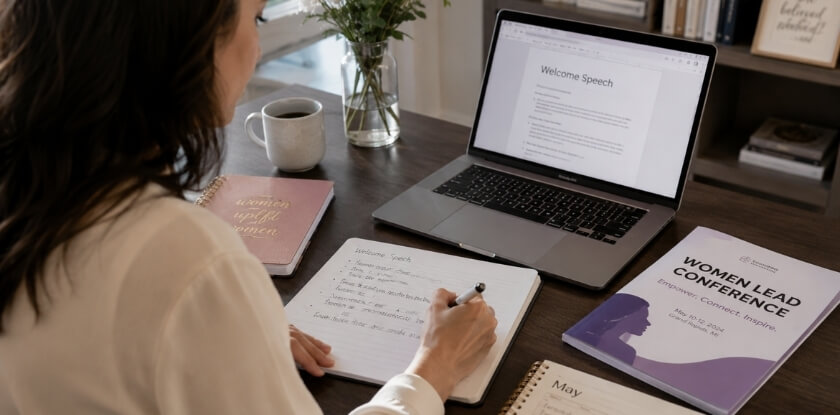
Opening Lines
Pick the one that fits your event and audience, then build the rest of your remarks from there.
For a formal Women’s Day conference:
- “Welcome to [Conference Name], a gathering that has brought together [number] women from [X] organizations, all here to [shared goal, for example build a mentoring network that lasts past today].”
- “On behalf of [organization name], I am honoured to open this year’s Women’s Day conference and to welcome [number] of you from [places].”
For a corporate women’s conference:
- “Welcome, everyone. Today [number] women from across [industry] are in one room, and [company name] is proud to host you.”
- “Thank you for being here. [Company name] holds this conference every year because [one real reason, for example our women’s network asked for it].”
For an academic or university women’s conference:
- “Welcome to [University Name]’s [annual/inaugural] women’s conference. The work you present over the next [two days] is the reason this conference exists.”
- “Good morning. [X] years ago this meeting fit in one seminar room with [number] participants. Today we have [number].” (Use your own true history.)
For a virtual or online women’s conference:
- “Welcome, everyone, wherever you are joining from. We have participants logged in from [number] countries today, and for the next [X] hours this screen is our shared room.”
- “Good [morning/afternoon]. If you are watching from your desk, your kitchen table or somewhere between flights, thank you for making time, and please say hello in the chat.”
For a Women’s Day program at church:
- “Giving honour to God, who is the head of our lives, to our pastor, [Name], to our first lady, [Name], and to every guest with us today: welcome to our Women’s Day celebration.”
- “This is the day that the Lord has made; let us rejoice and be glad in it. Welcome, brothers and sisters, to [Church Name]’s Women’s Day program.”
For an International Women’s Day program at school or work:
- “Good morning, everyone, and welcome to our International Women’s Day program. Today we stop to recognize the women in this [school/company].”
For a formal welcome with dignitaries present:
- “[Title and Name of the most senior guest], [Titles and Names of other guests], distinguished guests and friends: good morning, and welcome to [Conference Name].”
For a professional women’s conference with a mixed or senior audience:
- “It is a privilege to open this conference. You have each built something, whether a career, a practice, a team or a reputation, and this is the room where those experiences get to talk to each other.”
Closing Handoffs
A closing handoff is the one to three sentences that move you out of your welcome and into the next part of the program. Keep it short and direct.
Handing off to a keynote speaker:
- “I want to bring up someone whose work has [brief description, one clause]. Please welcome [Speaker Name].”
- “Our opening keynote sets the frame for everything you will hear today. I will let [Speaker Name] take it from here.”
- “[Speaker Name]’s [book/paper/profile] has shaped how many of us think about [topic], and I am glad you will all hear from her directly. [Speaker Name], the floor is yours.”
Handing off to a panel or session:
- “We move now into our first panel. The moderator will introduce the speakers, so I will step aside and let them begin.”
- “The next hour belongs to our panel on [topic]. Please give a warm welcome to the moderator, [Name].”
Handing off to a co-host or MC:
- “[Name] will guide you through the rest of the program. She knows this conference inside out, and I will pass it to her now.”
Handing off online:
- “I will hand over now to [Name], who will walk you through the day’s schedule and get us into our first session. [Name], over to you.”
- “At this point I want to bring in [Speaker/Moderator Name], who will be with you for the rest of the morning. The chat is open if you have questions.”
How to Personalize Your Speech for Any Women’s Event
A generic welcome gets you through the slot; a personalized one sounds as if it was written for this room, and I would spend my last half hour of preparation here. Audiences notice when a speech was recycled from last year’s event or pulled from a template with no changes. Mention the city, the organization or something about the attendees, and even one specific detail changes how the speech is received.
Match the Tone to the Conference Type
The same structure works across events, but the register shifts.
| Event type | Tone | What to do |
|---|---|---|
| Corporate | Professional, grounded | Acknowledge the business context, name company leaders or employee resource group (ERG) sponsors where appropriate, and favour plain, specific language over motivational slogans |
| Academic | Precise, curious | Name the thematic thread, such as gender equity in STEM or women in leadership studies, in your opening |
| Women’s Day | Reflective, warm | Name the occasion (and the date, if it is 8 March), skip the history lesson, then say what makes this gathering meaningful |
| Virtual | Tight, direct | Acknowledge that people join from different cities and time zones, and keep it shorter than an in-person opening |
| Community | Friendly, plain | Use local names and places, and thank volunteers by role |
Weave in the Conference Theme
If the event has a theme, echo it instead of just announcing it. Pull a key phrase and use it naturally rather than reading it off a banner. For a theme such as “Breaking Barriers” or “Women in the Future of Work,” write one sentence that connects the theme to where the audience is right now, in their industry, institution or career moment, and anchor your opening there.
Mention the Speaker and the Audience
- The keynote speaker. Say when she speaks and what she will cover, so the audience knows what to listen for.
- The audience itself. Use one real detail, such as “We have attendees from fourteen countries today” (only if true) or “many of you drove hours to be here”; it connects better than a generic thank-you.
Use Quotes Selectively
A quote from a woman leader, activist or thinker works only if it is relevant to the theme and not just broadly motivational. One quote can anchor a welcome. Three or four strung together suggest you ran out of original material. Place it toward the end of your welcome and let your own words introduce the event first. A scripture verse at a church program is the usual exception and can come early.
Write for the Ear, Practise Aloud and Keep Notes Short
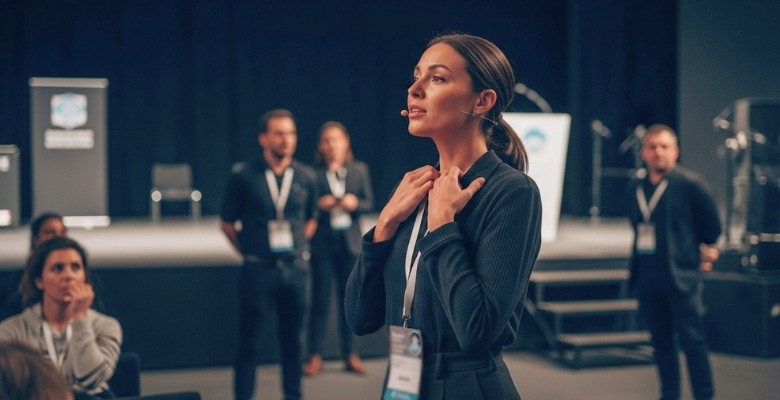
A welcome speech is heard, not read, so use everyday words and short sentences, and build the speech around one key message. Text that reads well on paper can be hard to say, so rehearse out loud, standing up if you will stand on the day. Toastmasters magazine (February 2024) describes speaking from notes as nothing to be ashamed of and suggests writing only key phrases, not full sentences. It also suggests having two or three backup phrases ready in case of a memory lapse.
Keep a Fill-in Framework Handy
If you write welcome speeches for several events a year, build the base around four slots: the event name and theme, one sentence about the audience, one acknowledgment of a key speaker or partner, and the closing handoff line. The speech feels fresh because the details are fresh, even if the scaffolding stays the same.
Common Mistakes to Avoid in a Women’s Conference Welcome Speech
These are the mistakes I would check a draft for, at corporate, academic and Women’s Day events alike.
- Starting with logistics instead of energy. In a room, fire exits, Wi-Fi passwords and schedule changes deflate the energy if they come first. Open with the theme, a nod to who is present or one striking statement, and save logistics for after you have set the tone. Online, a ten-second tech note can come first.
- Using inside jokes. A joke only the committee understands leaves first-time attendees on the outside. If you use humour, keep it to something everyone in the room saw, such as the queue at registration.
- Being vague about why the event matters. “Today is a very special day” says almost nothing. Name the purpose specifically, whether it is leadership pipelines, gender equity in academia or connecting attendees across time zones.
- Treating the advancement of women as a decorative theme. Saying “empowering women” and moving on is easy. The opening is stronger when it reflects what that looks like in your event: a promotion program, a research funding initiative, a mentorship network.
Opening Remarks vs Welcome Address: What Is the Difference?
The two terms are used loosely and often interchangeably, so check how your program labels the slot. If you write or organize the program, the distinction matters for how you structure the agenda and who says what.
| Opening remarks | Welcome address | |
|---|---|---|
| Typical length | Short, usually a few sentences | Within the 2 to 5 minute range above, unless the program allows more |
| Purpose | Settle the room and mark the formal start | Orient the audience, acknowledge guests, set the emotional tone |
| Who gives it | Often a board chair or session chair | The host or lead speaker |
| Preparation | A few prepared sentences | Written, rehearsed, sometimes published in conference materials |
What “Opening Remarks” Usually Means
Opening remarks are the first words from the stage. At a women’s conference this may be a board chair saying a few sentences before handing off to the main host. There is no expectation of storytelling or a keynote introduction.
What a “Welcome Address” Usually Means
A welcome address is the fuller speech. It explains why everyone has gathered, acknowledges key guests, speaks to the goals of the event and sets the emotional tone. It may quote a relevant figure, speak to the theme and close with something that energizes the room before the first session. If you are asked for a “welcome speech,” plan for this fuller form.
How They Work Together
At many professional conferences both happen in sequence: brief, functional opening remarks, then the prepared welcome address.
Does the Distinction Change for Virtual Events?
Online, the boundary blurs. A host may open with brief housekeeping on muting, chat and recording consent, then move straight into the welcome address. Those logistics do the job of opening remarks even if nobody calls them that.
From our experience at MS International: Our conferences are in person at venues in the Greater Toronto Area, and the moderator introduces each speaker. For most applicants, the route to these conferences is the presenting-author track: submit work for review and register after acceptance. Keynote and invited-speaker roles are arranged separately with the organizing team. Speakers cover their own travel, accommodation, visa, transportation and personal expenses unless MS International has agreed otherwise in writing. Speakers receive a certificate after completing the scheduled presentation.
FAQ
Here are short answers on length, a male host’s approach, the International Women’s Day theme and a Women’s Day welcome at church.
How long should a welcome speech be for a women’s conference?
Two to five minutes is the usual range, roughly 260 to 750 words at 130 to 150 words per minute. Confirm your slot with the organizers, time yourself reading aloud, and cut anything that delays the first speaker.
Does a male host need to change the speech significantly?
No, the structure stays the same. Add one short, sincere line about your connection to the event, then move on. Confirm with the organizers what they want from your opening, and do not spend minutes explaining why you are at the podium.
Can I use a sample speech word for word?
Only as a base. Replace the conference name, location, speaker names and theme language. A speech that names real people and specific goals sounds less borrowed.
Should I give brief opening remarks or a full speech?
Give a full welcome speech unless the program lists separate opening remarks. Opening remarks are a brief start, often under a minute. A welcome address is a fuller prepared speech with context, thanks and a handoff. The terms are used loosely, so check the program label or ask the organizer.
How formal should a Women’s Day conference welcome speech be?
Match the room. A corporate event usually calls for clear, professional language, while a community or grassroots event can be conversational. If unsure, stay warm and plain, which suits both.
Should I include inspiring quotes?
One relevant quote is enough. Introduce the event first and bring the quote in later, not as your very first line, skip anything overused, and check who really said it before you quote it.
What if I am introducing the keynote speaker in the same speech?
Finish the welcome, then shift clearly into the introduction with a connector such as “And now I would like to introduce [Name], who will speak about [topic].” If the program has no separate introducer, add two or three lines on her role and work; a full biography is still too long for a welcome.
Do I need to memorize the speech?
No. Know your first and last lines well and keep short key-phrase notes for the middle. Prepare two or three backup phrases in case you lose your place, and rehearse aloud.
How do I change a welcome speech for a virtual women’s conference?
Shorten it and make the first thirty seconds strong. Welcome people wherever they are joining from, mention time zones, test your audio and video beforehand, and tell viewers how to use the chat and where to find recordings, if there are any.
Should I mention the International Women’s Day theme in my welcome?
Yes, if your event is on or near 8 March, International Women’s Day. Name either the UN’s theme for that year or your own conference theme in the opening, not both. The UN’s 2026 theme was “Rights. Justice. Action. For ALL Women and Girls.”
Is it okay to be personal in a welcome speech?
Yes, with one brief personal detail tied to the event’s purpose. Keep it to a sentence or two, because the audience came for the conference, not your biography.
What do you say in a Women’s Day welcome at church?
Give honour to God and greet the church leadership first, then the guests, name the day’s theme, thank the choir, ushers and everyone who prepared the day, and welcome the guest speaker. Many welcomes also include one short scripture, such as Proverbs 31:25 or Psalm 118:24, and end with a blessing.
Is a church Women’s Day the same as International Women’s Day?
Not always. International Women’s Day is 8 March every year, while many churches hold their Women’s Day service or program on a date of their own. Check which one your program marks before you mention the date.
Before You Step Up to the Mic
A welcome speech does not need to be long or literary. My suggestion is to read it, before the day, to one person who has not seen the program, and to ask two questions: what is this gathering for, and who speaks next? If they can answer both, the speech has done its job.
Then cut any sentence that could be said at any other event. What is left is the part of the welcome that belongs to this room.