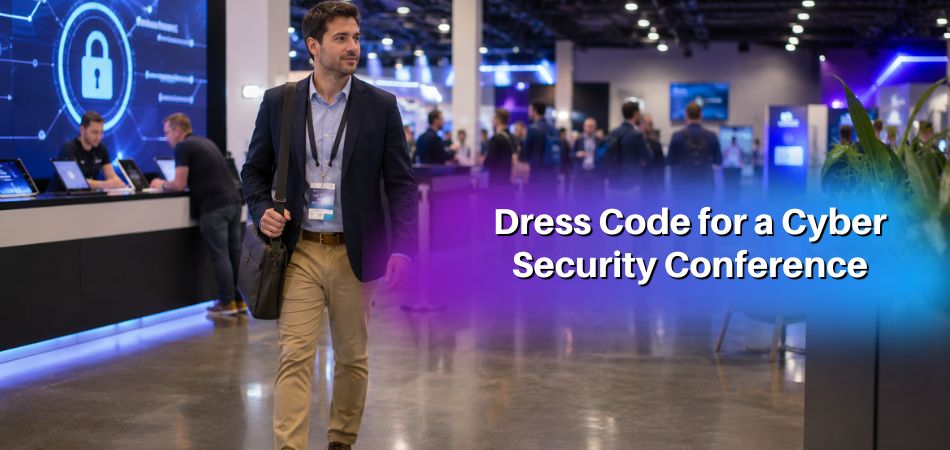

Many cybersecurity conferences publish no dress code at all, which somehow makes choosing an outfit harder. In the same week, one hall in Las Vegas can be full of hoodies and costumes while another is full of blazers and lanyards, and both count as normal.
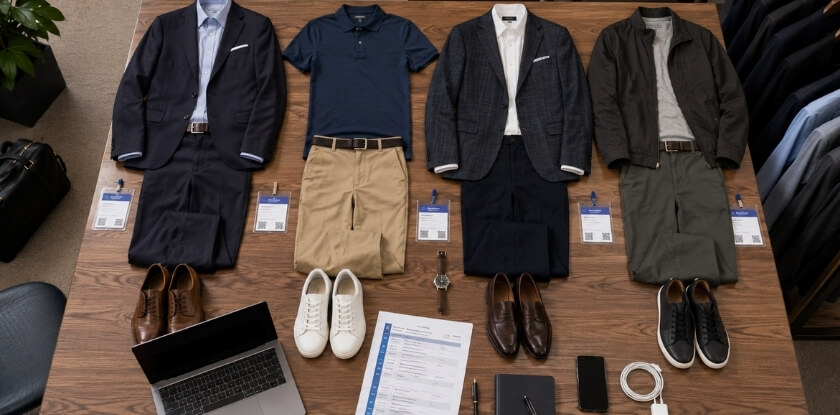
Quick answer: Wear smart casual: a clean polo or plain button-down, dark jeans or chinos, comfortable broken-in shoes, and a layer you can add or remove. That fits a wide range of cybersecurity conferences. Go more casual for hacker events like DEF CON and BSides, and more polished for RSA Conference, corporate summits, and any day you speak, staff a booth, or meet clients.
Last verified against official sources: October 2026.
What to Wear to a Cybersecurity Conference
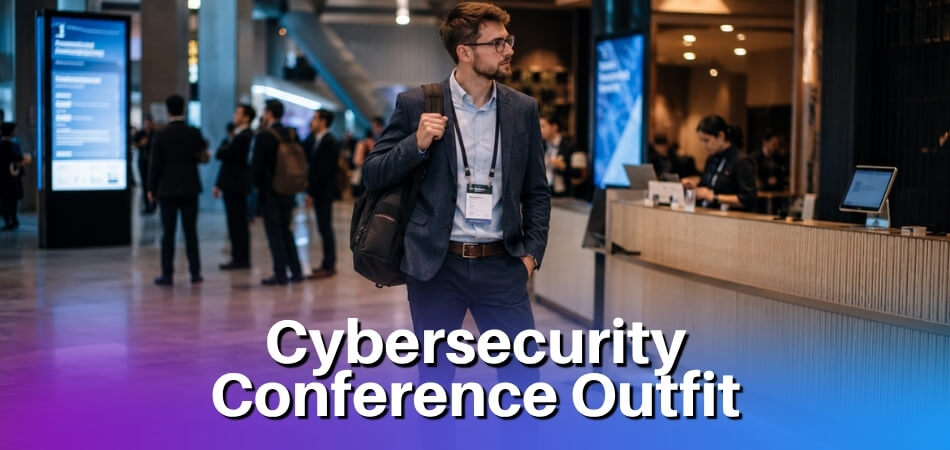
There is no single dress code, because the right outfit depends on the event, your role, and how much of the day you spend standing. DEF CON’s official FAQ sets no dress code, Black Hat’s public attendee pages do not publish one, and RSA Conference’s Code of Conduct only encourages business casual, so much of the guidance below is community practice, not policy. The table gives the quick version, and the sections after it explain each row.
| Event type | Typical outfit | Always pack |
|---|---|---|
| DEF CON and BSides | Jeans, tees, hoodies, cargo pants, themed or costume gear | Sneakers, a hoodie or light jacket |
| Black Hat | Smart casual: chinos or dark jeans, polo or button-down; blazers on the vendor floor | A blazer you can take off, clean shoes |
| RSA Conference and corporate summits | Business casual or above: blazer, collared shirt, trousers or a structured dress | A blazer or sport coat, leather shoes or flats |
| SANS and training events | Comfortable smart casual for long classroom days | A jacket or hoodie, because training rooms run cold |
| Virtual events | A neat top and a tidy background | A solid-colored shirt for camera |
A few things hold almost everywhere: comfortable shoes are non-negotiable, layering is smart because conference air conditioning is aggressive, and your employer’s logo clothing is generally fine, and expected if you staff a booth.
One Reliable Framework
If you are unsure, ask whether the event leans toward community and practitioner attendees (DEF CON, BSides) or enterprise and vendor audiences (RSA, larger Cyber Summits). Community events tolerate a much wider range of clothing. Enterprise events reward looking polished without being overdressed. Your name badge will not tell anyone what you are wearing, but how you present yourself in meetings and sessions does leave an impression.
Dress by Conference Type
Each event has its own unwritten expectations, and dressing for RSA at DEF CON will make you stand out for the wrong reasons, as will the reverse. Knowing the culture before you pack saves three days of feeling out of place.
DEF CON and BSides: Casual and Hacker-Culture Friendly
DEF CON is held every summer in Las Vegas (the 2026 edition ran 6 to 9 August at the Las Vegas Convention Center) and is about as relaxed as a professional conference gets. Jeans, t-shirts, hoodies, and sneakers are the norm. You will see everything from tactical vests and elaborate themed costumes to plain cargo shorts and a faded band tee. People are focused on talks, villages, and badge challenges, not on your outfit. The official FAQ adds one exception worth packing for: if you plan to go to the Friday or Saturday night music events, bring something dressier or deliberately silly, because people show off their outfits there.
Hacker culture has always pushed back against corporate dress norms, and wearing a suit here would genuinely be unusual. In Las Vegas heat, comfort matters more than appearance, and hoodies are everywhere. A hoodie also earns its place because the hotel and convention spaces are cold indoors.
BSides events follow the same spirit. They are community-run, often single-day or weekend conferences that put access and participation ahead of polish. They tend to be slightly more casual in atmosphere than DEF CON, though the clothing range is similarly broad. Dress casually, wear comfortable shoes, and bring a layer, because venue temperatures vary wildly. A cool-looking hoodie with a clever print, a company logo tee, or simply your most comfortable conference-walking outfit all work, and the floor plans at DEF CON are not small.
Black Hat: Smart Casual to Business Casual
Black Hat sits in the middle. It shares the Las Vegas conference circuit with DEF CON, and the two run back to back in early August (Black Hat USA 2026 was held at Mandalay Bay), but the crowd and tone differ. Vendors, enterprise security teams, security executives, and consultants selling services attend in large numbers, which pushes expectations up a notch.
Smart casual is the safe target: clean chinos or dark jeans, a polo or a collared button-down, and closed-toe shoes such as clean sneakers or boots. Business casual works too, especially on the vendor floor or at sponsored briefings. A blazer is optional but not out of place for keynote sessions and scheduled meetings. You do not need to dress as formally as for RSA, but a ripped t-shirt and flip-flops is not the right read either. If you are speaking, lean toward business casual. If you are only attending sessions, smart casual is fine.
RSA Conference and Corporate Summits: Business Casual or Above
RSA Conference (held at the Moscone Center in San Francisco, in March in 2026), Cyber Summit, and similar corporate-oriented events lean business casual, and business attire is welcome. RSA Conference’s Code of Conduct encourages business casual, lists untorn jeans, sweaters, and blazers among the options, and says business suits are also acceptable. They draw CISOs, executives, government representatives, and enterprise vendor teams, and the atmosphere is closer to a corporate trade show or a financial services conference than a hacker gathering.
Expect to see plenty of blazers, button-down shirts, and polished shoes on the floor. If you are presenting, speaking at a keynote session, or meeting potential clients, lean toward business attire without hesitation.
Logo clothing can work here, but it reads differently than at DEF CON. A well-fitted polo with a company logo is fine on the vendor floor. A branded hoodie looks out of step in a formal breakout session or a one-on-one with a prospective enterprise client.
SANS and Training Events: Comfort First
SANS courses and similar training events are classroom-heavy. You sit through long days of lectures and labs, and everyone is there to learn rather than to close a vendor deal. Comfortable smart casual is the right call: polo shirts, casual trousers or neat jeans, closed-toe shoes, and layers. Nobody expects formal attire, but a neat top reads better than gym wear when you spend several days with the same instructor and classmates.
Training rooms tend to be cold, so bring a light jacket or hoodie whatever the season. The accessories that matter are your name badge, laptop, and course materials. Your outfit only needs to keep you comfortable through a full day of focused work. SANS audiences are a mix of practitioners, government staff, and corporate security teams.
Cyber Summit and Cybercon
These events vary significantly with the host organization and location. Government-affiliated events in the United States often feel more formal than community-run ones. When you are unsure of the tone, a blazer you can remove is the easiest hedge, and professional attire is generally the safer side at regional enterprise-focused events.
What to Wear by Role: Attendee, Speaker, Booth Staff, Recruiter
Your role changes the outfit as much as the event does, so decide what you are there to do before you choose a shirt. The table shows the usual adjustment from a baseline attendee outfit.
| Role | Dress level | Key points |
|---|---|---|
| Attendee | Match the event | Comfort first; logo clothing optional |
| Speaker or panelist | One step above the audience | Blazer over smart casual; skip loud logos |
| Vendor or booth staff | Branded, tidy, easy to spot | Clean logo polo or jacket; shoes for hours of standing |
| Recruiter or job seeker | Smart casual, neutral | Plain top, no rival company logos |
Attendees
If you are sitting in sessions and walking the expo, dress for the event type above and for being on your feet. Company swag and logo clothing are optional, and plenty of people wear them while no one thinks less of anyone who does not.
Speakers and Panelists
Step up one level from what you would wear as an attendee. A blazer over smart casual separates you from the audience and signals that you are there in a professional capacity, which helps during Q&A and post-session networking. Skip logo clothing, since your name badge and your introduction do that job and a logo tee distracts from what you are saying. When you present internationally, dress slightly more formally than the average attendee: it shows respect for the audience, and that holds across cultures more consistently than any specific dress code.
Vendors and Booth Staff
If you are staffing a booth at Black Hat or RSA Conference, branded polo shirts are the usual choice, but read the exhibitor rules first, because they can set a stricter dress standard for booth staff than for attendees. Everyone knows you represent a product, and the logo tells attendees who to talk to. Standing for hours on concrete under convention center lighting is physically demanding, so shoes and breathable fabrics matter more than how put-together you look at 8 a.m.
Recruiters and Job Seekers
If your goal is conversations about work, keep the outfit neutral and tidy: a plain top, dark trousers or jeans, and a blazer if the event leans corporate. A company logo can work against you here, because people size up the logo before the person. Check what is on your shirt before walking into a networking session, since a competitor’s swag shirt picked up the day before is an easy mistake to make.
Menswear and Womenswear Ideas
The same event tiers apply to everyone, so choose by the conference first and use these items as a menu. Men can easily tip into either looking underdressed or looking like they wandered in from a finance seminar, and women face the same core challenge: an event that can swing from casual hacker village to formal keynote stage inside one building. Comfort, practicality, and the specific conference matter more than any rule about gender.

For Men
At DEF CON and BSides, a plain or graphic t-shirt, dark jeans, and clean sneakers or boots cover almost every situation, and a band tee with cargo shorts will not draw a glance. At Black Hat, dark jeans or chinos, a polo or plain button-down (untucked is fine), and clean leather shoes or tidy sneakers work well. A blazer is useful for vendor meetings or higher-level panels, and you are not expected to wear a tie, but a hoodie is a poor choice if you are presenting or meeting a sponsor.
At RSA, business casual is the target: chinos, well-fitted trousers, or untorn dark jeans, a button-down shirt, and leather shoes. A blazer or sport coat is worth bringing for keynotes and client-facing meetings. A suit is acceptable there but not required. Pack a layer regardless, because moving between outdoor San Francisco weather and over-air-conditioned ballrooms all day is uncomfortable without one.
For Women
At DEF CON and BSides, jeans, t-shirts, and hoodies are completely normal, and a clever graphic shirt raises no eyebrows. Casual does not mean unprepared, though: a well-fitted dark jean with a clean top still looks pulled-together. At Black Hat, well-fitted trousers or dark jeans with a neat blouse or polished top work well, and a blazer is worth packing for keynotes, speaking, or vendor meetings. Dresses and skirts are a solid choice in breathable fabrics, given the heat outside. Keep the fit professional, and think about whether you will be seated for long stretches or moving constantly, because that changes what is comfortable.
RSA is one of the more formal events on the cybersecurity calendar. You can expect to see suits, structured dresses, and blazers on the floor. A structured dress or a blazer-and-trousers combination both work. Heels are common but not required, and comfort and polish are not mutually exclusive here. A clean pair of flats or low-heeled boots is entirely appropriate, since the vendor floor involves serious mileage.
For Any Style: Know the Event and Your Role
For SANS, Cybercon, and Cyber Summit events, business casual or smart casual is a safe baseline whoever you are, and location matters (United States, United Kingdom, or Asia). Branded polos or jackets from your employer are fine if the quality is good. A cheap, ill-fitting logo shirt does not help anyone, so if your swag is not flattering, wear something clean in a neutral color instead.
Shoes, Bags, and Badge Gear
Comfortable shoes come first, then a bag that holds a laptop and a badge setup that does not flip over your jacket. It is easy to plan the shirt and forget the feet, which is a mistake at an event with a lot of walking, a lot of standing, and very little sitting when you would actually want it.
Shoes
Comfortable shoes are non-negotiable whatever the conference type, and the safest shoes for an engineering conference are closed-toe, which also suits demos and booth visits. At larger events like Black Hat or RSA Conference, you can walk miles across a convention center floor over two or three days. Whatever the event, avoid breaking in new shoes on site and wear what you have already tested. If you have room, a second comfortable pair lets you switch before an evening event.
- DEF CON and BSides: Sneakers are appropriate and practical. Clean, decent sneakers read as intentional, and worn-out trainers are fine too.
- RSA Conference, SANS events, or Cyber Summit: With business casual or business attire, choose clean leather shoes or dressy loafers. Heels are fine if you can stand in them for hours, but a block or low heel is more realistic than stilettos.
- Cybercon and mid-tier professional events: Clean leather sneakers, ankle boots, or casual dress shoes fit smart casual. Flip-flops and heavily worn athletic shoes do not fit the room.
Name Badges
Every conference gives you a badge on a lanyard, and it swings over whatever outerwear you are wearing. If you are layering, such as a hoodie under a jacket or a blazer over a polo, the badge gets caught or flips constantly. Clip the badge holder to a lapel or shirt pocket, or tuck the lanyard under a collar rather than letting it swing loose. Some people swap the provided lanyard for a shorter clip-on badge reel, which works well on a blazer or polo. Delicate fabrics and light colors near the chest are a poor choice if marks bother you, and avoid collars or necklines that clash with a badge sitting against them all day. It is a small thing, but it matters by the afternoon.
Bags and Backpacks
Bring something you can carry comfortably for a full day. At DEF CON and BSides a backpack is universal, because people haul laptops, hardware, swag, and water. At Black Hat or RSA Conference, a messenger bag or structured tote fits the more professional atmosphere better than a large hiking pack. A tote or backpack that fits your laptop, charger, and a notebook beats a small crossbody, since a conference day tends to fill a bag faster than expected. Something structured also holds its shape better in photos and panel settings. If you collect swag or vendor materials on the expo floor, assume you need more bag space than planned.
Tech and Accessories
Minimal jewelry and tech accessories: At security-focused events, people notice things. Flashy smartwatches or RFID-enabled accessories are occasionally a conversation topic at DEF CON in particular, and not always in a comfortable way. That is not a reason to leave your watch at home, but be aware of the audience.
A portable charger: It is not clothing, but it affects what you carry. Conference days are long, your phone will die, and outlets near seating areas disappear fast. A small power bank takes almost no bag space.
Venue, Weather, and Layering
Plan for cold rooms first and warm hallways second, because the building shapes your outfit more than the city does. Large conference centers, hotel ballrooms, and convention halls tend to run cold. Organizers set the air conditioning for a full room, sessions fill unevenly, and the thermostat does not adjust. A keynote at Black Hat in Las Vegas can feel arctic first thing in the morning even when it is very hot outside.
Las Vegas in August
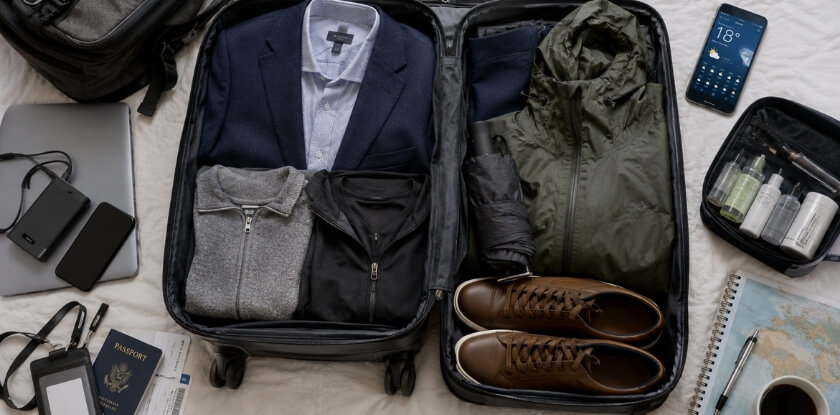
DEF CON and Black Hat both run in Las Vegas in early August. Extreme desert heat outside and aggressive air conditioning inside is rough if you are not prepared. Dress for the indoors and carry something for the walk between buildings; a light hoodie or packable jacket handles the transition. A refillable water bottle is worth carrying too, because the dry heat and the long walks between venues add up. Comfortable shoes matter even more here, because distances inside the big venues are longer than they look on a map.
United Kingdom and Asia
UK events, including various BSides chapters and regional Cybercon-style gatherings, may run in older venues with less aggressive climate control, so you might need a layer for warmth rather than just to escape cold air. Check whether the venue is a modern hotel or a historic exhibition hall. Events across Asia vary by city and season: some venues in Singapore or Tokyo are air-conditioned in a way that rivals Las Vegas ballrooms, while outdoor or semi-outdoor segments mean heat and humidity are the real concern. Research the specific venue rather than assuming one regional rule.
How the Schedule Affects What You Wear
A day split between a morning keynote, afternoon workshops, and an evening reception is essentially three dress code situations. Smart casual with a blazer you can add for the reception usually covers all three without a trip back to your room. If you are on the vendor floor all day at a conference like RSA, prioritize comfort from the start.
What to Pack for Layering
A few items handle most cybersecurity conference scenarios:
- A light structured blazer that folds without wrinkling, for SANS workshops, Cyber Summit sessions, or anything with a business casual expectation
- A zip-up hoodie or fleece, especially for DEF CON or BSides where company swag and logo clothing fits right in
- A lightweight cardigan or packable blazer for cold keynote halls, which are often colder than breakout rooms or the vendor floor
- A base layer in a breathable fabric, since you will cycle between cold sessions and crowded hallways
- Comfortable shoes you have already broken in, not ones bought for the trip
Brand Tees, Company Swag, and Logo Clothing: Acceptable or Not?
Logo clothing is acceptable when it matches the conference culture and your role, and it works against you when it does not. The short version: match the culture, match your role in the room, and when in doubt, go one step more neutral than you think you need to.
Wearing Your Employer’s Swag
At a booth, branded polos and logo tees are standard. If you attend as an independent professional, sitting in keynote sessions and networking in hallways, a company-branded shirt can signal that you are there to sell, even if you are not.
Branded polo shirts are the safest logo option. They read as smart casual, fit most conference dress codes, and do not look like a freebie from a tradeshow bag. At SANS or Cybercon events you will see plenty of them on attendees who want to represent their employer without going full vendor mode.
Graphic tees with company logos work at BSides and DEF CON. They do not work at RSA, Cyber Summit, or any event with a business casual expectation, because a screen-printed logo tee carries a different energy than the room has.
Swag You Pick Up On-Site
Free tees from the vendor floor are fine to wear back at your hotel. A fresh vendor tee the next morning inside the conference suggests you ran out of clean clothes. Some people wear DEF CON-branded shirts throughout DEF CON itself, which is appropriate because the shirt is almost a badge of belonging. That logic does not transfer to other events.
Hacker Culture and the Hoodie Question
DEF CON and BSides have a genuine tradition of hacker aesthetics: hoodies, black everything, tees with CTF team names or community inside jokes. There it is the ambient dress code, and a blazer is what looks out of place. At Black Hat, which runs in the same city a few days earlier, the crowd skews corporate. You will see hoodies and sport coats in the same hallway, and neither is wrong because Black Hat bridges both worlds.
When Logo Clothing Gets Complicated
Events in the United Kingdom, Asia, and parts of Europe may run slightly more formal than comparable US events, so a branded shirt that feels casual-professional in the United States can read as underdressed there. Speakers should skip logos, as covered in the role section.
Budget-Friendly Conference Outfit Ideas
You can look appropriate without spending much, because nobody on the vendor floor can see a price tag. A well-chosen outfit from a mid-range retailer reads the same as an expensive one across the vendor floor.
For DEF CON and BSides
These events are forgiving by design. A plain, well-fitting t-shirt in a solid color or subtle print, dark jeans without visible wear or rips, and clean sneakers is all you need. Well-made high-street basics hold their shape through a long Las Vegas week. If you want to lean into the culture, a band tee or a graphic shirt about your interests works fine.
For Black Hat
The crowd is more polished, but you do not need tailoring. A polo or simple button-down from a mid-range brand with chinos and leather-look sneakers hits the mark. A simple mid-range blazer photographs well for any keynote session or professional headshot opportunity.
The blazer trick. Buy one neutral blazer and wear it over whatever is underneath. It adjusts your look for a formal panel or vendor floor conversation without a separate outfit.
For RSA and SANS
Business casual is the baseline: an inexpensive button-down, dark trousers or clean slacks, and simple leather or leather-look shoes. You do not need a suit unless you are presenting or meeting clients. One good pair of trousers and two or three shirts to rotate through the week is a practical, affordable approach.
Skip fast fashion for shoes. Spend a reasonable amount on footwear even if you economize elsewhere. Cheap shoes with no support will make day two miserable on a multi-day in-person conference, and supportive shoes are a better investment than a nicer shirt.
General Money-Saving Tips
Thrift stores and consignment shops often carry good blazers, button-downs, and dress trousers, and end-of-season sales at mid-range retailers are worth timing. If your company provides swag, a clean logo polo can double as a legitimate conference outfit at most events outside RSA-level formality. Versatile pieces that mix and match across days also reduce what you bring, which matters if you are flying with checked baggage fees to consider.
Virtual vs In-Person Conferences
For a virtual conference, dress for what the camera sees; for an in-person one, dress for a ten-hour day on your feet. The outfit rules for a Black Hat keynote do not carry over when you join the same session from a home office.
In-Person Conferences
Showing up physically means your clothing keeps you comfortable across a long day, signals something about who you are, and affects whether people approach you. Comfort beats polish on long days: a smart casual outfit that lets you function all day is more useful than sharp business attire that leaves you exhausted by the afternoon keynote. At in-person events, company swag and your name badge also serve a social function, since people see the name on your chest and start conversations. At events like Black Hat or Cybercon where the vendor floor is busy, a clean polo or branded jacket makes you easy to identify; at BSides it reads as more relaxed and less promotional.
Virtual Conferences
If you are attending passively, watching keynote sessions or sitting in on panels, wear whatever you want, since no one cares what you wear below the frame. When you do appear, dress for the camera frame: a neat top, good lighting, and a clean background matter far more than what is happening below the desk. Business casual from the waist up is enough for most appearances, with a blazer added if you are presenting or on a formal panel.
The calculus changes the moment your camera is on. If you are speaking, paneling, presenting, or doing a recorded interview, a plain, solid-colored shirt reads better than a busy pattern or bright logo that becomes distracting in a small video thumbnail. Business casual works well on camera, and a blazer over a simple top is reliable. Strong overhead lighting or a window behind you will undermine a good outfit faster than the outfit itself, so sort your setup first.
The awkward middle case. Some virtual conferences run networking sessions where your video is on for group discussions. Treat those like an in-person professional meeting: a presentable top half and a reasonably tidy background. Hacker culture does not disappear online either. A conference hoodie in a virtual Cybercon session signals the same community membership it would in a hotel conference room, just make sure it looks good under your lighting.
Cultural and Regional Differences
Formality shifts with local professional culture, so check the event page and photos from past years rather than relying on a country stereotype. What reads as professional in Las Vegas can feel casual elsewhere, and the gap widens at enterprise-focused or government-adjacent events, while grassroots BSides chapters follow similar casual norms almost everywhere.

| Region | General tendency | Safe default |
|---|---|---|
| United States | Widest range, from DEF CON hoodies to RSA blazers | Match the event tier |
| United Kingdom | Smart casual as a baseline, often a notch more formal than the US | A neat, unfussy look |
| Asia | Often more formal at keynotes and client meetings | Business casual at minimum |
United States
American cybersecurity events span the widest range of any country. DEF CON and BSides sit firmly in hacker culture territory, and a blazer would make you stand out for the wrong reasons. Black Hat draws a more corporate crowd, with business casual common on the vendor floor and some attendees in full business attire at keynotes. RSA Conference in San Francisco tilts corporate across the board.
United Kingdom
UK events like Cybercon and various BSides chapters across London, Manchester, and Edinburgh lean toward smart casual. British professional culture often reads formality a notch higher than American equivalents: a plain merino jumper over dark trousers lands differently than a hoodie, even when the event is relaxed. Nobody expects a full suit at a community security event.
Asia
Conferences in places such as Singapore, Japan, and South Korea often carry stronger expectations around formal presentation. Business attire is more common at keynote sessions, and logo-heavy swag or casual streetwear can feel out of place when meeting clients or presenting. As a delegate at a mid-to-large regional conference, business casual at a minimum is a reasonable default, and erring toward formal rarely causes problems. This is a general pattern, not a rule, so confirm with the organizer if you can.
From our experience at MS International: Our conferences are held in person at Greater Toronto Area venues, and are held in person only. Speakers arrive at the check-in time in their confirmation email, collect their badge, meet the session coordinator or moderator, and are introduced by the moderator before presenting. Our business pages do not set a dress code, so one outfit that works for a day of sessions and a few minutes at the front of the room, such as a blazer or cardigan over a clean smart casual base, covers the whole day.
FAQ: What to Wear to a Cybersecurity Conference
Is a hoodie fine at RSA Conference, and does DEF CON expect anything in particular? Shoes, company logo shirts and repeating an outfit across several days come up too.
Is there an official dress code at DEF CON or Black Hat?
No. DEF CON’s official FAQ sets no dress code, and Black Hat’s public attendee pages do not publish one. DEF CON is famously casual, with hoodies, band tees, and jeans all normal. Black Hat skews more professional on the vendor floor and in keynotes, but it is not a suit-and-tie event.
Can I wear a hoodie to RSA Conference?
Yes, a hoodie is not banned, but you will stand out. RSA Conference’s Code of Conduct encourages business casual, so a hoodie works best as a layer for cold rooms while you walk the expo. If you are speaking, meeting clients, or staffing a booth, wear something more polished.
What counts as “smart casual” at a cybersecurity conference?
Smart casual means a clean polo or button-down, dark jeans or chinos, and decent shoes. No tie is required, and athleisure does not fit. It is the middle ground between a blazer and a hoodie.
Do I need a suit for a cybersecurity conference?
Usually not. Smart casual or business casual covers everyday sessions, and RSA Conference’s Code of Conduct calls business suits acceptable rather than expected. A suit makes sense for a formal dinner, a client meeting, or an event that asks for business attire.
Should I wear my company’s logo clothing?
Wear it if you are representing your employer at a booth or sponsored session. If you are just attending, it is optional, and no one will think less of you either way. Speakers should skip it.
What shoes should I wear?
Wear comfortable, already broken-in shoes. Conference venues are large and you will cover more ground than you expect. Clean sneakers are acceptable at many cybersecurity conferences, including Black Hat and SANS events.
Do virtual conferences have a dress code?
Practically, only from the waist up. If you are on camera for a keynote or panel, treat it like a video call, since a clean shirt or blazer reads well on screen. If you are just an audience member, nobody can see you.
Does what I wear differ by country?
It can. Conferences in the United Kingdom and across Asia can run slightly more formal than equivalent events in Las Vegas. At a Cyber Summit or Cybercon event in London or Singapore, business casual is a safer default than the relaxed norms of a US BSides event.
Is it okay to wear the same outfit multiple days?
Yes, repeating outfits is normal at multi-day conferences. Pack enough for some variation if the event runs three days or more. Nobody is tracking your outfits; they are reading your name badge.
What should I avoid wearing?
Avoid anything that makes movement uncomfortable, since you will be on your feet a lot. Offensive graphics or language are also a poor call at any conference type.
Before You Pack
Know which conference you are attending and what you are doing that day, whether that is speaking, staffing a booth, networking, or sitting through six hours of talks. Dress for that, with comfortable shoes and a layer. Dressing for the wrong room is a minor but avoidable distraction, whether that means a sharp suit at DEF CON or a faded band tee at a SANS leadership summit.