

Packing the right outfit for an engineering conference is easier than it sounds, because the day is mostly sitting, walking, talking and the odd hands-on demo. A few simple rules cover almost every situation.
Quick answer: Business casual is the best thing to wear to an engineering conference: a neat shirt, blouse or polo with chinos, trousers, a skirt or a simple dress, plus comfortable closed-toe shoes. Presenters should dress a little smarter, and a lab or site visit can add safety rules set by the host. Check the event’s own dress code first.
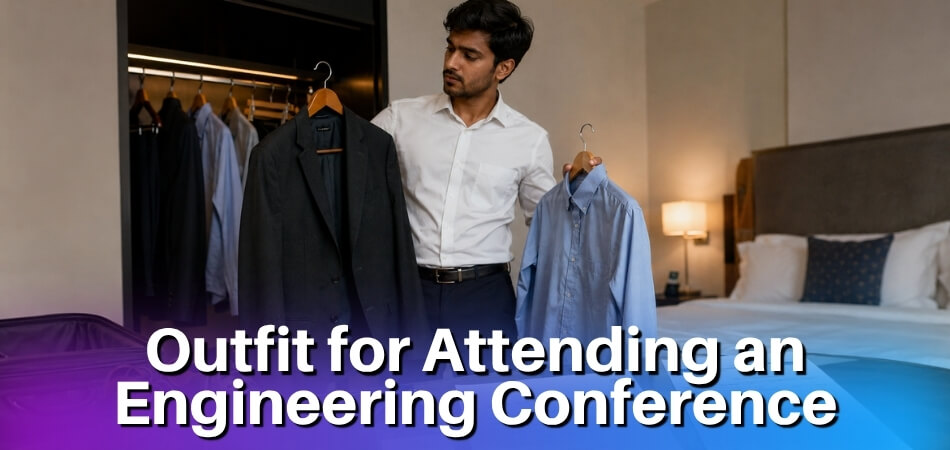
Engineering Conference Outfits by Attendee Type
Business casual is a safe default for attendees, and the role you play decides how much smarter to go. Keep the look clean and simple, and suitable for sitting, walking, presenting and networking.
| Attendee Type | Best Outfit Choice |
| General attendee | Shirt, blouse, polo, chinos, trousers, skirt, or simple dress |
| Presenter or speaker | Blazer, button-down shirt, dress pants, blouse, formal skirt, or polished dress |
| Student attendee | Neat business casual outfit with clean shoes |
| Company representative | Professional outfit that matches the brand or booth setting |
| Workshop participant | Comfortable business casual clothes that allow easy movement |
Best Outfit Formula for Attendees
A reliable formula is:
Neat top + structured bottom + comfortable shoes + light layer
For example:
- Button-down shirt with chinos
- Blouse with trousers
- Polo shirt with clean dark jeans or chinos
- Simple dress with a cardigan or blazer
- Shirt and blazer with dress pants
This balances a professional appearance with conference-day comfort.
What Men Can Wear
Men can wear a button-down shirt, polo, sweater, blazer, chinos, dress pants, or clean dark jeans if the event is relaxed. For a more formal engineering conference, choose a collared shirt with trousers and an optional blazer.
Good options include:
- Oxford shirt with chinos
- Polo with dress pants
- Button-down shirt with a blazer
- Sweater over a collared shirt
- Clean leather shoes, loafers, or neat sneakers
Skip graphic T-shirts, ripped jeans, flip-flops, and flashy clothing.
What Women Can Wear
Women can wear a blouse, button-down shirt, knit top, blazer, trousers, skirt, simple dress, or cardigan. The goal is to look polished while staying comfortable through long sessions.
Good options include:
- Blouse with well-fitted pants
- Simple dress with a cardigan
- Button-down shirt with a skirt
- Knit top with blazer and trousers
- Comfortable flats, loafers, low heels, or neat sneakers
Avoid outfits that feel too tight, too casual, or hard to sit and walk in for several hours.
What Presenters Should Wear
If you are presenting, dress slightly more polished than a regular attendee. Your outfit should look professional from the stage, on camera, and during networking.
Good presenter choices include:
- Blazer with shirt or blouse
- Dress pants or formal skirt
- Simple dress with a jacket
- Polished closed-toe shoes
- Minimal accessories
You do not need a full suit unless the conference is formal. A clean, structured outfit is the safest choice.
Why Engineering Conference Attire Should Be Professional but Practical
Engineering conference attire should look professional, but it also has to support a full day of sessions, walking, networking and note-taking. The best outfit helps you feel confident without being uncomfortable or distracting.
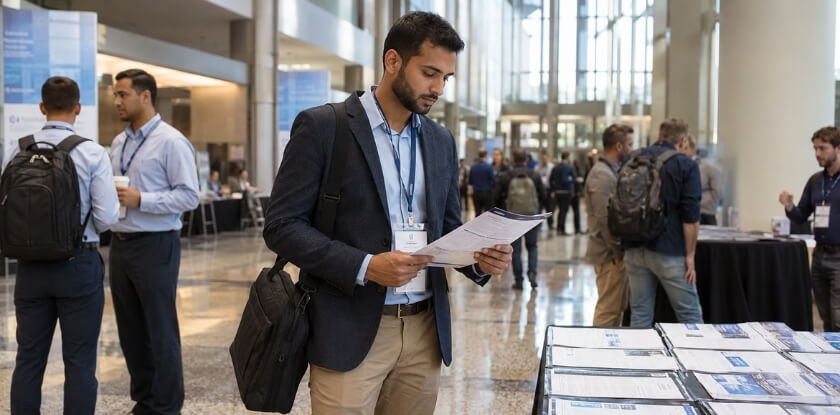
First Impressions Matter
Your clothing is part of the first impression you make on other attendees, speakers, recruiters, company representatives, and potential collaborators. A neat outfit shows that you respect the event and came prepared. You do not need expensive clothing. Clean, well-fitting, simple clothes are usually enough.
Comfort Supports Focus
Engineering conferences often involve long schedules. You may sit through keynote talks, walk between rooms, visit booths, join workshops, or stand during networking sessions.
Choose clothes that allow you to:
- Sit comfortably
- Walk without discomfort
- Move easily between sessions
- Carry a bag or laptop
- Stay comfortable in air-conditioned rooms
If an outfit feels too tight, heavy or itchy, it will distract you from the event.
Simple Clothing Looks More Professional
Solid colors, clean lines and minimal patterns look polished without drawing unnecessary attention. A simple look also suits the purpose of the event, which is usually technical knowledge, research, networking and industry updates. Colors and fabrics are covered in the clothing section below.
Engineering Conference Dress Code by Event Type
Different parts of an engineering conference call for slightly different outfits. A keynote may feel more formal, while a workshop or demo needs more practical clothing. When in doubt, choose business casual and add a blazer, cardigan or light jacket if the setting feels formal.
| Conference Activity | Best Dress Style | What to Keep in Mind |
| Opening ceremony | Polished business casual | Choose a neat, structured outfit |
| Keynote session | Professional and simple | Avoid distracting colors or loud patterns |
| Technical presentation | Smart business casual | Prioritize comfort and clean presentation |
| Workshop or demo | Practical business casual | Wear clothes that allow easy movement |
| Lab or site visit | Practical business casual with closed-toe shoes | Follow the host’s safety instructions |
| Networking session | Professional but approachable | Choose an outfit that feels confident and friendly |
| Company booth visit | Clean and polished | First impressions matter |
| Evening meetup | Smart casual | Relaxed is fine, but avoid looking careless |
| Awards banquet or gala | Check the program, as it may call for smarter dress | Some published codes ask for a suit and tie at banquets |
Opening Ceremony or Keynote Sessions
Opening ceremonies and keynotes can feel more formal than the rest of the event. A button-down shirt, blouse, blazer, trousers, skirt or simple dress works well, and this is a good time to leave the sporty or graphic items at home.
Technical Presentations and Research Sessions
For technical presentations, choose clothing that looks professional but does not distract from the content. A clean shirt, blouse, polo, chinos, trousers or neat skirt works well.
If you are presenting your own paper, poster or project, dress slightly more formally than the audience. Your outfit should support your credibility, not compete with your work, because an engineering conference presentation has to hold up under technical scrutiny.
Workshops, Demos, and Lab-Style Activities
Workshops and demos may involve standing, moving around, handling equipment, or hands-on activities. Choose comfortable clothing that still looks neat.
Good choices include:
- Chinos or trousers
- Comfortable flats, loafers, or clean sneakers
- Breathable shirts or tops
- A light layer that is easy to remove
- Minimal accessories that will not get in the way
Avoid loose accessories, uncomfortable shoes, or outfits that limit movement.
Lab Tours and Site Visits
If the program includes a lab tour or a visit to a plant or work site, the host sets the safety rules, not the conference. Closed-toe shoes, long trousers and hair that can be tied back are the easiest baseline. Common protective equipment, such as safety glasses, a hard hat or safety footwear, may be supplied or specified by the host, and who supplies it can vary by workplace, so ask before you pack.
A short message to the organiser is enough:
Hello [Organiser Name], I will join the [Visit Name] on [Date]. Could you tell me whether protective equipment is provided and if there is any footwear or clothing requirement? Thank you, [Your Name]
Networking Sessions and Company Booth Visits
You may meet recruiters, researchers, companies or future collaborators here, so look professional but approachable. A smart business casual look works best: clean clothes, tidy shoes, simple accessories.
If you are staffing a booth, match your employer’s branding where there is a uniform or branded shirt, and wear shoes you can stand in for hours.
Evening Mixers or Informal Meetups
Evening meetups are more relaxed, but they are still part of the conference. A clean shirt, dark jeans, chinos, casual blazer, simple dress or comfortable shoes is usually enough.
What a Published Engineering Society Dress Code Says
Some conferences publish their own code, and the details differ from event to event. The SAWE conference dress code (read October 2026) is a useful example from an engineering society. It says the code is primarily business casual, with more formal attire for some circumstances, and it asks attendees to avoid flashy patterns, extremely bright colors and overly revealing clothing.
Its event-by-event guidance shows how much one conference can vary:
- Training: business casual, polos acceptable, and close-toed shoes may be required
- Reception: business casual
- Technical sessions: suit and tie preferred for male presenters; for attendees suit and tie preferred, but business casual acceptable
- Awards banquet: suit and tie preferred for men
Your event may set different rules, so treat this as an example and check the conference website or attendee guide.
Best Clothing Choices for an Engineering Conference
The best clothing choices are clean, comfortable and professional enough for technical sessions, networking and presentations. Choose pieces that fit well, move easily and stay neat throughout the day.
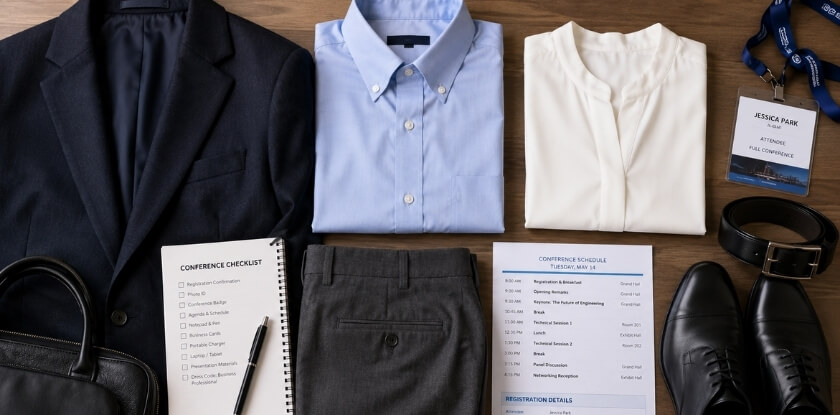
Shirts, Blouses, and Tops
A collared shirt, blouse, polo, knit top or simple sweater works well.
Good options include:
- Button-down shirts
- Plain polos
- Blouses
- Lightweight sweaters
- Simple knit tops
- T-shirts only if layered under a blazer or jacket
Avoid graphic shirts, wrinkled tops and loud slogans.
Trousers, Chinos, Skirts, and Dresses
Your bottom wear should be comfortable for sitting, walking and moving between sessions.
Good choices include:
- Dress pants
- Chinos
- Well-cut trousers
- Knee-length or midi skirts
- Simple professional dresses
- Dark jeans if the event is casual or student-friendly
Avoid ripped jeans, shorts, and very tight clothing.
Blazers, Cardigans, and Light Jackets
A layer makes a simple outfit look more professional, and conference rooms are often cool because of air conditioning. A navy, black, gray or beige blazer suits formal sessions, while a cardigan or light jacket suits relaxed settings. Pick one that is easy to carry.
Neutral Colors and Simple Patterns
Neutral colors are the safest choice because they look professional, match easily and do not distract from your work or conversation.
Best colors include:
- Navy
- Gray
- Black
- White
- Beige
- Brown
- Light blue
- Olive or soft green
Thin stripes, small checks and subtle textures are fine. Avoid loud prints, neon colors and large graphics.
Fabrics That Stay Comfortable All Day
Cotton blends, wool blends, knits and wrinkle-resistant fabrics breathe well and hold up through long hours. Avoid fabrics that wrinkle easily, feel itchy, trap heat or restrict movement.
Best Shoes for an Engineering Conference
The best shoes are clean, supportive and made for a full day of walking and standing. Choose a pair you have already worn, not brand-new shoes that may hurt after a few hours.
Comfortable Closed-Toe Shoes
Closed-toe shoes are the safest choice because they look professional and work in most venues. They are especially practical if the conference includes demos, lab-style sessions or booth visits.
Good options include:
- Loafers
- Flats
- Low heels
- Dress shoes
- Clean minimalist sneakers
- Ankle boots
- Comfortable oxfords
Shoes to Avoid During Long Conference Days
Skip shoes that look too casual, feel unstable or make it hard to walk between sessions:
- Flip-flops
- Worn-out sneakers
- Very high heels
- New shoes that are not broken in
- Loud or distracting footwear
- Running or gym sneakers
- Shoes that pinch, rub, or feel slippery
Even a good outfit feels bad if the shoes are wrong for the day.
How to Choose Shoes for Walking, Standing, and Networking
Pick shoes for the full schedule, not just the outfit. You may walk across a large venue, stand during networking, or move between presentation rooms.
Before choosing, ask:
- Can I walk comfortably in these for several hours?
- Do they match the formality of the event?
- Are they clean and in good condition?
- Will they work with the weather and venue?
- Can I stand in them during networking or booth visits?
Accessories and Grooming Tips for Engineering Conferences
Accessories and grooming should support a clean, professional appearance without distracting from your work or conversations. Keep the details simple and practical.
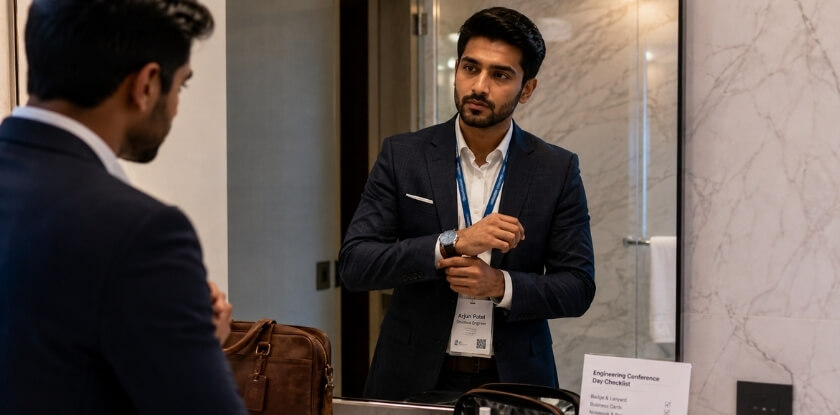
Minimal Accessories That Look Professional
Simple pieces work best in technical settings.
Good options include:
- A simple watch
- Small earrings
- Minimal rings
- A plain belt
- A light scarf
- A subtle tie
- Simple hair clips or bands
Avoid noisy jewelry, oversized pieces, and anything you will need to adjust during sessions.
Bags, Backpacks, and Laptop Cases
Your bag should carry conference materials but still look neat. A clean backpack, laptop bag, tote, messenger bag or briefcase can all work.
Choose a bag that can hold:
- Laptop or tablet
- Notebook and pen
- Charger or power bank
- Business cards
- Water bottle
- Conference badge or ID
- Small personal items
Avoid bags that are bulky, messy or hard to carry through crowded areas.
Grooming, Fragrance, and Personal Presentation
Good grooming completes the outfit. Keep fragrance light or skip it, especially in crowded rooms, because strong perfume or cologne bothers people who are sensitive to scents.
Before leaving, check:
- Clothes are clean and wrinkle-free
- Shoes are tidy
- Hair is neat
- Nails are clean
- Fragrance is light
- Accessories are simple
Name Badge Placement and Practical Details
Wear your name badge where people can easily read it during introductions. If it hangs on a lanyard, make sure it sits flat and does not cover your outfit. Keep pockets and bags organized so you can reach your phone, business cards, pen or schedule without searching mid-conversation.
How Cultural Norms and Location Affect What You Wear
Country expectations, venue type and weather all affect how you should dress for an engineering conference. The outfit should suit the setting, not just your own comfort.
Check the Country and Venue Expectations
Some conferences are relaxed and business casual, while others are more formal depending on the country, host institution or industry.
Before choosing your outfit, check:
- The conference website or attendee guide
- Photos from previous events
- Venue type, such as university, hotel, convention center, or company office
- Whether you are attending as a speaker, student, sponsor, or exhibitor
If the event is international, choose a slightly more conservative outfit unless the dress code says otherwise.
Dress More Conservatively When Unsure
When unsure, dress slightly more formally rather than too casually, and if you find no guidance at all, dress a little smarter on the first day and adjust to what others wear. A blazer, cardigan, collared shirt, blouse, trousers or simple dress fits most professional settings. This does not mean hiding your personal style, only respecting the professional environment.
Plan for Weather, Indoor Temperature, and Travel
A conference in a hot city calls for breathable fabrics, while a cold venue calls for a jacket or sweater.
Plan for:
- Outdoor walking between buildings
- Air-conditioned conference halls
- Rain or wind
- Long travel days
- Evening networking events
- Venue rules or safety requirements
A light layer, an umbrella and comfortable shoes make the outfit more practical without changing the professional look.
What Not to Wear to an Engineering Conference
Avoid clothing that looks too casual, distracting, uncomfortable or poorly maintained. You want people to focus on your ideas, not on your outfit. Shoe problems are covered in the shoes section above.
Clothes That Are Too Casual
Very casual clothing can make you look unprepared, especially during presentations, networking or booth visits.
It is better to avoid:
- Ripped jeans
- Flip-flops
- Graphic T-shirts
- Gym wear
- Shorts, unless the event clearly allows them
- Hoodies that look too casual
- Clothes with stains, holes, or heavy wrinkles
Clean dark jeans may be acceptable at relaxed conferences if you pair them with a polished top or jacket.
Distracting Colors, Logos, or Patterns
Bright colors, large logos and busy patterns pull attention away from you, which matters most when you are speaking, presenting a poster or representing a company.
Avoid:
- Neon colors
- Large brand logos
- Loud prints
- Shiny party-style fabrics
- Clothing with jokes or slogans
- Patterns that look distracting on camera
Small logos, subtle patterns and soft colors are usually fine.
Heavy Fragrance or Noisy Accessories
Noisy bracelets, large dangling accessories and bulky items become distracting during talks and conversations. Keep scents light and accessories minimal.
Wrinkled, Tight, or Poorly Fitted Clothing
Wrinkled or badly fitted clothing makes even a good outfit look careless, and clothes that are too tight or too loose are uncomfortable to sit in.
Before leaving for the conference, check that your outfit is:
- Clean
- Ironed or wrinkle-free
- Comfortable when sitting
- Easy to move in
- Properly fitted
- Appropriate for the venue
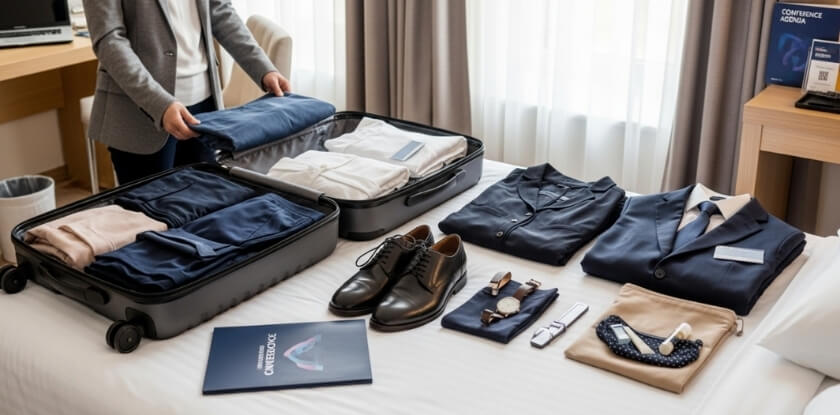
What to Pack With Your Conference Outfit
A few practical items packed with your outfit keep you organized, comfortable and ready for sessions, networking, travel and small outfit problems.
Notebook, Pen, and Business Cards
Even if you use a laptop or phone, a small notebook and pen are handy for quick notes, names and follow-up ideas.
Bring:
- Notebook or notepad
- Pen or pencil
- Business cards, if you have them
- Printed schedule or event pass, if needed
- Small folder for papers or handouts
Business cards help most during networking and booth visits.
Power Bank, Charger, and Small Tech Items
Schedules, QR codes, emails, slides and networking apps all run on your phone, so keep devices charged.
Useful tech items include:
- Phone charger
- Power bank
- Laptop or tablet charger
- USB cable
- Adapter, if traveling internationally
- Earbuds or headphones
- Flash drive, if needed for a presentation
Charge everything the night before so you are not hunting for outlets during the event.
Water Bottle, Snacks, and Personal Care Items
Long sessions are tiring, so pack small items that keep you fresh.
Consider carrying:
- Refillable water bottle
- Small snack
- Mints
- Tissues
- Hand sanitizer
- Lip balm
- Any personal medication you may need
Light Layer, Umbrella, or Weather Backup
Venues can be colder or warmer than expected, and weather can change on the walk between buildings.
Pack a few simple backups:
- Light jacket or cardigan
- Compact umbrella
- Foldable raincoat
- Extra socks, if rain is likely
Last-Minute Clothing Fixes Before the Conference
Small clothing problems can usually be fixed with a few simple tools. Before leaving, check your outfit for wrinkles, stains, loose buttons, shoe issues and weather.
Wrinkles, Stains, and Loose Buttons
For wrinkles, use a steamer or iron, or hang the clothes in a steamy bathroom for a few minutes. For small stains, blot gently with a damp cloth or stain-removal wipe. Rubbing hard can spread the stain or damage the fabric.
For a loose button, use a small sewing kit. If you do not have one, a safety pin holds it until you can repair it properly.
Broken Shoelaces or Shoe Discomfort
A broken lace can be replaced with a spare lace or ribbon, or knotted if it is still long enough. For sore feet, use blister pads, bandages, or thicker socks if they fit properly. This is one more reason not to wear brand-new shoes to a conference.
Small Tears, Odors, or Unexpected Weather
For a small tear, use a safety pin or fabric tape from the inside. Keep the fix neat and hidden. If clothes smell stale after travel, air them out or use a light fabric spray. Do not cover odors with strong fragrance. For sudden rain or cold, use your backup layer, umbrella or raincoat.
Simple Emergency Kit to Carry
A small kit stops minor outfit problems from becoming stressful. Useful items include:
- Safety pins
- Stain-removal wipe
- Bandages or blister pads
- Mini sewing kit
- Spare shoelaces
- Lint roller
- Breath mints
- Compact umbrella
Can You Reuse an Engineering Conference Outfit for Other Events?
Yes, you can reuse an engineering conference outfit for other professional events if it is clean, well-fitted and easy to restyle. A good business casual outfit also works for seminars, interviews, company visits, academic meetings and training sessions.

How to Restyle the Same Outfit
Change one or two pieces. Wear the same trousers with a different shirt, add a blazer, switch shoes, or use a simple accessory.
Easy restyling ideas include:
- Change the shirt, blouse, or top
- Add or remove a blazer
- Use a different belt, scarf, or tie
- Switch from sneakers to loafers or dress shoes
- Pair the same jacket with different trousers or a skirt
When to Dress It Up or Down
Dress it up for a presentation, interview, keynote or client meeting with a blazer, structured shoes and minimal accessories.
Dress it down slightly for workshops, student sessions, casual networking or travel days, with a softer layer, clean dark jeans or more relaxed shoes if the setting allows.
Keeping Reused Outfits Fresh and Professional
Before reusing an outfit, make sure it is:
- Clean
- Wrinkle-free
- Properly fitted
- Free from stains or odors
- Suitable for the event dress code
- Comfortable for the day’s schedule
From our experience at MS International: Our conferences are held in person at venues in the Greater Toronto Area, and our registration and FAQ pages do not publish a dress code. Registered attendees can take part as listeners. Speakers check in, collect a badge and meet the session coordinator or moderator before their slot, and the moderator introduces each speaker before the presentation. Your confirmation email and the final conference programme are the places to look for event details.
FAQ: Dressing for an Engineering Conference
From a keynote hall to a lab tour, engineering conference outfits raise doubts about jeans, sneakers, suits, what presenters and students should wear and when safety gear is needed.
Do engineering conferences have a dress code?
Some do, and the codes differ by event. One engineering society’s published conference code is primarily business casual, with a suit and tie preferred for male presenters in technical sessions and for its awards banquet. Check the conference website or attendee guide.
Is business casual enough for an engineering conference?
Yes, business casual is the usual baseline for engineering conferences. A neat shirt, blouse, polo, chinos, trousers, skirt, simple dress, blazer or cardigan works unless the event’s own code asks for more formal attire.
Can I wear jeans to an engineering conference?
Sometimes: at relaxed, student-focused or clearly business casual events, but not for presenting or formal sessions. Choose dark, clean, well-fitted jeans with a polished top, blazer or smart shoes. Avoid ripped or faded jeans.
What should I wear if I am presenting?
Dress slightly more formally than a regular attendee. A blazer, button-down shirt, blouse, dress pants, formal skirt or simple professional dress helps you look polished and prepared.
Are sneakers acceptable at an engineering conference?
Sometimes: clean, simple sneakers suit relaxed or tech-focused conferences, but running or gym sneakers do not. For formal sessions, presentations or company meetings, loafers, flats, dress shoes or low heels are safer.
Should I wear a suit to an engineering conference?
Not always. Business casual is enough at many events, but some published codes prefer a suit and tie for presenters, technical sessions or banquets. A suit also suits an official dinner or representing a company. Check the event’s code.
What colors are best for engineering conference attire?
Neutral and soft colors work best: navy, black, gray, white, beige, brown, light blue and muted green. They look professional, match easily and do not distract from your conversation.
What should students wear to an engineering conference?
Neat business casual. A collared shirt, blouse, polo, chinos, trousers, clean dark jeans, simple dress or skirt with comfortable shoes is appropriate. The goal is to look prepared, not overdressed.
How should I dress for an outdoor engineering conference event?
Choose breathable, weather-appropriate clothing that still looks neat. Wear comfortable shoes, bring a light layer, and prepare for sun, rain or wind. Avoid sportswear unless the event allows it.
Do I need safety gear for a lab or site visit at a conference?
Possibly. The host of the lab or site sets the rules and may supply or specify protective equipment. Wear closed-toe shoes and long trousers, and ask the organiser in advance.
Final Thoughts on Engineering Conference Attire
Knowing how to dress for an engineering conference comes down to balancing professionalism, comfort and practicality. A neat business casual outfit is the safe default, and presenters and company representatives can go slightly more formal.
Before the event, check the dress code, venue, weather and schedule, then pick comfortable shoes and a light layer. The best outfit is the one that lets you focus on the people and ideas around you.