
It is easy to arrive at an academic conference with a carefully prepared paper and no plan for what happens between sessions. The coffee break arrives, the room fills with strangers, and you end up refilling your cup instead of introducing yourself to the person whose work you have been reading for two years. It happens to experienced academics as well as first-year PhD students, and the good news is that networking is a skill you can practise, not a personality trait.
Quick answer: To network at an academic conference, prepare before you go, start conversations where people are already open to talking, and follow up quickly. Shortlist five to ten people from the programme, ask real questions at poster sessions and in session Q&A, use the coffee breaks on purpose, and send each person a specific email within 48 hours.
Network Strategically at Academic Conferences
Networking at an academic conference works best as a series of small, deliberate conversations rather than a campaign to meet everyone in the room. Academic culture quietly discourages open self-promotion, yet research collaborations, co-author relationships, and career opportunities often begin in informal spaces: the hallway, the poster session, the social dinner, and the follow-up email sent soon afterwards.
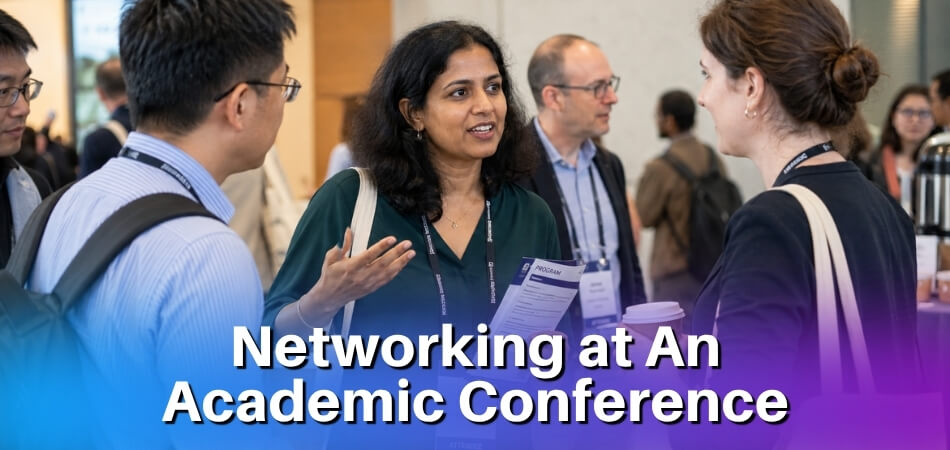
Before the event, read the conference program and shortlist the people whose work connects directly to yours. During the conference, poster sessions and coffee breaks are where many productive conversations start, not the formal talks. Ask a specific question about someone’s findings rather than leading with your own work.
Before the Conference: Research and Prepare
Walking into a conference without preparation is like showing up to a job interview without knowing anything about the company. You can still have good conversations, but you will miss most of the real opportunities. A few hours of focused prep changes the whole experience.
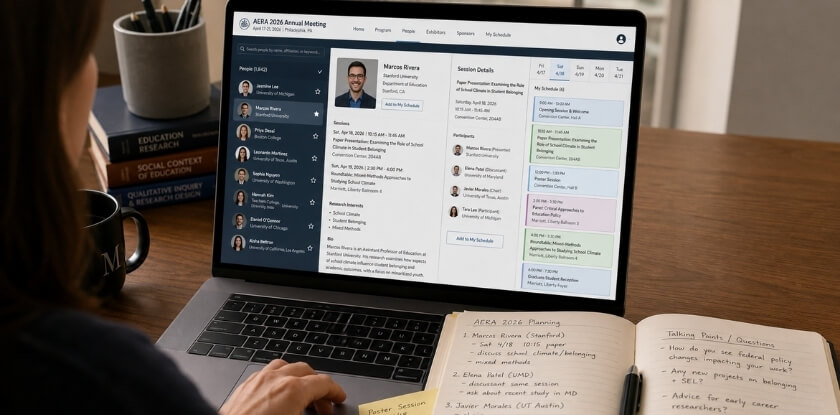
Identify Who You Want to Meet and Why
Start with a simple question: who is actually doing work that connects to yours? This is not about collecting as many contacts as possible. A handful of relevant people is worth far more than a stack of business cards from strangers you will never email.
Be specific about why you want to meet each person. “They work in behavioral economics” is too vague. A note like the one below gives you something real to say when you meet them.
[Name] published a paper on [topic] in 2026, and my current study uses a similar [sample or method]. I want to ask how they handled [specific problem].
Aim to identify five to ten people before you arrive. For each one, note what their recent work is about and what you would actually want to talk about. This makes introductions feel natural rather than forced.
Think across categories: potential co-authors, researchers whose methods you would like to understand better, senior academics whose feedback would be valuable, and peers at a similar career stage who might become long-term colleagues. Each type of connection serves a different purpose. Add one or two people you already know slightly as well: a planned coffee with a familiar name is easier than a cold introduction, and it turns an acquaintance into a closer contact.
Prepare Your Research Pitch (30-Second and 2-Minute Versions)
You will be asked “so what are you working on?” dozens of times at an academic conference. A disorganized answer makes people move on. A clear, interesting one opens the conversation. Prepare two versions.
The 30-second version is for coffee breaks, the registration desk, and any moment when you have someone’s partial attention. It covers your research question, your method in one phrase, and the core finding or contribution. Nothing more. A clear two-sentence version is often enough, and having it ready lowers the strain of an unexpected conversation.
I study [topic] using [method], mostly focused on [population]. So far I’m finding [headline result].
The 2-minute version is for when someone genuinely wants to know more: a poster session conversation, a breakout discussion, or a seat at the social dinner. It adds context: why the question matters, what your data looks like, and where the work is going next.
Practice both out loud before the conference. Saying something aloud once is worth more than reading it ten times. Use plain language, as if explaining to a friendly colleague, not an abstract read aloud. The goal is not a memorized script but being comfortable enough to adapt the pitch to whoever you are talking to. Adjust the length to the moment: in a hallway after a session you may have only 30 seconds, while at a poster you have time to go deeper. Keep jargon to a minimum unless you are confident the other person shares your exact subfield.
Use LinkedIn, ResearchGate, and the Conference Program to Map Attendees
Many academic conferences publish a program some weeks before the event. Download it and read it properly. Look at session titles, presenter names, and abstract summaries, and mark the sessions where the people you want to meet are presenting.
ResearchGate is especially useful here. Many researchers have profiles showing recent publications, listed projects, and sometimes their institutions. Ten minutes is enough to understand someone’s current focus well enough to have a real conversation.
LinkedIn is less detailed on the academic side, but it is good for confirming someone’s current position, seeing whether they have posted about the conference, and sending a brief connection request before the event. Keep any pre-conference message to a sentence or two: introduce yourself, mention one specific point of overlap with their work, and say you hope to meet at the conference.
Then map out a rough schedule: which sessions you will attend, which poster sessions are worth prioritizing, and where the gaps in the agenda are, because that is where networking happens most naturally. With that structure in your head, you spend the conference connecting with people instead of figuring out where to be.
For the few people you most want to meet, a short email before the event that proposes a coffee during a break is easier to say yes to than a hope of bumping into each other. Name the paper or session that connects you, and ask for a specific time.
Hello [Name], I am attending [Conference Name] and plan to be at your session on [topic]. Would you have a few minutes for a coffee during a break on [day]? I would like to ask about [specific point] in your [paper or study].
If the conference has an app or an official hashtag, join it early. It shows who is attending and gives you a low-pressure way to say hello before you arrive.
During the Conference: Where Networking Actually Happens
Preparation matters, but the actual connections happen on the ground: in hallways, over lukewarm coffee, and in rooms where people are interested in the same problems you are. Knowing where to position yourself makes a real difference.
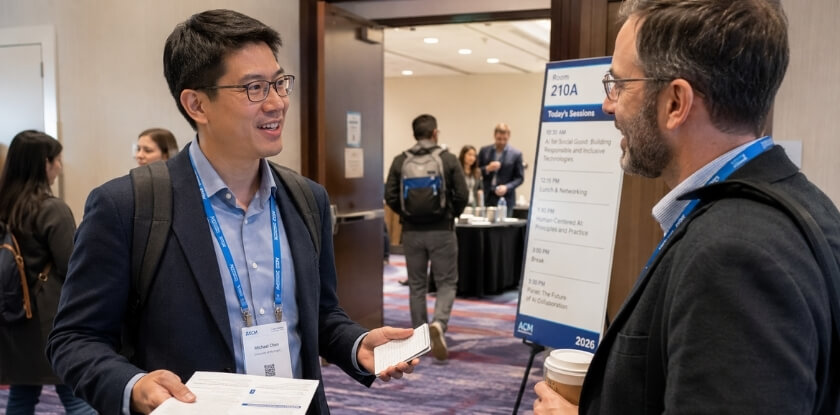
Poster Sessions as a Two-Way Networking Tool
Poster sessions get underestimated. Researchers often treat them as a one-way performance: stand by the poster, explain, answer questions, move on. That misses what makes the format valuable.
You are in a room full of people who have already sorted themselves around shared research interests. Walk the session before yours starts. When someone’s work connects to yours, say so specifically. “Your findings on X map almost directly onto a problem we’ve been running into” opens a real conversation. Vague compliments do not. People at poster sessions are open to talking, but they have no time for a ten-minute preamble, so open with your 30-second version.
Collect contact details on the spot: a ResearchGate profile, an institutional email, or a quick photo of the poster (with permission). If you wait until the end of the day, you will forget who was who.
Session Q&A and Coffee Breaks: How to Start a Real Conversation
Session Q&A is an underused networking opportunity at any academic conference. If you ask a genuine question, not a comment disguised as one, the speaker now knows your name and your area of interest. After the session, walk up and continue the thread.
I asked the question about [topic]. I’ve been working on something adjacent and would love to hear more about how you set up [method].
That is a warm introduction, not a cold one.
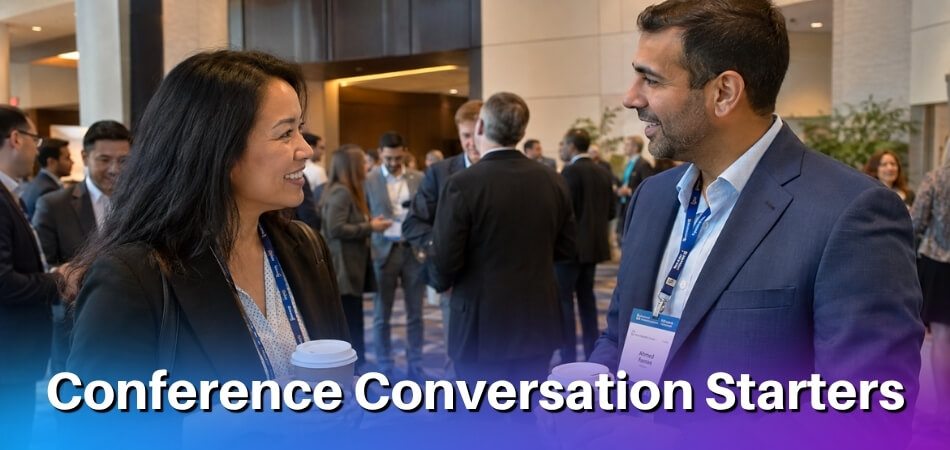
Coffee breaks are less structured, which makes them feel harder. The instinct, especially for introverts, is to check your phone or find a colleague you already know. Both are fine in moderation, but breaks are when researchers are available and not rushing anywhere.
Stand near the coffee table rather than retreating to a corner, because people circulate through that space naturally. Read the name badge for a name and institution, and say the name back once; it helps you remember who you spoke with when you write later. A simple opening about the session you just left is usually enough. “What did you make of that debate about X?” works because it invites an opinion rather than demanding that someone introduce themselves.
Leaving a Conversation Politely
Have a polite way to leave before you need one, so a good conversation can end well and a stuck one does not drag on. Thank the person, mention something specific from what you heard, and say where you are going next.
I enjoyed hearing about [topic]. I want to catch the next session, but may I email you the reference we talked about?
If the conversation is going well, suggest continuing later, for example at the next break, rather than cutting it off.
Workshops, Working Groups, and Social Dinners
Workshops and working groups are where some of the most durable research collaborations start. The format puts you in a room with a small group over a shared problem for a sustained period. You are not networking in the abstract. You are working alongside people, which tells you far more about whether a future co-author relationship would function.
Pay attention to who asks useful questions, who synthesizes well, and who approaches the problem differently than you do. Those are the people worth following up with. Breakout sessions inside larger workshops are especially good for this: the group is small enough that everyone speaks, so you get a real read on people’s thinking in a way a 300-person plenary never allows. If a working group is forming around a topic close to yours, join it even if your fit is not perfect, and mention your own work in context. “We ran into something similar in our study on X” is useful to the group and a natural way to surface what you do.
Social dinners and conference banquets often feel optional, especially when you are tired at the end of a conference day. Go anyway when you can. Dinner conversation is relaxed, so people talk about what they actually care about: where their research is heading, what frustrates them about the field, what they wish someone would study. That context is hard to get anywhere else. Decide beforehand how much alcohol, if any, you will drink, because these are still professional events.
Seat yourself strategically. Sitting with the colleagues you already know is comfortable but low-yield. Choose a table where you know no one, and do the same at lunch by sitting next to someone you do not recognize, introduce yourself to the person standing alone near the poster boards, or sit with someone from a different institution, country, or methodological tradition. The goal is not to work the room. It is to have one or two genuinely interesting conversations.
Before the evening ends, agree on a concrete next step with anyone you want to stay in touch with. “I’ll send you that paper” is fine, but “let’s connect on LinkedIn and I’ll email you the reference” is better, because it creates a specific expectation and makes the follow-through more likely. Even a plain “I’ll send you the preprint, what’s the best email?” works.
Networking as an Introvert or Across Language and Cultural Barriers
If a crowded hall drains you, or you are working in a second language, plan for lower-stakes entry points and more structure. An academic conference also draws researchers from many countries, so norms around conversation, self-promotion, and small talk vary a lot. Both situations are workable with a slightly different approach.
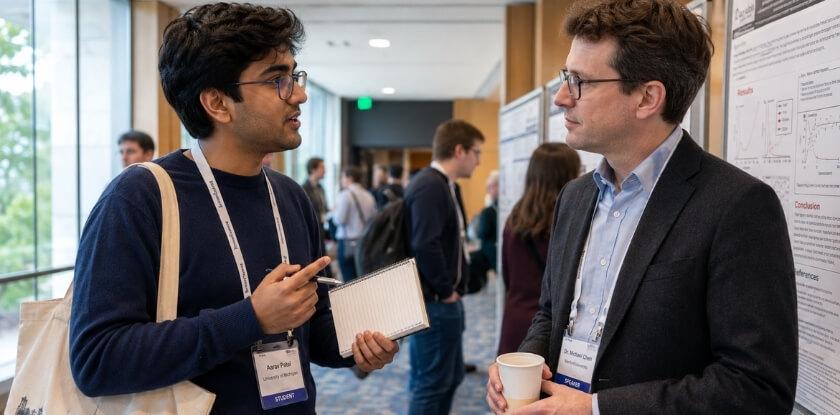
Strategies That Work for Introverts at Academic Events
Introvert networking usually needs more structure and lower-stakes entry points than the “just go talk to people” advice implies.
- Work from the conference program. Pick two or three sessions or poster sessions you are interested in, and decide in advance that you will speak to at least one presenter at each. A targeted plan removes the paralysis of scanning a room of strangers.
- Use the session Q&A as a warm-up. You speak to the whole room briefly, and it gives you an opener to approach that presenter afterward.
- Poster sessions are introvert-friendly. Presenters stand next to their work, want to talk, and the interaction has a clear subject, so you do not have to invent an opener.
- Coffee breaks are optional, not mandatory networking slots. If you need ten minutes alone to recharge, take them. A short walk or a quiet corner is not wasted time. Returning to a conversation refreshed beats showing up depleted and distracted.
- Take a small visible role. Presenting, discussing a paper or helping moderate a session means people already know who you are, and your talk gives them an easy opener.
- Use text where it helps. At a virtual or hybrid event, a chat comment, a note on a virtual poster, or a direct message all count as initiating contact. For many introverts, writing feels easier and often comes across as more considered.
- Follow up in writing. Many introverts communicate best by email, and a thoughtful message lets you show real interest in someone’s work in a way a crowded hallway exchange does not.
Language Gaps and Cross-Cultural Professional Norms
Academic English is often the shared working language at international conferences, but fluency levels vary widely, and so do cultural expectations about how researchers present themselves and start professional relationships. Norms around directness, eye contact, and how quickly first names are appropriate also differ, so read the other person’s cues and adjust. It is basic courtesy, and it stops a conversation from closing before it starts.
Speak at a moderate pace in mixed-language settings. This is not condescension, just practicality. Native English speakers often speak faster than they realize, and slowing down a little costs you nothing while making you much easier to follow.
Do not read silence as disinterest. In some academic cultures, pausing before responding can be a sign of respect and careful thought, not confusion or reluctance. Give people time to answer before you fill the gap, and remember that someone may speak excellent English and still find certain direct approaches uncomfortable.
Self-promotion norms differ. Researchers from some backgrounds find it uncomfortable to talk about their own work in the direct, first-person way that is common at North American and Western European conferences. If someone seems reluctant, ask specific questions rather than waiting for them to volunteer. “What got you interested in this topic?” opens more doors than “Tell me about your work.”
Disagreement is read differently. In some academic cultures, disagreeing publicly with someone’s work, even in session Q&A, is seen as disrespectful. In others it signals engagement. If you are unsure, watch how local researchers interact with each other first, then calibrate.
Interest in collaboration needs clarity. A remark about future research collaboration can mean anything from a firm intention to a polite way of ending the conversation. If someone expresses interest, follow up in writing (ResearchGate, LinkedIn, or direct email) within 48 hours and name a specific next step. That moves the exchange from pleasant to concrete.
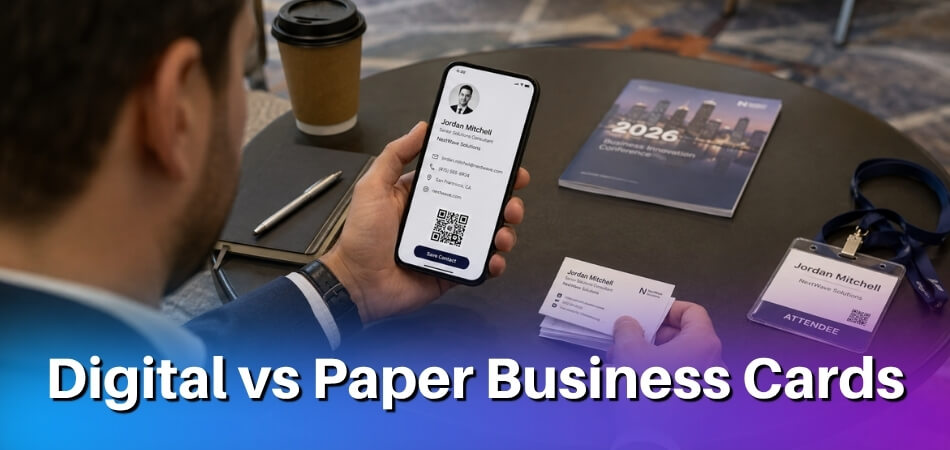
Business cards still circulate in some academic communities, and in some countries exchanging them is a formal custom. If someone hands you a card, take it with both hands, look at it, and do not stuff it straight into a pocket. At a conference with strong international participation, consider carrying a few cards yourself even if they feel outdated at home.
For non-native English speakers at a first major English-language conference: prepare a few key phrases in advance. Something like the line below is direct and honest, and it puts the other person at ease.
I’m still improving my English, but I’d love to hear more about your work.
Working with a co-author or colleague who is more comfortable in English can also help, and arriving at a dinner or breakout session with even one familiar face changes the dynamic.
Cultural awareness is less about memorizing etiquette rules and more about staying curious and patient. Assume good intent, ask rather than assume, and remember that a slightly awkward exchange can still be the start of a productive working group.
Virtual and Hybrid Conference Networking
At a virtual or hybrid conference, the chat room, breakout rooms, and virtual posters do the job of the hallway. This section applies when part or all of a conference runs online. You cannot catch someone in the hallway or linger after a talk, so the opportunities are more structured, more time-limited, and easier to miss if you are not paying attention.
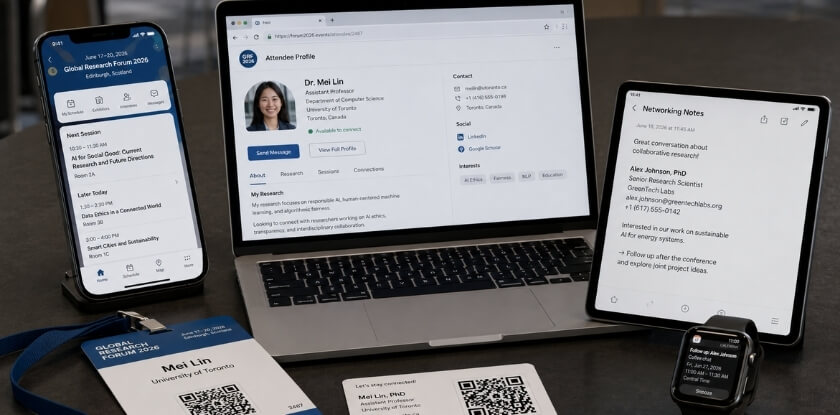
Making the Most of Chat Rooms, Breakout Sessions, and Virtual Posters
The chat room during a live session is an underused space at a virtual conference. Many attendees post a reaction or a quick question and move on. If you respond to someone else’s comment, or post a thoughtful follow-up to a question that was answered, you become a visible presence without saying a word out loud.
- Search the attendee directory first. Many platforms list attendees by name or research area before the event begins. Use it like the printed program: find people whose work aligns with yours and reach out before the conference officially starts.
- Introduce yourself early in the chat. When a session opens, a one-line intro takes ten seconds and gives people a name to connect to your questions later.
Hi from [City/Institution]. I work on [topic].
- Use breakout sessions like a small-group conversation. Many platforms drop you into a room with a handful of people. Treat it like a coffee break: ask what brought someone to this session, mention what you are working on, and ask a specific question about their research. The time limit helps, because there is no awkward exit problem.
- Engage with virtual posters before the live session. Many virtual conferences post posters or recorded walkthroughs ahead of time. A comment or question left in advance means you have already introduced yourself when the author shows up. If you are the one presenting a virtual poster, use the chat or the platform’s messaging feature to reach out to people viewing it, with a short, direct message about your work and what you are curious about in theirs.
- Use the informal lounge. Some platforms build in a networking lounge that stands in for the coffee break. It feels awkward, but so does a real coffee break with strangers. Comment on a session, respond to someone’s observation, or ask a follow-up.
- Check the text-based social spaces. Some conferences run a Slack workspace, a Discord server, or topic channels for the duration of the event. Look in once or twice a day, post in the channels that match your research area, and respond when something is relevant to you. A lot of informal research collaboration starts in exactly these spaces.
Following Up After a Virtual Event When You Never Met in Person
Following up after a virtual conference needs a bit more context, because the person has no visual memory of you. They did not see your face across a poster session or sit next to you at dinner, so you need to give them enough to reconstruct the connection.
- Reference something specific. A generic mention of the conference is forgettable. A line like the one below is identifiable.
I asked the question about [topic] during the session on Thursday afternoon. Your answer changed how I’m thinking about my own data.
- Do not wait. Send it within the same 48 hours you would after an in-person event. After a virtual conference attention disperses fast, and a week later the event feels distant.
- Pair the message with a connection request. On LinkedIn or ResearchGate, add a short personalized note rather than sending a cold request. On ResearchGate, you can follow their work and then message them once connected.
The honest advantage of virtual events is that chat logs and session recordings often stay accessible for a while. If you missed someone’s session live, you can still watch it, reference it in your message, and make an informed connection after the fact. That is not possible after an in-person conference ends.
Tracking and Organizing New Contacts Effectively
Write down who you met and what you promised before the day ends, because you can have a hundred good conversations at a conference and still lose most of them by the time you get home. Names blur, business cards pile up, and the person you definitely wanted to email slips through. A simple system, set up before you leave, prevents that.
Capture Information Right After Each Conversation
Do not wait until the end of the day. After a coffee break conversation or a poster session chat, take ninety seconds to note who you spoke with and what you discussed. The detail matters. Not just “[Name], computational linguistics” but “[Name], [Institution], working on low-resource language models, has a paper coming out in [month].”
Your phone’s notes app works fine. Some researchers write on the back of the business card they collected, and a few use a dedicated contact app. The tool matters less than the habit.
If someone did not have a card, look them up on ResearchGate or LinkedIn right there and send a quick connection request with a note about where you met. That timestamp helps both of you remember the context later.
Sort Contacts by What You Actually Want to Do Next
Once you have a list of names, sort them loosely by intended follow-up. Three rough groups are enough, and the sorting takes about five minutes.
| Group | Who belongs here | Next step |
|---|---|---|
| Email this week | A potential co-author, someone who offered to share data, a working group contact | Personal email with a specific ask or offer |
| Connect online | People worth a LinkedIn or ResearchGate link, without a personal email for now | Connection request with a short note |
| Stay loosely in touch | People you would like to hear from over time | Follow their work and reply when something fits |
This makes the follow-up phase far less overwhelming when you are back at your desk with a full inbox.
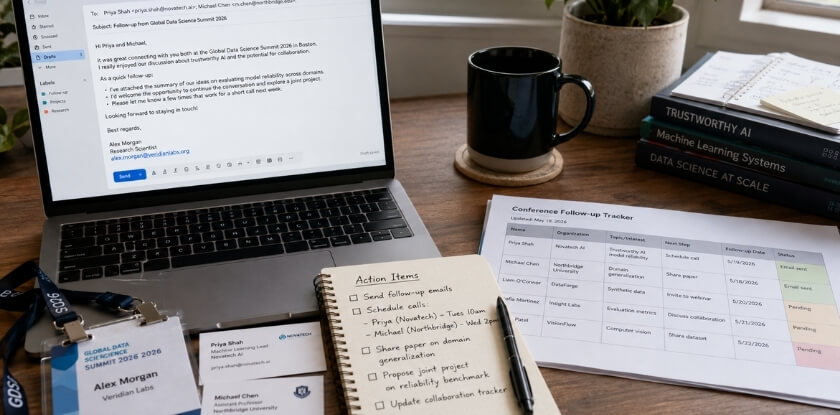
Build a Simple Contact Log
A basic spreadsheet works well. Even twenty rows in a Google Sheet beat a stack of business cards rattling around in your bag. Use these columns, and add a “done” column to tick off once you have sent the follow-up email.
| Name | Institution | Research area | How we met | What we discussed | Next step | Done |
|---|---|---|---|---|---|---|
| [Name] | [Institution] | [Topic] | Session Q&A | Their method for [X] | Send my preprint | No |
If you attended a virtual or hybrid conference, copy chat handles or email addresses into your log before the platform closes access, because some platforms can lock the event soon after it ends.
Link Contacts to Their Work
Before you send any follow-up email, spend two minutes pulling up the person’s actual research. A quick search on ResearchGate or Google Scholar gives you their recent publications. Mentioning something specific (“I looked up your paper on X after we talked”) shows the conversation meant something to you.
This also helps you decide whether a research collaboration makes real sense or whether the contact is more of a friendly professional acquaintance. Both are valuable, but they call for different follow-up.
Don’t Let the List Go Cold
Set a calendar reminder for the day after you return home, and work through your contact log in one focused sitting rather than picking at it across several weeks. If the first 48 hours have already passed, write anyway: a short email in the first week does more than a longer one sent a month later, when the shared context has faded and a message feels like starting from scratch.
Turning Contacts into Long-Term Collaborators or Co-Authors
A contact becomes a collaborator only if someone follows through, and that someone needs to be you. The conversations you had over coffee or at a poster create an opening, but much of the real work of academic networking happens after you leave the conference.
The Follow-Up Email: Timing, Tone, and What to Say
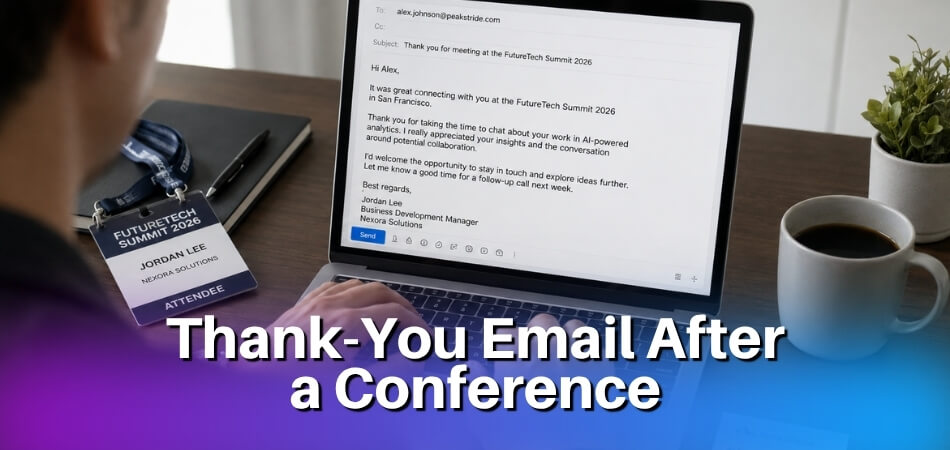
Send your follow-up within 48 hours of meeting someone. After that, the memory fades and the email starts to feel like an obligation rather than a natural continuation of a conversation.
Keep the message short. Your goal is to remind the person who you are, refer to something specific from your conversation, and give them a clear reason to write back. A line like “It was great meeting you at the conference” tells them nothing and gives them no reason to reply. Do first whatever you promised in the conversation, such as sending a paper or a reference, so the email already contains what the person was waiting for. A good opening line does the heavy lifting:
It was good to meet you at the breakout session on [topic]. Your point about [specific detail] stuck with me.
That shows you were paying attention, and it gives the person something concrete to respond to.
After that, make a specific ask or offer. If you want to share a draft, attach it or link the relevant paper or dataset. If you want to set up a call, propose two times. Vague closes like “let’s stay in touch” put the burden on the other person and usually go nowhere. Say plainly why you are writing: if you are interested in a co-author relationship, say so, and if you only want to stay in touch about a shared interest, say that. A specific reason such as “I’m writing a paper on [topic] and think your methodology is worth discussing” gives the other person something to answer.
From Email Thread to Research Collaboration
A few back-and-forth emails are encouraging, but they are not a research collaboration. At some point you need to name what you are proposing and ask whether the other person is interested.
Name the project explicitly. Do not let the thread drift. Once you have exchanged a couple of messages, say it directly:
I’ve been thinking about what you said regarding [topic], and I wonder if there’s a co-authored paper here. I’m imagining something around [specific angle]. Would you be open to a short call to see if our approaches are compatible?
Propose a low-stakes first step. A full research collaboration is a big commitment. Before you get there, suggest something smaller: co-writing a short commentary, contributing sections to a grant application, or joining a working group one of you already belongs to. Small concrete steps build trust and let both of you judge whether the working relationship makes sense.
Set up a shared document early. Once someone says yes to exploring a collaboration, create a shared doc, even a rough outline. Something tangible turns a casual email thread into an active project and shows whether your approaches align.
Be honest about your timeline and capacity. A collaboration that collapses six months in because one person was overcommitted damages a professional relationship more than politely declining in the first email. If your schedule is tight, say so and propose a realistic start date.
Collaborations that start at a conference and survive usually do so because someone was specific early on: about the question to answer, the role each person would play, and what a finished product would look like. That clarity is what moves a good conversation toward a submitted paper.
Keeping the Relationship Alive Between Conferences
A new contact grows through small useful acts more than through reminders. When you come across a paper, dataset or call for papers that fits their work, send it with one line on why. When two people you know would benefit from meeting, introduce them and say in a sentence why. Giving first makes a later request feel natural.
Before the next edition of the conference, or another event you both might attend, write to ask whether they will be there and suggest a coffee. Over the years, take on a bigger role in the same community: submit a paper, volunteer, or join a committee, so people meet you as a colleague rather than as a stranger.
Using Your Own Research as a Networking Tool
Your research is the most natural conversation starter you have at an academic conference. You do not need a rehearsed elevator pitch or a stack of business cards. You need to talk about your work clearly and connect it to what other people are doing.
Lead With the Problem and Say What Is Provisional
When you explain your research, start with the gap or question it addresses. Researchers from adjacent fields understand where your work sits when you lead with the problem, even if your methods are unfamiliar to them.
If your results are preliminary, say so. Researchers respond well to work in progress because it opens a real conversation. “I’m still working through the data” invites input, while a polished, conclusions-only summary can shut the conversation down.
If You Are Presenting a Poster
Treat the session as dedicated networking time rather than a performance. People who stop at your physical or virtual poster are already interested, so they have done the first step for you.
Ask questions back. After your brief overview, ask what they are working on or whether they have approached a similar problem differently. A poster session that becomes a two-way conversation almost always goes further than one where you only present.
Keep a few printed one-pagers, or a QR code linking to your paper, preprint, or ResearchGate profile. It gives visitors something to take away and makes follow-up easy without exchanging contact details on the spot.
Make Your Q&A Question Work for You
Connect your question to your own work. Something like “I’m looking at a similar cohort and ran into a related issue, so I’m curious how you handled X” signals your area of research while asking something genuine. The speaker has context before you have even introduced yourself.
Do not use Q&A as a platform. Keep the question short and specific. The goal is to open a door, not to demonstrate your own expertise in someone else’s session.
When You’re a Co-Author or Collaborator
If you are presenting work with co-authors who are not at the conference, say so. Other attendees may want to connect with your wider team, and flagging that a project is collaborative opens the door to future research collaboration that includes people beyond you.
It also signals how you work: that you build teams, share credit, and operate inside a research network rather than in isolation. That matters to people deciding whom they would like to work with.
Your research does the talking when you present it with curiosity rather than anxiety. The conferences where researchers make lasting connections are usually the ones where they were willing to say “I don’t have this figured out yet. What do you think?”
Common Mistakes to Avoid
Even researchers who prepare carefully can undermine their own networking. These mistakes are easy to fix once you know about them.
Pitching Too Hard, Too Fast
Leading with your agenda. If the first thing out of your mouth is a request, whether for a co-author, a collaboration, or a recommendation, people tend to back away. Networking is a conversation before it is a transaction. Ask what they are working on and show curiosity. The research pitch has its place, but it should not be your opening line.
Talking only about yourself. This happens easily, especially when nerves are involved. A good conversation has roughly equal airtime. If you have been talking for five minutes straight, stop and ask a question.
Ignoring Virtual Participants at Hybrid Events
At a hybrid conference, the people in the chat room or watching a virtual poster are easy to forget when you are physically in the room. They are still attendees, still researchers, and potentially future collaborators. Check the chat during sessions, and if you are presenting, acknowledge virtual questions directly.
Failing to Prioritize
The conference program is not a checklist. Spreading yourself across every session leaves no time for the unscheduled conversations that often matter most: the coffee break chat, the hallway discussion after a talk, the impromptu working group forming around a shared problem. Pick the sessions that matter to your work, and protect time for the in-between moments.
Letting the Connection Fade
You met someone and followed up by email, and then nothing: no ResearchGate connection, no LinkedIn request, no engagement with their published work. A single email starts a conversation. Staying connected on the platforms where researchers share their work, and glancing at their new publications now and then, is what keeps it alive over time.
From our experience at MS International: All our conferences are held in person at venues in the Greater Toronto Area, and a moderator introduces each speaker before they present. You do not need to be presenting yourself: attending as a registered listener is also a valid way to join the sessions and talk to speakers.
FAQ: Networking at Academic Conferences
For researchers meeting peers at a conference, the tricky parts are opening a chat, raising co-authorship too early, choosing LinkedIn or ResearchGate and language barriers.
Do I need to attend every session to network effectively?
No. Some of the best networking happens during coffee breaks and social dinners, not inside lecture halls. Choose sessions that match your research interests, and use the time in between to talk to people.
How do I start a conversation with someone I don’t know?
Ask about their work. A simple “I saw your name in the conference program, what’s your paper focusing on?” is enough. Researchers are often glad to talk about their own research.
Is it too forward to ask someone to be a co-author at a first meeting?
Yes, usually. Build the relationship first. A co-authorship conversation makes sense after a few exchanges, some shared context, and a clear overlap in your research directions.
What’s the best way to follow up after the conference?
Send a follow-up email within 48 hours, while the conversation is still fresh. Refer to something specific you discussed, and suggest one clear next step, such as a call or a paper you will send.
Should I connect on LinkedIn or ResearchGate, or both?
It depends on the person. LinkedIn suits a broad professional connection, and ResearchGate is better when your follow-up has a research or publication angle. When in doubt, ask which platform they actually check.
How do I network at a virtual conference if I’m shy?
Start in the session chat room, which is a low-pressure entry point. Commenting on someone’s virtual poster or asking a question in session Q&A opens a door without face-to-face interaction.
How many people should I aim to meet at a conference?
Aim for five to ten meaningful conversations rather than a pile of business cards. Quality of connection matters more than volume.
What if English isn’t my first language or the other person’s?
Slow down, keep sentences simple, and do not apologize for your English. Cross-cultural communication at conferences is normal, and most researchers are used to working across language differences.
Can a poster session lead to a real research collaboration?
Yes. Poster sessions attract people interested enough to stop and read, which makes them a natural starting point for substantive conversations about shared research directions.
What if someone I approach doesn’t seem interested in talking?
Move on politely and do not overthink it. Not every exchange will land, and conferences are large enough that the right conversations will happen if you keep showing up.
How do I politely end a conversation at a conference?
Thank the person, mention something specific from the conversation, and say where you are going next, for example “I enjoyed hearing about [topic], and I want to catch the next session.” Offering to email a reference gives a friendly exit.
Is it okay to email a researcher before the conference to arrange a meeting?
Yes. A short, specific email that proposes a coffee during a break and names the paper or session that connects you is reasonable. Keep it to a few sentences, and accept that some people will not reply before the event.
Can I network at an MS International conference if I attend as a listener?
Yes. Our FAQ describes listener registration as a way to attend sessions, interact with speakers, and meet academics from other countries without presenting a paper. All our events are held in person in the Greater Toronto Area.
Final Thoughts
Academic conferences pass quickly, and the conversations you have in a single coffee break or poster session can shape your research for years. The preparation, the follow-up email, and the willingness to introduce yourself in a room full of strangers are not glamorous, but they add up. Prepare a short list of people and a short pitch, ask real questions, and write a specific email within 48 hours. Show up with curiosity and follow through, and the collaborations tend to find their own way forward.