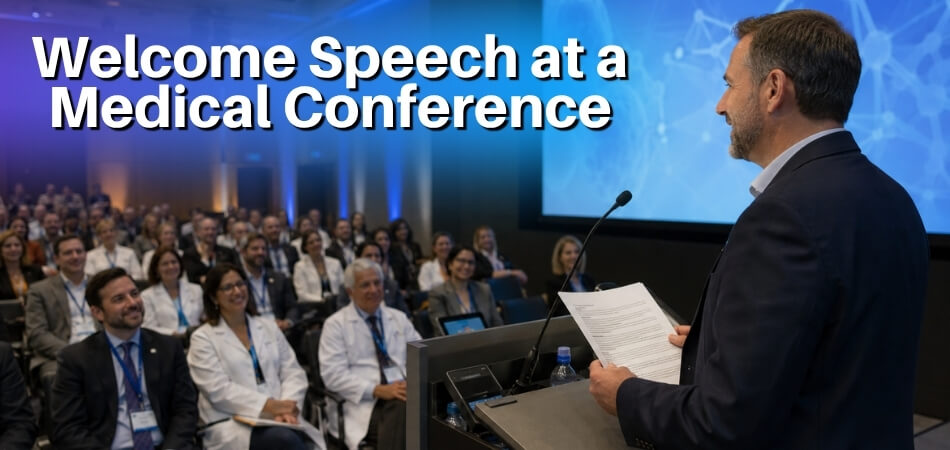

A closing speech can read well on paper and still fall flat on stage: a rushed pace, eyes stuck on the page, a last line that fades into “so, yes, thanks.” Delivery decides whether the audience remembers the ending or just hears the room empty.
Quick answer: To deliver impactful closing remarks at a conference, speak slowly from a short outline, pause before the thank-yous and before your last line, look across the room, and finish with a sentence you have rehearsed word for word. Plan two to four minutes for a typical one-day event, and up to five or six for an academic or formal close.
What Are Conference Closing Remarks?
Conference closing remarks are the final speech delivered at the end of a conference to summarize the event, thank contributors, and leave the audience with a clear closing message. They are usually given by a host, event chair, organizer, moderator, keynote speaker, or representative of the organizing committee. A moderator closing a single session gives a shorter version, with a quick summary of takeaways and thanks to the speakers.

Closing remarks are not meant to repeat the full program. They help the audience see the value of what they have experienced, and they bring together the event’s theme, the most important insights, and the people who made the conference possible.
Good closing remarks often include:
- A brief greeting or opening acknowledgment
- Thanks to speakers, participants, organizers, sponsors, and support teams
- A short reflection on the conference theme
- A summary of major takeaways
- A forward-looking message
- A polished final sentence
The tone can change based on the event. An academic conference may call for a formal and reflective close, a business event for a more action-focused ending, and a creative or community-based conference for a warmer, more conversational style. In every case, the purpose is the same: to close the event with clarity, appreciation, and direction.
Why Closing Remarks Matter at a Conference
Closing remarks matter because they shape the final impression of the conference, and delivery carries most of that impression. A thoughtful conclusion reinforces the value of attending. Even when the sessions are strong, a weak ending can make the event feel unfinished, while a calm, well-timed close gives the audience a sense of completion.
They Give the Event a Clear Ending
A conference may include keynote speeches, panels, workshops, networking sessions, and discussions. Without a proper closing, the event can feel like it simply stopped. Closing remarks create a clean transition from the program to what comes next, and they tell attendees:
- What the conference achieved
- Which ideas mattered most
- Why their participation was important
- What they should do after leaving
This is especially useful at multi-day or international conferences, where participants may have heard many speakers and covered many topics.
They Reinforce the Main Conference Theme
Every conference has a central purpose, whether research, innovation, leadership, healthcare, education, business, sustainability, technology, or professional development. Your closing brings attention back to it. If the theme is global collaboration, highlight shared knowledge and cross-border partnerships. If it is innovation, point to practical ideas and responsible progress. This helps the audience connect individual sessions to the larger meaning of the event.
They Recognize Everyone Who Contributed
Speakers, organizers, sponsors, volunteers, technical teams, registration staff, venue teams, and participants all play a role. Closing remarks give you a chance to thank them in public. That builds goodwill and shows the event was a shared effort, not just a program delivered from the stage. You do not need to name every person, but you should recognize the main groups.
They Encourage Action After the Event
The strongest closings do not only look back. A conference becomes more valuable when attendees use what they learned, continue the conversations, and follow up with contacts. A simple call to action turns the ending into a starting point: stay connected, share insights, explore partnerships, attend future events, or put key lessons into practice.
How to Deliver Impactful Closing Remarks at a Conference
To deliver impactful closing remarks, prepare a focused message that blends appreciation, reflection, summary, and future direction, then say it at a pace the room can follow. This section covers what to say and how it should sound, step by step.

1. Understand the Purpose of the Conference
Before you stand up, know why the conference was held: to share research, solve industry problems, create networking opportunities, discuss policy, promote innovation, or build partnerships. The purpose guides your tone. A healthcare conference may call for a responsible, human-centered voice, a business conference for growth and collaboration, and a student or academic conference for learning and research exchange.
Ask yourself:
- What was the main theme?
- What should attendees remember?
- What feeling should they leave with?
- What next step should they take?
2. Open With a Warm and Professional Greeting
Start with a short greeting that suits the setting, and say it slowly. The audience already knows the conference is ending, so a long introduction wastes their patience. At a formal event, address distinguished guests, speakers, chairs, or delegates first. At a smaller event, you can sound more conversational while staying professional. Then pause for a beat before your first real sentence.
“Good afternoon, everyone. As we bring this conference to a close, I would like to reflect on what we have shared, learned, and achieved together.”
3. Thank the Right People
Gratitude is essential, but a rushed list sounds like a formality. Group people by role and name their contribution:
- Speakers and presenters for sharing knowledge
- Participants for their attention, questions, and engagement
- Organizers for planning and coordination
- Sponsors and partners for support
- Volunteers and staff for helping the event run smoothly
- Technical teams for managing equipment, slides, streaming, or digital tools
Slow down for this part and look at the people you are thanking when they are in the room. That sounds more meaningful than a general “thank you to everyone.” You do not need to thank everyone by name unless the event is small.
4. Summarize the Main Takeaways
Remind attendees what they gained, without repeating the agenda. Pick two or three lessons: a challenge discussed throughout the event, a practical idea attendees can apply, a recurring point from panels and workshops, or a shared commitment that emerged. Say each one in a single clear sentence and pause after it so it lands. A short summary helps the audience connect the dots without feeling they are sitting through another presentation.
5. Connect the Highlights to the Event Theme
After the takeaways, tie them to the theme in one sentence. At a leadership conference, connect the discussions to responsibility and decision-making. At a technology conference, connect them to innovation, ethics, and problem-solving. At an education conference, connect them to learning, access, and future development. This makes the close feel intentional without sounding repetitive. If the conference opened with a question or a story, return to it here so the ending feels resolved.
6. Share a Forward-Looking Message
Encourage attendees to use the ideas, contacts, and lessons after the event ends: apply what they learned, follow up with new contacts, share insights with colleagues, continue research or collaboration, or join future conferences. Lower your pace and keep your voice warm here. It gives the audience direction without sounding forceful. A single specific step works better than a general wish, for example: “Before you leave today, send a message to one person you met this week.”
7. End With a Strong Final Line
Your last sentence should sound complete. Avoid “That’s all” or “I think we are done.” Prepare the final line in advance (some speakers write it first, so everything else leads to it), learn it by heart, and say it after a full pause. When it is finished, stop. Do not add “one more thing,” and do not follow it with logistics.
- “Let us leave with new ideas, stronger connections, and a shared commitment to keep moving forward.”
- “This conference is closing, but the conversations and possibilities it created can continue.”
- “Thank you for being part of this event, and may today’s insights guide the work we do next.”
What to Include in Conference Closing Remarks
Conference closing remarks should include appreciation, reflection, key takeaways, recognition, and a clear closing message. These elements make the speech complete without making it too long. Think of them as content to choose from, and the steps above as the way to say them.
Appreciation for Speakers, Guests, and Organizers
Speakers and presenters deserve recognition for their expertise, and guests and attendees for their participation. Organizers should be recognized for planning, communication, scheduling, registration, and problem-solving.
Key Lessons or Themes From the Event
Mention two or three broad lessons, such as collaboration, innovation, evidence-based discussion, leadership, international knowledge exchange, or the importance of turning ideas into action. This shows that your speech is connected to the actual event, not written as a generic closing.
Recognition of Sponsors, Volunteers, and Support Teams
Sponsors, volunteers, technical teams, and support staff are often essential to a successful conference, and recognizing them shows professionalism and respect. This matters most at large, hybrid, or international conferences with many moving parts.
A Call to Apply, Share, or Continue the Learning
Ask attendees to take the knowledge shared and use it in their workplaces, institutions, research, and communities. This moves the audience from reflection to action.
Future Events or Next Steps
If there are future conferences, certificates, proceedings, post-event materials, newsletters, or networking groups, mention them briefly. Include only what helps attendees know what to do next, and do not turn the closing into a long announcement.
Conference Closing Remarks Structure
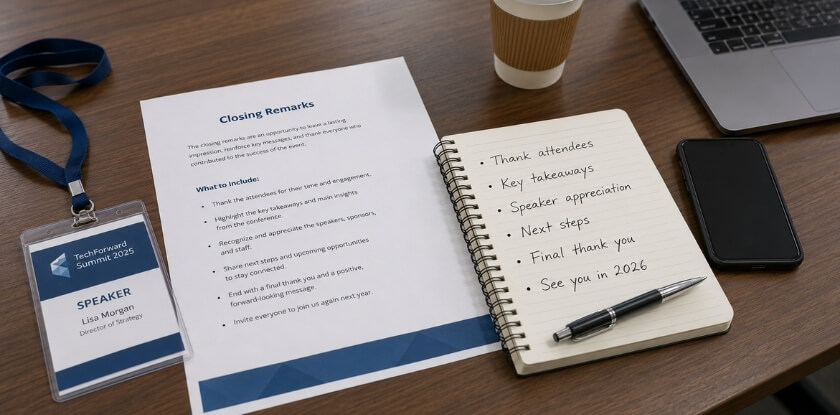
The best structure for conference closing remarks is opening acknowledgment, event reflection, key takeaway summary, recognition, call to action, and final sentence. This sequence keeps the speech easy to follow, and the table below adds what to do with your voice at each part.
| Part | Purpose | What to Say | How to Deliver It |
| Opening | Signal the close | Greet the audience and mark the end of the event | Slow, warm, then a short pause |
| Reflection | Show value | Mention what made the conference meaningful | Look up from your notes |
| Summary | Reinforce learning | Highlight two or three main takeaways | One sentence each, pause after each |
| Recognition | Express thanks | Acknowledge speakers, attendees, organizers, sponsors, and teams | Group by role, face the people you name |
| Call to action | Look ahead | Encourage continued learning or collaboration | Lower pace, confident tone |
| Final line | End strongly | Leave one memorable closing thought | Full pause before it, then stop |
This structure also helps you stay confident. Instead of memorizing every word, you can follow the flow of ideas.
How Long Should Conference Closing Remarks Be?
Conference closing remarks should usually be two to four minutes long, and up to five or six minutes for an academic or formal close. That is enough time to thank contributors, summarize key points, and end with a clear message without tiring the audience. Longer is not better: a closing speech should feel complete, not stretched.
| Conference Type | Suggested Length | Best Approach |
| Small seminar or workshop | 1 to 3 minutes | Keep it direct and personal |
| One-day professional or business conference | 2 to 4 minutes | Thank contributors, summarize key points, name next steps |
| Academic or formal conference | 4 to 6 minutes | Include research themes and formal recognition |
| Multi-day international conference | 4 to 6 minutes | Reflect on the full event and major contributors |
Speaking pace sources differ, with figures from about 100 to 160 words a minute for presentations, and 120 to 150 is a common planning range. At that pace, a 3-minute closing speech is around 360 to 450 spoken words and a 5-minute speech is around 600 to 750. If your draft is much longer, cut words rather than speed up. Nerves can push you to talk faster than in rehearsal, so time yourself aloud and aim to finish slightly under your slot. Running right to the limit tends to make speakers speed up.
How to Sound Confident While Giving Closing Remarks
To sound confident, prepare your key points, rehearse aloud, speak at a steady pace, use natural pauses, and focus on the audience. Confidence comes from preparation and control, not perfection.
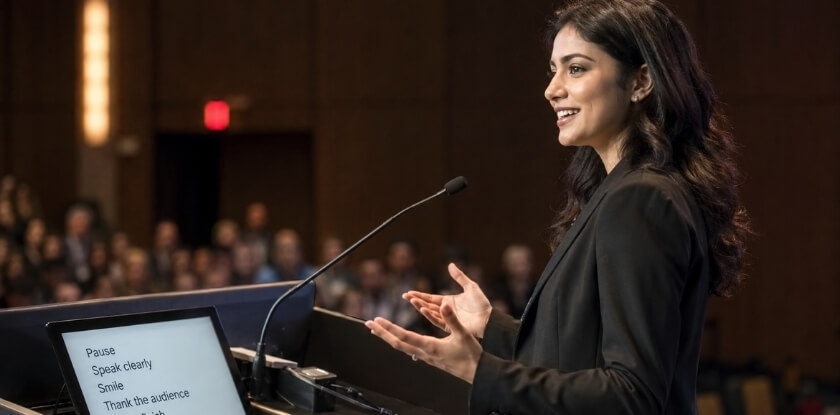
Prepare a Clear Speaking Outline
Use a short outline instead of relying only on memory or a full script: greeting, reflection, thanks, key takeaways, call to action, and final line. This keeps you organized while you still sound natural, and it stops you reading line by line.
Rehearse the Speech Aloud
Spoken language feels different from written language. Rehearsing aloud, with a timer, shows you long sentences, awkward transitions, unclear points, and timing problems. You do not need to memorize every word, but you should know the flow, and the final line should be word for word.
Use Steady Breathing and Pauses
Nervous speakers often rush. Take a calm breath before you start. Pauses help the audience absorb your message and help you stay composed. Use them after your opening, before key acknowledgments, after the main takeaway, and before the final sentence.
Maintain Eye Contact
Eye contact makes your message feel personal. Look across different parts of the room instead of staring at your notes. For virtual or hybrid events, look into the camera during important lines so online attendees feel included.
Control Your Pace and Voice
Speak slightly slower than in everyday conversation. Use a warm tone when thanking people and a more confident tone when encouraging future action. Vary your pace and volume as well: a slower, quieter line can stand out more than a louder one.
Check Names, Posture, and Tone
Confirm how to pronounce important names before you go on. Keep your posture open and your hands out of your pockets, and aim to sound sincere rather than scripted.
Stay Calm if Something Goes Wrong
Technical issues or forgotten lines can happen. Pause briefly and continue, and do not apologize repeatedly. A calm response shows professionalism and protects the flow of your closing. If you lose your place, look back instead of forward: restate the point you just made in different words to find your footing. If that does not work, return to your overall purpose with a line such as “Let me return to the main message I want to leave with you today.”
What to Do When the Programme Is Running Late
When the programme is running late, shorten the content, not your speaking speed. A close that is rushed at double pace feels worse than a short one delivered calmly, so the last minute is worth delivering at a steady pace.
- Prepare a short version in advance. Mark which lines are optional in your outline, so you can drop the agenda recap and extra detail without thinking.
- Keep three things. The thanks by role, one main takeaway, and your final line.
- Move announcements elsewhere. Certificates, proceedings, and future events can go into a post-event email or message instead of the speech.
- Acknowledge the clock once. One light sentence is enough, and then get on with it.
The same approach helps when someone before you overruns or when a session ends early and you have extra time: you still deliver the same shape, only longer or shorter.
Best Tone and Language for Closing Remarks
The best tone for conference closing remarks is clear, respectful, sincere, and suited to the event. Your language should help attendees feel appreciated while keeping the message easy to understand.
Keep the Message Clear and Sincere
Avoid complicated language that sounds impressive but says little, because simple words are also easier to say aloud. Instead of “This event has represented an extraordinary convergence of paradigm-shifting discourse,” say “This conference has brought together valuable ideas, thoughtful discussion, and meaningful professional exchange.” The second version is clearer and more natural.
Use Audience-Friendly Language
Your audience may include people from different countries, industries, academic backgrounds, or professional levels. Phrases such as “shared learning,” “valuable discussions,” “new connections,” “practical insights,” “continued collaboration,” “future opportunities,” and “meaningful progress” are professional without being difficult. Too much jargon limits connection, especially at international or interdisciplinary conferences.
Balance Professionalism With Warmth
Even formal remarks should not sound cold. Professional warmth means speaking with respect while still sounding human, for example: “Your presence, questions, and contributions helped make this conference more engaging and meaningful.”
Avoid Generic Phrases
“Thank you for coming” and “it was a great event” are acceptable, but they land better with detail. Instead of “Thank you for making this event successful,” say “Thank you for bringing your ideas, attention, and professional experience into each discussion.”
Match the Tone to the Conference Type
| Conference Type | Best Tone | Language Focus |
| Academic | Formal and reflective | Research, knowledge, scholarly exchange |
| Business | Professional and action-focused | Growth, leadership, partnerships |
| Healthcare | Respectful and purpose-driven | Care, evidence, responsibility |
| Technology | Forward-looking and practical | Innovation, solutions, ethical progress |
| Leadership | Motivational and confident | Responsibility, teamwork, change |
| Networking | Warm and conversational | Connections, collaboration, opportunities |
Should Closing Remarks Be Formal or Humorous?
Closing remarks can be formal, lightly humorous, or a careful mix of both, depending on the audience and setting. The safest choice is to stay respectful and use humor only when it feels natural.
When a Formal Tone Works Best
A formal tone usually suits academic conferences, government events, healthcare conferences, business summits, diplomatic programs, award ceremonies, and international conferences with diverse audiences. Formal does not mean stiff. It means polished, respectful, and focused: “As we conclude this conference, let us take forward the knowledge shared here with a continued commitment to learning, cooperation, and meaningful progress.”
When Light Humor Is Appropriate
Light humor may work at small professional gatherings, creative industry events, internal company conferences, or workshops with an informal atmosphere. Keep it brief, inclusive, and tied to the shared experience, such as “After a full day of ideas, questions, and coffee, I think we can all say this has been a productive conference.” Avoid sarcasm, personal jokes, political comments, and sensitive topics.
How to Use Humor Carefully
Use humor only when it supports the message, and let the audience laugh before you continue. If you are unsure whether a joke fits, leave it out. A sincere professional ending is better than humor that feels forced.
Common Mistakes to Avoid in Conference Closing Remarks
The most common delivery mistakes are speaking too long, rushing the ending, reciting the agenda, forgetting key acknowledgments, and ending without a clear final line.

Repeating the Full Agenda
The audience already knows what happened. Do not review every session; summarize the broader value instead.
Speaking for Too Long
A closing should not feel like another keynote. If the audience is tired or getting ready to leave, a long ending weakens the impression of the whole event.
Rushing Through the Ending
A rushed ending feels careless. Speak steadily and pause before your final sentence, because the last moment of the event deserves attention.
Forgetting Key Contributors
Before the event, write down the groups that need thanks. At minimum, consider speakers, panelists, participants, organizers, sponsors, volunteers, and support staff.
Using Too Much Jargon
Closing remarks should bring the audience together. Technical language you would use in a session room can leave part of an international or interdisciplinary audience behind, so choose plain professional wording.
Announcing the End More Than Once
Saying “in conclusion” or “finally” and then carrying on makes the audience stop trusting your ending. Signal the end once, and do not bring in new data or new points during the close. Also avoid apologetic last lines such as “I hope this was helpful,” which suggest doubt in your own message.
Ending Weakly
Do not close with “That is all from me.” Prepare a final sentence that sounds complete, such as “Thank you for your participation, and may the ideas shared here continue to inspire progress beyond this conference.”
Quick Checklist Before Delivering Closing Remarks
Before you go on stage, check that your remarks are clear, brief, appreciative, tied to the theme, and ready to be spoken with a steady voice. Only the items below are not covered above.
- The speech fits your slot, with time left for announcements or next steps after it, if there are any
- Your outline marks which lines you can drop if the schedule slips
- Important names are written phonetically if you are unsure of them
- The final line is ready and rehearsed word for word
From our experience at MS International: Our conferences are held in person at venues in the Greater Toronto Area. Presenters meet the session coordinator or moderator before their presentation, and the moderator introduces them. Registration is open to presenting authors and to listeners who attend without presenting, so a closing speaker at one of our events is addressing both groups.
FAQ About Delivering Closing Remarks
You are the last voice of the day, so the doubts are practical: how to open and finish, whether a quote or call to action fits, thanking people by name and a schedule running late.
What should I say at the end of a conference?
Thank the audience and contributors, state two or three main takeaways, connect the event to its purpose, and finish with a message that encourages future action. Keep it to about two to four minutes for a typical one-day event.
How do you start closing remarks?
Start with a warm greeting and a clear signal that the event is ending, then pause. Something as plain as “Good evening, everyone, and thank you for staying with us to the end” works, because it is easy to say slowly.
How do you end a conference speech memorably?
End with a short final line that reflects the conference theme or returns to how the event opened, say it after a full pause, and then stop. A memorable ending may focus on shared learning, future collaboration, or the value of the ideas discussed.
Should I use a quote in closing remarks?
Yes, if it is short, fits the conference theme, and is not overused. Follow it with a sentence of your own so the closing stays yours, and do not use a quote only to make the speech sound formal.
Can closing remarks include a call to action?
Yes. A call to action tells attendees what to do after the event: apply what they learned, continue networking, share insights, or attend future conferences. Say it in a warm, lower-paced voice so it does not sound forceful.
Should I thank everyone by name?
No, not unless the event is small. For larger conferences, thank groups such as speakers, organizers, sponsors, volunteers, and participants, and name only the few people whose role was central.
What should I do if I forget part of my closing speech?
Pause, breathe, and restate the point you just made in different words to find your place. If you are still stuck, return to your main message with a line such as “The main message I want to leave with you is…”. Do not apologize repeatedly.
What if the conference is running late when I go on?
Shorten the speech, not your pace. Keep the thanks by role, one main takeaway, and your final line, and send announcements by email afterward.
Final Thoughts on Delivering Conference Closing Remarks
Impactful conference closing remarks bring the event to a thoughtful and memorable end. They help the audience reflect on what they learned, appreciate the people who contributed, and understand how to carry the experience forward.
When you thank the right people, pace your voice, pause before the final line, and stop cleanly, a short speech can shape how people remember a conference that lasted hours or days.