
You usually get about 250 words to convince a conference committee that your research deserves a slot. This guide shows how to use them, step by step.
Quick answer: To write an abstract for a conference presentation, state the research problem, your method, your key findings and why they matter, in that order, in one self-contained paragraph that fits the word limit in the call for papers. Write it as a pitch to the review committee, not as a summary for readers of a finished paper, and make the findings specific.
Fact-checked by the MS International Editorial Team. Last verified against official sources: October 2026.
What Does a Conference Abstract Contain?
A conference abstract is a short, self-contained summary that tells the committee what you will present and why it matters to their audience. Most calls for papers set a limit somewhere between 150 and 500 words, and 250 to 300 is a common cap. Find the call for papers first and read its word count, format and required sections before you write a sentence.
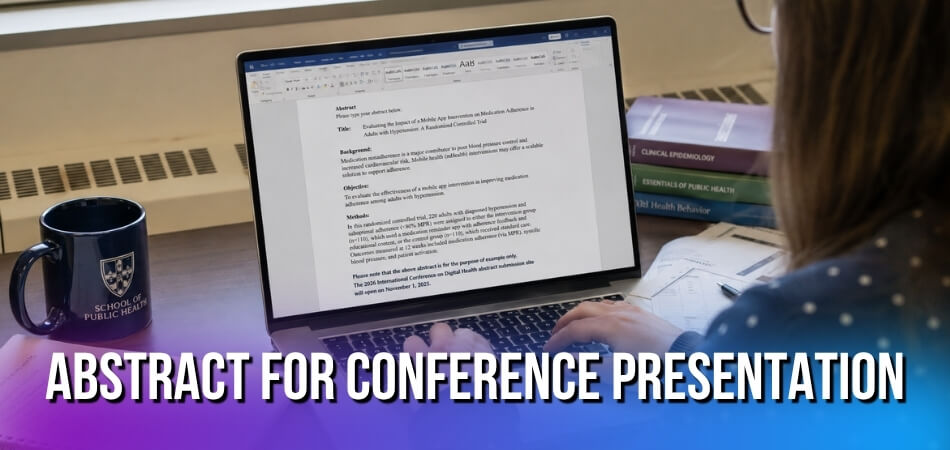
At its core, every conference abstract answers four questions:
- What problem or gap does your work address?
- How did you study or approach it (your methodology)?
- What did you find or argue (key findings or thesis)?
- Why should this audience care?
That is the skeleton. A science abstract with labeled sections and a humanities abstract written as open prose both need those four elements. Many calls add a fifth, learning objectives, which tell attendees what they will take away from the session.
| Element | What to write | Typical length |
|---|---|---|
| Research problem | The specific gap, question or debate you are entering | 1 to 2 sentences |
| Methodology | Data source, design, framework or corpus, named clearly | 1 to 3 sentences |
| Key findings | A specific result or argument, with numbers where you have them | 2 to 3 sentences |
| Significance | Why the findings matter to this conference, field or audience | 1 sentence |
| Learning objectives | What attendees will be able to do or know (only if the call asks) | 2 to 4 short statements |
Structured vs. Unstructured Formats
A structured abstract uses explicit headings such as Background, Methods, Results and Conclusion. Medical and nursing conferences usually use this format, and the committee can scan it in seconds. Fields such as literature, history, education and cultural studies usually expect plain paragraphs without labels. The absence of headers does not mean the absence of structure, because the same four elements still have to come through. If the call for papers gives an abstract template, use it exactly. Do not reformat it because you prefer another layout.
What Committees Actually Look For
Reviewers usually scan for clarity, fit with the conference theme, and whether the proposal is complete. An abstract that buries its findings in vague language, ignores the learning objectives listed in the call, or runs over the word limit suggests the presenter has not engaged seriously with the submission. Concrete, specific writing wins.
Conference Abstract vs. Research Paper Abstract
A journal abstract previews finished, published work, while a conference abstract is a pitch for a presentation slot. Confusing the two is a common reason conference abstracts are turned down.
What the Research Paper Abstract Does
A journal abstract summarizes work that is already complete. The reader can open the full paper, check the methods and verify the claims, so the abstract does not need to sell anything. It describes a paper that exists.
What the Conference Abstract Has to Do
The committee has not seen your research and will not see it before deciding. They judge whether your work deserves a slot from the abstract alone. The methodology still matters, but so does relevance to the conference theme, and the findings must be clear enough to show you actually have results. You are not describing a finished artifact. You are making a case.
The Differences That Matter
- Clarity of contribution. A journal abstract can be measured and technical. A conference abstract should lead with the problem and the contribution, not with background.
- Learning objectives or takeaways. Many conference calls ask what attendees will gain. Journal abstracts never include this. If the call does not ask, a single sentence on the practical or scholarly takeaway still helps.
- Fit with the theme. A journal submission lives on the quality of the research. A conference abstract must also match that year’s theme or track. Use the theme’s own language if it genuinely applies, so the committee does not have to make the connection for you.
- Tentativeness about results. Conference abstracts sometimes describe research in progress. If data collection is not finished, say what you expect to find and why, and be honest about where you are. Committees can work with that. They cannot work with an abstract that sounds complete but turns vague under a close look. Not every call takes unfinished work, so confirm that before you submit.
If you plan a journal paper from the same study, write the two abstracts separately. The conference version is a presentation proposal for a live audience and a scheduling committee. The journal version is a compact summary for a specialist with the paper one click away.
How to Write a Conference Abstract Step by Step
Write the abstract in this order: problem, method, findings, conclusion, significance, then polish the opening and trim to the word limit. Drafting in this order stops you from spending the whole word budget on context.
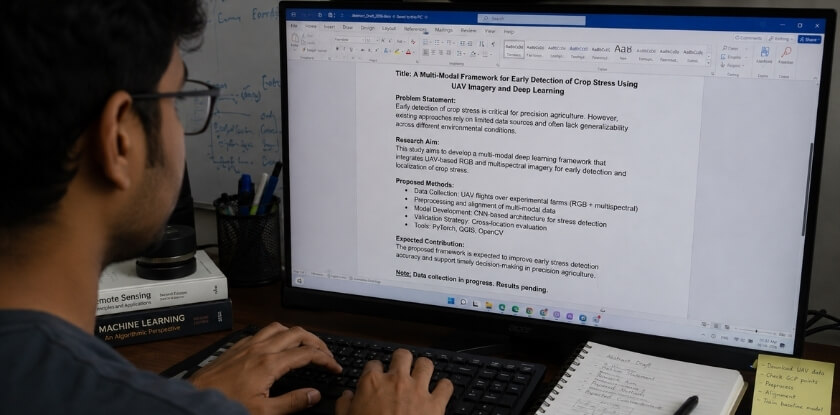
Step 1: Start with the Research Problem or Question
Tell the reader what you investigated and why it needed investigating, in one or two sentences. Be precise. Instead of “This paper examines healthcare communication,” write “This study examines how oncology nurses in rural settings communicate treatment risk to patients with low health literacy.” The second version gives the committee something to evaluate. The first gives them nothing.
Step 2: State Your Methodology
Explain how you approached the problem in one to three sentences. The goal is credibility, not completeness. In a science or medical abstract, name the study design, sample size and primary measures. In a humanities abstract, name the theoretical framework or the corpus of texts. A nursing abstract often adds the clinical setting and population. You do not need to justify the method, only name it clearly.
Step 3: Summarize Your Key Findings
This is the section most writers underwrite. They spend too many words on context and rush the results into one vague sentence. State what you found. If you found a statistically significant difference, say what it was. If a theme emerged from qualitative analysis, name it. If archival work led to a reinterpretation of an event, state that reinterpretation plainly. A line such as “This study found that X increased by 23% among Y populations” does more work than “the results have implications for practice.” “Results showed improvement” and “themes emerged related to communication” do not stand out. Specific findings do.
Step 4: Write the Conclusion and Takeaway
The conclusion should follow directly from the findings: what the results resolve, confirm or complicate. Keep it to one or two sentences. An abstract is not the place for philosophical reflection.
Step 5: Explain the Significance to the Field
Say what your work adds that was not there before, and tie it to your audience. For a medical conference that may be clinical implications. For a social science conference it may be a new framework or a challenge to existing theory. For an interdisciplinary event, connect it to the theme in the call. Do not just say your work “fills a critical gap.” Name the gap, then show how your research addresses it. Proceedings are built around shared relevance, so show the committee your work belongs in the room.
Step 6: Write a Strong Opening and Polish the Language
Once all the elements are drafted, go back to the first sentence. It is the first thing a reviewer reads. A strong opener either states the problem as a real tension or unresolved question, or leads with a striking finding.
Then check the whole abstract against the word limit. Many submission systems enforce limits strictly, and going over by even ten words can mean rejection or truncation. Cut any sentence that restates a point already made. Leave out references and figures unless the call asks for them, since the word count is better spent on your findings. Finally, check whether the call asks for a structured or unstructured abstract and map your draft onto the right format. Structured labels need a clean fit, while continuous prose needs tighter transitions between ideas.
Title and Keywords
Write the title last. A short title that names the topic and the method or main finding works better than a long one, and a common suggestion is 12 words or fewer. If the form asks for keywords, pick the terms researchers in your field would type into a search, and use the same wording as your abstract. Then leave the draft for a day and read it again with fresh eyes before you submit.
How to Write Learning Objectives for a Conference Abstract
A learning objective is one sentence stating what an attendee will be able to do after your session, built from an action verb plus a specific outcome. Education, healthcare and professional development calls often require them, and they shift the framing from “what my research covers” to “what you will walk away with.”
What a Good Learning Objective Contains
Weak verbs such as “understand,” “appreciate” or “explore” give reviewers nothing concrete to judge. Stronger verbs from Bloom’s Taxonomy signal cognitive depth: identify, compare, apply, critique, design, evaluate, distinguish.
Weak: Attendees will understand the challenges of rural telehealth delivery.
Sharper: Attendees will be able to identify three structural barriers to telehealth adoption in rural primary care settings and compare intervention strategies used in two regional case studies.
The second version shows exactly what thinking happens in your session.
How Many Objectives to Write
Most forms ask for two to four. Unless the call says otherwise, three is a reasonable default for a 45 to 60 minute slot, and two are usually enough for a 20 minute slot. Each objective should match a distinct part of the talk: the problem and context, the method or process, and the findings or takeaways. Five or six objectives for a short talk look disconnected from the real content.
Field-Specific Differences
- Medical and nursing conferences are the most prescriptive. Sessions that offer continuing education credit often must follow the accreditation body’s rules for objectives, and some providers supply a required verb list. Check the conference’s CME or CNE guidelines before you draft.
- Education and social science conferences allow more flexibility but still expect action-oriented language. Committees look for alignment between the objective, the session format (lecture, workshop, panel) and the methodology in the abstract.
- Humanities conferences rarely ask for formal objectives. If yours does, write them as intellectual takeaways: which argument or framework will the audience be able to engage with afterwards?
- Science and engineering conferences focus on practical outcomes. Phrases such as “apply the proposed algorithm to” or “evaluate the trade-offs between” reflect how technical knowledge transfers to practice.
Aligning Objectives with Your Abstract
Objectives must map to what the abstract already describes. If the abstract mentions a mixed-methods study comparing two interventions, one objective should reference that comparison. A mismatch is a red flag in review because it suggests the session has not been thought through. Pick the two or three most concrete things you are presenting and write one objective for each.
Using AI Tools to Draft Objectives
AI tools can produce draft objectives quickly if you give them your abstract text, the conference’s required format and a list of Bloom’s verbs. The output usually needs editing because it tends to be generic. Swap vague verbs, insert your real methodology, and keep only objectives your session can actually deliver.
Tailoring Your Abstract to a Specific Conference or Call for Papers
Tailor each abstract to its call for papers by matching the theme, format and word limit. Committees can tell when a proposal was written once and sent to five conferences.
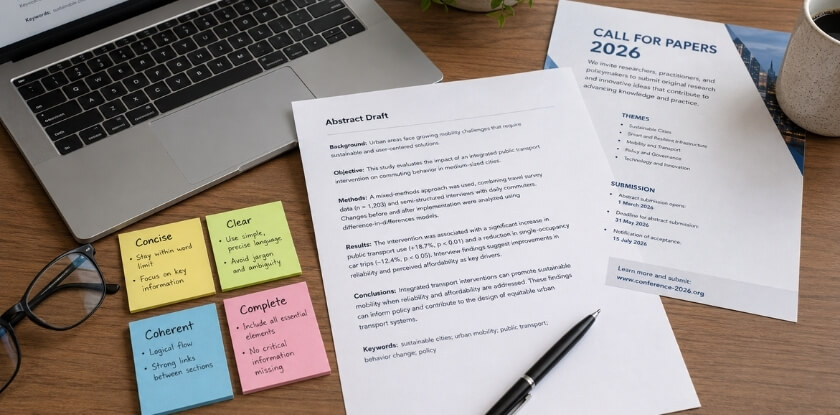
Read the Call for Papers Before You Write
The call tells you the theme, preferred topics, format and often the committee’s priorities.
- Match the theme explicitly. If the theme is “equity in healthcare systems,” do not submit a nursing abstract about patient outcomes and hope the connection is obvious. Name the theme or its core concept.
- Check the format. Some conferences require labeled sections (Background, Methods, Results, Conclusions) and others want one flowing paragraph. The wrong format is an easy reason to reject before anyone reads your content.
- Respect the word limit. About 250 words is common for medical and science conferences, and humanities conferences sometimes allow 400 to 500. Going over signals carelessness. Going far under can suggest the research is not fully developed.
Adjust Language and Emphasis for the Audience
See the field table in the next section for how emphasis changes. In short, a specialist technical audience expects precise, quantified detail, while an interdisciplinary audience needs plainer wording and a clearer link to the theme. If the conference has a practice orientation, lean into real-world implications. If it is more academic, foreground your conceptual framework.
Check What the Conference Values
Some conferences prioritize novel findings, others applicability to practitioners, and a few want work that challenges consensus. Look at the previous year’s proceedings if they are public. If most accepted abstracts included learning objectives or used labeled sections, do the same even when the call does not require it. If the call lists tracks, name the relevant track so the committee does not have to guess where you belong.
Calibrate Depth to the Event
A short regional conference with 15 minute sessions does not need the detail of a major international event whose proceedings are published. If the abstract will be printed in proceedings, be more precise about method and findings because a wider audience will read it later. At a small symposium the abstract mainly persuades the committee, so brevity and clarity matter more.
Follow the Abstract Template Exactly
Committees often build their review around the template’s fields, so a submission that departs from it creates friction even when the research is strong. Fill in every field. If the template asks for learning objectives separately, write both and do not fold one into the other. Choose keywords that reflect how researchers in your field actually search. Before you submit, read the finished abstract against the call once more and confirm that every required element is present and the word count is in range. That final pass catches more problems than any earlier review.
Sending the Same Work to More Than One Event
Check the originality rule in every call before you submit the same work twice. Many calls ask you to confirm that the work is unpublished and not under review elsewhere, and sending near-identical abstracts to events that both publish proceedings is the main risk. Whether a conference abstract counts as prior publication also depends on the discipline and on the journal you plan to use later. The International Committee of Medical Journal Editors (ICMJE) says its duplicate-publication rule does not stop a journal from considering a complete report that follows an abstract or poster shown at a scientific meeting. If you reuse earlier material, tell the organizers and the later journal about it, and adapt the framing to each audience.
From our experience at MS International: Our author submission guidelines say an abstract should clearly explain the work’s purpose, method, key findings, significance and relevance to the selected conference. We accept abstracts, full papers, case studies, review papers and professional presentations, and submitted work must not have been previously published or be under review by another conference, journal or publication. Papers should follow APA format and the official template provided by the conference team, and submissions go through double-blind peer review.
Abstract Writing by Field
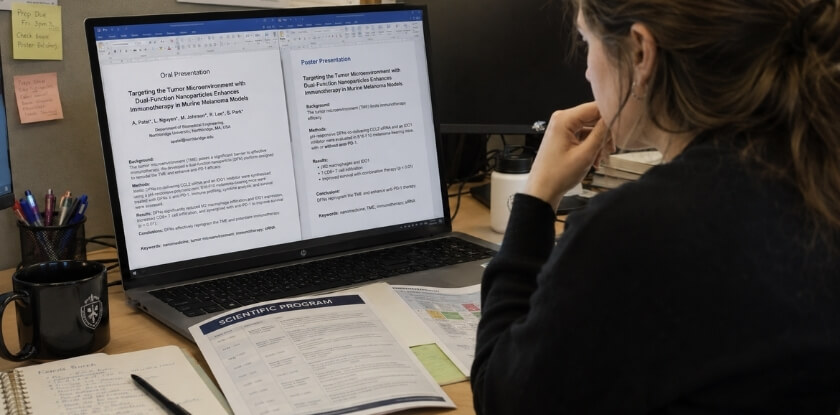
Disciplines have different expectations, so check your field’s conventions before drafting. What impresses a committee in oncology often frustrates one in literary studies.
| Field | Usual format | Open with | Stress |
|---|---|---|---|
| Sciences and medicine | Structured, labeled sections | The problem and objective | Design, sample size, quantified results |
| Nursing and health | Usually structured | The clinical problem | Setting, population, practice implication |
| Social sciences | Structured if quantitative, prose if qualitative | The question | Method, framework, finding |
| Humanities | Unstructured prose | Your argument | Position in scholarship, interpretive approach |
Sciences and Medicine (Including Nursing)
Most science and medical conferences expect a structured abstract. Common headings are Background, Objective, Methods, Results and Conclusion, though labels vary, so check the call. A busy reviewer can jump straight to Methods to judge the design or to Results to judge whether the findings merit a slot.
- Be precise about numbers. “Outcomes improved significantly” is weak. Something like “pain scores decreased by 32% at 12 weeks (p < 0.01)” reads as credible, while unquantified results read as preliminary. Use only your own real figures, of course.
- State the design clearly. Say whether it was a randomized controlled trial, a retrospective chart review, a systematic review or a pilot study. That detail shapes how reviewers weigh the findings.
- For nursing abstracts, clinical relevance matters as much as method. Reviewers want to know what practicing nurses would do differently. If your study is on medication error reduction, make the practice implication explicit.
Humanities and Social Sciences
Humanities conferences rarely use labeled sections. They expect flowing prose that makes a clear argument, places the work in a scholarly conversation and signals your interpretive approach. The argument has to emerge from the writing itself.
- Lead with your argument, not your topic. “This paper examines representations of grief in Victorian literature” tells the committee almost nothing. “I argue that Dickens’s deployment of mourning ritual in Dombey and Son actively resists the consolatory function critics have attributed to it” shows what the paper does and why it matters.
- Situate the work briefly. A line or two on which conversation you are entering and how you differ. This is not a literature review.
- Name your method or framework. Discourse analysis, archival research or postcolonial theory: naming your approach shows a coherent method sits behind the argument.
Social science sits between the two. Quantitative work such as surveys, experiments and modeling tends to follow the science format, while qualitative and theoretical work in sociology, anthropology or cultural studies leans toward the humanities model. When in doubt, read accepted abstracts from recent proceedings of the specific event.
Humanities limits commonly run from 250 to 500 words, and some conferences allow up to 750 for panel proposals. Extra room is space to develop the argument, not an invitation to be vague.
Conference Abstract Examples
The two examples below show a structured science abstract and an unstructured humanities abstract. The details are illustrative, so replace them with your own real data.
Science / Medical Abstract Example
Medical and science conferences typically require labeled sections, and word limits usually run from 250 to 350 words. The committee expects the problem, method, findings and implications in a predictable order.
Title: Reduced 30-Day Readmission Rates Following Nurse-Led Discharge Education in Post-Cardiac Surgery Patients: A Randomized Controlled Trial
Background: Hospital readmission within 30 days of cardiac surgery places significant burden on patients and health systems. Existing discharge protocols vary widely, and few have been tested in randomized controlled settings.
Objective: To evaluate whether a structured nurse-led discharge education intervention reduces 30-day readmission rates compared to standard discharge care in adult patients following coronary artery bypass grafting (CABG).
Methods: A single-center randomized controlled trial enrolled 184 adult patients (mean age 63.4 years; 71% male) between January 2022 and August 2023. Participants were randomly assigned to nurse-led education sessions (n=92) or standard discharge instructions (n=92). The primary outcome was all-cause readmission within 30 days. Secondary outcomes included patient self-reported medication adherence and post-discharge emergency department visits.
Results: The intervention group showed a 30-day readmission rate of 8.7%, compared to 19.6% in the control group (p=0.018, RR=0.44, 95% CI: 0.22 to 0.88). Medication adherence scores were significantly higher in the intervention group at two-week follow-up (mean score 87.3 vs. 74.1, p=0.003). Emergency department visits did not differ significantly between groups.
Conclusion: Nurse-led discharge education substantially reduced readmission rates following CABG. These findings support routine integration of structured patient education into cardiac surgical discharge protocols. Implementation across multi-site settings warrants further investigation.
Each labeled section delivers one clear thing. The sample size, dates and statistics are specific, and the conclusion states the finding and flags the next logical step without overreaching.
Humanities Abstract Example
Humanities abstracts in history, literature and cultural studies are usually unstructured paragraphs. The job is to frame the argument, signal the theoretical position and show why the question matters to the field.
Title: “The Household as Archive: Domestic Labor and Collective Memory in Postwar Pakistani Women’s Fiction”
This paper examines how postwar Pakistani women’s fiction from the 1950s through the 1970s positions domestic space not as a backdrop to historical events but as a primary site of cultural memory. Drawing on close readings of selected novels by Bapsi Sidhwa and Qurratulain Hyder, alongside theoretical frameworks from postcolonial memory studies and feminist historiography, the paper argues that acts of household labor (cooking, arranging, preserving) function as mnemonic practices that preserve subaltern histories excluded from official national narratives.
Existing scholarship on South Asian partition literature has centered predominantly on public spaces: the train, the border, the refugee camp. This paper redirects attention toward what remains: the kitchen, the trousseau, the inherited recipe. In doing so, it contends that domestic fiction of this period constitutes a counter-archive, a body of texts that encodes communal loss and gendered resilience in forms conventional historiography cannot access.
The paper contributes to ongoing conversations about gendered memory, postcolonial literary form, and the politics of preservation. It will be of interest to scholars working in South Asian literary studies, feminist archival theory, and twentieth-century women’s writing. Presentation materials will include close textual analysis and selected archival images from the period.
The structure is deliberately essayistic. The argument appears in the first paragraph, the scholarly intervention in the second, and the contribution and audience in the third. There are no headers because the logic carries the structure.
Using AI Tools and Templates to Draft Your Abstract
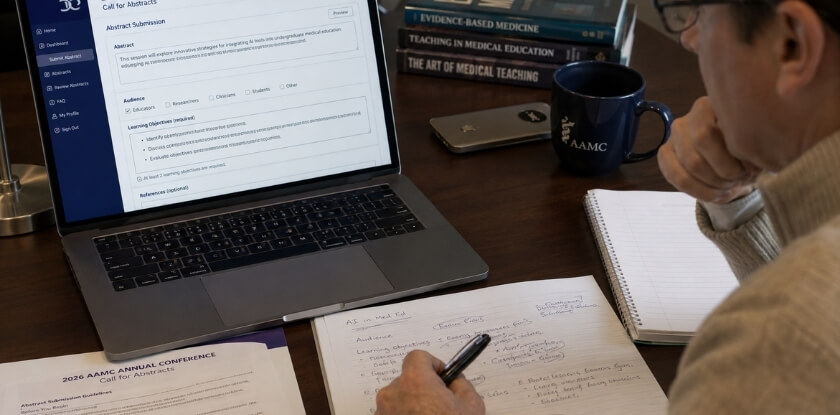
AI tools can help with a first draft, tightening and structure checks, but they cannot supply your findings, and some conferences now ask you to disclose their use. Treat them as an editing layer after your own substantive draft.
What AI Tools Do Well
- Generating a first draft. Paste a paragraph about your research into a tool such as ChatGPT or Claude and ask for a conference abstract. You usually get something correctly shaped, with problem, method, findings and implication in roughly the right order, which is faster to react to than a blank page.
- Tightening language. Paste a 350 word draft, state a 250 word limit and ask it to reduce without dropping key claims. The output will not always be clean, but it shows where to trim.
- Checking structure. Ask whether the abstract includes a clear problem, method, findings and “so what” statement. It works as a quick checklist.
Where AI Tools Get It Wrong
AI tools do not know your research and will fill gaps with plausible language that may be inaccurate, which is a real risk when precision matters. They also produce generic abstracts that could describe anyone’s project, and they flatten the unexpected finding or unusual dataset that makes your work stand out. And they do not know what a particular call asks for, for example that one nursing conference wants the patient population and clinical setting stated, so you must supply that context.
How to Use Them Effectively
- Start with your own rough notes. Write two or three sentences on the problem, the method and the result, then let the tool shape them.
- Give the tool the call for papers language. Include the word limit, required format and field-specific requirements.
- Treat the draft as a first pass. Check every claim against your research. If the tool softened a significant effect into “a possible trend,” correct it, and cut any implications you did not intend.
- Fill the template fields yourself first. If the conference gives labeled fields, write the content yourself and use AI only to smooth the language inside each one.
A Note on AI Disclosure
Some conferences, especially in medicine and science, treat AI-generated submissions as a policy concern, and a few ask for a disclosure statement. Check the submission guidelines, particularly for major events with strict review criteria. Using AI to improve your writing is different from letting it write for you, which becomes a problem if the abstract does not accurately represent your work. The Committee on Publication Ethics (COPE) states that AI tools cannot be listed as authors because they cannot take responsibility for the work, and that authors who use them should say how and which tool was used. You remain responsible for every claim in the abstract.
A Basic Abstract Template
A template forces you to fill in content before you worry about prose. A basic one for most conference submissions:
- The problem or gap: one to two sentences on the question and why it matters to this audience.
- The approach: one sentence on methodology or framework, enough to judge rigor.
- The findings: one to two sentences on key findings or the main argument. “Results were positive” tells a reviewer nothing.
- The implication: one sentence on what the audience should take away or what changes in practice or understanding.
- Learning objectives (if required): two to three concrete statements.
This fits most unstructured abstracts. For structured abstracts, replace it with the labeled headers your conference specifies. The content is the same and only the format is made explicit.
How the Abstract Connects to Your Actual Presentation
Your abstract is a public commitment about what your session will deliver. Once accepted, attendees use it to decide whether to attend and what to expect.
Your Abstract Sets Audience Expectations
If the abstract promises a case study comparing two clinical interventions and you arrive with a theoretical overview, you have broken an implicit contract, and attendees who chose your session will feel misled.
- Keep the scope honest. If you say you will share findings from a randomized trial, put those findings in the talk, not in a footnote or “future work.”
- Mirror the structure in your talk. Attendees map the abstract to what is on screen, so move through the same beats.
- Do not upgrade the claim to get accepted. Some presenters inflate the abstract and then walk back the claims in the room. Audiences notice immediately and committees notice over time.
When the Committee Reads It Again
After acceptance the abstract is often reread for scheduling, track assignment and promotional material. A “hands-on workshop” will not be placed in a 200 seat lecture hall, and a clinical session will not land in the education track. If something changes before the event, such as a co-presenter dropping out or a shifted dataset, tell the organizers. Many conferences allow minor revisions to the published abstract before proceedings are finalized, but check the rules for yours.
Using the Abstract as a Presentation Outline
A structured abstract maps straight onto slides. The problem becomes the opening slide, the methodology becomes two or three slides on design and sample, the findings drive the middle, and the implications close the talk. For an unstructured abstract, the argument’s arc is your structure. If building the talk forces you to add major content the abstract never mentioned, either the abstract was too thin or the talk is drifting from what you promised.
After the Conference
Some proceedings publish abstracts verbatim as permanent records, so future readers may meet your abstract without ever seeing the presentation. Your abstract can outlive the 20 minutes you spend at the podium, so write it so it stands on its own.
Common Mistakes to Avoid
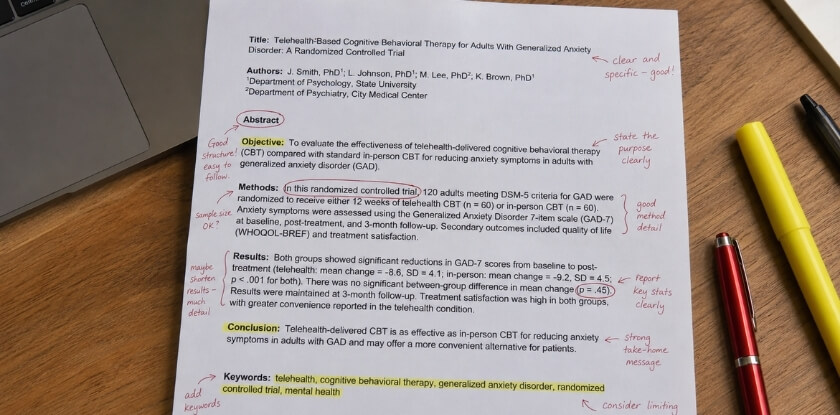
An abstract can be turned down even when the research is sound, because it fails to communicate it. These are the patterns that matter beyond the steps above.
Vague Opening Context
Do not open with context that never lands. Sentences such as “Mental health is a growing concern worldwide” are stage-setting reviewers have seen hundreds of times. Name the gap, tension or question directly in the first sentence.
Burying the Findings
Put the results where reviewers can find them. Many submissions describe the study at length and run out of words before stating what was discovered. If the findings are not in the abstract, there is nothing to evaluate.
Ignoring the Word Limit
Going over is not minor. Many submission systems hard-cut text at the limit, so a reviewer may never see your conclusions. Going far under can signal an underdeveloped proposal. Count precisely and use the space you are given.
Writing for the Wrong Audience
A journal-style abstract will not serve you at a conference. If it reads like the introduction to a methods paper instead of a preview of a presentation, it is often passed over for submissions that speak to audience takeaways. This matters most when the call asks for learning objectives.
Overpromising the Scope
Claiming to examine “all aspects of” a broad topic raises red flags. A 20 minute presentation can do one thing well, and narrow, confident claims beat sweeping ones.
Jargon That Excludes Reviewers
Reviewers are not always specialists in your sub-field. This is common at interdisciplinary events where one committee reviews several tracks. If the abstract only makes sense to five people, the reviewer may be person number six, so gloss technical terms briefly.
Writing a Report Instead of a Pitch
An abstract asks for a slot; it does not publish findings. Frame the work as relevant, timely and right for this conference’s audience, and name the theme if it fits.
Skipping the Methodology
Reviewers in science, medicine and social science expect to see how you did the work. “Data was analyzed” leaves a gap that undermines the findings. One sentence naming the method and sample is usually enough.
Submitting Without Proofreading
A typo does disproportionate damage. The abstract is the only writing the committee sees, so errors suggest errors in the presentation. Run a spell-check, read it aloud and ask someone else to read it, especially if you used AI for a first draft.
FAQ
Without a template from the organizers, a presentation abstract leaves you deciding how long to make it, how much weight the key findings get, whether research must be finished and why a well-written one can still be rejected.
How long should a conference abstract be?
Follow the word limit in the call for papers, which usually falls between 150 and 500 words; 250 to 300 is a common cap. If no limit is given, about 250 words fits most conferences. Going over can get an abstract cut off or rejected.
What’s the difference between a structured and an unstructured abstract?
A structured abstract uses labeled sections such as Background, Methods, Results and Conclusion, and is standard in medical, nursing and clinical conferences. An unstructured abstract presents the same information as continuous prose, which is more common in the humanities. The conference usually decides, not you.
Can I submit the same abstract to multiple conferences?
Not safely. Many conferences, including ours, require work that is not published or under review elsewhere. Read each call’s originality rule, tailor the text to each event, disclose earlier presentations, and never send identical text to events that both publish proceedings.
Do I need to have finished my research before submitting?
Not always. Some calls accept work in progress and others accept only completed work, so check the call for wording such as “preliminary results”. Describe unfinished findings as preliminary and say what you expect to show. Do not present expected results as final.
How important are the key findings in an abstract?
They are the most important part. Reviewers want to know what you discovered, not only what you studied. A vague or missing results statement leaves them nothing to judge, even when the research problem is strong.
Should I use AI writing tools to draft my abstract?
You can, as a rough first draft or editing aid, if the conference allows it. The claims about your method and findings must come from you, and some conferences ask for disclosure of AI use. Read the submission guidelines first, because an AI tool cannot take responsibility for your work, and you can.
What if the conference doesn’t provide an abstract template?
Look at abstracts from the same event’s previous proceedings. They show the expected format, length and tone even without a formal template. If there are none, use a structured layout for scientific work and plain prose for humanities work.
How long does the abstract review process take?
It varies by conference, so read the notification date in the call. At MS International, most review decisions are returned within about 10 working days, although complex papers or revision rounds can take longer. If the stated date passes, a polite follow-up email is appropriate.
Can an abstract be rejected even if it is well written?
Yes. Fit matters as much as quality. If your topic does not match the theme or the available tracks, the committee may pass on it however strong the writing is. Read the call before you write, not after.
Final Thoughts
A strong conference abstract names the problem, describes the method honestly and states findings specific enough to justify a slot. Draft it with the call for papers beside you, respect the word limit, and add learning objectives if they are required.
Before you submit, check that the abstract matches the theme and the format, then send it on time. If your abstract is accepted, remember that it is also the promise your session has to keep. Use it as your outline when you prepare the conference presentation step by step.