Nothing pulls your attention away from a conference quite like finding out you are the only one in a suit, or the only one in a T-shirt. Working out what to wear to a business conference as a man takes a few minutes of planning and saves you that moment.
Quick answer: For a business conference, men are on safe ground in business casual with a polished finish: fitted trousers or chinos, a collared shirt, leather shoes, and a blazer. Choose a navy, charcoal, or dark gray suit for formal events, and dark jeans only when the dress code clearly allows casual wear. If no dress code is listed, business casual with a blazer is the safest choice.
Why Men’s Conference Attire Matters
Your outfit shapes how others read your professionalism before any conversation begins. At a conference it supports your credibility, shows respect for the organizers, speakers, and other attendees, and makes every interaction smoother. Since conferences mix networking, learning sessions, business discussions, and career opportunities, dressing with intention pays off.
Professional image and first impressions
A conference brings together people who may become clients, employers, partners, mentors, or industry contacts. A neat, appropriate outfit helps you appear serious, organized, and ready to participate. You do not need to dress expensively, but your clothes should look clean, fitted, and suitable for the setting.
Confidence, comfort, and networking readiness
The right outfit should help you move comfortably through long sessions, coffee breaks, and networking events. Confidence comes from knowing you look prepared without feeling restricted. Choose breathable fabrics, comfortable shoes, and layers such as a blazer so you can adjust between session rooms, travel, and social events.
Representing your company, role, or personal brand
Many men attend as representatives of a company, organization, startup, academic institution, or professional field, and the clothing should match that role. A polished appearance helps when you meet decision-makers, present research, join panels, or exchange business cards.
How to Check the Dress Code Before Choosing an Outfit
Confirm the dress code, event format, and daily schedule before you pack. A finance summit, a startup expo, an academic meeting, and an evening networking dinner can each expect something different.

Review the event website or registration details
Start with the conference website, registration email, attendee guide, or event app. Look for terms such as business professional, business casual, smart casual, cocktail attire, or casual. If the dress code is unclear, photos from previous editions show how attendees usually dress.
Consider the conference industry and venue
The industry usually sets the tone. Finance, law, consulting, and corporate leadership events usually call for more formal clothing, while technology, marketing, creative, and startup conferences may allow a more relaxed look (the table of conference types below goes through each). The venue matters too. A hotel ballroom, convention center, university campus, or resort can each change how dressed up you should be.
Match your outfit to the agenda: keynote, networking, dinner, or expo floor
Check the schedule before packing. Keynotes, panels, investor meetings, and client introductions call for sharper outfits, while expo floors and workshops allow more comfort. For an evening reception or dinner, a blazer, darker trousers, and polished shoes carry you from the daytime sessions into the social part of the event.
Common Business Conference Dress Codes for Men
Dress codes for men usually fall into business professional, business casual, smart casual, or casual. The best choice depends on the event’s formality, your role, and the people you expect to meet.
Business professional
Business professional is the most formal common conference dress code. Wear a suit, dress shirt, dress shoes, and usually a tie, in conservative colors such as navy, charcoal, dark gray, or black. It is common for executive events, finance conferences, legal forums, and formal international business settings.
Business casual
Business casual is the standard choice for many modern business conferences: dress pants or chinos, a collared shirt, leather shoes, and an optional blazer. A tie is usually not required. This style looks professional while allowing more comfort during long sessions and networking breaks.
Smart casual
Smart casual is slightly more relaxed but still intentional: chinos, a crisp Oxford shirt, loafers, and a blazer or lightweight jacket. It suits creative industries, tech events, marketing conferences, and less formal networking sessions where a full suit may feel stiff.
Casual conference attire
Casual conference attire does not mean careless dressing. If casual clothing is allowed, choose dark jeans or chinos, a clean collared shirt, and neat leather shoes, or minimalist sneakers if the event supports them. Anything that looks like gym wear, beachwear, or weekend loungewear is out.
What to wear when no dress code is listed
The blazer settles it. Business casual with a blazer is the safest middle ground because you can take the jacket off if the event feels relaxed. A collared shirt, fitted trousers, polished shoes, and simple accessories look right in a wide range of conference settings. When unsure, dress one level more professional than casual, because conferences involve networking, presentations, client meetings, and first impressions.
Best Business Conference Outfit Ideas for Men
The best outfit balances professionalism, comfort, and the event’s dress code. A strong outfit should look intentional without leaving you feeling overdressed, underdressed, or distracted during long sessions. The table gives a ready combination for each level of formality, and the two situations below cover travel and evenings.

| Level | Outfit | Works for |
|---|---|---|
| Formal | Navy or charcoal suit, white dress shirt, dark leather oxfords, matching belt, simple tie | Executive conferences, finance events, formal presentations, international business meetings, ceremonies. Add the tie for executive, finance, legal, or highly corporate events; keep the look clean, simple, and structured |
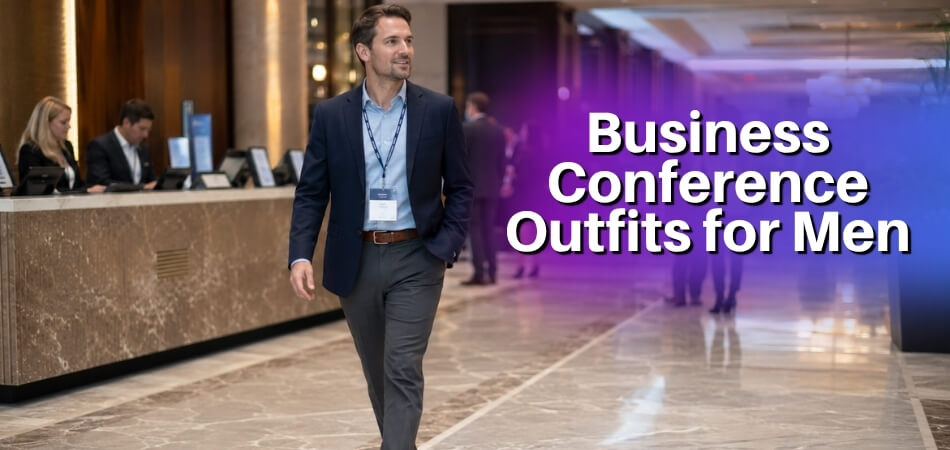
| Business casual | Gray dress trousers, light blue button-down shirt, brown derbies, brown leather belt, navy blazer | General sessions at many conferences; professional without the formality of a full suit |
| Smart casual | Chinos, Oxford shirt, loafers, lightweight blazer in muted colors | Tech, startup, marketing, and creative events |
| Casual but professional | Dark jeans, collared shirt, clean leather shoes, optional blazer | Events where casual attire is allowed |
| Virtual | Solid dress shirt or Oxford shirt, blazer for presentations, interviews, or client meetings | Online sessions (see the virtual section below) |
Other business casual combinations that work: dress trousers or chinos with a button-down shirt, loafers or derbies, and a blazer. Neutral colors make it easier to mix pieces across several conference days. In every row, keep the colors muted and the fit clean, and keep casual outfits free of distressed denim and athletic sneakers so they still suit networking and professional conversations.
Travel-friendly conference outfit
Choose clothes that resist wrinkles and feel comfortable for long hours: stretch chinos, a breathable collared shirt, a knit blazer, and supportive leather shoes. For a multi-day or international conference, pack pieces that can be reused in different combinations.
Evening networking or conference dinner outfit
Go for a slightly sharper version of your daytime outfit: a dark blazer, dress shirt, fitted trousers, and polished shoes. That combination lets you move from daytime sessions into professional social settings without changing everything. If the dinner is formal, wear a suit. If it is relaxed, skip the tie but keep the look refined.
Layers for cold session rooms
A thin knit layer lets you adjust without changing outfits. Air-conditioned session rooms can feel cool while corridors and receptions feel warm. A fine merino or cotton crewneck sweater over your shirt, worn under or instead of the blazer, keeps you comfortable and still looks business casual. Pick navy, gray, or charcoal so it goes with every pair of trousers you pack.
Which Shirts Work for Men at a Business Conference?
Wear a shirt that looks polished, fits well, and matches the formality of the conference. Dress shirts and Oxford button-downs are the safest options, and refined polo shirts work at casual events. Avoid shirts that are wrinkled, too tight, too loose, see-through, or covered in graphics.

Dress shirts
A dress shirt is the most versatile choice for business conferences. White, light blue, pale gray, and subtle stripes pair well with suits, blazers, and dress trousers. Look for a structured collar, smooth fabric, and a fit that allows movement without looking baggy.
Oxford button-down shirts
An Oxford button-down suits business casual and smart casual conferences. It looks professional without feeling too formal, goes well with chinos, loafers, and a blazer, and tends to feel comfortable during long days.
Polo shirts for casual settings
A polo shirt works only when the event clearly allows casual or smart casual attire. Choose a solid, well-fitted polo in a neutral or muted color and pair it with chinos and clean shoes. Skip athletic polos, large logos, and bright colors.
Shirt colors and patterns that work best
Beyond white and light blue, pale gray, navy, and soft neutrals are the best conference shirt colors. Fine stripes or small checks can work under a blazer, while loud prints, novelty patterns, and oversized logos pull attention away from your professional presence.
What Pants Are Appropriate for a Men’s Business Conference Outfit?
The best pants are fitted, clean, comfortable, and matched to the dress code. Dress trousers are safest for formal settings, while chinos and dark jeans may suit more relaxed conferences.
Dress trousers
Dress trousers are the strongest choice for business professional and business casual events. Pick navy, charcoal, gray, black, or tan with a clean fit: they should sit properly at the waist and fall neatly over your shoes, and they pair well with dress shirts, blazers, and leather shoes.
Chinos or khakis
Chinos and khakis suit business casual and smart casual outfits. They are less formal than dress pants but still look polished with a button-down shirt and blazer. Choose slim or straight fits, and avoid overly tight, faded, or wrinkled pairs.
Dark jeans when allowed
Dark jeans can work at casual conferences, startup events, creative meetups, or relaxed expo settings. Choose a clean, dark wash with no fading, rips, or heavy stitching, and pair them with a collared shirt, blazer, and leather shoes.
Should Men Wear a Blazer to a Business Conference?
Yes, a blazer is the most flexible piece you can bring. It gives a polished outfit that works across formal and semi-formal settings, makes a simple shirt-and-trouser combination look more professional, and is easy to remove if the room or event feels relaxed.
When a blazer is the safest choice
A blazer is safest when the dress code says business casual, when none is listed, or when you expect to meet clients, sponsors, executives, recruiters, or potential partners. It adds structure without a full suit, which helps for keynotes, networking breaks, and evening receptions.
Best blazer colors for conferences
Choose navy, charcoal, medium gray, black, or dark brown. Navy is the most versatile because it works with gray trousers, khakis, chinos, and dark jeans. Gray looks sharp in professional settings, and black suits formal evening events better than daytime sessions.
How to pair a blazer with trousers, chinos, or jeans
For a formal look, wear it with dress trousers, a dress shirt, and leather shoes. For business casual, wear it with chinos and an Oxford shirt. With jeans, keep the denim dark and free of distressing. The blazer should lift the outfit, not clash with casual pieces.
Fit tips for a polished look
A blazer should fit cleanly at the shoulders, chest, sleeves, and waist. The shoulder seam should sit near your natural shoulder, and the sleeves should show a small amount of shirt cuff. Avoid blazers that pull across the chest, hang loosely, or run too long for your frame.
Do Men Need a Suit at a Business Conference?
Wear a suit when the event is formal, executive-level, or tied to high-stakes professional meetings. It suits corporate conferences, finance events, legal forums, award dinners, and international business settings.
When a full suit is expected
A full suit is expected when the dress code says business professional, formal business attire, or executive attire. It is also a smart choice if you are presenting on stage, meeting senior decision-makers, representing your organization, or attending a conference in a conservative industry.
Best suit colors for professional events
Go with navy, charcoal, dark gray, or medium gray: they are polished, versatile, and easy to pair with dress shirts and leather shoes. A black suit can work for formal evenings but may feel too severe for daytime sessions.
Tie or no tie: how to decide
Wear a tie when the event is formal, traditional, or client-facing. Skip it for business casual conferences, startup events, creative industries, or relaxed networking sessions. If you are unsure, bring one: you can wear it for formal moments and remove it later if the setting turns out to be less strict.
How to avoid looking overdressed
Match the suit’s styling to the event. Choose a simple shirt, minimal accessories, and classic shoes. At less formal conferences, wear the suit without a tie or pick a softer jacket fabric. The goal is to look prepared, not out of place.
Best Shoes for Men at a Business Conference
The best shoes are polished, comfortable, and right for the dress code. Conferences involve walking between sessions, standing during networking, and long hours at the venue, so your shoes need to support both a professional appearance and all-day comfort.
Oxfords
Oxfords are the most formal business shoe. They work best with suits, dress trousers, and business professional outfits, in black or dark brown leather, for formal conferences, corporate events, and industries where traditional attire is expected.
Derbies
Derbies are slightly less formal than oxfords but still highly professional. They go with suits, dress pants, chinos, and blazers. Brown or burgundy derbies add style without looking too casual, which makes them useful for business casual conferences.
Loafers
Loafers suit business casual and smart casual conferences. They look polished and are easier to wear for long periods. Leather or suede loafers go well with chinos, fitted trousers, Oxford shirts, and blazers.
Dress boots
Dress boots work well for fall, winter, travel-heavy events, or conferences in colder cities. Choose sleek leather boots in black or brown, and leave rugged work boots at home unless the setting is casual and the rest of your outfit is clean and professional.
Comfort tips for long conference days
Break in your shoes before the event, wear quality socks, and consider cushioned insoles if you expect a lot of walking. For a multi-day conference, pack a second pair so you can rotate them and stay comfortable throughout the event.
Accessories Men Should Wear to a Business Conference
Keep accessories simple and useful. The best choices are a matching belt, classic watch, optional tie, subtle pocket square, professional bag, and the items you need for networking.

Belt
A leather belt should match your shoes as closely as possible: black with black shoes, brown with brown. Choose a simple buckle and avoid oversized, flashy, or heavily branded designs, which draw the eye away from the rest of the outfit.
Watch
A classic wristwatch adds polish without making the outfit busy. Choose a clean design with a leather or metal strap, and skip oversized sports watches unless the setting is very casual.
Tie
For formal conferences, presentations, executive meetings, and traditional industries, pick a tie in a solid color, subtle stripe, or small pattern. At business casual events, keep it in your bag until needed.
Pocket square
A pocket square adds personality to a blazer or suit jacket. Keep it subtle for business settings: white, navy, gray, or muted patterns work better than bright colors, dramatic folds, or novelty prints.
Cufflinks
Cufflinks go with French cuff shirts and more formal outfits. Pick simple metal designs. They work best for executive conferences, formal dinners, award events, and polished business professional looks.
Professional bag or briefcase
A professional bag keeps your belongings organized and supports your overall appearance. A leather briefcase, slim laptop bag, messenger bag, or clean backpack all work. Avoid gym bags, worn-out backpacks, and bags with distracting graphics.
Business cards and conference items
Carry business cards, a notebook, pen, phone charger, ID, registration badge, and any travel documents you need. They help you network smoothly, take notes, and stay prepared during the event.
Best Colors for Men’s Business Conference Attire
Stick to neutral, professional colors that are easy to coordinate, then add small accents.
Safe neutral colors
Navy, charcoal, gray, black, white, and light blue are the safest choices, with tan and brown close behind. They look professional, photograph well, pair easily with suits, blazers, trousers, shirts, and leather shoes, work across many industries, venues, and dress codes, and help you avoid looking too casual or distracting.
Accent colors that add personality
Small accents make an outfit feel personal without weakening its professionalism. Try burgundy, forest green, muted blue, soft purple, or warm brown in a tie, pocket square, socks, or shirt pattern, and keep them limited so they support the outfit rather than dominate it.
Colors and patterns to use carefully
Bright colors, large checks, loud prints, novelty ties, and high-contrast patterns distract in a professional setting. If you want a pattern, choose fine stripes, small checks, subtle textures, or muted prints that look refined from a distance.
Matching colors to industry expectations
For finance, law, consulting, and corporate leadership, darker neutrals work best. Technology, marketing, creative, and startup events allow slightly more relaxed colors and textures. When in doubt, start neutral and add one understated accent.
Grooming and Presentation Tips for Male Conference Attendees
Good grooming makes you look prepared and respectful. A strong outfit still looks unfinished if clothing is wrinkled, shoes are dirty, or your presentation feels careless.
Hair and facial hair
Keep hair and facial hair neat before the event. Trim your beard or shave cleanly, and style your hair so it stays tidy through long sessions. You do not need a dramatic change, only an intentional look.
Wrinkle-free clothing
Wear clean, pressed, wrinkle-free clothing whenever possible. Steam or iron shirts, trousers, and blazers before the conference. When traveling, pack fabrics that resist creasing and hang your clothes as soon as you arrive.
Fragrance and personal hygiene
Use fragrance lightly, or skip it if the conference involves crowded rooms, because strong scents distract in workshops, networking sessions, and shared seating. Cover the basics: deodorant, fresh breath, and clean hands throughout the day.
Clean shoes and well-maintained accessories
Check your shoes, belt, watch, and bag before leaving. Polish leather shoes, brush dust off bags, and replace anything cracked, scuffed, or damaged. Damaged soles, scuffed leather, and dirty shoes make even a good outfit look careless. Small details often decide whether an outfit feels polished or unfinished.
What Men Should Wear to Different Types of Business Conferences
Adapt your outfit to the industry, audience, venue, and purpose of the event. A polished look is always useful, but the right level of formality shifts between a corporate summit, a technology expo, an academic meeting, and an international business conference.
| Conference type | What to wear |
|---|---|
| Corporate, finance, banking, consulting, executive | Suit or business professional outfit in navy, charcoal, or gray; dress shirt and leather dress shoes; a tie if the event is formal or client-facing |
| Technology and startup | Business casual or smart casual: chinos, Oxford shirt, loafers, blazer. Dark jeans may work if the culture is relaxed, but keep them clean and fitted |
| Marketing and sales | Polished business casual with a little personality: blazer, button-down shirt, chinos, quality shoes, and a subtle accent in a tie, pocket square, or shirt pattern to look approachable |
| Academic, research, and professional associations | Business casual unless the event says otherwise: collared shirt, dress trousers or chinos, blazer. Dress slightly more formally if you are presenting, moderating, or meeting senior professionals |
| International business | Dress more conservatively unless you know the setting is casual: a suit or refined business casual, neutral colors, polished shoes, modest accessories |
| Trade shows and expos | Comfort first, since you may walk and stand for hours: supportive dress shoes or loafers, chinos or trousers, collared shirt, blazer if needed. Stay professional if you represent a company booth |
Use the table as a baseline, then adjust for weather, venue, and your role at the event.
What Men Should Wear for Virtual Business Conferences
Dress professionally, because camera presence still affects credibility. The outfit can be simpler than in-person attire, but it should look clean and structured, with the visible upper body in order.
Camera-friendly shirts and jackets
Choose a collared shirt, Oxford shirt, dress shirt, or lightweight blazer. A blazer adds structure on camera for presentations, panels, client meetings, or interviews. Make sure the collar sits cleanly and the neckline is not wrinkled.
Colors and patterns that look professional on screen
Solid colors usually look best: light blue, white, navy, gray, and soft neutrals. Tiny stripes, busy checks, shiny fabrics, and loud prints can look distracting or distorted on screen.
Why grooming and lighting matter
Grooming, lighting, and background matter almost as much as clothing online. Use front-facing light and sit in a clean, uncluttered space so your outfit and presence look sharper.
Dressing professionally even from home
Dress as if you may need to speak or turn your camera on unexpectedly. Pajama tops, gym clothes, wrinkled shirts, and anything too casual for a business setting are out.
What Men Should Avoid Wearing to a Business Conference
Avoid anything that looks too casual, distracting, poorly fitted, or worn out. A business conference is not always formal, but it is still a professional setting where your outfit should support networking and business conversations.
Overly casual clothing
Leave out graphic T-shirts, tank tops, hoodies, sweatpants, joggers, shorts, cargo pants, ripped jeans, and gym wear. For shoes, skip running shoes, worn-out sneakers, sandals, flip-flops, heavy work boots, and overly casual slip-ons. Even at a relaxed conference these pieces look too informal, unless the event specifically encourages casual clothing.
Distracting colors, logos, or graphics
Large logos, bright neon colors, novelty prints, and graphics pull attention away from your message. Choose clothing that supports your presence instead of becoming the first thing people notice.
Poorly fitted clothing
Clothing that is too tight, too baggy, too long, or too short makes an outfit look unprepared. Shirts should sit cleanly, trousers should break neatly over the shoes, and jackets should fit at the shoulders and chest. Pants that are visibly worn, and scuffed shoes or damaged accessories, weaken the rest of the outfit even if the shirt and blazer look professional (see the grooming tips above).
Business Conference Packing Checklist for Men
Pack versatile pieces that work across formal meetings, casual breaks, evening events, and travel days. A checklist keeps you ready for long sessions, travel, networking, and schedule changes, and neutral colors make it easier to build several outfits without overpacking.
| Category | What to pack |
|---|---|
| Clothing | Dress shirts, Oxford shirts, trousers, chinos, blazer, a suit if needed, undershirts, socks, sleepwear |
| Footwear | Polished dress shoes, loafers, or dress boots depending on the dress code and weather; a second pair for longer conferences; comfortable socks that suit your trousers and shoes |
| Accessories | Leather belt, watch, tie, pocket square, cufflinks if needed, professional bag, business cards, notebook, pen, charger, laptop or tablet |
| Grooming | Deodorant, toothbrush, toothpaste, comb or brush, shaving supplies, skincare basics, lint roller, personal hygiene items (travel sizes help) |
| Backups | Extra shirt, extra socks, stain remover pen, wrinkle-release spray, small sewing kit, pain reliever, bandages, portable phone charger |
Keep important items organized so you can move quickly between sessions. The backups are small, but they can save your appearance and comfort after a travel delay, a spill, or a long day.
Example: a three-day capsule wardrobe for men
A few pieces in two or three core colors can cover a three-day business casual conference. The plan below is an illustrative example built on navy, gray, and white or light blue, so every shirt works with every pair of trousers and the same blazer. Swap in a suit for any day the program marks as formal.
| Day | Outfit |
|---|---|
| Travel and check-in | Navy blazer worn while traveling to save suitcase space, stretch chinos, light blue Oxford shirt, loafers |
| Day 1 | Navy blazer, gray dress trousers, white dress shirt, brown derbies and matching belt, tie in your bag |
| Day 2 | Chinos, fresh Oxford shirt, thin merino sweater for cool rooms, loafers, blazer for the keynote or networking |
| Day 3 and closing dinner | Gray dress trousers, second dress shirt, navy blazer, derbies; add the tie if the dinner is formal |
That plan needs one blazer, two pairs of trousers, three or four shirts, two pairs of shoes, one sweater, and one tie. Fold shirts inside dry-cleaning or plastic bags to limit creasing, and roll the tie inside a shoe so it arrives smooth.
From our experience at MS International: Our conferences are held in person at venues in the Greater Toronto Area and are held in person only. Venue details, the session schedule and registration instructions reach participants by official email before the event, and our pages do not publish a separate dress code, so check that email for any dress guidance before you pack. Presenters collect a badge at check-in and meet the session coordinator or moderator, who introduces them before they speak.
FAQ: What Men Should Wear to a Business Conference
Men dressing for a business conference tend to ask about jeans, sneakers, ties and blazers, plus a conference dinner, bright patterns, presenting and events abroad.
Can men wear jeans to a business conference?
Sometimes. Dark, clean jeans can work when the dress code allows casual or smart casual attire, as at many tech, startup, or creative events. Skip them at finance, legal, or government events and when presenting or meeting clients. Pair them with a collared shirt, blazer, and polished shoes.
Are sneakers acceptable at a business conference?
Only at casual conferences or relaxed industry events where the dress code supports them. Choose clean, minimalist sneakers in a neutral color, not running shoes, gym sneakers, or sneakers with dirty soles.
Is a tie required at a business conference?
Usually not. A tie is expected mainly at formal, corporate, executive-level, or client-facing conferences, and it is optional at business casual or smart casual events. Bring one if you are unsure, especially for presentations, dinners, or senior meetings.
Is a blazer necessary for business casual conferences?
No, a blazer is not always required, but it is one of the safest pieces for business casual. It makes chinos, trousers, and collared shirts look more polished, and you can remove it if the event or venue feels warm or relaxed.
What should men wear to a conference dinner?
A slightly sharper outfit than your daytime wear: a blazer, dress shirt, fitted trousers, and leather shoes work for many dinners. If the invitation says formal, wear a suit and consider adding a tie.
What is the safest outfit when the dress code is unclear?
Business casual with a blazer. Wear fitted trousers or chinos, a collared shirt, polished leather shoes, and a matching belt. It works across many industries without being as formal as a full suit.
Can men wear bright colors or patterns to a conference?
In small amounts, yes. A subtle tie, pocket square, socks, or shirt pattern adds personality. Avoid loud prints, neon colors, and novelty graphics that distract during professional conversations.
How should men dress for an international business conference?
Dress conservatively unless the event clearly states a relaxed dress code. A suit or refined business casual outfit is safest, with neutral colors, polished shoes, and modest accessories that respect professional expectations across cultures.
What should I wear if I am presenting at a conference?
Dress one step more formal than the audience. At an academic or professional meeting, a blazer with dress trousers or chinos and a collared shirt is a safe base. For a corporate event or a stage talk, a suit is a smart choice.
Choosing Your Outfit: A Simple Rule
Start with the dress code, then adjust for the industry and your role. Business casual with a blazer is the most reliable everyday option. Wear a suit for formal conferences, and keep casual pieces refined at relaxed events.
A collared shirt, fitted trousers or chinos, polished shoes, and simple accessories carry you through sessions, networking breaks, and evening events. The goal is not to overdress or impress through clothing alone. It is to look prepared and confident, and ready for useful conversations.