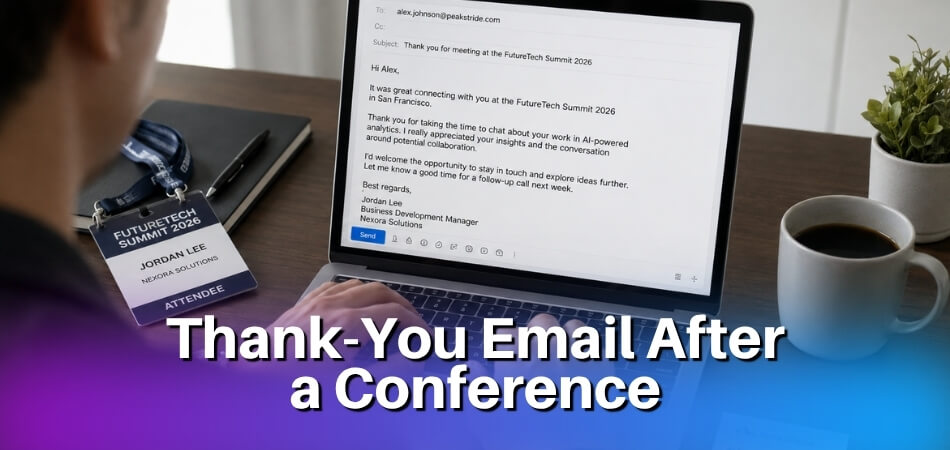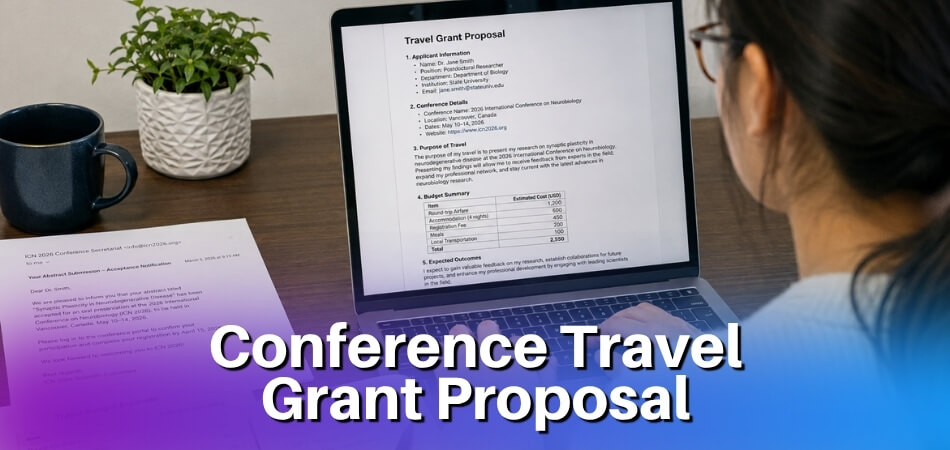

A conference ticket is easy to buy. Deciding how to label the trip is harder, because the label affects who pays, what you can claim, and what you tell a border officer.
Quick answer: Yes, attending a conference is usually business travel when the main purpose of the trip is work-related, such as training, presenting, meeting clients, or research. A trip that is mostly vacation, or an event unrelated to your job, may be treated as personal or mixed. Employers, tax authorities, and immigration offices each apply their own rules, so check each one before booking.
Last verified against official sources: October 2026.
What Makes a Conference Trip Business-Related?
A conference trip becomes business-related when the event supports a clear professional, commercial, academic, or employment purpose. The travel should connect to your work responsibilities, business activities, research goals, client relationships, or professional development.
The key question is whether the trip is mainly for work or mainly for leisure. If you would not have taken the trip without the conference, that is a strong sign that the event is the primary business reason.
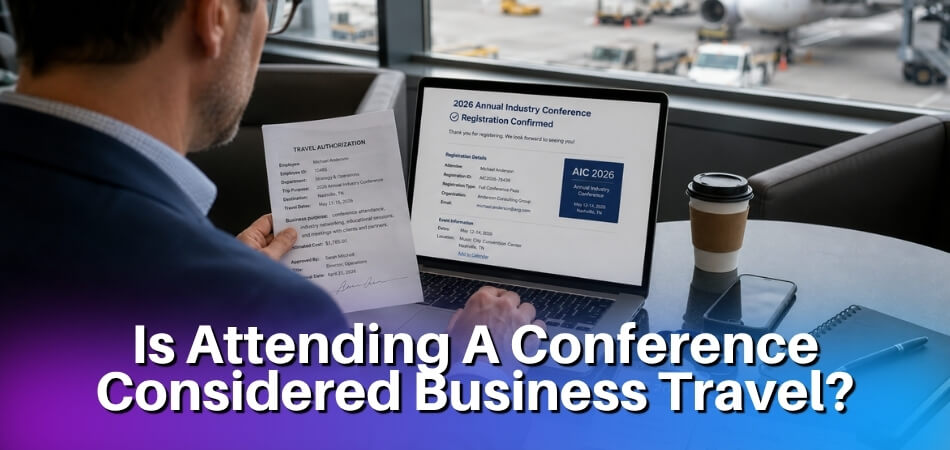
The strongest factor is purpose. The event should support your current role, business goals, academic work, client service, or professional growth. Not every trip with a conference in it is automatically business travel: if the conference is a small part of a mostly personal vacation, only the conference-related portion may be treated as business.
Work Purpose and Professional Relevance
A conference has professional relevance when its topics, speakers, sessions, or networking opportunities relate to your field. For example, a marketing manager attending a digital marketing conference, a healthcare professional joining a medical symposium, or a software developer attending a technology event may all have a work-related purpose.
Professional relevance may include:
- Improving skills used in your role
- Learning about new industry practices
- Studying regulations, tools, or methods
- Meeting people in your field, including clients, vendors, suppliers, sponsors, or partners
- Attending workshops, panels, seminars, or training sessions
- Exploring business, research, or career opportunities
- Presenting knowledge, products, services, or research
The event does not always need to be required by an employer. Self-employed professionals, freelancers, consultants, researchers, founders, and students may also attend conferences for valid work-related reasons.
Employer, Client, Industry, or Business Connection
A conference is easier to classify as business travel when there is a visible connection to an employer, client, business, industry, or professional role.
Examples include:
- An employer approves or requests the conference trip.
- A company pays for registration, travel, or accommodation.
- A business owner attends to meet clients or partners.
- A consultant attends to improve services for clients.
- A researcher presents findings at an academic event.
- A professional joins sessions to maintain industry knowledge.
Useful support may include employer approval, conference registration, event agenda, meeting notes, presentation acceptance, exhibitor confirmation, or a business reason written in your expense file.
Difference Between Business Travel and Personal Travel
Business travel is mainly for work; personal travel is mainly for leisure, family, tourism, or private reasons. Conference trips can become mixed-purpose when someone adds vacation time before or after the event.
A trip is more likely business-related when:
| Question | Why It Matters |
| Is the conference the main reason for travel? | Shows primary purpose |
| Are the topics connected to your work? | Shows professional relevance |
| Are you attending sessions or meetings? | Shows active participation |
| Are receipts and records available? | Supports reimbursement or tax review |
| Are personal costs separated? | Prevents confusion between business and leisure |
Personal activities do not automatically cancel the business purpose. However, sightseeing, family expenses, entertainment, and extra vacation nights should be kept separate from conference-related costs, and travel dates should be kept clearly separated too.
Common Conference Activities That Support Business Travel Classification
Conference activities support business travel classification when they are connected to work, learning, networking, training, business development, or professional representation. The more clearly your activities relate to your career, company, clients, research, or industry, the stronger the business purpose becomes.

Attending Industry Sessions, Workshops, or Seminars
Educational sessions are a common reason people travel for conferences. These sessions may cover industry trends, technical skills, leadership, compliance, market updates, research findings, or professional tools.
Attending sessions can support a business purpose when the content helps you:
- Improve work-related skills
- Understand new trends or regulations
- Learn methods that benefit clients or employers
- Gain knowledge for future projects
- Complete professional development or training
For example, a finance professional attending a risk management workshop, a teacher joining an education seminar, or an entrepreneur attending a business growth session may all have a professional reason for attending.
Presenting, Speaking, or Exhibiting
Presenting at a conference is a strong sign of professional purpose. If you give a speech, present research, lead a workshop, join a panel, display products, or represent a company booth, the trip is directly connected to business or career activity.
These roles may support:
- Sharing research, ideas, or case studies
- Promoting a business, institution, product, or service
- Building professional authority
- Meeting potential clients, sponsors, or partners
- Supporting brand visibility or market development
Exhibiting at a trade show or professional event is also often business-related because the goal may be to generate leads, meet suppliers, introduce services, or study competitors.
Networking With Clients, Partners, or Peers
Networking is one reason a conference can count as business travel. Many events are built to help attendees meet clients, suppliers, investors, employers, researchers, sponsors, and professional peers.
Business-related networking may include:
- Meeting existing or potential clients
- Discussing partnerships or projects
- Connecting with vendors or service providers
- Building relationships with industry leaders
- Joining roundtables, receptions, or networking sessions
For better records, note who you met and why the discussion related to your work. These notes can support your business purpose without needing to be lengthy.
Training, Research, and Professional Development
Training and professional development can support business travel when they improve skills, knowledge, qualifications, or research connected to your field.
Examples include:
- A researcher attending paper presentations
- A consultant learning new client service methods
- An employee completing industry training
- A founder studying market expansion
- A student or academic presenting research
Professional development does not always create an immediate sale or contract. It may still be business-related if it reasonably supports your role, employer, business, research, or long-term professional goals.
Business Travel Expenses Linked to Conference Attendance
Conference travel expenses are costs directly connected to attending a work-related event. These may include registration, transportation, accommodation, meals, and necessary incidental expenses, depending on employer policy, tax rules, and the purpose of the trip.
Not every cost during the trip is automatically business-related. A valid expense should be reasonable, documented, and connected to the conference or related professional activity.
Conference Registration Fees
Conference registration fees are usually one of the clearest business-related costs. This fee gives access to sessions, workshops, networking events, materials, panels, exhibitions, or training programs.
Registration-related costs may include:
- Standard attendee passes
- Workshop or seminar add-ons
- Professional training sessions
- Exhibition or trade show access
- Speaker, presenter, or exhibitor fees
- Professional association event fees
Keep the invoice, payment receipt, confirmation email, and agenda. These records show that the payment was for a professional event.
Transportation and Local Travel
Transportation costs may be business-related when they are needed to reach the conference or move between conference-related locations.
Examples include:
- Flights, trains, buses, or other long-distance travel
- Taxi, rideshare, shuttle, or public transit
- Car rental for event-related travel
- Mileage for a personal vehicle
- Parking and tolls connected to the event
- Travel between the airport, hotel, venue, and business meetings
If the trip includes personal activities, keep transport used for the conference separate from transport used for leisure.
Hotel or Accommodation Costs
Accommodation costs may be business-related when the stay is necessary for attending the conference. This may include nights during the event, a night before an early start, or a final night if same-day travel home is not practical.
Hotel records should show:
- Guest name
- Hotel name and location
- Dates of stay
- Total cost, taxes, and fees
- Payment confirmation
- Connection to conference dates or venue
Extra hotel nights for vacation, family visits, or sightseeing should be separated from the business portion.
Meals During the Business Trip
Meals may be treated as conference travel expenses when they occur during the business portion of the trip. This may include meals while traveling, meals during conference days, or meals tied to client meetings.
Meal records may include:
- Date and place
- Amount paid
- Receipt or invoice
- Business reason
- Names of business contacts, when relevant
Meal rules vary by employer and tax system. Some organizations use actual receipts, while others use per diem allowances. Follow the relevant policy before claiming meal costs.
Internet, Materials, and Other Incidental Costs
Incidental expenses may count when they are necessary for attending or participating in the event.
Examples include:
- Wi-Fi or internet access for work use
- Printing, copying, or scanning
- Presentation materials
- Conference documents or programs
- Business cards for networking
- Local phone or communication costs
- Luggage storage during conference hours
Personal purchases, entertainment, souvenirs, tourist tickets, and family expenses should not be included as conference business expenses.
Tax and Reimbursement Considerations for Conference Travel
Conference travel may affect tax deductions, employer reimbursement, and expense reporting when the event is connected to work or business. The exact treatment depends on your country, employment status, company policy, and the nature of the trip.
The basic rule is practical: the conference should have a clear work-related purpose, and the expenses should be supported by records.
Why the Main Purpose of the Trip Matters
The main purpose of travel helps determine whether the trip is business-related, personal, or mixed. If the conference is the reason you travel, the business classification is stronger. If the conference is only a minor part of a vacation, the business portion may be limited.
| Situation | Likely Treatment |
| Travel mainly for a three-day work conference | Mostly business-related |
| Attend a conference and add vacation days | Mixed; separate costs |
| Take a vacation and attend one short session | Mostly personal |
| Employer sends you to represent the company | Usually business-related |
| Event has no link to your work | May not qualify |
The event should be easy to connect to your profession, business, clients, research, or employer.
How Canada and the United States View Conference Costs
Both tax agencies look for a business link and for records, but their conference rules differ. This is a general summary of CRA and IRS guidance, not tax advice, and your own situation may be treated differently.
| Point | Canada (CRA) | United States (IRS) |
| Basic test | The convention must relate to your business or professional activity | Travel is business travel when it is primarily for business, and you must be able to show that attending benefits your trade or business |
| Limits to know | Self-employed people and businesses can deduct up to two conventions a year, and the event generally must be held in the area where the sponsoring organization normally operates. The area limit may not apply when an organization from another country sponsors the convention | Outside the North American area, the meeting must be directly related to your trade or business and it must be about as reasonable to hold it there as in North America |
| Meals | Meals and entertainment are subject to a 50% limit. If the convention fee includes food or entertainment that is not itemized, subtract $50 for each day it is provided and treat that amount as a meal at 50% | Generally only 50% of the unreimbursed cost of meals can be deducted (Publication 463, 2025 edition) |
| Employees paying their own costs | Employer policy and reimbursement usually decide what is covered, so ask a tax professional before assuming a deduction | Unreimbursed employee travel is generally not deductible; Form 2106 is limited to a few groups, such as Armed Forces reservists and qualified performing artists |
Ask the employer and a qualified tax professional which rules apply before you pay for the trip.
What Records and Receipts Should Be Kept
Good records help prove that the conference was work-related and that the expenses were necessary. Keep enough documentation to explain the trip clearly.
Useful records include:
- Registration confirmation
- Payment receipts and invoices
- Event agenda or session schedule
- Invitation, speaker confirmation, or exhibitor proof
- Employer approval or reimbursement request
- Transportation receipts
- Hotel bill
- Meal receipts, where required
- Meeting notes or contact details
- Attendance certificate, badge, or event email
The IRS notes that a convention agenda or program generally shows the purpose of the convention, so keep a copy with your receipts. Digital records are helpful. Save all documents in one folder and label them by conference name, location, and year.
Does Conference Travel Count as Paid Work Time?
For US employees covered by the Fair Labor Standards Act, overnight conference travel during normal working hours generally counts as work time. The US Department of Labor’s hours-worked fact sheet says travel away from home is clearly work time when it cuts across the employee’s workday, and this includes the corresponding hours on nonworking days. Riding as a passenger on a plane, train, bus or car outside regular working hours is not counted, as a matter of the agency’s enforcement policy.
The conference sessions themselves are treated the same way. Attending meetings, lectures or training programs is working time unless all four conditions are met: it is outside normal hours, it is voluntary, it is not related to the job, and no other work is done at the same time. Pay rules differ by country, province and job type, so check your employment contract, employer policy and the labour standards where you work.
When to Ask an Employer or Tax Professional
Ask an employer or tax professional when the trip includes mixed personal travel, international travel, large costs, unclear deductions, or unusual activities.
Ask your employer about:
- Pre-approval requirements
- Covered expenses
- Spending limits
- Meal or per diem rules
- Required receipts
- Expense submission deadlines
Ask a tax professional about:
- Whether conference costs can be claimed
- How to separate personal and business costs
- Rules for meals, mileage, lodging, and travel
- Self-employed or business owner expenses
- International conference travel documentation
In short, conference expenses are easier to reimburse or claim when the business purpose is clear, the costs are reasonable, and the records are complete.
Can You Combine a Conference Trip With Personal Travel?
Yes, you can combine a conference trip with personal travel, but the business and personal parts should be clearly separated. This is common when attendees add vacation days before or after a professional event.
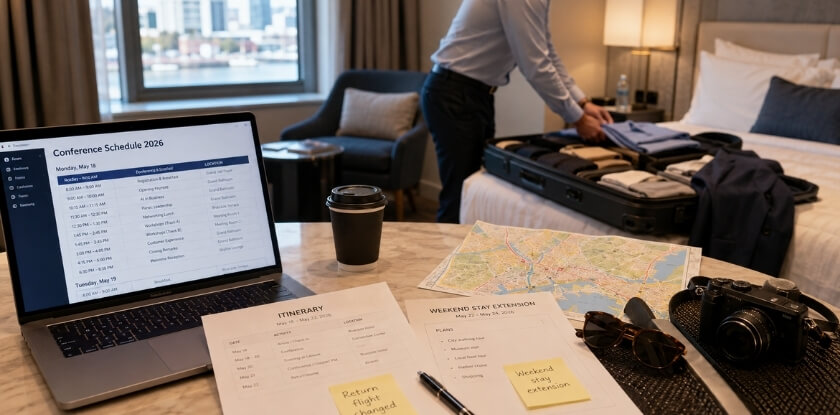
The conference should stay at the core of the trip. If the event is directly related to your work, business, academic role, or professional development, the conference portion may still be business travel. Vacation costs, family travel, sightseeing, entertainment, and personal shopping should be treated separately.
Separating Business Days From Vacation Days
Business days are the days needed to attend or participate in the conference. These may include event dates, reasonable travel days, speaker preparation days, exhibitor setup days, or scheduled business meetings.
Personal days are added for leisure, tourism, family visits, or private plans.
| Trip Activity | Classification |
| Travel the day before the conference starts | Business, if needed |
| Attend official sessions | Business |
| Present or exhibit | Business |
| Meet a client during the event | Business |
| Stay extra nights for vacation | Personal |
| Visit tourist attractions | Personal |
| Bring family members | Personal, unless they have a business role |
This separation helps with tax records, employer reimbursement, and travel documentation.
Which Costs Are Usually Business-Related
Business-related costs are expenses needed for the conference portion of the trip. These may include registration, event-related travel, hotel nights for conference dates, local transport, and meals during business travel days.
Presentation or exhibitor materials belong on the business side too. Personal costs may include:
- Extra vacation hotel nights
- Sightseeing tours
- Entertainment
- Family member travel
- Personal shopping
- Leisure transportation
If one receipt includes both business and personal costs, mark the business portion clearly.
How Personal Activities Can Affect Claims or Reimbursement
Personal activities do not automatically remove the business purpose, but they can reduce which costs are covered or claimed. A three-day conference plus a weekend stay is different from a two-week holiday with one short business session.
In the United States, IRS Publication 463 (2025 edition) says that when a trip is primarily for business but you extend it for a vacation or personal side trip, you can deduct only the business-related travel expenses. For a trip outside the United States, two of the IRS exceptions treat the whole trip as business: you were outside the country for a week or less, or you spent less than 25% of the total time on nonbusiness activities. Other cases are allocated under further IRS rules.
To avoid problems:
- Keep the official conference schedule.
- Separate business and personal dates.
- Save receipts by category.
- Do not claim leisure costs as business expenses.
- Follow employer policy before adding vacation days.
- Keep notes for meetings outside the event.
In short, you can add personal travel to a conference trip, but only the work-related portion should be treated as business travel.
Visa and Entry Rules for Attending Conferences Abroad
International conference travel may require a visitor visa, business visitor visa, electronic travel authorization, visa waiver, or visa-free entry, depending on the destination and traveler’s passport. The correct entry option depends on what you will do, how long you will stay, and the host country’s immigration rules.
Conference attendees usually travel for temporary professional purposes, such as attending sessions, meeting contacts, presenting research, or joining business discussions. This is different from taking regular employment in the host country. Because entry rules can change, check the official immigration website of the destination country before applying or booking non-refundable travel.
Why Conference Travel May Require Business Visitor Entry
Conference attendance is often treated as a temporary business activity because the traveler enters another country for a professional reason. This does not always mean a formal business visa is required, but the purpose must match the entry category.
Business visitor entry may apply when you travel to:
- Attend a conference, seminar, or convention
- Join professional meetings
- Meet clients, suppliers, or partners
- Present at an academic or industry event
- Visit a trade show or exhibition
- Take part in short-term professional training
Your invitation letter, registration confirmation, travel itinerary, and application documents should all show the same purpose.
United States Conference Travel Entry Options
For the United States, conference attendees may commonly use a B-1 business visitor visa or travel through the Visa Waiver Program with ESTA if eligible. The correct option depends on citizenship, travel history, and visit purpose.
A traveler may need to show a valid passport, conference registration or invitation, travel dates, accommodation details, funds for the stay, and intent to leave after the visit. Conference visitors should avoid activities that look like unauthorized employment.
Canada Conference Travel Entry Options
For Canada, conference attendees may enter as business visitors, but the required document may be a visitor visa, an electronic travel authorization, or neither, depending on nationality. The requirement depends on the traveler’s passport and method of travel. Kenyan citizens, for example, need a visitor visa, and the Canadian visa cost from Kenya is the standard IRCC visa fee plus the biometrics fee.
A conference visitor may need a passport, invitation or registration proof, event details, accommodation information, financial proof, and evidence that the stay is temporary. Attending an event is different from entering the Canadian labor market.
Schengen Area Conference Travel Entry Options
For conferences in the Schengen Area, some travelers need a short-stay Schengen visa, while others may enter visa-free for limited business or visitor purposes. Requirements depend on nationality, destination, trip length, and purpose.
Common documents may include a passport, application form if required, invitation letter, registration proof, accommodation details, travel insurance where required, financial proof, and return or onward travel information.
Why Requirements Depend on Passport, Citizenship, and Host Country
Visa rules differ because immigration systems consider nationality, passport type, destination, length of stay, activity, and travel history. Two people attending the same conference may need different documents.
Requirements may also change if you are a speaker, exhibitor, researcher, student, employee, business owner, or paid participant. If your situation involves payment, long stays, multiple countries, or unclear activities, ask a qualified immigration professional.
Documents Often Needed for Business or Conference Travel
Business or conference travel usually requires documents that prove identity, event purpose, travel plans, financial ability, and temporary stay. Exact requirements depend on the destination, entry category, employer policy, and your role at the conference.
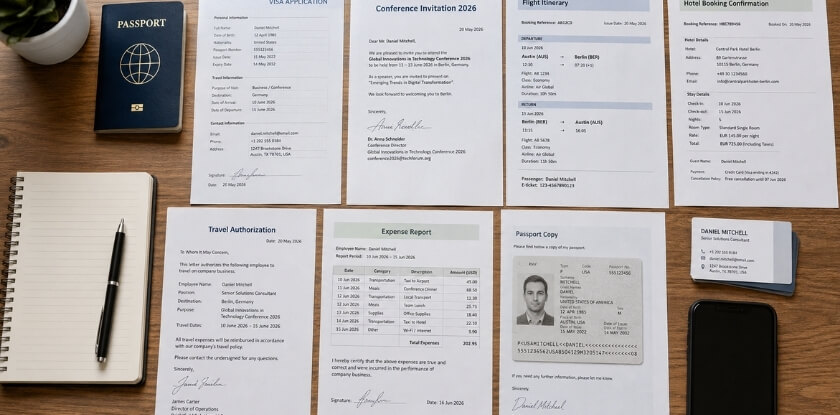
For international trips, documents should be consistent. Your registration, invitation, itinerary, hotel booking, and visa application should show the same event purpose, dates, and destination.
Valid Passport and Travel Authorization
A valid passport is the main identity document for international conference travel. Some countries require the passport to remain valid beyond the travel dates, so check the destination rules early.
Depending on nationality and destination, you may also need a visitor visa, business visitor visa, electronic travel authorization, visa waiver approval, transit visa, or entry form.
Conference Invitation or Registration Confirmation
A conference invitation or registration confirmation helps prove the purpose of travel. It shows that you are traveling for a specific professional event.
Useful documents may include:
- Invitation letter from the organizer
- Registration confirmation
- Payment receipt
- Speaker or presenter acceptance
- Exhibitor confirmation
- Event agenda
- Venue name and address
A strong invitation letter usually includes the traveler’s name, event name, dates, organizer details, location, and role at the conference.
Travel Itinerary and Accommodation Details
Travel and accommodation records show when you will arrive, where you will stay, and when you will leave. These documents may be needed for visa applications, employer approval, or reimbursement.
Examples include:
- Flight, train, or bus reservation
- Return or onward ticket
- Hotel booking
- Accommodation address
- Local transport plan, if needed
- Full itinerary separating business and personal days
If the trip includes vacation time, keep those dates separate from conference dates.
Employer or Business Support Letter
An employer or business support letter explains why the conference is connected to your work. It is especially useful when an employee travels on behalf of a company or when a business owner attends for commercial reasons.
A support letter may include job title, company name, purpose of travel, conference name, travel dates, payment responsibility, and confirmation that the visit is temporary. Self-employed professionals can prepare a business letter explaining their work, the reason for attending, and how the event supports business goals.
Proof of Funds, Insurance, or Additional Country-Specific Documents
Some destinations may ask for financial proof, insurance, or additional documents. Requirements vary, so follow the official checklist for the host country.
Possible documents include:
- Bank statement or financial proof
- Employment verification
- Business registration
- Tax or income documents
- Travel medical insurance
- Proof of ties to home country
- Academic or research documents
- Professional membership proof
Not every traveler needs all of these. Prepare the required documents first, then add supporting proof where it helps explain the trip.
Do Virtual or Hybrid Conferences Count as Business Expenses?
Virtual and hybrid conferences can count as business expenses when the event relates to your job, business, research, or professional development. A conference does not have to be fully in person to have a business purpose.
If you pay to attend online sessions, live workshops, professional training, or a hybrid event for work-related reasons, the cost may be treated as a business expense. The event should still have a clear professional connection, and records should show what you attended.
Online Conference Registration Fees
Online conference registration fees are often the clearest virtual event expense. The fee may cover professional sessions, panels, training modules, digital materials, recordings, or networking platforms.
Keep records such as payment receipts, registration confirmations, event agendas, attendance proof, certificates, or notes showing how the event connects to your work.
Hybrid Conference Attendance Costs
Hybrid conferences may include both in-person and online costs. You may travel to attend part of the event while joining other sessions virtually, or you may register online for a conference that also has a physical venue.
Possible costs include registration, workshop add-ons, travel, accommodation, local transport, meals during business travel days, online platform access, and digital event materials.
Work-Only Technology or Access Costs
Some technology costs may be business-related if they are necessary for attending the virtual or hybrid conference. These costs should be reasonable and directly connected to participation.
Examples include temporary software access, paid internet during travel, printing event materials, online workshop resources, or equipment needed specifically for participation.
Be careful with items used personally, such as laptops, phones, or general internet plans. These may need separate treatment under employer or tax rules.
Proof Needed for Virtual Event Participation
Proof is important for virtual conferences because there may be no flight, hotel, or venue record. Good documentation shows that the event was professional and work-related.
| Record | Purpose |
| Registration confirmation | Shows enrollment |
| Payment receipt | Shows cost |
| Event agenda | Shows professional content |
| Attendance certificate | Shows participation |
| Session notes | Connects event to work |
| Employer approval | Supports reimbursement |
Virtual and hybrid events can support business expenses when the purpose is work-related, and the records are clear.
Types of Business Events That May Qualify as Business Travel
Business travel can include many professional events, not only large conferences. If the event requires travel and connects to your job, business, research, clients, or professional growth, it may qualify as business travel.

The format may be formal or informal, domestic or international, in-person or hybrid. What matters is the professional purpose.
Professional Conferences
Professional conferences are a familiar type of business travel event. They bring people from the same field together to learn, share ideas, discuss trends, and build connections.
They may include keynote sessions, panels, industry updates, workshops, demonstrations, networking events, and professional association meetings.
Business Meetings and Corporate Events
Business meetings and corporate events may qualify as business travel when travel is required for company, client, or partner-related purposes.
Examples include client meetings, supplier meetings, investor discussions, board meetings, strategy sessions, sales presentations, partnership meetings, or company retreats with work sessions.
Academic or Research Events
Academic and research events may qualify as business travel when they relate to teaching, study, research, publication, or professional development.
Examples include research conferences, academic symposiums, paper presentations, poster sessions, university workshops, and research collaboration meetings. Useful proof may include acceptance letters, programs, grant records, or university approval.
Training Programs and Industry Workshops
Training programs and workshops may count as business travel when they improve skills used in your work.
Examples include certification programs, compliance workshops, technical training, leadership programs, software training, continuing education, and professional development courses.
Trade Shows, Exhibitions, and Cultural Add-On Events
Trade shows and exhibitions can qualify as business travel when the purpose is to promote, research, buy, sell, or build industry relationships.
Business activities may include exhibiting products, meeting suppliers, finding clients, studying competitors, attending demonstrations, or negotiating future opportunities.
Some conferences include cultural activities, receptions, or tours. These should be reviewed carefully because social or recreational activities may not be treated the same as professional sessions.
Quick Checklist: Is Your Conference Trip Business Travel?
A conference trip is likely business travel when the event is mainly connected to your job, business, research, clients, or professional development. Use this checklist before booking, submitting expenses, or preparing documents.
| Question | Yes/No |
| Is the event related to your work, business, or field? | |
| Is the conference the main reason for the trip? | |
| Are you attending sessions, meetings, training, or networking events? | |
| Are you speaking, presenting, exhibiting, or representing an organization? | |
| Did your employer, client, business, university, or organization support the trip? | |
| Can you show registration proof, agenda, or invitation? | |
| Are the travel dates reasonable for the event schedule? | |
| Have you separated vacation days from conference days? | |
| Have you kept receipts for major expenses? | |
| Are personal costs excluded from business claims? |
If most answers are “yes,” the trip likely has a strong business travel purpose. If several answers are “no,” review the trip carefully before claiming expenses or describing it as business travel.
From our experience at MS International: Registered listeners are eligible for an invitation letter, not only presenting authors. The letter is issued automatically within 3 to 5 business days after payment clears, and it supports an application but does not guarantee a visa or entry. A US$50 administrative fee may apply to corrections after the letter is issued, so check your name and passport details first. Registration fees are non-refundable and non-transferable, so get your employer’s approval before you pay. Our conferences are held in person in the Greater Toronto Area, and approved speakers receive a certificate after presenting, which you can add to your expense file.
FAQ: Conference Attendance and Business Travel
Treating a conference trip as business travel touches on taxes, employer reimbursement, paid travel time, adding vacation days and whether a listener registration still qualifies.
Is attending a conference business travel for tax purposes?
Yes, attending a conference can be business travel for tax purposes when the trip is mainly for work and the event relates to your business. Self-employed people and businesses may claim the costs within CRA or IRS limits, while US employees generally cannot deduct unreimbursed travel. Keep the agenda and receipts.
Can an employer reimburse conference travel costs?
Yes, employers can reimburse conference travel costs when the event is work-related and approved under company policy. Covered costs may include registration, transport, lodging, meals, and necessary incidentals, depending on the employer’s rules.
What conference expenses are commonly covered?
Common covered expenses include registration fees, transportation, lodging, meals, and work-related incidentals. Internet access, printing, presentation materials, and local travel may also qualify when they are necessary for attending or participating in the conference.
Can conference attendance affect my work schedule?
Yes, conference attendance can affect your regular work schedule because it may require time away from daily duties. Employees should plan deadlines, notify managers, arrange coverage if needed, and share useful takeaways after returning.
Is travel time to a conference paid?
It depends on where you work and your hours. Under US federal wage rules, overnight travel that overlaps your usual working hours is generally paid work time, but sitting as a passenger outside those hours is not. Canadian and other employees should check their contract and local labour standards.
Can I take vacation days during a conference trip?
Yes, you can take vacation days during a conference trip, but business and personal costs should be separated. Conference days and necessary travel may be business-related, while sightseeing, extra hotel nights, and leisure expenses are personal.
Can I attend as a listener and still call it business travel?
Yes, a registered listener can still be on business travel if the event relates to your work. Presenting is not required. Keep your registration confirmation, agenda, and employer approval to show the purpose.
Does business travel status guarantee a visa?
No, calling the trip business travel does not guarantee a visa or entry. The immigration office decides, and an invitation letter only supports the application. Check the official website of the destination country.
Final Takeaway: Conference Travel Is Business Travel When the Purpose Is Work-Related
Attending a conference is considered business travel when the main purpose of the trip is professional, business, academic, or work-related. The main factor is not the distance traveled or the size of the event. It is the reason for attending, and a local seminar, trade show, virtual event, or hybrid conference can all qualify.
Keep personal costs apart from conference costs, and keep your registration proof, receipts, schedules, and employer approval organized. Before claiming expenses or applying for entry documents, review employer policy, tax rules, and the official travel requirements for the destination.
Disclaimer: This article is general information and is not tax, legal or immigration advice. Rules change, so check the CRA, the IRS, your employer’s policy, and the destination country’s immigration website for your own case.