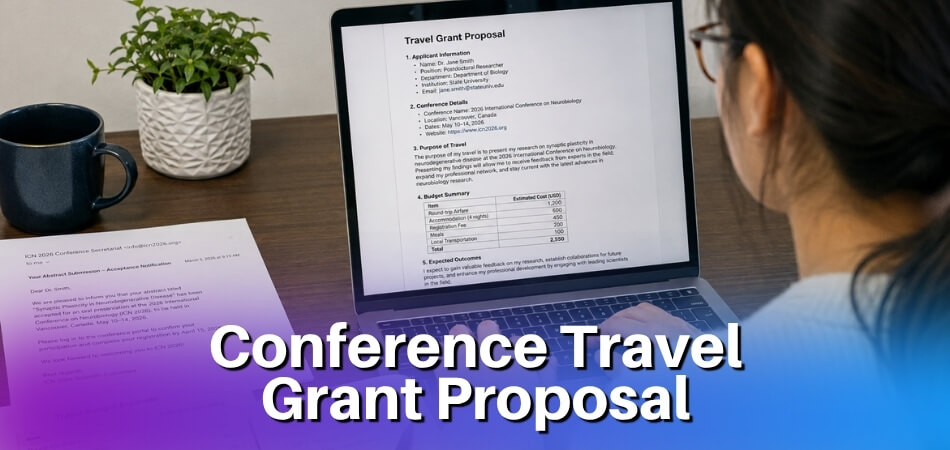

You came home from the conference full of energy, but within a few days, where does all that excitement go? The business cards end up in a drawer. Your notes sit in a bag you have not unpacked. The connections you swore you would follow up with are still waiting. It is easy to leave a conference with good intentions and a head full of ideas, then watch the momentum disappear under the weight of a regular inbox.
The usual advice does not help much either. “Send a follow-up email.” “Connect on LinkedIn.” Fine, but then what? What helps is a concrete, day-by-day action plan you can follow from the evening they get home through the following month, and that is what this checklist gives you.
Quick answer: After a conference, send personal follow-up emails and LinkedIn requests within 24 hours, then turn your notes into three to five actions you can really do. In the first week, file your expense report, share a short recap with your team and collect any missed slides or recordings. Within a month, measure the result against your original goals, and rest properly along the way.
What to Do After a Conference: Timeline at a Glance
The most important window is the first 24 hours. That is when your memory is sharpest, your energy is still connected to the experience, and the people you met are most likely to remember you too. Everything after that is a steady sequence, and the table below shows the order. The sections that follow explain each step.
| When | What to do | Why it cannot wait |
|---|---|---|
| First 24 hours | Brain dump of your notes, follow-up emails to every meaningful contact, personalized LinkedIn requests | Names and conversations are still fresh, for you and for them |
| First week | Three to five takeaways, expense report, short recap for your team, missed slides and recordings | Receipts get lost and the recap goes stale |
| Second week | Second-touch nudges, LinkedIn profile update, a post about what you learned | You have fresh material and a reason to appear in people’s feeds |
| First month | Recap report, ROI against your original goals, review of what has not been acted on | Without a checkpoint, good intentions fade, and a gut feeling that it “went well” is not a measurement |
A few things people skip matter more than they look: dealing with post-conference fatigue (schedule some decompression time), updating your professional profile while the energy is fresh, and building an action plan from your key learnings instead of letting your notes sit in a folder until next year.
The conference budget you or your company spent only pays off if you do something with what you brought back. The event was the input. Everything below is the output.
The First 24 Hours: The Most Critical Window
The 24 hours after a conference ends matter most. Your memory is fresh, the energy is still there (however tired you are), and the people you met are still actively checking their phones. After a few days the window starts to close. Do the quick, personal work on day one: capture your notes, connect with people and send short emails.
Connect with New Contacts on LinkedIn (with a Personalized Note)
Do this before you sleep. Pull out the business cards, photos of name badges, or whatever you collected, and send connection requests while the conversation is still recent. Do not just hit “Connect.” Write a note every time.
It does not need to be long. Something like this works:
Hi [Name], good talking to you about [topic] after the [session name] session today. Would love to stay connected.
One sentence that proves you remember them is enough. A generic request is easy to ignore or forget; a specific one is easier to accept and remember. Aim to send your connection requests the same day or the next. As the days pass, people’s recall of you fades and your message starts to feel like an afterthought.
If your LinkedIn About section is half-finished or vague, take ten minutes tonight to sharpen it. You are about to get profile views from the people you just met, and first impressions do not stop at the event.
Review Your Conference Notes and Pick 3 Actionable Takeaways
Do not try to act on everything. That is how nothing gets done. Go through your notes, whether they live in a notebook, a notes app, a voice memo dump or a chaotic mix of all three. Read everything once without stopping. Then ask yourself: what three things, if I actually did them, would make this trip worth the time and money?
Write those three down somewhere you will see them, not buried in a document you never reopen. Put them in your project tool or your calendar, wherever your real work lives.
While you sort, clear out the paper. Keep the handouts and flyers you will use, photograph or scan them, and recycle the rest. If you use an AI tool to summarise your notes or pull out action items, follow your organization’s rules on confidential information before you paste anything in.
Be strict about specificity. “Improve my email marketing” is not a takeaway. “Test a win-back email for customers who have not bought in 90 days, based on the retention session” is. The more concrete it is, the more likely it happens.
This is also the moment to flag any slides or missed-session recordings you need to track down. Some organizers send those out after the event, so add a reminder to follow up at the end of the week if they have not arrived.
Send Your Follow-Up Emails: What to Write and How to Write Them
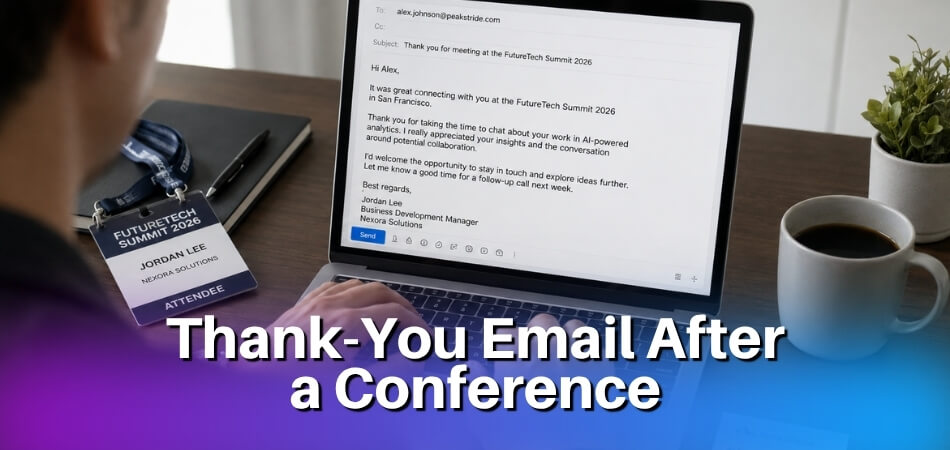
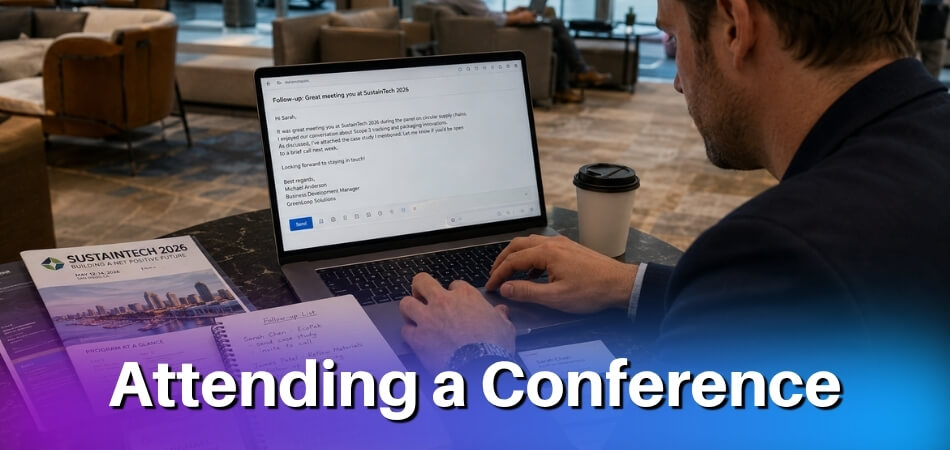
A follow-up email sent the same evening lands differently than one sent four days later. Four days later it feels obligatory; the same evening it feels genuine. Keep it short, three or four sentences, with this structure:
- Reference something specific from your actual conversation, not “it was great to meet you.”
- State one concrete next step if there is one: a call, a resource you promised to share, an introduction you offered.
- Leave the door open without pressure: “Happy to chat more whenever it suits you” is fine.
If you promised someone a resource, a link or an introduction, do it in that same email. Do not write “I’ll send that over soon” and then send a second email. Combine them.
For contacts with no immediate next step, such as speakers you admired or people in interesting roles, a short “great to hear you speak, I’m going to try the approach from your session” email still lands well. It asks for nothing, and people appreciate that. A thank you email to a speaker works best when it names one point from their session.
If you met more than eight to ten people, batch the follow-up emails rather than trying to write each one perfectly. Spend two or three minutes on each. The aim is timely and personal, not perfect.
The First Week: Keeping Your Momentum Going
The first 24 hours are reactive: you are capturing, connecting and sending quick emails. The first week is where you actually do something with all of it, and where it is easiest to lose steam. Work through three jobs: tell your team what you learned, collect what you missed, and close out your expenses.

Share Key Learnings with Your Team or Manager
If someone else paid for your ticket, they want to know what you learned. Even if you funded it yourself, sharing your notes with colleagues is one of the fastest ways to make the experience count beyond just you.
Do not wait for a formal meeting. Send a short recap by email, where bullet points work fine: three to five actionable takeaways, any tools or frameworks that came up repeatedly, and one or two things you think the team should act on. Keep it to one page or less.
If your manager asked you to attend specifically to gather information, say on an industry trend or a competitor’s positioning, this debrief matters more. Write it up properly and frame it around the goals you discussed beforehand, not just what you personally found interesting.
Sharing also does something quieter: it reinforces your personal brand inside the company. You become the person who goes to a conference and actually brings something back. For teams on Slack or similar tools, a quick channel post works just as well. It does not need to be formal. Just get the information moving.
If colleagues want more than a message, offer a short lunch-and-learn or ask for ten minutes in a regular team meeting, and tie each point to work the team is already doing. Put the slides, handouts and links you collected in one shared folder so others can use them after you have moved on.
Track Down Recordings and Slides from Sessions You Missed
Post-conference fatigue is real. You probably sat through a full day of sessions, had several side conversations and did not sleep enough, so missing a few talks is normal.
Some conferences publish recordings of sessions, though not all do, and timing differs from event to event. Check the conference app or attendee portal first. If you registered, you may already have access, and some events email a link to all registered attendees automatically.
For slides, check the speaker’s LinkedIn profile or personal site, since some speakers post their decks after the talk. If you cannot find them, ask directly with a short LinkedIn message or a reply to their conference-tagged social post. A polite request costs the speaker little to answer.
Prioritize what you actually watch. You do not need to consume everything. Look back at the schedule, identify the two or three sessions most tied to your current projects, and start there. Watching hours of recordings you will never act on is not useful.
Add the links to whatever system you use for your action plan, such as a shared document or your notes app. Do not let them sit in a browser tab you will close by Friday.
Complete Your Expense Report and Reimbursement Process
Nobody enjoys this part. Do it anyway, and do it this week. The longer you wait, the more receipts you lose track of. Some companies set a submission window, so check your own policy and deadline rather than guessing; missing it can mean you absorb costs that should have been covered.
Pull together everything: travel, accommodation, meals, registration fees and any materials you bought. Check your company’s policy on what is reimbursable before you submit. Some organizations cap meal expenses, for example, or do not cover certain categories without prior approval.
If your HR or finance team uses a specific expense platform, log in and start a new report now while your memory is fresh. Attach receipts as you go rather than hunting for them later.
A clean, accurate report also feeds into how the company judges the return on a conference over time. If they are deciding next year whether to send people to the same event, your documentation matters, and the budget conversation is easier when there is a clear record of what was spent and what came back.
Get it submitted and move on, but not while you are exhausted. Tired people miss receipts and enter wrong amounts, so give yourself one rested day first.
Update Your Personal Brand and Professional Profile
It is tempting to come back from a conference, drop the swag bag in a corner and move on. The weeks after a conference are one of the best windows you will get to strengthen your professional profile, because you have fresh material, recent context and a legitimate reason to show up in people’s feeds.
Refresh Your LinkedIn Profile and ‘About’ Section
Start with your About section. Read it right now. Does it mention anything you have learned, built or done in the last year? If not, it is stale, and a conference is a perfect trigger to fix that. You do not need a full rewrite. Small, specific updates work better anyway.
- If the conference reinforced a new direction in your career, add a sentence that reflects it.
- If you picked up a new skill or certificate at the event, add it under Licenses & Certifications or in your Featured section.
- If you spoke, facilitated a roundtable or even asked a notable question during a panel, that is worth mentioning.
- Update your headline if it no longer matches where you are heading. One line, accurate rather than aspirational.
- Check your Experience entries. If the conference was relevant to a current role, the skills and tools you engaged with there can sharpen the bullet points you already have. You are not padding, you are keeping it current.
Connect with the speakers and attendees you actually spoke to while you are updating your profile. LinkedIn will suggest them if you have already sent requests. Personalize any you have not sent yet, even with a one-line note like “Good talking at [conference name], wanted to stay connected,” because it does more than the default message.
Write a Post or Article About What You Learned at the Conference
This step is easy to skip, and it can bring a good return. Writing about what you learned cements your own understanding, gives your network a reason to engage with you, and positions you as someone who actively invests in their field.
A LinkedIn post works fine and does not need to be long. Three to five key learnings, written in plain language, can do more than a carefully polished essay that takes three weeks to publish and appears after the moment has passed.
Pull directly from your notes. What is the one thing that genuinely surprised you? What changed how you think about something? What would you tell a colleague who could not attend? Those answers are your post.
If you want to go deeper, a short article or recap on your own site gives you something to link back to for months. It can read like a well-organized email: here is what I went to, here is what stood out, here is what I am doing differently because of it.
Tag the speakers or organizations you mention, and use the official conference hashtag if it still has activity. That puts your post in front of people who were there and people who wished they were.
One caution: do not write a post just to write one. If nothing moved you, be selective. Pick the one thing that did land and build around that. A focused post about a single insight is more useful to your network than a vague roundup, and the goal is to reinforce your personal brand with something grounded in something real.
If You Presented a Paper, Poster or Talk
Presenting adds a few jobs of its own, and they are easier while the session is still fresh.
- Write down the questions you were asked. Questions from the audience and comments from the chair or reviewers show where your work was unclear or where it could go next. Note them before you forget who asked what.
- Revise while the feedback is fresh. If you plan to turn the paper into a journal article or a longer version, start the changes in the first week, not months later.
- Check any publication steps. If the event offers proceedings or a journal route, read the organizer’s instructions on the final version, formatting and deadlines, and do not assume publication follows automatically from presenting.
- Add it to your CV. List the presentation title, the event name, city and date under presentations, kept separate from publications.
- Send what you promised. If people asked for your slides or a preprint, send them with your follow-up email.
Write a Conference Summary or Recap Report
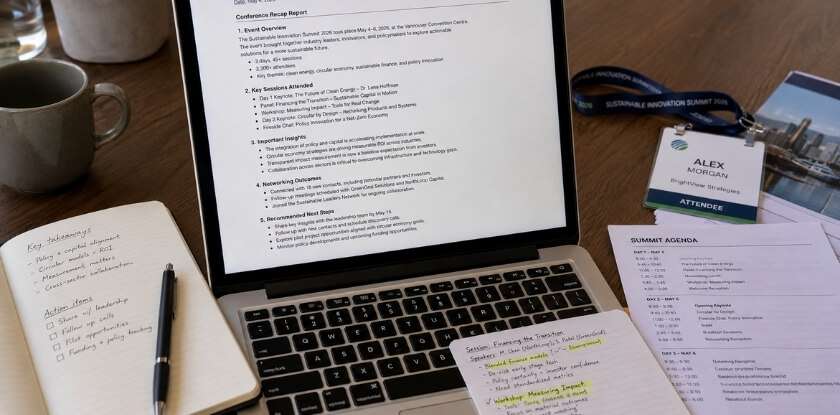
This step is often skipped, and that is a mistake. Writing a recap report forces you to consolidate your notes into something coherent, and it creates a record you can reference six months from now when you are trying to remember why a particular conference was approved. It does not have to be long, but it does have to be useful. This is the short version.
Recap Report Structure and Template
Keep it structured. This format works across most professional settings:
| Part | What to include |
|---|---|
| 1. Conference overview | Event name, dates, location and who attended, plus a one-line summary of what the conference covers, which helps if your reader has never heard of it. Half a page at most. |
| 2. Goals vs. what happened | The goals you set before going, and an honest account of which you met. If you went to find a vendor and did not, say so. If you found something better you did not expect, say that too. This is how you build credibility with the reader. |
| 3. Key learnings | Bullet points, not paragraphs, taken straight from your actionable takeaways. Five to ten is usually right; more and people stop reading. Focus on what matters to your team or organization, not everything you personally found interesting. |
| 4. Sessions attended | A brief list. If recordings of missed sessions are available, note that too, since a colleague may want to watch them. Mention slides if the organizers have posted them. |
| 5. People met (optional) | A short list of contacts, their company and one line on why they are relevant. Not a full directory, just the names that matter. |
| 6. Recommended actions | The core of the report. What should your organization do based on what you learned? Be specific: “research X vendor,” “revise Y policy,” “pilot Z in Q3.” This part turns a recap into an action plan. |
| 7. Cost summary | Attach or link your expense report, with the total cost against the conference budget. If reimbursement is still in progress, say so clearly, because HR teams like to know the status upfront. |
Length depends on the reader. One or two pages usually suit a manager, and a fuller report for a multi-day event can run longer. Keep it short enough that someone will read it.
Who to Send It to and How to Present It
Your direct manager, obviously, but think a step further.
- Colleagues who missed the event: a shorter version with the key learnings and recommended actions. Skip the expense breakdown, since that is not their concern. If recordings or slides are public, include those links so they can go deeper.
- A department head or executive: cut it to one page. Lead with the business implications and the action items. They do not need a session-by-session breakdown; they need to know whether attending was worth it before the conversation about next year’s budget.
- HR or learning and development: send a copy for the record. Some organizations use these reports to inform future conference decisions, and having yours on file does not hurt.
Send a PDF if you are presenting it formally. A shared document works fine for internal sharing, since people can comment and ask questions, and you can update it as actions are completed.
Timing matters. Send it within a week of getting back. Any later and it reads like an afterthought, even if the content is solid. Pushing through fatigue to finish it while the event is still fresh is what separates the people who get value from conferences from the ones who just collect tote bags.
Evaluate Your ROI and Justify the Conference to Your Employer
Attending a conference costs money: registration fees, travel, accommodation, meals and time away from your desk. Someone paid for that, whether you, your company or a mix of both, and there is a real question on the table: was it worth it?
This is where it is easy to go quiet: come back, file the expense report and move on. Taking 30 minutes to calculate your ROI and explain it clearly makes the case for next year’s event much easier.
How to Calculate Your Conference ROI
Start with the numbers you already have. Add up every dollar spent: registration, any paid workshops, flights or fuel, local transport and parking, accommodation, meals and any materials you bought. Include your daily rate or salary for the days you were out of office, if your employer factors that in. That is your total investment.
Now list what you got back. This is trickier, but not impossible. Concrete returns might include:
- New contacts who could become clients, referral partners or vendors. Estimate a realistic value per lead if you can.
- A specific skill, tool or process you learned that will save your team hours each week.
- A partnership or deal started at the event.
- Content or ideas that will feed into campaigns, product decisions or training.
For example, say you attended a session on email segmentation and plan to apply it to your next campaign. If your list is 10,000 people and even a 0.5% lift in conversions is realistic, put a dollar figure on it. It does not need to be exact. It needs to be defensible.
Some returns are harder to quantify, such as inspiration, renewed motivation and industry awareness. Mention those, but do not lean on them as your main argument. A number, even an estimate, is easier for an employer to weigh.
A simple formula that works:
ROI % = ((Value of Returns − Total Cost) ÷ Total Cost) × 100
Here is an example with made-up numbers. You spent $1,800 and can reasonably attribute $4,500 in value, for instance a new client introduction and a process improvement that saves three hours a week for the next month. That works out to a 150% ROI. Write that down. Keep your notes and actionable takeaways nearby while you do this, because they are your evidence.
Ways to Show Your Boss or HR the Value You Brought Back
Your recap report, if you wrote one, already does a lot of this work. But you can go further.
When you send your manager the short recap from your first week, attach the expense report if reimbursement is pending. It prompts the reimbursement conversation naturally and shows you are organized.
A few other ways to demonstrate value:
- Run a brief team debrief. Even a 15-minute video call or a chat message summarizing your key learnings shows you are sharing the investment across the team, not hoarding insights.
- Share missed-session recordings or slides if the organizer makes them available. Forward them to colleagues who could not attend. That is immediate, visible value.
- Tie your takeaways to current projects. Do not just say “I learned about X.” Say “I learned about X, and here is how I am applying it to [specific initiative] starting this sprint.”
- Reference your conference goals. If you set goals before going, compare them to your actual outcomes. Even partial wins are worth reporting.
- Loop in HR. Some HR teams keep records of professional development activity, and getting your attendance documented helps you long term. Send them the same summary or a slightly adapted version.
If you funded the trip yourself and hope to build a case for employer sponsorship next time, document all of this somewhere permanent. Your LinkedIn About section is a good place to mention the conference by name and what you took away from it. It signals that you take professional development seriously, and it is visible to the people making budget decisions. Getting conference costs covered again is less about seniority than about closing the loop each time.
Managing Conference Fatigue: Mental and Physical Recovery
It is easy to underestimate how drained you will feel after a conference. You spent two or three days switching context from session to session, making small talk with strangers, sitting in uncomfortable chairs, eating mediocre catered food and sleeping in a hotel bed that was not yours. That takes a real toll, and if you ignore it, the quality of your follow-up work drops.

Why Post-Conference Exhaustion Happens
Post-conference fatigue is not just tiredness. Several things hit you at once:
- Social overload. Even if you are extroverted, a conference demands sustained social performance: handshakes, elevator pitches, remembering names and keeping conversations going. That uses up mental energy quickly.
- Information density. Back-to-back sessions, keynotes, workshops and hallway conversations mean your brain has been processing non-stop for days.
- Travel. Time zone changes, disrupted sleep, airport noise and unfamiliar environments all add up, and by the time you get home you are running on less.
- A psychological let-down. Conferences build momentum and excitement. Coming home to a full inbox and a normal Tuesday can feel flat by comparison, which makes it harder to act on your takeaways at exactly the wrong moment.
Understanding why you feel this way helps you treat it as a real recovery situation, not laziness.
Recovery Checklist: Sleep, Hydration, and Schedule Decompression
Do not try to power through it. What actually helps:
- Sleep first. If you got back late, do not set an early alarm unless something is genuinely on fire. A full night’s sleep will do more for your productivity than an early start, and your brain consolidates memory during sleep, including the learnings you picked up at the conference.
- Drink water. You have probably been drinking more coffee and less water than usual. Rehydrate on the first morning back, since being short of water can make tiredness feel worse.
- Block a decompression window in your calendar. Put two to three hours in the calendar the day after you return and label it “Conference Recovery.” Use it to go through your notes at a relaxed pace, not to sprint through email. If you process everything while running on fumes, your action plan will be shallow and rushed.
- Delay non-urgent meetings. If you can push non-critical calls by a day, do it. One day rarely matters to anyone else, but it matters a lot to the quality of your thinking.
- Eat something real. After days of carb-heavy buffets and rushed sandwiches, your energy is uneven. A normal home-cooked meal helps.
Do not confuse recovery with avoidance. Resting for a day is smart. Waiting five days to start your follow-up emails because you “still feel tired” is how the value of the trip evaporates. Recover quickly and deliberately, so you can get back to the work that makes the conference worth what it cost.
Plan Ahead for Your Next Conference
It is common to walk away from a conference, file the expense report and then repeat the same vague process a year later: same budget anxiety, same scramble to justify attendance, same scattered notes you never act on. This is where you break that cycle.
Lessons to Take from This Conference Experience
Before you close the loop on this conference, spend 20 to 30 minutes on an honest debrief with yourself. This is not the recap report for HR, just an internal audit. Ask yourself a few direct questions:
- What worked? Did you hit your goals? If you walked in wanting three solid vendor conversations and left with seven business cards from people you genuinely connected with, that is a win. If you wanted to attend four sessions on a topic and only made two, figure out why: over-scheduled social events, poor session timing or weak planning.
- What did not work? Be honest. Maybe you did not review the agenda before day one. Maybe you skipped the networking lunch because you were tired and regretted it. Maybe you spent too long in the expo hall chasing free items. These are not failures, they are calibration data.
- What were your raw takeaways? Not the polished ones in your recap report. The idea you scribbled at 11pm that felt important, or the offhand comment from a speaker that made you rethink something you had been doing for two years. Capture those before fatigue wipes them clean.
- What would you do differently with your time? Time is the real constraint at any conference, and you could not attend every session you wanted. Some recordings and slides may be posted later, so check the conference website or app and download what matters.
Write this debrief somewhere you will find it again, such as a private note or a document labeled with the conference name and year. Future you will be grateful.
Set Goals and Budget for Your Next Conference in Advance
A common mistake is treating goals and budget as an afterthought, something you sort out two weeks before the event when registration prices have already risen.
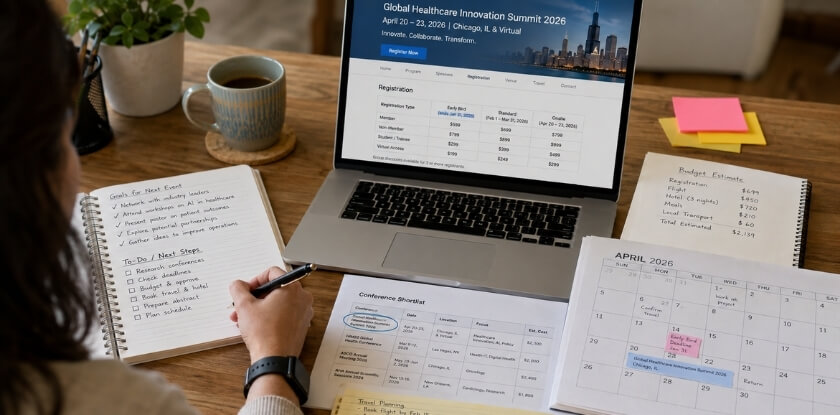
Start with your goals, not the event list. What do you need to accomplish professionally in the next six to twelve months? New vendor relationships, a skill gap to close, a speaking opportunity to build your personal brand? Your conference choice should come from those answers, not from a blanket “we always attend this one.” Write down two or three specific goals before you open any conference website. “Meet someone working in X who has solved Y” is useful. “Network” is not.
Then set a realistic budget. It is easy not to know what a conference costs until you are filing the reimbursement paperwork afterward. Break it down in advance:
- Registration fee (compare early-bird and regular rates, which can differ noticeably)
- Travel (flights, train or mileage)
- Accommodation (check whether the official conference hotel is really cheaper than booking independently)
- Food and incidentals, which add up in expensive cities during busy weeks
- Pre-conference workshops or add-on sessions, which often cost extra
If your employer covers this, talk to your HR department before you commit and get written confirmation of what is reimbursable and what is not. Surprises in expense reports create friction you do not need.
Use this conference’s ROI as your pitch. You have already worked out the return on this event. If one connection led to a partnership, a new client, a solved problem or a skill that saved your team ten hours, that is your case for next year’s budget. Keep a one-page document that tracks outcomes over time, which makes the ask easy.
Protect your recovery time. Block recovery time when you book the conference, not after. If the event ends on Sunday, reserve Monday morning for note review and inbox processing instead of back-to-back calls. Crashing the week you return destroys the momentum you built.
The plan you build now, with real goals, a real budget and specific lessons from this experience, gives the next conference a better chance of paying off than showing up and hoping something sticks.
Complete Post-Conference Action Checklist (Printable and Scannable)
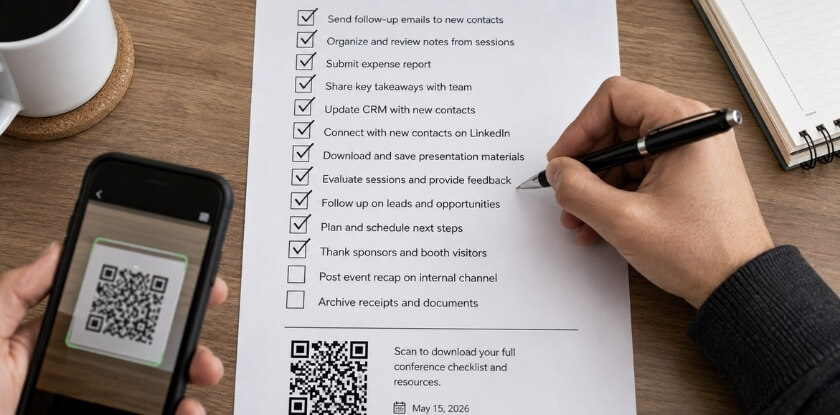
This is everything above distilled into one checklist that you can print, paste into a notes app or work through in a spreadsheet. Tick things off as you go.
Within 24 Hours
- [ ] Offload everything from your brain into a voice memo, notebook or document. Do not filter yet, just capture.
- [ ] Send at least five follow-up emails to the people you most want to stay connected with, each mentioning something specific you talked about. A generic “great to meet you” email is easy to ignore.
- [ ] Connect on LinkedIn with everyone you exchanged cards or details with, adding a short note on where you met.
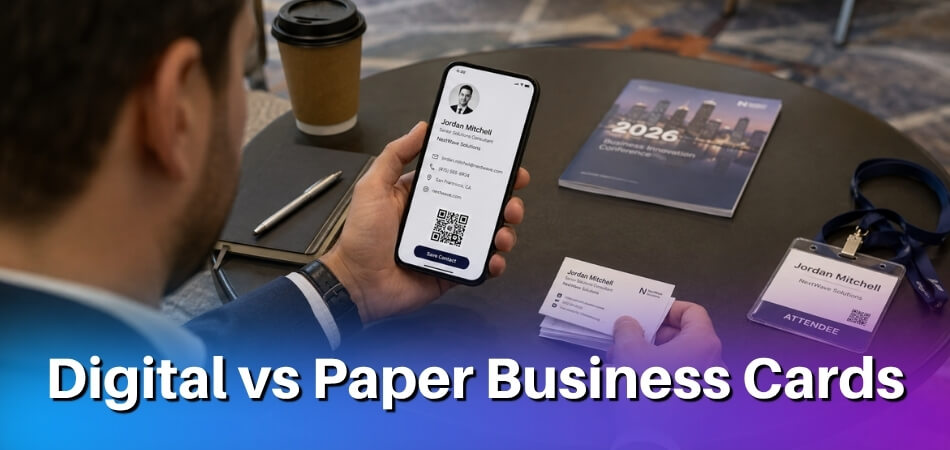
- [ ] Photograph or scan any business cards before they get buried in a bag, and add a line to each on where you met and what you promised.
- [ ] Save any slides, handouts or links you were given while the sessions are fresh in your mind.
- [ ] Check whether recordings of missed sessions have been posted.
- [ ] File your receipts and start your expense report. Reimbursement timelines vary by employer, so do not let it sit.
Days 2 to 5
- [ ] Sort your notes into themes or topics, and flag the three to five takeaways you actually intend to act on.
- [ ] Reply to any follow-up responses you received. Do not let a warm reply go cold.
- [ ] Draft your recap report if your employer or HR department expects one. Keep it tight: what you learned, what you will do differently, and whether the budget was well spent.
- [ ] Block time on your calendar for commitments you made at the event: calls, demos, referrals, shared resources.
- [ ] Start building your action plan. Specific tasks, named owners if a team is involved, real deadlines.
- [ ] Schedule decompression time if you have not already. Fatigue can make decisions harder, so plan around it instead of pushing through.
Week 2
- [ ] Send a second-touch follow-up to the contacts who did not reply. One short, friendly nudge is fine.
- [ ] Update your LinkedIn About section or profile with anything you learned or any new direction your thinking has taken. If you presented, add the talk to your CV.
- [ ] Download or bookmark any slides or resources you have not reviewed yet.
- [ ] Share key learnings with your team: a short chat message, a 15-minute stand-up or a written summary. It does not have to be formal.
- [ ] Check in on your action plan. Which tasks have started and which have not? Adjust timelines if needed.
The Following Month
- [ ] Calculate your ROI. Compare your original goals honestly against what happened: new contacts, knowledge gained, leads generated, ideas that turned into projects. Put numbers on it where you can.
- [ ] Submit your final expense report if it is not done, and chase reimbursement if it is overdue.
- [ ] Update your personal brand assets, such as your speaker bio, portfolio and LinkedIn profile, to reflect sessions you attended, topics you now know better or new credentials.
- [ ] Review the recap report you wrote and flag any items that were not acted on. Either commit to them properly or drop them. Limbo is not a strategy.
- [ ] Set a reminder for any session recordings you still have not watched.
- [ ] Start thinking about next year’s budget request early. Your ROI notes from this event are your best argument.
The Ongoing Stuff (Do Not Let It Slide)
- [ ] Maintain the new connections. A LinkedIn comment, a shared article or a relevant introduction takes two minutes and keeps relationships alive.
- [ ] Revisit your actionable takeaways every quarter. Implementation drifts without checkpoints.
- [ ] Keep your notes somewhere searchable. You will refer to them more than you expect, especially when a similar situation comes up months later.
You will not need every item every time. Some conferences are a single-day local event, others are a week-long international investment, so scale the checklist to fit. But the 24-hour window and the follow-up emails apply every time.
From our experience at MS International: Our conferences are held in person in the Greater Toronto Area. Approved speakers receive a certificate after their presentation, so check that your name, organization, position and presentation title are correct. The certificate confirms your participation; it is not a publication certificate or an academic qualification. Publication is a separate process: where the event offers it, accepted papers presented in person may be considered for the conference proceedings, subject to peer review, formatting and the event publication policy. For certificate or participation questions, contact the support team through the official email, contact form or phone number.
FAQ: After a Conference
The week after an event is when follow-up emails, a recap report for your employer and the ROI calculation compete for attention, along with plain post-conference tiredness.
How soon should I follow up with people I met at a conference?
Ideally within 24 to 48 hours, while they still remember you. If travel delays you, a note within a week still works. Send a short, personal email that mentions something specific from your conversation so it does not read like a template.
What should I actually write in a follow-up email?
Keep it brief: remind them who you are, mention one thing you talked about and state a clear next step, such as a call, a shared resource or staying connected on LinkedIn. Three to four sentences is plenty. You do not need a lengthy recap.
How do I organize conference notes so they are actually useful later?
Process them the same day or the night after. Sort your raw notes into things to implement, people to contact, ideas to explore and resources to find. If you cannot do that yet, flag the two or three most important points so they do not get buried.
What if I missed sessions I wanted to attend?
Check whether the organizers are sharing recordings or slides, as some events do and some do not. Some require you to log in with your registration account. If nothing is posted, ask the speaker directly for their slides.
How do I write a recap report if my employer paid for the conference?
Focus on actionable takeaways, not a narrative of what you attended. Your manager and HR department want to know what the organization gains from the investment, so cover key learnings, concrete next steps and links to current projects. One to two pages is usually enough.
What goes into a conference ROI calculation?
Total cost (registration, travel, accommodation, meals) compared with measurable outcomes: deals moved forward, skills gained, contacts with real business potential and processes you now use. Concrete estimates beat vague impressions, especially when you are making the case for next year’s budget.
Is it normal to feel exhausted and unproductive after a conference?
Yes, it is common. A few days of packed schedules, socializing and information overload take a toll. Put decompression time in your calendar before you return to full output, and do not expect full energy the next morning. If the exhaustion lasts for weeks, talk to a doctor.
Should I update my LinkedIn after every conference I attend?
Not after every one. Update your About section and relevant profile sections when you gained a certificate, picked up a new skill or had a significant shift in professional direction. It signals to your network that you are active and growing.
How do I share what I learned at a conference with my team?
Send a short recap of three to five takeaways within a week, each tied to work your team is already doing. If people want more, offer a short lunch-and-learn or a slot in a team meeting, and keep the slides and links in one shared folder.
How do I turn conference goals into an actual plan?
Write out your action plan with specific tasks and a date on each one. If you said you would read a recommended book, put a date on it. If you planned to contact five people, set a deadline for each. Vague plans do not survive a full inbox.
What is the biggest mistake people make after a conference?
Doing nothing with what they learned. They come back motivated, get swallowed by their normal workload, and the notes sit untouched. Taking even one concrete action in the first 48 hours makes it far more likely you will follow through on the rest.
Conclusion: The Real Value of a Conference Is Created Afterward
The flight home can feel like the finish line. It is really the starting gun. The sessions, the hallway conversations and the business cards stuffed in your jacket pocket do not matter if they stay there. The conference itself is raw material, and the value gets built in the days and weeks that follow.
Think about what you paid to be there: registration, travel, accommodation and two or three days away from your job. The return does not arrive automatically. It comes from the follow-up email you send on day one, the connections you personalize before the week is out, the notes you turn into three concrete actions, and the recording or slide deck you pull one usable idea from.
Handle your expense report early, while receipts are easy to find, and give yourself permission to run at less than full capacity for a day or two. Just do not let that recovery window turn into avoidance.
A strong return usually comes less from attending a better event than from being disciplined about what happens after. You do not need to do everything perfectly. You need to do something, consistently, starting within 24 hours of walking out the door. That is how a conference pays off. Not by showing up, but by following through.