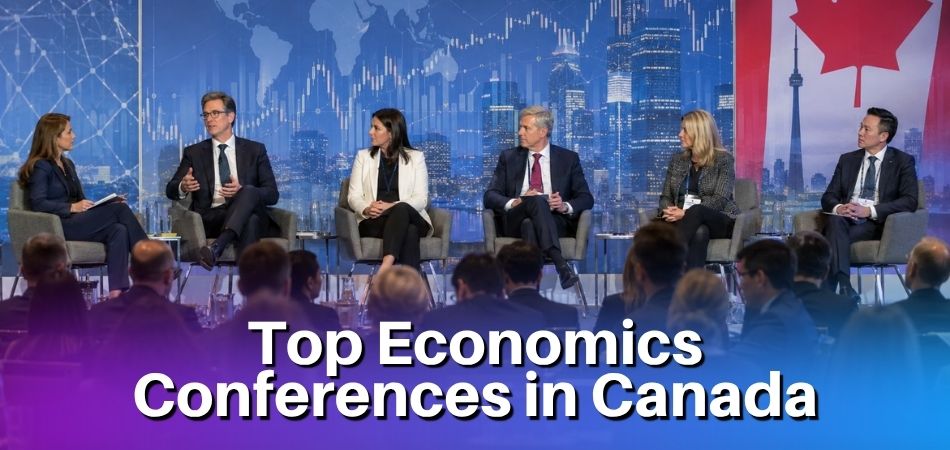
Top 10 Economics Conferences in Canada 2026

Are you planning to attend an economics conference in Canada in 2026 but not sure which one fits your goals? The options can feel confusing because each event has a different focus, audience, location, format, and price. This guide brings the key details together so you can compare conferences without checking multiple pages.

The list starts with the 1st International Conference on Economics in Toronto, a broad in-person event for economists, students, researchers, policymakers, and finance professionals. The 2nd International Conference on Economics also focuses on research and policy. Toronto also hosts the IDA Annual Conference for urban economic development and the African Economics and Development Conference for development-focused attendees.

Other events add more specialized value. EDAC 2026 focuses on regional economic development, while FNEAC 2026 highlights Indigenous entrepreneurship and partnerships. CREEA/ACERE 2026 supports environmental and resource economics, and 3rd AI in Finance 2026 covers finance, fintech, AI, and machine learning. This guide also covers costs, formats, student benefits, invitation letters, and networking tips.

Top 10 Economics Conferences in Canada

Top 10 Economics Conferences in Canada 2026 — Quick Comparison

Before getting into the details of each event, here’s a side-by-side look at all ten. Dates, cities, and formats can shift — always cross-check against the official conference page before you book flights.

#Conference NameApproximate DateCity / LocationFormatKey Focus
11st International Conference on Economics04 August 2026Toronto, ONIn-personEconomic systems, policy discussion, global research collaboration
272nd Annual Conference & Marketplace — International Downtown Association01–03 September 2026Toronto, ONIn-personUrban economic development, downtown growth, place management
32nd International Conference on Economics11 August 2026Toronto, ONIn-personEconomics research, policy analysis, applied economic issues
4EDAC 2026 Annual Conference14–17 September 2026Moncton, NBIn-personEconomic development, investment attraction, regional business growth
55th International Conference on African Economics and Development04 September 2026Toronto, ONIn-personAfrican economics, development policy, sustainable growth
6First Nations Economic Advancement Conference 202614–17 September 2026Brampton, ONIn-personIndigenous economic development, entrepreneurship, partnerships
7Economic and Military Sovereignties in the Face of Globalization and Geopolitical Turmoil30 September–02 October 2026Québec City, QC (Université Laval)In-personEconomic sovereignty, trade, defence economics, security policy
852nd Annual Atlantic Canada Economics Association Conference02–04 October 2026Wolfville, NSIn-personRegional economics, applied research, Atlantic Canada policy
9CREEA/ACERE Annual Conference 202602–03 October 2026Waterloo, ONIn-personEnvironmental economics, resource policy, sustainability transitions
103rd AI in Finance 202613–15 October 2026Montréal, QCHybridAI in finance, fintech, financial economics research

A few things worth flagging about this table.

  • The 1st International Conference on Economics is the first one to look at. It is in-person, based in Toronto, and broad enough for economists, students, policy professionals, researchers, and finance practitioners.
  • Format matters more than people think. Most events are in-person, while 3rd AI in Finance 2026 also includes limited virtual presentation and online listener options. Check this before registering.
  • Toronto hosts several economics events in 2026. The 1st International Conference on Economics2nd International Conference on Economics72nd Annual Conference & Marketplace, and 5th International Conference on African Economics and Development are all Toronto-based.
  • Similar conference names can be easy to mix up. The 1st International Conference on Economics2nd International Conference on Economics, and 5th International Conference on African Economics and Development are separate events with different dates, audiences, and focus areas.
  • Dates and budgets need a second check. Some events already list registration fees, while others have not published official pricing yet. Check the organizer’s page before booking travel or paying.

1. 1st International Conference on Economics

The 1st International Conference on Economics is a broad economics-focused event in Toronto for academics, researchers, students, policymakers, and professionals. If you want a general economics conference that covers research, policy, and applied economic thinking, this is a natural starting point on the 2026 calendar.

Conference Details — Dates, Venue, and Organizer

The conference is scheduled for August 4, 2026, in Toronto, Canada. It is listed as an in-person conference, which makes it useful for attendees who want face-to-face academic discussion, networking, and professional exchange.

The event focuses on economic systems, emerging theories, policy debate, and cross-border collaboration. Since this is the first edition, attendees should check the official event page carefully for final agenda details, speaker updates, registration rules, and any documentation process.

Who Can Attend and How to Register

This conference is suitable for academic economists, university researchers, graduate students, doctoral students, central bank analysts, monetary policy professionals, government economists, corporate strategists, development consultants, NGO representatives, and journalists covering economic affairs.

Here’s how it works practically:

  1. Check the official event page first. Confirm the final schedule, registration category, and participation rules.
  2. Choose your attendee type. You may need to register as a presenter, author, listener, student, or professional attendee depending on the options available.
  3. Complete registration early. If you are traveling internationally, allow enough time for travel planning and any documentation request.

If you need an invitation letter, do not assume it is automatic. Contact the organizer after registration and ask what documents they can provide.

Special Opportunities and Networking Value

The main value of this conference is its broad economics audience. It can bring together academic researchers, public-sector economists, students, financial professionals, and policy-focused attendees in one setting.

For early-career researchers, this can be useful for presenting ideas, meeting peers, and building international academic exposure. For professionals, it may offer a chance to understand economic trends from both research and policy perspectives.

2. 2nd International Conference on Economics

The 2nd International Conference on Economics is another Toronto-based event focused on economics research, policy analysis, market trends, and applied economic issues. It is relevant for attendees who want a structured academic and professional discussion around modern economic challenges.

Conference Details — Dates, Venue, and Organizer

The conference is scheduled for August 11, 2026, in Toronto, Canada. The format is understood as in-person based on the event listing provided.

The conference covers economics research, academic discussion, policy analysis, market trends, and applied economic issues. The official source is listed as the event’s official conference page. Registration fees are published: Author early-bird USD $499, author regular USD $599, and listener USD $499.

Who Can Attend and How to Register

The primary audience includes economics researchers, academics, students, policymakers, professionals, and international delegates.

Here’s how it works practically:

  1. Review the registration category. Decide whether you are attending as an author, presenter, or listener.
  2. Check the fee deadline. The early-bird author fee is lower than the regular author fee.
  3. Register through the official conference page. Keep your confirmation email and payment receipt for records.

If you are attending from outside Canada, ask the organizer directly whether they provide a formal invitation letter after confirmed registration.

Special Opportunities and Networking Value

This event is useful for researchers and professionals who want a focused economics platform in Toronto. Because it includes both academic and applied economic topics, it can suit people working in universities, policy spaces, government offices, and business sectors.

It may also be helpful for students or early-career researchers who want to present work, receive feedback, and connect with international economics delegates.

3. 72nd Annual Conference & Marketplace — International Downtown Association

The 72nd Annual Conference & Marketplace — International Downtown Association is different from a traditional economics research conference. Its focus is urban economic development, downtown revitalization, place management, public spaces, AI, and city growth.

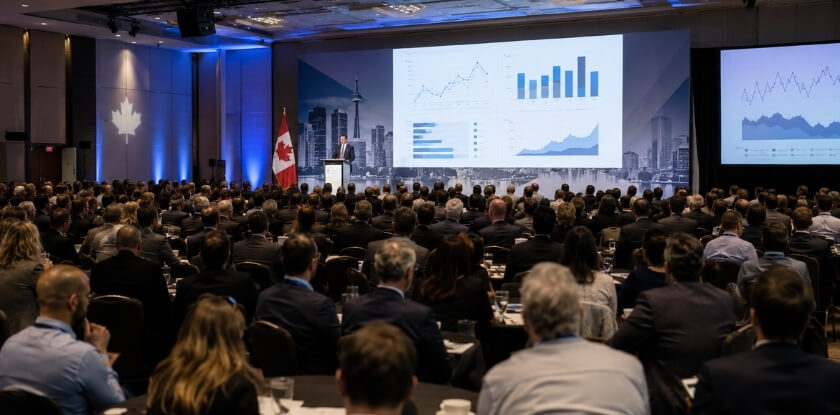
Canadian Economics Conference

Conference Details — Dates, Venue, and Organizer

The conference is scheduled for September 1–3, 2026, in Toronto, Ontario, Canada. It is an in-person event focused on downtown and urban economic development.

The event is organized around city-building, local economic activity, downtown management, inclusive public spaces, and resilient local economies. The official registration fees listed include Canadian member standard rate USD $780, Canadian nonmember standard rate USD $1,030, and student rate USD $149. Fees are listed in USD and may be subject to change.

Who Can Attend and How to Register

This conference is mainly for urban economic development leaders, downtown association professionals, city planners, business district managers, policymakers, and place-management professionals.

Here’s how it works practically:

  1. Check whether you qualify for a member or nonmember rate. The fee difference is significant.
  2. Review the conference program. This event is more applied and city-focused than academic.
  3. Register through the official IDA conference page. Students should check whether student-rate requirements apply.

International attendees should confirm documentation policies directly with the organizer if travel support letters are needed.

Special Opportunities and Networking Value

The biggest value here is practical urban economics. Attendees can learn how downtowns, business districts, and city centers are being managed for growth, resilience, and inclusion.

This is a strong fit for people working in city development, downtown management, urban policy, economic planning, and place-based business improvement.

4. 5th International Conference on African Economics and Development

The 5th International Conference on African Economics and Development is focused on African economic issues, development policy, poverty reduction, trade, investment, and sustainable growth. It is more specialized than a general economics conference.

Conference Details — Dates, Venue, and Organizer

The conference is scheduled for September 4, 2026, in Toronto, Canada. It is listed as an economics and development-focused event.

The main topics include African economics, regional development challenges, poverty reduction, trade, investment, sustainable growth, and development policy. The published budget includes author early-bird USD $499, author regular USD $599, and listener USD $499.

Who Can Attend and How to Register

The audience includes economists, development researchers, policymakers, academics, students, NGOs, and professionals focused on African economic development.

Here’s how it works practically:

  1. Decide whether you are attending as an author or listener.
  2. Check the topic fit before registering. This event is specific to African economics and development.
  3. Complete registration through the official conference page. Keep your confirmation and payment records.

If you need visa or travel documentation, contact the organizer after registration and confirm whether a formal invitation letter is available.

Special Opportunities and Networking Value

This conference is useful for people working on African development, regional policy, poverty reduction, investment, and sustainable growth. It can connect academic research with real-world development challenges.

For researchers and students, it may offer a focused platform to present work in African economics. For NGOs and policy professionals, it can support discussion around development planning and practical economic solutions.

5. EDAC 2026 Annual Conference

The EDAC 2026 Annual Conference is built around economic development, investment attraction, local business growth, workforce, technology, and regional strategy. It is more practice-based than a traditional academic economics conference.

Conference Details — Dates, Venue, and Organizer

The conference is scheduled for September 14–17, 2026, in Moncton, New Brunswick, Canada. It is an economic development-focused event.

The event covers investment attraction, trade, regional business growth, workforce development, technology, community prosperity, and local economic strategy. The official registration fee is not published on the accessible event page yet, so attendees should check the official EDAC conference page for updates.

Who Can Attend and How to Register

This event is mainly for economic development officers, municipal leaders, regional development professionals, policymakers, business leaders, and community development experts.

Here’s how it works practically:

  1. Check the EDAC conference page for registration updates.
  2. Review whether the sessions match your region or role.
  3. Wait for official pricing before budgeting. The registration fee has not been clearly published yet.

If you are traveling internationally, contact the organizer directly before making assumptions about invitation letters or travel documentation.

Special Opportunities and Networking Value

The main value of this conference is its applied economic development focus. It is especially useful for professionals working with cities, regions, municipalities, investment attraction, and business growth programs.

Unlike a research-only event, EDAC may offer more direct networking with people responsible for local and regional economic outcomes.

6. First Nations Economic Advancement Conference 2026

The First Nations Economic Advancement Conference 2026 focuses on Indigenous economic development, entrepreneurship, partnerships, investment, and First Nations-led economic growth. It brings a distinct and important perspective to the economics conference calendar.

Conference Details — Dates, Venue, and Organizer

The event is scheduled for September 14–17, 2026, in Brampton, Ontario, Canada. It is focused on First Nations economic advancement and community-led development.

The conference covers Indigenous entrepreneurship, community growth, business partnerships, investment, networking, and economic development. The official registration fee is not published on the accessible event page yet.

Who Can Attend and How to Register

The primary audience includes First Nations entrepreneurs, Economic Development Officers, community leaders, government representatives, industry partners, and business organizations.

Here’s how it works practically:

  1. Check the official FNEAC page for registration details.
  2. Confirm whether registration is open and what attendee categories are available.
  3. Review the program focus before booking travel. This event is centered on First Nations economic priorities.

For international attendees or out-of-province visitors, confirm documentation and registration policies directly with the organizer.

Special Opportunities and Networking Value

This conference is valuable because it focuses on economic development from a First Nations perspective. It may support conversations around entrepreneurship, partnerships, community investment, and Indigenous-led business growth.

For government, industry, and business organizations, it can also provide a meaningful platform to understand partnership opportunities and community-driven economic priorities.

7. Economic and Military Sovereignties in the Face of Globalization and Geopolitical Turmoil

Economic and Military Sovereignties in the Face of Globalization and Geopolitical Turmoil is a specialized academic conference focused on the links between trade, investment, security, defence, globalization, and economic sovereignty.

Conference Details — Dates, Venue, and Organizer

The conference is scheduled for September 30–October 2, 2026, at Université Laval in Québec City, Canada. It is connected to Université Laval / NEME based on the official source provided.

The event focuses on trade, investment, economic sovereignty, defence economics, globalization, geopolitical risk, security, and public policy. The official registration fee is not published on the accessible event page yet.

Who Can Attend and How to Register

The main audience includes economists, political economy researchers, policy scholars, international trade experts, security researchers, and academics.

Here’s how it works practically:

  1. Review the official Université Laval / NEME page.
  2. Check whether the event requires registration, paper submission, or invitation.
  3. Wait for official fee details before final budgeting.

If you are an international participant, ask the organizer directly about documentation after confirming your participation status.

Special Opportunities and Networking Value

This event is valuable for people studying the intersection of economics and security. It is especially relevant for researchers working on defence economics, trade policy, investment security, and geopolitical risk.

Its strength is the specialized topic. It is not a broad economics conference, but it can be highly useful for academics and policy professionals working in economic sovereignty and security-related fields.

8. 52nd Annual Atlantic Canada Economics Association Conference

The 52nd Annual Atlantic Canada Economics Association Conference is a regional economics conference focused on economics research, Atlantic Canada policy issues, regional development, and applied economics.

Conference Details — Dates, Venue, and Organizer

The conference is scheduled for October 2–4, 2026, in Wolfville, Nova Scotia, Canada. The official source provided is connected to Acadia University / ACEA.

The listed theme is “Better Living in Atlantic Canada.” Topics include economics research, regional development, applied economics, and Atlantic Canada policy issues. The official registration fee is not published on the event page yet.

Who Can Attend and How to Register

This conference is mainly for economists, researchers, professors, graduate students, early-career scholars, and interdisciplinary policy researchers.

Here’s how it works practically:

  1. Check the Acadia University / ACEA page for registration updates.
  2. Review whether paper submissions or attendance registration are required.
  3. Track fee details once they are published.

If you are presenting or traveling from outside Canada, confirm documentation support directly with the conference contact.

Special Opportunities and Networking Value

The strongest value of this conference is its regional focus. It is a good fit for people studying Atlantic Canada’s economy, local policy issues, labour markets, development, and applied economic research.

For graduate students and early-career scholars, regional economics conferences can also offer more accessible networking and presentation opportunities than very large international events.

9. CREEA/ACERE Annual Conference 2026

The CREEA/ACERE Annual Conference 2026 focuses on environmental economics, resource economics, climate policy, sustainability transitions, energy, and natural resources.

Conference Details — Dates, Venue, and Organizer

The conference is scheduled for October 2–3, 2026, in Waterloo, Ontario, Canada. It is focused on resource and environmental economics.

The event covers environmental economics, resource policy, climate policy, sustainability transitions, energy, natural resources, and economic policy. The official registration fee is not published on the accessible conference page yet.

Who Can Attend and How to Register

The main audience includes environmental economists, resource economists, policy researchers, academics, graduate students, and sustainability professionals.

Here’s how it works practically:

  1. Check the official CREEA/ACERE conference page for registration updates.
  2. Review whether the event includes paper submissions, panels, or regular attendance.
  3. Do not estimate fees until official pricing is released.

Anyone needing travel documentation should contact the organizer directly after registration or acceptance, depending on the event process.

Special Opportunities and Networking Value

This conference is especially useful for people working in climate economics, energy policy, resource management, sustainability, and environmental regulation.

Its value comes from its specialized research community. Attendees can expect more focused conversations than at a general economics conference, especially around climate, natural resources, and policy design.

10. 3rd AI in Finance 2026

The 3rd AI in Finance 2026 conference connects financial economics, artificial intelligence, machine learning, fintech, risk, markets, and data-driven finance research. It is one of the more technical events on this list.

Conference Details — Dates, Venue, and Organizer

The conference is scheduled for October 13–15, 2026, in Montréal, Québec, Canada. It also includes limited virtual presentation and online listener options, making the format more flexible than most events listed here.

The event is hosted through the official Concordia event page provided. Published fees include early-bird regular registration CAD $650 + taxes, PhD registration CAD $325 + taxes, online presentation CAD $300, and online listener CAD $75 + taxes.

Who Can Attend and How to Register

The primary audience includes financial economists, AI researchers, finance professionals, PhD students, postdoctoral researchers, policymakers, and industry practitioners.

Here’s how it works practically:

  1. Choose the correct participation type. Options include in-person, online presentation, and online listener formats.
  2. Check whether you qualify for the PhD rate.
  3. Register through the official Concordia event page.

If you need documentation for travel, check whether support is available for in-person attendees and request it as early as possible.

Special Opportunities and Networking Value

This conference is valuable for people working where finance and AI overlap. It can support research and professional discussion around fintech, markets, machine learning, risk analysis, and investment-related data tools.

For PhD students and postdoctoral researchers, the reduced registration rate may make it more accessible. For professionals, the event offers a technical view of how AI is changing financial economics and market research.

Online vs In-Person: Which Conference Format Is Right for You?

Canada’s 2026 economics conferences aren’t all built the same. Some are fully in-person, some run entirely online, and a growing number offer hybrid formats where you can choose your mode of participation. That choice matters more than people think — and it’s worth getting right before you register.

Online vs In-Person Which Conference Format Is Right for You

The Case for Attending In-Person

If your goal is networking, in-person attendance is still the stronger option. Events like the 1st International Conference on Economics, 2nd International Conference on Economics, EDAC 2026 Annual Conference, and First Nations Economic Advancement Conference 2026 are more useful when you can meet speakers, researchers, policymakers, and professionals face to face.

The 1st International Conference on Economics is a good example. Since it brings together academics, graduate students, central bank analysts, government economists, consultants, and finance-sector professionals, the real value is not only in the sessions. It is also in the conversations before panels, during breaks, and after presentations.

In-person attendance also helps if you are presenting research. You can read the room, answer questions directly, and build stronger academic or professional visibility. For students and early-career researchers, that can be more valuable than simply watching sessions online.

The downside is cost. Registration alone can be significant. The 1st International Conference on Economics lists author regular pricing at USD $599, author early-bird at USD $499, and listener pricing at USD $499. Add flights, hotels, meals, and local transport, and the full trip can become expensive quickly.

The Case for Going Virtual

There are fewer clearly virtual options on this list. Most conferences appear to be designed around in-person attendance. The main exception is 3rd AI in Finance 2026, which includes limited virtual presentation and online listener options.

That makes 3rd AI in Finance 2026 useful for attendees who want access to finance, AI, fintech, machine learning, and financial economics discussions without fully traveling to Montréal. The listed online listener fee is CAD $75 + taxes, while online presentation is CAD $300, making it much more accessible than full in-person travel.

Virtual participation works best if your main goal is learning, presenting remotely, or staying updated on a technical field. It is also helpful for researchers, PhD students, and professionals who cannot justify travel costs but still want to follow the conversation.

The limitation is networking. Online attendance may give you access to content, but it usually does not create the same relationship-building opportunities as attending in person.

Hybrid: The Middle Ground

Hybrid formats can be useful, but only if the organizer handles them well. 3rd AI in Finance 2026 is the clearest example on this list because it mentions limited virtual presentation and online listener options.

Before choosing a hybrid or online option, check what access you actually receive. Can online attendees ask questions? Are sessions recorded? Is networking available? Is the online fee only for listening, or does it include presentation rights?

This matters because a cheaper ticket is not always better if it limits your participation. For example, an online listener option may be fine if you only want to learn. But if you want to present research, meet collaborators, or build visibility, in-person attendance may still be worth the extra cost.

A Quick Decision Framework

Ask yourself a few simple questions before registering:

  • Is networking your main goal? Choose in-person events like the 1st International Conference on EconomicsEDAC 2026FNEAC 2026, or the IDA Annual Conference.
  • Do you need a lower-cost option? Look closely at 3rd AI in Finance 2026, especially its online listener and online presentation fees.
  • Are you presenting research? In-person is usually stronger, but online presentation may work if the conference clearly supports it.
  • Are you traveling internationally? Check the official event page early and ask the organizer whether they provide registration confirmation or an invitation letter. Do not assume every conference offers the same documentation.

For most attendees, the right choice depends on purpose. If you want exposure, networking, and serious professional exchange, attend in person. If you mainly want content access or a budget-friendly option, virtual or limited online participation may be enough.

Conference Fees and Registration Costs — 2026 Estimated Pricing Guide

Registration costs vary across these economics events, so it is worth checking the fee structure before you choose where to attend. Some conferences already list author, listener, student, or online rates. Others have confirmed dates but have not published official registration fees yet.

1st International Conference on Economics

The 1st International Conference on Economics has a clear pricing structure. The author early-bird fee is USD $499, the author regular fee is USD $599, and the listener fee is USD $499.

This makes it easier to budget early, especially if you are planning to present research. If you want the lower author rate, the early-bird deadline matters. Missing it means paying the regular author fee.

For international attendees, remember that this is only the registration cost. Travel, accommodation, meals, and visa-related expenses should be calculated separately.

2nd International Conference on Economics

The 2nd International Conference on Economics follows the same listed pricing model. The author early-bird fee is USD $499, the author regular fee is USD $599, and the listener fee is USD $499.

This setup is straightforward for researchers and attendees. Presenting authors should register under the author category, while non-presenting participants can use the listener option.

Since the event is held in Toronto, attendees should also budget for hotel and local transport costs, especially if traveling from outside Canada.

72nd Annual Conference & Marketplace — International Downtown Association

The IDA Annual Conference & Marketplace has higher registration pricing than many academic-style events on this list. The listed Canadian member standard rate is USD $780, while the Canadian nonmember standard rate is USD $1,030.

Students receive a much lower listed rate of USD $149, making it more accessible for early-career attendees or those still studying urban planning, economics, or city development.

The fee difference between member and nonmember pricing is significant, so attendees should check whether membership applies before registering.

5th International Conference on African Economics and Development

The 5th International Conference on African Economics and Development lists the same fee structure as the economics conference series. The author early-bird fee is USD $499, the author regular fee is USD $599, and the listener fee is USD $499.

This event is more specialized, so attendees should confirm that their work or professional interest fits African economics, development policy, poverty reduction, trade, investment, or sustainable growth before paying.

If you are submitting as an author, register early to avoid the higher regular fee.

3rd AI in Finance 2026

The 3rd AI in Finance 2026 conference has one of the clearest and most flexible pricing structures on the list. The early-bird regular registration fee is CAD $650 + taxes, while the PhD registration fee is CAD $325 + taxes.

It also offers lower-cost online options. The online presentation fee is CAD $300, and the online listener fee is CAD $75 + taxes.

This makes it a good option for attendees who want to follow finance, AI, fintech, and machine learning discussions without paying for full travel to Montréal.

Conferences Without Published Fees Yet

Several events have confirmed dates and locations, but their official registration fees are not clearly published yet. These include:

ConferenceDateFee Status
EDAC 2026 Annual ConferenceSeptember 14–17, 2026Not published yet
First Nations Economic Advancement Conference 2026September 14–17, 2026Not published yet
Economic and Military Sovereignties in the Face of Globalization and Geopolitical TurmoilSeptember 30–October 2, 2026Not published yet
52nd Annual Atlantic Canada Economics Association ConferenceOctober 2–4, 2026Not published yet
CREEA/ACERE Annual Conference 2026October 2–3, 2026Not published yet

For these events, do not estimate the fee unless the organizer publishes it. Check the official event page regularly, especially as the registration period gets closer.

Quick Cost Comparison

ConferencePublished Registration Cost
1st International Conference on EconomicsAuthor early-bird USD $499; author regular USD $599; listener USD $499
2nd International Conference on EconomicsAuthor early-bird USD $499; author regular USD $599; listener USD $499
72nd Annual Conference & Marketplace — IDACanadian member USD $780; nonmember USD $1,030; student USD $149
5th International Conference on African Economics and DevelopmentAuthor early-bird USD $499; author regular USD $599; listener USD $499
3rd AI in Finance 2026Regular CAD $650 + taxes; PhD CAD $325 + taxes; online presentation CAD $300; online listener CAD $75 + taxes

Where to Check Before Paying

Always confirm the final registration fee on the official conference page before making payment. Fees can change, early-bird deadlines may close, and some events may add taxes, service charges, membership requirements, or separate presenter fees.

Do not rely only on third-party event listings for pricing. Use them for discovery if needed, but complete registration only through the official organizer or conference website.

Networking Opportunities at Economics Conferences — How to Make the Most of Them

Showing up to an economics conference is only the first step. The real value often comes from the conversations you have before sessions, during breaks, after presentations, and through follow-up messages once the event is over.

Here’s how to make that time count.

Networking Opportunities at Economics Conferences — How to Make the Most of Them

Before You Arrive

Start by checking the conference program, speaker list, and attendee details if they are available. For broad events like the 1st International Conference on Economics, look for people connected to your area of interest, whether that is economic policy, development economics, financial markets, or public finance.

Prepare a short introduction before the event. Keep it simple: who you are, what you work on, and why you are attending. This matters whether you are a graduate student, researcher, government economist, consultant, or finance-sector professional.

If you are attending as an author or presenter, prepare a short explanation of your research. Do not wait until someone asks. A clear one-minute summary can make networking much easier.

During the Conference

Attend sessions that match your field, but also try one session outside your usual area. For example, someone focused on general economics may still benefit from a session on urban economic development at the IDA Annual Conference or AI in finance at 3rd AI in Finance 2026.

Ask specific questions when possible. “I liked your point about development policy” is fine, but “How do you see this affecting investment or regional growth?” opens a better conversation.

Use breaks carefully. Events like the 1st International Conference on Economics, 2nd International Conference on Economics, EDAC 2026 Annual Conference, and First Nations Economic Advancement Conference 2026 bring different types of attendees together. Coffee breaks, lunch periods, and informal conversations can be just as useful as formal sessions.

After the Conference

Follow up within two days. A short email or LinkedIn message works best when it mentions something specific from your conversation. Do not send a generic message that could apply to anyone.

If you met a researcher, mention their paper or presentation. If you met a policymaker or practitioner, refer to the topic you discussed. This makes the follow-up feel natural and useful.

Keep notes after each event. Write down who you met, what they work on, and whether you promised to send anything. After a busy conference, names and details become easy to forget.

Specific to 2026 Conferences

The 1st International Conference on Economics is a strong networking option because it brings together academics, graduate students, policy professionals, central bank analysts, government economists, consultants, and finance-sector practitioners. That broad mix can help attendees build connections across research, policy, and professional practice.

The 72nd Annual Conference & Marketplace — International Downtown Association is better suited for urban economic development professionals, city planners, downtown association leaders, and place-management experts. If your interest is local economies, city growth, or downtown revitalization, this event offers a more applied networking environment.

The EDAC 2026 Annual Conference and First Nations Economic Advancement Conference 2026 are useful for people focused on regional development, community growth, partnerships, and economic advancement. These events may be especially relevant for attendees working with municipalities, Indigenous communities, business organizations, or development agencies.

The 3rd AI in Finance 2026 is different because it includes limited virtual presentation and online listener options. If you attend online, use any available Q&A or chat features actively. If you attend in person, focus on meeting people working at the intersection of financial economics, AI, fintech, and machine learning.

One final point: give people a reason to remember you. “I study economics” is too broad. “I’m working on development policy and investment patterns in emerging markets” is much clearer. The more specific your introduction is, the easier it is for the right people to continue the conversation.

Special Benefits for Students and Early-Career Researchers

If you are a graduate student, doctoral researcher, or early-career economist, these 2026 economics events can offer more than just attendance. The right conference can help you present research, meet senior professionals, understand policy debates, and build useful academic or industry connections.

Reduced Registration Fees

Not every event has a student rate, so check the pricing carefully before registering. The 1st International Conference on Economics lists USD $499 for early-bird authorsUSD $599 for regular authors, and USD $499 for listeners. The 2nd International Conference on Economics follows the same listed pricing.

The 72nd Annual Conference & Marketplace — International Downtown Association has a clear student rate of USD $149, which is much lower than the listed Canadian member and nonmember rates. That makes it one of the more accessible options for students interested in urban economics, city development, or downtown revitalization.

The 3rd AI in Finance 2026 also has student-friendly pricing. Its PhD registration fee is CAD $325 + taxes, while online listener access is listed at CAD $75 + taxes. For students working in financial economics, fintech, machine learning, or AI, that lower-cost online option may be worth considering.

Travel Grants and Subsidies

Some students may be able to get support from their university, department, research supervisor, or employer. Do not rely only on the conference organizer. Ask your department early whether travel funding is available for presenting research or attending academic events.

For conferences where fees are not published yet, such as EDAC 2026 Annual Conference, First Nations Economic Advancement Conference 2026, 52nd Annual Atlantic Canada Economics Association Conference, and CREEA/ACERE Annual Conference 2026, wait for official registration details before building your final budget.

If you are presenting a paper, keep your acceptance email, registration receipt, and conference details. These documents may help when applying for internal travel support.

Mentorship and Structured Networking

The 1st International Conference on Economics is a strong starting point for early-career attendees because its audience includes academic economists, graduate students, central bank analysts, government economists, consultants, and finance-sector professionals. That mix can help students connect with both academic and applied economics communities.

For more specialized networking, choose based on your research area. CREEA/ACERE Annual Conference 2026 is more suitable for environmental and resource economics. 3rd AI in Finance 2026 is better for financial economics and AI-related research. First Nations Economic Advancement Conference 2026 is more relevant for Indigenous economic development and partnership-focused work.

Do not wait for networking to happen naturally. Prepare a short introduction about your research, attend sessions outside your exact topic, and follow up with people soon after the event.

Presenting Your First Paper

If this is your first conference presentation, choose an event that closely matches your topic. A broad event like the 1st International Conference on Economics or 2nd International Conference on Economics may suit general economics research. A focused event like the 5th International Conference on African Economics and Development may be better if your work is connected to African economics, development policy, poverty reduction, trade, or investment.

For technical research, 3rd AI in Finance 2026 may be a better fit if your paper connects finance, AI, fintech, machine learning, or financial markets. For regional or policy-focused work, 52nd Annual Atlantic Canada Economics Association Conference and EDAC 2026 Annual Conference may be more relevant.

Before submitting, check whether the conference accepts abstracts, full papers, posters, or listener-only registration. Do not assume every event uses the same submission process.

Invitation Letters for Visa Purposes

International students and early-career researchers should start documentation early. If you need an invitation letter for travel or visa purposes, request it only after checking the official registration process.

Do not assume every event automatically provides a formal letter. Some conferences may issue registration confirmation, while others may provide an invitation letter after payment or acceptance. Contact the organizer directly and ask what documents they can provide.

This is especially important for in-person events in Toronto, Moncton, Brampton, Québec City, Wolfville, Waterloo, and Montréal. Visa and travel planning can take time, so do not wait until the final weeks before the conference.

How to Get an Invitation Letter for a Canada Conference

If you’re travelling from outside Canada to attend a conference like International Conference on Economics, there’s a good chance you’ll need an official invitation letter for your visa application. This isn’t a formality you can skip. Canadian visa officers want to see documentation that confirms why you’re entering the country and who’s expecting you.

What an Invitation Letter Should Include

A proper invitation letter isn’t just a paragraph saying “we’d love to have you.” It needs specific details, and missing any of them can cause delays at the embassy.

The letter should include:

  • Your full name exactly as it appears on your passport
  • Your affiliation — university, institution, or employer
  • Conference name, dates, and location — for example, “1st International Conference on Economics, Toronto, Canada”
  • Your role at the conference — attendee, paper presenter, keynote speaker, session chair
  • A statement confirming your registration or acceptance of your paper submission
  • Conference organizer contact details — name, title, email, phone number, and official letterhead

Some embassies also want the letter to mention that the organizer is aware you’re applying for a Canadian visa. Worth asking the organizer to include that line explicitly.

For conferences affiliated with universities like University of Toronto, McGill University, or Queen’s University, the letter sometimes comes on institutional letterhead, which carries more weight with visa officers than a plain company header.

Where to Request One and When to Apply

Where to Request One and When to Apply

Go directly to the official conference organizer. Do not request an invitation letter through third-party listing sites or unofficial contacts. For events like the 1st International Conference on Economics, 2nd International Conference on Economics, and 5th International Conference on African Economics and Development, use the official conference page or the organizer’s listed contact email after completing registration.

Timing matters. If you are traveling to Canada for an in-person event in Toronto, Moncton, Brampton, Québec City, Wolfville, Waterloo, or Montréal, request your letter as soon as your registration is confirmed. Do not wait until the final few weeks, because visa processing and organizer response times can both take longer than expected.

A few practical notes:

  • Register first, then request the letter. Most organizers will not issue an invitation letter before registration or payment is completed. Keep your registration confirmation and payment receipt.
  • Use your passport details carefully. Your name on the request should match your passport exactly. Include the conference name, date, city, and your registration category, such as author, listener, presenter, or attendee.
  • Confirm the event format. For in-person events like the 1st International Conference on Economics, make sure the letter clearly states that you are attending in Canada. For 3rd AI in Finance 2026, which includes limited virtual and online options, confirm whether your registration is for in-person or online participation.
  • Do not assume every event provides the same document. Some conferences may provide a formal invitation letter, while others may only provide registration confirmation. For events where the fee is not published yet, such as EDAC 2026, FNEAC 2026, ACEA 2026, and CREEA/ACERE 2026, check the official page before making travel plans.

Always verify the organizer’s official email before sending passport information or personal documents. Conference directories can help you discover events, but the invitation letter request should only go through the official conference organizer.

Where to Find the Best Economics Conferences in Canada (Conference Index, ICA, Top Ten Events)

Knowing a conference exists is half the battle. Here are the platforms actually worth bookmarking.

Where to Find the Best Economics Conferences in Canada (Conference Index, ICA, Top Ten Events)

Conference Index

[Conference Index](https://www.conferenceindex.org) is one of the more reliable aggregators for academic events in Canada. You can filter by country, discipline, and year — so searching “economics Canada 2026” gives you a usable list pretty quickly. Listings include submission deadlines, venue details, and direct links to official conference websites. It’s not exhaustive, but it covers a solid range of events from CEA-affiliated gatherings to smaller applied economics workshops.

One thing to watch: not every listing gets updated promptly. Always click through to the official site to confirm dates and registration status before making any travel plans.

International Conferences Inc.

International Conferences Inc. is useful if you are looking for Canada-based, subject-specific academic conferences with clear event pages. It is especially relevant for events like the 1st International Conference on Economics, 2nd International Conference on Economics, and 5th International Conference on African Economics and Development in Toronto.

The main benefit is that the pages usually show the basics in one place — date, location, format, audience, topic focus, and registration fees such as author, early-bird, and listener pricing. That makes it easier to compare costs before you register.

Top Ten Events

Top Ten Events is a smaller directory, but it shows up consistently in search results for Canadian academic conferences. Coverage isn’t as deep as Conference Index, but it’s a decent cross-reference. If a conference appears on all three platforms, that’s usually a good sign it’s legitimate and active.

Don’t Ignore Institutional Sources

Directories are a starting point — not the final word. The Canadian Economics Association posts its own annual conference details directly at economics.ca. University departments at institutions like University of Toronto, University of British Columbia, McGill University, Queen’s University, and University of Calgary often maintain event calendars that list conferences their faculty are organizing or co-sponsoring. These pages frequently get updated faster than third-party directories do.

The CWEC page within the CEA website is also worth checking specifically if you’re looking for events relevant to early-career researchers or gender-focused economics programming.

A Practical Search Routine

If you’re actively hunting for 2026 conferences, here’s a simple approach that works:

  1. Start with Conference Index for a broad sweep.
  2. Cross-check with ICA for anything international hosted in Canada.
  3. Verify every shortlisted event on its official website — dates, fees, abstract deadlines.
  4. Set a Google Alert for “economics conference Canada 2026” to catch announcements that haven’t hit the directories yet.

Takes about 20 minutes to set up. After that, you’re mostly just monitoring.

Best Canadian Universities to Study Economics (Beyond the Conference Circuit)

If you’re thinking long-term — a graduate degree, a research position, or a serious grounding in economic theory and policy — Canada has some genuinely strong economics programs worth knowing about.

Best Canadian Universities to Study Economics

Here’s a practical look at where to go and why.

University of Toronto

U of T’s economics department is consistently ranked among the top in North America. It’s strong across the board, including macroeconomics, labour economics, public finance, and econometrics. The PhD program is competitive and well-funded. If you’re interested in applied policy work or academic research, this is one of the first places you’d look.

Its location in Toronto also gives students access to government agencies, financial institutions, research networks, and private-sector economists.

University of British Columbia

UBC Vancouver has a research-heavy economics faculty with particular strength in environmental economics, trade, and development. It consistently produces work that appears in leading academic journals.

The city helps too. Vancouver attracts international researchers and has strong Pacific Rim trade connections, which supports the university’s research culture in global economics and policy.

McGill University

McGill University in Montreal sits at an interesting intersection. The department has strong ties to both North American and European academic traditions, partly because of Montreal’s bilingual character and its appeal to international faculty.

Health economics and political economy are notable strengths. Graduate students here often benefit from a globally connected academic environment.

Queen’s University

Queen’s University is smaller than U of T or UBC, but it should not be underestimated. Its economics program in Kingston, Ontario has strong faculty-to-student ratios and a reputation for close graduate supervision.

If you want a tighter academic community with more direct access to faculty support, Queen’s is worth considering.

University of Calgary

The University of Calgary has built real credibility in energy economics, which makes sense given Alberta’s oil and gas industry.

If your interests sit anywhere near resource economics, environmental policy, or energy markets, the access to industry data, policy networks, and regional expertise here is hard to match elsewhere in Canada.

What to Look for When Choosing

A few things matter more than rankings alone:

  • Supervisor fit — Read faculty research pages. Email professors before applying. A good supervisor changes everything.
  • Funding packages — Canadian PhD programs vary significantly. Some offer full funding plus a stipend, while others expect you to piece support together through teaching assistantships or research work.
  • Placement records — Look at where recent PhD graduates ended up. Academic jobs, government, central banking, consulting, and policy research roles all tell you what the department actually prepares students for.
  • Research culture — Strong departments usually have active seminar series, working paper workshops, and regular opportunities for graduate students to present and refine their work.

Early-career researchers especially benefit from programs with strong mentorship, active faculty networks, and clear professional development support. A good economics department should not only train you in theory and methods, but also help you build the academic and professional connections needed for long-term growth.

Frequently Asked Questions (FAQ)

What is the best economics conference in Canada for 2026?

There is no single best option for everyone, but the 1st International Conference on Economics is a strong starting point because it is broad, in-person, and directly focused on economics. It is suitable for economists, researchers, graduate students, policymakers, finance professionals, development consultants, and other attendees who want a general economics-focused event in Toronto.

Which conference is best for general economics researchers?

The 1st International Conference on Economics and 2nd International Conference on Economics are the most direct options for general economics research. Both are based in Toronto and focus on economics research, policy analysis, academic discussion, market trends, and applied economic issues. Researchers should compare the dates, fees, and participation categories before registering.

Which conference is best for urban economics and city development?

The 72nd Annual Conference & Marketplace — International Downtown Association is the best match for urban economics, downtown development, city planning, and place management. It is designed for downtown association professionals, city planners, business district managers, policymakers, and urban economic development leaders. The focus is more practical and city-focused than academic.

Which conference is best for African economics and development?

The 5th International Conference on African Economics and Development is the strongest fit for this area. It focuses on African economics, development policy, poverty reduction, trade, investment, sustainable growth, and regional economic challenges. It is suitable for economists, development researchers, policymakers, NGOs, academics, students, and professionals working on African development issues.

Which conference is best for economic development professionals?

The EDAC 2026 Annual Conference is a good choice for economic development officers, municipal leaders, regional development professionals, policymakers, business leaders, and community development experts. Its focus includes investment attraction, trade, local business growth, workforce, technology, regional strategy, and community prosperity.

Are there any Indigenous economic development conferences on this list?

Yes. The First Nations Economic Advancement Conference 2026 focuses on First Nations-led economic development, entrepreneurship, partnerships, business networking, investment, and community growth. It is especially relevant for First Nations entrepreneurs, Economic Development Officers, community leaders, government representatives, industry partners, and business organizations.

Which conference is best for environmental and resource economics?

The CREEA/ACERE Annual Conference 2026 is the strongest fit for environmental and resource economics. It is designed for environmental economists, resource economists, policy researchers, academics, graduate students, and sustainability professionals. The main focus includes climate policy, sustainability transitions, energy, natural resources, and economic policy.

Which conference offers virtual or online participation?

Most events on this list appear to be in-person. The clearest flexible option is 3rd AI in Finance 2026, which lists limited virtual presentation and online listener options. Its online listener fee is CAD $75 + taxes, and online presentation is listed at CAD $300. Always confirm the exact access before registering.

How much does it cost to attend these economics conferences?

Costs vary by event. The 1st International Conference on Economics, 2nd International Conference on Economics, and 5th International Conference on African Economics and Development list author early-bird fees at USD $499, regular author fees at USD $599, and listener fees at USD $499. The IDA Annual Conference lists higher rates, while several other events have not published official fees yet.

Which conferences have not published official registration fees yet?

Several events do not have clearly published fees in the provided information. These include EDAC 2026 Annual Conference, First Nations Economic Advancement Conference 2026, Economic and Military Sovereignties in the Face of Globalization and Geopolitical Turmoil, 52nd Annual Atlantic Canada Economics Association Conference, and CREEA/ACERE Annual Conference 2026. Check the official pages before budgeting.

Do I need an invitation letter to attend these conferences?

You may not need an invitation letter simply to attend. However, if you are traveling to Canada from another country and need visa documentation, you should ask the official organizer whether they provide an invitation letter or registration confirmation. Do this only through the official event page or organizer email, and request it after registration or acceptance.

How early should I register for a 2026 economics conference in Canada?

Register as early as possible, especially if you are presenting, traveling internationally, or trying to use an early-bird rate. For events with listed pricing, such as the 1st International Conference on Economics, early registration can help you avoid the higher regular author fee. International attendees should also allow extra time for visa and travel planning.

Can students and early-career researchers attend these conferences?

Yes. Several conferences are suitable for students and early-career researchers. The 1st International Conference on Economics includes graduate and doctoral students in its audience. The IDA Annual Conference lists a student rate of USD $149, and 3rd AI in Finance 2026 lists a PhD registration fee of CAD $325 + taxes.

What should I check before paying a registration fee?

Check the official event page, registration category, refund policy, format, location, deadline, and fee details. Also confirm whether the event is in-person, hybrid, or online. If you need travel documentation, ask the organizer directly before relying on the conference for visa support. Do not depend only on third-party listings.

Conclusion — Choose the Right Economics Conference for 2026 and Start Preparing Today

Canada’s 2026 economics conference calendar has a solid mix of academic, policy, development, urban, environmental, Indigenous economic development, and finance-focused events. Whether you are a graduate student, researcher, policymaker, economist, or industry professional, there is likely an event here that fits your goals.

Here’s the short version of what matters most when choosing:

Start with the 1st International Conference on Economics if you want a broad, in-person economics event in Toronto. It is suitable for academics, graduate students, policy professionals, central bank analysts, government economists, finance-sector practitioners, and development-focused attendees.

Choose the 2nd International Conference on Economics if you want another Toronto-based option focused on economics research, policy analysis, academic discussion, market trends, and applied economic issues.

Pick the 72nd Annual Conference & Marketplace — International Downtown Association if your work connects to urban economic development, downtown revitalization, place management, city growth, or local economic strategy.

Go with the 5th International Conference on African Economics and Development if your focus is African economics, development policy, poverty reduction, trade, investment, or sustainable growth.

Consider EDAC 2026 Annual Conference or First Nations Economic Advancement Conference 2026 if you work in economic development, community growth, regional strategy, Indigenous entrepreneurship, partnerships, or investment attraction.

Choose CREEA/ACERE Annual Conference 2026 if your interest is environmental economics, resource economics, climate policy, sustainability, energy, or natural resource management.

Look at 3rd AI in Finance 2026 if your work sits at the intersection of financial economics, AI, fintech, machine learning, risk, markets, and data-driven finance.

Don’t Wait on Registration

Registration fees, early-bird deadlines, and available participation formats can change. Some events already list clear pricing, including the 1st International Conference on Economics2nd International Conference on Economics5th International Conference on African Economics and DevelopmentIDA Annual Conference, and 3rd AI in Finance 2026.

Other conferences have not clearly published official fees yet, so keep checking the official event pages. If you are traveling internationally, start even earlier. You may need registration confirmation, payment receipts, travel documents, or an invitation letter from the organizer.

One Practical Thing Before You Go

Do not attend without a plan. Check the agenda when it becomes available, identify two or three sessions that matter most, and prepare a short introduction about who you are and what you work on.

That small bit of preparation can change the whole experience. It helps you ask better questions, meet the right people, and turn a conference trip into something more valuable than just sitting through panels.

2026 is close. Pick the conference that fits your goals, register early, and prepare before you arrive.

Leave a Comment

Your email address will not be published. Required fields are marked *

Shopping Cart
Scroll to Top