
A conference can have a strong agenda and good speakers and still struggle if nobody funds the extras. That is where conference sponsorship packages come in: they give companies a clear offer and give organizers a professional way to ask for support.
Quick answer: The main types of conference sponsorship packages are tiered (Platinum to Bronze), title and presenting, in-kind, media, activity or session, booth and exhibition, and virtual or hybrid packages. Tiered packages are the usual starting structure, a title package gives one sponsor top naming visibility, and in-kind and media packages trade services or coverage for recognition instead of cash.
Last verified against official sources: October 2026.
What Are Conference Sponsorship Packages?
Conference sponsorship packages are structured offers that show how a company can support an event and what it receives in return. They usually include brand visibility, speaking opportunities, booth space, digital promotion, networking access, attendee engagement, and post-event reporting. A clear package is easier for a sponsor to compare and approve.
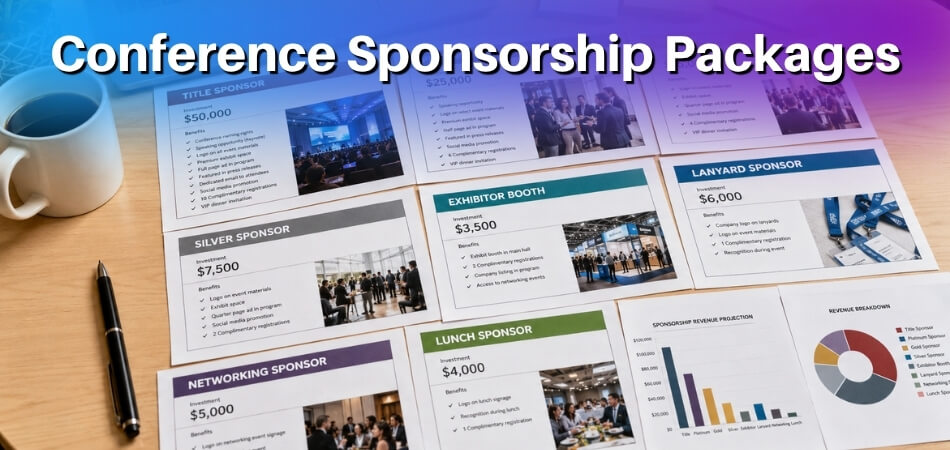
For sponsors, the package explains the business value of taking part. For organizers, it turns general requests for support into specific levels, benefits, prices, and deliverables.
A good sponsorship package should answer:
- Sponsor contribution: What will the sponsor provide financially or in-kind?
- Sponsor benefits: What visibility, access, or engagement will the sponsor receive?
- Brand placement: Where will the sponsor’s logo, name, or message appear?
- Audience connection: How can the sponsor interact with attendees?
- Reporting: What proof of value will be shared after the event?
The best packages do not only sell logo placement. They connect sponsors with the right audience in a way that feels useful, relevant, and measurable.
Main Types of Conference Sponsorship Packages
There are eight main types, summarized in the table below. Some focus on broad visibility, while others focus on direct engagement, media reach, operational support, or attendee interaction.
Different sponsors value different things. A large company may want premium recognition across the whole conference, while a smaller business may prefer a booth, a product demo, or a sponsored coffee break. That is why organizers should offer a mix of types instead of one format.
| Sponsorship Type | Main Purpose | Best Fit For |
| Tiered sponsorship | Structured sponsor levels | Events with multiple sponsors |
| Title sponsorship | Maximum brand association | Large brands seeking top visibility |
| Presenting sponsorship | Premium recognition below title level | Brands wanting strong visibility without naming rights |
| In-kind sponsorship | Product or service support | Budget-conscious events |
| Media sponsorship | Promotion and coverage | Events needing wider reach |
| Activity-based sponsorship | Targeted event visibility | Sponsors with specific audience goals |
| Booth sponsorship | Direct attendee interaction | Product or service providers |
| Virtual sponsorship | Online visibility | Virtual or hybrid conferences |
Tiered Sponsorship Packages
Tiered sponsorship packages organize sponsor opportunities into levels based on contribution and benefits, with each level giving more than the one below it. The levels themselves are described in the tier section further down.
Sponsors can compare options quickly. Higher tiers usually include stronger visibility, better booth placement, more digital promotion, and possible speaking opportunities. Lower tiers offer simpler benefits at a more accessible price.
Title Sponsorship
Title sponsorship gives one sponsor the highest level of visibility by connecting its name to the conference title or main event branding. It is usually the most premium option.
A title sponsor may appear in the event name, main banners, press releases, registration pages, email campaigns, and stage branding. It suits companies that want broad awareness and a strong link with the event topic. Because it carries so much value, it should usually be exclusive.
Presenting Sponsorship
Presenting sponsorship gives a sponsor premium recognition without naming the event after the company. It is often shown with phrases such as “presented by,” “powered by,” or “in partnership with.”
This works when the organizer wants to keep the conference brand as the main identity while still offering a high-value position. Presenting sponsors may receive logo placement near the event title, opening recognition, stage visibility, digital promotion, and VIP access.
With placeholders, a title credit reads “[Company] [Conference Name]”, while a presenting credit reads “[Conference Name], presented by [Company]”. In the sponsorship guide published by Sponsorship Collective (read October 2026), presenting rights may or may not be exclusive and are described as the most cost-effective of the naming options, while title sponsorship is usually exclusive.
In-Kind Sponsorship
In-kind sponsorship happens when a sponsor provides products, services, equipment, or space instead of money. This reduces event costs while still giving the sponsor visibility.
Examples include:
- Venue support: A hotel or event space provides meeting rooms.
- Printing support: A print company produces badges, banners, or programs.
- Food support: A caterer supplies meals, snacks, or refreshments.
- Technology support: A software provider offers registration tools or event apps.
- Creative support: A photographer, designer, or video team supports event production.
- Attendee materials: A supplier provides tote bags, notebooks, pens, or gifts for the conference kit handed to attendees.
Because there is no cash amount, agree in writing how the contribution is valued. Some event sponsorship pages state that the organizer assesses the value of an in-kind contribution and matches it to the nearest tier, and that items such as lanyards or bags need organizer approval. This type is especially useful for smaller conferences or events with limited budgets.
Media Sponsorship
Media sponsorship means a media partner promotes or covers the conference through its platform. Media sponsors may be industry magazines, newspapers, podcasts, radio stations, online publications, newsletters, or digital communities.
A media sponsor may provide pre-event announcements, interviews, event listings, social posts, articles, or post-event coverage. In return, it receives official recognition among attendees. This package helps when the organizer wants more awareness and credibility.
Activity-Based and Session Sponsorship
Activity-based sponsorship lets a sponsor support one specific part of the conference, such as a coffee break, networking session, workshop, welcome reception, registration desk, award ceremony, attendee lounge, or a single session or track.
The sponsor is connected to a real attendee experience. A coffee sponsor becomes associated with hospitality and comfort, and a networking sponsor with relationship-building.
Booth, Zone, or Exhibition Sponsorship
Booth sponsorship gives sponsors a physical space to meet attendees, show products, answer questions, and collect leads. It suits sponsors that want direct engagement instead of passive visibility.
Organizers can also create sponsored zones, such as:
- Innovation zone
- Startup zone
- Career zone
- Technology showcase
- Wellness area
- VIP lounge
- Product demo space
These zones give sponsors more meaningful interaction with attendees.
Virtual or Hybrid Event Sponsorship
Virtual or hybrid sponsorship gives sponsors visibility in online or mixed-format conferences. It may include logo placement on the event platform, sponsored virtual rooms, digital exhibitor pages, branded waiting screens, chat sponsorship, replay sponsorship, or downloadable resources.
Hybrid sponsorships can combine these digital benefits with in-person branding, booth space, and networking access, which helps when a conference serves both on-site and remote participants.
Common Conference Sponsorship Tier Levels
The common tier levels are Platinum, Gold, Silver, and Bronze. They show a clear step up in value from one level to the next, and the model works best when every package has a distinct purpose and a visible difference in benefits.
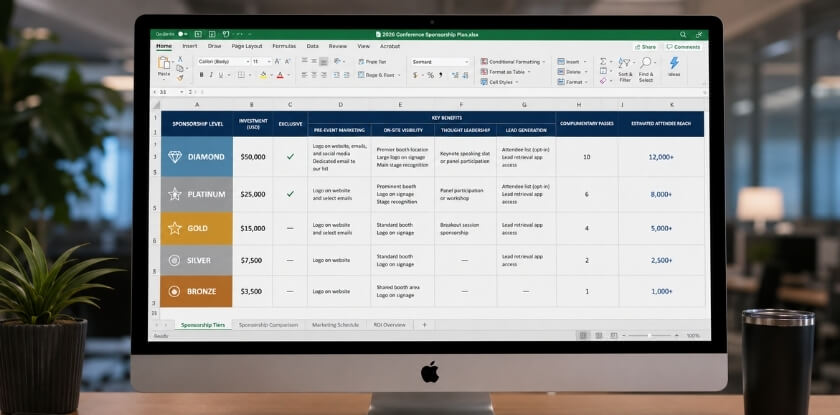
The goal is not to create as many levels as possible. Too many tiers confuse sponsors and make the proposal harder to sell. Three or four core sponsorship tiers plus optional add-ons is the usual recommendation. PCMA’s guidance on bespoke sponsor packages (read October 2026) suggests at least three to four tiers, with two to six sponsors at the top level and more sponsors at each lower level, so the structure forms a pyramid. The Conference Handbook, an open guide for volunteer-run events, uses a doubling price step between its four example levels and says the levels are only suggestions.
Platinum Sponsorship
Platinum sponsorship is usually the highest tier, for companies that want maximum exposure, premium placement, and strong association with the event.
Typical benefits may include:
- Main-stage branding
- Premium booth space
- Speaking opportunity
- Website and email recognition
- Social media mentions
- VIP access
- Recognition in opening remarks
- Post-event reporting
Platinum sponsors should receive high-value benefits that are not available in lower tiers.
Gold Sponsorship
Gold sponsorship offers strong visibility without the full exclusivity of Platinum. It suits companies that want meaningful exposure but not the top position.
Gold benefits may include booth space, website placement, signage, agenda recognition, social promotion, and complimentary passes, at a more balanced investment level.
Silver Sponsorship
Silver sponsorship provides moderate visibility at a more accessible level. It may include sponsor page placement, program recognition, shared signage, basic booth access, or limited digital mentions.
It is useful for companies testing the event for the first time, because it gives them a professional presence without a premium commitment.
Bronze Sponsorship
Bronze sponsorship is the entry-level option. It may include logo listing, basic digital recognition, a program mention, and limited attendee access.
Even as the lowest tier, it should offer clear value. Sponsors should feel they are getting a real business opportunity, not making a donation.
Custom or Add-On Sponsorship Levels
Custom options let sponsors choose benefits that do not fit neatly into a tier. These may include:
- Lanyard sponsorship
- Badge sponsorship
- Mobile app sponsorship
- Charging station sponsorship
- VIP lounge sponsorship
- Sponsored email feature
- Private meeting room
- Branded attendee bag
Add-ons make the program more flexible without complicating the main package structure.
PCMA describes building custom packages from an à la carte menu: list each item with the benefit it delivers, group the items by sponsor objective, and add up the items a sponsor chooses to set its package level. Only list items you plan to deliver.
What to Include in a Conference Sponsorship Package
A package should include clear benefits, specific deliverables, pricing, visibility options, engagement opportunities, and reporting details. Sponsors should know exactly what they are getting before they agree, and your team needs the same detail to deliver every promise.
Replace vague claims like “great exposure” with the actual benefit: where the logo will appear, how many mentions are included, what access the sponsor receives, and what will be reported afterward.
| Package Element | Why It Matters |
| Brand visibility | Helps sponsors reach attendees |
| Speaking opportunities | Builds authority and trust |
| Booth space | Enables direct interaction |
| Digital promotion | Extends reach before and after the event |
| Networking access | Creates business connections |
| Lead generation | Supports measurable sponsor value |
| Reporting | Proves what was delivered |
Brand Visibility Benefits
Brand visibility may include logo placement on the event website, signage, banners, stage screens, printed programs, attendee badges, event apps, and email campaigns.
Placement matters. A logo on the main stage or registration desk is worth more than a small logo at the bottom of a sponsor page.
Speaking and Thought Leadership Opportunities
Speaking opportunities help sponsors share expertise and build credibility. They may include panel participation, welcome remarks, keynote introductions, workshops, fireside chats, or roundtables. Sponsor content should be useful and relevant. Attendees should feel they are learning something, not sitting through a sales pitch.
Booth or Display Space
Booth space lets sponsors meet attendees, demonstrate products, and start conversations. The package should state booth size, location, setup rules, furniture, lead capture options, and exhibitor directory placement. For virtual events, this can become a digital exhibitor profile with video, downloads, chat, and contact forms.
Attendee Engagement Opportunities
Sponsors often want more than passive logo placement. Engagement options may include:
- Live demos
- Polls
- Giveaways
- Q&A sessions
- Hosted roundtables
- Appointment scheduling
- Interactive displays
- Product trials
These help sponsors create direct connections with attendees.
Digital Promotion and Email Mentions
Digital promotion may include website placement, social media posts, email mentions, event app banners, registration email inclusion, blog content, or post-event recap placement.
Be specific. “Two LinkedIn posts before the event” is clearer than “social media promotion.”
Lead Generation and Audience Insights
Lead generation benefits may include badge scans, opt-in leads, booth visits, resource downloads, meeting requests, session attendance, or virtual engagement metrics. Only promise data you can legally and technically provide. Accuracy matters more than overpromising.
Post-Event Reporting
A sponsor report may include attendance numbers, branding photos, session data, booth engagement, digital results, media mentions, and attendee feedback. It helps sponsors judge the value of their investment and decide whether to return. Agree which measures will be reported before the event, based on the sponsor’s goal (for example booth visits, leads collected, or session attendance), so the report matches what the sponsor expected.
How to Match Sponsorship Package Types to Sponsor Goals
The best package depends on the sponsor’s main goal. Some sponsors want awareness, others want leads, product exposure, authority, or community connection. Matching the two makes your proposal more useful and easier to sell.
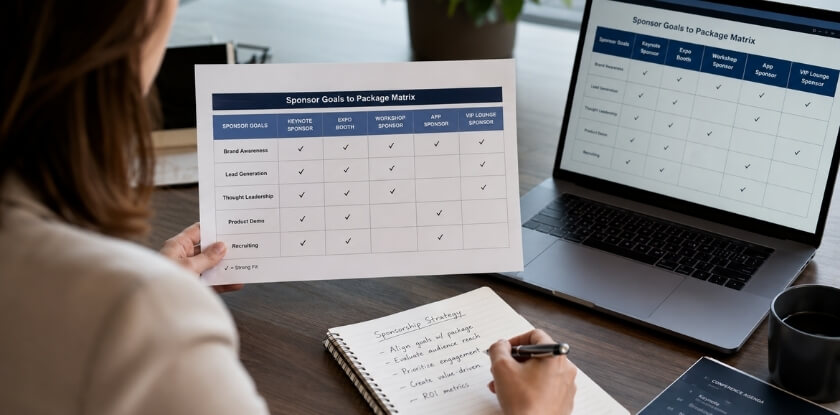
Start before you send a proposal. If you know what the sponsor wants, you can recommend the right package instead of forcing them into a generic tier, and you avoid offering benefits that look attractive but do not support their objective.
- Ask what the sponsor wants to achieve: Find out whether they want visibility, conversations, leads, product demos, authority, or reputation-building.
- Match the goal to the right package type: A sponsor looking for awareness may need a title package, while one looking for conversations may need a booth or networking package.
- Choose benefits that support the goal: Do not offer speaking time to a sponsor that mainly wants leads, and do not offer only logo placement to one that wants direct engagement.
- Set clear deliverables: Explain exactly what is included, where the sponsor will appear, and how each benefit will be delivered.
- Report results after the event: Show the sponsor what was completed and what engagement happened.
| Sponsor Goal | Best Package Types |
| Brand awareness | Title, presenting, Platinum, media sponsorship |
| Lead generation | Booth, demo zone, workshop, networking sponsorship |
| Product exposure | Exhibition booth, demo session, showcase area |
| Thought leadership | Panel, workshop, keynote introduction |
| Community positioning | Student support, awards, academic track, networking reception |
Why Conference Sponsorship Packages Matter
Packages matter because they help fund the event, improve the attendee experience, build credibility, expand promotion, and create long-term partnerships. Sponsorship is not only about money. Sponsors can also improve the event through services, media reach, technology, content, and attendee resources.
Key reasons include:
- They support event costs: Sponsorship can help cover venue, speakers, technology, marketing, printing, catering, and staffing.
- They improve attendee experience: Sponsors can support lounges, coffee breaks, networking events, event apps, giveaways, and demo areas.
- They build credibility: Relevant sponsors can make the event feel more connected to the industry.
- They expand promotion: Sponsors may share the event with their own audience through email, social media, media channels, or partner networks.
- They create repeat partnerships: Clear benefits and strong follow-up can turn first-time sponsors into long-term supporters.
How to Identify Potential Conference Sponsors
To identify potential sponsors, look for organizations that already want to reach your audience. The strongest prospects are not always the biggest companies. They are the companies, institutions, media partners, or service providers with the clearest connection to your attendees.
Keep the research focused. Random outreach wastes time, while a short, targeted list lets you personalize the pitch and recommend the right package.
- Define your audience: Identify attendee roles, industries, interests, locations, decision-making power, and reasons for attending.
- List sponsor categories: Think about which companies sell to, hire from, educate, support, or influence your audience.
- Study similar events: Review sponsor pages, exhibitor lists, media partners, and session sponsors from comparable conferences.
- Find decision-makers: Look for marketing managers, partnership managers, business development leads, event managers, communications directors, or founders.
- Build a sponsor tracking sheet: Include company name, contact person, sponsor fit, likely goal, suggested package, and outreach status.
- Personalize your pitch: Explain why your audience matters to that specific sponsor and which package fits best.
- Send a prospectus: Write to a named person and attach a standalone document that covers the event basics, why sponsors benefit, the sponsorship levels, and contact details. The Conference Handbook advises that it should make sense to someone who has never heard of the event.
A strong pitch reads like a business opportunity, not a donation request.
How to Customize Sponsorship Packages for Your Conference
To customize packages, connect your event goals with sponsor goals and create benefits your team can deliver well. A package should feel specific to your conference rather than copied from a template, without becoming hard to manage.
Start by deciding what your event needs most: funding, media reach, a better attendee experience, more networking, speaker support, or stronger digital engagement. Then design sponsor opportunities around those needs.
- Start with event goals: Decide whether sponsorship should support costs, networking, speakers, marketing, attendee experience, or industry partnerships.
- Choose a simple tier structure: Use the three or four core levels described above.
- Set benefits by value: Higher tiers should include stronger placement, better engagement, or more exclusive access.
- Add flexible options: Offer choices such as coffee breaks, workshops, meeting rooms, branded bags, sponsored emails, or demo spaces.
- Price packages fairly: Consider audience size, audience quality, event reputation, visibility, exclusivity, booth access, digital reach, and delivery cost.
- Write clear deliverables: Use exact wording such as “one sponsor spotlight email” or “logo on the main-stage screen during opening remarks.”
Custom does not mean unlimited. Only approve benefits that fit the event and can be delivered professionally.
Four Ways to Price a Package
PCMA’s guidance on sponsorship pricing (read October 2026) describes four approaches, and an organizer can use a different one for different items:
- Compare with similar events: Check what two or three comparable events charge for similar items, such as a mobile app or a speaking slot.
- Cost-plus: Add up the cost of selling and delivering an item, then multiply by two, or by three for a high-performing program. PCMA suggests this for items such as banners, charging stations, Wi-Fi, and giveaways.
- Expense recovery: Seek partial funding for food and beverage items such as coffee breaks. Part of the cost covered is better than no sponsor for that item.
- Value-based: Price what the market will bear, for items such as sponsored sessions and VIP experiences. Opportunities that sell out suggest the price can rise.
PCMA also notes that sponsors generally prefer one combined payment over several separate requests.
Mistakes to Avoid When Offering Sponsorship Packages
Common mistakes include unclear deliverables, unrealistic promises, too many tiers, weak communication, no post-event proof, and unwritten terms. These problems can leave sponsors feeling undervalued even when the conference goes well, and avoiding them protects trust and repeat sponsorship.
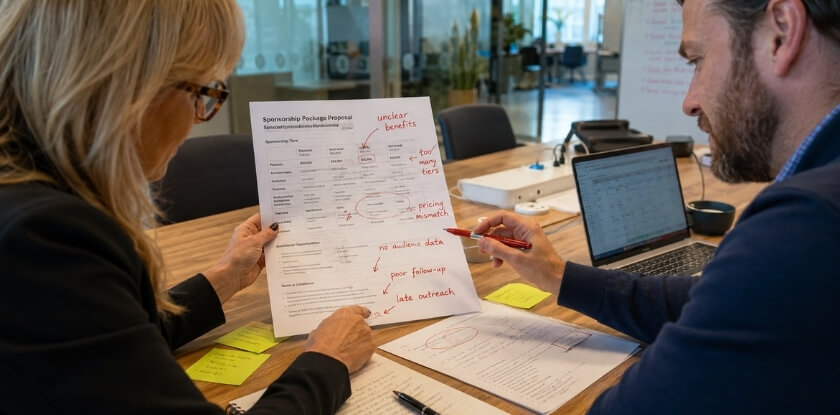
Some mistakes happen before the agreement is signed, others during planning, delivery, or follow-up. The safest approach is to keep every promise clear, realistic, and trackable.
1. Creating Unclear Deliverables
Sponsors should know exactly where their logo appears, how often they are mentioned, what access they receive, and what is included.
Avoid:
- “Premium exposure”
- “Great visibility”
- “Strong promotion”
- “Networking access”
Use:
- “Logo on the event website sponsor page”
- “One email mention before the conference”
- “One exhibition table near registration”
- “Two complimentary attendee passes”
2. Overpromising Sponsor Benefits
Do not guarantee leads, media exposure, booth traffic, or attendee data unless you can deliver it. Honest promises build more trust than inflated claims.
3. Ignoring Sponsor Objectives
A brand-awareness sponsor needs different benefits from a lead-generation sponsor. Ask about the goal before recommending a package.
4. Offering Too Many Package Levels
A simple structure with selected add-ons is easier to sell and manage than a long list of tiers.
5. Communicating Poorly After Agreement
Sponsors need deadlines, artwork requirements, booth instructions, registration links, schedule updates, and contact details. Keep communicating after the agreement is signed.
6. Failing to Prove Sponsor Value
After the event, send a short report with attendance numbers, branding photos, delivered benefits, engagement data, digital results, and feedback where available.
7. Leaving Exclusivity and Terms Unwritten
State whether a package is exclusive, which category the sponsor sits in, and how long the arrangement lasts. Sponsorship Collective suggests asking a new sponsor for a list of its competitors so conflicts can be avoided, and defining the assets included in each package. For binding terms, have a qualified lawyer review the agreement.
8. Promising a Donation Receipt
If your organization is a registered charity in Canada, the Canada Revenue Agency (CRA) treats sponsorship differently from a gift. Its page on sponsorship (page details dated 2024-12-10, read October 2026) says a business that receives special recognition for its payment is a sponsor, and that when the value of that benefit cannot be calculated, the charity cannot issue an official donation receipt. Do not promise a receipt in a package without checking the CRA page. This is general information, not tax or legal advice; confirm your case with the CRA or an accountant.
How to Balance Sponsor Visibility With Attendee Experience
Sponsor visibility should be useful and relevant without disrupting the conference. Attendees should feel that sponsorship improves the event, not that it takes over the program.
A sponsor-heavy event can feel distracting if every session, sign, email, or announcement is promotional. At the same time, sponsors feel undervalued if their presence is hidden. The goal is visibility that feels natural.
Use these guidelines:
- Keep branding relevant: A technology sponsor fits an event app or charging station, while a coffee sponsor fits refreshment breaks.
- Limit promotional overload: Avoid too many sponsor speeches, crowded signs, repeated announcements, and excessive branded emails.
- Make sponsored sessions educational: Sponsor content should provide insights, research, examples, or practical advice.
- Place booths carefully: Good locations include registration areas, coffee zones, session exits, and exhibition halls.
- Protect attendee trust: Every sponsor benefit should fit the event theme and support the audience experience.
When attendees benefit from sponsor involvement, sponsors receive more positive attention.
How to Manage Sponsor Expectations During the Conference
Manage expectations with clear communication, confirmed deliverables, on-site support, and post-event follow-up. Sponsorship management does not end when the agreement is signed.
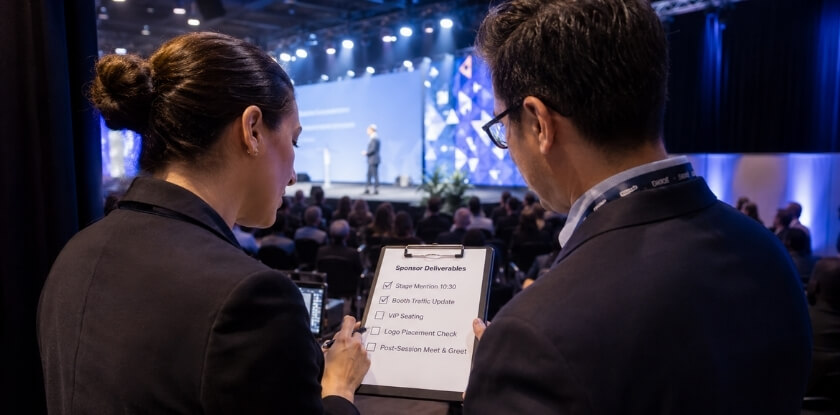
Small problems often start with missed details. A sponsor may not know where to set up, when its session begins, who to contact, or whether its branding is in place. A simple workflow prevents most of these.
- Assign one sponsor contact: Give sponsors one person to contact for artwork, booth setup, passes, session details, questions, and reporting.
- Confirm deliverables before the event: Review logos, signage, website listings, booth locations, digital promotion, session details, and pass allocations.
- Share event-day updates: Provide short updates about setup, schedule changes, sponsor recognition timing, networking activities, or technical instructions.
- Handle last-minute requests professionally: If a request is possible, confirm the solution; if not, explain the limitation and offer a realistic alternative.
- Collect sponsor feedback: Ask whether the booth, session, or activity is working as expected so small issues can be solved quickly.
- Send post-event results: Share photos, delivered benefits, available metrics, and renewal opportunities.
Conference Sponsorship Package Examples by Event Type
Sponsorship packages should change with the conference type, audience, and sponsor expectations. A package that works for a tech event may not fit an academic research conference, because the format should match the reason people attend.
| Event Type | Suitable Sponsorship Options |
| Academic conference | Research track, student support, poster session, proceedings sponsorship |
| Business conference | Executive networking, VIP lounge, panel sponsorship, booth package |
| Technology conference | Demo zone, hackathon, app sponsorship, innovation showcase |
| Healthcare conference | Medical education session, research presentation, attendee resources |
| Virtual conference | Sponsored lobby, digital booth, replay sponsorship, platform banner |
Academic events should focus on education, research, and professional development. Business events often need decision-maker access, lead generation, and networking value. Technology events benefit from demos, showcases, and digital engagement. Healthcare events need professional, relevant, trust-building sponsor involvement. Virtual events should focus on digital visibility, engagement metrics, downloadable resources, and replay value.
From our experience at MS International: We run in-person conferences in the Greater Toronto Area. If your company or organization is interested in sponsorship, our support team can answer questions about sponsorship and conference details. One related point from our business pages: an invitation letter can support a travel or funding request, but it does not mean the organizer is providing sponsorship.
FAQs About Types of Conference Sponsorship Packages
Organizers building a sponsor offer wrestle with the number of tiers, how title and presenting sponsors differ, pricing, tax receipts from a charity and what suits a small company.
What are the most common types of conference sponsorship packages?
The most common types are tiered, title, in-kind, media, activity-based, booth, session, and virtual sponsorships. They let sponsors choose between broad visibility, targeted engagement, practical support, and digital exposure.
How many sponsorship tiers should a conference have?
Three to four main tiers is the usual recommendation, for example Platinum, Gold, Silver, and Bronze. That gives sponsors enough choice without making the proposal hard to read. Keep the top level small and let custom options cover special requests.
What is the difference between title sponsorship and tiered sponsorship?
Title sponsorship gives one sponsor top naming visibility, while tiered sponsorship organizes multiple sponsors into different benefit levels. Title sponsorship is usually exclusive. Tiered sponsorship lets several companies take part at different investment levels.
What should a sponsor receive in return for supporting a conference?
A sponsor should receive benefits that match its goals and level of support, such as logo placement, booth space, speaking opportunities, digital promotion, networking access, leads, and a post-event report. The exact deliverables should be written down before the sponsor agrees.
How do you price conference sponsorship packages?
Price each package by what it delivers: compare similar events, add your delivery cost (PCMA suggests multiplying by two, or three for a strong program), or price by demand for items that sell out. Premium benefits should cost more than basic recognition. Amounts vary by event, so set yours from your own costs.
Which sponsorship package is best for small companies?
Bronze, booth, activity-based, and in-kind sponsorships are often the best fit for small companies, because they give visibility or engagement without the largest investment. The right choice depends on whether the company wants awareness, conversations, product exposure, or community presence.
What is the difference between a title sponsor and a presenting sponsor?
A title sponsor’s name becomes part of the event name, while a presenting sponsor appears in a “presented by” credit beside it. Title sponsorship is usually exclusive. Presenting rights may or may not be exclusive and usually cost less.
Can a charity give a tax receipt for a sponsorship?
Not when the sponsor receives special recognition and the value of that benefit cannot be calculated: the CRA says the charity then cannot issue an official donation receipt. Check the CRA sponsorship page or ask an accountant, because this is general information, not tax advice.
Can sponsors customize a conference sponsorship package?
Yes, when the organizer offers flexible options. Custom benefits may include extra digital promotion, booth upgrades, sponsored workshops, meeting rooms, branded materials, or virtual visibility. Organizers should only approve what they can deliver properly.
How do organizers measure sponsorship success?
Measure success against the goals agreed with each sponsor before the event. Useful measures include delivered benefits, attendance, booth visits, session participation, opt-in leads, email results, social reach, resource downloads, and sponsor feedback.
Conclusion
Conference sponsorship packages help organizers build clear, valuable partnerships with companies that want to reach their audience. Pick the mix of package types that matches your event format and sponsor goals, keep the tier structure simple, and write every deliverable so it can be checked afterward. When sponsors see real value and attendees see a better event, the partnership is more likely to continue.