What Kind of Bag Should I Bring to a Conference?

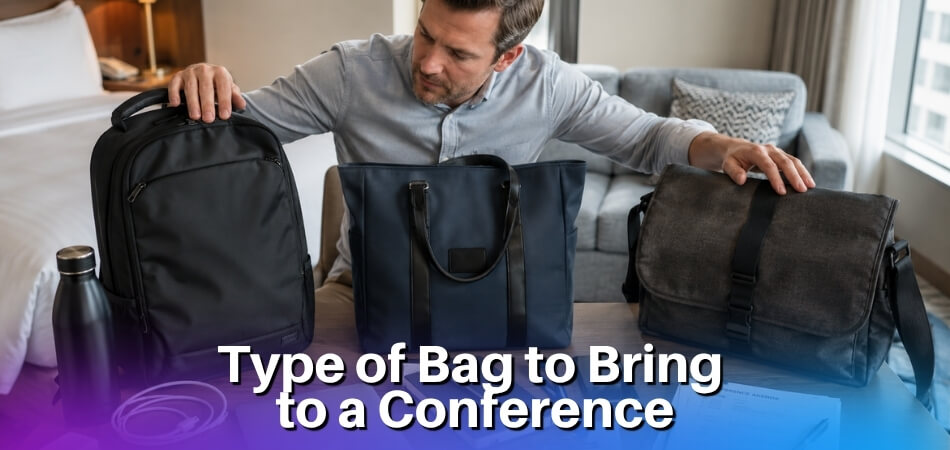
Think about the last time you packed for a conference. You probably spent real time on your outfit, your business cards, maybe even your elevator pitch — but the bag? Most people grab whatever is closest to the door. That split-second decision matters more than you’d think. Before you shake a single hand or hand over a business card, your bag is already doing the talking. A beat-up backpack at a formal conference, an overstuffed tote bag at a trade show, a tiny crossbody bag when you needed space for A4 documents and a laptop sleeve — these are quiet signals that can work against you before you say a word.

This guide gives you a straight answer: which bag type fits your specific conference format, your gender, your budget, and even the weather forecast. You’ll know exactly which bags to bring, which ones to leave at home, and what to look for whether you’re eyeing a Tumi briefcase or an Amazon Basics backpack.

For most conference-goers, a structured backpack or a professional tote bag is the right call — but the best choice depends on what you’re carrying and what kind of event you’re walking into. If you’re hauling a laptop, a portable charger, a cable organizer, and printed materials, a dedicated laptop bag or a multi-compartment backpack from brands like Bellroy, Targus, or Peak Design handles the load without wrecking your posture. For lighter days — think a networking event or a single-day seminar — a leather crossbody bag or a polished canvas tote keeps things trim and professional. A rolling bag or wheeled tote makes sense for multi-day conferences where you’d rather not carry the weight. Whatever you choose, the bag should look intentional: clean lines, no visible damage, and a size that fits the room. Showing up with the right bag is a small thing that quietly confirms you know exactly where you are and why you’re there.

Quick Answer: What Kind of Bag Should You Bring to a Conference?

It depends on three things: how long the conference is, what you’re carrying, and how formal the setting is.

What Kind of Bag Should I Bring to a Conference

Here’s the short version:

  • One-day conference, business formal setting → briefcase or structured leather bag
  • One-day conference, business casual or tech setting → crossbody bag or slim backpack
  • Multi-day conference → laptop bag, rolling bag, or a backpack with dedicated compartments
  • Trade show or academic conference → tote bag or wheeled tote (you’ll be collecting materials all day)
  • Networking event attached to a conference → something hands-free — a crossbody bag or small backpack

That’s the quick answer. But there’s real nuance here.

A backpack that looks great at a tech conference looks out of place at a formal legal or finance conference. A tiny crossbody bag is fine for a one-day networking event but completely impractical if you’re hauling a 15-inch laptop, A4 documents, a portable charger, and a water bottle across three days.

The variables that actually matter

Your industry signals a lot. Tech, creative, and startup conferences are relaxed about bags. People show up with Peak Design backpacks, Herschel packs, canvas bags — nobody notices. At a formal conference in finance, law, or medicine, a structured leather bag or proper briefcase reads more professionally. First impression stuff.

Day count changes everything. A single-day event? Almost any bag works if it fits your laptop and a few essentials. A multi-day conference means you need real organization — a cable organizer, a spot for business cards, enough room to stay functional without digging through a chaos pile every hour.

What you’re carrying determines the size. Most people underestimate this. If you’re bringing a laptop, charger, portable charger, water bottle, a notebook, and any conference materials — you’re looking at a bag that’s at least 15–20 liters. Anything smaller and you’re stuffing things into your pockets or carrying a second bag, which looks messy.

Weather and commute matter too. If you’re walking between venues or there’s any chance of rain, a water-resistant bag or nylon bag beats a nice canvas tote every time. Leather bags can handle a light drizzle, but you don’t want to stress about it.

The sections below break this down by bag type, by budget, and by specific conference format — so you can just find your situation and go from there.

Conference Bag vs Regular Office Bag — What Is the Actual Difference?

Most people assume the bag they use every day for work is fine for a conference. Sometimes it is. Often, it isn’t — and the gap shows up faster than you’d expect.

Your regular office bag is built around a fixed routine. Same commute, same laptop, same handful of items. A conference bag needs to handle something messier: a full day (or multiple days) of moving between sessions, collecting materials, networking, and possibly traveling to get there in the first place.

The Core Differences That Actually Matter

Volume and organization. A standard office bag might carry your laptop and lunch. A multi-day conference means you’re hauling a laptop, charger, cable organizer, water bottle, A4 documents, brochures, a portable charger, business cards, and whatever swag you pick up at the trade show floor. Most everyday bags aren’t built for that load. You want something in the 20–30 liter range with actual compartments — not just one main cavity you root through every time.

Professional appearance under pressure. Your office bag might look fine at 8am when you’re walking into a building you know. At a formal conference or networking event, your bag is part of how people read you on first impression. A beat-up canvas bag or a gym backpack doesn’t say what you want it to say when you’re meeting someone important for the first time.

Access patterns are different. At the office, your bag mostly sits under your desk. At a conference, you’re opening it constantly — pulling out your phone, grabbing a business card holder, finding your notebook mid-conversation. A bag without quick-access pockets becomes genuinely annoying by hour three.

Security. Crowded venues mean higher risk. Your everyday bag probably has no anti-theft features. A proper conference bag — especially if you’re traveling to get there — often has RFID-blocking pockets, lockable zippers, or slash-resistant panels. Brands like Tumi, Knomo, and Bellroy design explicitly for this. It matters more than people think until it doesn’t.

When Your Regular Bag Actually Works Fine

If you’re attending a single-day local conference, business casual dress code, and you already carry a well-organized leather bag or a clean backpack from Peak Design or Lo and Sons — you’re probably fine. The distinction between “conference bag” and “regular professional bag” collapses when the bag genuinely fits the context.

The real question isn’t the label. It’s whether your bag can handle the actual demands of that specific event without looking out of place or falling apart organizationally by noon.

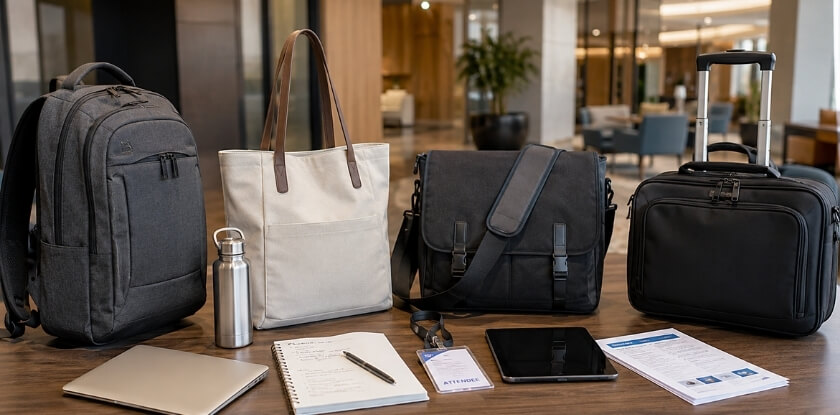
Which Type of Bag Works Best at a Conference?

There’s no single right answer — it depends on the event, your outfit, how much you’re carrying, and how many days you’re there. But here’s how each bag type actually performs in a real conference setting.

Which Type of Bag Works Best at a Conference?

Tote Bag — Simple, Professional, and the Most Popular Choice

The tote bag is probably the most common thing you’ll see at any conference, and there’s a reason for that. It’s easy to get in and out of, fits A4 documents flat without folding them, and looks put-together without trying too hard.

A structured canvas bag or leather tote in a neutral color — black, navy, tan — reads as professional without being stiff. Brands like Bellroy and Lo and Sons make totes that hold a 13″ or 15″ laptop, a water bottle, and enough daily supplies without turning into a slouchy mess by hour three.

The downside is real though. Totes don’t distribute weight well. If you’re loading in a laptop, a portable charger, cables, and a water bottle, your shoulder will feel it by lunch. They also don’t usually have great organization — no built-in cable organizer, no business card holder in a useful spot. You’ll want to use a small internal pouch to keep things findable.

Best for: one-day conferences, business casual events, anything where you’re also carrying a small personal bag alongside it.

Backpack — When It Works and When to Leave It at Home

A backpack is the most practical option for carrying volume. Full stop. If you’ve got a laptop, a laptop sleeve, chargers, a notebook, snacks, and a jacket stuffed in there, a backpack is the only bag that won’t destroy your posture.

At a tech conference or academic conference, backpacks are completely standard. Nobody blinks. Peak Design, Herschel, and Targus all make clean, professional-looking backpacks that don’t scream “college student” — especially in black or charcoal with a minimal design.

But context matters. At a formal conference — think finance, law, or a senior executive event — a backpack can undercut your first impression before you’ve said a word. If you’re going straight from a session into a dinner or a one-on-one networking meeting, a backpack can feel jarring with business formal clothes.

The fix: keep a slim, professional backpack (20–25 liters max) and avoid anything with too many straps, dangling clips, or loud branding. An anti-theft backpack with an RFID-blocking pocket is worth considering at large trade shows where pickpocketing is more of an actual risk.

Leave it at home when: the dress code is formal, you’re doing a lot of networking events in the evening, or the conference is small and relationship-focused.

Briefcase or Laptop Bag — The Right Call for Formal Conferences

If the conference has a tie-and-jacket crowd, bring a briefcase or a dedicated laptop bag. It’s that simple.

A structured leather bag from Tumi, Knomo, or Samsonite signals that you take the setting seriously. It pairs well with a suit or tailored separates, and it keeps your professional appearance consistent throughout the day. The slim profile also makes you easier to move through cocktail-hour networking without bumping into people.

Most modern briefcases in this category carry a 15″ laptop, have a front pocket for business cards, and a main compartment that fits A4 documents without bending them. Look for a pass-through sleeve on the back if you’re connecting through an airport to get there — it slides directly over rolling luggage handles.

One practical note: a hard-sided briefcase is not great for a long day on your feet. It’s one-handed carrying, it doesn’t go on your shoulder easily, and it gets heavy fast. If you’re moving between floors, sessions, and outdoor spaces all day, a laptop bag with a shoulder strap is a better version of the same idea.

Crossbody Bag — Ideal for Networking-Heavy Events

At a conference where the networking is the point — receptions, exhibition floors, side events — the crossbody bag is arguably the smartest choice.

It keeps your hands completely free. You can shake hands, hold a drink, flip through your phone, grab a business card, and take notes without putting anything down. A tote or briefcase forces you to set it somewhere or awkwardly shift it around. A crossbody just stays out of the way.

Size matters here. You want something that fits your phone, a slim wallet, a portable charger, a few business cards, and maybe a small notebook. Around 4–8 liters is the right range. Anything bigger starts to feel like a bag that’s trying to be a backpack.

For women, this is an especially practical choice at evening networking events where you’ve changed out of a full conference outfit into something more polished. A clean leather or nylon crossbody works with almost anything. For men, a slim crossbody or sling bag is increasingly common at tech conferences and creative industry events — it’s worth checking the tone of the event before committing.

Brands worth looking at: Bellroy’s crossbody range, Lo and Sons for travel-oriented versions, and Knomo for something more traditional.

Rolling Bag or Wheeled Tote — Best for Multi-Day Conferences

For a multi-day conference, especially one where you’re flying in and need your bag to double as a carry-on bag, a rolling bag or wheeled tote changes the whole equation.

You’re not carrying weight. That matters more than it sounds after two full days of sessions, evening events, and walking between hotels and convention centers. A wheeled tote from Samsonite or a rolling bag from Tumi can handle a laptop, three days of materials, cables, chargers, and everything else without putting any of it on your body.

The trade-off is mobility. Rolling bags don’t work well on carpet-heavy floors (which describes most conference centers), they’re awkward in crowded exhibit halls, and they signal “I just got off a plane” more than they signal “I’m here to network.” They’re also harder to tuck under a seat during a keynote.

The practical approach most people land on: use a rolling carry-on bag for travel, then pack a smaller professional bag — a backpack or tote — inside it for use during the actual conference days. You get the benefits of both without the drawbacks of either.

If you want a single bag that does everything, a wheeled tote with a removable shoulder strap (Lo and Sons makes a well-regarded version) is a genuine option. It’s not perfect at anything, but it’s good enough at everything, which for a three-day trip can be exactly what you need.

Best Conference Bags for Men — Which Options Actually Fit the Setting?

The bag you carry says something before you open your mouth. That’s not an exaggeration — it’s just how professional settings work. The good news is you have more options than most guys realize, and none of them require spending $400 to look put-together.

The Classic Briefcase Still Works — In the Right Context

If you’re heading to a formal conference, a law or finance summit, or anything where suits are the norm, a structured briefcase still reads as sharp and intentional. Leather bags from brands like Tumi or Knomo hold their shape, fit A4 documents without folding, and don’t look out of place in a boardroom breakout session.

The downside? Briefcases are hand-carry only. If you’re also managing a laptop, cables, a portable charger, and a water bottle, one handle gets old fast.

Go with a briefcase if you’re at a single-day formal event and traveling light. Skip it for a multi-day conference where you need to haul gear across a convention floor.

A Backpack Is the Most Practical Option — But Pick the Right One

Most men at conferences are wearing a backpack. That’s just the reality. The question is whether yours looks intentional or looks like you grabbed whatever was in your car.

A slim, structured backpack in black or navy works for almost every conference type — tech conferences, academic conferences, trade shows. Peak Design’s Everyday Backpack and the Bellroy Classic Backpack both hold a 15-inch laptop, have a cable organizer section, and don’t look like gym bags. Targus makes solid options if you’re closer to the $50–$80 range and want something purely functional.

What to avoid: oversized hiking-style backpacks with external straps hanging loose, heavily branded packs, or anything that sags because it’s overpacked. Size-wise, 20–26 liters is the sweet spot for a conference backpack. Enough room, not a camping trip.

For networking events specifically, a backpack with a front slip pocket for business cards is genuinely useful. Digging through your main compartment while someone’s waiting is awkward.

The Messenger Bag and Crossbody Bag Are Underrated

A crossbody bag or structured messenger bag gives you hands-free carry without the bulk of a full backpack. For men attending a one-day conference or a workshop-heavy event, this works well.

Lo and Sons makes messenger bags that fit a 13-inch laptop and sit flat enough to not feel like a saddlebag. Tumi and Knomo both have crossbody options that hit a business casual standard without trying too hard.

The practical limit here is capacity. You’re not fitting much beyond a laptop, a notebook, and your essentials. If you’re collecting a lot of materials — brochures, product samples, conference swag — you’ll run out of room quickly.

Rolling Bags for Multi-Day Conferences

If you’re at a three or four-day event and flying in, a carry-on bag or rolling bag that doubles as your conference bag makes real sense. Samsonite and Tumi both make wheeled totes and rolling bags that meet airline carry-on specs and still look professional walking through a hotel lobby.

Some guys use a wheeled tote specifically because they can throw a laptop sleeve inside, pack a day’s worth of materials, and not wreck their back walking between sessions and exhibition halls. It’s not the most stylish move, but at a large trade show, you’ll see plenty of them.

One thing to check: make sure the bag has a laptop sleeve that fits your actual machine. A 16-inch MacBook Pro does not fit in a sleeve designed for 14 inches, and finding that out at the airport is a bad start to the trip.

Material and Practical Features Worth Paying Attention To

For most conference settings, a nylon bag or ballistic nylon holds up better day-to-day than canvas, resists minor spills, and doesn’t look worn out after a season. A water-resistant bag or waterproof bag matters more than people think — conference venues involve outdoor walks, and unexpected rain ruins a leather bag and the documents inside it.

If you’re at an event with large crowds — trade shows especially — an anti-theft bag with lockable zippers or an RFID-blocking bag for your wallet section is a practical add, not a paranoid one.

Don’t overthink the brand. Amazon Basics makes a perfectly decent laptop bag for under $30. You don’t need Tumi to make a good first impression. You need a bag that’s clean, fits your stuff, and doesn’t look like an afterthought.

Best Conference Bags for Women — Balancing Style and Practicality

Women attending conferences face a specific challenge that men largely don’t: most professional bags designed for women sacrifice capacity for looks. You end up with something cute that fits your phone, a lip balm, and absolutely nothing else. That doesn’t work when you’re hauling a laptop, charger, notebook, and a stack of business cards through a three-day trade show.

Best Conference Bags for Women — Balancing Style and Practicality

The good news is the market has genuinely improved. You don’t have to choose between looking polished and carrying what you actually need.

What You’re Actually Trying to Balance

Before picking a bag, be honest about your situation. Are you commuting to a formal conference in a suit, or rolling into a tech conference in business casual? Are you on a panel, or mostly moving between booths at a trade show? The answers change everything.

A structured leather bag reads very differently than a canvas tote. Neither is wrong — context determines which one makes the right first impression.

Structured Tote Bags

For most professional conferences, a structured tote bag is the most versatile choice. It sits at that sweet spot between polished and practical.

The key word is structured. A floppy canvas tote with a logo on it looks like you grabbed it from a vendor booth. A well-made tote with a flat base, internal organization, and a zipper closure looks intentional.

Brands worth looking at:

  • Lo & Sons O.G. Tote — This one comes up constantly for a reason. It has a laptop sleeve, an external pocket for your water bottle, and enough room for A4 documents without becoming a carry-on bag situation. The size is right for one to two day conferences.
  • Knomo Beauchamp — More structured, slightly more formal. Good if you’re at a legal or finance-adjacent conference where the aesthetic leans conservative.
  • Bellroy Tote — Clean and minimal. Holds a 13 or 15-inch laptop depending on the size you pick. Not cheap, but the organization inside is genuinely useful.

Aim for a bag in the 18–25 liter range if you’re carrying a laptop. Below that, you’ll be cramming things in.

Crossbody Bags — When You’re Moving a Lot

At a large trade show or a multi-day conference where you’re walking miles between sessions, a crossbody bag makes more sense than you’d think.

You’re not lugging everything. You’re carrying the essentials — phone, business card holder, portable charger, small notebook — while your main bag stays at the hotel or checked at coat storage.

A leather crossbody at a formal conference looks sharp. A nylon or water-resistant bag works better if you’re outside or the weather is unpredictable. Brands like Tumi and Knomo both make crossbody options that don’t look like tourist bags.

For networking events specifically, a smaller crossbody keeps your hands free. That matters more than people realize. You’re shaking hands, holding drinks, exchanging cards — a shoulder bag that keeps slipping down is a genuine nuisance.

Backpacks Done Right

Backpacks have become completely acceptable at tech conferences and academic conferences. At a formal conference, they still read as slightly casual — that’s just the reality.

If you’re going the backpack route, fit matters. A backpack designed with women’s proportions in mind sits differently and looks less bulky. The Peak Design Everyday Backpack comes in a 20L size that works well without overwhelming a smaller frame. Herschel makes cleaner-looking options if budget is a factor.

What to look for in a conference backpack:

  • A dedicated padded laptop sleeve (not just a random pocket)
  • A cable organizer or at least a small tech pocket
  • Water-resistant or waterproof material — not optional if you’re in a city with unpredictable weather
  • RFID-blocking card slot if you’re carrying your passport or key cards

Anti-theft features are worth considering at large conferences and trade shows. Crowded registration areas are exactly where pickpocketing happens.

Multi-Day Conferences — Go Bigger

If you’re at a multi-day conference and flying in, you want something that can double as a carry-on bag or at minimum keep you organized across multiple days without needing to dig through everything each morning.

The Lo & Sons OMG or Tumi Voyageur line handles this well. A wheeled tote or rolling bag becomes worth considering if you’re also presenting and carrying materials, but most women find a large structured tote or laptop bag more manageable on foot.

Don’t underpack to look minimalist. A bag that’s obviously overstuffed because it’s too small looks worse than just bringing the right size bag.

Material and Color — Practical Thoughts

Black and navy are the safest neutral choices. Not because you have to play it safe, but because they photograph well for conference coverage (relevant if you’re speaking), match most outfits, and don’t show wear.

Leather looks more formal. Nylon is lighter and more durable for heavy travel. Canvas is fine for academic conferences but can look underdressed at corporate events.

A structured bag in a deep jewel tone — burgundy, forest green — can stand out without looking unprofessional. Just keep the rest of your look relatively simple if the bag is doing something visually.

Quick Reference by Conference Type

Conference TypeBest Bag Option
Formal / corporateStructured leather tote or leather laptop bag
Tech conferenceClean backpack or nylon tote
Academic conferenceCanvas tote or backpack with laptop sleeve
Trade showCrossbody for essentials + tote or rolling bag for materials
Multi-day with travelLarge laptop bag or wheeled tote that fits overhead

The biggest mistake is choosing based entirely on how a bag looks in a photo. Pick it up. Put your laptop in it. Walk around your apartment. If the strap digs in after ten minutes, it’ll be miserable after three hours on a conference floor.

How Big Should Your Conference Bag Be?

Size is where most people get it wrong. They either bring something so small they’re stuffed to capacity by 10am, or they haul in a bag so massive it looks like they packed for a weekend trip.

The honest answer: it depends on how many days you’re attending, what you’re carrying, and whether you’ll be moving between venues.

The General Rule on Liters

For a single-day conference, something in the 15–20 liter range is usually enough. That covers a laptop, a notebook, your charger, a water bottle, and a few extras. You’re not uncomfortable, and you don’t look like you’re relocating.

For a multi-day conference — two or three days where you’re staying at a hotel and heading straight to the venue — bump that up to 25–35 liters. This is especially relevant if you’re grabbing swag, printed materials, or A4 documents throughout the day. Trade shows are notorious for loading you up with brochures you didn’t ask for.

Anything over 35 liters starts crossing into luggage territory. At that point, a rolling bag or wheeled tote probably makes more sense than a backpack straining at the seams.

Match the Bag Size to What You’re Actually Carrying

Before you decide, do a quick mental inventory:

  • Laptop (13″, 15″, or 16″ matters — check the bag’s sleeve dimensions)
  • Laptop sleeve if it’s a separate piece
  • Power adapter and cable organizer
  • Portable charger
  • Business card holder
  • Water bottle
  • Printed agenda or A4 documents
  • A light jacket if the venue runs cold

That list fills a 20-liter bag comfortably. Add an extra day’s worth of items and a travel umbrella, and you’re looking at 25+.

When a Smaller Bag Is the Right Call

If you’re only attending a half-day session or a focused networking event — not lugging a laptop, not collecting materials — a crossbody bag or a structured tote can absolutely work. Some people go this route intentionally. A smaller, well-made leather bag or a clean canvas tote gives a sharper first impression than an oversized backpack that’s half-empty.

The Bellroy City Pouch Plus is worth mentioning here. It’s compact, sits around 7–9 liters, and handles phones, cards, a small notebook, and cables without looking stuffed. Not for everyone, but useful if you’re traveling light.

Multi-Day Conferences Have Different Demands

If you’re at a three-day academic conference or a major tech conference where you’re going straight from the airport to the venue, sizing up makes sense. Here a 30-liter backpack or a carry-on bag that doubles as your conference bag is genuinely practical.

Brands like Samsonite, Lo & Sons, and Tumi make bags specifically designed for this overlap — business-ready enough for the conference floor, functional enough to handle checked or carry-on travel. Peak Design’s Travel Backpack at 30L is popular in tech conference circles for exactly this reason.

One Size Trap to Avoid

Don’t buy based on the bag’s listed liter capacity alone. A poorly organized 25-liter bag can feel smaller than a well-organized 20-liter one. Check whether it has a dedicated laptop compartment, whether the opening is wide enough for A4 documents without bending them, and whether there’s a front pocket that actually fits things you need quickly — like a portable charger or your phone.

Capacity numbers tell you the volume. They don’t tell you how usable that volume is.

Best Conference Bags by Budget

Budget matters. A $30 bag and a $300 bag can both work at a conference — but they won’t perform the same way, and they won’t send the same signal. Here’s what you actually get at each price point.

Low Budget — What to Look for Without Compromising Professionalism

Roughly $20–$60. This range is tighter than people admit, but it’s not hopeless.

The main thing to avoid is anything that looks visibly cheap — shiny plastic hardware, thin straps that sag under weight, or logos from brands that scream “free giveaway.” Those details kill your first impression faster than you’d expect.

At this price, canvas tote bags and basic nylon backpacks are your most realistic options. A plain canvas tote with no branding, clean seams, and a dark neutral color can look completely professional. Amazon Basics and Herschel both have backpack options under $50 that don’t look budget. They’re not impressive — but they’re not embarrassing either.

What to prioritize at this price point:

  • Solid zippers. YKK zippers are better. Check for them.
  • A dedicated laptop sleeve or padded pocket. Even cheap bags sometimes have this. If yours doesn’t, a $10 laptop sleeve slipped inside solves the problem.
  • Neutral color. Black, navy, grey, or olive. Nothing with visible wear patterns after one use.
  • Fits A4 documents flat. If papers crumple, that’s a problem at an academic conference or trade show.

Skip the rolling bag at this budget entirely. Cheap wheels break. Cheap handles wobble. It’s not worth the risk.

One honest note: if you’re attending a formal conference or a high-stakes networking event, a $30 bag might cost you more in perception than it saves you in cash. Worth thinking about before you commit.

Mid Budget — What You Can Realistically Expect

Roughly $60–$180. This is where the options get genuinely good.

At this range, you start getting water-resistant or water-resistant-coated nylon, proper organizational structure, and hardware that holds up over time. Brands like Targus, Bellroy, Knomo, and Peak Design sit here. So does the lower end of Tumi’s lineup if you catch a sale.

A mid-range backpack from Bellroy (their Transit or Classic Backpack Plus) gives you a padded laptop compartment, a flat organization panel for cables and a portable charger, and a profile that reads as business casual or above. It won’t raise eyebrows at a tech conference or a corporate offsite.

A crossbody bag or structured laptop bag from Knomo hits around $100–$140 and works well for one-day conferences where you’re not hauling much. Clean enough for formal settings. Light enough to not drag on a long day.

What you realistically get at this range:

  • Actual organization — dedicated slots for a business card holder, cable organizer, pens, and your phone
  • Better weight distribution on backpack straps
  • Water-resistant nylon or coated canvas (not waterproof, but functional in light rain)
  • Bags that hold 15–25 liters without looking stuffed or saggy
  • RFID-blocking pockets on many models — useful at busy trade shows

If you’re doing a multi-day conference, this is the minimum budget where carry-on bag compatible designs become practical. Lo & Sons has a few options in this range that double as carry-on bags — smart if you’re flying in.

High Budget — Treating Your Bag as a Long-Term Professional Investment

$180 and above. Different calculation entirely.

At this level, you’re not buying a bag for one conference. You’re buying something that lasts five to ten years, holds its appearance, and works across every professional context you’ll encounter.

Tumi and Samsonite’s premium lines are the standard references here. A Tumi Alpha briefcase or backpack around $400–$600 is built from ballistic nylon that genuinely resists wear. The zippers don’t snag. The structure doesn’t collapse. It looks the same after three years of regular use as it did out of the box.

Leather bags at this price point — a proper leather briefcase or leather laptop bag — carry a different kind of weight. They age well when maintained, and they signal something specific: seriousness, experience, permanence. Worth it at a formal conference or any setting where professional appearance is being assessed closely.

Peak Design’s bags sit around $200–$300 and serve a different audience — tech conferences, hybrid professional/travel scenarios, people who need flexibility more than formality. The carry-on bag and everyday backpack from their lineup are well-engineered and hold up to heavy use.

What justifies the price:

  • Materials. Full-grain leather, ballistic nylon, or reinforced fabric — not polyester with a coating
  • Warranty. Tumi offers a lifetime warranty. That changes the math.
  • Structure that holds shape. High-end professional bags look deliberate. Budget bags eventually look slouchy.
  • Thoughtful organization. A proper cable organizer, multiple A4-compatible sections, anti-theft features, and RFID-blocking pockets tend to be standard, not optional

The honest argument for spending more: a bag you carry to every conference, every networking event, and every client meeting is visible constantly. It’s not a vanity purchase. It’s a tool you’re seen with repeatedly.

How to Choose a Conference Bag Based on Weather and Season

Most people pick a bag based on style or price and completely ignore the weather. That’s a mistake you’ll feel the moment you’re standing outside in a downpour with a soaked canvas tote, trying to protect your laptop with your jacket.

How to Choose a Conference Bag Based on Weather and Season

Weather genuinely changes which bag makes sense. Here’s how to think through it.

Rain and Wet Conditions

If there’s any real chance of rain — a commute, walking between venues, outdoor trade show areas — material matters more than anything else.

A nylon bag is your safest default. It sheds water naturally, dries fast, and doesn’t warp. A leather bag can handle light rain if it’s treated, but repeated soaking cracks the finish over time. Canvas bags are the worst option in wet weather. They absorb water, get heavy, and take forever to dry.

Look for bags explicitly labeled water-resistant rather than just “durable.” Brands like Peak Design and Tumi use water-resistant nylon on most of their conference-oriented bags. Samsonite and Targus do the same on their laptop bags. If you’re going somewhere genuinely wet — like a multi-day conference in Seattle in November — consider a waterproof bag with sealed zippers rather than just water-resistant.

One detail people skip: even a water-resistant bag won’t protect your laptop if the zippers aren’t covered or the bag sits in standing water. A laptop sleeve inside adds a second layer. Worth having.

Hot and Humid Weather

Heat and humidity change what’s comfortable to carry, not just what survives the weather.

A backpack against your back in 90°F heat is genuinely miserable for longer walks. If you’re going to a tech conference or academic conference in a warm-weather city — Austin, Miami, Phoenix — think about whether a crossbody bag or tote bag makes more sense for the outdoor portions of the day. They don’t trap heat the same way.

Lighter materials help too. A canvas bag that’s too heavy in rain is actually fine in dry summer heat. Mesh-backed backpacks reduce sweat significantly if you do go that route — Targus makes a few designed for exactly this.

If you’re sweating, your bag is going to sweat too. Avoid suede, untreated leather, or fabric bags with minimal lining. They absorb moisture and can smell after a day of heavy use.

Cold and Winter Conditions

Winter conferences — especially when you’re flying in and dealing with airport-to-venue transitions — favor bags that handle bulk.

You’ll be wearing a coat, possibly carrying gloves and a scarf, and probably hauling more than you would in summer. A rolling bag or wheeled tote becomes genuinely useful here. Not because of the weather itself, but because layering up means you’re often carrying more than your bag was originally sized for.

If you’re driving or taking a direct cab, a leather briefcase still works fine in winter. But if you’re walking any distance, an exposed leather bag in freezing wet slush will suffer unless it’s properly conditioned. Bellroy and Knomo both sell treated leather bags that hold up better than cheaper options.

For cold commutes specifically, nylon bags with structured frames are the most practical. They don’t go stiff in cold temperatures the way some synthetic materials do, and they’re easier to wipe off after a snowy walk.

Traveling to the Conference

If your conference bag doubles as your carry-on bag, weather at the destination affects your packing choices, not just what bag you grab.

A Lo and Sons OG2 or similar carry-on bag in ballistic nylon handles almost any climate reasonably well. The structure stays intact, the material repels surface moisture, and it fits under the seat without fighting you. For multi-day travel, this matters more than people realize.

Anti-theft bags with RFID-blocking pockets — common in travel-focused brands like Tumi and some Amazon Basics options — also happen to use more tightly woven fabrics that hold up better in wet conditions. Not their primary selling point, but a useful side effect.

Quick Reference by Condition

WeatherAvoidUse Instead
RainCanvas, untreated leatherNylon, waterproof bag
Heat/humidityBackpacks for long walksCrossbody, tote
Cold/snowUntreated leatherTreated nylon, structured bags
Multi-day travelSoft unstructured totesRolling bag, carry-on hybrid

The bottom line: weather isn’t the only factor, but it’s the one most people ignore until it’s too late. A bag that looks great at a formal conference in San Diego in June might be a disaster at an academic conference in Chicago in February. Match the material to the conditions, and you won’t be that person wringing out their A4 documents in the lobby.

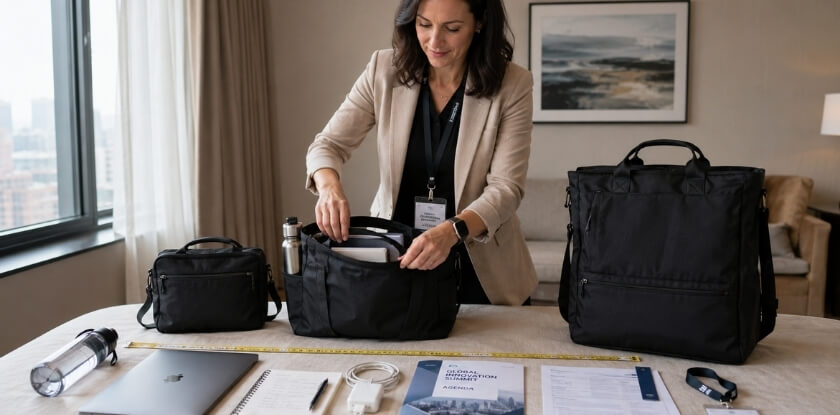
What to Pack in Your Conference Bag — The Essential Packing List

The bag matters, but what’s inside it matters just as much. Showing up to a networking event with a half-empty bag full of random junk makes just as bad an impression as showing up with the wrong bag entirely. Here’s what actually belongs in your conference bag — and a few things that don’t.

The Non-Negotiables

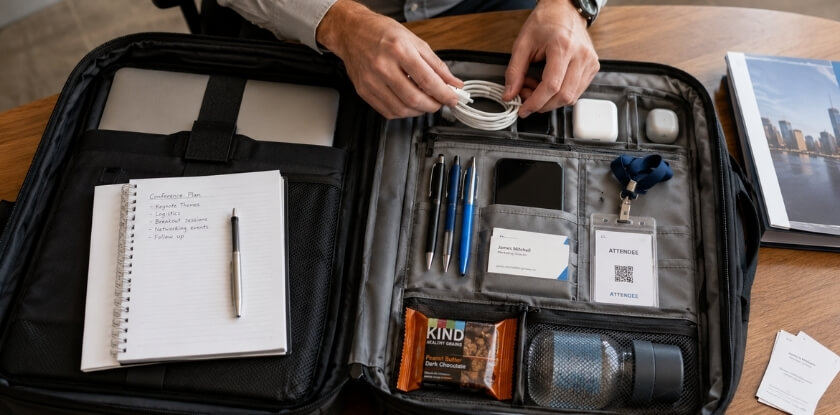
Your laptop and a sleeve. Even if the conference provides handouts, you’ll want your laptop. Don’t just throw it loose into a backpack. A laptop sleeve adds a layer of protection and keeps it from banging against your water bottle. Targus and Tomtoc both make decent slim sleeves under $25.

A portable charger. Conference days are long. Your phone will die by 2pm if you’re using it for photos, notes, and LinkedIn connections. Bring a charger that can at least top up your phone twice — something in the 10,000–20,000 mAh range.

Business cards. Yes, still. Digital cards are fine as a backup, but a physical card handed over during a conversation is faster and more natural. Use a small business card holder so they don’t come out crumpled. This is a small thing that signals you’re organized.

A notebook and pen. Typing notes in someone’s face during a panel can feel rude. A small A5 notebook is less intrusive and doesn’t require charging.

A reusable water bottle. Most conferences have water stations. Staying hydrated across a full conference day is practical, not optional. A 500ml bottle fits in most bag side pockets without adding much weight.

Documents and Tech Accessories

If you’re presenting or attending a formal conference, bring printed copies of anything you might need — an agenda, a one-page summary of your work, or materials relevant to meetings you’ve pre-scheduled. A4 documents fold badly in small bags, so make sure your bag actually fits them flat.

A cable organizer is worth having if you carry multiple cables. It takes up almost no space and stops you from digging around for five minutes every time you need something. Bellroy’s Tech Kit is a popular option; so is the simple Cocoon Grid-It organizer.

Bring the right cables. USB-C, your laptop charger, maybe a presentation adapter if you’re speaking. Don’t assume the venue has what you need.

What to Add for Multi-Day Conferences

A multi-day conference changes the equation. You’re not just commuting for a day — you might be walking between venues, sitting through back-to-back sessions, and heading straight to a dinner event afterward.

Pack a small toiletry pouch. Deodorant, a travel toothbrush, pain reliever. It sounds basic but you’ll be grateful after day two. If you’re using a wheeled tote or a rolling bag that doubles as a carry-on bag, you have the room — use it.

A spare phone battery or charging cable goes in here too. Things break. Batteries drain faster under stress.

Bring a foldable tote bag as a backup. Trade shows especially will load you with brochures, swag, and product samples. Your main conference bag shouldn’t be the one carrying branded stress balls home.

What to Leave Behind

Your full laptop charger brick if your laptop holds charge well. Leave the heavy stuff at the hotel when you can.

Don’t bring every cable you own. Don’t bring a full-size umbrella if a compact one fits. And don’t pack for every hypothetical — pack for what you’ll actually need in an 8-hour day on your feet.

A clean, organized bag is part of your professional appearance. When you pull out a business card and it comes out immediately, without you fishing around, people notice. Same when you grab a pen without a fuss. The bag is just the container — what’s inside it is what actually makes you look prepared.

What to Avoid Putting in Your Conference Bag

Most packing guides tell you what to bring. This one focuses on what to leave behind — because overpacking is one of the most common mistakes people make, and it shows.

Your Entire Office

You don’t need three notebooks, two laptops, a backup charger, a full pencil case, and a folder for every session. Bring what you’ll actually use in a single day. If it’s a multi-day conference, you can repack each morning at the hotel.

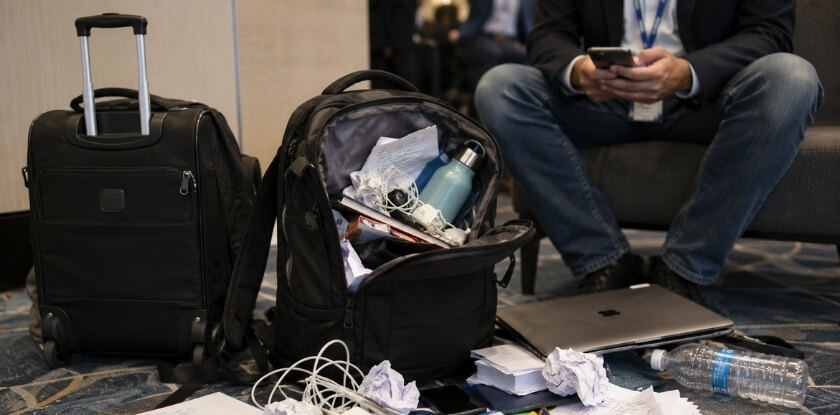
A bag that’s visibly straining at the seams doesn’t read as prepared. It reads as disorganized.

Heavy Peripherals You Won’t Use

Leave the full-size keyboard, the external hard drive, and the HDMI adapter at home unless you’re presenting. These items add dead weight and eat up space you need for things like A4 documents, a business card holder, or a portable charger. Be honest with yourself about what you’ll actually reach for.

Gym Gear

This one sounds obvious. It isn’t. People stuff a gym kit into their conference bag because they plan to work out. Then they carry it around all day during networking events looking like they’re heading to the airport.

If you’re going to the gym, use a separate bag and leave it at the hotel.

Anything Fragile Without Protection

Loose sunglasses, an unsleeved tablet, a glass water bottle rolling around next to your laptop — these are accidents waiting to happen. Use a laptop sleeve at minimum. Fragile items in a packed bag get damaged fast, especially in a crowded trade show or during public transit.

Food That Will Smell

Conferences are close-quarters environments. A banana that’s been in your bag since morning, a container of leftover curry, anything with a strong smell — skip it. Snacks are fine. Just keep them sealed and not pungent.

A Second Bag “Just in Case”

Stuffing a foldable tote inside your backpack in case you pick up swag is reasonable. But showing up with two bags — a briefcase in one hand and a canvas tote in the other — undermines the professional appearance you’re going for. Pick one bag that fits everything, or commit to the foldable backup and keep it flat until you actually need it.

Valuables You Don’t Need On You

Your passport, large amounts of cash, expensive jewelry — leave them at the hotel. If you’re worried about card skimming at a trade show, a small RFID-blocking bag or wallet is enough. You don’t need to carry everything you own to feel secure.

The Bag Itself Can Be the Problem

A beat-up, dirty, or wildly casual bag undermines an otherwise polished outfit. A worn-out Herschel backpack might be fine for a tech conference or an academic conference with a relaxed vibe. It looks out of place at a formal conference in a law firm ballroom. The bag is part of your first impression whether you think about it or not. Treat it that way.

How to Manage Your Bag While Networking at a Conference

Most people focus on what to pack but never think about how to actually carry and handle the bag once they’re in the room. That’s where things get awkward fast.

How to Manage Your Bag While Networking at a Conference

Keep One Hand Free — Always

This is the single most important rule. You need your right hand (or dominant hand) available at all times for handshakes. If your bag occupies that hand, you’re already starting the interaction wrong.

A crossbody bag worn across your body solves this immediately. A backpack worn properly does too. The problem is a tote bag or briefcase carried in your dominant hand — you’ll be constantly shifting it, juggling a drink and your bag and a business card, and looking flustered.

At a networking event, flustered is not the impression you want.

Where to Put Your Business Cards

Have them in one specific, easy-access pocket. Not buried in the main compartment. Not loose in a side pouch where they’ll bend. A bag with a dedicated business card holder slot is genuinely useful here — Bellroy and Knomo both build these into several of their conference bag designs.

If your bag doesn’t have one, use a slim card case in your jacket pocket instead. Don’t let the bag become the obstacle.

Sitting Down at Sessions

Overhead storage at conferences is usually nonexistent. You’re placing your bag under the seat or on your lap. A backpack goes under the seat easily. A rolling bag or wheeled tote is awkward in tight conference seating rows — you’ll block the aisle and annoy people around you.

If you’re carrying a laptop, make sure you can pull it out without unpacking the entire bag. A bag with a dedicated laptop sleeve that opens from the back panel or top handle area is much easier to manage mid-session.

Standing Receptions and Cocktail Hours

This is where bag management gets genuinely tricky. You’ve got a drink, a plate possibly, and someone extending their hand.

Smaller is better here. A crossbody bag that sits flat against your hip, or a slim briefcase you can tuck under your arm, works much better than a large backpack that swings into people when you turn around. If you’re carrying a full-size conference backpack, consider leaving it at your hotel room or coat check before the evening reception.

At the Coat Check

Use it. Seriously. Most formal conferences and trade shows have coat check available. Dropping your bag there during lunch or evening events frees you completely. Just move your essentials — phone, business cards, portable charger, key — into your jacket pockets or a slim crossbody before you hand over the main bag.

A bag with a built-in organizer makes this transfer fast. A disorganized bag means you’re standing at the coat check counter digging around while people wait.

Anti-Theft Awareness in Crowded Venues

Trade shows especially get crowded. A packed expo floor is exactly the kind of environment where a backpack zipper gets opened without you noticing.

An anti-theft bag with locking zippers or hidden pockets — something like Peak Design’s Everyday Backpack or bags with RFID-blocking pockets — adds real protection. At minimum, don’t keep your wallet or passport in the outer pocket of any bag at a busy conference.

The Overhead Bin Problem (Multi-Day Conferences)

If you flew in and you’re using a carry-on bag as your conference bag, keep this in mind: you can’t bring a rolling carry-on into the session rooms and expect it to be invisible. It won’t fit under seats. It will block aisles. People will trip on it.

For multi-day conferences where you flew in, the smarter move is a carry-on for travel plus a packable day bag that folds into the carry-on. Pull out the day bag once you arrive and use that for sessions. Lo & Sons makes a few travel-to-conference bags built around exactly this idea.

One Last Thing

Don’t put your bag on the table during meals or roundtables. Floor only. It signals situational awareness and basic professional etiquette — two things that matter more than whatever bag you’re carrying.

Conference Bag FAQs — Common Questions Answered

Can I use a regular backpack at a conference?

Yes, but it depends on the conference type. At a tech conference or academic conference, a clean, structured backpack is completely acceptable. At a formal conference or corporate networking event, a backpack can read as too casual — especially if it’s sporty or worn-looking. If you go the backpack route, stick with something like a Bellroy Transit or Peak Design Everyday Backpack. Avoid anything with mesh side pockets, loud branding, or hydration ports.

Is a tote bag professional enough?

For a one-day conference, a tote bag works fine — provided it’s structured and made from leather or quality canvas, not a freebie promotional bag. A slouchy tote that collapses under the weight of your laptop and A4 documents will undermine your professional appearance fast. Use a tote when you’re traveling light. Add a laptop sleeve inside if you’re carrying a computer.

Should I bring a separate bag for a multi-day conference?

Yes. A multi-day conference usually means hotel stays, more gear, and at least one after-hours networking event. A single day bag won’t cut it. Most people do well with a larger carry-on bag or a rolling bag that handles the travel side, plus a smaller crossbody bag or compact briefcase for the conference floor itself. Don’t lug your full luggage into sessions.

What’s the ideal bag size in liters for a conference?

For a single day: 15–20 liters covers a laptop, notebook, water bottle, cables, and a portable charger without bulk. For two or more days: 25–35 liters. Anything above 40 liters starts to look like you’re going camping, not attending a trade show.

Are anti-theft and RFID-blocking bags actually necessary?

At large trade shows and international conferences, yes — they’re worth considering. Crowded expo floors are exactly where opportunistic theft and card skimming happen. An anti-theft bag with hidden zippers and an RFID-blocking pocket (Tumi and Knomo both offer these) isn’t paranoid. It’s just practical.

Can women bring a handbag to a conference?

Absolutely. A structured leather handbag that fits a tablet, notebook, and business card holder is a completely legitimate conference bag for a one-day event. The key word is structured — it needs to hold its shape and have enough organization that you’re not digging through it during a conversation. If you’re carrying a laptop, you’ll need something bigger, or pair it with a dedicated laptop bag.

What’s the best bag if I’m flying to a conference?

Something that doubles as a carry-on bag saves you time and checked bag fees. Lo & Sons OG2, Samsonite’s wheeled tote, or a structured travel backpack all work here. Make sure the bag fits under the seat or in the overhead bin, and that it has a luggage pass-through sleeve so you can stack it on your rolling bag without it sliding off.

Does the bag material matter that much?

More than people think. A leather bag reads formal and polished at a finance or legal conference. A nylon bag or canvas bag works at a creative, tech, or academic setting. In rainy weather, a water-resistant bag or waterproof bag matters practically — arriving at a conference with a soaked leather briefcase is not a good look. Targus and Amazon Basics both offer decent water-resistant options at a lower price point if budget is a concern.

How do I stop my bag from being a burden while networking?

Keep it light. If you’re constantly shifting your bag between hands or struggling with straps during a handshake, it’s too heavy or the wrong style. A crossbody bag keeps your hands free. A backpack can be worn on one shoulder for short periods but gets uncomfortable fast. Pack only what you’ll actually use during the day, and leave everything else in your hotel room or conference locker.

What if the conference provides a bag at registration?

Use your judgment. Conference-provided bags are usually canvas tote bags with sponsor logos all over them. They’re fine for carrying swag and flyers, but they’re not your primary professional bag. Bring your own bag for your actual gear, and use the freebie for brochures and giveaways you pick up on the floor.

Final Thoughts — The Right Bag Sends the Right First Impression

Your bag shows up before you do.

Before you shake a hand or say your name, people at a conference are already registering what you’re carrying. That’s not paranoia — it’s just how rooms work. A beat-up grocery tote or an overstuffed backpack with a broken zipper tells a story you probably don’t want to tell. A clean, organized professional bag tells a different one.

None of this means you need to spend $400 on a Tumi leather briefcase. It means you need to think for ten minutes before you pack.

Here’s what actually matters when you’re making this call:

The conference type sets the baseline. A tech conference gives you more flexibility — a Peak Design backpack or a clean Herschel bag fits fine. A formal conference or industry trade show where clients are present? Get closer to a briefcase, a structured leather bag, or a polished laptop bag. Academic conferences sit somewhere in the middle. Read the room before you even read the schedule.

Carry only what you’ll use. The biggest mistake people make is treating their conference bag like a just-in-case bag. A portable charger, a cable organizer, a business card holder, your A4 documents, a water bottle — that’s probably enough. If you’re reaching past three layers of junk to hand someone a card, the bag is working against you.

Comfort matters across a full day. A multi-day conference is different from a two-hour networking event. If you’re on your feet for six hours across a trade show floor, a wheeled tote or a rolling bag saves you real energy. If you’re moving between breakout sessions and trying to stay sharp for afternoon networking, a crossbody bag that sits close to your body is easier to manage than a backpack you’re constantly swinging off your shoulder.

Weather isn’t a small consideration. A water-resistant bag or a fully waterproof bag is worth having if there’s any chance you’re walking between venues. Canvas bags and plain nylon bags from Amazon Basics will survive light rain. Leather bags from Knomo or Bellroy handle it better than you’d expect, but they still need care afterward.

Match your bag to your gender and context — but don’t overthink it. Women carrying a structured tote or a crossbody bag at a formal conference look appropriate and stay mobile. Men with a clean backpack or a laptop bag are fine at most professional settings. The goal is that your bag doesn’t distract — it just works.

The brands that consistently deliver on all of this — organization, durability, professional appearance — are Bellroy, Tumi, Lo and Sons, Knomo, and Samsonite at the higher end. Targus and Amazon Basics are solid if your budget is under $50 and you need something functional without fuss.

One last thing. If you’re carrying sensitive materials or traveling through a crowded trade show floor, an anti-theft bag or an RFID-blocking bag isn’t overkill. It’s just smart.

You don’t need a perfect bag. You need one that fits the day you’re actually having — organized, appropriately sized, and easy enough to manage that it stops being something you think about. That’s the whole point.

Leave a Comment

Your email address will not be published. Required fields are marked *

Shopping Cart
Scroll to Top