
A conference bag can easily end up in a hotel bin or at the back of a cupboard. A kit that people keep using is not a bigger one, it is one where every item has a job. These conference kit ideas cover different event types, themes and budgets, so you can build a kit your attendees will actually use.
Quick answer: The best conference kit ideas are practical, light and matched to the event: a clear badge and lanyard, a notebook and pen, a schedule card with a QR code, a reusable bottle and a tote bag, plus one extra that fits your theme. Attendees remember items they actually use, so choose fewer, better items and test samples before ordering.
Last verified against official sources: October 2026.
What Is a Conference Kit?
A conference kit is the set of printed, practical and digital items an attendee receives before or at the start of a conference. It is not a bag of promotional leftovers. It is a ready-to-use set of tools that helps people follow the program, take notes, identify other participants, find resources and move around the venue with less confusion.
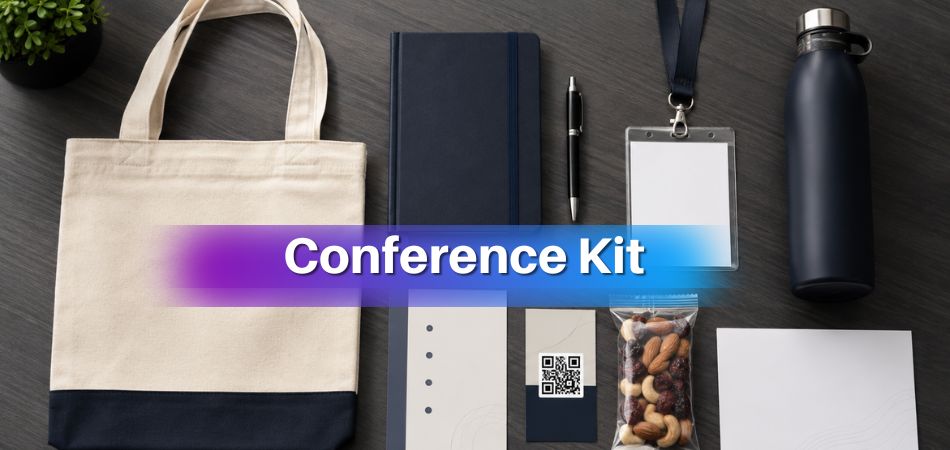
A kit can be physical, digital or a mix of both. A physical kit can include stationery, snacks, wellness items, drinkware or printed cards. A digital kit can include QR codes, app links, maps, speaker details, presentation files and feedback forms.
A good kit is relevant to the audience, light enough to carry, useful after the event, consistent with the theme and organized so items are easy to find. Its quality is measured by how well the items support attendees, not by how many there are.
What Should Be Included in a Conference Kit?
Include only items that attendees will use, can carry easily and that support the event. The best kits combine event essentials, practical giveaways, digital access tools and a few personal touches.
Before adding any item, ask three questions: Will attendees use it? Is it easy to carry? Does it support the event experience?
Branded Stationery
Attendees write notes, questions and follow-up ideas during sessions, so stationery is one of the most used items. Good options are a notebook or notepad, a pen or pencil, sticky notes, a small folder, a session worksheet and a feedback card. Keep branding clean and subtle: a small logo, the event name, the date or a theme line is enough. Oversized branding makes items less useful after the event.
Reusable Drinkware
A water bottle or travel cup suits full-day and multi-day conferences and cuts down on disposable bottles and cups. Lightweight bottles, stainless steel bottles, travel tumblers and foldable bottles all work. Choose one that is easy to carry, leak-resistant and suitable for daily use.
Healthy Snack Options
Long sessions, walking and networking make snack packs welcome. Granola bars, trail mix, dried fruit, crackers, roasted nuts and low-sugar bars are safe choices. Pick sealed snacks with a reasonable shelf life, and avoid anything that melts, leaks, smells strongly or needs refrigeration. Think about dietary needs: Health Canada lists peanuts, tree nuts, milk, eggs, soy, wheat and sesame seeds among its priority food allergens, so many of the snacks above contain one. Choose prepackaged snacks with a full ingredient label, and mention allergens on the welcome card.
Small Tech Accessories
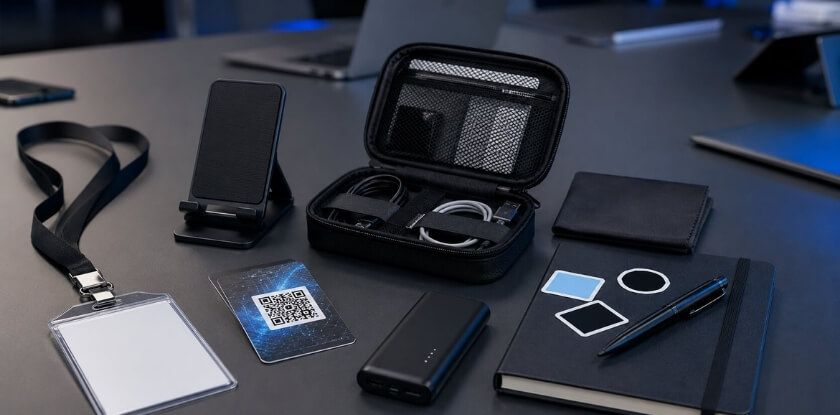
Many attendees rely on phones, laptops, tablets and online schedules, so a small tech item earns its place. Options include a cable organizer, phone stand, screen cleaning cloth, USB drive, charging cable and, for premium kits, a compact power bank. One reliable accessory is better than several low-quality gadgets that stop working quickly.
Name Badges and Lanyards
Badges are needed for identification, access control and networking. A clear badge helps attendees recognize speakers, sponsors, staff, exhibitors and each other. Print the attendee name, organization or role, event name, badge category if needed, and a QR or check-in code if you use one. At larger events, badge colors or lanyard styles can separate speakers, VIP guests, volunteers, sponsors and general attendees.
Tote Bags or Kit Packaging
A tote bag, folder, box or pouch keeps everything together and gives attendees something practical to carry. Cotton, canvas, recycled paper, drawstring, zipper pouch, document folder and kraft box are the common choices. Match the choice to the event format; the table in the bag and box section lays this out.
Stickers, Pins, and Small Keepsakes
Small keepsakes are optional, but they add personality when they match the event identity. Stickers, pins, bookmarks, mini postcards, sponsor cards and theme-based collectibles can all work. They should connect to the event topic, audience or community. Do not fill the kit with random small items just to make it look fuller.
Hygiene and Wellness Items
These help attendees feel comfortable during long events or travel-heavy conferences. Practical options are hand sanitizer, a tissue pack, lip balm, a mint pack, a stress ball, hand wipes and a small bandage pack. Choose neutral, compact items, and avoid strong scents or products that need special instructions.
Printed Schedule Cards and QR Codes
A schedule card gives attendees quick access to key times, while QR codes connect them to the full digital resources. A compact card can list registration time, keynote sessions, break times, workshop slots, the lunch period and networking sessions, plus a venue map QR code and an event app QR code.
QR codes can link to agendas, maps, speaker bios, presentation files, feedback forms, certificate pages and social media pages. Always test every code before printing. Keep a printed schedule and a simple venue map in the kit as well, because phone batteries and venue Wi-Fi can fail during a long day.
Thank-You Notes and Welcome Cards
A welcome card or thank-you note adds warmth and sets a friendly tone. It can include a short welcome message, the event theme, the organizer name, a sponsor acknowledgment, help desk details and a QR code for resources. A few direct lines are better than a long, generic note.
Best Conference Kit Ideas by Event Type
The right kit depends on the audience, format and purpose of the event. A kit for a business summit should not look like one for a workshop, a healthcare event or a technology conference. Each idea below assumes the basics a conference kit usually includes (badge, notebook, pen, schedule) and lists what is specific to that event type.
Business Conference Kit Ideas
Business attendees may be in leadership sessions, meeting clients and exchanging contacts, so the kit should look polished and practical. Good extras are a slim notebook, a quality pen, a business card holder, a professional badge, a LinkedIn QR code card, a minimal tote and a thank-you card. Clean design and useful materials usually work better here than playful or decorative items.
Academic Conference Kit Ideas
An academic kit should help attendees follow research sessions, record ideas and connect with presenters. Useful extras include an abstract booklet or a QR code for papers, a bookmark, a badge with institution details, a folder, certificate instructions and a feedback QR code. If the event has multiple tracks, use clear schedules, room labels and color-coded categories to reduce confusion.
Tech Conference Kit Ideas
A tech kit should support device use, digital access and fast navigation. Strong ideas are a Wi-Fi access card, an event app QR code, a badge with a scannable profile code, a laptop sticker, a digital schedule card and a compact power bank, along with the cable organizer, phone stand and screen cloth listed earlier. Digital access often matters more than printed brochures here, but essential information should still be easy to find.
Healthcare Conference Kit Ideas
Attendees may include doctors, researchers, nurses, administrators and healthcare business leaders, so the kit should feel clean, organized and practical. Add hand sanitizer, a tissue pack, a QR code for speaker materials and one simple wellness item. Avoid clutter, strong scents and anything that makes health-related claims.
Marketing Conference Kit Ideas
A marketing kit can be more creative while staying useful. Try stickers, a social media prompt card, an event hashtag card, a bold tote bag, a content worksheet, a sponsor offer card and a networking challenge card. The design should match the event’s visual identity, and engagement prompts should be optional and simple.
Sustainability-Focused Conference Kit Ideas
A sustainable kit uses items attendees can reuse and keeps waste low. Ideas include a recycled paper notebook, a bamboo pen, a refillable water bottle, a cotton or jute tote, a paper badge holder, cloth pouches, cardboard packaging, a local snack and a digital agenda QR code. The sustainability section below covers the practices behind these choices.
Workshop and Training Event Kit Ideas
A workshop kit should support active participation through exercises, group tasks and worksheets. Good extras are a workbook, a marker, sticky notes, a session checklist, a QR code for training materials, a feedback form, certificate instructions and a light snack. For training events, focus on learning tools instead of unrelated promotional products.
Premium and VIP Kit Ideas
A premium kit gets its feel from quality and presentation, not from volume. Ideas include a rigid box or zipper pouch, a better notebook, an insulated stainless steel bottle, a compact power bank, a printed welcome note with the guest’s name and a small local treat. Keep it light enough to carry, and keep the same rule as any other kit: every item needs a job.
Virtual and Digital Kit Ideas
For hybrid or remote attendees, the kit is a message and a page. Send a short welcome note from the organizer, a one-page guide on how to join, app instructions, links to the agenda and slides, a help contact and a feedback form. A digital kit costs little to produce, but each link must be tested on a phone as well as a laptop. If you also ship a small physical kit to remote attendees, add delivery time and cost to the plan.
Local-Flavour Kit Ideas
Items from the host city make a kit feel specific to the place. Consider a pocket map or QR map of nearby cafes and transit stops, snacks made by a local producer with clear ingredient labels, or a postcard by a local artist. Local suppliers can also make delivery simpler, but ask for samples first.
Why Conference Kits Matter for Attendee Experience
A conference kit shapes the first impression and supports attendees throughout the event. A useful kit makes the conference feel organized, professional and attendee-focused.
They Create a Strong First Impression
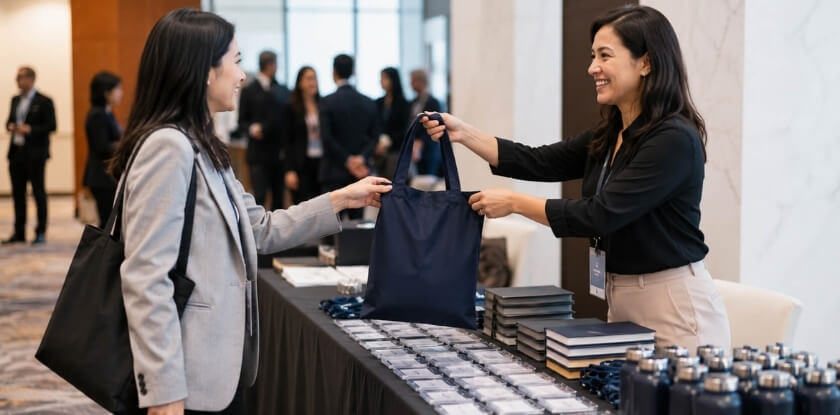
The registration desk is where attendees first meet the event in person. Clean packaging, clear badges, useful welcome materials and an organized layout make that moment smooth, and a prepared kit can help attendees feel the event is well run.
They Support Event Branding
A kit turns the event identity into something attendees can see and use. Colors, logos, typography and printed cards on bags, badges, lanyards, notebooks, bottles and welcome cards reinforce the brand, and clean designs are more likely to be reused after the event.
They Make the Event More Convenient
A kit puts the agenda, venue map, app QR code, Wi-Fi details and help desk contact in one place. This matters most at large events, multi-track conferences and international gatherings.
They Encourage Networking
Readable name badges with organization details, color-coded lanyards, QR profile cards, hashtag cards and conversation prompt cards help attendees identify and approach each other. Small details make introductions smoother and more natural.
They Reflect Event Values
The contents of a kit show what the event stands for. A sustainability event should avoid wasteful products, a healthcare event should feel clean and practical, and a technology event should offer smart digital access. Attendees notice when the kit matches the event’s message.
They Extend Event Recall After the Conference
Notebooks, bottles, tote bags and tech accessories may keep being used at work, at school or while traveling, which keeps the event in mind long after it ends. The more useful an item is, the more likely attendees are to keep it.
How to Match Conference Kit Items With Your Event Theme
Conference kit items should match the event theme through design, color, purpose, packaging and relevance to attendees. A themed kit feels intentional because every item seems to belong to the same experience.
Define the Theme Before Choosing Items
Start with the event theme, purpose and audience. Ask:
- What is the main topic?
- Is the event formal, creative, academic or technical?
- Who are the attendees: their field, their age range, and whether they are travelling or local?
- What will attendees do during the event?
- What message should the kit communicate?
When the theme is clear, item selection becomes easier.
Use a Consistent Color Palette
Take colors from the event logo, website, signage or stage design, and apply them to bags, lanyards, badges, cards, notebook covers, labels and stickers. Two or three main colors are usually enough.
Add Simple Event Branding
Branding should make the kit recognizable without making every item look like an advertisement. The event name, logo, date, venue or city, theme line, website, hashtag and QR code are all useful elements. Subtle branding increases the chance that attendees reuse the items later. Put the logo small, or on the inside lining of a bag, and leave the date off items unless the event is worth remembering for years. Avoid oversized logos on every item, sponsor messages across the whole bag, repeated branding on small accessories and promotional flyers with little value.
Select Items Based on Event Format
The event format should guide item choices.
| Event Format | Useful Kit Items |
| Full-day conference | Schedule, notebook, pen, bottle, snack, badge |
| Multi-day conference | Tote, agenda, wellness item, reusable bottle, QR card |
| Workshop | Workbook, sticky notes, marker, feedback form |
| Networking event | Badge, QR profile card, conversation prompt |
| Hybrid event | App instructions, digital resource links, help contact |
This keeps the kit practical instead of generic.
Include Personalized Details
Personalization can be simple and affordable: name-based badges, role labels, track-specific schedule cards, speaker notes, sponsor inserts and attendee category stickers. For large events, category-based personalization is easier than individual customization.
Coordinate Packaging With the Event Design
The bag, box, folder or pouch is the first thing attendees see, so it should look like part of the same event: same colors, same logo placement, same tone.
Review the Full Kit Before Ordering
Lay out one complete sample kit and look at it as a whole. Remove anything that does not support the theme or the attendee’s needs.
How to Choose Useful and Lightweight Conference Kit Items
Useful, lightweight kit items are easy to carry, simple to use and valuable during or after the event. The kit should help attendees, not burden them.
Prioritize Items Attendees Will Actually Use
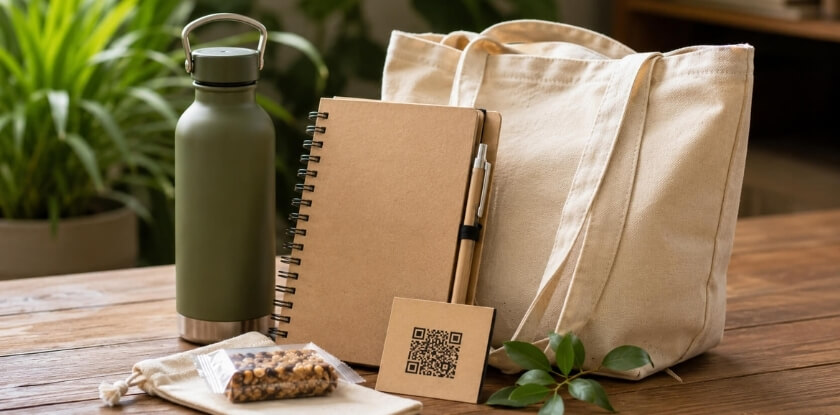
Start with practical items before adding decorative ones. If an item does not solve a problem or support the event, it may not belong in the kit. A quick test for travelling attendees is to ask whether they would pack it for the trip home; heavy or bulky items usually fail it.
Choose Compact Versions of Essentials
Compact items reduce weight and are easier to store, ship and distribute. Better choices include:
- A5 notebook instead of a large notebook
- Slim pen instead of a stationery set
- Pocket schedule instead of a full brochure
- Mini sanitizer instead of a large bottle
- Foldable tote instead of a bulky bag
Look for Multi-Purpose Items
Multi-purpose items add value without increasing kit size.
| Item | Uses |
| Tote bag | Holds items and can be reused |
| Notebook with agenda | Supports notes and planning |
| Pen with stylus | Works on paper and touchscreen |
| QR card | Links to agenda, map, slides, and feedback |
| Badge holder | Displays ID and stores small cards |
The fewer unnecessary items, the cleaner the kit feels.
Avoid Materials That Add Unnecessary Weight
Glass, ceramic, large metal products, thick binders, heavy books and bulky samples add weight fast. Choose lightweight alternatives that still feel durable and professional.
Test Samples Before Bulk Ordering
Always test samples before buying in large quantities. Check weight, size, durability, print quality, color accuracy, logo placement, QR code function, packaging fit and ease of carrying. Proofread every name, date and logo before printing as well. Samples help you avoid low-quality items that weaken the attendee experience.
Focus on Items Useful Beyond the Event
A tote bag, notebook, pen, water bottle, phone stand, cable organizer, bookmark or travel pouch can be used for months after the conference. Subtle design increases long-term use.
What to Avoid Putting in a Conference Kit
A conference kit should not include items that are fragile, heavy, wasteful, confusing or unlikely to be used. The wrong items raise costs and lower attendee satisfaction.
Fragile Items
Glass bottles, ceramic mugs, delicate ornaments, thin plastic products and breakable gadgets can break during transport or check-in. Choose durable alternatives that survive handling and travel.
Heavy or Oversized Products
Large books, thick folders, oversized bottles, bulky merchandise and large product samples make the kit hard to carry. If you need to share a large guide or report, use a QR code instead.
Items With Excessive Branding
Too much branding makes items feel less practical. Subtle branding is more professional and more likely to be reused.
Foods or Drinks That Spoil Quickly
Skip fresh fruit without storage, sandwiches, dairy products, open drinks, unsealed homemade snacks and anything that melts easily. Use sealed, shelf-stable snacks with clear ingredient labels.
Duplicate Office Supplies
Too many similar items create clutter. Attendees usually do not need multiple pens, notebooks or flyers, so choose one good version of each.
Seasonal or Too-Niche Items
Avoid items that only work for a small audience or specific weather unless they clearly match the event. For general conferences, choose items with broad everyday use.
Random Add-Ons With No Clear Purpose
Do not include items only to fill space. If an item does not support comfort, learning, networking or branding, leave it out. A focused kit feels more professional than a crowded one.
Does the Conference Kit Bag or Box Matter?
Yes, the bag or box matters because it affects presentation, portability, protection and attendee satisfaction. It is the first part of the kit attendees see, so it should look organized and feel practical.
A good bag or box keeps items together, is easy to carry, protects the contents, matches the event style and supports reuse where possible. The table shows which format tends to suit which event.
| Event Style | Packaging Idea |
| Full-day or multi-day conference | Cotton or canvas tote, reusable after the event |
| Short seminar | Document folder or recycled paper bag |
| Sustainable event | Kraft bag or cloth drawstring bag |
| Compact premium kit | Zipper pouch |
| VIP or sponsor kit | Rigid or kraft box |
The packaging should not be too large, too small or uncomfortable. If a packed sample feels heavy, awkward or poorly balanced, adjust the contents or choose better packaging.
Best Ways to Pack and Present Conference Kits
Pack kits so items are easy to find, safe to carry and pleasant to open. Good presentation improves the first impression and makes the kit more useful.
Place Heavier Items at the Bottom
Put bottles, tech items and other heavy products at the bottom so paper materials, snacks and small items are not crushed.
Separate Small Items With Pouches or Sleeves
Use envelopes, sleeves or pouches for stickers, pins, feedback cards, sanitizer or cable organizers. This keeps the kit neat and easy to search.
Avoid Overpacking the Bag or Box
A kit should feel curated, not crowded. If the bag is difficult to close or feels too full, remove the lowest-value items first.
Put Welcome Materials on Top
Place the welcome card, agenda, badge, QR code card or Wi-Fi information where attendees see it first so they can get started quickly.
Protect Delicate Items
Use sleeves or dividers for cards, badges, snacks, tech items and printed certificates. Avoid fragile products unless they are necessary.
Arrange Items for Easy Discovery
A simple order works well:
- Welcome card and schedule
- Badge and lanyard
- Notebook and pen
- Bottle or snack
- Tech or wellness item
- Stickers or sponsor inserts
Use Labels When Items Need Explanation
Short labels help attendees understand QR codes, feedback cards, sponsor offers and certificate instructions. For example: “Scan for full agenda”, “Scan for speaker slides”, “Use this card for feedback” or “Keep this badge for session entry”.
Make the Kit Easy to Carry
Carry a fully packed kit around the venue and check the handles, weight, balance, closure and comfort. If it is hard to carry, simplify it.
How to Make a Conference Kit More Sustainable
A sustainable kit reduces waste while still giving attendees practical items. The goal is to choose fewer, better products that support reuse and responsible materials.
Use Reusable or Recyclable Materials
Reusable tote bags, recycled notebooks, refillable bottles and paper badge holders are the usual starting points. A reusable item still has to be durable. Poor-quality items create waste even if they look eco-friendly.
Replace Printed Materials With QR Codes
QR codes can replace long brochures, speaker booklets, printed maps and handouts, and they can link to the sponsor pages and event app as well as the resources listed earlier. Keep one small printed card for quick access and label every QR code clearly.
Choose Minimal Packaging
Avoid wrapping every item separately unless needed for hygiene or protection. Use one main bag, simple labels and grouped inserts. Minimal packaging can still look professional when items are arranged neatly.
Work With Local or Responsible Suppliers
Ask suppliers about materials, packaging, durability, samples, delivery timelines and waste-reduction options. Local suppliers may also reduce shipping complexity.
Avoid Single-Use Plastic Items
Try to avoid disposable plastic bottles, plastic folders, plastic-wrapped brochures, cheap plastic pens, single-use cutlery and excessive plastic packaging. Use paper, cloth, metal, bamboo, recycled materials or digital resources where practical.
How to Plan a Conference Kit on a Budget
A budget kit focuses on useful items instead of expensive extras. A small, practical kit can create a better experience than a large but low-value one.
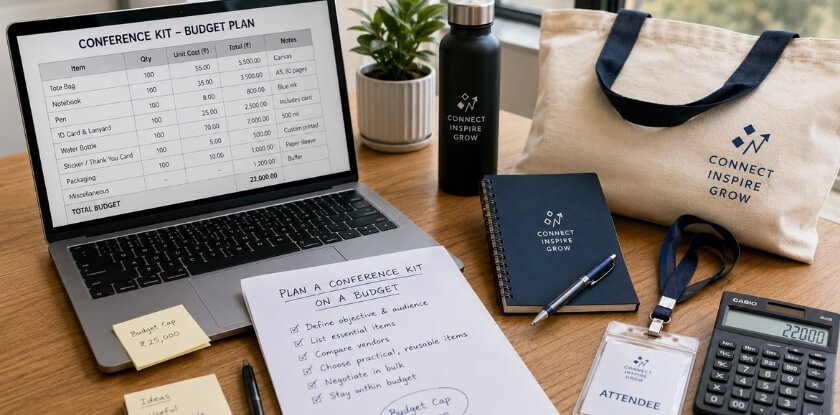
One way to plan is to decide which level you are building before you pick items. The table gives a simple ladder from lean to premium, without prices, because costs depend on your supplier and quantity.
| Level | What it usually contains |
| Lean | Badge, lanyard, printed schedule card with a QR code, pen |
| Standard | Lean items plus a notebook, a reusable tote and a sealed snack |
| Premium | Standard items plus a reusable bottle, a tech or wellness item, a welcome note and better packaging |
Set a Per-Attendee Budget
Start with a clear cost limit per attendee. Include the bag or box, badge and lanyard, printed cards, notebook and pen, snack, drinkware, any tech or wellness item, printing, shipping and packing materials. This separates essentials from optional extras.
Choose Fewer High-Value Items
Spend on the items people use every day, such as the notebook, pen, badge, lanyard and tote, and keep extras like a small sanitizer or sticker minimal. One reliable item is better than several low-quality products.
Order Early to Avoid Rush Costs
Late ordering can increase printing, shipping and supplier costs. Plan early for samples, approvals, production, packing and delivery, and order against confirmed registrations plus a small spare so leftovers do not pile up.
Compare Supplier Samples
Request samples from more than one supplier and compare quality, durability, print clarity, weight, color accuracy and delivery reliability against price. The cheapest option is not always the best value.
Use Digital Resources to Reduce Printing Costs
Digital resources can replace full brochures, speaker bios, sponsor lists, printed slides and detailed maps. Print only what attendees need immediately.
How to Get Feedback on Your Conference Kit
Kit feedback shows which items attendees used, ignored, liked or wanted improved. This makes future kits more practical and cost-effective.
Send a Post-Event Survey
Ask short, clear questions:
- Which item was most useful?
- Which item did you not use?
- Was the kit easy to carry?
- Did the QR code card help?
- What should we add next time?
- What should we remove?
Keep the survey brief to improve response rates.
Ask Short Questions During Check-In
During kit pickup, ask whether attendees can find the badge, scan the QR code and understand the schedule. This catches early issues.
Include a Feedback Card
A small feedback card collects quick opinions during the event. Place a collection box near registration, the exit or the help desk.
Use Social Media Polls
Social polls can work for marketing, tech, student or community-driven events. Ask attendees to vote on their favorite item or suggest future kit ideas.
Interview a Small Group of Attendees
Short conversations with speakers, sponsors, first-time attendees, students and general participants can reveal detailed opinions that surveys miss.
Track Which Items Were Used Most
Watch what attendees actually use: notebooks in sessions, bottles being carried, QR cards being scanned, snacks being opened, or brochures left behind.
Review Feedback Before Planning the Next Kit
Sort feedback into categories and act on each:
| Feedback Area | Action |
| Most useful items | Keep or improve |
| Least used items | Remove or replace |
| Carrying comfort | Adjust weight or packaging |
| Digital access | Improve QR codes or instructions |
| Design response | Refine colors and branding |
| Sustainability | Reduce waste and packaging |
Use feedback before ordering the next kit, not after decisions are already made.
Conference Kit Planning Checklist
A planning checklist helps organizers choose the right items, control costs, reduce waste and prepare kits without last-minute confusion.
| Planning Area | What to Check |
| Audience and purpose | Attendee type, travel needs, event size, session format, and whether the goal is networking, learning, branding or comfort |
| Budget | Clear per-attendee cost |
| Core items | Badge, lanyard, agenda access, key event information and a notebook, pen, bottle, snack or tech accessory |
| Digital Access | QR codes for agenda, maps, resources and feedback |
| Theme Match | Colors, materials and design style |
| Weight and Packaging | Comfortable to carry all day, in a properly sized tote, box, pouch, folder or bag |
| Sustainability | Less plastic, fewer printed items, minimal waste |
| Quality Check | Samples, printing, QR codes and packaging |
| Packing Order | Important materials on top and heavier items below |
| Distribution | Storage, transport and registration handout plan |
| Feedback | Post-event review for future improvement |
From our experience at MS International: Our conferences are held in person in the Greater Toronto Area. Speakers arrive at the check-in time stated in their confirmation email, collect their conference badge and meet the session coordinator or moderator before presenting, and the moderator introduces them before the presentation. Approved speakers receive a certificate after presenting, so they are asked to check that their name, organization, position and presentation title are correct beforehand.
FAQ: Conference Kit Ideas
Want attendees to remember the kit? Planning lead time, a tight budget, branding, size, choosing suppliers and eco-friendly items shape the result.
How early should you start planning a conference kit?
Start as soon as the date and expected attendance are set. Lead times vary by supplier and product, so ask each supplier for production and delivery dates in writing, and leave room for samples, approvals and corrections.
What makes a conference kit memorable?
A kit becomes memorable when it is useful, well designed, easy to carry and connected to the event theme. Attendees remember items that solve a real problem, such as a clear schedule or a bottle they refill all day. A simple test is whether they would pack the item for the trip home.
How can you create a budget-friendly conference kit?
Choose fewer high-value items instead of many low-value giveaways. Cover the essentials first, then add extras only if the budget allows. Digital resources can replace some printing, and ordering against confirmed registrations avoids waste.
Why is branding important in a conference kit?
Branding connects the kit to the event identity. It helps attendees remember the organizer, theme and experience, and subtle branding is usually reused more than heavy promotion.
Should conference kits include digital materials?
Yes, digital materials suit schedules, maps, speaker bios, slides, feedback forms and event apps. QR codes reduce printing and make updates easier, as long as every code is tested. Keep a printed schedule as a backup for dead phones and weak Wi-Fi.
What size should a conference kit be?
Compact enough to carry comfortably, but large enough to hold the items without crowding. Medium totes, pouches, folders or small boxes work well.
How do you choose suppliers for conference kit items?
Choose suppliers on quality, price, reliability, customization options, sample availability and delivery timelines. Always review samples before a bulk order.
What are the best eco-friendly conference kit items?
Reusable, recyclable, durable and useful ones. Good choices are reusable tote bags, refillable bottles, recycled notebooks, bamboo pens, paper badge holders and QR code cards. Ask suppliers to confirm material claims such as “recycled” in writing.
Final Thoughts on Conference Kit Ideas
The best conference kit ideas are practical, lightweight, theme-focused and designed around the attendee. A small kit with a clear badge, a schedule, a notebook and one or two thoughtful extras beats a crowded bag of giveaways.
Before finalizing your kit, check three things: whether each item is useful, whether attendees can carry it comfortably and whether the kit reflects your event identity. Removing unnecessary items is often as important as adding good ones.