
Conference speakers are not a special class of people. They sent in a proposal, and many people with something to say never did. That one fact explains much of the gap between people who wish they were on stage and people who are. This article covers the whole process: building a first speaker profile, pitching a local meetup, writing proposals that get accepted, handling rejection, and moving toward invited and paid stages.
Quick answer: You become a conference speaker by submitting a clear, narrowly scoped proposal to a call for papers (CFP) that fits your field. Practise first at a local meetup, Toastmasters club or webinar, record your talks, and keep submitting. You do not need fame or a large following. Keynote and paid roles usually come after you have a record of accepted talks.
You will also find how organizers judge proposals, what separates a forgettable submission from one that gets accepted, how to handle nerves, and how speaking can lead to consulting work.
Becoming a Conference Speaker
Becoming a conference speaker takes preparation, persistence and a clear point of view. It does not take fame or a massive following.
The fastest path starts with your niche expertise. Conferences need speakers who can teach something specific and useful. If you can describe a concrete problem you solved, a method you tested, or a view grounded in real experience, you already have a talk worth proposing.
From there the process runs in a straight line: build a small track record at local meetups or internal events, put together a speaker profile, then answer CFP (Call for Papers) listings from conferences in your field. Many first-time speakers are turned down before the first yes. That is normal, and how you respond to those rejections decides how quickly you progress.
As your experience grows, so does your standing with larger conference organizers. Paid speaking and international conference invitations can follow once you have spoken at a handful of events, kept recordings of your talks, and built relationships in your industry.
What You Need to Know Before Becoming a Conference Speaker
Most people assume speaking is reserved for published authors, academics or executives with decades behind them. That assumption keeps many knowledgeable people out of rooms where they could do real good. Before you write a proposal, it helps to know what actually gets speakers selected.
You Need Niche Expertise, Not Special Credentials
Organizers are not hiring you for a job title. They want someone who can give their audience a specific, useful insight that is hard to find elsewhere.
“Three years running paid ads for small e-commerce brands” is a stronger pitch than “digital marketing professional with 10 years of experience”. Specificity is what separates a strong speaker profile from a forgettable one.
Many first-time speakers position themselves too broadly because they want to look versatile. Organizers read that as unfocused. A tight niche, narrower than feels comfortable at first, tells the organizer which session you belong in and which audience you will serve.
You also do not need a book, a podcast or a large social following. Those can support an application, but they are not prerequisites. What you need is a clear point of view on a subject your target audience cares about, plus some evidence that you have done the work.
If you are unsure of your niche, Toastmasters clubs and local meetup groups are practical places to test ideas. You learn which points land with an audience, and you start building the speaking experience that strengthens later applications.
What Organizers Look For in the Speaker Selection Process
Many mid-size and large conferences run a formal CFP. A committee, which may include past speakers and programme chairs, scores the proposals against set criteria. Reviewers may start with your session title and abstract rather than your bio, because the session is what fills seats.
A committee may ask a few practical questions. Will this session attract attendees? Does the topic fit our theme and audience level? Is the proposal clear enough that we can predict what people will take away? Has this person shown they can deliver what they promise?
The last question is where many first-timers stumble. A strong abstract with no supporting evidence is a risk for the organizer. A short video clip from a webinar, a local meetup talk or a well-produced internal presentation gives the committee something to judge.
Organizers also think about balance: variety of topics, backgrounds, seniority levels and sometimes geography. A rejection does not always mean your proposal was weak. Another pitch may have been stronger, or the committee may already have accepted three sessions on nearby topics.
Prior contact helps too. Connecting after a conference you attended, engaging with the event on social media, or asking a genuine question about the scope of the CFP makes your name less anonymous when your proposal reaches the review pile. It is not a shortcut, but it is a real factor in a process that is more human than most applicants expect.
Step-by-Step: How to Become a Conference Speaker
Organizers look for fresh voices. They just need those voices to turn up in the right places, in the right way. These five steps take you from no stage time to a record that organizers can evaluate.
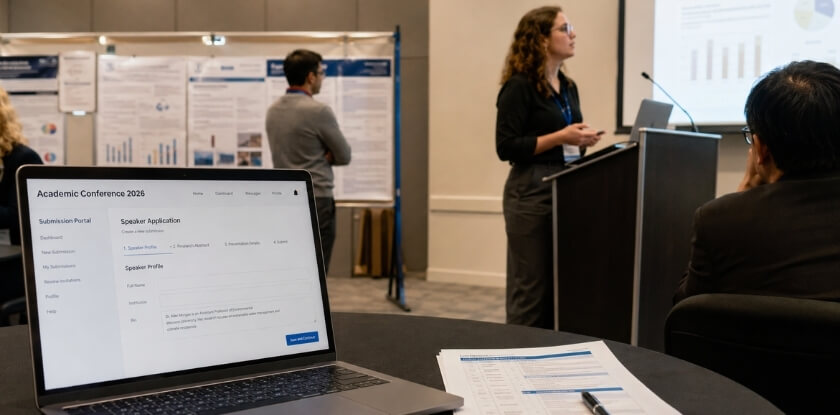
Step 1: Start Small With Local Meetups, Toastmasters and Webinars
Before an organizer considers you, they want evidence that you can hold a room. The quickest way to build it is in lower-stakes settings where a bad day costs you nothing.
Local meetups are a practical starting point. A 20-minute talk at a city-level meetup, a professional group or an industry association event gets you honest audience feedback and often a recording you can reuse. Search Meetup.com for groups in your field and write to organizers directly.
Toastmasters is built for this problem. Many clubs meet weekly and some every two weeks, so check the club’s listing. The structured feedback helps you cut filler words and tighten your pacing, and a few months of regular sessions give you steady practice.
Webinars fill the gap between practice and a conference stage. A free webinar on a specific topic in your niche gives you a speaking credit, a video asset and a list of people who found the content useful.
Even a well-made recording from a small event shows you can communicate clearly and stay composed inside the limits of a live format. The goal at this stage is simple: collect repetitions and recordings.
Step 2: Build Your Speaker Profile and Speaker Page
Some first-time applicants skip this. Reviewers can look up a speaker’s name, and if your online presence does not confirm your expertise, your proposal is harder to trust.
Your speaker page is the foundation. Host it on your own domain, not only on LinkedIn, and give it four things: a professional headshot, a short bio written in the third person, your topic areas, and links to past talks or webinar recordings. Even a 10-minute recording of a meetup talk counts. The same four items are what you should keep current; a thin bio, a blurry photo and no video make you look unproven even when you are not.
A profile on a speaker platform such as Sessionize keeps your tagline, biography and photo ready to reuse in each submission. Fill it in completely. Changes to your default profile do not update events you have already submitted to, so edit the profile inside that event if a detail changes.
Write the bio for the niche you want to speak in. “Marketing consultant and speaker” tells an organizer nothing. “SEO strategist who audits e-commerce sites and speaks on technical content strategy” tells them who you are and whether you fit their audience.
Step 3: Find CFP (Call for Papers) Opportunities and Submit
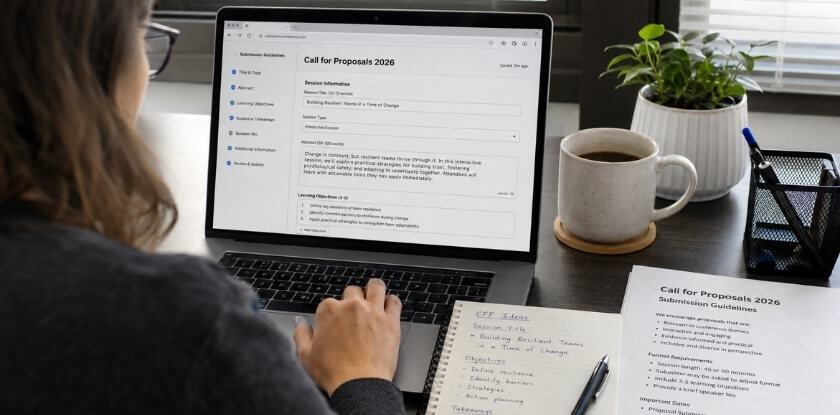
A CFP is an open invitation from a conference for speakers to submit topic proposals. Most run for a defined window, often several months before the event, and close on a hard deadline.
Start with the websites of conferences in your field, which usually have a “Call for Speakers”, “Call for Papers” or “Submit a talk” link. Many events run their submissions through platforms such as Sessionize or PaperCall, so those are worth browsing. Searching social media for “#CFP” plus your niche keyword brings up calls that never reach the big platforms. Organizers also announce calls in community Slack groups and newsletters. Your employer can be a route too: ask colleagues in sales or partnerships whether your organisation receives speaking invitations you could take. Some events have no open call at all. For those, check the organiser’s contact page and send a short, specific pitch to whoever builds the programme, naming your topic and the audience it suits.
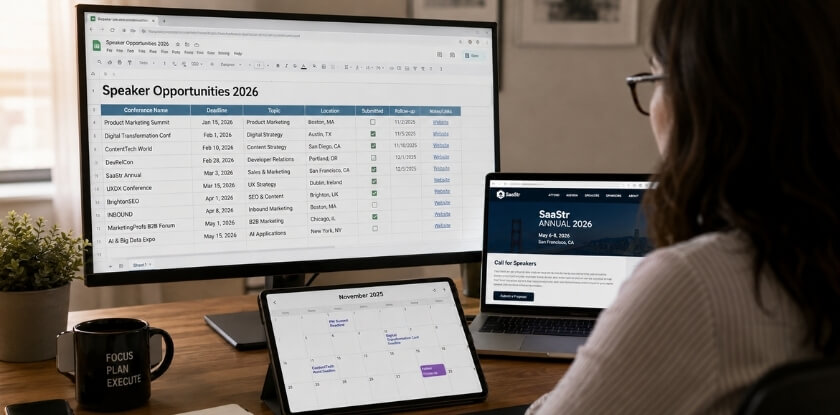
Track what you apply to. A simple spreadsheet with the conference name, deadline, topic submitted and status stops you losing track once you submit to several events.
Submit broadly while you are starting out. Competitive conferences accept only a share of what they receive, so volume is part of the strategy, and the same core talk can go to several events if you adapt the abstract to each audience. Read each call’s rules first: Sessionize notes that some events allow multiple session submissions and some do not, and if there is a limit, submit your best sessions. You can target more precisely once you have a few acceptances.
Step 4: Write a Proposal Organizers Cannot Skip
A strong proposal makes the organizer confident that your session will serve their audience. Credentials and speaking history only support that promise.
Build the proposal around a specific outcome. Name the exact problem your talk solves, the format you will use, and two or three concrete takeaways. “Attendees will leave knowing how to reduce cart abandonment using exit-intent data” is a proposal. “Attendees will learn about conversion optimization” is not. The first tells the organizer you have thought through the session, not only the topic.
Titles matter because reviewers meet them first. A title that names a problem and hints at the fix gives a reviewer a reason to read on, for example “Why Your Conversion Rate Stalls and the Data Strategy That Fixes It”. A vague label such as “Advanced CRO Techniques” gives them nothing to judge.
Check the word limit in the call, because it varies from event to event. Cover the problem, why it matters to this audience, and how the session is structured. Assume the reviewer does not know your name, so let the content sell itself.
Include your earlier speaking experience, even if it is only meetup talks or webinars. Organizers expect new speakers to have modest records. They want evidence that you have stood in front of an audience, and a link to a recording beats a paragraph describing it. If you are new to speaking, check whether the call suggests a short video of you explaining the topic: some calls do, and it gives reviewers something to judge. It also helps to ask someone who has not seen your idea to read the proposal and tell you what they think the session offers.
Step 5: Handle Rejection Professionally and Keep Following Up
Rejection is common, experienced speakers included, and the real mistake is failing to learn from it. Treating each decline as information rather than judgment keeps you in the game.
Reply briefly to thank the organizer for considering you. It takes 30 seconds and keeps the exchange courteous when the next CFP opens.
Hi [Organizer Name], thank you for reviewing my proposal for [Conference Name]. I understand the programme was competitive. If you can share any feedback, I would value it, and I hope to submit again next year.
Ask for feedback where you can. Not every organizer replies, but some will, and even one line such as “the topic overlapped with a session we had already confirmed” shows how to differentiate the next proposal. If several people point at the same weakness, take it seriously and revise.
Make your follow-up calendar-based. Note when each conference usually opens its next CFP and submit again with a refined proposal. Reapplying with a refined proposal gives you a fresh chance, and some speakers are accepted on a second or third attempt.
The same applies to waitlists. If you are on one, check in once, briefly and politely, about two weeks before the event. Cancellations happen and organizers sometimes need to fill a slot quickly. A speaker who stayed in touch may get that call.
If you get no reply at all, a short follow-up is fine once the stated decision date has passed by about two weeks. Confirm they received your submission, restate your interest and leave it there. Do not follow up repeatedly.
Paid and international slots come out of the same pipeline: accepted talks, a visible speaker page and a reputation for being easy to work with. Organizers who book paid keynotes may have first seen the speaker at a regional event.
From our experience at MS International: For most applicants, the route to our in-person conferences in the Greater Toronto Area is the presenting-author track: submit work for review and register after acceptance. You choose a conference that fits your work and submit an abstract, full paper, case study, review paper or professional presentation for double-blind review, with decisions in about 10 working days. After presenting, approved speakers receive a speaker certificate. A PhD is not required, and the route is designed for people with a useful, original contribution, not only experienced public speakers. Speakers cover their own travel, accommodation, visa, transportation and personal expenses unless we have agreed otherwise in writing, and an honorarium, travel reimbursement or free registration should not be assumed. Keynote and invited roles are arranged separately with the organizing team.
Strategies for Getting on International Conference Stages
International stages need a different approach from a first local talk. Audiences can be larger, competition for slots can be stiffer, and organizers may expect a record before they take a risk on someone they have never seen present.
Build a Record Before You Pitch
Organizers take a risk on every speaker they select, and some international organizers will not shortlist a speaker who has nothing to show. You need documented proof of past talks: video, audience sizes, event names and any measurable outcomes.
- Add a past-events section to your speaker page. List past events, talk titles and audience types, and add a short, clean video demo of two to three minutes. Without it, you are asking organizers to take your word for it. Your resume should carry the same list, with conference presentations in their own section once you have more than one talk.
- Treat regional events as your portfolio. Meetups, industry webinars and mid-tier domestic conferences are not a consolation prize. They are the material that makes international CFPs reviewable. A talk delivered to a regional audience is concrete evidence; one given only inside your own company is not.
- Show niche expertise in public. Guest posts, podcast appearances, published case studies and a clear content focus on LinkedIn tell an organizer what you stand for before they read your proposal. International programmes may favour speakers with a recognizable position in a field over generalists.
Write Proposals That Travel Well
Reviewers at international conferences read a great many submissions, so a proposal that would pass at a local event does not automatically pass here.
- Be concrete about the takeaway. “We’ll explore the future of X” gets passed over. Say what an attendee will be able to do differently afterwards. One specific, usable outcome is worth more than three broad themes.
- Adapt the framing to the audience. Sending the same text to every conference is a mistake, and so is aiming too basic or too technical for the room. Spend twenty minutes reading the event’s past sessions, themes and attendee profile, then adjust your angle. Organizers notice when a proposal reads as if it was written for their event.
- Show cultural awareness. Outside your home region, proposals that acknowledge differences in regulation, user behaviour or market context can land better than ones that assume a single market.
Use Connections, Not Just Cold Submissions
Selection at some larger international conferences is not blind, and relationships can count.
Attend the conferences you want to speak at before you submit. Talk to organizers, ask thoughtful questions in Q&A sessions and engage with speakers on social media afterwards. A familiar name can help when the committee reviews submissions.
If someone you know has already spoken at a target event, ask whether the organizers accept introductions or recommendations. Some do, and a warm introduction from a trusted past speaker carries weight that an unsolicited form cannot.
Keep Momentum After a Rejection
You will be rejected by international conferences, often repeatedly, and established speakers are too. When a conference has far more proposals than slots, the odds work against everyone.
- Write after the event. A brief, gracious email congratulating the team on a successful conference keeps the door open for the next call.
- Keep submitting in parallel. Waiting on one dream event at a time is the slowest route. Keep a rolling list of five to ten target conferences with open calls and treat submitting as ongoing work, not a quarterly task.
Move Toward Paid Speaking Internationally
Unpaid and expenses-only engagements are normal at the start, but they are a waypoint, not a destination. If your goal is a speaking fee, the move needs deliberate positioning.
After you have spoken at several credible events, you can introduce a fee. There is no standard rate: it varies widely with the event, the field and your profile, so anchor it to the value of your niche expertise and the outcomes you deliver, not to a number that merely sounds reasonable.
Paid international engagements usually come from two directions: inbound interest from organizers who saw you speak or found your speaker page, and outbound pitches to events with confirmed speaker budgets. Find out whether a conference pays speakers before you submit; some say so in their prospectus, and others will tell you if you ask. Months spent courting an event that never pays are wasted if paid speaking is the goal.
Consulting work, partnerships and client leads often follow international slots. Build that into how you close every talk: a clear call to action, a resource link, and an easy way for attendees to reach you.
Overcoming Stage Fright and Delivering a Memorable Talk
Many people who speak regularly say the nerves never fully go away. What changes is your relationship with them. The aim is not to remove anxiety before you walk on, but to get comfortable enough that it does not run the show.
Understanding What You Are Afraid Of
Pre-talk anxiety usually comes from one of three sources: fear of forgetting your material, fear of judgment, or fear of silence. Knowing which one drives yours helps you fix the right thing.
If you fear forgetting, the answer is a solid structure, not memorization. Learning a talk word for word is one of the most reliable ways to freeze on stage, because one lost sentence can take the rest with it. Audiences do not know your script. They respond to clarity and presence. Know your structure and key points well enough to adapt if a slide will not load, a moderator asks a question, or your slot is cut short. If judgment worries you, remember that conference audiences generally want you to succeed. They came to learn something from you.
Building Confidence Before the Big Stage
- Start with lower-stakes rooms. Toastmasters has a predictable format and constructive feedback. A local meetup works just as well: volunteer for a 10-minute talk on your niche before you submit anything to a major conference.
- Record yourself. It is uncomfortable, but a playback shows filler words, pacing and the places where you rush. A phone propped against a stack of books is enough.
- Rehearse with an audience. Practise in front of two or three colleagues and ask them to interrupt with questions midway. That trains you to recover and carry on, which is exactly what a real stage demands. Rehearsing aloud matters as much as polishing slides.
- Do a webinar first. A live online audience is a lower-pressure way to test material, time your talk and see which parts land before you face a large room.
On Stage: What Helps
The first minute or two decides whether you win the room. Prepare your opening sentence exactly, the actual words, not a rough outline, and say it aloud until it is automatic. Nerves peak at the start.
- Slow down. Nervous speakers talk fast. If you feel you are speaking too slowly, you are probably at the right pace for the audience.
- Pick three or four faces and rotate eye contact between them. It feels like real connection to those people and stops you staring at the ceiling or your slides.
- Leave pauses in. Silence feels much longer to you than to the room. A two-second pause after a key point reads as confidence.
- Know your closing line. A talk that trails off into “so, yeah, that’s basically it” undoes the work before it. Plan your last sentence as carefully as your first.
When Things Go Wrong
Technology fails, you lose your place, someone asks a question that throws you. This happens to experienced speakers too, and the audience’s impression depends mostly on how you handle it.
If your slides die, keep talking. A good talk can usually survive without slides. If you lose your place, say “let me back up for a second” and find your footing. Handling a hiccup calmly tends to build credibility.
The speakers people remember are not the ones who performed perfectly. They are the ones who seemed engaged with the room, spoke with conviction and made the content useful. You can do that without being a natural performer. It takes enough practice that the mechanics stop needing your full attention and the ideas can come through.
How Much Can You Earn as a Conference Speaker
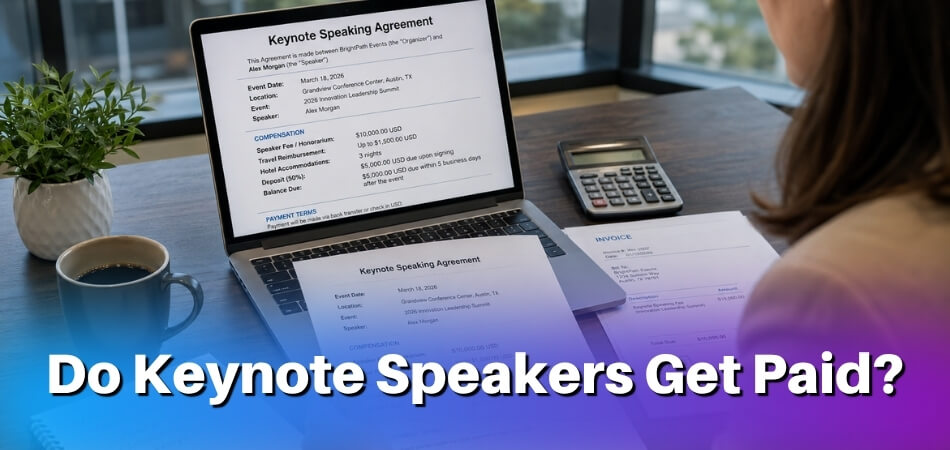
Earnings vary widely with your experience, the event’s budget and your niche. A first-time speaker at a local meetup should not expect a payment, while a recognized expert at a well-funded event may be paid a substantial fee for a single talk. No reliable public rate card exists, so treat any quoted range with caution and ask each organizer what the event offers. A talk you submitted through a call is more likely to bring a free pass or expenses support than a fee, while invited speakers are more likely to be offered one, but each event decides.
| Stage | What organizers may offer | What you do |
|---|---|---|
| Unpaid or stipend level | Nothing, a free ticket, a hotel night or travel help | Build your profile, collect video, prove you can hold a room |
| Mid-tier | Honorarium or small fee | Ask politely what support the event offers speakers |
| Established paid speaker | Speaking fee, often with travel handled separately | Clarify fee and logistics costs upfront |
Unpaid and Stipend-Level Speaking
Many speakers start here. Local meetups, community conferences and many open-source events pay nothing. You might get a free ticket, a hotel night or travel reimbursement if you are lucky.
This is not a failure. These events are where you build your profile, collect footage and prove yourself, so treat them as an investment, not a transaction.
Mid-Tier: Honorariums and Small Fees
After a handful of events and a credible speaker page with past talks and testimonials, you can start negotiating. Mid-sized industry events, regional summits and professional association conferences sometimes offer honorariums.
These are not always advertised. Organizers often have a speaker budget but will not mention it unless asked. When you submit a CFP, or after you are selected, it is reasonable to ask what support the event gives speakers. You will not be penalized for the question.
Paid Speaking and What Drives the Fee
Established speakers with clear niche expertise and a record of strong talks can charge a fee, and rates for headline keynote speakers can be very high. Fees are usually separate from travel and expenses, and experienced speakers clarify that upfront. Several factors move the number up.
- Specificity of your expertise. Speakers who address a narrow, high-value problem command more than generalists. A talk on cybersecurity risk for financial institutions is worth more to the right audience than a broad leadership keynote.
- The conference’s business model. Events with high ticket prices and sponsors have budget to pay speakers properly; free community events generally do not. Research ticket price and sponsorship before you negotiate.
- Your track record of outcomes. If past organizers can point to the audience response you generated, such as referrals, follow-up sessions or a rise in registrations, that is a selling point. Collect those quotes and put them on your speaker page.
- Demand signals. Frequent bookings, a waitlist for workshops, or being approached by organizers instead of always submitting yourself all signal market value and shift the negotiation your way.
When to Work for Free (and When to Stop)
Early on, saying yes to unpaid slots makes sense. After a handful of documented talks, a filling-out profile and the first inbound interest, continuing to speak free devalues your time and, counterproductively, your perceived expertise.
If a conference charges for tickets and has sponsors, it is reasonable to ask whether it has a speaker budget and what it covers. If the answer does not work for you, you can decline gracefully or propose a trade, such as sponsored access to the attendee list, a booth presence or a prominent feature in their marketing. Not every negotiation ends in a cheque, but it should end in something concrete.
Some organizers will push back or drop you when you ask about fees. That is fine. Events that cannot pay are usually clear about it, and knowing early saves time on both sides.
One more caution applies to timing. Asking about fees before you have any track record puts organizers in an awkward spot and can end the conversation early. The progression from unpaid local talks to a travel stipend to a fee is real, but it takes time and evidence. Once organizers approach you, the fee conversation gets much easier.
Turning Speaking Into Consulting and Business Opportunities
A well-received talk can be an effective business development tool for a speaker. People in the audience make decisions about vendors, partners and advisors while you are still on stage, and by the time you step off some already want to talk. The fee is often only part of the return: consulting inquiries, webinar invitations, course enrollments and book sales can be worth more than the fee itself.
The question is whether you are set up to capture that.
Your Speaker Profile as a Sales Page
Your speaker page should do more than list talks. Say what you can help people with afterwards, whether that is consulting, advisory work or training. A short “Work With Me” paragraph and a contact form are enough. If you do not say that you are available for hire, people may assume you are not.
Building a Consulting Pipeline Through Speaking
- Lead with niche expertise. The narrower your topic, the more credible you look to clients with that exact problem. “Reducing Churn in B2B SaaS” attracts more qualified inquiries than “Growing Your Business”.
- Answer people who reach out. Attendees who email you are warm contacts. Reply within 48 hours, even if only to set up a call. A slow reply after a strong talk loses the moment.
- Offer a post-talk resource. A short guide, checklist or framework handout tied to your topic gives attendees a reason to share an email address, and that list becomes a pipeline over time. Webinars work the same way.
When Speaking Turns Into Paid Work
The path is usually the same: you speak, someone in the audience has the problem you described, they reach out, you have a call, and work follows. It is not complicated, but it requires that your talk solves a real problem rather than skimming a topic.
Paid speaking becomes a business line once you have a record. Organizations hosting corporate events, association conferences and executive retreats pay fees because they want proven authority in front of their audience. After a few notable conferences you can list a fee on your website and start taking inbound requests. International events can also open relationships in markets you would never reach through cold outreach.
Protecting the Relationship With Organizers
Some organizers forbid overt pitching from the stage, and breaking that norm can close future doors. Keep the talk educational. Business development happens in the hallway, over coffee and through your profile, not through a sales pitch dressed up as a keynote.
Build a real relationship with organizers. They receive sponsorship inquiries, know which companies need speakers or trainers, and can refer consulting work. Treat them as long-term professional contacts, not gatekeepers you meet once.
Structuring Offers Around Your Speaking Topics
Once speaking is regular, align your consulting packages with your talk topics. If you speak on pricing strategy, offer a pricing audit. If you speak on team leadership, offer a workshop version for corporate clients.
This gives you a coherent professional identity. A company that sees you speak, visits your website and finds an offer matching your talk has a very short path to becoming a client. Keep that path clear.
Common Mistakes New Speakers Make (and How to Avoid Them)
Even speakers with solid ideas lose opportunities through avoidable errors. The main traps are covered above: a generic proposal (Step 4), a thin speaker page and no recordings (Steps 1 and 2), pitching a major international event before you have spoken anywhere (Build a Record Before You Pitch), and rehearsing slides but never out loud (stage fright section). These patterns are easy to fix once you know them, and these are the ones left.

Ignoring the Audience Fit
A proposal that is too basic for an advanced audience, or too technical for a general one, shows you did not do your homework. Read last year’s speaker lineup and session topics before you write a word. A DevOps event and a product management summit use different vocabularies even when the content overlaps.
Staying Silent After You Submit
If you hear nothing after a CFP submission, remember that organizers are busy and your email may have been missed. A short, polite note is acceptable once the decision date has passed (see Step 5 for timing). When a no arrives, ask what made other proposals stronger that year. Some conferences will not share it, and others will.
Disappearing After the Talk
Speaking is a business opportunity that some new speakers fail to act on. They present, answer questions and go back to the hotel room. Stay in the room instead. Talk to people who approached you, connect with other speakers and swap contact details. A LinkedIn request with a short note referencing your conversation can turn a 30-minute talk into a consulting lead, a co-speaker invitation or an introduction to an organizer who books paid engagements.
Promote your own appearance as well. Post before, during and after the event. Organizers may value speakers who bring their own audience, and that visibility can influence whether you are invited back or promoted on the main conference channels.
FAQ
Breaking into conference speaking without stage experience means deciding how many CFP proposals to send, how to follow up, how to take rejection and when to ask for a fee.
Do I need speaking experience before submitting a CFP?
Usually not. Many calls state that first-time speakers are welcome, and some suggest a short video if you are new to speaking. A proposal built on real niche expertise is judged on content, but each event sets its own rules, so read the call.
How long does it take to land a first speaking slot?
It varies, and often takes several months of active effort: submitting, attending events and building your profile. Some people are accepted on their first submission. Many go through several rejections before the first yes.
What is the difference between a paid and unpaid speaking gig?
A paid gig includes a speaking fee, while an unpaid gig offers none, sometimes with a free pass or expenses support. Fees come more readily with a record and a visible online presence, and every event decides, so ask what support it offers before you accept.
How many proposals should I submit at once?
It depends on the call, because some events limit how many sessions one person can submit. Within any limit, send your best sessions. Across events, a rolling list of five to ten target conferences is a workable pace while you build visibility.
Should I follow up after submitting a proposal?
Yes, once, if you have heard nothing two weeks after the stated decision date. Keep it short: confirm they received your submission and say you are still interested. Avoid repeated follow-ups.
How do I handle rejection from a conference organizer?
Reply politely, ask for feedback and reapply with a sharper proposal. A decline can reflect programme fit or limited slots as well as proposal quality, so treat it as information, not a verdict.
Can a webinar or online talk count as speaking experience?
Yes. Online formats take real presentation skill. List webinars on your speaker page, especially ones with a sizeable audience or a credible host.
When is it reasonable to ask for a speaking fee?
Once you have a handful of talks behind you and organizers are approaching you. Before then, ask what support the event offers speakers. When you do name a fee, state a clear figure and adjust it to the event’s budget and your own value.
Is Toastmasters worth joining?
Yes, for delivery and stage fright. It gives you a low-stakes place to practise structure, timing and presence. It will not help with writing proposals or getting booked, but it is useful for the craft.
Do I need a dedicated speaker page on my website?
Yes, it makes a real difference. Organizers want one place to see your topics, past talks, short bio and contact details. Without it you make their job harder.
Can I speak at an MS International conference without a PhD or stage experience?
Yes. You do not need a PhD or a long stage record; what counts is a useful, original contribution that fits the conference. Choose a conference that fits your work, submit it for review, and register as an author if accepted. Keynote and invited roles are arranged separately.
How do I get invited to speak at a conference?
Build visibility and relationships first. Speak at smaller events, keep a speaker page with recordings, attend the conferences you want to speak at, and tell organizers your topic. Some events also invite speakers recommended by past speakers.
Final Thoughts
Speaking is a skill you build over time, not something that happens because you sent one proposal and got lucky. Start with local meetups, refine your material, build your profile and keep submitting even when rejections pile up. What carries speakers to larger stages is consistency: enough submissions, recordings and relationships for opportunities to compound.