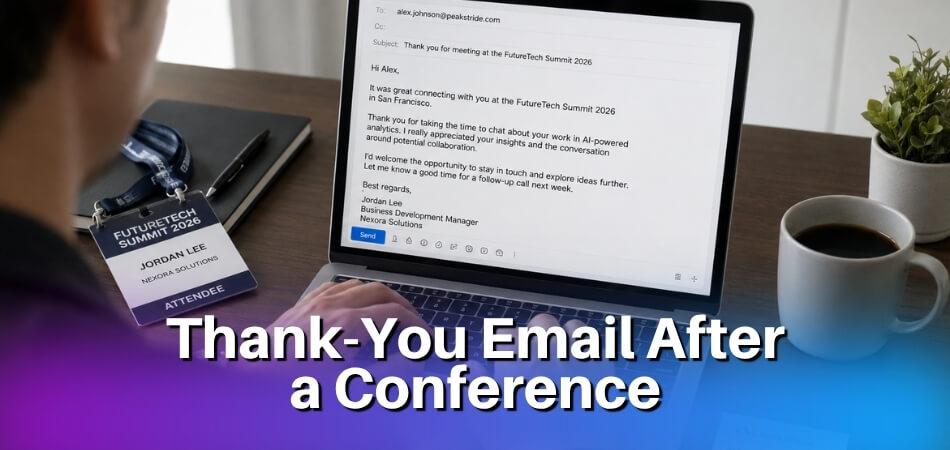
You are standing in the coffee line with a badge that has flipped backwards, and the person next to you says, “So, what do you do?” You know the answer. It just refuses to come out in order.
Quick answer: To introduce yourself at a conference, say your name, what you do, and one specific thing you are working on or hoping to learn, in about 30 seconds. Then finish with a question so the other person can answer. Keep the words plain, skip the full career history, and change the last sentence to suit who is listening.
This guide shows how to build that introduction, gives sample scripts for different attendees, and covers networking breaks, sessions, question time and online events.
What Is an Elevator Pitch (and Why It Matters at a Conference)
An elevator pitch is a short introduction that says who you are, what you do and why it might matter to the listener, in roughly 30 seconds. The name comes from the idea that you could finish it during a short ride with a stranger.

At a conference you will say some version of it many times, so it is worth having one ready.
Why 30 Seconds Is the Right Target
Conferences are noisy, and people are moving between sessions, coffee and their phones. Nobody has five minutes for your career history at a networking break, so a short pitch respects their time.
It also forces clarity. If you cannot explain your work in half a minute, you probably have not yet decided how you want to describe it to someone outside your own circle. Writing the pitch is often the useful part.
What Makes a Conference Introduction Different
You are talking to strangers from different fields and different levels of seniority. Some may become collaborators, some may be hiring, and some are simply interesting people to meet.
That range means your introduction has to bend. Your name, your role and your focus stay the same, but the detail you lead with changes depending on who is standing in front of you.
Why It Matters More Than People Prepare For
If you arrive with nothing prepared, it is easy to end up in the same loop: “I work in marketing… well, more on the digital side… brand stuff, mostly.” That stumble is uncomfortable, and it leaves the other person with nothing to respond to.
A clear introduction gives them something concrete to pick up, which is what turns a handshake into a conversation. It does not need a slick tagline. It only needs to say plainly who you are and what you care about professionally.
The 30-Second Structure for a Conference Introduction
Use three parts: who you are, something memorable, and a question back. Each part takes roughly ten seconds, and the shape stops you from rambling or going blank.

| Part | Job | Example |
|---|---|---|
| Name + role + value | Say who you are and what you do for whom | “I’m [Name]. I design onboarding screens for banking apps.” |
| Hook | Add one concrete detail that makes people curious | “Right now I’m trying to cut the steps in a first payment.” |
| Close | Hand the conversation back | “What brought you to this event?” |
Name + Role + Value (the Opening 10 Seconds)
State who you are, what you do and why it matters, in that order, without detours.
A common opener is a job title: “I’m a marketing manager at [Company].” That is fine, but it tells the listener little. Add the value and the introduction starts to work. Compare these two:
“I’m [Name]. I’m a UX designer at a fintech startup.”
“I’m [Name]. I’m a UX designer, and I help fintech teams shorten the steps a new user takes to make a first payment.”
The second takes a few seconds longer and gives the listener a question to ask.
A job seeker can use the same pattern with a direction added: “I’m [Name]. I’ve spent five years in supply chain logistics, and I’m looking for roles in international distribution.” A student can lead with a project or a thesis topic: “I’m [Name], finishing a master’s in data science. My dissertation looks at why subscription customers cancel.” That is a professional introduction, not an apology for still being in school.
The Hook: What Makes You Memorable
After the basics, add one detail that sticks. The same listener may hear many introductions in one day, so the hook is what separates yours. Generic lines such as “I’m passionate about my work” fit everyone, so they add nothing.
It does not need to be clever. A concrete outcome, a narrow audience or a specific project works well:
“I work only with family-owned manufacturers who are scaling for the first time.”
“My last project mapped delivery routes across several countries with a team of four.”
“I’m testing whether shorter sign-up forms keep more new users.”
None of these brag. They are specific, and specifics are what make an introduction sound real. If you cannot think of a hook, ask yourself what colleagues always want you to explain further, and start there. Only quote a result you can back up.
The Close: A Conversation Starter, Not a Monologue
Finish with one short question. The introduction is an opening to a dialogue, not a performance to complete. Then listen to the answer, and use the other person’s name once so that you remember it.
“Are you working on anything in that area?”
“What brought you to this conference in particular?”
“I’d be curious how your team handles that.”
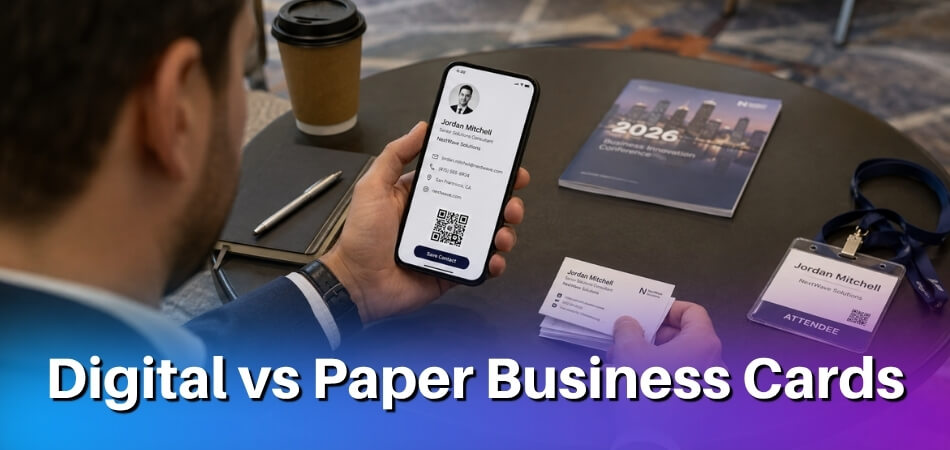
These are not tricks. They show you are interested in the other person, which is the real purpose of networking. If the setting is more formal, such as a planned one-to-one between sessions, you can close with a soft next step: “If it’s useful, we could swap contact details and follow up.” Keep a paper or digital business card within easy reach so that swap takes seconds.
Elevator Pitch Examples for a Conference
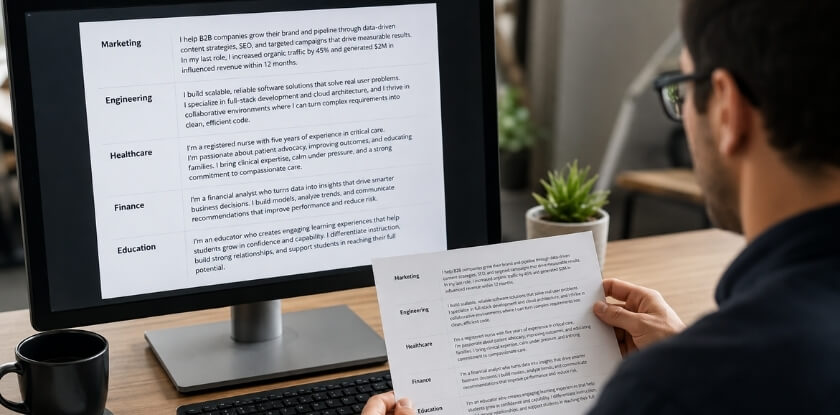
Below are four samples for common situations: an established professional, a freelancer, a job seeker and a student. Every name, company and school is a placeholder. Change the details to your own and say them in your own words.
For Professionals and Networkers
The first case is an established professional with a title, a track record and a reason for being at this event.
“Hi, I’m [Name]. I lead product at [Company], where we build payment tools for small-business lenders. We’re starting to expand into new markets, so I’m here to meet people who work on cross-border compliance. What brings you to this one?”
Notice that the speaker names the company, narrows the role to something concrete and gives a reason for attending. The final question turns a summary of a résumé into a conversation, which is the whole point of networking at an event.
A freelancer or consultant has no company to anchor the introduction, so the work itself has to do that:
“I’m [Name], an independent UX consultant working mostly with early-stage startups. I help them simplify sign-up so that more trial users stay. I’m here mainly for the product design sessions. Which track are you following?”
For Job Seekers
A job seeker has an outcome in mind, but the pitch should not make every chat feel transactional.
“I’m [Name]. I’ve worked in B2B software sales for about six years, most recently managing mid-market accounts across two regions. I’m exploring new opportunities, ideally in team leadership. I noticed your company has been growing its sales team, and I’d like to hear what that looks like from the inside.”
“I’m exploring new opportunities” is worth keeping. It is direct and comfortable to say, and it does not apologise for looking for work or lead with desperation. The detail that makes this pitch work is the closing line: the speaker did some homework and shows it, which gives a recruiter an easy reason to keep talking. The introduction also packs a clear picture into a few details: years of experience, sector, account size and region. Recruiters and hiring managers may be there to meet people, so a genuine question about their team is welcome.
For Students
Students can undersell themselves. Present where you are honestly and make it clear that you came with a purpose.
“I’m [Name], finishing a master’s in environmental engineering at [University]. My thesis looks at wastewater treatment in dense cities, in particular filtration systems that can scale without major construction. I’m here to hear what is actually used in the field and to meet people working on municipal water projects.”
There is no “I’m just a student” here. The topic is specific enough that someone in the field will know at once whether a connection is worth making. That specificity is what separates a strong student pitch from a forgettable one.
If you do not have thesis-level research yet, lead with the overlap between a skill and an interest:
“I’m [Name], going into my final year in computer science at [University]. I’ve been building small projects on web accessibility, which is what brought me to this conference. I’d like to talk to developers who care about inclusive design.”
You do not need a shipped product or a team to lead. You only need to be clear about what you bring and what you are looking for.
How to Adapt Your Pitch to the Situation
Change the last sentence of your pitch, not the whole thing. A speed-networking round, a lunch table and a session discussion each reward a slightly different version.
| Setting | Length | What to lead with | How to end |
|---|---|---|---|
| Networking break or lunch | 20 to 30 seconds | Name, role, one hook | One question |
| Group round at a workshop table | 2 to 3 sentences | Name, role, what you hope to get from the session | Stop and listen |
| Question time in a session | One sentence | Name and organization, then your question | Sit down after the answer |
| Warm introduction by a colleague | 15 to 20 seconds | The shared contact, then your value | Why you wanted to meet |
| Online event or chat | One or two lines in writing | Name, role, topic | An open question |
When You’re a Job Seeker
Lead with your expertise, then add one sentence about the direction you want. “I’m exploring roles in product strategy at early-stage software companies” is specific and easy to act on. Opening with “I’m between jobs” gives away your value; your skills come first and your situation is background.
When You’re a Student or Recent Graduate
Students can anchor on a field and a question instead of a degree. “I’m researching how subscription fatigue affects retention” is more interesting than “I study business”. Say what you want from the conversation too, whether that is a mentor, a research partner or a first role. People help more readily when they know how.
When You’re at a Niche Industry Conference
Your listeners already share your context, so skip the basics and say what you actually work on. “I build data pipelines for real-time fraud detection” lands faster than “I’m a software engineer.” Linking your work to a shared problem, such as a regulation change or a new technology, gives the other person a hook.
When You’re at a Large General Conference
Bigger events mean more noise and shorter attention. If you work where two fields overlap, such as clinical psychology and UX research, lead with that overlap because it is memorable. End on a question like “What brings you to this one?” to keep the exchange going.
When You Join a Conversation Already Under Way
At a coffee table or a poster hall, groups are often mid-conversation. Stand near the group, listen for a moment and wait for a natural pause. Then say your name and add a short comment on what they were discussing, such as “I’m [Name]. I heard you mention sampling bias, and I ran into the same problem.” Keep the full pitch for when someone asks what you do. If the group is deep in a private talk, move on and try another group.
When Someone Asks Mid-Session
At a workshop table or a structured networking exercise, keep it to two or three sentences: who you are, what you do and one thing you want from the session. Do not cover everything. You only need to be memorable enough that the right people find you afterwards.
When You Ask a Question in a Session
Say your name and organization first, then ask. “I’m [Name] from [Organization]. In your example, how did you handle the data from smaller sites?” Keep it to a single question so others get a turn, and speak slowly enough for the room.
When You’re Following Up on a Warm Introduction
If a colleague has introduced you, you are not starting from zero. Acknowledge the connection and move straight to your value: “[Name] mentioned you’re building a content operations team. I’ve spent three years doing that for a mid-size publisher.” You have oriented the listener, made yourself relevant and given them a reason to talk.
When the Event Is Online
Online events allow no body language, so put the essentials in writing. A profile name with your role, such as “[Name], Product Designer, [Company]”, does half the work. In the chat, post one line: your name, your role and what you want to discuss. When you speak, say your name before anything else because people may only see a tile with initials.
From our experience at MS International: Our conferences are held in person in the Greater Toronto Area, and you can register as a listener without presenting a paper. For listeners, the sessions and breaks are the places to put a short introduction to use. Speakers collect their badge at check-in and meet the session coordinator or moderator before presenting, and where a question-and-answer period is included, that is a natural place to say your name and organization.
What the 3 C’s of an Elevator Pitch Actually Mean
The three C’s are Clear, Concise and Compelling. Each has a typical failure that quietly weakens a conference introduction.

Clear
A clear pitch makes the listener understand your work immediately, not after thinking about it. The usual problem is jargon. “A full-stack solutions architect driving B2B adoption cycles” gives a stranger nothing to hold. “I help mid-sized retailers move from old software to cloud inventory systems” does.
Concise
Concise does not mean rushed. It means everything that does not serve the opening has been cut. At a normal speaking pace, 30 seconds is roughly 60 to 80 words. If your introduction keeps growing toward two minutes, you are adding background that belongs in the follow-up chat. A job seeker does not need to recite a full résumé, and a student does not need the whole academic history. Give the headline, not the whole article. The name, role and value pattern works as a built-in limit: three pieces, and that is the whole foundation.
Compelling
A compelling pitch makes the listener want to ask a follow-up. Compare:
“I work in marketing for a healthcare company.”
“I help hospitals cut patient no-shows with automated reminder messages.”
The second gives the listener something to ask about. Check your own pitch against all three, find the weakest C and fix that first.
Common Mistakes That Kill a Conference Introduction
Several stumbles come from habits that feel natural in the moment. Each fix below is a single change.

You Lead With Your Job Title Instead of Your Value
A title without context is just a label. Lead with what you do and who it helps: “I help software companies reduce churn by improving onboarding” tells someone at once whether you are worth talking to.
You Try to Cover Everything
Three roles, two industries, a side project and a career change in one breath produce fog. Pick the single thread that matters for this audience and let the rest come out in conversation.
You Memorize It Word for Word
If you lose your place or the other person interrupts, a recited script falls apart. Learn the structure and let the exact words change each time, so it sounds like a person talking.
You Forget to Pause
Nerves make people rush. A one-to-two-second pause after your name gives the listener time to take it in, and it feels much longer to you than it does to them.
You End With No Direction
An introduction that trails off leaves the other person unsure what to do next. Finish with a question or a reason you wanted to talk to people in this area, such as “I’d love to hear what’s drawing people to this track.”
You Use the Same Pitch for Every Room
A pitch that sounds identical at a startup mixer and a government policy summit is wrong for at least one of them. Keep the structure and change the emphasis.
You Only Think About What You Say, Not How You Say It
Personal branding at a conference happens through your voice and posture before anyone has weighed your message. Flat delivery, little eye contact or crossed arms signal discomfort even when the words are right. Stand upright, look at the person and speak a little slower than feels necessary. In a loud room, that is usually about right.
FAQ: Introducing Yourself at a Conference
Your self-introduction can stumble on length, freezing mid-pitch or lacking an impressive title, and stepping into a group chat that has already started adds its own challenge.
How long should a conference introduction be?
About 20 to 30 seconds in casual networking. If you are asked to introduce yourself formally to a group, take about 45 seconds at most. Give the other person enough to work with, then invite a reply.
What’s the difference between a 30-second pitch and a sales pitch?
A 30-second pitch opens a dialogue, while a sales pitch tries to close a deal. At a conference your job is to be memorable and prompt a question, not to convince anyone on the spot.
What if I freeze up or forget what I planned to say?
Say your name, your role and one thing you are working on. Those three parts make a complete introduction even when you are nervous. If you lose the thread, pause, smile and say “Let me start again.”
Should I memorize my pitch word for word?
No. Know the key points, not a script. A memorized script sounds flat and breaks when someone interrupts. Practise until the ideas flow, but let the wording vary.
Is there a different approach for a job seeker versus someone already employed?
Slightly. A job seeker should add the kind of role they want, because that gives the listener something to act on. Someone already employed focuses on the value they create. Both use the same name, role and value pattern.
What if I don’t have an impressive title or company?
Your title matters less than what you do. “I help early-stage startups decide which customers to approach first” is a stronger opening than a title nobody recognizes. Lead with the work, not the label.
Can students use an elevator pitch at a conference?
Yes. A student pitch works when it is specific. “I study marketing” is vague, while “I’m researching how young viewers respond to short product videos” gives the listener something to ask about.
How do I end my pitch without it feeling awkward?
End with a question. “What brings you to this conference?” or “Are you seeing that in your field too?” moves the conversation along and takes the pressure off you.
Do I need a different pitch for every conference?
Not entirely. Your core introduction stays the same, but you should adjust the emphasis to the audience. A marketing event and a technology summit care about different parts of your work.
How do I join a conversation that is already under way?
Stand nearby, listen, and speak at a natural pause. Say your name and add a short comment on the topic before mentioning your own work. Avoid breaking into a closed huddle.
How do I know if my pitch is working?
If people ask follow-up questions, it is working. If they nod politely and look for an exit, it is probably too vague or too long. Notice the reactions and adjust.
Final Thoughts
A strong introduction will not make your career at a single conference, but a muddled one can end a conversation before it starts. Keep it short, specific and grounded in what you really do. Practise it until it feels natural, then adjust it to the person in front of you.