
“Great event!” is easy to type and just as easy to forget. The compliments that organizers and speakers actually keep are the ones that show you were paying attention.
Quick answer: To compliment a good conference, name one specific thing that worked, such as a session, a speaker, the schedule or the staff, say why it mattered to you, and thank the people behind it. Keep the tone natural and send it soon after the event, by email, in a feedback form or in a short public post.
A well-written compliment does more than show appreciation. It tells organizers what worked, encourages speakers, strengthens professional relationships and supports better future events, so your words should reflect what you genuinely noticed and valued.
What Makes a Conference Worth Complimenting?
A conference is worth complimenting when it gives attendees a smooth, useful and memorable experience. That can come from the structure of the event, the quality of its sessions, the professionalism of the speakers or the way organizers support participants from start to finish.
Strong event planning and smooth coordination
The first sign of a good conference is clear organization. Registration is simple, the schedule is easy to follow, sessions begin on time and people know where to go next.
Small details carry a lot of weight: helpful signage, clear communication, friendly staff and quick answers to questions. When these work, attendees can focus on learning and meeting people instead of sorting out confusion. A strong compliment can mention how smoothly the event moved from one part to the next, because that shows you noticed the planning behind the scenes.
Useful sessions and clear takeaways
A conference is valuable when attendees leave with new ideas, practical knowledge or a better understanding of a topic. Good sessions do not just fill time; they give people something to use, think about or apply later.
Expert talks, panel discussions, workshops, case studies and Q&A segments can all do this when they are focused, relevant and easy to follow. When you compliment a session, say what it changed for you. “It gave me a clearer view of an industry trend” tells more than “the sessions were good”.
Engaging speakers and relevant topics
A strong speaker makes a complex topic easier to understand, keeps the room engaged and prompts real discussion. Speakers who are clear, prepared and connected to the audience’s interests deserve recognition for their delivery, examples, subject knowledge and thoughtful answers.
It also helps to say how well the topics matched the audience. A conference feels more successful when the content is relevant to the people in the room.
Welcoming atmosphere and attendee support
A good conference is not only about information. It is also about the environment created for attendees, where people feel welcomed, respected and supported.
That atmosphere comes from friendly staff, comfortable spaces, accessible information, organized seating and clear instructions. At a virtual conference it comes from smooth login, stable technology, clear moderation and easy participation. Mentioning the attendee experience shows your feedback goes beyond the obvious parts of the event.
Meaningful networking opportunities
A conference gives people a chance to meet others, share ideas and build professional connections, so an event that makes room for networking adds extra value.
Coffee breaks, discussion groups, meet-and-greet sessions, workshops, online chat rooms and post-event communication all count. If the event helped you connect with speakers, organizers or other attendees, say so, and say how it made conversation easier.
How to Compliment a Good Conference in a Genuine Way
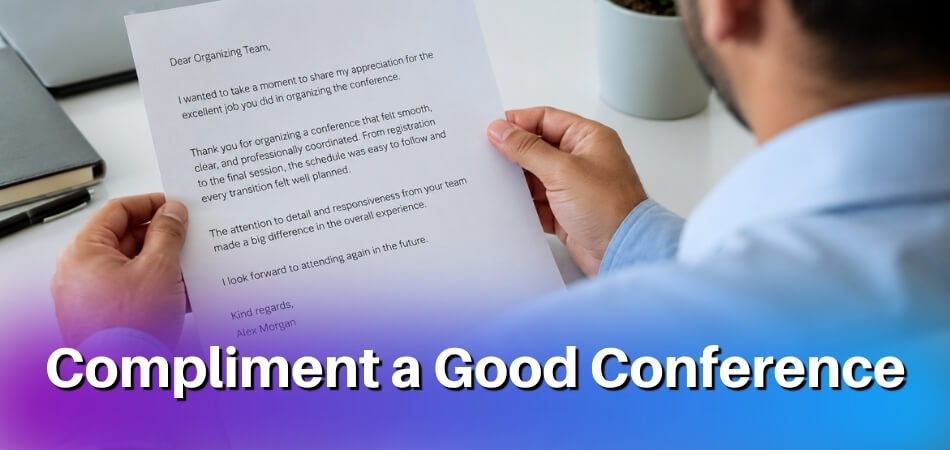
To compliment a good conference genuinely, focus on real details from your experience: what impressed you, why it mattered and how it added value. A sincere compliment sounds natural, not forced.
Start with a specific part of the conference
The strongest compliments begin with something concrete: the opening session, a keynote, the schedule, the registration process, a workshop or the overall flow of the day. Specific comments feel believable because they show you paid attention, and they tell organizers which parts had the strongest impact.
For example:
“The opening session set a clear, professional tone for the whole event.”
“The panel on industry trends was the most useful hour of the conference for me.”
“Every session started on time, so the day was easy to follow.”
Recognize the organizers’ effort
Behind every successful conference is a team handling planning, communication, logistics, scheduling, speakers, technology and attendee support. You do not need to know every detail of what happened behind the scenes. You can still appreciate the visible results, such as organization, timing, communication and smooth coordination.
A good compliment might say:
“You could tell the event was carefully planned and well coordinated.”
“From registration to the last session, everything felt prepared.”
“Thank you to the organizing team for such a smooth experience.”
Mention a speaker, session or topic that stood out
If a speaker or session made a strong impression, include it. You can mention a speaker’s clarity, confidence, examples, insights or ability to connect with the audience, or a session that helped you understand something better. This makes your message more personal and more useful.
For example:
“[Speaker Name] explained [topic] clearly and kept everyone engaged.”
“The workshop gave us ideas we could use the next morning.”
“The discussion panel brought different viewpoints together in a helpful way.”
Share what you learned or found useful
If you learned a new idea, found a resource, understood a topic better or felt inspired to act, say so. This kind of compliment shows the event had a real impact and tells speakers and organizers that their content reached the audience.
You might say:
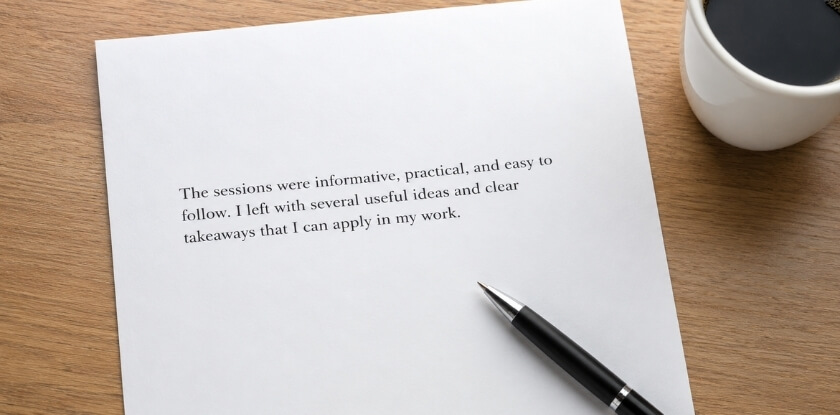
“I left with several practical ideas I can apply at work.”
“The sessions helped me see [topic] from a broader perspective.”
“The examples shared during the event made the content easy to relate to.”
Acknowledge the event experience as a whole
Sometimes the full experience matters more than one session. If the entire event felt organized, welcoming and useful, say that. A complete compliment can touch on content, speakers, atmosphere and organization, which gives a balanced view of why the event worked.
For example:
“Well organized, engaging speakers and sessions with real insight. A very good conference.”
“It was a professional, welcoming space for learning and networking.”
“From the schedule to the discussions, the conference felt purposeful.”
This kind of compliment suits emails, reviews and social media posts.
Keep your tone natural and sincere
The best compliments sound like something a real person would say. Avoid overused words, exaggerated praise and overly formal language, because simple, honest words often work best. Say what you liked and why it mattered, and the message stays warm, professional and believable.
Best Things to Mention When Praising a Conference
When praising a conference, mention the parts that shaped the attendee experience: organization, speakers, content, environment, support and networking. A well-managed schedule helps attendees enjoy the event without stress, so if sessions started on time, breaks were placed well or the agenda was easy to follow, include that. Speakers can turn a normal event into a memorable one, so focus on what made their presentation effective. The table gives you something to praise in each area and one line you can adapt.
| Area | What you can praise | Sample line |
| Organization and schedule | Clear event communication, smooth registration, proper session timing, easy movement between sessions, helpful instructions, strong team coordination | “The schedule was easy to follow, and the coordination kept everyone focused all day.” |
| Speaker quality and style | Clear explanations, strong examples, confident delivery, audience interaction, relevant insights, helpful answers during Q&A | “The speakers kept things clear and gave us examples we could use.” |
| Session content | Useful topics, fresh perspectives, practical advice, strong discussions, well-prepared materials, clear learning outcomes | “I took away practical points that go beyond the conference itself.” |
| Venue, platform or environment | In person: venue, seating, accessibility, sound, lighting, comfort. Online: platform, streaming quality, login process, technical support | “The room was comfortable and professional, so it was easy to concentrate.” Online: “The platform was simple to use and the sessions ran smoothly.” |
| Staff and attendee experience | Friendly staff, clear guidance, quick problem-solving, welcoming behavior, good communication, professional support | “The staff were approachable and made the day more comfortable.” |
| Networking and connections | Chances to meet, talk and share ideas; value beyond the formal sessions | “The event made it easy to meet people and exchange ideas.” |
Conference content should match the needs and interests of attendees, and the event setting affects how people experience it, so mention both when they stood out. Helpful staff shape the day for anyone who needed directions, support or answers, so name them when they helped. A line about networking shows the event gave value beyond the formal sessions.
Examples of Good Conference Compliments
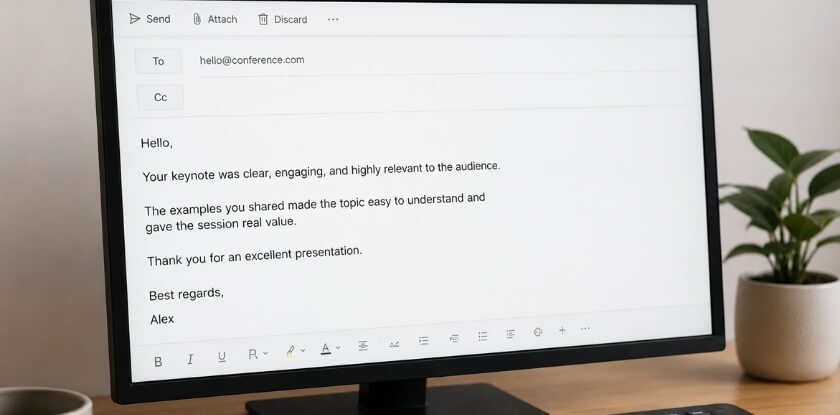
Good conference compliments are clear, specific and easy to understand. Adjust the tone depending on whether you are writing to organizers, speakers, staff or your wider professional network.
Short compliment examples for organizers
“The conference was well planned and easy to follow from beginning to end.”
“Thank you for organizing such a useful and professional event.”
“Your attention to detail showed in every part of the day.”
“The sessions were relevant, and the whole experience ran smoothly.”
“The organizing team created a conference that was worth attending.”
Compliment examples for speakers
“Your session explained the topic clearly and gave the audience practical ideas.”
“Your examples made the presentation easy to follow.”
“Your talk was engaging, well structured and highly relevant.”
“I liked how you tied the topic to real professional situations.”
“The Q&A after your talk added even more value.”
Compliment examples for event teams
“The event team was helpful, professional and well prepared.”
“Your coordination made the conference feel organized from the first hour.”
“The support team made attendees feel welcome.”
“Thank you for handling the details that made the event run so well.”
“The team’s effort was visible throughout the conference.”
Professional thank-you message examples
Here is a polished thank-you message you can send after attending a conference:
“Thank you for organizing such a well-structured and valuable conference. The sessions were informative, the speakers were engaging, and the whole event felt smooth and professional. I especially appreciated the chance to hear different perspectives and meet other attendees.”
Another option:
“I appreciate the work that went into planning and delivering this conference. The agenda was clear, the topics were relevant, and the event made room for real discussion. Thank you to the organizers, speakers and support team for a worthwhile experience.”
Social media compliment examples
Social media compliments should be short, positive and easy to read. You can tag organizers or speakers when appropriate.
“A valuable conference with insightful sessions, strong speakers and excellent organization. Thank you to everyone who made it happen.”
“Great experience at this conference. Relevant sessions, thoughtful discussions and a very well-managed event.”
“Glad I had the chance to learn, connect and hear from knowledgeable speakers at this well-organized conference.”
Email compliment examples after a conference
Email lets you include more detail. Here is a simple format:
Subject: Thank You for a Valuable Conference Experience
“Dear [Name/Team],
Thank you for organizing a thoughtful and well-managed conference. The event offered useful sessions, engaging speakers and meaningful opportunities to connect with other attendees.
I especially appreciated [mention a specific session, topic or moment]. It added real value to the experience and gave me useful points to reflect on after the event.
Thank you again for your effort and professionalism. I look forward to future events.”
How to Compliment a Conference Organizer
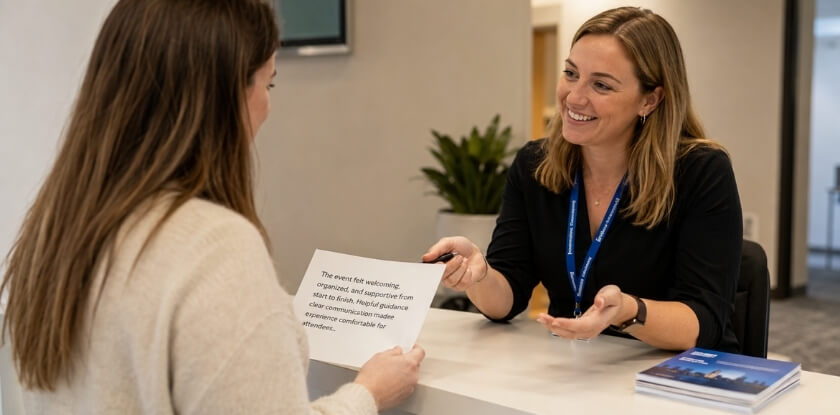
To compliment a conference organizer, focus on planning, coordination, communication and attendee experience. Organizers manage many details that attendees never see, so recognizing that effort matters.
Thank them for planning and coordination
Start by thanking the organizer or team directly, and mention that the event felt structured, smooth or well prepared.
“Thank you for putting together such a well-coordinated conference. It was easy to follow, and every part felt carefully planned.”
This gives direct appreciation without sounding exaggerated.
Mention how their work improved the attendee experience
Organizers want to know whether their planning helped attendees. Explain how their effort made the event better for you or for others.
“The clear schedule and helpful communication made it simple to move between sessions and stay engaged.”
Recognize behind-the-scenes effort without exaggeration
You can acknowledge that a successful conference takes time, teamwork and preparation, as long as you keep it sincere and balanced.
“A lot of preparation clearly went into this. The smooth flow of the sessions and the professional setup showed strong planning.”
Include one clear example from the event
A specific example makes the compliment stronger. It can be about registration, session timing, speaker selection, networking or communication, and it gives the organizer useful feedback.
“Placing the panel discussions right after the keynote helped the day flow naturally and kept the audience engaged.”
How to Compliment a Conference Speaker
To compliment a conference speaker, mention what they explained well, how they delivered it and what you learned from the session. Speaker compliments work best when they refer to the actual content.
Refer to the topic or key idea they explained well
A speaker will appreciate knowing which part of the talk stood out, so mention a key idea, example or explanation. A line about a specific example also gives the organizer useful feedback on speaker selection.
“Your explanation of [topic] was clear and easy to follow, especially the way you connected it to practical examples.”
This is better than only saying “Great talk,” because it gives useful detail.
Praise clarity, delivery and audience engagement
Good speakers make a session understandable and engaging. Mention their speaking style, structure or ability to hold attention.
“Your presentation was well structured, and your delivery kept the audience with you throughout.”
This recognizes both preparation and communication skill.
Explain how their session helped you
A strong compliment explains the value you gained, which makes your feedback more personal and tells the speaker their work had an impact.
“Your session gave me a clearer understanding of the issue and a more practical way to approach it.”
Keep speaker feedback respectful and specific
Avoid exaggerated praise or unclear comments, and keep the message focused on the speaker’s contribution.
“I appreciated the practical examples you shared. They made the topic easier to understand and tied the session to real professional challenges.”
Complimenting a speaker in person
After the session, wait until the speaker has finished with the room, then name the talk or idea that helped you and say what you will do with it. One or two sentences are enough, especially if other people are waiting to speak to them. If you have more to say, send a short email later.
“I’m [Your Name]. Your point about [topic] changed how I will approach [task]. Thank you for the talk.”
How to Give Feedback That Praises Both Content and Organization
Good conference feedback recognizes both what was presented and how it was delivered, so organizers and speakers see the full attendee experience.
Comment on the quality of the conference content
Start with the substance of the event. Were the sessions useful, the topics relevant, and did the content match the audience’s needs?
“The content was relevant and well chosen, and the sessions dealt with important topics clearly.”
Recognize the structure and flow of the event
Even strong content can feel difficult to follow when the event is poorly arranged, and good structure makes a conference easier to experience, so it deserves a mention.
“The agenda had a clear flow, and the order of sessions built understanding as the day went on.”
Mention smooth transitions between sessions
Transitions affect how the day feels. When sessions change smoothly, attendees stay focused and comfortable.
“Transitions between sessions were well managed, which kept a steady, professional pace.”
Highlight audience engagement and relevance
A good conference keeps the audience involved through Q&A, interactive workshops, panel discussions, networking activities or relevant examples.
“The sessions connected well with the audience, and the discussions made us think more deeply about the topics.”
Balance appreciation with useful suggestions
If you want to include a suggestion, start with appreciation and then offer one helpful idea.
“The sessions were informative and well presented. For future events, a little more time for audience questions could make the discussions even more valuable.”
This keeps the tone positive while still giving constructive feedback.
Public vs. Private Conference Compliments: Which Is Better?
Both work, but they serve different purposes. Public praise promotes the event and recognizes the team openly, while private appreciation allows a more personal and detailed message.
When to compliment a conference publicly
Public compliments work well when you want to share a positive experience with a wider audience, for example on LinkedIn, Facebook, X, Instagram or an event review platform. They are useful when you want to:
- Support the organizers
- Recognize speakers openly
- Share key takeaways with your network in a short conference recap
- Encourage others to attend future events
- Build professional visibility in your field
Keep a public compliment polite, concise and professional. Tag the people you name, such as the speaker whose idea you mention and the event’s official page or account if it has one. Tag only those you refer to, and work the tags into your sentences instead of adding a long list at the end.
When to send a private thank-you message
Private compliments are better when you want to share more personal or detailed appreciation. Send a private message to an organizer, speaker, moderator or team member when you want to:
- Mention a specific detail
- Build a professional relationship
- Thank someone directly
- Include thoughtful feedback
- Avoid posting publicly
A private message can be warmer and more detailed than a public post.
How public and private praise help
A thoughtful public compliment can increase trust in the conference, highlight the value of the sessions, encourage speakers and organizers, and give future attendees a positive impression. It also shows your engagement in the professional community.
Private appreciation creates a more personal connection because you took the time to thank someone directly. A speaker or organizer may remember a thoughtful private message more than a general post, and it can lead to future conversations, collaborations or invitations to other events.
Comparison table: public and private compliments
| Area | Public Compliment | Private Compliment |
| Best use | Sharing appreciation with a wider audience | Thanking someone directly |
| Tone | Professional and concise | Personal and detailed |
| Visibility | Seen by others | Seen only by the recipient |
| Good for | Event promotion and public recognition | Relationship building |
| Detail level | Usually brief | Can include specific feedback |
| Example channel | LinkedIn post or event review | Email or direct message |
Mistakes to Avoid When Complimenting a Conference
The common mistakes are praise that is too vague, too stiff, negative or focused on only one part of the event. A compliment should sound honest and thoughtful.
Using vague praise without details
A vague compliment like “Nice event” is not wrong, but it gives organizers and speakers very little. Add one detail:
“The pacing of the day made it easy to take everything in.”
“The keynote offered insights I will use.”
“Networking time was well placed and helpful.”
Sounding overly formal or unnatural
If the wording is too stiff, it sounds less sincere. Instead of writing:
“The conference demonstrated exceptional operational excellence across all areas.”
You can write:
“The conference was well organized, and the team made the experience smooth for attendees.”
Natural language is usually more effective.
Ignoring the organizers or support team
It is easy to praise the speakers and forget the planners, volunteers, moderators, registration teams, technical teams and coordinators. A balanced compliment recognizes more than the stage presentations.
“Thank you to the speakers, organizers and support team for such a valuable conference.”
Focusing only on the venue or food
The venue and food are part of the experience, but a conference is mainly about learning, discussion, organization and connection. If you liked the venue, include it as one part of a broader compliment.
“The venue was comfortable, and the sessions were well structured and informative.”
Comparing the conference too much with other events
Saying one event was better than another can sound negative and create unnecessary tension. Focus on what made this conference valuable.
“This conference stood out for its clear sessions, strong speakers and useful networking.”
Giving feedback that sounds negative instead of helpful
Keep any suggestion respectful, and avoid harsh wording, blame or unnecessary criticism. Instead of saying:
“The Q&A was too short and should have been better planned.”
You can say:
“The sessions were very useful, and a little more time for Q&A could make future discussions even stronger.”
Also avoid praise with a complaint attached, such as “Great talk, even though the slides were hard to read.” The second half can cancel the first. If a point needs raising, say it separately and kindly.
Why Complimenting a Good Conference Matters
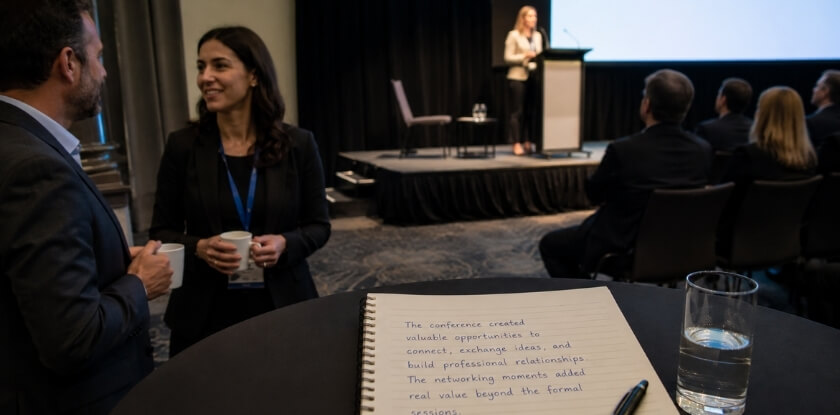
Complimenting a conference recognizes effort, encourages improvement and strengthens professional connection, and it can help organizers, speakers, attendees and future events.
It encourages organizers and event teams
Organizers spend time on schedules, speakers, communication, venues or platforms and problem-solving. A sincere compliment reminds them their work was noticed, which can motivate the team to keep improving future conferences.
It helps speakers understand their impact
Speakers often want to know whether their message was clear and useful. If you say that a speaker’s examples made the topic easier to understand, you give them feedback they can use in future presentations.
It supports better future events
Positive feedback helps organizers identify what worked. If many attendees praise the same part of a conference, the team may keep similar elements next time, but only when the praise is specific and honest.
It strengthens professional connections
A thoughtful compliment can open the door to a conversation with organizers, speakers or fellow attendees. Professional relationships often begin with simple, respectful communication, and a well-written thank-you message leaves a positive impression. If you hope to return, the same note is a natural place to express interest in attending again.
It spreads positive recognition within the event community
When people publicly appreciate a strong conference, it draws positive attention to the event and encourages a culture of gratitude and professional respect. That benefits everyone involved, from the planning team to the speakers and attendees.
From our experience at MS International: Our conferences are in-person events in the Greater Toronto Area. Attendees can register as listeners without presenting, while presenters meet the session coordinator or moderator before their presentation, and the moderator introduces them.
FAQ: Complimenting a Conference
Praise lands better with the right timing and length, so consider when to send it, whether to tag organizers, how to add a suggestion and what to say to a speaker in person.
What is the best time to compliment a conference?
The best time is soon after the conference ends, while the experience is fresh. A same-day or next-day message feels timely and genuine. You can send a more detailed thank-you note later if you want to mention specific sessions or people.
Can I compliment a conference I attended virtually?
Yes. Focus on the online experience: session quality, speaker engagement and technical setup. Mention if the platform was easy to use, the sessions were clear, or the organizers managed timing and communication smoothly throughout the event.
What should I write in a conference appreciation message?
Include a clear thank-you, one or two specific details and the value you received. You can mention the organization, speakers, sessions, networking or overall experience. Keeping it simple and specific makes the message sound sincere.
How do I make my compliment sound professional?
Use clear, respectful language and avoid exaggerated praise or casual slang. Focus on what worked well, such as the planning, speaker quality, useful sessions or attendee support. A calm, specific tone usually feels more credible.
Is it okay to include suggestions with praise?
Yes, if you keep the tone kind and constructive. Start by appreciating what worked well, then add one helpful idea for improvement. This shows respect and gives organizers feedback they can consider for future events.
Should I tag organizers or speakers in a public compliment?
Yes, tag the speaker whose idea you mention and the event’s official page, if it has one, as long as the post is positive and respectful. Avoid tagging people in posts that include sensitive feedback or detailed criticism; send those privately.
How long should a conference compliment be?
Two or three sentences are enough for a social media post, and a few short paragraphs suit an email. Either way, include one clear detail that makes your appreciation meaningful.
How do I compliment a speaker in person?
Wait until the session ends, name the talk or idea that helped you and say what you will do with it, in a sentence or two. If other people are waiting, thank the speaker briefly and send a longer note by email later.
What should I avoid saying after a conference?
Avoid vague comments, harsh criticism, sarcastic remarks and unnecessary comparisons with other events. If your purpose is to compliment the conference, focus on what went well. Share suggestions politely, and send more sensitive feedback privately.
Final Thoughts
Knowing how to compliment a good conference comes down to noticing what made the event valuable and saying it clearly. Fancy words are not the point; the point is to recognize the planning, content, speakers, teamwork and attendee experience in a sincere way.
Be specific, say why it mattered and thank the people behind the event. When a conference gives you value, taking a moment to say so is a small gesture that means a lot.