Do You Have to Pay to Present at A Conference?

You want to present your paper or research at a conference — then you see the registration fee and freeze. You are not alone. Every year, thousands of graduate students, early-career researchers, and seasoned academics hit that exact wall. The question feels almost too basic to ask out loud, but it matters enormously when you are already stretching a tight budget just to do the work itself.

Here is the short answer: yes, in most cases presenters are expected to pay a registration fee, just like any other attendee. That fee covers the venue, audio-visual equipment, catering, administrative logistics, and the production of conference proceedings — the event simply cannot run without it. Major organizations like IEEE, ACM, the American Psychological Association (APA), and the Society for Neuroscience (SfN) all require presenting authors to register and pay. However, exceptions are real and more common than most people realize. Invited keynote speakers at events like TED Conference or the World Economic Forum typically have their fees covered entirely. Large industry-backed conferences sometimes absorb costs for select presenters. And many academic conferences offer formal registration fee waiver programs specifically for graduate students, early-career researchers, and applicants from lower-income institutions.

What makes this question genuinely complicated is everything that sits between the flat “yes” and the fine print. Fee structures shift depending on whether you are delivering an oral presentation, running a poster presentation, or sitting as a session chair. Virtual conference platforms and hybrid conference formats have introduced new pricing models that did not exist five years ago. Funding sources — from the National Science Foundation (NSF) and the Fulbright Program to university research offices, department funding pools, and fellowships like the Google PhD Fellowship or Microsoft Research Fellowship — can offset costs significantly if you know where to look and when to apply.

This guide walks through all of it. Not just whether you pay, but who qualifies for a waiver, how to apply for travel grants, what red flags signal a predatory conference, and how to build a realistic plan to present your work without putting your finances at serious risk.

Do You Have to Pay to Present at a Conference? (Direct Answer)

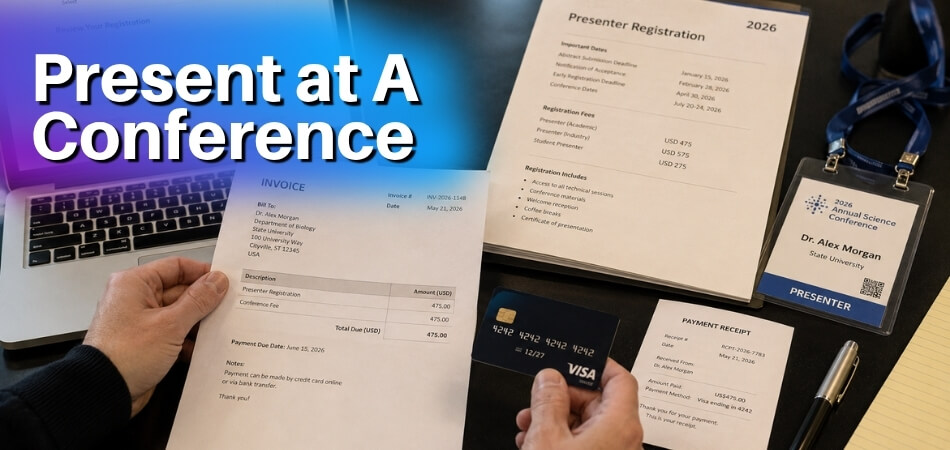
Yes, in most cases you do. Presenting at an academic or professional conference almost always requires you to register as an attendee — and that registration costs money. The fact that you’re delivering an oral presentation or standing next to a poster doesn’t exempt you from the fee. The conference still needs to cover venue costs, AV equipment, printed proceedings, catering, and administrative overhead. Your speaker slot doesn’t cancel that out.

do you have to pay to present at a conference

That said, the full picture is more complicated.

The Standard Expectation

At major technical conferences like IEEE symposia, ACM conferences, and large machine learning venues like NeurIPS and ICML, at least one author per accepted paper must register at the full rate. This is usually called the “author registration” requirement, and it’s spelled out clearly in the Call for Papers (CFP). Skip it, and your paper gets pulled from the conference proceedings.

Registration fees vary wildly. A single IEEE conference registration can run $600–$1,200 for non-members. ACM fees are in a similar range. NeurIPS in-person registration has historically been even harder to access — demand so far outstrips supply that tickets go in a lottery.

For humanities and social science conferences — think American Psychological Association (APA) annual meetings or Modern Language Association (MLA) events — fees tend to be lower but still real. APA’s full member registration can exceed $500. MLA sits more in the $200–$400 range depending on membership status and when you register.

When You Don’t Pay (Or Pay Less)

Some presenters genuinely do get a free ride. Keynote speakers at most mid-to-large conferences aren’t paying anything — they’re invited, often compensated with an honorarium, and have travel covered. That’s a different category entirely from the average researcher submitting to a call for papers.

For everyone else, the main legitimate path to not paying full price is a registration fee waiver. Many conferences offer these, especially for:

  • Graduate students presenting their first work
  • Early-career researchers from low-income countries
  • Session chairs who are volunteering significant organizational work
  • Presenters who’ve also taken on a reviewer role in the peer review process

Some conferences — particularly hybrid conference formats that have expanded post-pandemic — offer reduced virtual registration rates. If you can attend via a virtual conference platform instead of in person, you might pay $50–$150 instead of $800. Not nothing, but a real difference.

The Funding Question

Most academics aren’t paying out of pocket. They’re pulling from a department funding pot, a university research office travel budget, or a grant. If you have NSF funding, for instance, conference travel is a legitimate line item. The Fulbright Program, DAAD Scholarship, and Google PhD Fellowship all include provisions for conference attendance costs.

The expectation at most universities is that if you’re presenting funded research, the grant or your department covers registration. If neither of those applies to you — you’re an independent researcher, a practitioner, or your institution has no travel budget — then yes, you’re paying yourself.

What About Industry Conferences?

SXSW is a useful example here. Selected speakers do get complimentary badges, which is not the norm for academic venues. The TED Conference operates almost entirely on invitation, and the World Economic Forum is another world altogether — attendance there is by institutional relationship, not open submission.

Most industry-facing professional conferences fall somewhere in between. Speaker discounts are common. Free passes are less common than people assume.

The Short Version

If you’re submitting to a standard academic conference through a CFP, budget for the registration fee. Look for early-bird registration rates, apply for a fee waiver if you qualify, and talk to your university research office before you assume you’re covering it yourself. The fee is real. But so are the ways around it.

Why Are Presenters Required to Pay a Registration Fee?

The short answer: conferences aren’t free to run.

Even a mid-sized academic conference — say, a regional ACM symposium with 400 attendees — costs real money. Venue rental, A/V equipment, catering, printed proceedings, staff coordination, and online hosting for hybrid sessions all add up fast. Registration fees are the primary way organizers cover those costs. Presenters aren’t exempt from that just because they’re contributing content.

There’s also a practical logic behind it. If you’re presenting, you’re attending. You’re using the rooms, eating the lunch, downloading the proceedings, and networking in the hallways. IEEE, for instance, treats presenter registration the same as attendee registration because the conference infrastructure serves everyone equally.

The “Pay to Participate” Model Is Standard, Not Exploitative

A lot of early-career researchers feel blindsided when they submit an abstract, get accepted after peer review, and then find out they owe a registration fee. It feels backward — like being charged after doing someone a favor. But that’s a misread of how the model works.

The conference isn’t paying you for your research. They’re giving you a venue, an audience, and a slot in the conference proceedings. That has real value, especially if you’re presenting an oral presentation at something like ICML or NeurIPS, where getting accepted is genuinely competitive. The fee is your buy-in for that infrastructure.

That said, the fee shouldn’t be a barrier to participation, and most legitimate conferences know this. The American Psychological Association (APA) and the Society for Neuroscience (SfN) both have tiered pricing — student rates, postdoc rates, and full professional rates differ significantly. Early-bird registration discounts are common. So is a registration fee waiver for presenters who can demonstrate financial hardship or who qualify through specific programs.

When the Model Gets Murky

Here’s where it gets worth scrutinizing. Predatory conferences exist specifically to collect fees. They’ll issue an acceptance from a fake peer review process, charge you $800, and deliver almost nothing in return — no meaningful audience, no indexed proceedings, no credibility. Beall’s List and the Think Check Attend initiative exist for exactly this reason. If a conference accepted your submission within 48 hours and the website looks like it was built in 2009, check before you pay.

Legitimate conferences — IEEE, ACM, the Modern Language Association (MLA), SXSW in the industry space — are transparent about fees upfront in the Call for Papers (CFP). You should know the registration cost before you even submit. If you can’t find it, ask.

Does Anyone Actually Get Out of Paying?

Yes. Keynote speakers at major events often have their fee waived and travel covered. The World Economic Forum and TED Conference operate on invitation models where featured speakers don’t pay at all — the conference itself funds their participation. That’s the exception, not the rule, and it applies to high-profile invited speakers, not typical session presenters.

For everyone else — graduate students, early-career researchers, and academics from lower-income institutions — fee waivers are available but you have to actively pursue them. That’s a whole separate conversation, but the point is: the requirement to pay exists for legitimate structural reasons, and there are real pathways around it if the cost is prohibitive.

When Do Presenters Not Have to Pay? (exceptions)

Not every presenter pulls out their credit card. There are real, well-established situations where the fee gets dropped, waived, or was never expected in the first place.

When Do Presenters Not Have to Pay (exceptions)

Invited Keynote Speakers

If a conference invites you to give a keynote, you almost certainly aren’t paying registration. You’re being asked. That’s a different relationship entirely.

Keynote speakers at events like SXSW, TED Conference, or the World Economic Forum are selected by the organizing committee — sometimes months or even years in advance. The conference needs them, not the other way around. In many cases, keynotes also receive an honorarium, travel reimbursement, hotel accommodation, and occasionally a speaker fee on top of that.

Even at academic conferences — IEEE, ACM, NeurIPS — invited plenary speakers typically get their registration waived and travel costs covered, at least partially. The bigger the conference and the more prominent the speaker, the more generous that package tends to be.

What doesn’t count: submitting a paper through the standard Call for Papers (CFP), getting it accepted, and then expecting keynote-level treatment. That’s a regular accepted presenter slot. The waiver rules there are different.

Industry and Corporate Conferences

Many corporate and professional conferences operate on a model where presenters are treated as contributors, not attendees.

At a vendor conference or a company-run event, speakers are often marketing assets. Paying them to show up defeats the purpose. So fees get waived, sometimes along with travel. The logic is simple — their talk draws attendees who pay full ticket prices.

Industry trade shows work similarly. If you’re a subject-matter expert presenting a session, the organizers may cover your badge. That said, this varies a lot. Some corporate events only waive the fee for external speakers while internal staff pay through departmental budgets. Always check the speaker agreement before assuming anything.

The American Psychological Association (APA) annual convention, for example, handles continuing education presenters differently from standard paper presenters — and the financial arrangements reflect that. Know which category your talk falls into.

Situations Where a Fee Waiver Is Granted

This is where early-career researchers and graduate students should pay close attention. Registration fee waivers are more common than most people realize — they just aren’t always advertised prominently.

  • Graduate students and early-career researchers. Many conferences — especially in STEM fields — offer partial or full registration fee waivers for students who are presenting. NeurIPS and ICML both have formal financial assistance programs. The Society for Neuroscience (SfN) annual meeting has a tiered registration structure that significantly reduces costs for trainees. You usually have to apply separately from your abstract submission, and there’s a deadline, so don’t wait.
  • Volunteer and service roles. Some conferences waive registration entirely if you agree to serve as a session chair, help with registration desk duties, or assist with poster presentation logistics. This is especially common at mid-sized academic conferences that run on tight budgets. Worth asking about directly when you get your acceptance notice.
  • Financial hardship and equity waivers. A growing number of conferences have introduced explicit hardship waivers. These exist to support researchers from low-income countries, independent scholars without institutional backing, or anyone who can demonstrate that the fee creates a genuine barrier. You typically need to write a short statement explaining your situation. It’s not humiliating — the committees reviewing these are usually sympathetic and the funds often go unspent because people don’t ask.
  • Peer review service. If you reviewed papers for the same conference, some organizations — particularly in computer science and AI fields — offer reduced or waived registration as a thank-you. IEEE conferences sometimes do this. Again, not automatic; you may need to flag it with the program committee.

If you’re at a university, talk to your university research office before assuming you need a waiver. Department funding or a graduate student travel grant might cover the full fee anyway, which keeps you off a competitive waiver pool and leaves that support for someone without institutional backing.

Academic Conference vs. Industry Conference — A Fee Comparison

These two worlds operate on completely different financial logic. Understanding that gap can save you a lot of frustration — and money.

Academic Conferences

At most academic conferences, presenters pay to attend just like everyone else. The registration fee covers the venue, catering, conference proceedings, and usually some form of open access publishing for submitted papers. IEEE and ACM conferences typically run registration fees between $500 and $1,200 for full members, with student rates often landing around $200–$400. NeurIPS and ICML have seen their fees climb in recent years — NeurIPS in-person registration has exceeded $900 for non-students in some cycles, reflecting high demand and limited capacity.

The American Psychological Association (APA) annual convention charges presenters the same registration rate as attendees, which can sit above $600 for non-members. The Modern Language Association (MLA) and Society for Neuroscience (SfN) follow a similar model. SfN’s annual meeting, one of the largest neuroscience gatherings in the world, regularly draws 30,000+ attendees and has tiered pricing based on membership status.

What academic conferences do offer, that industry events often don’t, is a structured waiver and grant ecosystem. Abstract submission and peer review processes are taken seriously, and acceptance itself sometimes unlocks reduced fees. Graduate student travel grants, department funding, and external sources like the National Science Foundation (NSF), Fulbright Program, DAAD Scholarship, Google PhD Fellowship, and Microsoft Research Fellowship all exist specifically to help early-career researchers cover these costs. The system is clunky, but the funding exists.

Predatory conferences deliberately mimic legitimate academic events. They charge submission fees, skip actual peer review, and deliver nothing of professional value. Always cross-reference against Beall’s List and use the Think Check Attend checklist before submitting anywhere unfamiliar. If a Call for Papers (CFP) guarantees acceptance within 48 hours, that’s your first red flag.

Poster presentation and oral presentation slots at legitimate academic conferences carry the same registration obligation. Session chairs sometimes receive a partial discount or a complimentary registration day — it varies by organization and conference size.

Industry Conferences

The fee structure here is almost inverted. Industry conferences — especially large commercial ones like SXSW — often pay speakers or, at minimum, waive registration entirely. Speaking is the value proposition. Organizers want recognized names and credible content to justify ticket prices that frequently exceed $1,500 per attendee.

SXSW, for example, selects speakers through a public panel picker and jury process. Accepted speakers get a badge. They don’t pay. The TED Conference operates on invitation; speakers are never charged and often have travel and accommodation covered. The World Economic Forum is invitation-only at an entirely different level — participation is not something you apply for with a credit card.

Smaller industry events vary more widely. A niche B2B conference might offer free registration to speakers but no travel support. A corporate summit might pay a modest honorarium. Startup-focused events sometimes offer equity exposure over cash. The point is: the expectation that speakers pay is much less common in industry than in academia.

Hybrid conference formats and virtual conference platforms have complicated things slightly. Some events now offer tiered speaker arrangements — in-person speakers get a full waiver, virtual presenters get a discount. That’s not universal, but it’s becoming more common post-2020.

The Practical Comparison

Academic ConferencesIndustry Conferences
Presenter pays registration?Usually yesRarely
Fee waivers available?Yes, but competitiveOften automatic for speakers
Travel funding sourcesGrants, fellowships, university research officeOrganizer, employer, or none
Early-bird registrationCommonVaries
Peer review requiredYes (legitimate ones)No

If you’re presenting at an academic conference, budget for fees and apply aggressively for every waiver and grant available. If you’re presenting at an industry conference, ask explicitly about speaker compensation before you confirm anything. The defaults are very different in each world.

Are Fees Lower for Virtual and Online Conferences?

Sometimes. But not always, and the gap is smaller than most people expect.

Are Fees Lower for Virtual and Online Conferences

When virtual conferences exploded during 2020–2021, a lot of researchers assumed the fees would drop dramatically. No venue rental, no catering, no AV crews — the savings had to go somewhere, right? In practice, many organizations kept their fees close to in-person rates. NeurIPS, for example, ran virtual editions where registration still cost several hundred dollars. The argument from organizers was that hosting a virtual conference isn’t free either. Licensing a virtual conference platform, managing livestreams, handling technical support, and staffing the event all cost real money.

That said, virtual and hybrid conferences do tend to run cheaper on average — especially for attendees traveling from outside the host country. When you factor in flights, hotels, and per diem costs, an in-person conference can run you $2,000–$5,000 total. A virtual ticket at $200–$400 is obviously a different financial conversation.

What Virtual Registration Actually Costs for Presenters

For academic conferences, the presenter registration fee at a fully virtual event typically runs 30–50% lower than the equivalent in-person rate. IEEE and ACM conferences have both used tiered pricing that reflects this, though the exact numbers vary by conference and region. Graduate students at virtual events often see fees in the $75–$200 range, compared to $300–$600 for in-person equivalents.

Industry events are less predictable. SXSW, for instance, has offered both physical and virtual badges, but the pricing logic doesn’t always follow a clean discount structure. TED Conference and World Economic Forum events don’t really operate on open registration models at all — those are invite-based.

One real difference with virtual conferences: early-bird registration discounts are often larger and the windows are longer. If you’re presenting at a virtual event, watch the Call for Papers (CFP) timeline carefully. Submitting your abstract early and registering before the early-bird deadline can cut your cost by 20–40% compared to standard rates.

The Catch With “Free” Virtual Conferences

Some virtual conferences advertise zero registration fees. That sounds great. But this is exactly where predatory conference behavior tends to show up. If there’s no registration fee and no clear peer review process, check the conference against Beall’s List and run it through Think Check Attend before you commit. A legitimate professional organization — whether that’s the American Psychological Association (APA), the Modern Language Association (MLA), or the Society for Neuroscience (SfN) — will have transparent fee structures and editorial processes regardless of whether the event is virtual or in-person.

Free registration at a real conference does happen, though. Some virtual events waive fees for poster presentation submitters, or offer complimentary access to early-career researchers who are accepted as speakers. It’s always worth emailing the organizing committee directly and asking. The worst they can say is no.

Hybrid Conferences Are a Different Story

Hybrid conferences — where some attendees present in person and others present remotely — have introduced a new pricing layer. Most now charge two separate registration tiers: one for in-person attendance and a lower virtual rate. If you’re presenting remotely at a hybrid event, you’ll typically pay the virtual rate, which is cheaper. But check the fine print. Some conferences require all presenters to pay the full in-person rate regardless of how they’re actually presenting. That policy is frustrating, but it exists.

If you’re presenting virtually at a hybrid conference, confirm in writing which fee tier applies to you before you register. Conference proceedings and oral presentation credits usually apply equally to both presenter types, so the content value is the same — you just want to make sure you’re not accidentally paying the wrong rate.

Does Your University Cover Virtual Registration?

This is worth checking with your university research office. Some departments that previously funded only in-person conference attendance have updated their policies to include virtual events. Department funding requests for virtual conferences are often easier to get approved because the total cost is lower and there’s no travel paperwork involved. If you have a graduate student travel grant available, ask explicitly whether it can be applied to virtual registration fees — many grant administrators will say yes.

How to Apply as a Presenter — Step-by-Step Process

How to Apply as a Presenter — Step-by-Step Process

From Abstract Submission to Acceptance

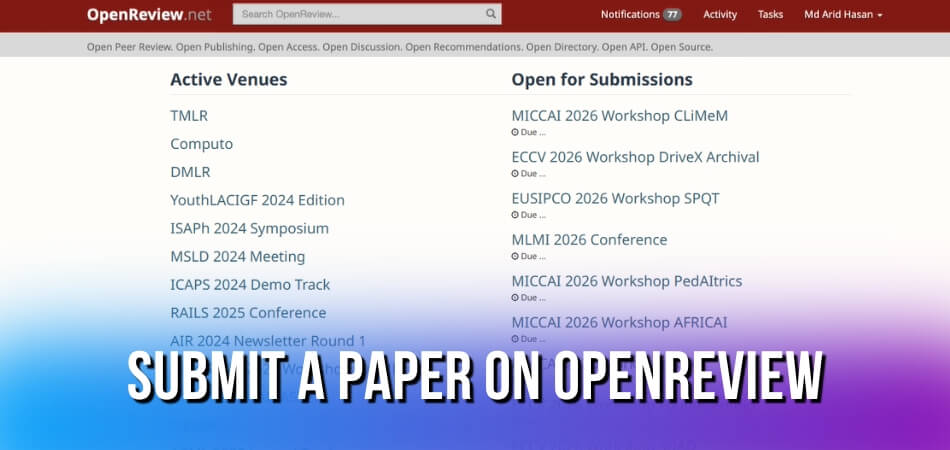
The process starts well before any money changes hands. Most academic conferences — IEEE, ACM, NeurIPS, ICML, APA — run on a Call for Papers (CFP) cycle. You find the CFP, write your abstract, submit it through the conference system, and wait.

Abstract length varies. Some conferences want 250 words. Others, like Society for Neuroscience (SfN), allow up to 2,400 characters including spaces. ICML typically wants a short abstract plus a full paper. Know what’s required before you start writing.

After submission, your work goes through peer review. This is blind or double-blind depending on the conference. Reviewers score it. If scores clear the threshold, you get an acceptance notification — usually by email, with a decision portal link.

That acceptance email matters. Read it carefully. It will tell you:

  • Whether you’ve been accepted for an oral presentation or a poster presentation
  • Whether you’re being considered as a session chair
  • Any registration deadlines tied to the acceptance
  • Whether a registration fee waiver was automatically applied or if you need to request one separately

For industry events like SXSW or the World Economic Forum, the pathway looks different. SXSW uses a public panel picker and internal curation. WEF invites speakers directly — you don’t apply cold. TED Conference selects through nominations and auditions, not a standard CFP. If you’re applying to those, abstract submission isn’t really the mechanism.

One thing early-career researchers miss: always check whether a conference is legitimate before investing time. Search it on Beall’s List if it’s open access adjacent, or run it through Think Check Attend. Predatory conferences will accept your abstract instantly, ask for full payment upfront, and deliver nothing useful. Legitimate peer review takes weeks, sometimes months.

When to Register and When to Pay

Acceptance doesn’t mean you register immediately. Here’s the actual sequence:

1. Accept the invitation. Most conferences give you a window — typically 2–4 weeks — to confirm you’ll present. Miss this, and your slot goes to someone else.

2. Check for fee waivers before registering. If you qualify for a registration fee waiver — as a graduate student, early-career researcher, or someone from a low-income country — apply for that first. Don’t pay full price and then ask for a refund. That process rarely works cleanly.

3. Register during the early-bird window. Early-bird registration can save you a real amount. ACM conferences often have a $100–$200 difference between early and standard rates. IEEE varies by event but the gap is similar. If your acceptance comes in time to hit that window, do it.

4. Pay after funding is confirmed, not before, if possible. If you’re waiting on a graduate student travel grant, department funding, or something like an NSF grant supplement, coordinate timing. Some university research offices will pay the conference directly. Others reimburse you. Know which yours does before you swipe your card.

5. Submit your final materials. Full paper, poster file, or presentation slides — depending on format. Deadlines for these are separate from registration deadlines. Missing the camera-ready deadline for conference proceedings can get your paper pulled even after you’ve registered and paid.

Virtual and hybrid conferences sometimes compress this timeline. A virtual conference platform acceptance might come with a shorter window to register — sometimes as little as one week — because logistics are simpler on their end. Don’t assume you have the usual two-month runway.

The Fulbright Program, DAAD Scholarship, Google PhD Fellowship, and Microsoft Research Fellowship all have their own rules about conference funding. Some require pre-approval before you commit to attending. Check your funding agreement. Some explicitly prohibit last-minute travel requests and require you to budget conference attendance into your original proposal.

The moment your acceptance lands, open three tabs — your institution’s travel reimbursement policy, the conference registration page, and any external funding applications you qualify for. That first 48 hours is when your options are widest.

How to Plan Your Budget Before Presenting at a Conference

Start with the full picture before you commit to anything. Conference costs stack up faster than most first-time presenters expect, and registration is just one line item.

Know What You’re Actually Paying For

Here’s a rough breakdown of what a single conference trip can cost:

  • Registration fee: $200–$1,500+ depending on the organization (IEEE and ACM conferences regularly run $600–$900 for non-members)
  • Travel: Flights, train tickets, or fuel — budget realistically, not optimistically
  • Hotel: Most major conferences block rooms at a partner hotel, usually $150–$300/night
  • Per diem (meals, transport): NSF uses roughly $79/day as a domestic meals benchmark — it’s a useful starting point
  • Poster printing: A standard 36×48″ poster can cost $40–$120 depending on where you print it
  • Proceedings or publication fees: Some conferences charge separately for including your paper in the conference proceedings

For a domestic three-day conference, you’re realistically looking at $1,200–$2,500 all-in. International conferences — say, a Society for Neuroscience (SfN) annual meeting or an ICML in Europe — can push $3,500–$6,000+ once flights and lodging are included.

Build Your Budget Spreadsheet Early

Don’t wait until your abstract gets accepted. Build a rough budget the moment you see the Call for Papers (CFP). By the time you’re accepted, early-bird registration may have already closed, and you’ll lose $100–$300 right there.

Track four columns: estimated cost, actual cost, funding source, and amount confirmed. Simple, but it forces you to chase down real numbers instead of guessing.

Factor In Membership Discounts

Many organizations charge significantly less if you’re a member. ACM membership runs about $99/year for professionals, $42 for students. If the member registration rate saves you $200 on a single conference, the math is obvious. Same logic applies to IEEE, the American Psychological Association (APA), and the Modern Language Association (MLA) — check the fee table before registering as a non-member.

Map Out Your Funding Sources

This is where most early-career researchers leave money on the table. Before spending a dollar of your own, check every one of these:

University-level funding

  • Your university research office often has travel grant pools specifically for conference presenters
  • Department funding is usually separate — ask your department administrator directly, not just your advisor
  • Graduate student travel grants are common and frequently under-applied-for

External funding

  • The National Science Foundation (NSF) funds conference travel through certain grants — if your work falls under an active grant, ask the PI whether travel is a budgeted line item
  • The Fulbright Program and DAAD Scholarship both cover conference travel costs in some cases if you’re an international presenter or traveling internationally
  • The Google PhD Fellowship and Microsoft Research Fellowship typically include a conference travel allowance — check your fellowship terms

Conference-level waivers Look for registration fee waiver programs when you submit. NeurIPS, for example, has had explicit fee waiver tracks for presenters from low-income countries and early-career researchers. It’s listed in the CFP if it exists — read the whole thing carefully.

Time Your Registrations Strategically

Register as early as possible once you’re accepted. Early-bird registration windows are real, and the savings are real. A $150 early-bird discount isn’t trivial when you’re working with a $500 department grant.

If you’re chairing a session, ask the organizers about fee reductions. Session chairs sometimes receive partial or full registration waivers, but you often have to ask.

Virtual Conference Budgets Are Different, Not Zero

If you’re presenting at a hybrid conference or a virtual-only event, your costs drop significantly — but they don’t disappear. Virtual conference platform fees, a decent webcam or microphone, and registration still apply. Budget $50–$300 for equipment if yours isn’t already presentation-quality. A muffled audio feed during your oral presentation is not a good look.

One Red Flag to Watch For

Before you budget for anything, verify the conference is legitimate. Predatory conferences will happily take your registration fee and publication charges, deliver almost nothing in return, and not appear on any serious CV. Use Think Check Attend and cross-reference against Beall’s List. If a conference accepted your abstract in 48 hours with no peer review, that’s a warning sign worth taking seriously.

Spending $800 to present at a conference that damages your reputation is a far worse outcome than not presenting at all.

How Do Graduate Students Cover Conference Fees?

Graduate students are in a tough spot. You’re expected to present research — it helps your CV, your advisor’s reputation, your program’s visibility — but registration fees for major conferences can easily run $400–$900 before you add flights and hotels. The good news is that real funding options exist, and most grad students who do the legwork manage to cover most or all of their costs.

How Do Graduate Students Cover Conference Fees

University and Department Grants

Start here. This is usually the fastest and most reliable source of funding.

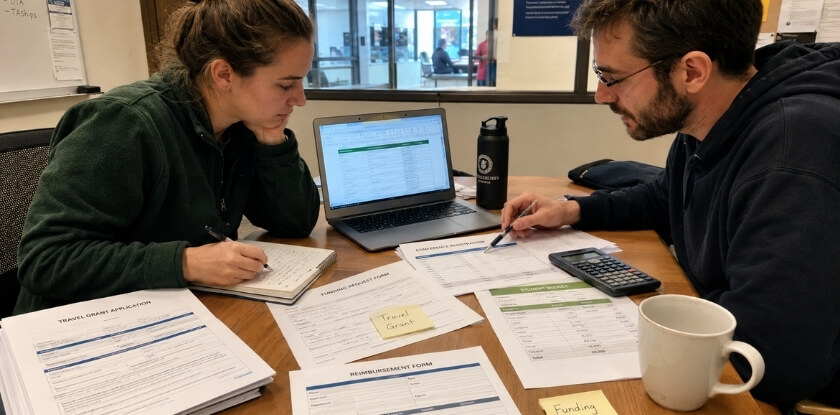
Most universities have a graduate student travel grant administered through the graduate school office or a student affairs division. Awards typically range from $300 to $1,000 depending on the institution. Some are competitive, some are first-come-first-served, and deadlines are often semester-based rather than tied to your conference date — so check early.

Your department may have a separate pool of money on top of that. Talk to your department’s administrative coordinator, not just your advisor. Advisors don’t always know where the administrative money lives. A 10-minute conversation with the right staff person has saved students hundreds of dollars.

Your advisor’s grant can also cover you, especially if your presentation is directly tied to funded research. If your work is supported by an NSF grant, for example, conference travel is an allowable expense under most NSF budgets. The University research office can clarify what’s permissible — they process these reimbursements constantly and can tell you exactly what documentation you’ll need (acceptance letter, registration receipt, abstract copy).

Get your acceptance confirmed before approaching anyone for funding. Departments almost never commit money for a conference you haven’t been accepted to yet.

Travel Grants and Funding Offered by the Conference Itself

Many major conferences have dedicated funding programs for graduate students, and this goes beyond a simple registration fee waiver.

NeurIPS, for instance, offers financial assistance applications alongside the main registration process. ICML has run similar programs. ACM and IEEE both fund student travel for specific conferences under their umbrella — the amounts vary by event, but $500–$1,000 in combined travel and registration support isn’t unusual. The Society for Neuroscience (SfN) runs a competitive travel award program specifically for early-career researchers presenting at their annual meeting.

The catch: these programs have their own deadlines, which don’t always align with the abstract submission or notification timeline. You might get accepted in March but find the travel grant application closed in February. Read the Call for Papers carefully and look for any mention of financial assistance at the same time you’re thinking about submitting.

Some conferences also offer volunteer opportunities that get you free or discounted registration in exchange for a few hours of work — helping with session logistics, staffing registration desks, or working as a session chair. SXSW has done this for years. It’s worth checking whether the conference you’re targeting has something similar.

Don’t ignore poster presentation vs. oral presentation distinctions here. Some funding programs prioritize oral presenters. Others fund poster presenters equally. Know which category you’re in when you apply.

External Scholarships and Fellowships

If your department is underfunded and the conference doesn’t have a travel program, external fellowships are your next move.

The Google PhD Fellowship and Microsoft Research Fellowship both provide annual stipends that fellows can direct toward conference attendance. If you hold one of these, use that money — it’s exactly what it’s there for.

The Fulbright Program and DAAD Scholarship support international researchers specifically, and both programs have provisions that allow or encourage conference participation as part of your research activity. If you’re on one of these awards, contact your program officer before assuming you can or can’t use funds this way.

The NSF Graduate Research Fellowship Program (GRFP) provides a research allowance — $12,000 per year as of recent program years — that fellows can use for conference registration, travel, and other research-related expenses. That’s a meaningful amount if you’re strategic about it.

Beyond the big names, professional associations often have their own smaller award programs. The American Psychological Association (APA) offers convention grants for student affiliates. The Modern Language Association (MLA) has funding for graduate students presenting at the annual convention. These awards are smaller (sometimes $150–$250), but they stack. Combine a department grant, a conference travel award, and an association-specific grant and you’ve often covered the full cost.

If you’re researching funding sources and come across a conference promising guaranteed acceptance alongside heavy marketing for their own “grants,” check that conference against Beall’s List and run it through Think Check Attend before you apply anywhere. Predatory conferences do advertise fake funding to attract submissions. Real funding comes attached to real peer review, not to guaranteed acceptance.

How to Get a Conference Fee Waiver

Fee waivers exist. The problem is that most presenters don’t ask for them — or don’t know they can.

Conferences at every level, from small regional academic meetings to major events like NeurIPS and the American Psychological Association (APA) annual convention, have waiver programs built into their budgets. They just don’t always advertise them loudly. You have to go looking.

Who Qualifies for a Waiver

The short answer: more people than you’d think.

Graduate students are the most common recipients, but early-career researchers, presenters from low-income countries, independent scholars without institutional affiliation, and people with financial hardship documentation can all be eligible. Some conferences specifically set aside waivers for underrepresented groups in their field.

IEEE, for instance, offers student member discounts so significant they function almost like partial waivers. The Society for Neuroscience (SfN) has explicit fee assistance for attendees from developing countries. ACM sometimes builds volunteer-based registration into its event structure. The specifics change year to year, so you need to check the current Call for Papers (CFP) and the registration page — not just assume last year’s policy applies.

Where to Find the Waiver Option

Start at the source. Go to the conference website and look for:

  • A “financial assistance” or “registration support” section
  • Notes in the CFP about reduced or waived fees for certain presenter categories
  • A separate application form linked from the registration page

If you don’t see anything obvious, email the organizing committee directly. Keep it short. Something like: “I’ve been accepted to present at [conference name] and I’m a [graduate student / independent researcher / presenter from X country]. Do you offer any registration fee waiver or assistance options?” That’s it. You’d be surprised how often the answer is yes.

How to Apply and What to Include

Most waiver applications are straightforward. You’ll typically submit:

  • Proof of presenter status (your acceptance letter from peer review)
  • A brief statement of financial need or eligibility (one paragraph is usually enough)
  • Your institutional affiliation, or lack of one
  • Sometimes a CV or abstract submission confirmation

Don’t overthink the financial hardship statement. Be direct. “I’m a second-year PhD student without external grant funding” is a complete and legitimate explanation. You don’t need to write an essay.

Apply early. Waivers are limited, and conferences usually process them on a first-come, first-served basis after acceptance decisions go out. Waiting until two weeks before the event is too late.

Volunteer in Exchange for Registration

This is an underused option. Many conferences — including hybrid conference formats and large in-person events — offer free or heavily discounted registration to volunteers who help run sessions, manage poster presentation areas, staff registration desks, or act as a session chair.

SXSW has a formal volunteer program that covers badge access. Academic conferences do this too, often quietly. If you’re presenting a poster and the event is three days long, you might only need one day’s access anyway — and working a half-day shift at the registration desk could cover your fee entirely.

Ask the organizing committee if volunteer slots are available. Frame it as wanting to contribute, not just wanting a free pass, even if that’s part of the motivation.

Watch Out for Conferences That Never Waive Fees

Some events won’t budge. High-profile industry conferences like the World Economic Forum and TED Conference operate on a completely different financial model — their fees fund curated speaker selection and production costs, and they’re not running waiver programs for early-career researchers.

On the other end of the spectrum, predatory conferences might claim to offer waivers but still pressure you into paying publication fees, open access publishing charges, or other costs you didn’t expect. If a conference isn’t on your radar from colleagues or mentors, check it against Beall’s List and run it through Think Check Attend before you submit anything. A waiver that leads you into a predatory conference isn’t a deal — it’s a trap.

If a Waiver Isn’t Available, Negotiate Something Else

Even when a full waiver is off the table, you might negotiate a reduced early-bird registration rate, a payment plan, or a partial reimbursement post-event. Some conferences will comp your conference proceedings access or your virtual conference platform subscription if you can’t afford full registration.

The University research office or your department funding coordinator may also have discretionary funds for exactly this scenario — a confirmed presenter who needs a small gap filled. That’s worth a conversation before you assume you’re stuck paying out of pocket.

How to Spot a Predatory Conference — Stay Cautious Before You Pay

Paying hundreds of dollars to present at a conference that turns out to be a scam is more common than most early-career researchers expect. Predatory conferences exist specifically to collect registration fees from academics who need a publication credit or a line on their CV — and they do a convincing job of looking legitimate at first glance.

How to Spot a Predatory Conference — Stay Cautious Before You Pay

Here’s what to watch for before you send any money.

The Invitation Came Out of Nowhere

Legitimate conferences don’t usually cold-email random researchers with a personal invitation to “share your expertise” at their event. If you got an unsolicited email telling you that your work was “highly recommended” for a keynote speaker slot — and you’ve never heard of this conference before — that’s a red flag. Real calls for papers go through established channels: journal mailing lists, society newsletters, and the conference’s own website.

IEEE, ACM, and the American Psychological Association (APA) all publish their CFPs through vetted platforms. Random Gmail invitations aren’t how that works.

The Timeline Is Absurdly Fast

You receive the invite, submit an abstract, and get “accepted” within 48 hours. No real peer review happened. Predatory conferences often skip abstract submission review entirely or run it as a rubber stamp — because acceptance isn’t the product, your registration fee is.

Conferences like NeurIPS or ICML have peer review processes that take months. A two-day turnaround is a sign that nothing was actually evaluated.

Check the Website — Hard

Look for:

  • A physical venue address that you can verify on Google Maps
  • A legitimate organizing committee with real institutional affiliations (names you can look up)
  • Past conference proceedings that are indexed in a real database like Scopus, Web of Science, or the ACM Digital Library
  • Contact details that aren’t a free Gmail or Yahoo account

If the website was clearly built in a weekend, uses stock photos of conferences from the wrong continent, or lists keynote speakers without hyperlinks or verification — walk away.

Use Think Check Attend

This is exactly what the [Think Check Attend](https://thinkcheckattend.org/) initiative is for. It’s a checklist-based tool that helps you evaluate whether a conference is worth your time and money. Run any suspicious conference through it before paying anything. It takes about five minutes.

Similarly, if the conference claims to publish your paper in an open access journal as part of registration, cross-reference that journal against Beall’s List of potential predatory journals and publishers. A lot of predatory conferences bundle in a fake publication as extra bait.

The Fee Structure Doesn’t Add Up

If a conference charges $800 to present but the proceedings aren’t indexed anywhere, there’s no institutional backing, and the “venue” is a hotel conference room in a city nobody from your field is traveling to — ask yourself what you’re actually paying for.

Contrast that with something like the Society for Neuroscience (SfN) annual meeting. The fee is high, but it comes with indexed proceedings, real networking with thousands of active researchers, and a program committee that has genuine credibility.

Ask Around Before You Commit

This one’s simple. Post in your department’s Slack, ask your advisor, email a colleague who works in the same subfield. If nobody has heard of the conference, that matters. The academic community is actually pretty good at sharing warnings about bad actors — the problem is that early-career researchers sometimes don’t know to ask.

Your university research office may also keep a list of known predatory publishers and conferences. Worth checking before you submit anything.

If You’re Still Not Sure

Search “[Conference Name] scam” or “[Conference Name] predatory” on Google Scholar discussions, Reddit’s r/academia, or ResearchGate. Researchers who’ve been burned usually say so publicly. A single warning from a credible source should be enough to make you pause.

If the acceptance came fast, the fee feels disconnected from any real value, and you can’t verify the organizing body — don’t pay. There are enough legitimate conferences with registration fee waiver programs and graduate student travel grants that you don’t need to risk your money or your CV on something that won’t hold up to scrutiny.

FAQ

Do presenters always have to pay to attend the conference they’re speaking at?

Usually, yes. Most academic and professional conferences require presenters to register and pay the standard fee, just like any other attendee. The assumption is that if you’re there to share research, you’re also there to participate in the full event. There are exceptions — keynote speakers at major industry events like SXSW or the World Economic Forum often have fees waived or get paid outright — but for the average academic presenter at IEEE, ACM, or APA conferences, payment is expected.

Can I present without registering?

No. Nearly every conference ties your presentation slot directly to your registration. If you don’t register, your paper or abstract gets pulled from the program. This is non-negotiable at conferences like NeurIPS and ICML, where the organizing committees cross-check registration lists before finalizing the schedule.

What happens if I register, pay, and then can’t attend?

It depends on the conference’s refund policy. Some offer partial refunds before a certain date — often 30 to 60 days before the event. Others give you a credit toward the following year. Many offer nothing at all. Always check the refund terms before you submit payment. If you’re presenting at a hybrid conference, some organizers will let you switch to virtual attendance rather than lose the full fee.

Is the registration fee the only cost?

Not even close. Registration is just the starting point. You’ll also likely pay for travel, accommodation, meals, and potentially visa fees if it’s an international event. Poster printing for a poster presentation can run $50–$150 on its own. Budget for all of it upfront, not just the registration line.

Do graduate students ever get full fee waivers?

Yes, it happens, but it’s not common. More typically, graduate students get a reduced rate rather than a full waiver. Full waivers are most often available for volunteers who help run the conference — session chair duties, registration desk work, that kind of thing. Some conferences also offer need-based waivers. The NSF, Fulbright Program, and Google PhD Fellowship are separate funding sources worth pursuing if your department funding won’t cover the full cost.

How do I know if a conference is legitimate before I pay?

Check Beall’s List for known predatory publishers and conferences. Use Think Check Attend to run through a quick verification checklist. Look for a real program committee, a peer review process for abstract submission, and a clear Call for Papers (CFP) with an institutional affiliation. If the conference accepts your paper within 24 hours with no peer review, that’s a red flag. Legitimate conferences through organizations like ACM, the Society for Neuroscience (SfN), or the Modern Language Association (MLA) have established reputations and verifiable histories.

Can companies pay my conference fee?

Yes. If you’re presenting industry-relevant research, it’s worth asking your employer directly. Many companies have professional development budgets that cover conference registration and travel. If you’re affiliated with a university, your department or university research office may also have funds specifically set aside for this. Don’t assume you have to cover it yourself before you ask.

Are virtual conferences free for presenters?

Not always, though they’re almost always cheaper. Virtual conference platform costs still exist for organizers, so many pass a reduced fee onto presenters. Early-bird registration discounts tend to be more generous for virtual events. Check the CFP carefully — some fully online conferences do waive presenter fees, particularly smaller, community-run events.

What’s the difference between an early-career researcher rate and a student rate?

Student rates apply if you’re currently enrolled as a degree-seeking student and can provide proof of enrollment. Early-career researcher rates are typically for people who received their PhD within the last five to seven years and are not yet in a tenured or senior position. The exact definitions vary by conference, so read the registration category descriptions before you select one — miscategorizing yourself can cause problems later.

If I’m presenting a poster, do I pay less than someone giving an oral presentation?

Generally no. Poster presentation and oral presentation fees fall under the same registration tier at most conferences. You’re registered as an attendee-presenter regardless of format. A few conferences have experimented with tiered pricing, but it’s not standard practice.

Final Thoughts: What to Keep in Mind Before You Decide to Present

Presenting at a conference is genuinely worth doing. It builds your reputation, sharpens how you communicate your work, and puts you in the same room (or virtual space) as people who care about the same problems you do. But it’s not free, and going in without a clear picture of the costs is how people end up frustrated or out of pocket.

Here’s the honest summary: yes, in most cases you will pay something. Whether that’s a full registration fee at an IEEE or ACM conference, a reduced graduate student rate at NeurIPS or ICML, or just a modest processing fee for a virtual event — money is almost always part of the equation. The exceptions exist — keynote speakers, invited panelists, certain equity-focused waivers — but don’t assume you’ll fall into that category until you’ve read the actual Call for Papers carefully.

Know what you’re agreeing to before you submit

Abstract submission commits you to more than just writing a summary. If your paper gets accepted after peer review, you’re expected to register, pay, and show up — whether that’s in person for an oral presentation or a poster presentation, or logged in on a virtual conference platform at a specific time. Backing out after acceptance damages your reputation and can affect whether your work appears in the conference proceedings.

Check the registration fee waiver policy before you submit, not after you get accepted. Some conferences are upfront about it in the CFP. Others make you dig.

Early-career researchers have more options than they realize

If you’re an early-career researcher or a graduate student, don’t assume you have to cover costs yourself. University research offices often have discretionary funds. Department funding exists specifically for situations like this. External sources — the National Science Foundation, the Fulbright Program, DAAD Scholarship, Google PhD Fellowship, Microsoft Research Fellowship — each have mechanisms to help cover travel and registration for academic work. You usually have to apply in advance, sometimes months before the conference date.

Early-bird registration saves real money. If you know you’re submitting to a conference, mark the early registration deadline on your calendar the same day you mark the submission deadline.

The conference itself matters as much as the cost

A $200 registration fee at a well-run conference with rigorous peer review and strong attendance is a better investment than a $0 “opportunity” that turns out to be a predatory conference. Run any unfamiliar conference through Think Check Attend and cross-check it against Beall’s List before you pay anything or submit your work. Getting published in a questionable proceedings volume can actively hurt your CV — it signals poor judgment to hiring committees and grant reviewers.

SXSW, the World Economic Forum, and the TED Conference operate differently from academic venues — they’re industry and public-facing events with their own rules around who presents and what costs look like. The American Psychological Association, Modern Language Association, and Society for Neuroscience all have established, transparent processes. Stick to conferences with a track record.

One last practical point

If you’re presenting for the first time, consider whether a hybrid conference or a virtual conference is a smarter starting point. Lower travel costs mean lower financial risk. You still get the experience — the session chair interaction, the Q&A, the networking — without a $1,500 plane ticket hanging over the whole thing.

Presenting is a career move. Treat the cost side of it with the same seriousness you’d give the research itself.

Leave a Comment

Your email address will not be published. Required fields are marked *

Shopping Cart
Scroll to Top