
If you are going to a conference to listen rather than present, you may wonder whether the organiser will bother with paperwork for you.
Quick answer: Yes, a listener or general attendee can get an invitation letter, and you do not have to present a paper. Register and pay first, then ask the organiser for a letter that names you as an attendee, unless the organiser sends it automatically. Check your name, role, dates and venue before you use it for a visa, employer approval or funding.
Fact-checked by the MS International Editorial Team. Last verified against official sources: October 2026.
You have registered for an international conference, but nobody has sent you a letter. Speakers seem to get theirs without asking, and you are only listening. It is a fair worry, and the answer is simple: you can have one too. The process just works a little differently, and the wording of the letter has to match your real role.
Do Listeners and General Attendees Get an Invitation Letter?
Often, yes, but it depends on the organiser. A registered listener, delegate or general attendee has a legitimate reason to ask for a letter. The letter confirms that you are registered for a specific event. It does not say you were invited to speak. Some conferences, however, issue visa letters only to authors of accepted papers or to presenters, so check the conference’s own visa page before you assume.
Why the Mix-Up Happens
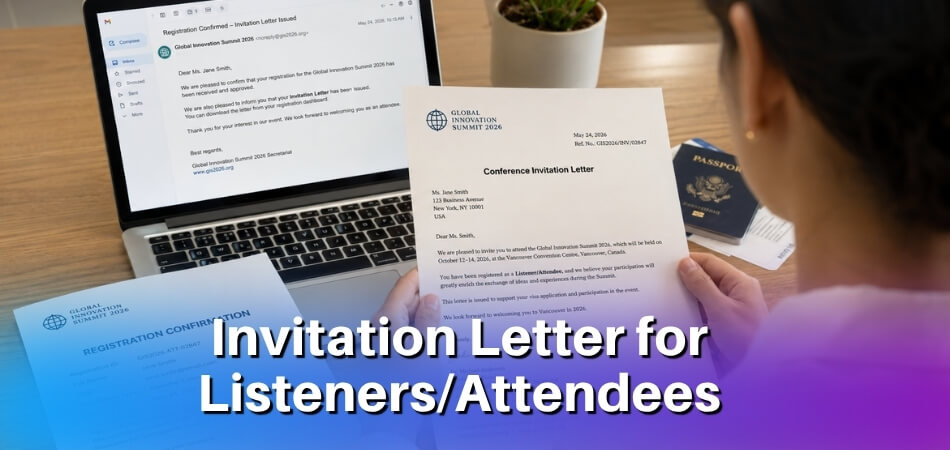
Most people hear “invitation letter” and picture something sent to a keynote speaker. Speakers are confirmed months ahead because the programme depends on them, so their letter often arrives as part of that confirmation. A listener usually registers later, and some organisers only issue the letter when the attendee asks for it. Others issue it automatically once payment clears, and some offer a standard letter at registration plus a custom one on request. Check the registration page or confirmation email to see which one applies to you.
What the Letter Says for an Attendee
It will not say “invited to present.” Expect wording close to this:
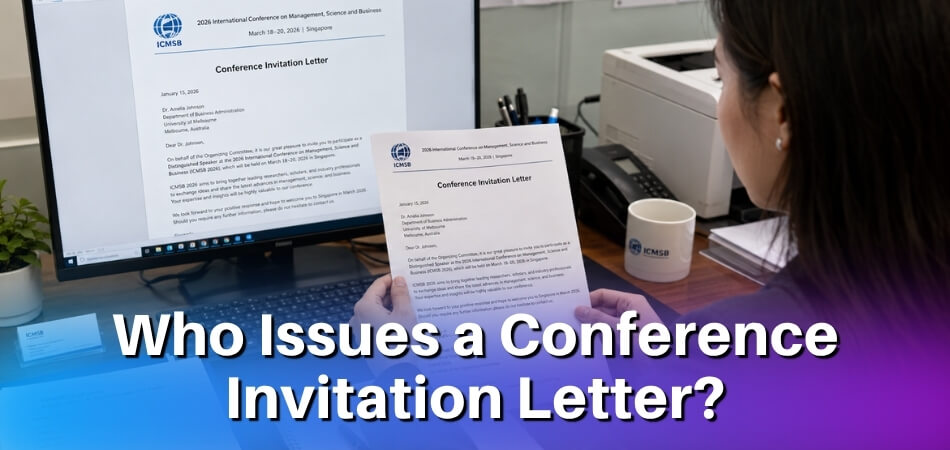
We confirm that [your name] is registered to attend [Conference Name] as a conference participant/listener/attendee, to be held on [dates] at [venue, city, country].
A letter that matches your real role is more credible to a visa officer than an inflated one. It confirms that your trip has a verifiable purpose. It is not a visa and it does not guarantee approval.
Speaker Invitation vs Attendee Invitation: What Is the Difference?
The main differences are timing and wording. Speaker letters stress contribution, and attendee letters confirm participation. Both are valid, as long as the letter matches your registration.
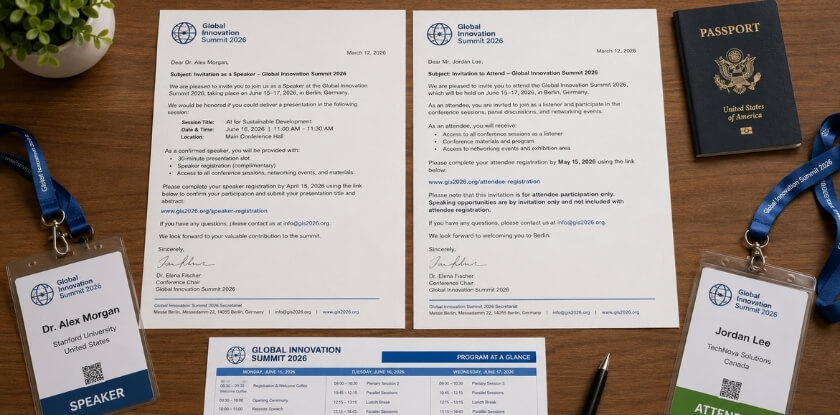
| Point | Speaker letter | Attendee or listener letter |
|---|---|---|
| When it arrives | Often with the speaking confirmation, sometimes six to nine months before the event | After registration and payment, on request or automatically |
| Typical wording | “Invited to present a paper” or “selected to deliver a talk” | “Registered to participate as a conference participant” or “attending as a listener/delegate” |
| What it shows | A concrete professional duty to attend and return | Registered participation in a real event |
| Funding line | May mention support or a fee waiver | Should mention support only if you actually receive it |
Both letters name the conference, the dates, the venue and your full name, and both should be on official letterhead with a committee contact. If any of these is missing, ask for a corrected version before you submit anything.
Why Do Attendees Need an Invitation Letter?
Because a registration receipt alone often does not carry enough weight for a visa officer, an employer or a funding body. The letter is the one document that ties your name to a specific event and dates.
For Visa Applications (Schengen, USA, and Other Countries)
Many embassies and consulates want proof of why you are travelling, and a conference letter is a common way to show it for a business or professional trip. Whether it is required differs by country and by consulate, so read the checklist of the one you apply to.
For a Schengen visa, the European Commission says the application can be lodged up to six months before the trip and as a rule at least 15 calendar days before it. A decision is normally made within 15 calendar days and can take up to 45 if the case needs closer examination. Plan on the longer side, not the shortest one. The Commission lists “supporting documents relating to the purpose of your stay” without naming an invitation letter, and consulates may ask for additional documents, so the conference letter is one piece of evidence among several.
For a US visa, the State Department lists attending a professional or business conference among the activities a B-1 visitor visa allows. Its visitor visa page says you do not need a letter of invitation to apply and that a letter is not one of the factors used to decide the case, so treat the conference letter as supporting evidence only and check the website of the US embassy where you apply. Interview waits differ by embassy, so book your appointment early.
Three US rules changed recently, and a conference letter does not affect any of them. Since 1 October 2025 most nonimmigrant applicants, including first-time B-1 applicants, need an in-person interview, because the interview-waiver categories were narrowed. Nationals of countries on the State Department’s visa bond list may have to post a bond before a B-1/B-2 visa is issued, and that programme has been permanent since 3 August 2026. Nationals of some countries are also covered by a partial suspension of B-1/B-2 visas that applies from 1 January 2026. Check your nationality against the State Department pages before you pay a registration fee.
For Canada, IRCC says it sometimes asks for a letter of invitation when you apply for a visitor visa, and that such a letter does not guarantee a visa. An officer decides on your whole file.
Whatever the country, the letter should state your role clearly, the dates should match your travel window, and the signature and contact details should be real.
For Employer Approval and Travel Funding
Employers and funding bodies want a paper trail. The letter shows the conference is real, professionally relevant and on fixed dates, which is often enough to move an approval along. It can also support expense reimbursement later.
If your HR department has different approval paths for speakers and general attendees, ask the organiser to state “attendee” or “listener” explicitly. If your employer is paying, you may also need a separate employer letter. The conference letter confirms the event and your registration. The employer letter confirms permission to travel. Students often need a supervisor or university letter for the same reason, and a conference invitation letter for students explains what it should say.
The Process for Attendees to Receive an Invitation Letter
Complete your registration and payment first, then request the letter if it has not arrived on its own. Doing the steps in this order avoids most delays.
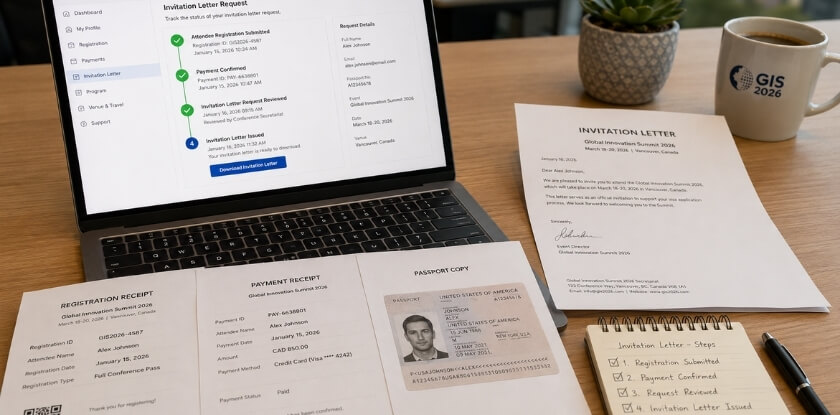
| Step | What to do | Why it matters |
|---|---|---|
| 1. Register and pay | Wait for the confirmation email and keep it | Most organisers will not issue a letter until payment clears |
| 2. Find the request route | Look for a visa support form on the conference site, or the contact email | Some conferences use a form, others only email |
| 3. Send the request | Name, registration ID, role (attendee or listener), purpose, destination country, deadline | The organiser can fill in the letter correctly the first time |
| 4. Check the letter | Compare it with your passport and registration confirmation | Errors are easier to fix before the visa application |
Completing Your Registration, Including Payment
“Pending payment” or “awaiting bank transfer” is not enough. An invitation letter is an official document, and organisers will not generate one for someone who has not committed to attending. If you are waiting for employer approval or funding before paying, sort that out first. Some organisers may issue a provisional letter before full payment, but that is the exception.
Submitting the Request
Keep the email short and specific. If the conference offers a custom letter, it may also ask for your nationality, your address, your travel dates and where you will stay, so have them ready. One example is enough:
Subject: Invitation letter request, [Your Full Name], Registration ID [number]
Dear Organizing Committee,
I have registered as a listener for [Conference Name] on [dates]. Please send me an invitation letter that states my role as attendee. I need it for a [visa type] application to [country], and my deadline is [date]. My name as it appears on my passport is [full name], passport number [number].
Thank you,
[Your name]
Timing: Ask Early
Replies vary. Some organisers email the letter as soon as registration is complete, while others quote a week or more, especially close to the event or a registration deadline. Build in at least two to three weeks between your request and any visa appointment or application deadline.
Common Mistakes Found in Invitation Letters
A small error can cause questions at the consulate, even when the rest of your file is fine. Put the letter next to your passport and your registration confirmation. Names, dates, role and country should match across all three.
| What to check | Common mistake |
|---|---|
| Role | The letter says “speaker” or a vague “participant” when you registered as a listener. The role should match your registration receipt exactly. |
| Conference dates | Only a month is given, such as “in March”. Visa officers need the exact start and end dates. |
| Funding line | A leftover speaker line such as “we will cover all expenses” when you pay for yourself. It clashes with your bank statements. |
| Passport details | Misspelt name, wrong nationality or wrong passport number. |
| Organiser contact | No official email, website, address or phone number, so the letter cannot be verified. |
| Letterhead and signature | A plain-text email instead of a signed letter on letterhead, which many consulates may not accept. |
| Generic wording | A one-size-fits-all letter with no reference to your registration or your role. Ask the committee to personalise it. |
A good letter also gives the full venue address and a one or two sentence description of the event. Some consulates want it to say the conference is academic, professional or technical, or that you receive no speaker fee. If yours lacks any of these, ask the committee to reissue it first.
What Should You Do If You Don’t Receive an Invitation Letter?
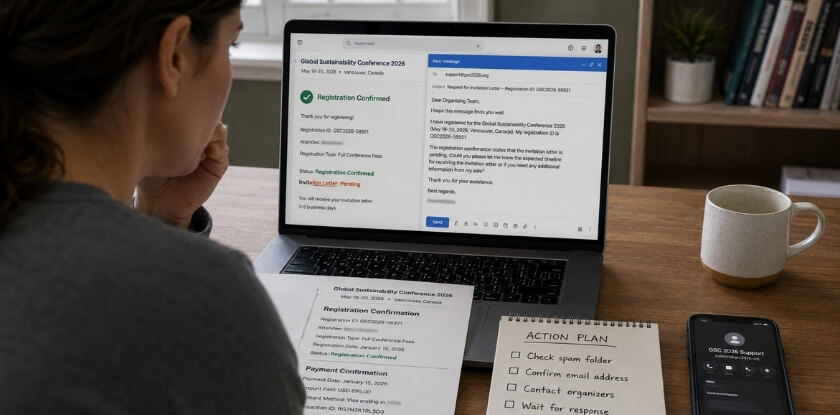
Wait a few business days, check your spam folder, then contact the organiser with your registration details. Letters are usually checked against your registration before they are sent, so a missing or mismatched detail can hold yours up.
Contact the Right Person
If nothing arrives after five business days, email a specific person, such as the conference coordinator, the visa support contact or the registration manager, rather than a generic form. Their names are usually under “Contact” or “Organizing Committee”. Include:
- Your full name exactly as it appears on your registration
- Your registration confirmation number
- Your role: attendee, listener or conference participant
- The purpose and visa type, if any (Schengen, US and so on)
- Your deadline, if you have one
Some committees use different templates by visa type. A Schengen request, for example, may need your travel dates and host institution details.
Follow Up Once, Then Escalate
Send one polite follow-up if you hear nothing. After that, look for a second contact, such as a programme chair, another listed email address or a dedicated visa support inbox. Larger conferences often list one on the FAQ or registration page.
When the Letter Has the Wrong Role
If the letter calls you a speaker, or gives no role, ask the committee for a corrected version. Do not try to work around it with a different document.
When the Conference Does Not Offer Letters to Attendees
Some conferences issue visa letters only to authors of accepted papers or to presenters, and some smaller or virtual events do not issue letters to general attendees at all. Ask whether they can give a signed confirmation of attendance on letterhead instead, and use it in place of a visa letter. As a last step, ask the consulate what it will accept before you assume a format will be rejected.
Can Attendees See Other Participants’ Meeting Responses?
No, not by default. When organisers send invitations through a registration platform or calendar system, your reply is usually visible only to them. Attendee lists contain names, affiliations and contact details that organisers are not allowed to share freely.
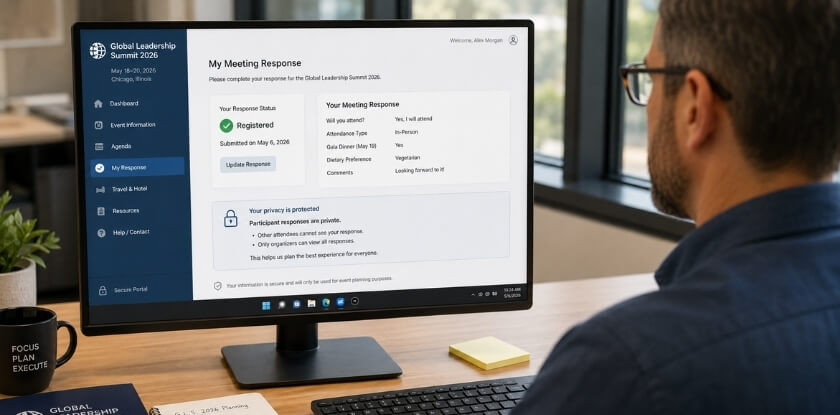
Some smaller academic or invite-only events do circulate a participant list after registration closes, usually as a separate document. If you are added as a guest on a calendar event, you may see other guests only when the organiser switched that setting on. Dedicated registration platforms normally show you your own status and nothing more.
For a visa, only your own letter and registration confirmation count. Officers do not expect proof of who else is attending. If your employer or funding body needs proof that several colleagues are registered, ask the organiser to confirm it in writing instead of sharing screenshots. If you are sending five or more people, ask whether the organiser has a group coordinator.
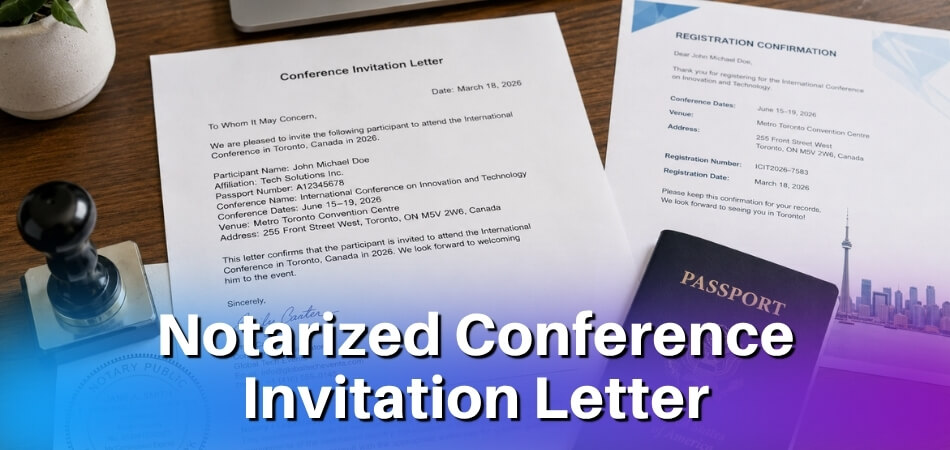
From our experience at MS International: Registered authors, presenters and listeners are all eligible for an invitation letter once payment is complete. The letter process then starts automatically, with no separate request, and the letter is issued within 3 to 5 business days after payment clears, as a PDF sent to your registered email. The standard letter is free for registered participants. Enter your name exactly as it appears on your passport, because the team may contact you if details are missing or names do not match. A US$50 administrative fee may apply to corrections requested after the letter is issued. Each letter is issued for the named participant, conference, date and location. A notarized version is optional, costs US$100, takes up to 10 business days and is non-refundable. Our conferences are held in person in the Greater Toronto Area, and registration fees are non-refundable.
Frequently Asked Questions (FAQ)
Coming as a listener rather than a speaker? Attendees wonder if they receive a letter at all, whether it works for a Schengen or US visa, and how to fix one with the wrong name or dates.
Do all conference attendees automatically get an invitation letter?
No. Some organisers issue the letter automatically after payment, some only on request, and some only to presenters. At MS International the process starts automatically once payment clears. Check your confirmation email, and if you need one for a visa or employer approval, ask as soon as your registration is confirmed.
Is an attendee invitation letter different from a speaker invitation letter?
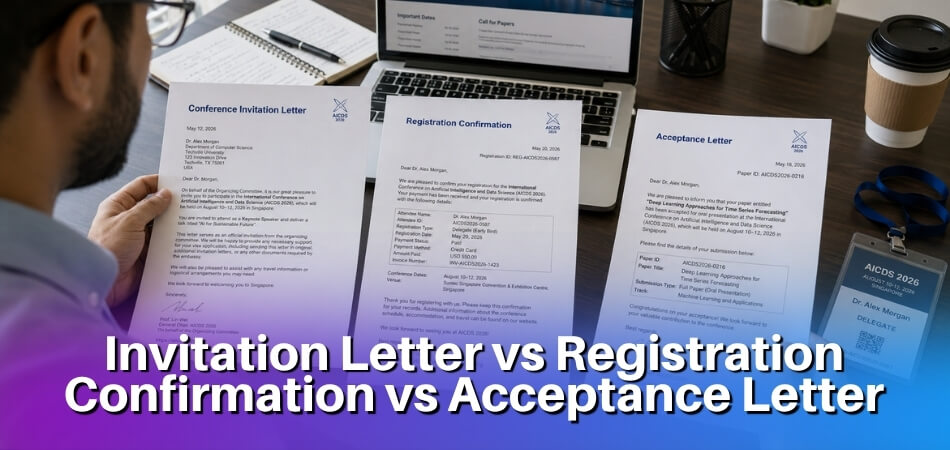
Yes. A speaker letter mentions the speaking role and often comes with the speaking confirmation. An attendee letter is based on registration and describes you as a participant or listener. Both are valid for visa purposes when they match your real role.
Can I use an attendee invitation letter for a Schengen visa or US visa?
Yes, it can support either application, but it does not guarantee a visa, and the State Department says a US visitor visa applicant does not need one. Bring your registration proof, funding evidence and the other documents on the consulate’s checklist.
What if the invitation letter has the wrong name or dates?
Ask the organiser for a corrected letter before you submit it to a consulate, and send your registration confirmation and passport details with the request. Some organisers charge for changes after issue. MS International may charge a US$50 administrative fee for corrections requested after the letter is issued, so check your details first.
How long does it take to receive an invitation letter after requesting one?
It depends on the organiser: some email it at once after registration, others take a week or more. MS International issues it within 3 to 5 business days after payment clears. Do not wait until the week of your visa appointment.
Can the invitation letter be used for employer approval or travel funding?
Yes. It shows your employer or funding body that the event is real, has fixed dates and that you are formally registered. If they distinguish speakers from attendees, ask for your role to be stated clearly.
What should the invitation letter include to be valid for a visa?
Your full name as on your passport, your role, the conference name, exact dates and venue, and the organiser’s contact details and signature on letterhead. Some organisers also add your passport number. Without these basics a visa officer may treat the letter as insufficient.
I never got a reply after requesting my invitation letter. What now?
Send one follow-up after about five business days, quoting your registration number. If that fails, find a second contact or a separate visa support form. Many large events handle letters through a form, so check that you did not miss one.
Conclusion: Requesting an Invitation Letter Is Your Right
Being a listener does not make you a second-tier participant. You paid your registration fee, and the organiser can issue a standard document that confirms it. Ask early, state your exact role and your purpose, and check every detail against your passport before you submit a visa application.
Disclaimer: This article is general information, not legal or immigration advice. Visa rules and processing times change and decisions rest with the embassy or consulate, so confirm requirements with the official government website before you apply.