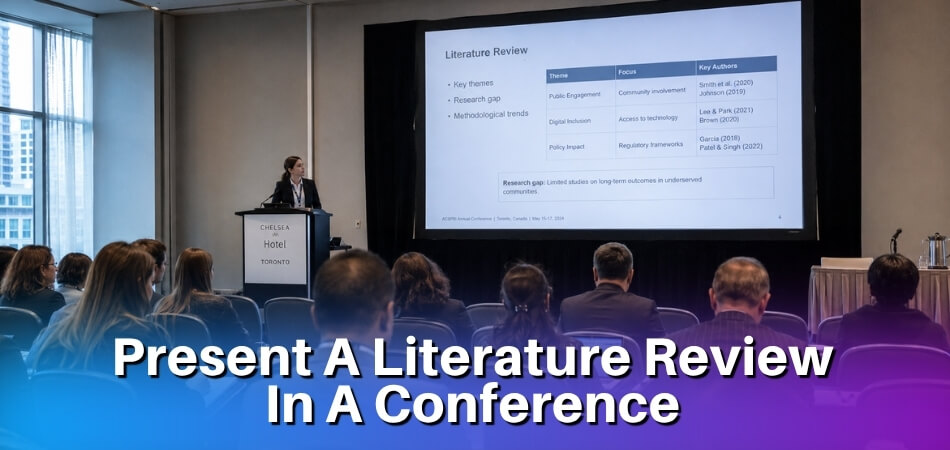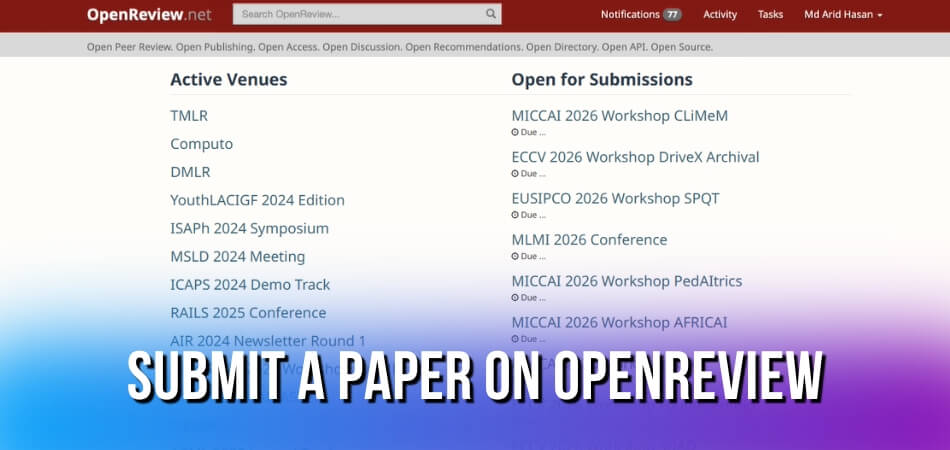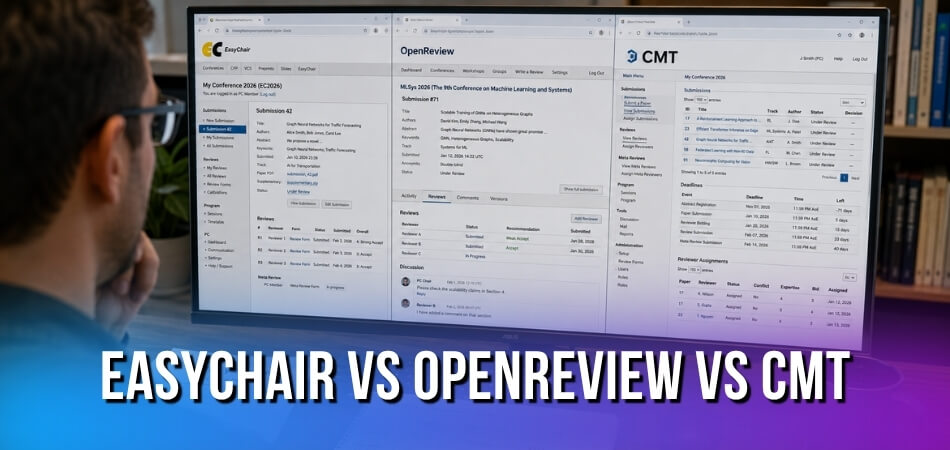

Many people assume that going to a conference means having something to present. It does not. General attendee registration is open to anyone, and plenty of delegates at academic meetings, professional summits and industry events never submit an abstract or stand behind a podium.
Quick answer: Yes, you can attend a conference without presenting. Register as a general attendee (some events call it a listener or delegate), pay the registration fee, and you can join sessions, keynotes and networking like everyone else. You do not need an abstract or paper ID. Check what your ticket tier covers, because workshops and special events can cost extra.
The sections below explain how registration works, which events suit non-presenters, how to introduce yourself, and what etiquette applies.
Yes, You Can Attend Without Presenting: How It Works
Yes. General attendee registration exists for people who want to take part without submitting a paper or giving a talk, and it is a recognised category at many academic, professional and industry conferences. You are not attending under false pretenses.
Some organisers say so in their own words. The 8th AECL International Conference (2026, University of Alicante) lists in-person participation “with or without a paper presentation”, and offers virtual attendees the plenary lectures live under the same wording.

What Registration Looks Like for Non-Presenters
Conferences typically offer several registration tiers, and the standard attendee badge covers more than most people expect.
| What you get | Usually included for attendees | What to check |
|---|---|---|
| Keynotes, panels, breakout sessions | Yes, across the event, not only the talks where a name is on a slide | Invite-only or add-on events |
| Workshops and specialty sessions | Sometimes. Some need a separate sign-up or fee, and that applies to everyone equally | The event program, before you pay |
| Receptions, lunches, networking functions | Typically open to all registered attendees, not a speaker perk | Whether a social event is ticketed separately |
| Online or hybrid access | Streamed sessions, virtual networking rooms, sometimes on-demand recordings | What the organizer offers at your tier |
Online and Hybrid Conferences
The same logic applies to an online conference or a hybrid conference. Virtual registration tiers for non-presenting attendees are common. The format is different, but your standing as an attendee is not. The code of conduct and basic ethics still apply online: engage respectfully in chats, Q&A and virtual networking rooms, whether or not you are presenting.
What You Can and Can’t Do
You can introduce yourself at networking events, join hallway conversations, ask questions in Q&A and attend the sessions your ticket covers. Attending without presenting does come with some honest boundaries. You are there to learn, connect and engage, not to use the event as a backdoor speaking slot.
The main boundary is honesty about your role: if you registered as a general attendee, do not imply that you are presenting. Confidentiality expectations apply to everyone in the room, whether or not they are on stage.
Professional development is a legitimate reason to attend any conference. You do not need an accepted paper to get real value from a keynote, a packed workshop or a conversation you stumble into between sessions.
Which Types of Conferences Are Most Open to Non-Presenting Attendees
Professional and industry conferences are usually the easiest for non-presenters, academic conferences are open but more presenter-heavy, and online or hybrid events are the most accessible. Some conferences expect most people in the room to have submitted work, while others design their programs for general attendees. Knowing which kind you are looking at saves you time, money and awkward surprises at the registration desk.
| Conference type | How open it is to non-presenters | Watch for |
|---|---|---|
| Academic | Open, with a general attendee tier separate from the presenter track | Sliding-scale pricing, where presenters and attendees pay different rates |
| Professional and industry | Often the norm, since general attendees are the main audience | Expo-only passes that skip the sessions |
| Online and hybrid | Most accessible, often lower fees and no travel | Uneven networking between in-person and remote attendees |
Academic Conferences
Events tied to journals, graduate programs or discipline associations do skew toward people sharing research, but most still offer general attendee registration that is completely separate from the presenter track.
Attending an academic conference without presenting is common among graduate students scouting a field, early-career researchers building familiarity before they submit work, and practitioners who want exposure to current research. Keynotes, panels and workshops are usually open to all registered attendees whether or not they are on the program.
Some academic conferences price registration by role, so presenters and non-presenting attendees may pay different rates, and the difference can go either way. The XXIII Conference on Culture and Computer Science (KUI 2026, Gdańsk) listed an early fee of 149 € for a non-presenting participant against 492 € for a participant, valid until 7 September 2026. At ASME IMECE 2020 the registration page listed a presenting author at $349, an ASME member attendee (not presenting) at $199 and a non-member attendee (not presenting) at $399. Read the registration page before assuming what you will pay. Hallway conversations are also central at academic events, and a non-presenting badge does not exclude you from any of that.
Professional and Industry Conferences
Many of these events are built around a mix of speakers, exhibitors and general attendees, and the general attendee is often the audience the organizers design for. Session access, workshops and networking events are usually part of the standard package, and your badge typically covers everything except invite-only or add-on events.
They also tend to offer more structured professional development programming, such as certification workshops, skills labs or mentorship meetups, aimed at people who are there to learn. If professional development is your reason for going, an industry conference is often the best fit.
Some larger industry conferences sell a separate expo pass that opens the exhibition floor but not the full session program. If you want to attend sessions, confirm that your registration type covers them.
Online and Hybrid Conferences
Online and hybrid formats have made non-presenting attendance more accessible. Fees are often lower and there is no travel cost. Some online conferences offer free or low-cost general registration, with optional paid tiers for workshops or on-demand recordings.
Hybrid conferences have a wrinkle. The in-person and online experiences are often priced and structured differently, and networking can feel uneven between the two. If you plan to join the online side for networking, check how the platform handles virtual attendee interaction, because some treat remote participants as passive viewers.
For a first time, an online conference is a low-stakes place to start. You can observe how sessions run, how Q&A is handled and how attendees interact before committing to an in-person event.
How to Register as a General Attendee
Choose the attendee category on the registration page, fill in your name, affiliation and contact details, and pay the fee. No abstract number or paper ID is needed. The details vary between events, so understand what you are signing up for before you pay.
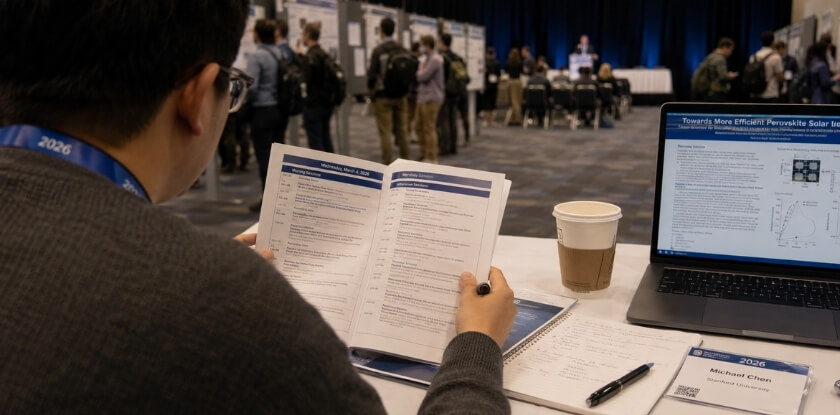
Find the Right Registration Category
Registration pages typically list several tiers. Look for labels such as “general attendee,” “non-presenting attendee,” “listener” or simply “attendee registration” (labels may change from event to event). At an academic conference you will often see separate tiers for presenters, students and general participants, each with its own fee. At a professional or industry conference it is usually simpler, with one standard badge.
If the page is unclear about what non-presenters get, check the FAQ or email the organizers. Ask whether your badge gives full session access, including workshops and keynotes, or whether some sessions are reserved for presenters. Some conferences gate certain workshops behind an add-on fee.
What to Expect During Registration
For an online or hybrid conference you will usually get a link to the virtual platform after registration closes or a few days before the event.
Watch the early-bird deadline. The fee is usually lower before a set date. KUI 2026, for example, listed 149 € early and 179 € late for non-presenting participants.
Confirm What Your Badge Actually Covers
Once registered, read your confirmation email carefully. It should say which sessions are included. Most conferences give general attendees the keynotes and main programming. Hands-on workshops sometimes have capacity limits and need pre-registration even when they are included in your ticket.
If you want proof of attendance for professional development, ask whether the conference gives a certificate of attendance to non-presenting participants. Some do, but not always automatically, so you may need to request it at registration or on site.
Volunteering as an Alternative Entry Point
If the fee is a barrier, volunteering can be a way in. Some academic and professional conferences recruit volunteers for session management, registration desks and logistics in exchange for complimentary or discounted attendance. You still get a badge and access to sessions during your off hours, with full standing for networking and hallway conversations.
Look for a volunteer application on the conference website, often under “Get Involved” or a similar tab. Apply early, since volunteer places are usually limited. Read the code of conduct beforehand, since as a volunteer you represent the event.
Read the Code of Conduct Before You Arrive
As a general attendee you are bound by the conference code of conduct just as presenters are. Find it on the registration or conference page before you pay, because it is part of what you agree to when you register.
What You Can Do at a Conference Without Presenting
You can do almost everything except take a speaking slot: attend the full main program, join workshops, network, volunteer and, at some events, take on small roles. Attending without presenting does not mean sitting quietly in the back row, and for many professionals the most valuable parts of a conference have nothing to do with a podium.
Sessions, Keynotes, and Workshops
Registered attendees generally get the same session access as everyone else: plenary talks, panel discussions, the keynote on the opening morning and any workshops included in your tier. Read the programme before you go and mark the sessions you want, because parallel sessions can clash.
Workshops are often where the real learning happens. They tend to be smaller, more interactive and focused on practical skills. If a workshop is sold as an add-on, it is usually worth the extra fee.
Some conferences run popular sessions in parallel rooms or cap workshop attendance. Log into the attendee portal and reserve seats as soon as registration opens, especially for hands-on sessions, because spots fill up quickly.
Networking and Hallway Conversations
Some of the most useful conversations happen between sessions. Hallway conversations are where people share what is working in their field, swap job leads and make introductions that turn into professional relationships.
Your name badge does a lot of work here. Most badges show your name, organization and sometimes your role or location, and people use that to start a conversation. Make sure the details are accurate and think briefly about how you would describe what you do in a sentence or two.
Online and hybrid formats make this harder but not impossible. Most platforms have chat rooms, virtual lounges or scheduled networking slots, so use them actively instead of treating them as optional background noise.
- Introduce yourself honestly as a general attendee. There is no need to explain yourself or apologize for not presenting.
- Ask genuine questions after sessions rather than grabbing speakers before they have left the stage.
- Follow up within 48 hours, while the conversation is still fresh.
Volunteering and Other Roles
Volunteering gives you a legitimate reason to introduce yourself to people you might otherwise hesitate to approach, and it puts you in direct contact with organizers and speakers.
Beyond volunteering, it is worth asking at registration whether the conference needs session chairs or note-takers, since some events may fill these roles with attendees who have no paper on the program.
How to Introduce Yourself When You’re Not Presenting
Be direct and specific: give your name, your organization and one line about what you are there for. One of the quiet worries of attending without presenting is the moment someone asks, “So, what are you presenting on?” A ready answer makes the difference between feeling awkward and feeling confident.

If Someone Asks What You’re Presenting
You do not need to apologize or over-explain.
- Own your reason for being there. Something like “I’m here to learn more about [topic area] and connect with people working in this space” is completely normal. A non-presenting attendee is a legitimate role.
- Name your actual interest. “I work in supply chain and I’m trying to understand where the research is heading” gives the other person something to respond to. Specificity opens a conversation, generic answers close one.
- Skip the disclaimer. Do not lead with “I’m just attending” or “I’m only here to observe.” That framing undersells you. You registered, paid a fee and are investing your time, and that is worth something.
Introducing Yourself First
Your badge can carry a lot of weight when you start a conversation. Use it as a starting point, then add one line of context. A simple structure works at both academic and industry conferences:
“I’m [Name], from [Organization]. I’m here focusing on [topic or goal].”
That is all you need. At a workshop or after a keynote people are already in a conversational mindset, so a short, genuine intro is enough to start a dialogue.
Networking as a General Attendee
- Do not wait for structured moments. Networking happens as much during coffee breaks and lunch queues as in formal sessions. Position yourself near those spaces and be willing to speak first.
- Mention what you just attended. “What did you think of that last session?” is one of the easiest openers at any conference, and it works whether or not you are presenting.
- Be honest about your perspective. If you are there for professional development or exploring a new field, say so. Admitting you are still learning often leads to better conversations than pretending expertise you do not have.
- Use a volunteer role as an opener. Helping run registration or a session room gives you a built-in reason to talk to almost anyone.
Ethical and Confidentiality Considerations
Attending as a non-presenter is completely legitimate, but there are some practical and ethical boundaries worth understanding before you walk in. The rules are the same for you as for speakers: follow the code of conduct, respect confidentiality and be honest about who you are. These are not bureaucratic technicalities. They shape how you participate and how others see you.
Respect the Conference Code of Conduct
Every serious conference publishes a code of conduct, and you agreed to it when you completed registration, even if you scrolled past it quickly.
- Know what is in it. Most codes cover harassment, recording policies and how disputes are handled. Organizers can enforce them against attendees and speakers alike.
- Recording rules matter especially. Recording talks usually needs the speaker’s permission, and online sessions are not an exception. The ASGSR 2026 Annual Meeting policy, for example, says recording scientific sessions, workshops, keynotes and posters requires explicit permission from both the presenter and the society, and that livestreaming presentations without permission is prohibited. Photo rules can differ: the same policy allows photographs during sessions unless the presenter signals otherwise, and not of material marked confidential. If you are unsure, ask the organizer or session chair before you hit record.
Confidentiality in Research and Business Contexts
Academic conferences often include unpublished or early-stage work. Speakers share findings before formal publication, trusting the room not to circulate them without permission. This is one of the quieter ethical points that new attendees miss, because it is rarely spelled out on a badge or in the session materials. As an attendee, do not live-tweet specific data, post summaries of pre-publication findings or discuss proprietary content outside the event without the presenter’s consent. The ASGSR 2026 policy, for instance, asks attendees not to share confidential, proprietary, unpublished or sensitive research on social media without permission and to credit presenters by name. The same care applies at hybrid conferences where sessions may be recorded but speakers have not agreed to wider distribution.
Professional and industry conferences carry similar expectations, particularly in closed-door workshops where companies or practitioners share internal processes or case studies. If a speaker asks the room to keep something off the record, honor it.
Introducing Yourself Honestly
Your badge introduction should reflect your real role, organization and reason for attending. Claiming an affiliation you do not have, or a position you do not hold, to gain access to people is a genuine ethical breach, however harmless it feels in the moment. There is no advantage to overstating your credentials, because your actual work will surface in conversation anyway.
Badge Access and Session Boundaries
Your badge dictates what you can access. Some conferences tier their fees so that different badges open different sessions, workshops or networking events. Walking into a session your badge does not cover is not a gray area, even if the door is open. At hybrid conferences the line between what is included and what is gated can be less obvious, so ask registration staff when something is unclear.
Hallway Conversations and Information You Overhear
Hallway conversations are informal, but they are not anonymous. If someone shares something candid with you, treat it that way. Using it for competitive advantage, or attributing it publicly without permission, is not appropriate even without a signed agreement.
Is Attending Without Presenting Worth It?
It can be, but the honest answer depends on what you want from the conference. If your main goal is to present your work and get feedback, attending without presenting does not meet that need. If you are going to learn, observe, build connections or test whether a field is right for you, it is usually a good investment. If open discussion matters more to you than listening to talks, a forum may suit you better than a conference.

What You Actually Gain
Non-presenters have something presenters may not have: time. You are not fixing slides the night before, rehearsing in your hotel room or running on adrenaline. You can give full attention to keynotes, sit through workshops that interest you and follow the conversations that matter, and you can give them more attention when you are not preparing your own talk.
- Networking is often where non-presenters find the most unexpected value. Hallway chats, lunch tables and evening events are not less valuable because you have no paper to pitch, and collaborations can start in exactly those spaces.
- Session access is often the same as what presenters get: the same panels, workshops and keynotes, subject to your ticket tier.
- Volunteering can deepen the experience, with behind-the-scenes access, contact with organizers and a way to meet people without a cold introduction.
When It Might Not Be Worth It
The registration fee is the main variable, and the attendee rate is not always a bargain, as the fee examples above show. It is also a weaker fit if your main goal is feedback on your own work, or if the programme has few sessions in your area and your ticket covers little else. Online and hybrid conferences lower the bar, since fees are often lower and there is no travel cost.
The Longer-Term Consideration
Attending as a general attendee is often how people decide whether to present at a future event. You see how sessions are structured, what kinds of work get presented and what the community values in a submission, which you cannot replicate by reading the conference website. You also learn whether the conference is the right venue for your work, which can save you from submitting to the wrong place later.
Attending Without Presenting at an MS International Conference
At MS International conferences you can register as a listener without submitting a paper. Participation is in person only, in the Greater Toronto Area, and the fee depends on your registration category. Event pages currently list the Listener fee as US$499, and the fee, deadlines and inclusions are shown on the registration page of each conference.
Registered listeners are eligible for an invitation letter. The process starts automatically once payment clears, and MS International issues the letter within 3 to 5 business days after payment clears. It may support visa, travel, employer or academic leave applications, but it does not guarantee visa approval or entry into Canada. A US$50 administrative fee may apply to corrections requested after the letter has been issued.
From our experience at MS International: the paper submission page names listener registration as the way to attend without presenting a paper. Submissions are a separate process: they are double-blind peer reviewed, most review decisions are returned within about 10 working days, and accepted papers may be considered for the conference proceedings where applicable.
FAQ
Attending purely to listen has a few awkward edges: the attendee fee, networking events without a talk, workshop access, volunteering and getting an invitation letter.
Can I attend an academic conference if I’m not presenting a paper?
Yes, in most cases. Many academic conferences offer general attendee registration that does not require you to submit or present research, and some say so in writing, such as the 8th AECL International Conference (2026). Check which sessions your tier covers.
Is the registration fee lower for non-presenting attendees?
Sometimes, and it can go either way. KUI 2026 listed an early non-presenting fee of 149 € against 492 € for a participant, while ASME IMECE 2020 listed a non-member attendee at $399 against $349 for a presenting author. Check the registration page.
Will people know I’m not presenting?
Only if you tell them or they ask. Badge designs differ between events, so check what yours shows. Most networking starts with what you work on, not your role at the event.
Do I need to explain why I’m attending without presenting?
No. Professional development, learning from sessions and meeting people in your field are all legitimate reasons, and you do not owe anyone an explanation.
Can I still attend workshops and breakout sessions?
Generally yes, as long as they are included in your registration tier. Some workshops at larger conferences need a separate sign-up or fee, so confirm what your session access covers when you register.
Are online and hybrid conferences easier to attend as a non-presenter?
They tend to be more accessible, and the fee is often lower. Online formats also reduce the pressure of in-person networking, which some attendees find useful when they are there purely to learn.
Is it awkward to go to conference networking events without presenting?
Not really. Networking events are meant for everyone registered, and conversations usually start from shared interests rather than who is on the speaker list.
Are there any ethical issues I should be aware of?
Yes. Confidentiality and the code of conduct apply to all attendees, not just presenters. Treat unpublished research you hear in a session with discretion, and do not record or post it without the presenter’s permission.
Should I volunteer if I want to get more out of the conference?
It can help if the fee is a barrier. Some events offer free or discounted attendance in exchange for volunteering. Look for a volunteer application on the conference website before you register.
Can a non-presenting attendee get an invitation letter?
At MS International, yes. Registered listeners are eligible, and the letter is issued within 3 to 5 business days after payment clears. Other organizers have their own rules, so ask before you pay.
Final Thoughts
Attending a conference without presenting is a normal way to take part, and can be a sensible choice depending on where you are in your career or field. Check what your ticket covers, be honest about your role, and engage genuinely with the people around you. That is enough.