
Looking for African business and technology conferences in Canada, but the 2026 listings contradict each other and many dates are already behind us? This guide keeps only what could be confirmed on an organiser’s own website on 11 October 2026, so you can plan the rest of the year and spring 2027 without chasing dead links.
Quick answer: The African business and technology conferences in Canada still ahead run from BLAXPO Toronto (16 to 17 October 2026) to Africa Day in Ottawa (25 May 2027). In between are four Greater Toronto Area editions of the International Conference on African Business and Technology (19 October to 10 November 2026), BFUTR in Mississauga (19 to 20 November 2026), PDAC 2027 in Toronto (7 to 10 March 2027) and the AfriCanada Economic Summit (1 to 2 April 2027).
Last verified against official sources: October 2026. Dates, formats and fees can change, so confirm them on each official event page before you pay or book travel.
Top African Business and Technology Conferences in Canada 2026/27: Quick Comparison
Each of these ten upcoming events has its date and city on the organiser’s own website. The International Conference on African Business and Technology counts as one entry, with its four editions grouped together. Listings that exist only on ticketing sites, with no organiser website, were left out, and events that have already taken place are listed further down.
| # | Conference | Date | City | Format | Key focus |
|---|---|---|---|---|---|
| 1 | BLAXPO Toronto 2026 | 16 to 17 October 2026 | Toronto, ON | Conference with exhibitor hall | Black professionals, careers, networking, founders |
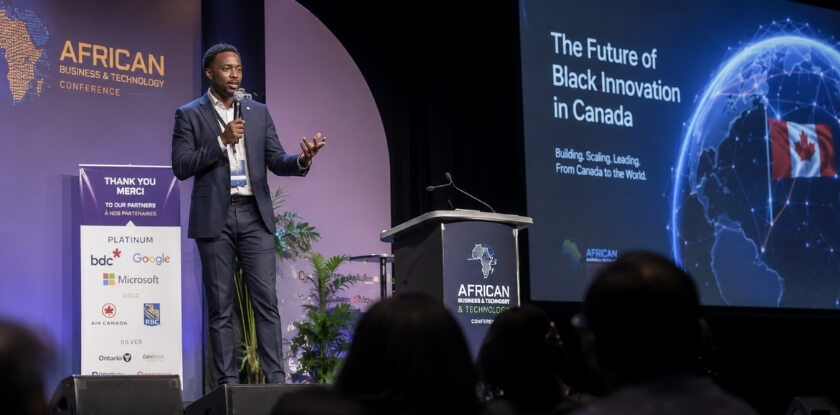
| 2 | International Conference on African Business and Technology (11th to 14th editions) | 19 October, 26 October, 3 November and 10 November 2026 | Markham, Mississauga, Toronto and Brampton, ON | In person | African markets, entrepreneurship, fintech, AI |
| 3 | Annual Members’ Capital Luncheon (Canada-Africa Chamber of Business) | 22 October 2026 | Gatineau, QC (Ottawa region) | Luncheon at a golf club | Trade, investment, African heads of mission |
| 4 | Metro Vancouver Black Business Expo 2026 | 24 October 2026 | Surrey, BC | Expo at Surrey City Hall | Black-owned businesses, vendors, networking |
| 5 | Black Innovation Summit 2026 (DMZ) | 28 October 2026 | Toronto, ON | In person | Pitch competition for Black tech founders |
| 6 | BFUTR Global Tech Summit 2026 | 19 to 20 November 2026 | Mississauga, ON | Summit at The International Centre | Black tech talent, careers, technology |
| 7 | PDAC 2027 with the 28th African Mining Breakfast | 7 to 10 March 2027 | Toronto, ON | In-person convention and trade show | Mining investment in Africa |
| 8 | AfriCanada Economic Summit 2027 | 1 to 2 April 2027 | Toronto, ON | Not stated on the site | Canada-Africa investment, markets and partnerships |
| 9 | Canada-Africa Forum, Montreal (Canada-Africa Chamber of Business) | 1 April 2027 | Montreal, QC | Not stated on the site | Study, work and venture paths between Canada and Africa |
| 10 | Africa Day 2027 (Casa Foundation) | 25 May 2027 | Ottawa, ON | Morning session at Carleton University | Africa-Canada partnerships, trade, innovation |
A few points about this table:
- Seven of the ten are in Ontario. The others are in Quebec (Gatineau and Montreal) and British Columbia (Surrey).
- The International Conference on African Business and Technology row covers four separate editions. They have different dates and cities, so do not mix up the numbers (11th, 12th, 13th and 14th).
- Two events share 1 April 2027. The AfriCanada Economic Summit in Toronto and the Canada-Africa Forum in Montreal fall on the same day, so you can attend only one of them.
- The mix is varied. There is an academic series, a Black professionals expo, a founder pitch event, a Black tech summit, a mining convention and an investment summit, so decide first which kind you need.
Details of the Upcoming Conferences
1. BLAXPO Toronto 2026 (Toronto)
BLAXPO describes itself on its official site as a bilingual conference for Black professionals. The 2026 Toronto edition is listed for 16 to 17 October and includes speed networking, a CV clinic, a headshot studio, a wellness centre and an exhibitor hall. It also runs programmes for executives and founders, including an Executive Leadership Accelerator and a Founder Cohort. The ticket page lists four tickets, each plus tax: Student $40 (valid ID required), Experience $80, Legacy $190 and Corporate $250 (for companies bringing three or more team members). The event is a Four Brown Girls production, and the site does not name a venue yet, so check it before you book a hotel.
Who should attend: Black and African diaspora professionals, early-stage founders, students and employers who want to meet them. Topics: careers, entrepreneurship, networking and professional development. It is a community and career event rather than a trade or research conference, so pick it for contacts and visibility, not for formal investment matchmaking.
2. International Conference on African Business and Technology, 11th to 14th Editions (Greater Toronto Area)
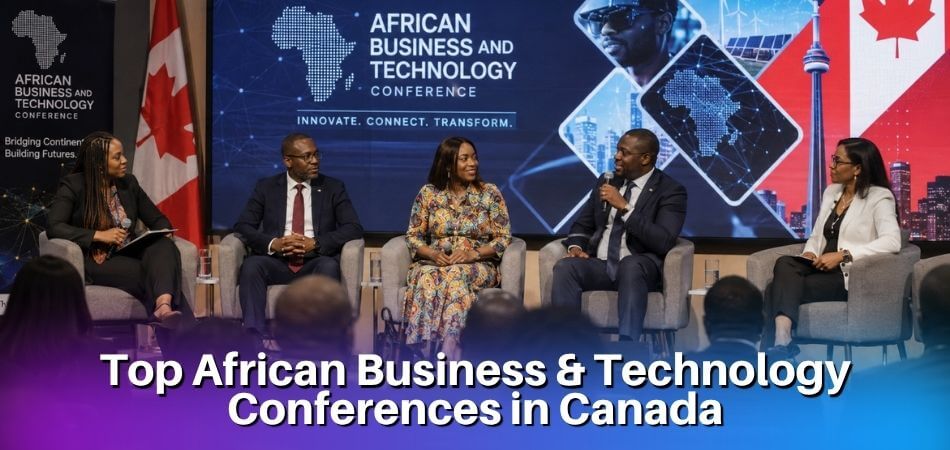
This series is run by the organiser that publishes this site, so read this entry with that in mind. Four editions remain in 2026, all held in person in the Greater Toronto Area, and the conference title sets the focus: business and technology in African markets.
Who should attend: researchers and professionals who want to present or discuss work on African business and technology. Format: a formal academic conference. Papers go through double-blind review, and accepted papers may be presented during technical sessions.
| Edition | Date | City |
|---|---|---|
| 11th International Conference on African Business and Technology | 19 October 2026 | Markham |
| 12th International Conference on African Business and Technology | 26 October 2026 | Mississauga |
| 13th International Conference on African Business and Technology | 3 November 2026 | Toronto |
| 14th International Conference on African Business and Technology | 10 November 2026 | Brampton |
Each edition lists three tickets: Author (Early Bird) US$499, Author (Regular) US$599 and Listener US$499, so the early-bird rate is US$100 below the regular author fee. Registration fees are non-refundable, so pick an edition whose date you are sure you can make.
3. Annual Members’ Capital Luncheon, Canada-Africa Chamber of Business (Gatineau)
The Canada-Africa Chamber of Business, founded in 1994 and based in Toronto, holds its Annual Members’ Capital Luncheon on Thursday, 22 October 2026, from 12:00 to 14:00 at the Royal Ottawa Golf Club in Gatineau, Quebec, in the Ottawa capital region. The Chamber says all members are welcome and expects African heads of mission to Canada (ambassadors and high commissioners) and leaders from the Government of Canada among the guests. The page gives an RSVP contact but no ticket price, and it is a members’ event, so ask the Chamber whether non-members can attend.
Who should attend: Chamber members, exporters and investors working on Canada-Africa trade, and anyone who wants to meet diplomats from African governments. Topics: the Chamber’s trade and investment work with African governments. It is a two-hour lunch, not a multi-day conference, so pick it for access to diplomats rather than for sessions.
4. Metro Vancouver Black Business Expo 2026 (Surrey)
The expo’s own site lists the 2026 edition for 24 October, from 12:00 to 4:00 PM, at Surrey City Hall, 13450 104 Avenue, Surrey, British Columbia. It is hosted by the Yoruba Social and Cultural Association of BC with the Surrey & White Rock Board of Trade, and it gives Black business owners a place to show products and services, meet customers and learn about programmes for Black-owned businesses. The Surrey & White Rock Board of Trade’s event page lists attendee admission as free and an exhibitor fee of $200. Each vendor space comes with one 2 ft by 6 ft table and two chairs, and because sales take place on City of Surrey property, vendors remit 15% of their sales to the City after the event.
Who should attend: Black and African diaspora business owners in British Columbia, vendors and local shoppers. Topics: local sales, networking and brand visibility. It is a community market rather than a trade or investment conference, and it is the only entry on this list in western Canada.
5. Black Innovation Summit 2026 (Toronto)
DMZ at Toronto Metropolitan University calls this its sixth annual summit and describes it as Canada’s premier pitch competition for Black tech founders. It takes place on Wednesday, 28 October 2026 at SixtyEight at Scotia Plaza in downtown Toronto and is hosted with Scotiabank. Selected founders pitch live for a prize pool of C$170,000 in investments and grants, and finalists receive investor-readiness sessions beforehand. Pitch applications are closed, but the event is open to RSVPs through the link on the DMZ page. The page does not state an admission fee.
Who should attend: Black tech founders, investors, startup-ecosystem staff and industry leaders who want to see early-stage Canadian ventures pitch. Topics: startup funding, investor readiness and Black entrepreneurship in technology. It is the closest match on this list for technology founders who want to watch investors respond to live pitches.
6. BFUTR Global Tech Summit 2026 (Mississauga)
BFUTR is a global tech summit for Black professionals, run by Obsidi. The official page lists the 2026 edition for 19 to 20 November in Mississauga, Ontario, in the Greater Toronto Area. The host venue is The International Centre, and the site names the Hilton Toronto Airport Hotel & Suites as the official hotel. Passes come in three levels (Access, Accelerator and Executive Circle), and the higher two add full main stage access on both days. The site describes the Access Pass as free in one section and as $20 for non-members of Obsidi ($0 for members) in another, and it shows no price for the higher passes, so confirm the cost at checkout. A marketplace with partner jobs is part of the programme.
Who should attend: Black technology professionals, job seekers, founders and employers who hire Black tech talent. Topics: careers, emerging technology and community. It is a Black tech event with a global reach rather than an Africa-only one, so pick it for talent and technology contacts.
7. PDAC 2027 and the African Mining Breakfast (Toronto)
PDAC is the large mineral exploration and mining convention held in Toronto. Its own site lists PDAC 2027 for Sunday 7 to Wednesday 10 March 2027, in person at the Metro Toronto Convention Centre. MineAfrica runs the Africa programme during PDAC week: the Canada-Africa Chamber of Business 28th Annual African Mining Breakfast and the 25th Annual Investing in African Mining Seminar take place on Tuesday, 9 March 2027 at the Sheraton Centre Toronto Hotel, opening with an address by an African mining minister. MineAfrica says its 2026 event drew 650 participants. Its page does not list a price for the breakfast, so ask when you register.
Who should attend: mining investors, exploration companies, suppliers and policy staff who follow African resources. Topics: African mining investment and partnerships. It is the most specialised entry here, so choose it only if mining is your sector.
8. AfriCanada Economic Summit 2027 (Toronto)
The AfriCanada Economic Summit Group lists the next summit for 1 to 2 April 2027 at the Ontario Investment and Trade Centre, 250 Yonge Street, Toronto. The theme is “Bridging Markets, Mobilizing Capital: Building an Inclusive Investment Future”. The organiser’s site describes the summit as a platform for entrepreneurs, policymakers and investors from Canada and Africa. Its focus areas include market development, trade missions, joint ventures, procurement and institutional relations. The site links to an Eventbrite ticket page but lists no prices or format, and parts of the page still refer to the 2026 summit, so confirm the details with the organiser.
Who should attend: entrepreneurs, investors, policy staff and trade professionals working on Canada-Africa deals. Topics: investment, market entry, partnerships and sustainable development. Because it runs two days in spring, it suits you if the autumn events clash with your calendar.
9. Canada-Africa Forum (Montreal)
The Canada-Africa Chamber of Business lists a save-the-date for Thursday, 1 April 2027 in Montreal, titled “Accelerating Educational & Career Advancement for Trade & Investment”. It is aimed at Chamber members, students and recent alumni who are looking at study, work and venture options in Africa, and members can book an exhibitor table. The page gives no venue, format or ticket price yet, and registration goes through the Chamber’s members contact.
Who should attend: students, recent graduates, recruiters and young entrepreneurs. Topics: careers that bridge Canada and Africa, trade and investment. It is the one entry on this list built around early-career talent.
10. Africa Day 2027 (Ottawa)
Casa Foundation for International Development lists Africa Day 2027 at Carleton University in Ottawa, from 9 am to 12 pm, with the theme “Promoting Africa-Canada Partnerships”. The page promises panel discussions, fireside chats and networking with ambassadors, industry leaders and entrepreneurs. It gives the date as 25 May but calls it a Monday, and 25 May 2027 falls on a Tuesday, so confirm the day with Casa before you plan. The page does not state a format or a fee.
Who should attend: entrepreneurs, trade professionals and diaspora leaders in the Ottawa area. Topics: Africa-Canada partnerships, trade, innovation and community development. It is a morning session, so it fits easily around other plans in the capital.
Already Held in 2026
These events took place before 11 October 2026. Watch for their 2027 editions if the topic suits you.
- Black Business Summit Calgary 2026, Calgary, 19 September 2026. It was a free one-day event for Black immigrant business owners and aspiring entrepreneurs, organized by Connecting the Dots (cddic.ca).
- Africa Accelerating 2026, Canada programme (Canada-Africa Chamber of Business), Toronto, 6 to 7 October 2026, held at Bay Adelaide Centre.
- Africa-Canada Bilateral Business & Investment Summit 2026 (Africa Canada Impact Exchange), Surrey, 25 to 28 September 2026.
- 16th African Economic Summit (Friends of Africa 2026), Toronto, 30 September to 3 October 2026, run by the Casa Foundation. Casa Foundation’s page lists speakers, panels, a marketplace, pitch competitions, workshops and career connections. The 17th edition is the one to watch for.
Listings found only on ticketing sites, with no organiser website, are not shown, and neither are events whose own pages give conflicting dates.
Registration Costs: What the Official Pages Show
Three organisers publish full prices: the International Conference on African Business and Technology (US$499 to US$599), BLAXPO ($40 to $250 plus tax) and the Vancouver expo (free for attendees, $200 for exhibitors). BFUTR’s Access Pass is free or low cost depending on Obsidi membership. Ask the other organisers about fees before you budget, and add flights, hotel and local transport.
| Event | Registration | Invitation letter |
|---|---|---|
| BLAXPO Toronto 2026 | Student $40, Experience $80, Legacy $190, Corporate $250, each plus tax | Not stated |
| International Conference on African Business and Technology (4 editions) | Author Early Bird US$499, Author Regular US$599, Listener US$499 | Included for registered participants; terms in the paragraph before the FAQ |
| Canada-Africa Chamber Members’ Capital Luncheon | RSVP to the Chamber; fee not stated | Not stated |
| Metro Vancouver Black Business Expo 2026 | Attendees free; exhibitor fee $200 (Board of Trade page) | Not stated |
| Black Innovation Summit 2026 | RSVP through the DMZ page; fee not stated | Not stated |
| BFUTR Global Tech Summit 2026 | Access Pass free for Obsidi members, $20 for others in one section of the site; Accelerator and Executive Circle prices not listed | Not stated |
| PDAC 2027 and the African Mining Breakfast | Breakfast and seminar price not listed on the MineAfrica page | Not stated |
| AfriCanada Economic Summit 2027 | Eventbrite ticket link; prices not listed | Not stated |
| Canada-Africa Forum, Montreal | Registration through the Chamber; fee not stated | Not stated |
| Africa Day 2027 (Casa Foundation) | Not stated | Not stated |
A paid academic conference makes more sense when you have a clear goal, such as presenting research. For events that do not publish a fee, confirm the price and what it includes before you travel, and judge each one by whether the people you need to meet will be there.
How to Choose the Right Conference for Your Profile
Pick by what you want to do on the day: present research, meet investors, build a professional network or find partners. The paragraphs below match each profile to the events above.

If You Are a Researcher, Academic or Student
The International Conference on African Business and Technology is the one academic series on this list, and its papers go through double-blind review. Students can also look at BLAXPO, which has a student ticket category and is built around careers and networking rather than paper presentation, and at the Montreal forum, which is aimed at students and recent alumni.
If You Are an Entrepreneur or Startup Founder
The AfriCanada Economic Summit is the more direct route to Canada-Africa investment and partnerships, though its format and fees are not yet published. Black tech founders can also look at the Black Innovation Summit and BFUTR. Black business owners who sell products can use the Vancouver expo to meet customers. Founders with African mining projects can exhibit in the MineAfrica pavilion at PDAC or apply to present at its seminar.
If You Are an Investor or Finance Professional
Look at who the organizer says will attend, not at the ticket price. The AfriCanada Economic Summit targets investors and policymakers from Canada and Africa, and the Black Innovation Summit puts investors in front of live founder pitches. Mining investors should add PDAC 2027 and its African Mining Breakfast to the shortlist. Ask each organizer for the current speaker and partner list before you decide.
If You Are a Policymaker or Government Representative
For policy staff, format matters as much as subject. The International Conference on African Business and Technology presents accepted papers in technical sessions, which suits policy staff who want to hear research on African markets. The AfriCanada Economic Summit is more relevant if your work involves trade, investment or institutional partnerships. The Chamber’s luncheon in Gatineau is the one event here that names African heads of mission among its guests. Events built around startup pitching or community networking will be less useful for a policy role than economics conferences that suit policy staff, such as the Ontario Economic Summit.
If You Are a Diaspora Professional or Community Leader
Community-focused events are good for local contacts, and business conferences are better for partnerships and research. Since the Black Business Summit in Calgary has already taken place, watch for its next edition, and consider BLAXPO for career and community contacts, the AfriCanada Economic Summit for cross-border business ties and Africa Day in Ottawa for diplomats and entrepreneurs in the capital.
Virtual vs In-Person Attendance Options
PDAC 2027 and the International Conference on African Business and Technology state that they are held in person. The Black Innovation Summit, the Chamber luncheon, the Vancouver expo, BFUTR, the AfriCanada Economic Summit and Africa Day name a physical venue, and BLAXPO’s programme (exhibitor hall, speed networking, headshot studio) is built around being there. No event page on this list mentions a virtual ticket, so do not plan to join remotely unless an organizer confirms it in writing.
Treat any claim of a “hybrid” ticket with care. Ask whether online attendees can join sessions live, ask questions and get recordings, because a one-way livestream is a very different experience from a full conference. Virtual attendance can save travel costs, but for research exchange, investors and partnerships, being in the room matters more.
Networking is a common reason professionals travel to these events. If your goal is to present research, discuss technology ideas or meet people working in African markets, in-person attendance gives you conversations that rarely happen through a screen. The same applies to founders looking for partners or customers: the introductions that matter often happen before sessions, during breaks or after the programme ends.
A quick way to decide:
- Is your goal content or connections? Content can work online. Research networking, investors and partnerships usually need you there.
- What will travel really cost? Add flights, accommodation, transport and food to the registration fee.
- Does the organizer offer a real hybrid setup? If it does not say so, assume it does not.
Visa and Travel Support for International Attendees
If you travel from an African country, plan the visa before you register, because Canadian visitor visa processing times vary by country and change through the year. Check the current IRCC processing estimate for your country, and do not assume a conference invitation letter speeds up processing or guarantees approval. It supports the purpose of your trip, and the final decision belongs to Canadian immigration authorities.
Getting Your Conference Invitation Letter
An invitation letter confirms your registration and the purpose of your trip. It does not replace a visa. Letter rules differ between organizers: some include the letter with registration, while others set separate eligibility rules, processing times or fees, so never assume every Canada-Africa conference works the same way. Apart from the International Conference on African Business and Technology, whose terms are in the paragraph before the FAQ, the events on this list do not publish letter terms on their event pages, so ask the organizer before you pay.
Temporary Resident Visa vs. Electronic Travel Authorization
This depends on your passport. Many travellers from African countries need a visitor visa (Temporary Resident Visa), but always confirm through IRCC’s official visa-or-eTA tool. Some travellers from visa-required countries may qualify for an eTA if they meet specific conditions, such as holding a Canadian visitor visa within the previous 10 years or a valid U.S. nonimmigrant visa and travelling by air.
An individual visitor visa costs CAD $100, and the individual biometrics fee is CAD $85, so the government fees come to CAD $185 for an applicant who needs both. An eTA costs CAD $7. These are separate from conference registration, visa application centre charges and travel.
Business Purpose Documentation
Your documents should show why you are travelling, how you will pay for the trip and why you will leave Canada at the end of your stay. Useful items include:
- Proof of registration and payment for the event
- The organizer’s invitation letter
- Business registration, an employment letter or academic documents where relevant
- Evidence of ties to your home country, such as employment, property, family responsibilities or ongoing business activity
- Bank statements showing enough funds for the trip
Attendees remain responsible for their own visa application, accommodation, transport and related costs. Genuine supporting documents from your employer, company or Canadian business contacts can help, but include them only when they connect directly to the purpose of the trip.
Trade Commissioner Service Support
The Trade Commissioner Service (TCS) helps Canadian companies connect with international partners and trade events, and it has posts in Africa. It is not a visa channel. IRCC makes immigration decisions, so do not expect a TCS contact to produce a visa-support letter. For Canadian technology companies selling into Africa, the TCS also runs a Canadian pavilion at Africa Tech Festival in Cape Town, South Africa (16 to 19 November 2026), with business-to-business meetings for firms that serve the telecoms sector; its registration deadline has passed, but the page names a trade commissioner to contact.
Travel Insurance and Arriving Early
Canada does not generally pay hospital or medical costs for ordinary visitors, and IRCC recommends visitors get health insurance before travelling. It is not listed as a blanket requirement for every visitor visa, but coverage for your whole stay is a sensible precaution.
Arrive at least a day early. If you combine events, note that BLAXPO (16 to 17 October) and the 19 October conference edition in Markham are both in the Toronto area, so one trip can cover both. Leave room between events so a delayed flight does not cost you the first day of networking, and contact people from the local African diaspora network for transport and introductions before you land.
If you already know people in the Pan-African community in Toronto or the surrounding cities, use that network. They can advise on neighbourhoods, local transport and professional introductions, and they can help you understand the local business environment before the event. Your registration gets you into the room, and local relationships help you use the time before, during and after it. Check the exact venue of each conference before you book a hotel, because some event sites, such as BLAXPO’s, do not name a venue yet.
The African Diaspora Business Community in Canada: Why These Conferences Matter
Canada’s 2021 Census counted about 1.5 million Black people, 4.3% of the population, and the community’s backgrounds and business interests are highly diverse. Statistics Canada reports that about four in ten (40.9%) were born in Canada. Entrepreneurs still face real barriers around capital, networks and mentorship, and conferences help by putting founders, researchers, investors and community leaders in one room.
Institutional Support Is Growing
Canada launched its first global Africa Strategy in March 2025, aimed at stronger trade, investment and partnerships, including a new pan-Africa trade hub. The Trade Commissioner Service says it is represented in 20 posts in Africa. Conferences are one practical way to meet people working in that space, alongside these formal channels.
The Network Effect
Conferences compress networking. You might spend months finding researchers, founders, investors or policy staff working on the same Canada-Africa questions, and meet several of them in one focused day. The AfriCanada Economic Summit centres on investment and partnerships, while the Black Innovation Summit puts founders and investors in the same room. Sometimes the most useful person is not the keynote speaker but the founder, researcher or community leader beside you during a break.
Immigration and Professional Pathways
Immigration and business often overlap. Statistics Canada found that, among Black business owners in 2018, immigrants made up 64.8% of men and 53.5% of women, with Nigeria, Jamaica and Ethiopia the three leading countries of origin. The federal Black Entrepreneurship Program, renewed with $189 million, reports support for more than 24,000 Black entrepreneurs and over $70 million in approved loans as of February 2026.
For someone still building a Canadian network, a lower-cost community event can be as useful as a large investment summit. Second-generation Canadians with an African background can use these conferences to add the commercial and research contacts that cultural familiarity alone does not provide.
What Past Editions Tell You (and What They Do Not)
Look at what an earlier edition actually delivered before you pay, not at the promotional copy.
The public record for most of these series is thin. There is little published evidence of funding rounds or deals tied to specific editions, so a returning conference shows that an audience exists, not that every attendee leaves with funding. The Friends of Africa summit, now in its 16th year, has the longest visible history on this list, which gives repeat attendees a chance to rebuild earlier contacts.
Business introductions rarely pay off on the day. One meeting may lead to a call three months later, or to nothing. Attendees who arrive knowing the type of person they want to meet, whether an investor, distributor, government contact or research collaborator, tend to get more from the same event. Treat the event as a business opportunity, and decide in advance what you will follow up on.
Community-focused events deliver a different kind of result. Success at a gathering like the Calgary Black Business Summit might be a local accountant who understands newcomer businesses, a supplier, a business support programme or a founder facing the same problem, not a major investment deal. Judge each event by the outcomes it is designed to produce.
Before registering, ask the organizer three things: who attended last time, which organizations or sectors were represented, and whether session materials or a participant list are shared afterwards. Those answers tell you more than a general description of the audience.
From our experience at MS International: We organise the International Conference on African Business and Technology editions listed above, and the invitation letter is part of registration: the process starts automatically once payment clears, and the standard letter is issued by email within 3 to 5 business days after payment clears, with no separate request form normally required. Check your legal name, passport details, conference title, date, location and participation category before you submit, because a US$50 administrative fee may apply to a correction after the letter has been issued, and corrections may delay delivery. A notarized letter costs an additional US$100 and is typically processed within 10 business days.
FAQ: African Business and Technology Conferences in Canada
Before picking one of these events, people weigh whether it suits African tech startups or young entrepreneurs, which visa applies from an African country and whether any are free.
When do registrations open for African business conferences in Canada?
Several are open already. BLAXPO, BFUTR and the AfriCanada Economic Summit link to ticket pages, and the Black Innovation Summit takes RSVPs. Other organizers, such as the Canada-Africa Chamber of Business, take bookings by email, so check each official page early so you do not miss lower pricing.
Is the MS International African Business and Technology conference mainly academic?
Yes, it is a formal academic conference: papers go through double-blind review, and accepted work may be considered for conference proceedings where applicable. You can also attend without presenting on a Listener ticket (US$499).
Do I need to be African or of African descent to attend?
No. These events suit anyone with a serious professional interest in African business, technology, trade or policy. Some events, such as the Black Innovation Summit, centre on Black founders and professionals, so read each event page to see who it is built for.
Are any of these conferences free to attend?
Yes. The Metro Vancouver Black Business Expo is free for attendees, and BFUTR’s Access Pass is free for Obsidi members ($20 for others in one section of its site). BLAXPO starts at $40 plus tax for students. Most other organizers do not publish a fee, so ask.
Can international attendees join virtually?
Not on the current event pages. None of the upcoming events on this list mentions a virtual ticket, and PDAC 2027 and the African Business and Technology conference editions state that they are in person. Confirm any online ticket with the organizer in writing before you rely on it.
What visa do I need to travel from an African country?
Many travellers from African countries need a visitor visa (Temporary Resident Visa). Citizens of Morocco and Seychelles who fly in and held a Canadian visa in the past 10 years, or hold a valid US non-immigrant visa, may use an eTA instead. Check IRCC’s visa-or-eTA tool. An invitation letter supports your application but does not guarantee approval.
How do I find out if investors or policymakers will attend?
Ask the organizer for the confirmed speaker, partner and attendee information once it is published. The AfriCanada Economic Summit is aimed at investors and policymakers, and the Chamber’s luncheon names African heads of mission among its guests. Do not rely on the general event description alone.
What is the best conference for Canada-Africa business partnerships?
The AfriCanada Economic Summit is the most direct fit because it targets investment and partnerships between Canada and Africa. The Canada-Africa Chamber of Business’s own Canada-Africa Business Conference is held in Africa rather than Canada; its 6th edition took place in Lagos, Nigeria, on 24 to 25 June 2026.
Which conference is best for African tech startups?
For Black tech founders, the Black Innovation Summit is the closest fit: selected founders pitch live to investors for C$170,000 in investments and grants. BFUTR adds a Black tech talent marketplace, and the African Business and Technology conference editions suit founders presenting research. Compare audience, cost and the connections you want.
Is there a conference for young or early-stage entrepreneurs?
Partly. BLAXPO has a student ticket category and a Founder Cohort, the Black Innovation Summit is built around early-stage tech founders, and the Montreal forum targets students and recent alumni. We found no event on this list aimed only at young entrepreneurs.
Which African Business Conference in Canada Is Right for You?
Choose by goal: the International Conference on African Business and Technology for research and paper presentation, the AfriCanada Economic Summit for investment and partnerships, the Black Innovation Summit or BFUTR for tech founders and talent, BLAXPO for careers and networking, PDAC for mining, and the Chamber’s events for diplomats and student paths. Pick one or two at most, because attending all of them splits your budget and attention. Confirm each date, fee and letter policy on the organizer’s page before you pay, and start the visa process early.