
Choosing what to wear for a big talk sounds minor until the date gets close. Then it turns into a surprisingly stressful question, because you want to look right and then forget about your clothes once you are on stage.
Quick answer: A keynote speaker should wear polished, event-appropriate clothing that is slightly smarter than the audience’s, comfortable to move in, and works with a microphone and stage lights. Business professional suits most corporate and academic events, and smart casual suits tech and creative ones. Check the dress code with the organizer first.
A keynote speech starts before the first sentence. Your outfit shapes how the audience reads your authority, confidence, and readiness the moment you step onto the stage. The goal is not to be the most formal person in the room. It is to look prepared and credible, and to keep attention on your ideas rather than your clothing.

Why Your Keynote Speaker Outfit Matters
Your outfit matters because it influences first impressions, audience trust, stage presence, and your own confidence. People begin forming opinions as soon as they see you. They notice whether you look prepared and whether your clothing fits the room.
The right outfit also gives you one less thing to worry about. When clothing fits well and feels natural, you can focus on your voice, timing, body language, slides, and connection with the audience.

First Impressions and Stage Presence
A strong first impression helps the audience trust you faster. As a keynote speaker, your entrance often sets the tone for the whole session. Your outfit contributes to that moment along with posture, eye contact, pace, and confidence.
Stage presence is also visual. On a large stage, under bright lights, or on a screen, your clothing becomes part of how people experience you. A clean, well-fitted outfit makes you look focused. A wrinkled or distracting one can weaken your presence before your message has a chance to land.
Credibility, Authority, and Audience Trust
Clothing strengthens credibility when it matches the topic, audience, and industry. Finance, healthcare, law, education, and government often expect a traditional look. In technology or creative fields, credibility may come from looking polished without looking stiff.
The key is balance. Dressing too casually can make you seem unprepared. Dressing too formally in a relaxed room can make you feel distant. A good keynote outfit shows that you understand the audience and respect the event.
How Clothing Supports Your Message and Personal Brand
Your outfit should work as part of your speaker brand, not as a costume. Some speakers become known for a signature color, a jacket style, minimalist clothing, or one consistent accessory. You do not need a trademark look, but your clothing should feel connected to how you want to be remembered. Organizers who book keynote speaking engagements usually see your headshot and demo reel before they meet you, so keep the look consistent there too.
A business strategist may choose structured neutral pieces. A creative entrepreneur may use color or texture. A technology speaker may prefer clean, simple layers. A motivational speaker may choose a warmer, more approachable look.
Why Comfort Affects Delivery and Confidence
Comfort affects how naturally you speak, move, and connect with the audience. A stylish outfit becomes a problem if it restricts your gestures, makes you overheat, or needs constant adjustment.
Keynote speakers often stand for long periods, walk across the stage, sit during panels, wear microphones, and meet attendees afterward. Your outfit has to handle all of that for the full length of a keynote talk, plus any Q&A that follows.
Key Factors to Consider Before Choosing Your Outfit
Before choosing, consider the audience, event formality, venue, stage setup, lighting, and industry. These details help you avoid being underdressed, overdressed, or visually disconnected from your message.
Plan your clothing with the same care as your slides or opening line. An outfit that suits one event may feel wrong at another, so do not choose based only on personal preference.
Audience Expectations
Your audience should feel that you understand their environment. Senior executives, researchers, healthcare professionals, educators, and government representatives often expect a more formal appearance. Entrepreneurs, designers, marketers, and startup professionals may respond better to a modern, approachable look.
You can dress slightly more polished than the audience and still feel connected to the room. If most attendees wear suits, a very casual outfit weakens your authority. If the audience is relaxed, a heavily formal outfit creates distance.
Event Theme and Formality
The event theme gives clear clues about the right level of dress. A leadership summit, medical conference, academic event, or business forum usually calls for professional clothing. A creative festival, startup event, or innovation conference allows more flexibility.
Check the event website, invitation, speaker photos, or past event images. An opening keynote may call for a sharper look than a workshop or panel, and an evening keynote may call for more refined clothing than a daytime session.
Venue, Stage Setup, and Lighting
Your outfit should work in the physical space where you will speak. A hotel ballroom, convention center, university hall, theater, or outdoor venue changes what feels appropriate and practical.
Consider whether you will stand behind a podium, walk across the stage, sit for a panel, wear a lapel microphone, or be filmed. Bright lights can reveal wrinkles, shiny fabrics, and poor fit. Large screens can make busy patterns distracting. Choose clothing that holds its shape and reads clearly from a distance.
Industry Norms
Each industry has its own expectations for speaker attire. Finance, law, government, and corporate leadership events usually favor structured, conservative outfits. Healthcare and academic events call for professional, modest clothing, while technology, marketing, and creative events may allow smart casual styling.
Personal Brand and Signature Style
Your outfit should reflect your personal brand without distracting from the speech. A signature color, jacket, or accessory helps you become memorable only when it feels natural, fits the room, and supports the message.
Choosing the Right Keynote Outfit at a Glance
Pick the formality of the event first, then check that the outfit supports your message and lets you move. For corporate, academic, finance, healthcare, or government events, choose structured pieces such as a suit, blazer, tailored trousers, dress shirt, blouse, professional dress, or polished shoes. For technology, startup, marketing, or creative events, smart casual works: a blazer with dark jeans, clean sneakers, a refined top, or modern separates.
Your outfit should pass three questions:
- Does it match the event’s level of formality?
- Does it support the message I am delivering?
- Can I stand, walk, sit, gesture, and use a microphone comfortably?
If all three answers are yes, the outfit is likely suitable.
The table shows the safer direction for each event type.
| Event Type | Recommended Speaker Outfit |
| Corporate conference or leadership event | Suit, blazer, dress shirt, blouse, dress, or tailored trousers; polished and authoritative |
| Academic conference | Professional, modest, and comfortable attire |
| Finance, law, government, or healthcare event | Conservative business professional attire |
| Technology or startup event | Smart casual clothing with clean, modern styling |
| Creative, arts, or marketing event | Polished outfit with room for color or personality |
| Community or nonprofit event | Respectful, approachable, comfortable |
| Mixed-audience conference | Balanced business casual or smart professional look |
What to Wear as a Keynote Speaker by Event Type
What you wear should change with the event type, because each audience expects a different mix of professionalism, creativity, and formality.
Corporate Conferences
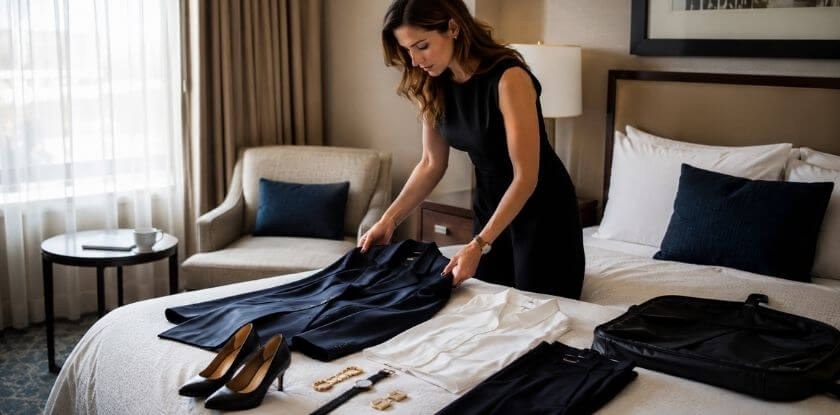
For corporate conferences, keynote speakers should usually wear business professional or polished business casual attire. Strong choices include a suit, blazer, dress shirt, blouse, structured dress, dress trousers, polished shoes, and minimal accessories.
Corporate audiences often include executives, managers, entrepreneurs, investors, and decision-makers. You may not always need a full suit, but your clothing should feel neat and intentional.
Academic and Research Conferences
For academic and research conferences, choose professional, modest, and comfortable clothing. A blazer with trousers, a button-down shirt, or a sweater over structured layers can work well.
Academic events may include long sessions, Q&A, panels, and networking, so pick pieces that let you sit, stand, and walk without constant adjustment. Avoid overly casual clothing and loud patterns.
Technology and Startup Events
For technology and startup events, smart casual clothing is often acceptable if it still looks sharp. Good options include a blazer with a clean T-shirt, dark jeans with a button-down shirt, chinos, minimalist sneakers, loafers, boots, a simple dress, or a modern jumpsuit.
Tech audiences often value practicality and authenticity, but casual should not mean careless. Avoid wrinkled shirts, worn-out shoes, and oversized hoodies.
Creative, Design, or Arts Events
For creative events, keynote speakers can use more color, texture, and personal style while staying polished. A statement blazer, distinctive dress, artistic accessory, bold color, or interesting silhouette can work well.
The key is control. One memorable element is usually stronger than several competing details, and your outfit should not become more memorable than your message.
Healthcare, Finance, or Government Events
For healthcare, finance, or government events, choose conservative, structured, and professional clothing. A well-fitted suit, blazer, professional dress, formal trousers, closed-toe shoes, and subtle accessories are safe choices.
These settings value trust, responsibility, and seriousness. Avoid anything flashy, revealing, experimental, or too casual.
Mixed-Audience Conferences
For mixed-audience conferences, choose a balanced outfit that feels professional and approachable. Business casual or smart professional attire usually works best, such as a blazer, trousers, a neat dress, or a structured top.
Avoid dressing for only one part of the audience. The best choice sits in the middle: confident, respectful, and easy to connect with.
Common Dress Codes for Keynote Speakers
Common dress codes for keynote speakers are business professional, business casual, smart casual, and semi-formal or formal. Knowing these categories helps you choose the right level of polish. They are general guidance, not fixed rules, so a dress code from the organizer always comes first.

Business Professional
Business professional attire is best for formal corporate, finance, healthcare, government, legal, academic, and executive-level events. A classic version is a suit, dress shirt, tie, dress shoes, and a matching belt. Another is a suit, a blazer with trousers or skirt, a professional dress, or a blouse, with polished heels, flats, loafers, or boots.
Neutral and deep colors such as navy, charcoal, black, gray, cream, and dark brown usually work well. Keep accessories simple.
Business Casual
Business casual is polished but less formal than a full suit. It suits many conferences, seminars, education events, leadership workshops, and networking programs.
It may include a blazer, dress trousers, chinos, a blouse, a button-down shirt, a knit top, a modest dress, a skirt, loafers, flats, or boots. The outfit should still look intentional, not relaxed in a careless way.
Smart Casual
Smart casual is clean, modern, and flexible. It works especially well for technology, startup, creative, marketing, and innovation events.
Think dark jeans, chinos, a blazer, a simple top, a smart sweater, boots, loafers, polished sneakers, or a simple dress with structured layers. Avoid faded denim, graphic T-shirts, athletic wear, and worn-out shoes unless the event clearly supports that style.
Semi-Formal or Formal Attire
Semi-formal and formal attire suit evening keynotes, award ceremonies, gala-style programs, and prestigious conference events. Semi-formal may include a dark suit, cocktail dress, elegant jumpsuit, or dressy separates. Black-tie may require a tuxedo, formal gown, or high-end formal separates.
Formal clothing can limit movement, so rehearse in the full outfit before the event.
Outfit Ideas for Male Keynote Speakers
Male keynote speakers should choose outfits that fit well, match the event, and look intentional from head to toe.
For a business professional keynote, a reliable choice is a navy, charcoal, black, or dark gray suit with a crisp dress shirt, dress shoes, a matching belt, and a simple watch. A tie suits formal or traditional events.
For business casual, wear a blazer or sport coat with dress trousers or chinos and a button-down shirt, knit polo, or refined sweater, finished with loafers, brogues, Chelsea boots, or clean dress shoes. A blazer is often the easiest way to look speaker-ready without a full suit.
For smart casual, try a blazer with a clean T-shirt, dark jeans with a button-down shirt, chinos with a minimalist jacket, or a fine sweater with structured trousers. Clean sneakers can work at tech or startup events when they look fresh and intentional.
For creative or brand-focused events, one standout element can help: a signature blazer, bold color, distinctive shoes, a patterned shirt, or unique frames. Keep the rest of the outfit simple.
Shoes and accessories matter. Formal events call for polished dress shoes, business casual works with loafers, brogues, or boots, and smart casual may allow minimalist sneakers. Avoid bulky pockets, noisy accessories, worn shoes, and mismatched details.
Outfit Ideas for Female Keynote Speakers
Female keynote speakers should choose outfits that feel professional, comfortable, stage-ready, and in tune with the event.
For a business professional keynote, strong options include a pantsuit, skirt suit, blazer with dress trousers, structured dress with a jacket, or a blouse with a pencil skirt, finished with polished closed-toe shoes. Navy, black, charcoal, beige, cream, burgundy, or forest green often work well.

For business casual, consider a blazer with trousers, a midi dress with a structured jacket, a refined knit top with a skirt or dress pants, a blouse with wide-leg trousers, or a smart jumpsuit. Flats, loafers, block heels, ankle boots, or low heels are practical for standing and walking.
For smart casual events, a blazer with dark jeans, a simple dress with boots, trousers with a modern top, a polished jumpsuit, or a clean sweater with structured pants can work. Minimalist sneakers may suit relaxed tech or creative events if styled carefully.
For creative or brand-focused keynotes, one memorable detail can strengthen your presence: a bold blazer, signature color, statement necklace, distinctive shoes, patterned scarf, artistic earrings, or unique dress shape. Keep the base of the outfit clean.
Shoes and accessories should support movement and the microphone setup. Avoid noisy bracelets, earrings that hit a headset mic, necklaces that rub against a lapel mic, loose scarves, slippery shoes, and heels that hurt over a long session.
How to Match Your Outfit With Your Speaking Topic
Your outfit should match the subject of your keynote, because clothing can reinforce the tone and emotion of the talk. The audience should not feel a gap between what you say and how you appear.
Leadership, Business, and Finance Topics
For leadership, business, and finance topics, choose structured and polished clothing. These subjects involve trust, strategy, and decision-making, so a suit, blazer, dress shirt, blouse, or business dress supports the message.
Navy, charcoal, and gray suit these rooms. Add personality through one controlled detail, such as a tie, scarf, pocket square, brooch, or watch.
Technology and Innovation Topics
For technology and innovation topics, your outfit can look modern, clean, and slightly relaxed. Smart casual or polished business casual often works well. Choose clean lines, simple layers, solid colors, and pieces that allow easy movement, especially if you are running a demo or slides.
Education, Research, and Academic Topics
For education, research, and academic topics, choose clothing that feels credible, respectful, and practical. Structured cardigans, blouses, professional dresses, and suit separates also suit these rooms. The focus should be on knowledge and clarity, not flashiness.
Creative, Motivational, or Personal Branding Topics
For creative, motivational, or personal branding topics, you can show more individuality. A bold blazer, distinctive dress, colorful scarf, statement shoes, or signature color can make you memorable. Use one or two expressive elements rather than letting every item compete.
Social Impact, Healthcare, and Community Topics
For social impact, healthcare, and community topics, choose clothing that feels trustworthy and approachable. A blazer with softer styling, professional dress, separates, a neat shirt or blouse, and comfortable, polished shoes create a respectful and sincere impression.
Colors, Patterns, and Fabrics That Work Well on Stage
The best colors, patterns, and fabrics look clear under lights, support your authority, and do not distract from your face or message.
Solid colors are usually safest. Navy, charcoal, black, gray, cream, burgundy, forest green, and deep blue often look polished. Dark colors feel formal and authoritative, lighter colors feel open and approachable, and bright colors work if they match your brand and you use them carefully. Ohio University’s on-camera guide advises against large areas of black or white and against large areas of red or similar highly saturated colors, and it asks for clothing that gives a lavalier microphone a place to clip.
Also think about the stage behind you. A black suit disappears against a black set, so ask the organizer what the backdrop looks like and choose a color that separates you from it. A signature color can make you recognizable. Use it in a jacket, scarf, tie, dress, shoes, glasses, or accessory, as long as it feels connected to your brand and not forced.
Avoid tiny stripes, dense checks, high-contrast prints, and overly detailed patterns, especially if the keynote will be recorded or projected on a large screen. Fine patterns can shimmer on video, a flicker known as moiré. If you wear a pattern, keep the rest of the outfit calm.
Choose fabrics that hold their shape, resist wrinkles, and avoid excessive shine. Structured cotton blends, wool blends, crepe, ponte, matte suiting fabric, and fine knits often work well. Be careful with thin linen, shiny satin, sheer fabrics, clingy materials, and fabrics that show sweat quickly. Choose opaque fabric, because some thin materials look see-through under stage lights.
| Element | Works well | Better to avoid |
| Color | Solid navy, charcoal, gray, cream, burgundy, deep green | Large areas of pure white or black, very saturated reds |
| Stage backdrop | A color that separates you from the set | A black suit on a black stage, or a shade that matches the backdrop |
| Pattern | Solids, or one calm pattern with a plain base | Tiny stripes, dense checks, high-contrast prints |
| Fabric | Matte wool blends, structured cotton, crepe, ponte, fine knits | Shiny satin, thin linen, sheer or clingy cloth |
| Microphone | Jacket lapel, shirt placket, a belt or pocket for the pack | Crew necks, dangling jewelry, loose scarves |
What Keynote Speakers Should Avoid Wearing
Avoid anything that distracts the audience, weakens credibility, creates discomfort, or makes stage movement difficult.
Skip clothing and accessories that pull attention away from your face and message: oversized logos, flashy jewelry, clashing colors, extremely busy prints, reflective fabrics, large hats indoors, novelty clothing, or accessories that move constantly.
Poor fit is another distraction. Avoid jackets that pull, trousers that drag, sleeves that cover the hands, dresses that ride up, shirts that gap, and shoes that hurt.
Noisy jewelry and shoes can interfere with microphones. Avoid bangles, chains, loose bracelets, heavy necklaces, squeaky shoes, and loud heels if the sound system may amplify them.
Also avoid overly casual clothing at formal events. Gym wear, flip-flops, wrinkled T-shirts, faded jeans, hoodies, shorts, and worn-out sneakers can make a keynote speaker seem unprepared unless the event clearly encourages that style. Finally, avoid outfits that clash with your topic: a flashy outfit feels wrong for a serious healthcare discussion, and a very casual one does not support an executive leadership talk.
Practical Tips Before the Event Day
Before the event day, test your outfit for comfort, movement, microphone setup, weather, travel, and backup needs. A choice that looks good at home can behave differently under lights or after hours of travel.
- Test the full outfit in real movement: Walk, sit, stand, raise your arms, gesture, climb steps, and bend slightly as you might during the keynote. If anything pulls, shifts, or needs constant adjustment, fix it before the event.
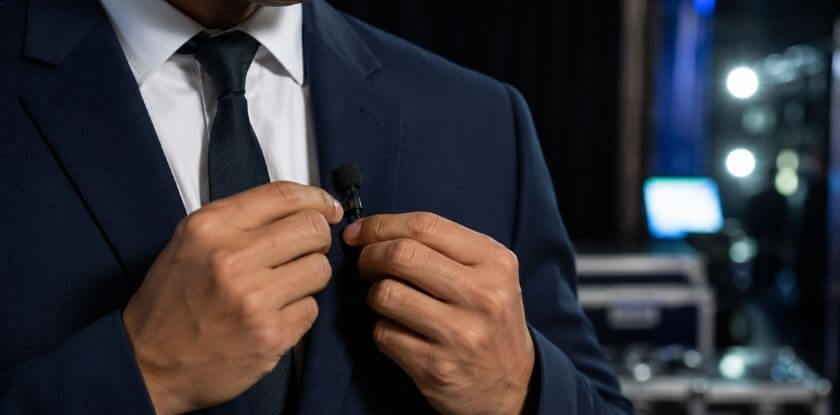
- Check microphone placement early: A lapel microphone needs a stable edge, such as a jacket lapel, shirt placket, blouse edge, or structured neckline. T-shirts and crew necks leave nowhere to clip it, and nothing should cover or brush against the microphone, because that can muffle the sound and add noise. With a headset mic, avoid earrings, collars, scarves, or hairstyles that may rub against it.
- Plan where the transmitter pack will go: Some outfits have no waistband, pocket, or belt to hold the pack. If so, ask the organizer or production team about the best setup before you arrive.
- Prepare for travel and wrinkles: Use a garment bag for suits, dresses, and blazers. Pack delicate items carefully and allow time for steaming or pressing.
- Dress for the venue temperature: Conference rooms can be cold, warm, or heavily air-conditioned. Bring a professional layer, such as a blazer, cardigan, coat, or scarf.
- Bring a small backup kit and a second option: The Backup Essentials list in the checklist below covers what to pack. A second outfit lets you choose once you see the stage, the lighting, and what the audience is wearing. Wear any new piece at least once before the day.
- Confirm details with the organizer: Ask what speakers usually wear, whether the keynote will be filmed, what the stage background looks like, what microphone will be used, and whether there is a reception or dinner afterward.
- Pack your keynote outfit safely: For important events, keep essential clothing in carry-on luggage so delayed checked baggage cannot leave you without your main outfit.
From our experience at MS International: All of our conferences are held in person at venues in the Greater Toronto Area. Check-in time is stated in your confirmation email, and your speaker confirmation and final conference programme are the official sources for your schedule, because presentation lengths may vary. Meet the session coordinator or moderator before you present to confirm your room, speaking time, and technical setup, which includes the microphone. Keynote and invited-speaker roles are arranged separately with the organizing team, and speakers cover their own travel, accommodation, visa, transportation, and personal expenses unless MS International has agreed otherwise in writing.
Keynote Speaker Outfit Checklist
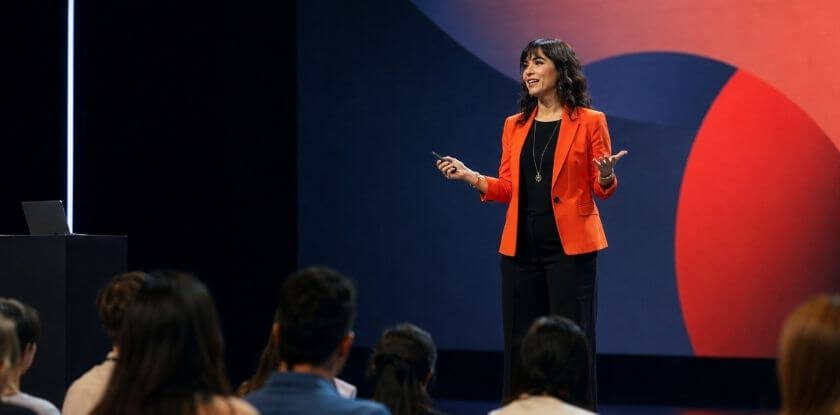
Use this checklist to confirm that your clothing is professional, comfortable, on brand, and stage-ready.
Fit and Comfort
- Clothing fits without pulling, gaping, or bunching.
- Movement feels easy in every position.
- Shoes are stable and already broken in.
- Nothing needs constant adjustment.
Professional Appearance
- Clothing is clean, pressed, and free of wrinkles.
- Shoes are polished or clean.
- Buttons, zippers, seams, and hems are secure.
- Accessories are simple, and pockets are not bulky.
- Grooming looks neat and stage-ready.
Brand Alignment
- The outfit matches your keynote topic, the industry, and the audience.
- It reflects how you want to be remembered and feels authentic.
- There is one clear style direction.
Stage and Camera Readiness
- Colors contrast with the stage background.
- Patterns are not too busy, and fabrics are not overly shiny or transparent.
- The outfit works with the microphone.
- Accessories and shoes do not create noise.
- Nothing distracts from your face, gestures, or slides.
Backup Essentials
- Extra shirt, blouse, top, or tie
- Lint roller
- Safety pins
- Stain remover pen
- Small sewing kit
- Wrinkle-release spray or travel steamer
- Extra socks, hosiery, or insoles
- Backup shoes if needed
- Breath mints and grooming items
FAQs About What to Wear as a Keynote Speaker
Suit or jeans, bold color or neutral, and a different outfit for a virtual keynote: speakers deciding what to wear tend to start there, plus whether to dress above the audience.
Should a Keynote Speaker Wear a Suit?
It depends on the event. A suit is the safest choice at formal, corporate, finance, healthcare, legal, or government events. At relaxed technology or creative events, a blazer with smart trousers is usually enough.
Can a Keynote Speaker Wear Jeans?
Only at relaxed events, such as startup, technology, creative, or smart casual ones. Choose dark, clean, well-fitted jeans and pair them with a blazer, structured top, or professional shoes. At formal events, wear trousers instead.
What Color Should a Keynote Speaker Wear?
Choose a solid color that stands out from the stage backdrop and suits the event. Navy, charcoal, gray, cream, burgundy, and deep green usually work well. Avoid a color that matches the backdrop, and avoid large areas of pure white or black if you will be filmed.
Should Keynote Speakers Dress Better Than the Audience?
Yes, but only slightly, about one step above the audience. A little more polish shows respect for the role without creating distance. If most attendees wear suits, wear a suit; if they are relaxed, a blazer is enough.
What Should a Keynote Speaker Avoid Wearing?
Avoid distracting patterns, noisy jewelry, wrinkled clothing, poor fit, uncomfortable shoes, and overly casual items. Clothing should keep attention on the speech, not the outfit.
How Should I Dress for a Virtual Keynote Speech?
Dress fully, but pay most attention to the top half: a collared shirt or blazer in a solid mid-tone color that contrasts with your background. Avoid tiny patterns, shiny fabrics, very bright whites, and noisy accessories, and test the outfit on camera first. MS International conferences are held in person, so this applies to other organizers’ online events.
Final Thoughts on Dressing as a Keynote Speaker
What to wear as a keynote speaker depends on the event, audience, topic, and dress code. The best outfit is not simply the most formal one. It helps you look prepared, feel confident, and keep attention on your message.
For formal business, finance, healthcare, government, or academic conferences, business professional attire is usually safest. For technology, startup, creative, or mixed-audience events, business casual or smart casual may fit better. Test the outfit, check the microphone setup, and pack backups, then focus on the talk.