
Many people assume a Canada invitation letter is something you buy, which makes the cost a source of real confusion. The honest picture is a little more mixed than a single price.
Quick answer: A Canada invitation letter usually costs nothing when a genuine host in Canada writes it, because the government does not sell invitation letters. Related costs can still apply: notarization, translation, conference registration, the CAD 100 visitor visa fee and the CAD 85 biometrics fee. At MS International, the conference letter comes with eligible registration and a notarized one is US$100.
Fact-checked by the MS International Editorial Team. Last verified against official sources: October 2026.
Canada Invitation Letter Cost Breakdown
The letter itself is only one line in the budget. This is where money is actually spent, from a host’s letter to a notarized conference letter.
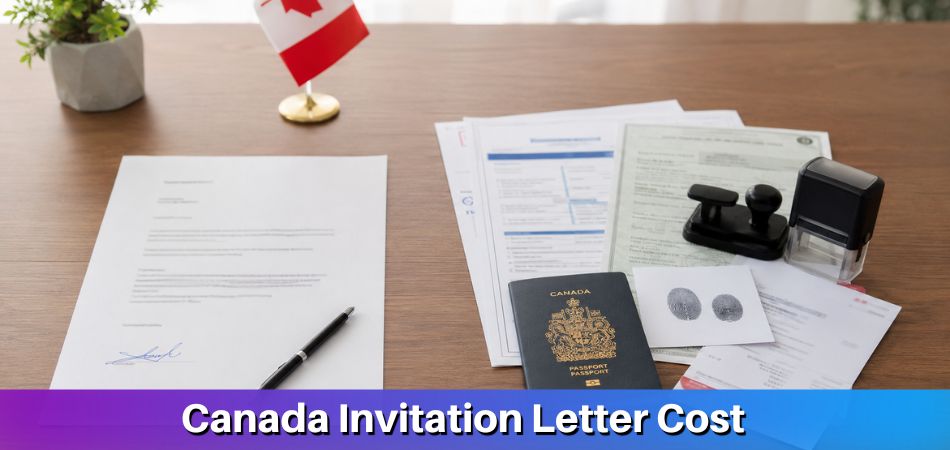
Here is the practical cost breakdown:
| Item | Typical Cost Status |
| Basic invitation letter from family or friend | Usually free |
| Business invitation letter from a Canadian company | Usually free |
| Conference invitation letter | Often tied to registration or event policy |
| Notarized invitation letter | Paid if notarization is required |
| Translation | Paid if documents are not in English or French |
| Lawyer, consultant, or document service | Optional paid support |
| Canada visitor visa fee | CAD 100 per person, separate government fee |
| Biometrics fee | CAD 85 per person, CAD 170 maximum for a family, separate government fee |
A paid invitation letter does not guarantee visa approval. A visa officer reviews the complete application, including the purpose of travel, financial ability, home-country ties, travel history and overall credibility.
Is There an Official Government Fee for a Canada Invitation Letter?
The government charges nothing for a regular invitation letter, because it does not issue them for applicants. The host writes the letter and sends it to the visitor, who includes it with the visa application.
The government fees belong to the visa itself. The visitor visa costs CAD 100 per person, with a family maximum of CAD 500 for five or more people applying together. Biometrics cost CAD 85 per person, up to CAD 170 for a family of two or more. IRCC says first-time applicants using the IRCC portal pay the biometrics fee when they submit the application, unless they are exempt. Biometrics stay valid for 10 years, even if an application is refused, so a repeat applicant within that window generally does not give them again. The applicant normally pays these fees, although a host may choose to help privately.
Some travellers do not need a visa at all: since 26 May 2026, some citizens of Indonesia and Malaysia who meet IRCC’s requirements can apply for an eTA instead to fly to Canada.
A free letter therefore does not make the whole process free. It only means the host is not charging for the supporting document.
When Can a Canada Invitation Letter Cost Money?
A Canada invitation letter can cost money when it needs services beyond writing and signing. The usual paid situations are notarization, translation, event administration and professional help.

Notarization Cost
A notary public charges to verify the signer’s identity and witness the signature. The price depends on location, provider, urgency, number of pages and extra copies. At MS International, a notarized invitation letter is a flat US$100 and takes up to 10 business days. Whether you need notarization at all is covered in the notarization section below.
Conference or Event Fees
Many organizers issue letters only to confirmed participants, speakers, presenters or delegates, so payment of registration may come first. The cost is usually part of registration, administration or document processing rather than a separate fee. Before paying, check that the event is genuine, what the refund policy says, and whether the letter includes enough detail for visa purposes. At MS International the standard letter is free for registered participants, but registration and document fees are non-refundable, including after a visa refusal or delay, so budget for that risk before you pay.
Translation Fees
Documents not in English or French may need translation. The price depends on the language, length, urgency and whether certified translation is needed. Proof of relationship, marriage certificates, business records, employment letters and event documents are the usual ones.
Professional Writing or Review
Some people pay a document service, regulated consultant or immigration lawyer to draft or review the letter or the full application. This can help after a previous refusal, with complicated finances, an unclear travel purpose or business travel. It is optional for most applicants, and for a simple family or friend visit an honest letter from the host is often enough. If you pay anyone for help with the application itself, IRCC says that person must be a lawyer or paralegal in good standing with a Canadian law society, a Quebec notary, or a consultant in good standing with the College of Immigration and Citizenship Consultants. Unpaid help from family or friends is allowed, and IRCC may return or refuse an application handled by an unauthorized paid representative. Courier fees may also apply if originals are sent abroad.
Canada Invitation Letter Cost by Purpose
The cost of a Canada invitation letter depends on who writes it and which extra services you need, as this table shows.
| Purpose | Letter Cost | Possible Extra Costs |
| Family visit | Usually free | Notary, translation, courier |
| Friend visit | Usually free | Notary, document review |
| Business visit | Usually free from company | Admin processing, legal review |
| Conference visit | Often tied to registration | Registration, admin fee |
| Institutional visit | Usually policy-based | Processing, courier, translation |
| Notarized letter | Paid if notary charges | Notary fee, extra copies |
A business company usually issues its letter without a charge, but internal admin, legal review or courier costs may apply depending on its process. Conference organizers differ: some include the letter in registration, while others charge an administrative fee or require full payment first, so confirm the event’s letter policy before paying.
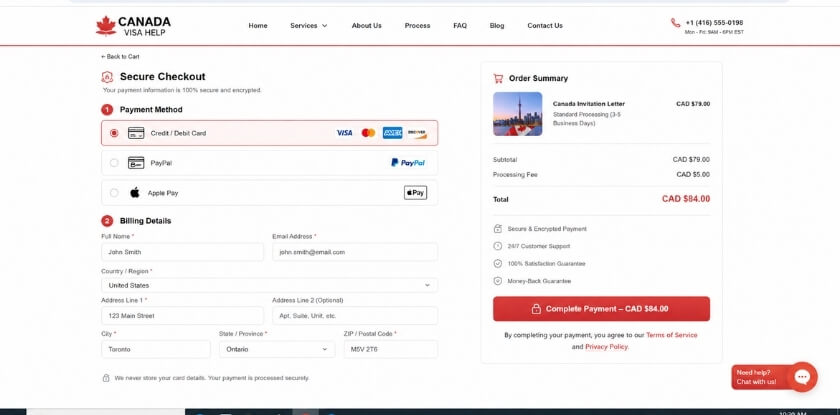
Free vs Paid Canada Invitation Letter Services
A free Canada invitation letter is usually enough when the host is genuine and the visit is simple. Paid services help in complex cases but are not required for everyone.
When a Free Letter Is Enough
A free letter works when the purpose is simple, the host knows the visitor personally, the relationship and dates are clear, and no notarization or translation is requested. A short honest letter is often better than a long generic paid one.
When Paid Help May Be Useful
Paid help may be worth it when:
- The applicant had a previous refusal
- The host is offering financial support
- Several visitors apply together
- Business or conference documents need careful wording or verification
- Translation or notarization is requested
Paid support should improve clarity and organization. It should never create false information.
How to Avoid Overpaying
First confirm that you need a letter at all. If you are staying with a relative, friend, business contact or event organizer, it helps. If you are travelling only as a tourist with hotel bookings, it may not be needed. Use a genuine host instead of paying an unknown provider, and check whether notarization, translation or courier delivery is truly required. Avoid anyone selling “guaranteed” letters, fake conference documents, unknown Canadian hosts or fake business letters. A fake letter can damage your credibility with the visa officer. Before paying any event or service fee, read the refund policy and processing time.
Does a Canada Invitation Letter Need to Be Notarized?
Not always. A regular signed letter from the host is often enough for a Canada invitation letter. IRCC’s guidance for business invitation letters says some visa offices may need these letters to be notarized, so notarization is needed mainly when your visa office asks for it, and it never guarantees approval.
A notarized letter only confirms that the host signed in front of a notary. It does not turn the letter into a government document. Notarization may also be worth the cost when:
- The host is giving financial support
- The visitor will stay at the host’s home
- The applicant had a previous refusal
- The relationship needs more support
A regular letter can still be strong if it is complete and matches the application. The visa officer decides how much weight any letter gets, so confirm with the Canadian visa office that handles your application before paying for notarization.
What a Canada Invitation Letter Means
A Canada invitation letter is a written statement from a host in Canada inviting someone to visit. It says who the visitor and host are, why the visitor is coming, how long they will stay, where they will stay and who covers the costs.
It is not a visa and gives no automatic entry. It does not replace financial documents, employment proof, travel history or evidence that you will leave Canada after the trip. It is one supporting document, and it should be truthful, specific and consistent with the rest of the application.
Not every visitor needs one. A tourist staying in hotels can rely on bookings, an itinerary and financial documents. A letter is most useful for family visits, friend visits, business meetings, conferences, workshops and academic or community events, where a host or event is part of the trip.
Who Can Provide a Canada Invitation Letter?
A Canada invitation letter can be provided by any genuine host in Canada with a real family, friendship, business, event or organizational reason to invite you.

- Family members and friends: the letter should explain the relationship, how long they have known each other, dates, accommodation and support. It should not sound generic.
- Canadian companies: use letterhead, and include the company name, address, contact person, the visitor’s role, business purpose, dates and who pays. A business visitor is not a foreign worker, so describe temporary business activities only.
- Conference organizers: include event name, dates, venue, participant role, registration status and a contact for verification. Mention a paper or talk if the applicant is presenting. Delegates who attend a Canadian conference as business visitors then apply for a visitor visa or an eTA, depending on their passport, and that letter is their main evidence of purpose.
- Universities, associations and community groups: explain the purpose of the visit, give official contact details and connect the visitor clearly to the activity.
What Details Should Be Included in a Canada Invitation Letter?
A Canada invitation letter should cover the host, the visitor, the purpose, the stay, accommodation, money and the relationship, and it should match the visa application.
| Detail | What to Include |
| Host information | Name, address, phone, email, status in Canada |
| Visitor information | Name, date of birth, address, passport details |
| Purpose | Family visit, tourism, business, conference, event |
| Stay period | Planned arrival and departure dates |
| Accommodation | Host address, hotel, or event-arranged stay |
| Financial support | Who pays for travel, stay, food, and local costs |
| Relationship | Family, friend, business, event, or institution link |
| Signature | Host signature and date |
Names must match the passport exactly, and a family travelling together can be listed in one letter. Specific reasons beat vague ones: “to attend my sister’s wedding in Calgary from July 8 to July 15” is clearer than “to visit Canada.” If the host promises financial support, they should be ready to prove it. Useful attachments are proof of status in Canada, proof of address, proof of relationship, conference registration or an event program.
How Long Does It Take to Get a Canada Invitation Letter?
A Canada invitation letter can often be prepared within a few days, but the timeline depends on the host, the purpose and any notarization.

A family or friend letter is usually fastest. A business or conference letter may need company approval, registration confirmation or organizer verification. Missing passport details, unclear dates, missing proof of status and corrections slow it down. At MS International, the conference letter is issued within 3 to 5 business days after payment clears. Request any letter early so there is time to fix mistakes.
Canada Invitation Letter Templates by Purpose
A Canada invitation letter template helps with structure, but customize it so it matches your real purpose, dates, relationship, accommodation and financial plan.
Family Visit Invitation Letter Template
Subject: Invitation Letter for [Visitor’s Full Name]
To the Visa Officer,
I, [Host’s Full Name], living at [Full Address in Canada], invite my [relationship], [Visitor’s Full Name], to visit me in Canada from [Arrival Date] to [Departure Date].
I am a [Canadian citizen/permanent resident/work permit holder/study permit holder/other status]. My phone number is [Phone Number], and my email address is [Email Address].
The purpose of the visit is [family visit, wedding, graduation, holiday, or other reason]. During the stay, [Visitor’s Name] will stay at [address or accommodation]. Expenses will be covered by [visitor/host/both].
I have included supporting documents, such as [proof of status, proof of address, proof of relationship, or financial documents if applicable].
Sincerely,
[Signature]
[Printed Name]
[Date]
Business Visit Invitation Letter Template
Subject: Business Invitation Letter for [Visitor’s Full Name]
To the Visa Officer,
On behalf of [Canadian Company Name], I invite [Visitor’s Full Name], [Job Title] at [Visitor’s Company], to visit Canada for [business meetings/training/site visit/trade event] from [Start Date] to [End Date].
The visit will take place in [City, Province] and will involve [brief description of business activities]. Accommodation and expenses will be covered by [visitor/company/host/sponsor].
Our company details are:
- Company: [Company Name]
- Address: [Company Address]
- Contact person: [Name and Position]
- Phone/Email: [Contact Details]
Sincerely,
[Authorized Name]
[Position]
[Company Name]
[Signature and Date]
Conference Invitation Letter Template
Subject: Invitation Letter for Conference Participation
To the Visa Officer,
On behalf of [Organizer Name], we invite [Participant’s Full Name] to attend [Conference Name] in [City, Province, Canada] from [Start Date] to [End Date].
The participant is registered as a [attendee/presenter/speaker/panelist/delegate]. If applicable, the presentation title is [Title]. The event will be held at [Venue Name and Address].
Travel and accommodation expenses will be covered by [participant/sponsor/organization]. For verification, please contact [Contact Person] at [Phone/Email].
Sincerely,
[Authorized Name]
[Position]
[Organization Name]
[Signature and Date]
Common Mistakes to Avoid
A Canada invitation letter becomes weak when it is incomplete, vague or inconsistent. The biggest mistakes are:
- Missing details or wrong passport information
- Travel dates that do not match the application
- Unsupported financial promises
- Generic wording copied straight from a template
- Confusing the invitation letter cost with the visa fee
- Using fake or unverifiable hosts
The most important rule is consistency. The letter, visa form, travel plan, financial proof, leave letter and registration documents should all tell the same story.
From our experience at MS International: check your name and passport details against your passport before you submit, because a correction after the letter is issued carries a US$50 fee. If you need a notarized copy, request it at the same time, because it is a separate request that takes up to 10 business days.
FAQs About Canada Invitation Letter Cost
Wondering what a Canada invitation letter costs? The money side covers notarization fees and who pays them, organizer charges, and whether the letter fee is separate from the visa fee.
Is a Canada invitation letter free?
Yes. A Canada invitation letter is usually free when written by a genuine host, such as a family member, friend, company or organization in Canada. Extra services like notarization or translation may cost money.
Can someone charge for writing an invitation letter?
Yes, for related services. Notaries, translators and event organizers may charge, but only a lawyer, Quebec notary or licensed consultant may charge for immigration help. The letter itself is not a paid government document.
Is notarization mandatory?
No. Notarization is not always mandatory. IRCC says only some visa offices may need a notarized letter, so ask yours; many applications use a regular signed letter.
Who pays for notarization?
The host usually arranges it in Canada, and the host and visitor decide who pays. It is a private cost, not a government fee.
Do conference organizers charge for invitation letters?
Some do. A conference invitation letter may be issued only after registration, payment or verification. At MS International it comes with eligible registration at no separate charge. Always check the event policy first.
How much is a notarized invitation letter from MS International?
It is a flat US$100, processed in up to 10 business days. The fee covers preparation, review and notarization support, excludes visa fees and is non-refundable once submitted.
Is the invitation letter fee the same as the visa fee?
No. A host’s letter has no government fee, while the visitor visa fee is CAD 100 and the biometrics fee CAD 85 per person. Both are paid to IRCC, separately from any letter.
Can I prepare a Canada invitation letter without an agent?
Yes. A host can prepare the letter without an agent if the information is complete, accurate and clearly written.
Does an invitation letter guarantee visa approval?
No. A Canada invitation letter does not guarantee approval. The visa officer reviews the entire application before deciding.
Final Summary: How Much Should You Expect to Pay?
A Canada invitation letter usually costs nothing when written by a genuine host. Costs appear only with extra services such as notarization, translation, professional review, conference registration or courier delivery, and they are separate from the CAD 100 visa fee and CAD 85 biometrics fee.
Get a real letter from a real host, keep the purpose specific, match it to your application and avoid guaranteed-letter services. Its value comes from credibility, not from how much money is paid for it.
Disclaimer: This article is general information, not legal or immigration advice. Fees and rules can change, so check the IRCC website or a regulated immigration professional before you apply.