
Anyone planning a trip to Canada from the Philippines soon asks when they should book flights, pay deposits or tell their employer. The waiting time is the one detail that shapes every other plan, and it is rarely the same for two people.
Quick answer: A Canadian visitor visa from the Philippines usually takes a few weeks, and recent IRCC figures for the Philippines have been around three weeks. Study and work permits take several weeks, and super visas several months. Permanent residence takes months. The numbers change weekly, and some Filipinos can skip the visa with a CAD 7 eTA. Check IRCC’s processing times tool for your application type before you plan.
Fact-checked by the MS International Editorial Team. Last verified against official sources: October 2026.
How long you wait depends mostly on the type of application. A visitor visa is the quickest. Study and work permits take longer, and permanent residence takes the longest because the checks go deeper. Your own file matters too: complete documents, fast biometrics and quick replies to IRCC keep it moving.
Canada Visa Processing Times from the Philippines by Category
Each application type is reviewed differently, so each has its own timeline. A short visit gets lighter checks than study, work or permanent residence.
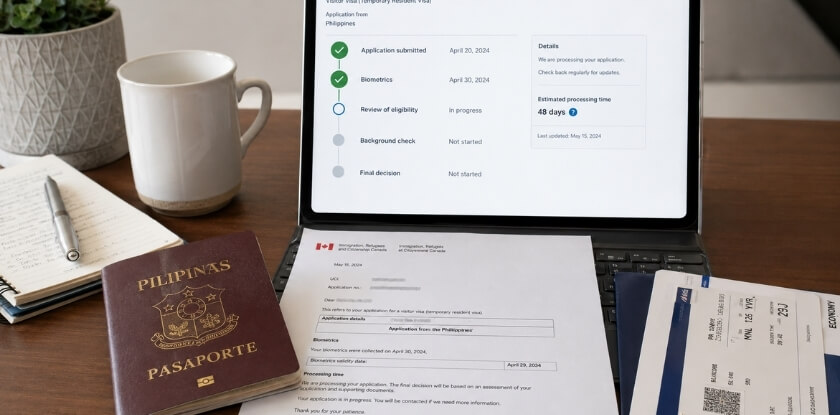
Average Timeline by Visa Type
| Application type | Recent guide (Philippines) | IRCC service standard |
| Visitor visa | About 3 weeks | 14 days (outside Canada) |
| Study permit | Several weeks | 60 days (outside Canada) |
| Work permit | Several weeks | 60 days (outside Canada) |
| Super visa | Several months | 112 days |
| Permanent residence | Months, depends on the program | Varies by program |
IRCC updates these figures roughly every week, and the Philippines numbers move by days or even a week between updates. The middle column is a rounded guide based on recent IRCC figures for the Philippines as reported by immigration news trackers. The right column is the service standard, which is IRCC’s commitment under normal circumstances and is not updated regularly. Treat both as guides and check the live tool before you book anything.
Why Processing Times Are Only Estimates
IRCC shows how long it expects an application to take if it arrived today. The historical figure is how long IRCC took to process 80% of that type of application, so it is not a maximum or a guarantee. The clock starts when IRCC receives your complete application. Your own case can be faster or slower than that, and the factors are listed in the next section.
Visitor Visa Processing Time
A visitor visa covers tourism, family visits, short business trips and conferences. There is no separate conference visa. The government fee is CAD 100 per person, plus CAD 85 for biometrics.
The review still takes longer when the officer is unsure why you are travelling, how you will pay, or whether you will return home. An invitation letter, a clear itinerary, proof of work and bank statements answer those questions.
Faster Option for Some Filipinos: The eTA
Some Filipinos who fly to Canada do not need a visitor visa at all. The Philippines is on IRCC’s list of visa-required countries whose citizens can apply for an eTA instead, if they meet all three conditions: they have held a Canadian visitor visa in the past 10 years or hold a valid US non-immigrant visa, they are coming for a temporary stay, and they are flying in on a valid Philippine passport. The US visa must be valid on the day you apply, not on the day you travel. The eTA costs CAD 7, and most applications are approved within minutes. If IRCC needs documents, it emails instructions within 72 hours. Arriving by car, bus, train or boat still needs a visitor visa.
Study Permit Processing Time
A study permit is for a designated learning institution. The officer checks your acceptance letter, your funds and your study plan. Apply as soon as you have the acceptance letter. A late decision can cost you the start date and your housing.
Work Permit Processing Time
A work permit depends on the permit type and the employer’s paperwork. A job offer, employer compliance steps or a Labour Market Impact Assessment can all add time. A missing or unclear employer document slows the file down.
Super Visa Processing Time
The super visa is for parents and grandparents of Canadian citizens or permanent residents. It allows longer stays than a regular visitor visa. You need proof of the family relationship, financial support from the child or grandchild in Canada, and Canadian medical insurance. A medical exam is also part of the process and affects the total wait.
Permanent Residence Processing Time
Permanent residence takes the longest. Express Entry, family sponsorship and provincial nominee programs each follow their own timeline, so check the tool for your program. Inconsistent documents are a common reason for extra review.
What Affects Canadian Visa Processing Time for Filipino Applicants?
Application type, document quality, biometrics, medical checks and IRCC’s workload all change the wait. Two people applying for the same visa on the same day may still hear back at different times.
Completeness and Accuracy of Documents
Missing files, blurry scans, wrong dates and mismatched details force IRCC to ask for more, and every request adds days.
Biometrics Appointment Timing
Most applicants give fingerprints and a photo. After you receive the biometrics instruction letter, you have 30 days to give them. IRCC cannot finish certain steps until it receives them, and the time you take to give them counts inside the processing time, so a late appointment lengthens your own wait. Biometrics stay valid for 10 years.
Medical Exam Requirements
A medical exam is required for some applications, especially longer stays, certain jobs and permanent residence. The wait then depends on how soon you see a panel physician and how fast the results reach IRCC.
Background, Security, and Eligibility Checks
IRCC may review your identity, travel history, criminal record and past refusals. These checks are routine, but they do not finish at the same speed for everyone.
Seasonal Application Volume
Holiday travel, school intakes and busy conference seasons can slow processing. Applying early is the only real protection.
Requests for Additional Documents
IRCC may ask for updated bank statements, a clearer passport copy or proof of your travel purpose. The request appears in your online account, with a deadline. Reply on time and send exactly what was asked. Missing the deadline can lead to refusal.
How to Avoid Delays in a Canadian Visa Application from the Philippines
Submit a complete, accurate and well-organised application the first time. Most avoidable delays come from missing documents, unclear scans, late biometrics and slow replies to IRCC.
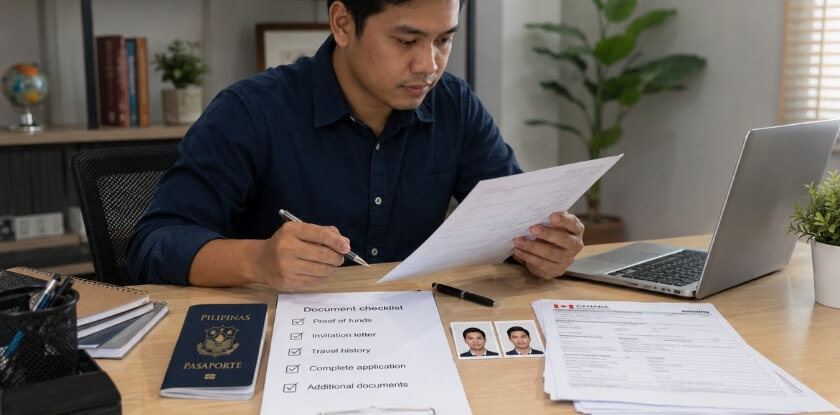
Submit a Complete Application the First Time
Use the document checklist for your exact application type, because a visitor visa and a work permit need different papers. Common items are:
- a valid passport and completed forms;
- proof of funds and travel history;
- an invitation letter, if you have one;
- a school acceptance letter for a study permit;
- a job offer or employer documents for a work permit;
- proof of the family relationship for a super visa.
Check Personal Details Carefully
Check your name, date of birth, passport number, address and travel dates before you submit. One mismatch between your passport and your bank letter is enough to trigger a request for clarification.
Upload Clear and Readable Documents
Upload full-page scans that are not cropped or dark. Put each file under the correct document category. If you have to zoom in to read it, the officer will struggle too.
Book Biometrics as Soon as Possible
Book the appointment at a Visa Application Centre as soon as the instruction letter arrives, and keep your confirmation. When you give biometrics for a Canada visa in the Philippines, VAC staff check your documents and take your fingerprints and photo, with no interview. Booking is free, so do not pay anyone for a slot, and both Manila and Cebu have centres. Send your passport only when IRCC asks for it. If you cannot make the 30 days, use the IRCC web form to explain why you need more time.
Respond Quickly to IRCC Requests
Requests may also come by email. Send only what is asked, because unrelated documents do not help.
Provide Honest and Consistent Information
Declare previous refusals, travel history and employment truthfully. Misleading information can lead to a refusal and may affect future applications.
Apply Well Before Your Planned Travel Date
Do not count on the shortest posted time. Apply early for conferences, family events, school intakes and work start dates, so you still have room for biometrics, document requests and surprises.
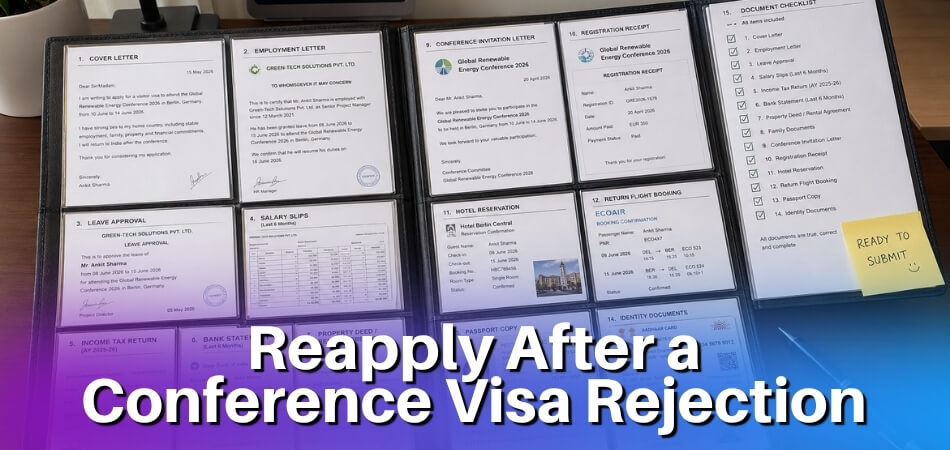
From our experience at MS International: our conferences are held in person in the Greater Toronto Area, and the invitation letter is issued within 3 to 5 business days after payment clears. The letter supports your application but does not guarantee a visa or speed up IRCC’s review, and registration fees are non-refundable, including after a visa delay. Plan the letter time and the visa time separately, and check the current IRCC estimate before you pay.
How Filipino Applicants Can Check Canadian Visa Application Status
Your IRCC online account is the main place to check status. It shows whether biometrics were received, whether IRCC sent a message, and whether you have a deadline.
Check Status Through an IRCC Online Account
Sign in to the account you applied with: the IRCC Portal (email sign-in) or the IRCC secure account (GCKey or a Sign-In Partner such as an approved online banking login). Use the same account that you used to apply. Check it often, because document requests and deadlines appear there, and an email alone is easy to miss.
Track Applications Submitted Through a Visa Application Centre
If you gave your passport or biometrics at a Visa Application Centre, you may be able to track those steps with the centre’s tracking system. It shows receipt and return of documents, not the decision details. The IRCC account stays the main source.
Monitor Email and Spam Folders for IRCC Updates
IRCC may email you about new messages, biometrics, passport requests or decisions. Keep your email address correct and check the junk folder.
What to Do If Your Canadian Visa Application Takes Longer Than Expected
First check your online account for a pending request, then compare your wait with the current IRCC time for your application type. A longer wait is not always a problem. Often the file is waiting for something from you.
Compare Your Case with Current IRCC Processing Times
Use the tool for the right category and country. Late biometrics or extra document requests can make your own wait longer than the posted figure, so rule those out first.
Review Your Online Account for Pending Requests
Look for unread messages, document requests, biometrics or medical instructions, passport requests and deadline notices.
Submit an IRCC Webform Inquiry
If you are past the normal processing time and see no update, send a webform inquiry with your application number, full name, date of birth, visa type and the date you applied. Keep it short, and avoid sending repeat inquiries. If you cannot sign in to your account or are unsure whether IRCC received your documents, use the official IRCC contact options instead and have your application number ready.
Get Help from a Licensed Immigration Consultant When Needed
A licensed immigration consultant or immigration lawyer can help if you have past refusals, a complex travel history or repeated document requests. Most straightforward applicants do not need one.
Can Filipinos Be Refused a Canadian Visa?
Yes. An application can be refused if the officer is not satisfied about the purpose of travel, your funds, or that you will leave Canada on time. This section is a short overview. Each of these topics has its own full article on this site.
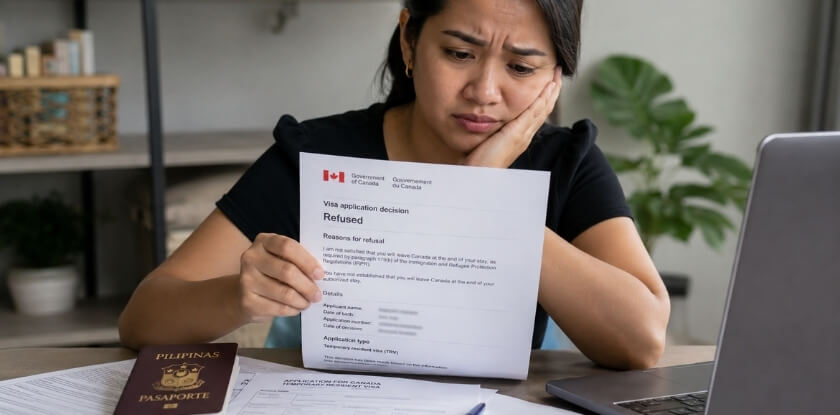
Common Reasons for Canadian Visa Refusal
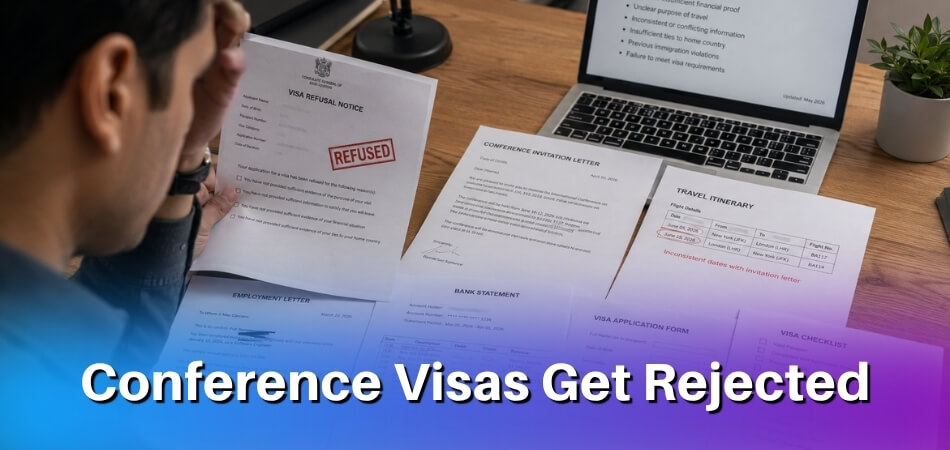
Refusals usually come from the overall strength of the file, not one document. Typical reasons are:
- an unclear purpose of travel;
- weak or unexplained funds, such as sudden deposits;
- incomplete or inconsistent documents;
- weak ties to the Philippines, such as no stable job, family or property;
- doubts that you will leave Canada at the end of your stay.
Why Strong Ties to the Philippines Matter
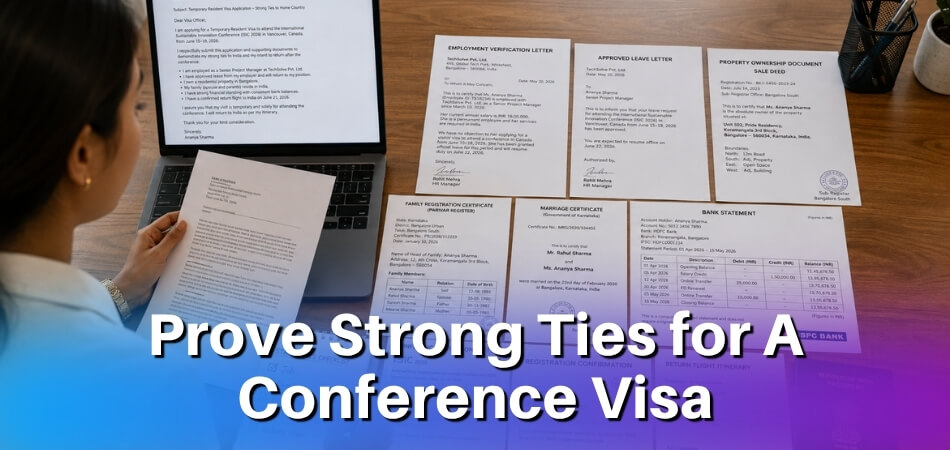
Officers look for reasons you will return home. Stable employment, a business, school enrolment, family responsibilities and property all count. For a conference trip, show that your employer expects you back and that your funds cover registration, flights, accommodation and daily costs.
What to Do After a Canadian Visa Refusal
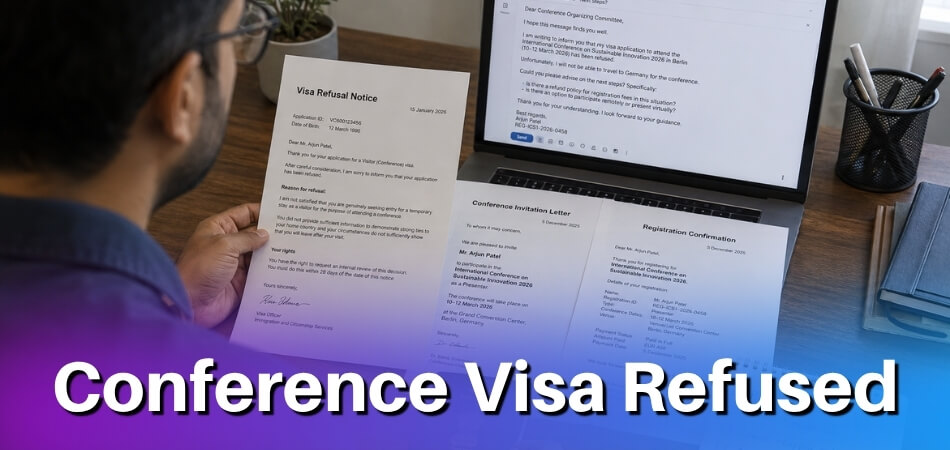
Read the refusal letter, fix the weak points, and reapply only when the new application is clearly stronger. Sending the same documents again usually leads to the same result.
Read the Refusal Letter and Identify Weak Points
The letter lists the concerns raised by the officer. Compare each concern with what you submitted. If the issue was funds, check your balance and income source. If it was the travel purpose, check whether your itinerary and invitation were detailed enough.
Improve Documents Before Reapplying
Add evidence that answers the refusal reasons directly, such as updated bank statements, an employment certificate, tax records, conference registration proof or an explanation letter. Also correct any form errors. Every added document should have a purpose.
Consider Professional Advice for Complicated Cases
Multiple refusals, an earlier overstay or unclear employment history are good reasons to speak with a licensed consultant or lawyer before you apply again.
What to Do After Getting a Canadian Visa from the Philippines
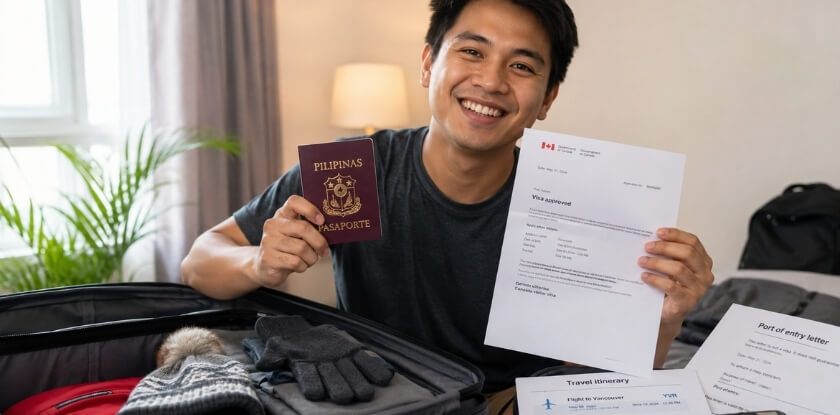
Check the visa details, prepare your travel documents, and follow the conditions of your stay. Approval is not a guarantee of entry, because a border officer still decides at arrival.
Check Visa Validity and Conditions
Check your name, passport number, validity, number of entries and expiry date. The expiry date is not always the date you can stay until. The border officer decides the final stay, so follow any date they give you.
Keep Passport and Visa Documents Safe
Keep digital and printed copies of your passport bio page, visa approval, itinerary, hotel booking, invitation letter, conference registration and emergency contacts.
Prepare Travel, Accommodation, and Invitation Documents
Carry what explains your trip: a return ticket, accommodation details, your invitation letter, conference registration, proof of funds and the contact details of your host or organiser. Expect questions at the port of entry.
Follow Canadian Entry and Stay Rules
Do not work, study or stay longer than your status allows. If your plans change after you arrive, check the correct process first. Overstaying or breaking conditions can affect future applications.
FAQs About Canadian Visa Processing Time from the Philippines
Filipino applicants comparing timelines ask about visitor visas versus study and work permits, checking the current IRCC time, an eTA as an alternative and whether a medical exam or past refusal adds delay.
How long does a Canada visitor visa take from the Philippines?
Recent IRCC figures for the Philippines have been around three weeks. The time changes weekly, so check the IRCC processing times tool. Late biometrics, weak funds or missing documents can make it longer.
How long do a Canadian study permit and work permit take from the Philippines?
Recent figures have been several weeks for both, and IRCC’s service standard for applications from outside Canada is 60 days. Employer documents, biometrics and medical exams can add time.
How do I check the current processing time?
Open IRCC’s processing times tool, choose your application type, and select the Philippines as your country. It shows the estimate for an application received today.
Does biometrics affect Canadian visa processing time?
Yes. IRCC counts the time you take to give biometrics inside the processing time and needs them to continue certain checks. You have 30 days after the instruction letter to give them, and they stay valid for 10 years.
Can Filipinos get an eTA instead of waiting for a visitor visa?
Some can. If you held a Canadian visitor visa in the past 10 years or hold a valid US non-immigrant visa, you can apply for a CAD 7 eTA to fly to Canada. Most are approved within minutes. Everyone else needs a visitor visa.
Can a previous visa refusal delay a new application?
It does not mean automatic refusal, but the file may get a closer look. Fix the earlier reasons and declare the refusal truthfully.
Can a medical exam delay a Canadian visa application?
Yes, if one is required and you book it late or the results arrive late. Complete it quickly with an approved panel physician.
What if my application takes longer than the IRCC time?
Check your account for requests first. The posted time is not a maximum. If nothing is pending and you are past it, submit one IRCC webform inquiry with your application number.
Final Summary
Expect around three weeks for a visitor visa and several weeks for a study or work permit from the Philippines, based on recent IRCC figures. Super visas and permanent residence take longer.
To avoid delays, check whether you qualify for an eTA, apply early, upload clear documents, give honest information, book biometrics quickly, and check your online account often.
Disclaimer: This article is general information, not legal or immigration advice. Visa rules, fees, and processing times change. Confirm the current requirements on the official IRCC website before you apply.