
A polo shirt sits in an awkward middle ground: too casual for a suit-and-tie crowd, too structured for a barbecue. That makes it a hard item to pack when you are not sure whether it will look polished or underdressed.
Quick answer: Yes, a polo shirt is fine at most business casual and smart casual conferences, and it suits tech, startup, creative and trade show events best. Skip it at formal or black-tie events and at conservative finance or law gatherings. Fit, fabric and what you wear with it matter as much as the shirt. Speakers should dress one step above the audience.
This guide covers where a polo earns its place at a conference, where it falls short, and how to style one so it looks chosen, not grabbed.
Can You Wear a Polo Shirt to a Conference?
Yes, in most cases, as long as the dress code is business casual or smart casual. A polo sits between a T-shirt and a dress shirt, which is why it works at the right event and looks careless at the wrong one.

The table below gives the short version by event type. The sections after it explain each case.
| Event type | Polo? | Best way to wear it |
|---|---|---|
| Tech, startup, creative | Yes | Fitted, solid color, clean shoes |
| Trade show or expo (booth staff) | Yes | Matching branded polo, pressed trousers |
| Business casual or smart casual | Yes | Tucked in, chinos, leather shoes, blazer if unsure |
| Finance, law, corporate summit | Usually not | Dress shirt and jacket instead |
| Formal or black-tie business event | No | Suit and tie |
If the invitation states a dress code, follow it. Many conferences do state one, and it settles the question faster than any rule of thumb. Read the programme too: a code can apply only to certain sessions or days, such as a gala dinner, so the polo may be fine on one day and wrong on another. Wording such as “business professional” or “formal conference attire” rules a polo out, however nice it is. The speaker lineup, the venue and the tone of the invitation can also signal traditional formality, even when no code is printed.
When a Polo Shirt Works at a Conference
A polo works wherever the dress code is business casual or smart casual, which covers most mid-size professional conferences, regional industry summits and corporate training days.
Business Casual and Smart Casual Conferences
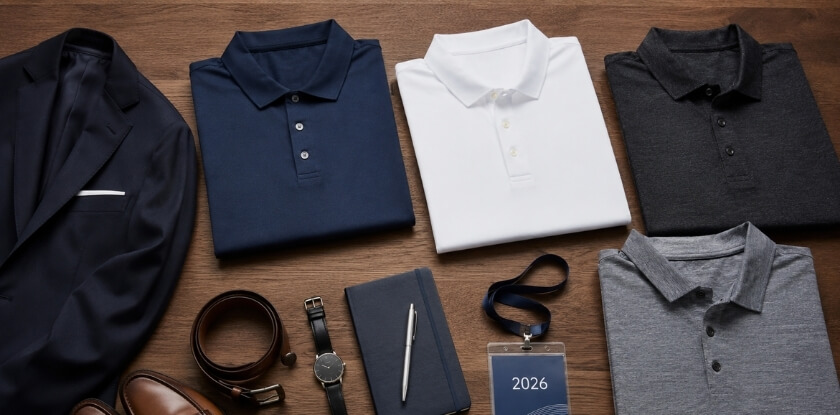
A well-fitted polo in a solid color or subtle pattern, with chinos or dress trousers and leather shoes, meets a business casual code without effort. For smart casual you can relax a little: dark jeans work if they are clean and not distressed.
The key variable is fit. A polo that pulls across the shoulders or hangs loose around the midsection looks sloppy whatever else you wear.
Finance and law conferences sit at the formal end of business casual. A polo is technically acceptable on day two or three of a multi-day event, but it is not the first choice for an opening session or a day with client-facing meetings.
Tech, Creative, and Startup Events
These events have largely dropped formal attire. Where hoodies and sneakers are common, a fitted polo in a clean color makes you look professional without looking like you came from a board meeting. That helps if you are there to make contacts or represent a company.
An embroidered company polo is a legitimate choice here and reads as intentional. A thin, faded one from five years ago undermines the effect, so quality matters.
Trade Shows and Networking-Heavy Summits
At a trade show you are on your feet for hours, often six to eight, moving between booths, conversations and presentations, so comfort counts, and a polo handles handshakes and walking better than a dress shirt. A polo breathes, holds its shape through a long day and looks clean in event photos and LinkedIn posts. For booth staff, a matching polo with a company logo is a common choice: consistent, professional and easy to coordinate across a team.
Not every conference has a strict dress code, and many work against the old suit-and-tie default. At a networking summit the dress code is usually smart casual at most, so a polo with well-fitted trousers and clean shoes is appropriate and keeps attention on the conversations.
When to Skip the Polo
Skip it when the dress code is formal or when the industry expects a dress shirt, because the wrong first impression is hard to walk back.
Formal and Black-Tie Business Conferences
If the invitation says black-tie, business formal or formal attire, expect a suit and tie at minimum, and sometimes evening wear. A polo reads as underdressed there, however good it is. Gala dinners attached to conferences, annual general meetings, awards ceremonies with a black-tie designation and high-profile summits where formal dress is the norm fall in this group. People at these events notice what you wear, and looking out of step with the room affects how they receive you before you have said a word.
If the code is truly ambiguous, a blazer over dress trousers is safer. You can take a blazer off later, but you cannot add formality once you have walked in.
Finance, Law, and Corporate Industry Events
Industry culture matters as much as the printed code. At finance and law conferences, “business casual” often means a dress shirt and trousers, not a polo. People at these events know that how they present themselves reflects on their firm or practice. A branded polo at a law networking summit can suggest you did not read the room. The same polo may be fine at a booth in the exhibition hall but not in the sessions or formal networking.
If you are speaking at a high-level finance summit, expect a suit. Elsewhere in these industries, default to a dress shirt and jacket unless colleagues who attended before say the crowd is relaxed.
Speaker vs. Attendee: Does Your Role Change the Rules?
Yes. The same polo that looks relaxed and professional on an attendee can look underdressed on a speaker, because speakers are watched for longer.

| Your role | Polo? | Notes |
|---|---|---|
| Speaker at a tech, startup or creative event | Yes | Fitted polo with dark trousers or chinos |
| Speaker at a corporate, finance or law event | No | Blazer at minimum, often a suit |
| Booth staff | Yes | A matching branded polo is common |
| Attendee at a casual or business casual event | Yes | Add a blazer for sessions and networking |
| Attendee at a formal event | No | Suit and tie |
If You’re a Speaker
You are at the front of the room, often on a raised platform and under lighting, and people form an impression before you speak. That is not pressure to wear a suit. It is a reason to be intentional.
At a tech, startup or creative event, a clean, well-fitted polo with dark chinos looks comfortable and confident. At a corporate summit, finance event or law conference, audiences expect speakers in business formal or at least a blazer.
A polo with a blazer over it, in a dark solid color, also works well for speakers on virtual panels. Also check whether the organizer is supplying a branded polo as part of a sponsor arrangement. If so, wear it: it shows you are part of the program and removes the decision.
If You’re an Attendee
Attendees have more room. Nobody is studying your collar from a stage, so the real question is whether you will be doing serious networking, sitting in sessions or selling.
At a trade show or networking summit, a polo fits smart casual or business casual expectations and is comfortable for a full day on your feet. At a general corporate conference or multi-day professional event, a polo works as a middle option: wear a well-fitting one, without a large logo, and let something else do the dressing up, such as a structured blazer or a leather belt and smart shoes. At a formal event it does not belong in the attendee wardrobe either.
What Kind of Polo Is Conference-Appropriate?
A polo with a firm collar, a medium-weight fabric, a close but not tight fit and a solid, muted color. Those details decide whether it looks polished or like a weekend shirt.
Fabric and Weight
Lightweight cotton piqué is the classic polo fabric and holds up in most conference settings. It breathes, drapes reasonably and does not look overly casual. Avoid thin, stretchy jersey polos: they lose their shape under a blazer and cling under bright lights.
A heavier piqué or a cotton-modal blend looks crisper. Merino wool polos suit cooler venues and full days between sessions, and they read slightly more formal than cotton.
Fit
Too loose looks sloppy, and too tight looks like gym wear. Aim for the shoulder seam at the edge of your shoulder, the chest lying flat without pulling at the placket, and the hem just below your waistband. If you tuck it in, it should be long enough to stay tucked without constant adjusting.
Collar Quality
The collar is the first thing people notice, and getting these details right matters more than most people expect when a room full of people forms quick impressions. One that curls, flares or loses its shape after a few washes spoils an otherwise clean outfit. Look for a tighter rib or a fused backing that holds up through a long day. If the collar looks tired before you leave the house, choose another shirt.
Color and Pattern
Solid, muted colors are safest: navy, white, charcoal, mid-grey, forest green, burgundy. They pair with chinos or dress trousers and sit well under a blazer.
Bright colors are not automatically off limits: a clear sky blue or a warm coral can work at a creative or startup event where the dress culture is relaxed. Loud patterns, graphic prints and large logos look more like casual wear than considered conference attire.
Branded and Custom Polo Shirts
Branded polos are common at trade shows and expos, where exhibitors and booth staff wear matching ones. There the purpose is clear, so it works.
Outside a trade show, wearing someone else’s branded polo as a general attendee looks like you wandered over from a vendor booth. Your own company’s polo is reasonable if the logo is small and the shirt is well made. A cheap promotional shirt with a large chest logo does not look professional, whoever the brand is. If you attend industry events often, a small order of embroidered polos for your team can double as everyday office wear.
At a booth, the logo does part of the presenting, so the focus shifts to fit and cleanliness. Keep the embroidery or print crisp and the shirt freshly laundered, because a wrinkled branded polo looks worse than a plain one.
When a Blazer Changes the Equation
A well-fitted blazer raises the formality of a polo noticeably, and it is one of the easiest ways to make a borderline outfit work. The polo collar sitting above the blazer lapel gives a clean, intentional look. Keep both pieces in the same register: a structured wool blazer over a faded cotton polo looks mismatched, so make sure both are in good condition and similar in weight.
How to Style a Polo for a Conference
Choose a slim fit, tuck it in for anything business casual, wear dark trousers and clean shoes, and add a blazer if the day calls for it. The polo is half the look. The rest of the outfit decides whether it reads as polished.

Choose the Right Fit
Slim or tailored fit works best for most conferences, because it shows you dressed with care. Avoid boxy or oversized cuts, which can look as if you grabbed the wrong size, unless you are at a very casual tech or startup event. Avoid tight fits that stretch the placket or collar, which suggests poor planning or the wrong size.
Tuck or Untuck?
Tucked in is safer for a networking summit, a trade show or any business casual event. Pair it with chinos or dress trousers and a belt that matches your shoes.
Untucked is acceptable at tech, creative and startup events, but only if the shirt is cut for it. A straight hem is designed to be worn out. A longer curved hem left out looks unfinished.
Bottoms and Shoes
Chinos or dress trousers take a polo into business casual comfortably. Dark chinos in navy, charcoal or stone are reliable, and dress trousers push toward smart casual, which suits a speaker or a more formal networking event.
Jeans are fine at tech or creative events if they are dark, clean and not distressed. Light wash or ripped jeans pull the outfit back to casual.
Shoes matter more than people expect. Clean white leather sneakers or loafers look intentional with a polo. Scuffed trainers, flip-flops and bulky athletic shoes undo the effort. Oxfords or derbies push the outfit toward the smarter end.
Layering Options
An unstructured blazer is a reliable move for speakers or anyone at a higher-stakes event such as a corporate networking summit. Neutral navy, grey or camel goes with most polo colors.
A merino cardigan is a subtler option that reads as smart casual.
Do not pair a polo with a formal suit jacket. The collar style does not sit well under a suit lapel, and the result looks mismatched rather than layered.
Rooms at a conference can swing from cold air conditioning to a warm, crowded hall, so a removable layer keeps you comfortable without changing the look. Choose shoes you can stand and walk in for hours, because sessions, breaks and booth visits add up to a long day on your feet.
What to Wear When You Don’t Know the Dress Code
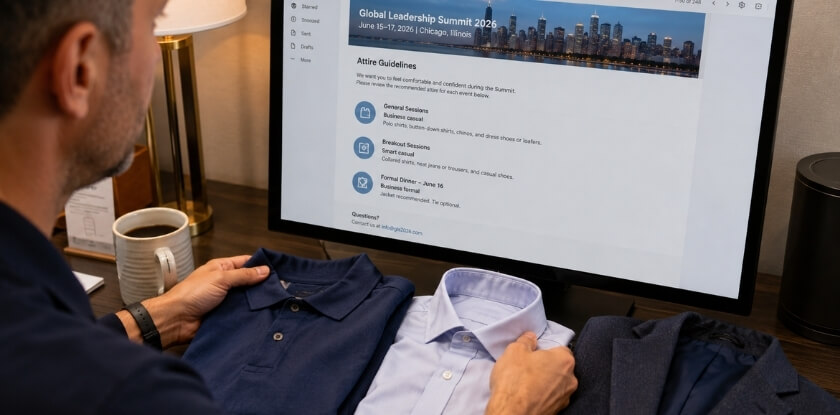
Dress one step above what you expect, in smart casual: a polo with a blazer, dress trousers and clean leather shoes. Not every conference publishes a dress code, and “business casual” means different things in different rooms, so a few checks help before you pack.
Look at the Industry First
The industry tells you more than the label. A polo is usually safe at tech, startup and creative events, which run casual by default, and trade shows and networking summits sit in the middle. At finance and law conferences, even without a stated code, the culture skews formal, so a dress shirt or blazer will usually serve you better.
Check the Event’s Social Media
If the conference has run before, look at last year’s photos on LinkedIn or the event’s own channels. Scroll through images of speakers, panelists and attendees on the floor. What people actually wore is more useful than any written description. If you see blazers and dress shirts across the board, dress up. If you see polos, open collars and clean sneakers, you have your answer.
Use the Rule of One Step Up
When you find nothing, dress one level above what you expect. Starting a little dressier on the first day and adjusting once you see the room is a sound plan. If you guess the crowd is casual, wear a polo. If you guess smart casual, add a blazer over the polo. You can remove a blazer if you are overdressed, but you cannot add formality you did not bring.
When in Doubt, Ask
If you are speaking, presenting or attending in an official capacity, email the organizer. Event teams are usually glad to answer. Something like “Is there a recommended dress code for speakers?” takes thirty seconds to send and removes the guesswork.
Virtual and Hybrid Conferences: What to Wear on Camera
For a virtual conference, a solid-color polo is a good choice: it looks polished on camera and the collar gives structure that a crewneck T-shirt does not. For a hybrid event, dress for the room if you are there in person, and for the camera if you are remote. You are dressing for a rectangle, often framed from the chest up, under whatever lighting your room has.
What the Camera Does to Your Outfit
A webcam flattens everything. Bold patterns, fine stripes and busy prints create visual noise and can shimmer on screen. A solid navy, charcoal, white or forest green polo reads cleanly under both natural and artificial light. Fit still matters, and a slightly large polo looks sloppier up close. Wear the one you would wear into a room, not one for a grocery run.
Virtual Attendees
For most virtual attendees a polo is reasonable at tech, startup and creative events and at trade shows that have moved online.
Match the event’s register, even online. A finance or law virtual conference carries the expectations of those fields. If the in-person version would call for a blazer, the online one probably does too. A polo may be fine in a breakout room or a casual session, but if you are visible during a keynote or a panel Q&A, lean more formal.
Camera framing changes things. If your whole torso is visible, the outfit matters more. If you are framed tightly from the shoulders up, the collar does almost all the work, and a polo collar holds its shape.
Virtual Speakers
Speakers fill a larger part of attendees’ screens for longer. A well-fitted solid polo works, and this is one place where a quality embroidered company polo helps, especially at a trade show or networking summit where brand visibility is the point. Make sure the logo sits flat and is clear, because a wrinkled or poorly printed one looks worse on camera than in person. Avoid white against a light background, since the contrast disappears and you look washed out. A mid-tone polo stands out better.
Hybrid Conferences
At a hybrid event some attendees are in the room and some are on screen. If you are in person, dress for the room. If you join remotely but will be shown on a large screen in the venue, treat it like an in-person appearance.
For remote speakers, a blazer over a polo works on camera and shows you understood the event was formal enough to deserve some thought. Speaker dress expectations do not relax because you are calling in from your office. A merino cardigan over a polo also works if you move between camera and venue.
Building a Budget-Friendly Conference Wardrobe
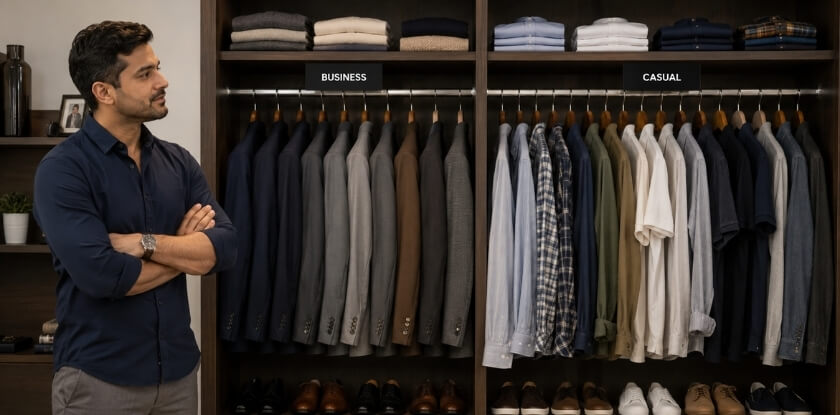
A few well-chosen pieces, including one or two good polos, can carry you through several events without starting from scratch each time.
Start With Versatile Polo Shirts
A solid polo in navy, white, grey or black dresses up with chinos and a blazer, or down with dark jeans for a casual tech or startup event.
Stick to two or three colors. Neutrals mix with what you already own, so you do not need new bottoms for each shirt.
Buy quality fabric, not quantity. One cotton-piqué polo that holds its shape after washing serves you longer than several cheap shirts that pill after a couple of washes.
Plan Around the Conference Type
Your conference schedule should guide what you buy, because a corporate finance summit and a creative industry event have almost nothing in common.
Tech and startup events: Two or three quality polos, dark chinos, clean sneakers and one lightweight blazer cover nearly every scenario.
Trade shows and networking summits: A branded polo with pressed trousers looks professional and approachable.
More formal conferences: A polo will not be enough alone. You will need at least one dress shirt and a proper blazer or suit jacket, and the polo becomes an option for evening networking.
What to Actually Buy
- Two solid polo shirts in neutral tones
- One blazer that fits well (this is where spending more pays off, because a good blazer transforms an outfit)
- One pair of dark chinos or dress trousers
- One pair of clean, simple leather shoes, or smart leather-look sneakers depending on your industry
Business casual and smart casual are common dress codes, and this set handles both. If you are presenting, spend a little more on a slightly better fabric such as a merino-blend polo, since a wrinkled or ill-fitting shirt shows under stage lighting and on recordings. Attendees can stay with standard options.
Getting More From Each Piece
One polo can look different three days in a row. Wear it with chinos on day one, add a blazer for the keynote on day two, and tuck it in with trousers for the networking dinner on day three.
Pack a small travel steamer or wrinkle-release spray. Clothes spend time in luggage, and visible creases undermine everything else you did right.
From our experience at MS International: Our conferences are held in person in the Greater Toronto Area. Attendees arrive at the check-in time stated in the confirmation email and collect a conference badge, and presenters meet the session coordinator or moderator before their scheduled slot. Our pages do not state a dress code, so if you are unsure what to wear, you can ask the organizers through the contact details on the website.
FAQ: Wearing a Polo Shirt to a Conference
A polo sits on the line between casual and business casual, which is why tucking, branded versus plain polos, wearing one as a speaker and industry norms get looked at.
Can I wear a polo shirt to a professional conference?
Yes, in most cases. A polo works at business casual and smart casual conferences, tech events, trade shows and startup gatherings. It is only a problem at formal or black-tie events, where a suit jacket and dress shirt are expected.
Is a polo shirt too casual for a conference speaker?
It depends on the event. At a tech or creative conference, a fitted polo is fine for a speaker. At a corporate summit, finance or law event, wear a blazer at minimum.
What’s the difference between a branded polo and a regular polo at a conference?
A branded or custom polo suits staff representing a company at a trade show or expo. For general attendance or speaking, a solid-color, unbranded polo looks more polished.
Do I need to tuck in my polo shirt at a conference?
For most professional settings, yes. A tucked polo with chinos or dress trousers looks intentional. Untucked can work at casual tech or startup events if the hem is straight-cut and the fit is clean.
What should I wear if I don’t know the conference dress code?
Smart casual is the safest default. A polo with a blazer, dress trousers and clean leather shoes looks professional without being overdressed. Remove the blazer if the room is more casual.
Can I wear a polo to a virtual or hybrid conference?
Yes, it is a solid choice on camera. A well-fitted polo in a solid color photographs cleanly, avoids the visual noise of patterns and looks more put-together than a T-shirt.
Does the industry change whether a polo is appropriate?
Yes. At a tech or startup event a polo is normal. At a finance or law conference it usually looks too casual unless the event states a relaxed dress code. Past attendee photos on LinkedIn or the event’s social channels show what people wear.
Does a polo count as business casual?
Yes. A fitted polo in a solid color, with chinos or dress trousers, meets a business casual code. It falls short at conservative, client-facing events where a dress shirt is expected, so check the dress code first.
Is a polo shirt acceptable as conference formal attire?
No. A polo is not formal attire. If the invitation says formal attire or black-tie, wear a suit and tie, however well the polo fits.
Before You Pack: A Quick Decision Guide
Wear the polo if the dress code is business casual, smart casual or tech, and add a blazer when you are unsure. Choose a dress shirt for formal events and for finance or law industry gatherings. If you are speaking, go one step more structured than the audience, and carry a blazer either way, because it costs nothing and solves most dress code doubt.