
Going to an international conference for the first time raises plenty of small questions: which events are genuine, what you have to pay for, and whether a visa is involved. This guide takes you through each stage in order, from choosing an event to following up afterward.
Quick answer: You can attend an international conference by choosing a relevant event, confirming it is genuine, registering on the official website as a listener or author, and arranging any funding, invitation letter, visa, and travel. Many events accept attendees without a paper. Start early, because visa processing and funding deadlines can close well before the event.
What Does It Mean to Attend an International Conference?
Attending an international conference means taking part in a professional, academic, or industry event where people from different countries exchange knowledge and build connections. These events may be held in person, online, or in a hybrid format. You may attend as a student, researcher, professional, business owner, author, speaker, poster presenter, or general participant.

International conferences commonly include keynote speeches, panel discussions, workshops, paper presentations, poster sessions, networking events, exhibitions, and question-answer sessions. Academic conferences often focus on research and publication, while business or professional conferences may focus on industry trends, leadership, technology, marketing, healthcare, education, environment, or other specialized fields.
The main value of attending is exposure. You hear new ideas, meet people outside your usual environment, understand global developments in your field, and gain experience that can help your studies, career, business goals, or research profile. Turning that exposure into something lasting takes preparation and follow-up, which later sections cover.
Who Can Attend an International Conference?
International conferences are open to different types of participants, depending on the event’s purpose and eligibility rules. Typical attendees include students, researchers, professionals, entrepreneurs, educators, speakers, authors, and general participants.
Students and Researchers
Students and researchers attend conferences to learn from experts, present work, explore new topics, and meet academic communities. Research-based events may require an abstract, paper, or poster. For students, attending can also improve confidence, presentation skills, and understanding of global academic standards.
Professionals and Business Owners
Professionals join conferences to stay updated, improve skills, and meet people in their industry. Business owners may attend to explore market trends, find partners, build visibility, or understand customer needs. A relevant conference can also strengthen a professional profile because it shows active learning and industry engagement.
Speakers, Presenters, and Authors
Speakers and presenters share knowledge through talks, papers, case studies, posters, or panel discussions. Some are invited by organizers, while others are selected after submitting a proposal. Authors may also attend if their paper is accepted for presentation or conference proceedings.
General Participants
You do not have to present to take part. Attending as a listener is a good option for first-timers because it shows how a conference works before they apply as a speaker, author, or presenter in the future.
How Can I Attend International Conference Step by Step?
Attending takes eight steps, from choosing an event to following up afterward. The bigger steps (registration, visa, funding, preparation) have their own sections further down, so each step below stays short.
Step 1: Choose a Conference That Matches Your Goal
Start by deciding why you want to attend. Your goal may be learning, presenting research, meeting experts, finding business opportunities, improving your resume, or building international connections. Once your purpose is clear, search for conferences related to your subject, industry, or professional interest.
Then compare the theme, session topics, host country, event format, and target audience with that goal. A good conference should match your academic, career, or business needs.
Step 2: Check the Eligibility and Participation Type
Read the conference details carefully. Some events are open to all registered participants, while others are designed for researchers, authors, professionals, members of a specific organization, or invited guests.
Also check the available participation types:
| Participation type | What it usually involves |
|---|---|
| Listener or general participant | Registration and payment; no paper needed |
| Oral presenter | An accepted abstract or paper |
| Poster presenter | An accepted abstract or poster proposal |
| Author | An accepted paper |
| Virtual participant | An online or hybrid event; not every organizer offers it |
| Sponsor or exhibitor | An arrangement with the organizer |
| Workshop participant | Sometimes a separate sign-up |
Choosing the correct category is important because it affects your registration fee, certificate, presentation slot, invitation letter, and conference access.
Step 3: Submit an Abstract or Paper If Required
If the conference is academic or research-based, you may need to submit an abstract, paper, poster proposal, or presentation summary. Follow the organizer’s instructions exactly. Check the topic category, format, word limit, author details, citation style, submission portal, and deadline.
A strong abstract should explain the topic, purpose, method, key findings, and importance of your work. After submission, the review committee may accept, reject, or request changes. Keep the acceptance email because it may be needed for registration, visa support, funding, or institutional approval. Watch the author registration deadline too: some conferences drop an accepted paper from the program if no author registers by that date.
Step 4: Register Through the Official Website
Register only through the official conference website, and pick the category that matches how you will take part. The registration section below walks through the form, the payment, and the documents to save.
Step 5: Request an Invitation Letter
If the conference is in another country, you may need an invitation letter for your visa application. Organizers usually issue it only after you have registered and paid in full. The letter usually includes your name, conference title, venue, date, organizer details, and purpose of visit.
An invitation letter supports your visa application, but it does not guarantee approval. You still need to meet the official immigration requirements of the host country.
Step 6: Arrange Visa, Travel, and Accommodation
Check the visa rules on the official embassy, consulate, or immigration website of the destination country, and start early (see the visa section below). Once your travel plan is clear, compare flights, book accommodation, and check local transport options. Keep copies of your hotel booking, travel plan, and insurance documents. If you are crossing several time zones, consider arriving a day before the event so a delayed flight or jet lag does not cost you the opening sessions.
Step 7: Prepare Before the Conference
Review the agenda, choose the sessions that matter most, and get your presentation files and self-introduction ready if you are presenting. The preparation section below has the details.
Step 8: Attend, Network, and Follow Up
During the event, attend relevant sessions, take notes, ask clear questions, and introduce yourself to people when appropriate. Focus on meaningful conversations instead of trying to meet everyone. After the event, follow up with the people you met. The sections on the conference days and the time afterward cover both.
How to Find the Right International Conference Online
You can find the right international conference online by searching official conference websites, university event pages, academic platforms, professional associations, and trusted conference directories. The important part is verifying the event before you register.
Start with specific search terms related to your field. For example, search for “international business conference,” “education conference in Canada,” “engineering conference 2027,” or “healthcare research conference.” Specific searches are usually better than broad searches because they help you find events that match your purpose.
Academic participants can check university websites, research communities, journal pages, and call-for-paper announcements. Professionals can follow industry associations, business networks, training organizations, and event platforms. Conference listing websites can also help, but you should always visit the official event website before paying.
Before choosing a conference, verify these details:
- Official organizer name and contact information
- Event date, venue, and location
- Clear agenda or topic areas
- Speaker or committee information
- Registration fee and refund policy
- Submission rules, if papers are accepted
- Previous event history or public records
- Professional email and working website
Be careful if the conference promises guaranteed publication, hides organizer details, uses copied content, has unclear fees, or pressures you to pay quickly. Unsolicited emails full of flattery, a very broad title that covers many unrelated fields, and a short gap between the abstract deadline and the event are further reasons to look more closely. A reliable international conference should provide transparent information and respond professionally to questions.
Use the Think. Check. Attend. Checklist
Think. Check. Attend. is a free checklist introduced by Knowledge E to help researchers judge whether a conference is genuine. Its questions fall into three groups:
| Checklist area | Example questions it asks |
|---|---|
| Organizers and sponsors | Do you know the society or organizer behind it? Can you find the venue easily? Have you or your colleagues attended before? Are the fees clear? |
| Agenda and committee | Is the agenda clearly stated? Do you recognize the keynote speakers and committee members? Does the event explain its peer-review process? |
| Proceedings | Is it clear where the proceedings will be published and which indexing services are named? Is the publisher a member of a recognized body such as COPE, DOAJ, or OASPA? |
The checklist suggests attending or submitting only when you can answer yes to most of its questions.
What Are the Requirements to Attend an International Conference?
The common requirements to attend an international conference include registration confirmation, valid identification, payment proof, travel documents, and any paper or presentation approval if you are attending as a presenter. Requirements vary by event type and host country.
You will usually need registration confirmation before you can enter the venue or access online sessions. This may come as an email, ticket, invoice, receipt, or participant ID. Keep both digital and printed copies.
If the event is local, a national ID, student ID, or professional ID may be enough. For an overseas event, you usually need a valid passport. Some countries require your passport to remain valid for several months after your planned travel date, so check this early.
Depending on your nationality and destination, you may also need a visa or entry permission. The visa section below lists the supporting documents that usually go with it.
Presenters may need extra documents, such as an abstract acceptance email, full paper approval, poster confirmation, or presentation schedule. These documents can help with registration, visa support, funding applications, and institutional reporting.
How to Register for an International Conference
You can register for an international conference by visiting the official website, selecting the correct registration category, filling out the form, paying the fee, and saving the confirmation documents. Avoid registering through unverified links or informal messages.
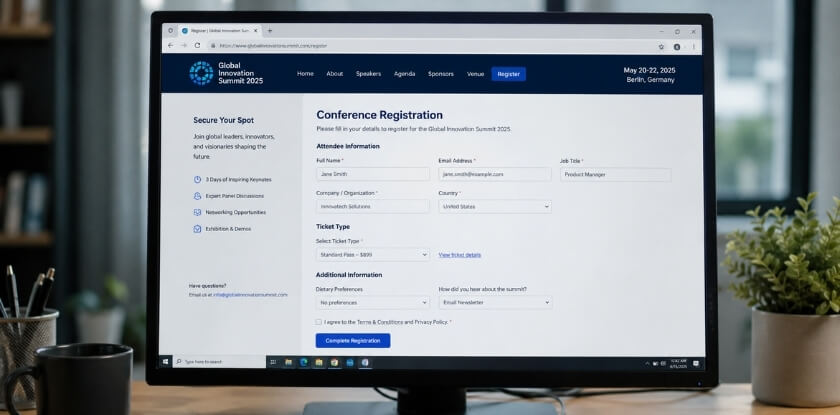
First, go to the official conference website and review the registration page. Check the event title, date, venue, topic areas, registration categories, fees, deadlines, refund rules, and what is included in the fee.
Next, choose the correct category. Students, presenters, authors, listeners, virtual participants, and professionals may have different fees and benefits. If you are presenting an accepted paper, select the author or presenter option. If you only want to attend sessions, choose the participant or listener option.
Fill out the form carefully. Use the same name that appears on your passport or ID, especially if you need an invitation letter or certificate. Common details include your full name, email, phone number, country, institution, job title, participation type, and paper ID if applicable.
After submitting the form, pay the registration fee through the approved method. Then save the confirmation email, invoice, receipt, and registration number. These may be needed for venue entry, visa application, employer reimbursement, university funding, or proof of attendance.
Keep checking your email after registration. Organizers may send updates about the agenda, venue instructions, badge collection, presentation schedule, slide submission, workshop access, or certificate process.
Do You Need to Submit a Paper to Attend an International Conference?
No, a paper is not always required. Ordinary registration as a participant, listener, or delegate is open at many events. A paper is usually required only if you want to present research, join as an author, or apply for publication-related opportunities.
If you attend without presenting, you can still join sessions, listen to speakers, ask questions, meet people, and receive the participation benefits offered by the organizer.
If you attend as an oral presenter, you usually need to submit an abstract or paper and receive acceptance. Your presentation should be clear, focused, and within the time limit. Be ready to explain your topic and answer questions.
Poster presenters explain their work through a visual poster. This format is common in academic, scientific, medical, engineering, and education conferences. It is often more conversational because participants can walk up, ask questions, and discuss the topic directly.
Some conferences also offer publication opportunities. If this matters to you, read the policy carefully. Check the review process, publication timeline, indexing claims, formatting rules, copyright terms, and any extra fees. Do not assume that registration automatically guarantees publication.
How to Apply for a Visa for an International Conference
To apply for a visa for an international conference, check the official visa rules of the host country, prepare the required documents, complete the application, pay the fee, and attend an interview if required. The conference organizer can support your application with documents, but the visa decision belongs to the embassy, consulate, or immigration authority.
Start with the official embassy or immigration website. Visa rules vary by nationality, destination, travel purpose, and length of stay; a conference in the USA, for example, usually needs a B-1 or B-1/B-2 visitor visa unless you can use the Visa Waiver Program. Look for the correct visa category, document checklist, application fee, appointment process, processing time, and interview requirements.
Common visa documents may include:
- Valid passport
- Visa application form
- Passport-size photos
- Conference invitation letter
- Registration confirmation
- Payment receipt
- Hotel booking
- Flight plan or reservation
- Bank statement or sponsorship letter
- Employment, business, or student letter
- Travel insurance, if required
Your documents should be consistent. The name, passport number, conference dates, travel dates, and hotel details should match across your application.
If an interview is required, answer honestly and clearly. You may be asked why you are attending, who is paying, where you will stay, what you do in your home country, and when you plan to return. Keep your answers simple and supported by your documents. Apply early. Processing can take weeks, and delays can affect your flight, hotel booking, conference participation, and funding approval.
How Much Does It Cost to Attend an International Conference?
The cost of attending an international conference depends on the registration fee, destination, flight price, accommodation, visa fee, meals, local transport, insurance, and personal spending. A virtual or nearby event may cost much less than an overseas in-person conference.
Your main budget areas include:
| Cost Area | What to Include |
| Registration | Participant fee, presenter fee, workshops, certificate, materials |
| Travel | Flights, baggage, airport transfers |
| Accommodation | Hotel, hostel, guesthouse, or short-term rental |
| Food | Meals, snacks, water, coffee, dietary needs |
| Local transport | Bus, train, taxi, rideshare, metro |
| Visa and insurance | Visa fee, service fee, travel insurance |
| Extra costs | Printing, SIM card, business cards, emergency funds |
Registration fees vary by conference type, country, organizer, and participant category. Students often pay less than professionals. Many conferences also offer early-bird fees, group discounts, or presenter categories.
Flights and accommodation can become expensive if you book late or travel during peak season. Compare routes, baggage rules, cancellation policies, and hotel distance from the venue. Staying near the venue may cost more, but it can reduce transport time and stress.
Daily expenses are easy to forget. Even if the conference provides lunch or refreshments, you may still need breakfast, dinner, local travel, internet, printing, and personal items. Build a realistic budget and add a small emergency amount for unexpected changes.
How to Get Funding, Scholarships, or Travel Grants for a Conference
You can get funding for an international conference by checking conference grants, asking the organizer about discounts, applying through your university or employer, and searching for government, NGO, or professional development support. Funding is often limited, so start early.
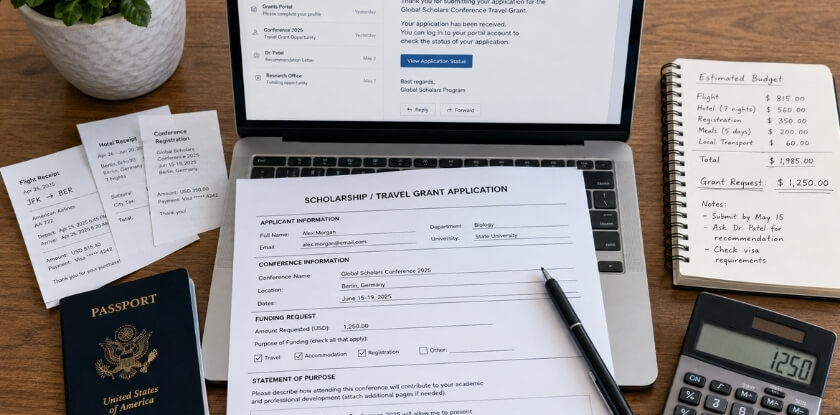
First, check the conference website for sections such as “grants,” “scholarships,” “travel support,” “student support,” or “fee waiver.” Some opportunities are only for students, early-career researchers, presenters, accepted authors, or participants from specific regions.
If the website does not mention funding, email the organizing committee. Ask politely whether they offer student rates, presenter discounts, partial fee waivers, group discounts, or travel grants. Keep your message short and include your name, role, institution, and reason for attending.
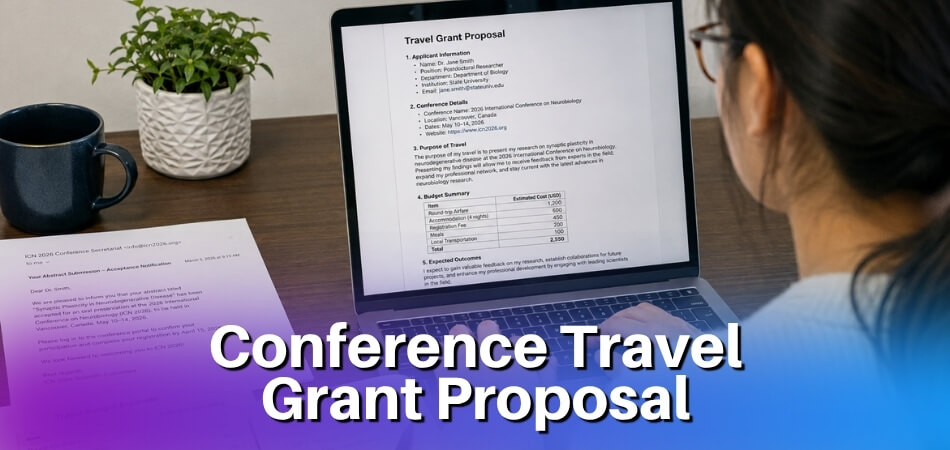
Universities, employers, research centers, and professional organizations may also support conference participation. A strong funding request usually includes:
- Conference title, date, and location
- Reason for attending
- Connection to your study, research, job, or department
- Acceptance letter, if presenting
- Estimated budget
- Expected benefits
- Plan to share what you learn afterward
You can also search for support from government programs, research councils, education boards, foundations, NGOs, or professional development funds. Track all deadlines and required documents because funding deadlines may close earlier than registration deadlines.
Some conferences also reduce or waive the registration fee for student volunteers who help with registration desks or session rooms, for competition winners, or for invited speakers. These places are limited and are not always advertised, so ask the organizer directly well before the event.
How to Prepare Before Attending an International Conference
Preparing before an international conference means getting your agenda, presentation materials, and networking approach ready before the event starts. Good preparation helps you avoid stress and make better use of the opportunity.
Review the conference agenda and choose the sessions that match your goals. You do not need to attend everything. Focus on keynote talks, workshops, panel discussions, paper sessions, or networking events that connect with your field.
If you are presenting, check the slide format, poster size, file type, and submission deadline. Keep your slides simple and practice your talk several times. Save backup copies in your email, cloud storage, and USB drive.
Prepare a short introduction that explains your name, role, field, and reason for attending. This helps when meeting speakers, participants, organizers, or potential collaborators.
Also set a networking goal. For example, you may aim to have three useful conversations each day instead of trying to meet everyone. A few strong connections are often better than many random contacts.
What to Do During the Conference
During the conference, focus on learning actively, joining relevant sessions, speaking with people, asking useful questions, and recording important takeaways. Your actions during the event decide how much value you gain.
On arrival, go to the registration desk first to collect your badge and any printed program. Then attend the sessions that support your purpose. If you are attending for academic growth, prioritize research talks and technical discussions. If your goal is career growth, look for workshops, skill sessions, and industry panels. If you are attending for business, focus on market trends, partnerships, innovation, and leadership topics.
Take notes, but do not try to write everything. Record the session title, speaker name, main idea, useful points, resources, and follow-up actions. This makes it easier to review your learning later.
Ask questions when the session allows it. Keep your question short, relevant, and respectful. A good question can help you learn more and may create a chance to speak with the presenter afterward.
Use breaks, lunch sessions, workshops, and networking events to meet people. Start with simple topics such as the session, conference theme, or shared interests. Listen carefully before talking about yourself.
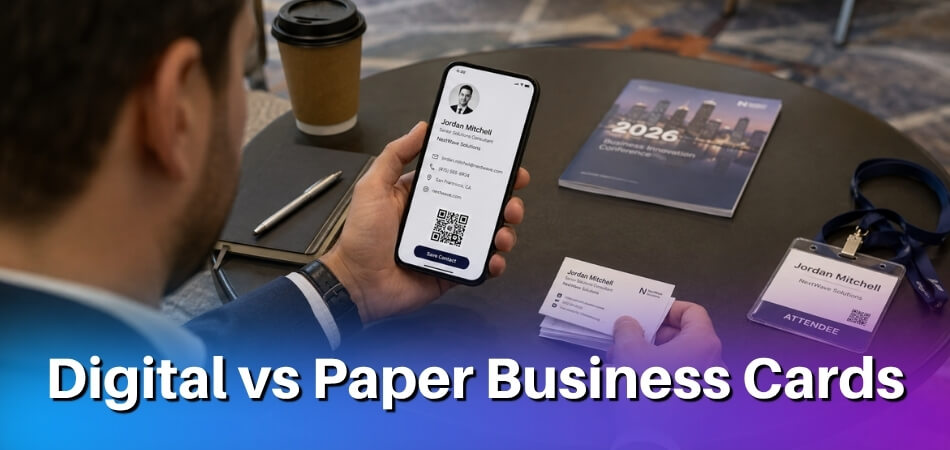
When you meet someone relevant, exchange contact details professionally. You can use business cards, email, LinkedIn, or a digital profile. Afterward, write a quick note about what you discussed so your follow-up message feels personal.
What to Do After the Conference Ends
After an international conference, organize your notes, follow up with contacts, share what you learned, update your profile, and explore future opportunities. The value of a conference often continues after the event.
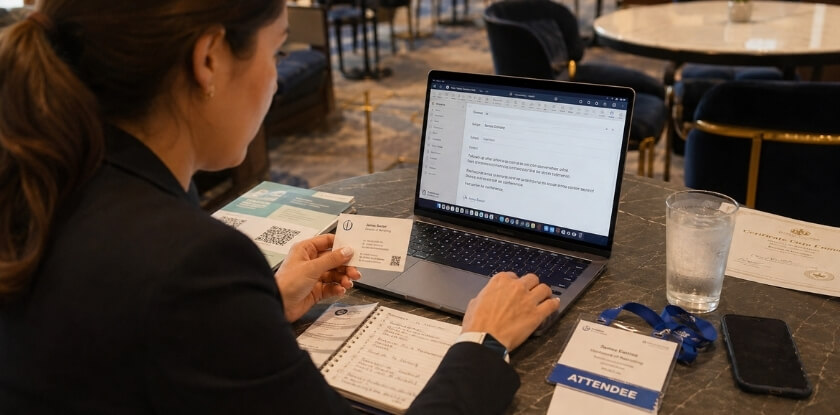
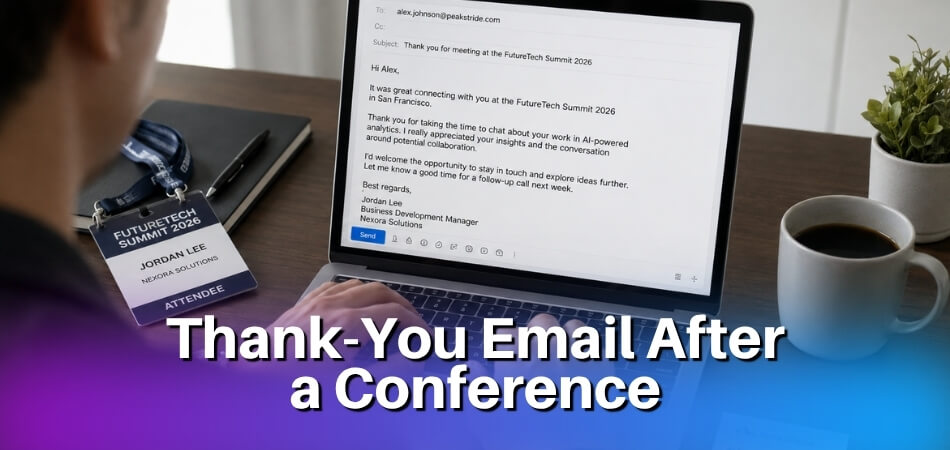
Send follow-up messages within a few days while the conversation is still fresh. Mention where you met, thank the person, and refer to something specific you discussed. Keep the message short and professional.
Review your notes and group them by topic, speaker, session, or action item. Highlight ideas you can use in your study, job, research, business, or future conference planning.
If your university, company, supervisor, or sponsor supported your attendance, prepare a short summary of what you learned. This can be a report, presentation, team discussion, or professional update.
Add the conference to your CV, resume, LinkedIn profile, portfolio, or research profile if it is relevant. Mention your role accurately, such as attendee, speaker, poster presenter, author, panelist, or workshop participant.
Some outcomes may come later. A short conference conversation can lead to research collaboration, business partnerships, mentorship, internship ideas, future speaking invitations, or publication opportunities.
Common Mistakes to Avoid When Attending an International Conference
The biggest mistakes are choosing an unreliable conference, missing deadlines, applying late for a visa, underestimating costs, and attending without a plan. Avoiding these issues can save time, money, and stress.
- Do not register only because the title sounds attractive. Unrealistic promises or unclear information are a warning sign, so run the checks in the section on finding the right conference.
- Do not ignore deadlines. Abstract submission, paper acceptance, registration payment, visa application, funding requests, and travel booking may all have different timelines.
- Do not apply for a visa at the last minute. Even if you have paid the registration fee, visa processing can take longer than expected.
- Do not budget only for the conference fee. Mobile data and printing are easy to miss, and an emergency amount is worth keeping aside.
- Do not attend without a networking plan. Decide who you want to meet and what kind of conversations would be useful, then follow up, or many connections may be lost.
From our experience at MS International: Our conferences are held in person only, in the Greater Toronto Area, and registering as a listener (US$499 on our event pages) is a valid way to attend without a paper. The invitation letter process starts automatically once payment clears, and the letter is issued within 3 to 5 business days for registered authors, presenters, and listeners alike. Enter your name exactly as it appears on your passport, because a correction after the letter is issued may cost US$50. Papers go through double-blind review, decisions usually come within about 10 working days, and accepted papers may be considered for conference proceedings where applicable.
FAQs About Attending an International Conference
Planning a trip to an international conference brings up registration timing, invitation letters, which documents to carry, spotting a trustworthy organizer and refunds after a visa refusal.
Can I attend an international conference without presenting a paper?
Yes. Many international conferences allow people to attend as general participants, listeners, or delegates. You usually need a paper only if you want to present research or join as an author.
How early should I register for an international conference?
Register as soon as you have confirmed the event is genuine, ideally before the early-bird deadline. If you need a visa, register even earlier, because invitation letters are usually issued only after full payment. Some venues and workshops also have limited places.
Do conference organizers provide invitation letters?
Yes, many do, usually only after you register and pay in full. The letter typically shows your passport name, the conference title, dates, and venue. It supports a visa application, but the visa decision belongs to the immigration authority, and approval is never guaranteed.
Can students attend international conferences?
Yes. Many conferences welcome students and may offer student rates, poster sessions, scholarships, travel grants, or research presentation options.
What should I wear to an international conference?
Business formal or business casual clothing is usually appropriate. Choose clean, comfortable, and professional outfits unless the organizer gives a specific dress code.
What documents should I carry to the venue?
Carry your registration confirmation, payment receipt, ID or passport, invitation letter if needed, presentation files, hotel details, and any documents requested by the organizer.
Can I attend only one day of a multi-day conference?
Some conferences offer one-day passes or partial attendance, but not all do. Check the registration page or contact the organizer before planning.
How do I know if an international conference is trustworthy?
A trustworthy conference usually has clear organizer details, transparent fees, a confirmed venue, realistic claims, relevant speakers, and a stated peer-review process. Be wary of unsolicited flattering invitations and guaranteed publication. The Think. Check. Attend. checklist is a useful test.
Can I attend an international conference for free?
Sometimes. Free or reduced places usually come through travel grants, scholarships, fee waivers, student volunteer roles, or invited speaker slots, and they are limited and competitive. Otherwise expect to pay registration plus travel, so ask the organizer, your university, or your employer early.
Can I get a refund if my visa is refused?
Usually not. At MS International, registration fees are non-refundable and non-transferable, and that includes visa refusal or delay. Read the refund policy of any event before you pay, and apply for your visa early.
Final Checklist Before Attending an International Conference
Before attending an international conference, make sure your registration, documents, travel plan, and packing are in order. Use this checklist a few days before you travel, so any gap shows up while it can still be fixed:
- Confirm your registration and save the receipt.
- Keep your passport, visa, ID, and invitation letter ready.
- Save hotel, flight, local transport, and insurance details.
- Pack chargers, adapters, notebook, pen, and business cards.
- Check the conference date, venue, and agenda one more time.
- Keep emergency contacts and backup funds available.
Attending an international conference gets easier when you treat it as a step-by-step process. Choose a reliable event, register correctly, arrange documents and travel early, take part actively, and follow up. With the right planning, the experience can help you learn, connect, and grow beyond your usual academic or professional environment.