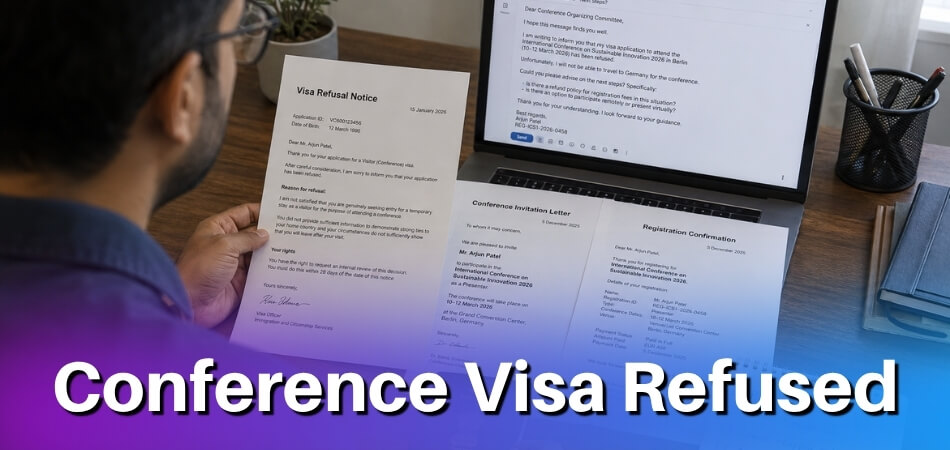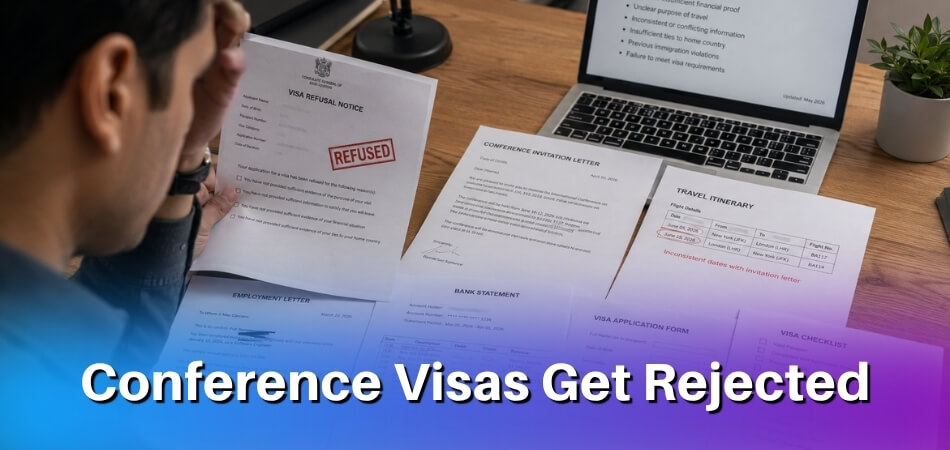

A refusal of your expedite request feels like a setback, especially when you had a real reason to ask for speed. The notice can be short and unclear, and it is easy to imagine the worst. Before you panic, it helps to see exactly what was turned down.
Quick answer: If an expedite request is denied, your main application is not denied with it. The agency has only refused to move your case ahead of the normal queue, so the case continues under standard processing with its original filing date. Keep attending appointments and answering notices. Some U.S. embassies allow only one expedite request per application, so ask again only where the agency accepts it and you have new facts or stronger evidence.
Fact-checked by the MS International Editorial Team. Last verified against official sources: October 2026.
An expedite request asks an immigration agency, visa office or consulate to handle a pending case faster than usual, normally because waiting would cause serious harm. These requests are discretionary, so a refusal is a real possibility, and applicants often assume the whole application is now at risk. It usually is not. This article explains what the denial changes, what it does not, and what to do next.
What Does an Expedite Denial Actually Mean?
A refused speed-up does not automatically refuse the application behind it. The agency has only decided not to move your case ahead of the regular processing line. Your application, petition or appointment request usually stays active and continues under standard review.
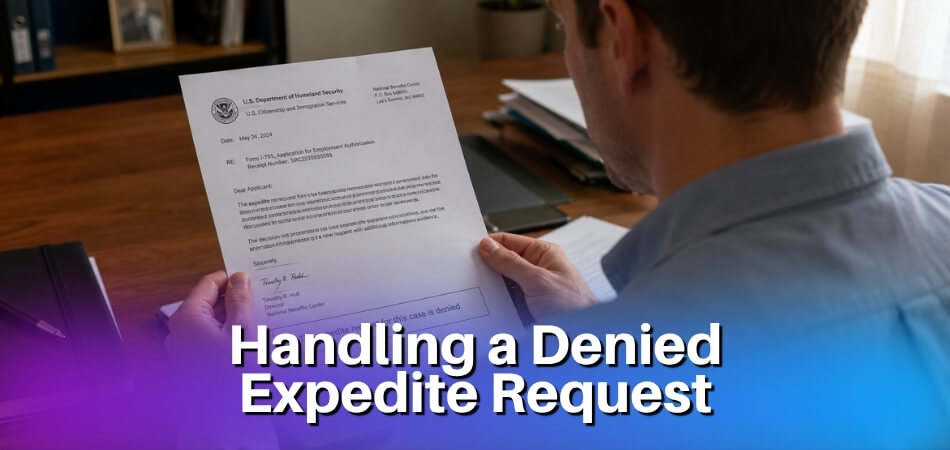
An expedite request is separate from the main application. The expedite request asks, “Should this case move faster?” The main application asks, “Does this applicant qualify?” Because the questions differ, an officer can refuse faster handling while the case itself stays eligible for approval. A denied expedite request means “not faster”. It does not mean “not qualified”.
In practice, a denial usually means:
- Your case returns to normal processing.
- Your receipt number or appointment request stays valid.
- Your original filing date is usually not reset, so you do not go to the back of the line.
- Your eligibility is still reviewed separately, on the law, your documents and any interview or checks.
- You can still be approved later, and you may be able to ask again if your situation changes.
Treat the denial as a refusal of the main case only if the agency sends a separate notice saying that the application itself has been denied, refused, rejected, withdrawn or closed.
You do not normally need to file a new main application. Refiling without a clear reason can create duplicate filings, extra fees and real delay.
Does a Denied Expedite Request Affect Final Approval?
No, a refused speed-up rarely changes the final result. Approval of your main application depends on whether it meets the requirements, not on whether the agency agreed to speed it up.
Expedite review is narrow. The officer checks whether the urgency claim and the evidence justify jumping the queue, and may not look at the main case in depth at that stage. The main review is broader and depends on things like correct forms and signatures, fees, proof of identity and purpose of travel, consistent information across documents, security or medical checks, interview results, and prior immigration history. An expedite request cannot repair a weak application, and a denied one does not damage a strong application.
Is a Denial a Negative Record?
The agency may keep an internal note that an expedite request was made and refused. That is not a refusal, violation or fraud finding, and it should not make a later officer suspicious by itself. What matters is that your statements are truthful and consistent.
There is one real exception. If the request contained false evidence, exaggerated facts or misleading claims, that can cause serious problems. Some U.S. embassies warn that a misrepresented reason for urgent travel is noted on the case file and may affect the visa decision. The danger then is the inaccurate information, not the denial.
What Happens to Your Case After the Request Is Denied?
After an expedite request is denied, the case normally returns to standard processing. The agency handles it under the usual timeline for that form, category, visa type and office.
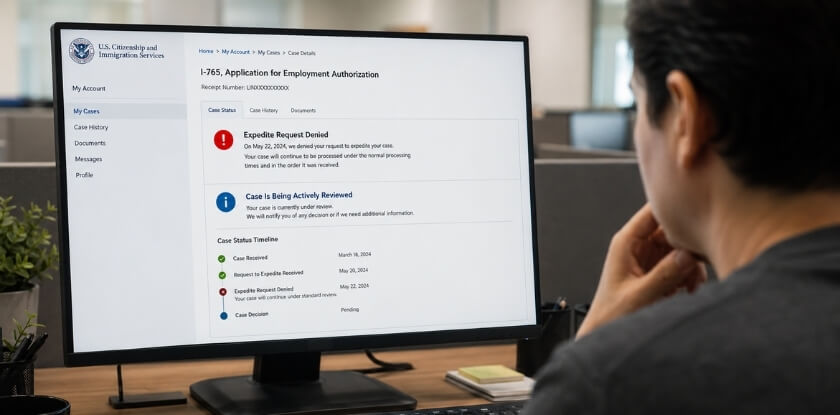
The denial does not add a separate delay, but the case can still take time for ordinary reasons: case volume, office workload, background checks, biometrics, interview scheduling, medical exams, missing documents, dependent applications or administrative review.
Online Status May Mention the Expedite Request
Some portals show a message such as “expedite request denied” or “case not expedited”. That message refers only to the speed request. Look at the separate status of the main application. If it still says pending, received, scheduled or processing, the case is still moving. Do not assume the worst unless the agency sends a separate decision on the main case.
Required Steps Still Apply
Biometrics, interviews, medical exams, security checks and evidence requests are not removed by the denial. Missing one of them does far more harm than the denial itself. For example, skipping a biometrics appointment or missing a request-for-evidence deadline can delay or damage the application.
No Formal Appeal Is Usually Available
Most expedite decisions are discretionary, so there is usually no formal appeal for the denial alone. U.S. embassy pages, such as those of the Dominican Republic and the United Kingdom, state plainly that a denied request for an earlier appointment cannot be appealed. You still have options: a new request with stronger proof, a paid priority service where one exists, a case inquiry once normal processing time has passed, or professional advice. These are covered below.
Common Reasons Expedite Requests Are Denied
Expedite requests are usually denied because the agency does not see enough urgency, evidence or basis for faster action. A situation can feel urgent to you and still fall short of the agency’s standard for moving one case ahead of others.
The Reason Is Not Urgent Enough
Wanting an answer sooner, reducing stress, starting work earlier or avoiding inconvenience is rarely enough. Planned events, routine travel, school plans and family visits often fail too. Official guidance gives examples of what does count. USCIS, for instance, looks at severe financial loss, urgent humanitarian situations such as serious illness or a death in the family, government or public interest, and clear agency error. It states that a wish to travel solely for vacation generally does not meet the definition of a pressing need, and that needing employment authorization alone does not warrant an expedite.
Conference Travel Is Often Excluded
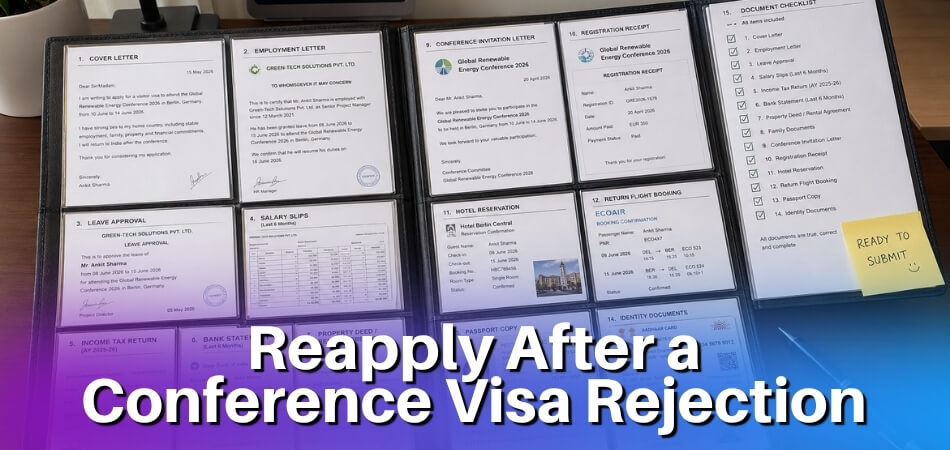
This matters for conference attendees. Many U.S. embassy visa pages say that travel to attend an annual business, academic or professional conference does not qualify for an expedited visa appointment, and ask applicants to book a regular appointment well in advance. Burkina Faso’s embassy explains why: attending an annual conference is not an “unexpected” need to travel. Some posts treat it differently, so check your own embassy page. The U.S. embassy in Portugal, for example, says attendees do not qualify but speakers or presenters with evidence of that role may, and it also lists having already booked a flight as a non-qualifying reason. Embassies also expect you to have completed the application form, paid the fee and booked the earliest available interview before they will even look at an expedite request. If your conference is in Canada, check how long a Canada conference visa takes and apply early.
The Evidence Is Too Weak
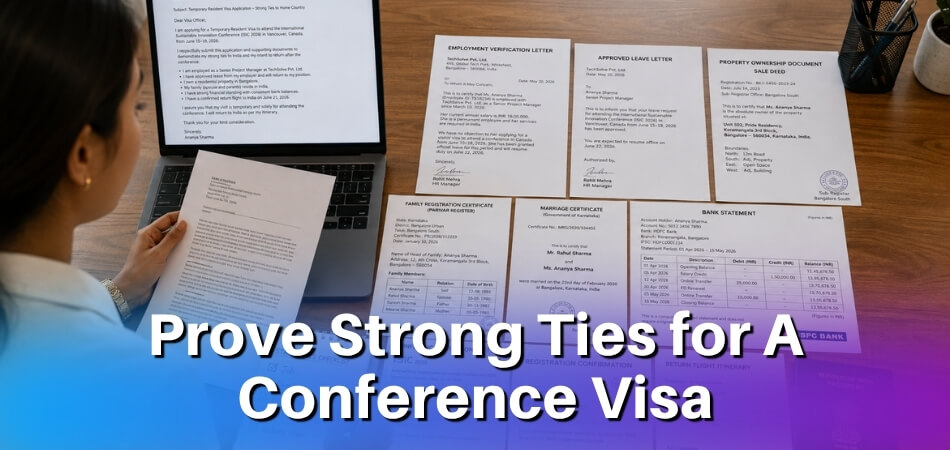
A written explanation alone is rarely enough. Useful evidence is specific, current and tied directly to the request:
- Medical letters or hospital records explaining the timing
- Employer letters with a specific deadline
- Financial loss records, contract termination or layoff notices
- Death certificates or funeral details, with proof of your relationship
- Government letters or proof of an agency mistake
A letter that only says “urgent” is not persuasive. A strong one gives the deadline, the consequence of delay and the link to the pending case.
The Urgency Was Self-Created
Agencies may refuse when the urgency comes from the applicant’s own delay, such as filing shortly before travel, waiting too long to renew, missing an appointment or ignoring a document request. USCIS says plainly that the need for urgent action must not be the result of a failure to file on time or to respond to a request for evidence. A late situation is not always hopeless, but the request must explain why the delay was unavoidable.
Steps Are Still Pending, or the Request Was a Repeat
A case may not be ready to move faster if biometrics, background checks, medical exams or documents are still outstanding. Finishing those steps helps more than another request. A repeated request that only says the case is still pending, the deadline remains or the same evidence is attached again will usually get the same answer.
A Paid Faster Option Exists
Where a premium or priority service exists for the case type, the agency may expect you to use it instead of asking for discretionary handling. Paid processing does not guarantee approval, but its timeline is usually more predictable.
What to Do After an Expedite Request Is Denied
After an expedite request is denied, your first priority is protecting the main application. Do not rush into another request until you know why the first one failed.
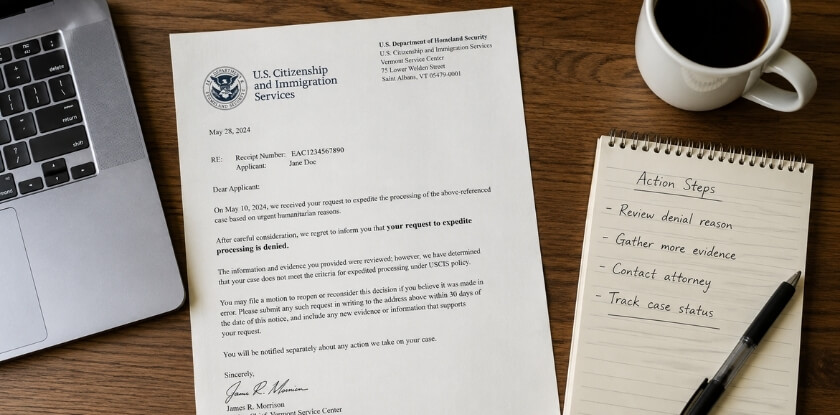
Read the Notice and Check the Main Case
Read the notice, email or portal message for clues: insufficient evidence, criteria not met, or simply “the case will continue normally”. Do not expect a detailed reason, because USCIS says it generally does not provide justification for expedite decisions. Check whether the message asks you to do anything. Then confirm in the official system that your receipt number is correct, the case is still pending, no evidence request or appointment has appeared, your address is right and no deadline is close. The main case status matters more than the expedite update.
Finish Every Pending Requirement
Complete any open biometrics, interview, medical exam, upload or evidence response as soon as possible, and keep proof: delivery confirmation for mail, screenshots for uploads, and the notice for any appointment you attend.
Keep One Organized File
Save receipt and appointment notices, copies of every form, the evidence sent with the main application and with the expedite request, the denial notice, delivery confirmations, portal messages and notes of calls. Label them with dates. It saves time if you later speak to a lawyer, congressional office or agency representative.
Get Help When the Case Is Complex
Family separation, job loss, medical hardship, dependents, prior refusals, status problems or very long delay are good reasons to speak to a qualified immigration lawyer or accredited representative. They can judge whether another request is worth filing and whether the main application has weaknesses.
Can You Reapply After an Expedite Request Is Denied?
Sometimes, but not everywhere: for a U.S. embassy visa appointment the answer can be no, and elsewhere a new request should be meaningfully stronger. What you can do depends on the agency.
For a U.S. embassy, check the post’s own page before sending anything. The embassy in Turkmenistan, for example, allows only one expedite request per application and says that if it is denied you cannot make a second one and should attend the regular appointment you booked. Other posts say a denial cannot be appealed.
USCIS asks applicants to make only one expedite request per case. If your circumstances change materially after a denial, a new request with new evidence is the only version worth sending, because the same explanation and documents are unlikely to change the result. Repeated unsupported requests only make the case record messy and distract from stronger actions.
A new request makes sense when something real has changed: a new emergency, a more serious hardship, a detailed doctor’s letter, a written employer deadline, proof of severe financial loss, or a clear agency error. If nothing has changed, wait or choose another route.
How to Write a Stronger Request
Keep it short and factual, without long emotional narratives. A good second request:
- Identifies the case with receipt number, form type, applicant name and filing date.
- States the urgent reason in one or two direct sentences.
- Explains what changed since the last request and why normal processing would cause serious harm.
- Connects the urgency to the pending application.
- Lists the attached evidence, which should be specific, recent and official.
Do not exaggerate, and do not submit documents that conflict with the main application.
Alternatives to Filing Another Expedite Request
Another expedite request is not always the best option. Depending on the agency and your timeline, a different route may be more practical.

Premium or Priority Processing
Some applications qualify for paid faster handling. Before paying, confirm that your exact form or category qualifies, the service is currently offered, dependents are included or priced separately, and the case is complete enough that missing evidence or checks will not still hold it up.
Official Case Inquiry
If the case is outside normal processing time, an inquiry may work better than a second expedite request. An expedite request asks for faster handling because of urgent harm. An inquiry asks why the case is delayed beyond normal expectations.
Congressional Inquiry and Ombudsman (U.S. Cases)
A senator’s or representative’s office can contact the agency for an update. This does not force approval, but it can expose unusual delay or missing notices. For USCIS cases, the CIS Ombudsman can sometimes help with delayed or problem cases, but it cannot grant an expedite request or overturn one USCIS denied, and it generally expects you to have contacted USCIS first.
Paid Expedited Appointment Pilot at Some U.S. Posts
From 1 July to 31 December 2026, the State Department is running a pilot that lets some B-1/B-2 applicants pay US$750 to request an expedited interview appointment. It runs only at designated posts, and Mission Mexico was the first one announced in July 2026. The fee speeds the interview date, not the decision, and it gives no advantage in the visa decision. Consular officers can still grant free expedites in cases such as humanitarian circumstances, so check travel.state.gov and your embassy’s page to see whether your post takes part.
Emergency Travel or Special Relief
Some cases allow emergency appointments or travel permission for medical issues, a death or family hardship. Before you travel, confirm whether leaving the country could affect your pending application, status or ability to return.
Legal Help for Extreme Delays
In rare U.S. cases, a lawyer may discuss a writ of mandamus, which asks a federal court to act on unreasonable delay. It does not ask the court to approve the application. It involves cost and risk, so use it carefully.
Expedite Denial by Agency or Application Type
Expedite denial does not work the same way in every system. The terms and rules differ, but the general idea is similar: faster handling is refused, while the main case continues.
| Agency | What a denial usually means | What to do next |
| USCIS | Benefit request is not prioritized; the case stays active | Keep answering notices; consider an inquiry once outside normal processing time |
| U.S. embassy or consulate | No earlier interview date; the visa itself is not refused | Keep the regular appointment and watch for openings |
| IRCC (Canada) | Application stays in the normal stream | Keep tracking the case and answering document requests |
| UKVI | Standard processing continues | Check whether a paid priority service is available for your visa |
For a U.S. embassy, the visa decision is made later, on the interview, documents and eligibility. Embassy pages advise checking the appointment system regularly for cancellations and newly opened dates. Posts also say that an applicant who is later refused, or who misses the interview, cannot get another expedited appointment. The embassy in the United Kingdom adds that it cannot refund fees because an appointment was not available before your travel date.
For IRCC, urgent handling depends on the application type. IRCC publishes urgent-processing routes for products such as PR cards and citizenship certificates, and an eTA application lets you explain the urgent reason for travel. IRCC’s contact page says it cannot speed up processing unless you are already eligible for urgent processing, and that sending another web form does not make an application move faster. If your application is past its normal processing time, the same web form has an option to ask about it. When a Canada visitor visa is taking so long, the usual causes are heavy application volume, biometrics not yet given or a request for extra documents. Separately, IRCC’s Ebola measures, in place to 27 November 2026, mean applications from people whose last country of residence is the Democratic Republic of the Congo, South Sudan or Uganda are processed but not finalized, so a speed-up request does not change that.
For UKVI, faster handling is mostly paid. On GOV.UK, applicants inside the UK can pay an extra £500 for a decision usually within 5 working days or an extra £1,000 for one by the end of the next working day, where eligible. Fees and eligibility differ for applications made outside the UK, so check the current GOV.UK page. A priority service speeds the decision, not the outcome.
Discretionary Expedite vs. Paid Priority Service
| Feature | Discretionary Expedite Request | Paid Priority Service |
| Purpose | Ask for faster handling due to urgency | Pay for faster review where available |
| Availability | Limited and case-specific | Only for eligible categories |
| Evidence | Usually required | Standard case documents usually required |
| Approval guaranteed? | No | Faster review may be expected, but approval is not guaranteed |
| If denied or unavailable | Case continues normally | Case continues under standard processing |
If paid priority is available, it is usually more predictable. If not, a well-supported request or an official delay inquiry may be the better route.
Mistakes to Avoid After an Expedite Request Is Denied
The biggest mistake after an expedite denial is reacting without a plan. Besides the points above (treating the denial as a refusal, resending the same request, missing normal deadlines), watch for these.
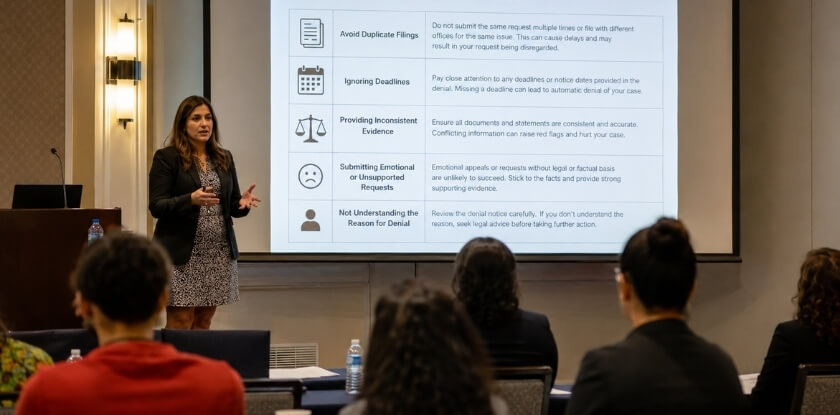
Traveling Without Checking
An expedite denial does not give travel permission, and it does not protect you from the consequences of leaving while a case is pending. Confirm whether travel could affect your application, status, reentry or appointments.
Withdrawing Too Quickly
Withdrawing the main application is usually unnecessary. Before you do, ask whether refiling would reset your timeline, whether fees are refundable, whether dependents are affected and whether the application can still be approved.
Emailing the Embassy to Argue the Decision
Some embassies ask applicants not to send a separate email requesting reconsideration after a denial, and say each request is evaluated on the information provided. A follow-up email without new facts will not reopen the decision.
Relying Only on Forums or Social Media
Personal stories can help, but outcomes vary by agency, evidence, case type and officer discretion. Base your decision on your own case and official instructions.
From our experience at MS International: Registered delegates can ask us for a Visa Expedite Request Letter. It confirms your registration and the event details, but it only supports a request. It does not guarantee approval or faster processing, and the embassy alone decides. Because many embassies do not treat annual-conference travel as urgent, book the regular appointment as soon as your invitation letter arrives (we issue it within 3 to 5 business days after payment clears) and avoid non-refundable travel plans until the visa is in your passport.
Frequently Asked Questions About Expedite Request Denials
When an expedite request is turned down, the next moves are less clear: appealing, sending a second request, travelling, refunds, effects on dependents or your employer and a US appointment needed for a conference.
Will an Expedite Denial Delay My Application?
No, an expedite denial usually does not add a separate delay to the main application. The case continues under standard processing, though background checks, missing evidence, interview scheduling or workload can still take time.
Can I Appeal an Expedite Request Denial?
No, there is usually no formal appeal for an expedite denial. These decisions are discretionary, and some U.S. embassies state that a denial cannot be appealed. Where the agency allows another request, send one only when circumstances change or stronger evidence appears.
Can I Expedite a U.S. Visa Appointment to Attend a Conference?
Usually not for an annual conference. Many U.S. embassies list it as non-qualifying and ask for a regular appointment well in advance. Some posts, such as Portugal’s, consider speakers or presenters with proof of their role, so check your embassy’s page.
Will I Receive a Refund After a Denial?
Most expedite requests have no separate fee, so there is usually no refund. The fee for the main application still applies, and at least one U.S. embassy says it cannot refund fees when no earlier appointment is available. Refund rules for paid priority services depend on the agency.
Does the Denial Appear on My Immigration Record?
The agency may keep an internal note, but it is not usually a negative immigration mark. It is not a visa refusal or finding of ineligibility, but a misrepresented reason for urgent travel can be noted and cause serious problems.
Will My Employer Be Notified?
Usually not, unless the employer is the petitioner, sponsor or authorized contact. In employer-filed cases the employer or attorney may receive updates.
Can Dependents Be Affected?
A denied expedite request does not automatically harm dependent applications. If dependents also need faster handling, their urgency may need to be explained separately.
Can I Send a Second Expedite Request?
It depends on the agency, and at some U.S. embassies the answer is no. Some posts allow only one request per application, and USCIS asks for only one per case. Ask again only if the agency allows it and you have new evidence.
Should I Contact the Agency Again?
Only when there is a clear reason: new emergency evidence, a missed notice, incorrect case information, or a case outside normal processing time. Repeated contact without new facts usually does not help.
Can I Travel After an Expedite Denial?
Travel depends on your visa, status and pending application type. The denial itself neither approves nor blocks travel. Confirm first that leaving will not abandon your application or cause you to miss an appointment.
Can My Case Speed Up Later Without Another Request?
Yes, a case can move faster later without another expedite request. Completed checks, appointment availability and normal queue movement can all help. Keep your file complete and respond quickly to notices.
Conclusion
An expedite denial can feel discouraging, but it only means the agency will not move your case ahead of normal processing at this time. Your application stays active and is decided on its own merits.
Stay organized, finish every pending requirement and answer notices on time. Ask again only with new evidence, or consider a paid priority service, an official inquiry or professional help where your case type allows.
Disclaimer: This article is general information, not legal or immigration advice. Rules and fees change, so confirm details with the official agency or a licensed professional before you act.