
A conference means a registration fee, travel, and several days away from your desk, so it is fair to ask whether it pays off. This guide gives ten concrete reasons to go, shows who benefits most, and explains how to make the case for the cost to an employer or sponsor.
Quick answer: The top reasons to attend a conference are practical learning, industry updates, access to experts, professional connections, new opportunities, feedback on your work, communication confidence, new tools, fresh motivation, and a peer community. It is worth the cost when the event matches one clear goal, you prepare before you go, and you follow up within days afterward.
Why Conferences Still Matter for Professional Growth
Conferences remain valuable because they combine learning, networking, visibility, and motivation in one focused place. Instead of learning alone or relying only on online resources, you can hear from experienced speakers, ask questions, compare ideas with peers, and make connections that may support future goals.
For many people, the biggest benefit is access. In a short period you can meet industry experts, researchers, employers, business partners, tool providers, mentors, and like-minded attendees. That makes it easier to see what is changing, where opportunities are growing, and how others are solving problems similar to yours.
Top 10 Reasons to Attend a Conference
The ten reasons below cover practical knowledge, trends, expert access, connections, opportunities, feedback, confidence, tools, motivation, and community. A good conference gives you more than information: it gives you expert thinking, real conversations, fresh tools, and people who can influence your next academic, career, or business step.
1. Gain Practical Knowledge You Can Apply
Conferences often focus on real problems, current methods, and practical solutions. Instead of learning only from articles, textbooks, or recorded lessons, you can see how professionals, researchers, and industry leaders apply ideas in real situations.
This is especially useful in workshops, case studies, live demonstrations, and panel discussions. A marketing professional may learn a better campaign process. A researcher may discover a stronger way to present data. A business owner may find a practical way to improve customer experience. You leave with ideas you can test, adapt, or apply after the event.
2. Keep Up With Industry Trends and Changes
Industries change through new technology, customer behavior, regulations, research, and professional standards. Conferences help you understand these changes before they become difficult to ignore.
Trend-focused sessions often show what experts are watching, what organizations are testing, and what skills may become more important. This helps you stay prepared instead of reacting late.
| What You Learn | Why It Matters |
| New tools | Helps you improve workflow or decision-making |
| Industry challenges | Shows what problems others are trying to solve |
| Emerging skills | Helps you plan career or team development |
| Market shifts | Supports smarter business or research decisions |
Staying current is a reason to return to the same conference series year after year.
3. Learn From Experienced Speakers and Subject Experts
Speakers, trainers, researchers, executives, and subject experts often share lessons from real projects, not just general theory. Their insights show what works, what fails, and which mistakes to avoid. A short expert session can sometimes clarify a topic faster than hours of independent research.
You may also get to ask questions during Q&A sessions, roundtables, or informal discussions. That interaction makes the learning more personal and relevant to your own goals.
4. Build Valuable Professional Connections
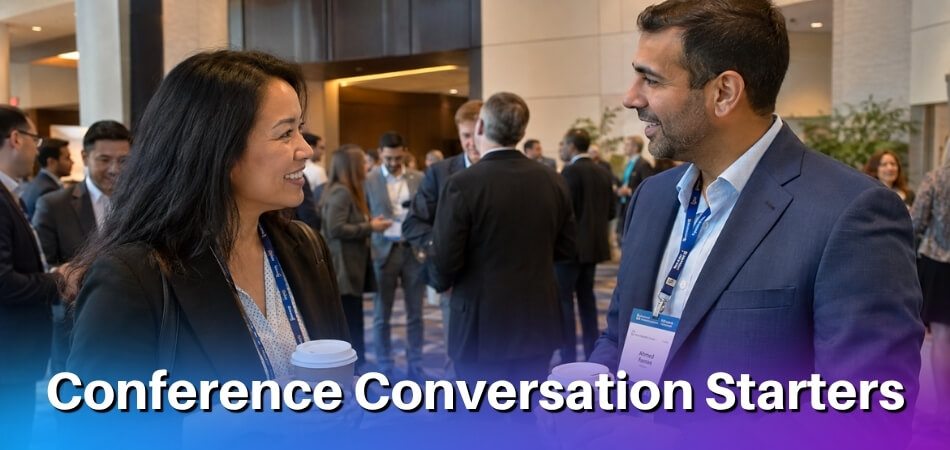
Networking is one of the most important reasons to attend a conference. The event brings together people who already share a field, topic, or professional interest, so conversations are easier to start. They can happen in scheduled networking sessions, but also during coffee breaks, workshops, exhibitor visits, or a short chat after a presentation.
A single strong connection can lead to a mentor, referral, collaboration, client discussion, research partnership, or future event invitation. The goal is not to collect as many contacts as possible. It is to meet relevant people and continue the right conversations after the event.
5. Discover Career, Business, or Academic Opportunities
Some opportunities are easier to find through direct interaction than online searching. At a conference you may hear about open roles, research ideas, funding options, partnership needs, freelance projects, or market gaps before they become widely known.
For professionals, this could mean a career lead or leadership path. For students and researchers, it could mean academic programs, publishing opportunities, or collaboration ideas. For entrepreneurs, it could mean investors, vendors, partners, or early customers. When you know what you are looking for, the right conversation is much easier to recognize.
6. Present Your Work and Receive Constructive Feedback
Presenting gives you a chance to test your ideas in front of people who understand your field. This is valuable for researchers, students, startup founders, and anyone developing a project, paper, product, or proposal.
Feedback can reveal weak points, missed angles, unclear explanations, or stronger directions. Even one short question from the audience can help you improve your work before publishing, launching, or presenting it elsewhere. Presenting also builds credibility, because it shows you are active in your field and willing to contribute to the wider conversation. Some academic conferences also consider accepted papers for proceedings or a related journal, so read the call for papers to see what applies.
7. Improve Communication and Professional Confidence
Conferences create small moments of communication practice. You may introduce yourself, ask a speaker a question, join a group discussion, explain your work, or talk to someone you have never met.
These interactions happen in a professional but focused setting, so confidence builds with repetition. Over time this can improve how you speak in interviews, meetings, presentations, academic discussions, or client conversations.
8. Explore New Tools, Technologies, and Ideas
Many conferences include product demos, exhibitions, sponsor booths, research displays, or technology showcases. The benefit is hands-on comparison: you can ask questions, see how something works, and decide whether it fits your work, research, or business.
You might find a project management platform, research tool, analytics system, or technical solution that saves time or improves quality. Even when you do not buy or adopt anything right away, exposure to new ideas improves future planning.
9. Step Away From Routine and Renew Motivation
A conference gives you space outside your normal work or study routine. That change of environment makes it easier to think clearly, reflect on your goals, and return with fresh energy.
It is not only about feeling inspired. You see what others are building, learn how they solve problems, and realize what is possible in your field. Sometimes one strong talk or one meaningful conversation is enough to restart momentum on a project, career goal, or business idea.
10. Become Part of a Like-Minded Professional Community
Conferences bring together people with similar interests, challenges, and ambitions. That can matter a lot if your work, research, or business often feels isolated.
A conference community may continue through online groups, repeat events, professional associations, academic networks, or informal peer circles. This sense of belonging is one reason many attendees return to the same conference series: they are not only attending sessions, they are staying connected to a professional community.
Who Benefits Most From Attending Conferences?
Conferences benefit students, researchers, professionals, managers, entrepreneurs, and business teams in different ways. The value depends on whether the attendee wants to learn, network, present work, find opportunities, or understand industry changes.
| Attendee Type | Main Conference Value |
| Students and graduates | Career exposure, mentors, internships, and real-world learning |
| Researchers and PhD scholars | Feedback, visibility, methods, publication ideas, and collaboration |
| Early-career professionals | Skill growth, confidence, networking, and career direction |
| Managers and team leaders | Leadership ideas, team tools, process improvements, and strategy |
| Entrepreneurs and founders | Market feedback, partners, investors, vendors, and customers |
| Sales and business teams | Leads, buyer insights, relationships, and competitive awareness |
Students and Recent Graduates
Students can connect classroom learning with real-world practice, meet mentors, and see which skills matter in their field.
Researchers and PhD Scholars
Researchers present findings, receive feedback, and follow current work in their discipline. These events can also support academic visibility, publication ideas, and future collaboration.
Early-Career Professionals
Early-career professionals build practical knowledge and industry awareness, meet peers and mentors, and identify the skills they need to develop next.
Managers and Team Leaders
Managers often attend to find ideas they can bring back to their teams, such as leadership strategies, productivity tools, process improvements, or better ways to respond to industry change.
Entrepreneurs and Startup Founders
Entrepreneurs can test ideas, study market needs, and speak with investors, vendors, or early customers. Direct feedback can help improve a product, service, or business model.
Business Development and Sales Professionals
Sales and business development professionals meet prospects, learn buyer needs, and build relationships in a more natural setting. The best results come from listening first and following up later.
How to Choose the Right Conference for Your Goals
To choose the right conference, match the event with your goal, field, experience level, budget, format, and networking needs. A good conference should offer relevant sessions, credible speakers, useful attendees, and clear value for your time and cost.

Start With One Clear Goal
Decide what the conference should help you achieve. Your goal may be to learn a skill, meet clients, present research, find partners, earn credits, explore tools, or understand industry trends. Without a goal it is hard to choose sessions, pick the right people to approach, or judge afterward whether the event was worth it. A networking-focused attendee should prioritize audience quality. A learning-focused attendee should look for workshops, case studies, and expert sessions.
Check Topic and Audience Fit
The event should match your industry, role, academic area, or business interest. Review the theme, session categories, speaker backgrounds, target audience, and past agendas before registering. Avoid events that combine too many unrelated topics without a clear purpose.
Review the Agenda and Speakers
The agenda shows what the event will actually deliver. Look for sessions that match your goal and offer practical value.
| If Your Goal Is… | Look For… |
| Learning skills | Workshops, demos, tutorials, and case studies |
| Networking | Breaks, roundtables, meetups, and attendee access |
| Research growth | Paper sessions, poster sessions, and academic panels |
| Business growth | Exhibitors, sponsors, buyer groups, and partnership sessions |
| Career development | Industry talks, recruiters, mentoring, and certification options |
A speaker does not need to be famous to be useful. What matters is relevant experience and clear subject knowledge.
Check Reputation, Cost, and Red Flags
A trustworthy conference has clear organizer details, previous event records, real contact information, transparent registration terms, and a visible agenda. Also review the full cost, including registration, travel, accommodation, meals, visa costs, materials, and time away from work or study.
Be cautious if the event has vague details, unverified speakers, unrealistic promises, unrelated topics, poor communication, or unclear registration and refund terms. The cheapest event is not always the best option and the most expensive is not always the most valuable, so judge the agenda, speakers, and attendees as well as the ticket price.
When a Conference Is Not Worth It
Sometimes the honest answer is to skip an event or wait for a better one. Check these practical points first:
- You cannot name one goal the event would serve.
- The full cost, including time away, is more than you can justify.
- The sessions you need are available free as recordings or articles, and you do not need the people.
- You have no time to follow up in the week afterward.
Also remember that a conference with parallel tracks lets you see only part of the programme, and session quality can vary. Reading the agenda and speaker backgrounds first lowers that risk.
How to Justify Conference Costs With ROI
Conference ROI means comparing the total cost of attending with the value you expect to gain from the event. That value may come from new skills, useful contacts, business leads, professional credits, time-saving ideas, or team improvements.
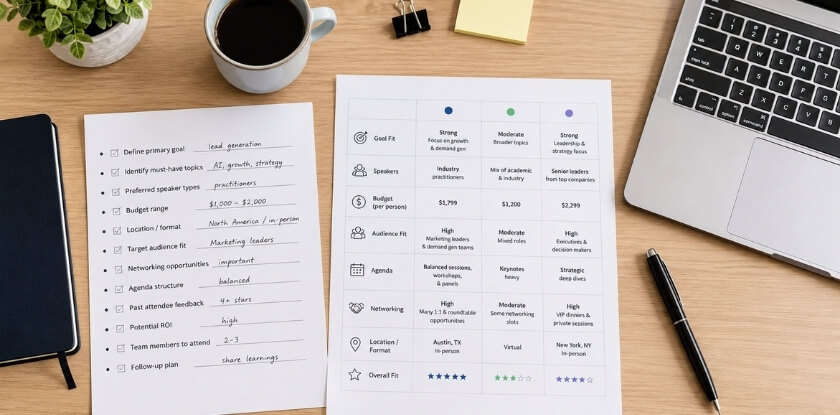
What Conference ROI Means
ROI stands for return on investment. For conferences, ROI is not always only financial. A new client lead, improved skill, stronger process, research feedback, or valuable contact can all count as returns.
Costs to Include
When calculating conference cost, include:
- Registration fee
- Travel
- Hotel or accommodation
- Meals and local transport
- Visa or document costs, if needed
- Materials or equipment
- Time away from work, business, or study
Simple Conference ROI Formula
Use this formula:
Conference ROI = (Expected Benefits − Total Cost) ÷ Total Cost
For example, if the total conference cost is $1,700 and you estimate the benefit at $3,200 (example figures only), the ROI is:
($3,200 − $1,700) ÷ $1,700 = 0.88, or 88%
This means the expected return is higher than the cost. The benefit figure is your own estimate, so be honest about it and name how you arrived at it.
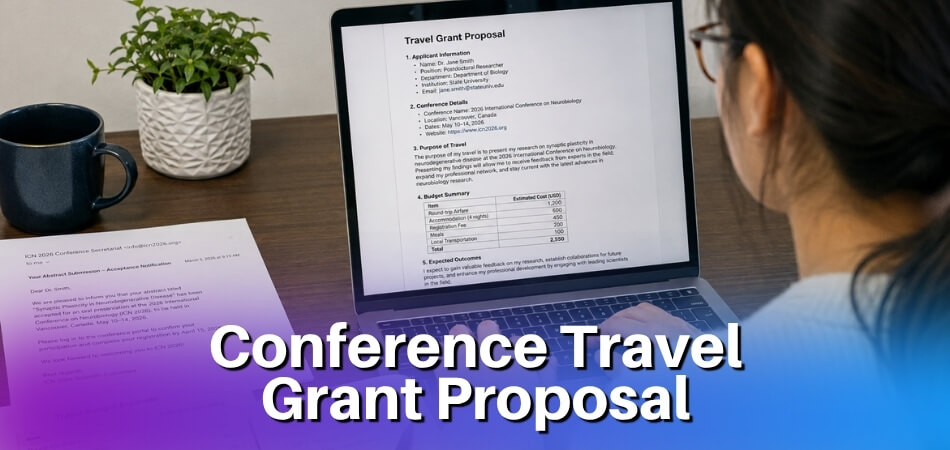
How to Justify the Trip to Your Employer or Sponsor
A strong request shows that the event supports a real business, academic, or professional goal instead of being only a personal expense. Put the following in one short message:
| Include | What to Say |
| Event and dates | Conference name, location, and how many days you will be away |
| Total cost | The full list from the section above, not only the registration fee |
| Relevant sessions | Two or three sessions linked to a current project or team problem |
| Expected benefit | The skill, contact, or idea you expect, and your ROI estimate |
| What you will share | A written summary or short team briefing after the event |
Name the registration deadline if early registration is cheaper, and say how you will keep costs down, for example by sharing a room or paying part of the cost yourself. Also say how your work will be covered while you are away. Expect that an employer may agree to part of the cost or to paid time off only, so decide in advance what you can accept.
A sample request you can adapt:
Hello [Manager’s name],
I would like your approval to attend [Conference name] in [City] on [dates]. The total cost is [amount], covering registration, travel, and accommodation. The sessions on [topic 1] and [topic 2] relate directly to [current project]. Within a week of returning I will send a one-page summary and offer a short briefing for the team. Can we talk about this on [day]?
Thank you,
[Your name]
In-Person vs Virtual vs Hybrid Conferences
In-person, virtual, and hybrid conferences all offer value, but the best choice depends on your goal. In-person events are stronger for networking, virtual events are better for convenience and lower costs, and hybrid events offer flexible access.
| Format | Best For | Main Advantage | Main Limitation |
| In-person | Networking, workshops, relationship-building | Stronger face-to-face interaction | Higher cost and travel time |
| Virtual | Learning, accessibility, budget control | Lower cost and easier access | Less natural networking |
| Hybrid | Flexibility and wider access | Combines live and online options | Quality depends on event setup |
Choose in-person if you want live discussion, deeper networking, or hands-on participation. Choose virtual if your main goal is learning with lower cost and less travel. Choose hybrid if you want access to both live and digital benefits. The best format is the one that matches your goal and gives the strongest return for your time and budget.
How to Prepare Before Attending a Conference
Preparing before a conference helps you attend with purpose, choose better sessions, meet the right people, and return with useful takeaways. A simple plan makes the event more productive and less stressful.
Plan Your Schedule Around Your Goal
Review the agenda and pick the sessions that match the goal you set. Do not try to attend everything: a full schedule leaves little time to reflect, network, or follow up, and it often leads to fatigue and poor retention. Leave space between sessions, because breaks are when you process what you learned, speak with other attendees, or visit exhibitors.
Check the session description, speaker background, and topic level, since a title can sound interesting while the content is too basic or too advanced. Choose a workshop for hands-on practice, a panel discussion for several expert views, or a research presentation for academic depth.
Research People You Want to Meet
Look up speakers, moderators, exhibitors, or attendees you may want to connect with. If the event has an app, attendee list, or networking platform, use it before the conference starts. A short message beforehand can make it easier to arrange a quick conversation during a break.
Prepare Your Introduction and Profile
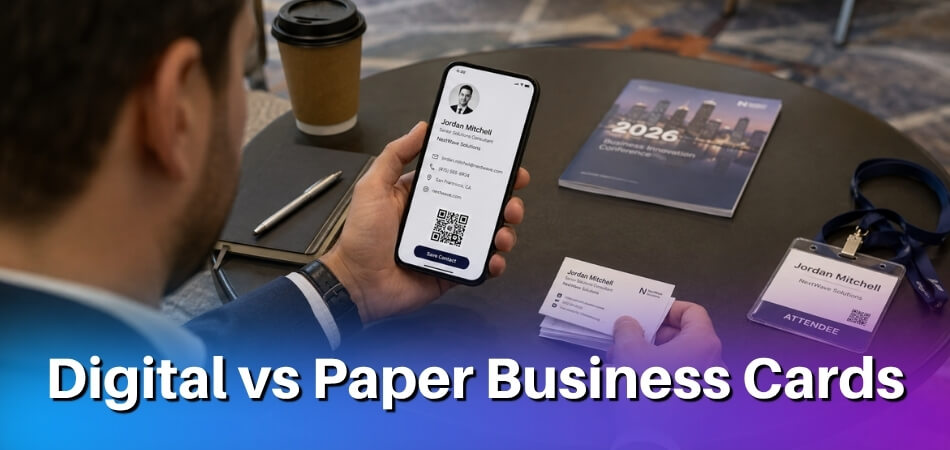
Create a short introduction that explains who you are, what you do, and why you are attending. Update your LinkedIn profile, portfolio, website, or professional bio so new contacts can quickly understand your background. If useful, prepare a QR code, digital business card, or simple contact-sharing method.
Organize Materials and Technology
For in-person conferences, prepare your registration confirmation, ID, travel details, charger, power bank, notebook, laptop, business cards, and any presentation materials. For virtual or hybrid conferences, test your internet connection, login link, camera, microphone, and event platform before the first session.
What to Do After a Conference
After a conference, follow up with new contacts, organize your notes, share useful takeaways, and turn the best ideas into action. This keeps the value of the event alive instead of letting new connections and lessons fade.
Follow Up With New Contacts
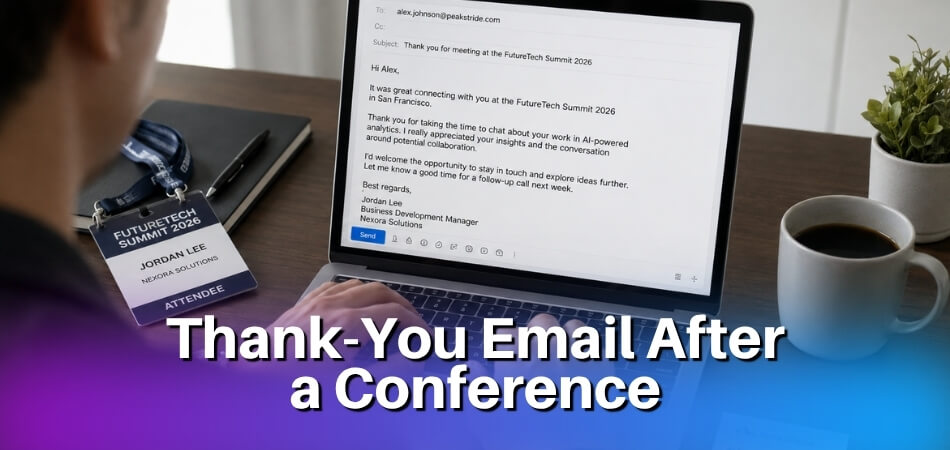
Send follow-up messages within a day or two while the conversation is still fresh. Mention where you met, what you discussed, and one simple reason to stay connected. A short, specific message works better than a generic connection request, and it can lead to a call, referral, collaboration, introduction, or helpful resource. If you promised to send a link, share a file, or make an introduction, do it quickly. Following through builds trust.
Organize Your Notes
Review your notes soon after the event and sort them into useful groups. For each lesson, write the key idea, how it applies to your goal, and the next step you will take.
| Note Type | What to Capture |
| Key lessons | Ideas, frameworks, or methods worth remembering |
| People | Names, roles, contact details, and discussion topics |
| Tools | Software, platforms, books, templates, or resources mentioned |
| Opportunities | Job leads, research ideas, partnerships, clients, or collaborations |
| Action items | Tasks you want to complete after the event |
Notes only help when they lead to action, so a long record of quotes with no next step is not worth much.
Share Useful Takeaways
If you attended for work, study, research, or business, share the most valuable insights with others. A short recap email, team presentation, checklist, resource list, or action summary works well. This matters most when an employer, team, sponsor, or institution supported your attendance.
Turn Ideas Into Action and Track Results
Choose a few realistic ideas to apply first rather than everything at once. Focus on actions that are relevant, easy to test, and connected to your goals, such as scheduling one follow-up call, testing one new workflow, reviewing one tool, or updating one project based on conference feedback.
After a few weeks, review what came from the event: contacts, calls, leads, skills applied, feedback used, tools tested, or improvements made. This shows whether the conference was worth the time and cost.
Stay Connected With the Community
Many conferences continue through event apps, online groups, email lists, social media pages, or future editions. Stay connected with the people and communities that are relevant to your goals.
Common Mistakes to Avoid When Attending a Conference
The biggest mistakes are going without a clear goal, picking sessions randomly, skipping networking, taking notes without action steps, and failing to follow up. Treating a conference as a passive event reduces its value. You need a plan before, active participation during, and follow-up after.

| Mistake | Better Approach |
| Attending without a clear goal | Pick one main purpose and use it as a filter for sessions, people, and results to track |
| Choosing sessions randomly | Read the description, level, and format, then match it to your goal |
| Ignoring networking | Ask one question after a session or start a short chat at a break; aim for relevant people, not everyone |
| Trying to attend every session | Choose fewer high-value sessions and leave time to reflect and talk |
| Taking notes with no action steps | Record the key idea, use case, and next step |
| Forgetting to follow up | Message new contacts within a day or two |
| Judging value only by ticket price | Compare the agenda, speakers, attendees, and networking access, not the fee alone |
A conference is worth attending when it helps you gain useful knowledge, meet relevant people, solve a problem, improve your work, or create future opportunities. Price matters, but the real measure is the return you get.
From our experience at MS International: Our conferences are held in person at venues in the Greater Toronto Area. You can register as a listener to attend without presenting, or submit your work for double-blind review (typically about 10 working days) and register after acceptance. Registration fees are non-refundable and non-transferable.
FAQs About the Top Reasons to Attend a Conference
Deciding whether a conference is worth the trip? Career growth, value for students, persuading your employer to pay and the downsides are the points weighed here.
Is Attending a Conference Worth It?
Yes, when you go with one clear goal, the audience matches your work, and you follow up afterward. Without a goal or a plan, free recordings and articles may give you the same knowledge for less.
What Is the Biggest Benefit of Attending a Conference?
The biggest benefit is combining learning and networking in one focused setting. You hear from experienced speakers, ask questions, and meet people in your field, which online research alone rarely matches. Which of the two matters more depends on your goal.
Can Conferences Help With Career Growth?
Yes, conferences can support career growth by helping you learn new skills, meet industry contacts, understand job trends, and improve professional visibility. You may also meet people who offer advice, referrals, or mentoring.
Are Conferences Useful for Students?
Yes, they connect classroom learning with real-world knowledge. Students can hear from experts, explore career paths, meet researchers or employers, and see which skills are valued in their field.
How Do Conferences Help With Networking?
They bring together people who already share a field, topic, or professional interest. That makes it easier to start conversations that may lead to mentorship, referrals, collaborations, or client leads.
What Should I Bring to a Conference?
Bring items that keep you organized, comfortable, and ready to connect. For an in-person event: registration confirmation, ID, notebook, pen, charger, power bank, business cards or digital contact details, and presentation materials if you are speaking.
How Can I Persuade My Employer to Pay for a Conference?
Send a short written request with the total cost, two or three sessions tied to a current project, and what you will share afterward. Offering to cut costs or cover part of the fee makes a yes easier.
How Can I Make a Conference More Productive?
Set a clear goal, choose sessions carefully, take action-focused notes, meet relevant people, and follow up afterward. The aim is not to attend everything but to focus on what supports your learning, networking, or career needs.
Should I Attend a Conference in Person or Online?
Attend in person if networking and live discussion are your top priorities; choose online if cost and flexibility matter more. A hybrid event suits you if you want both live and digital benefits.
What Are the Disadvantages of Attending a Conference?
The main drawbacks are cost, days away from work, uneven session quality, and information overload. You can limit them by choosing the event against one goal, reading the agenda first, and planning follow-up time.
Final Thoughts
Attending a conference is worth it when you want to learn from experts, build meaningful connections, stay updated on trends, and find new career, academic, or business opportunities. Choose an event that matches your purpose, prepare before you go, stay active during the sessions, and follow up when it ends. If you need approval to attend, put the cost and the expected return in writing.