Plenary Speakers vs. Keynote Speakers: Differences & Roles

Are you planning a conference and struggling to decide — should you book a plenary speaker or a keynote speaker? You’re not alone. Most event organizers, conference program committees, and even speaker bureaus use these two terms interchangeably. That’s a mistake that can lead to mismatched expectations, awkward scheduling, and a speaker fee conversation that goes sideways fast.

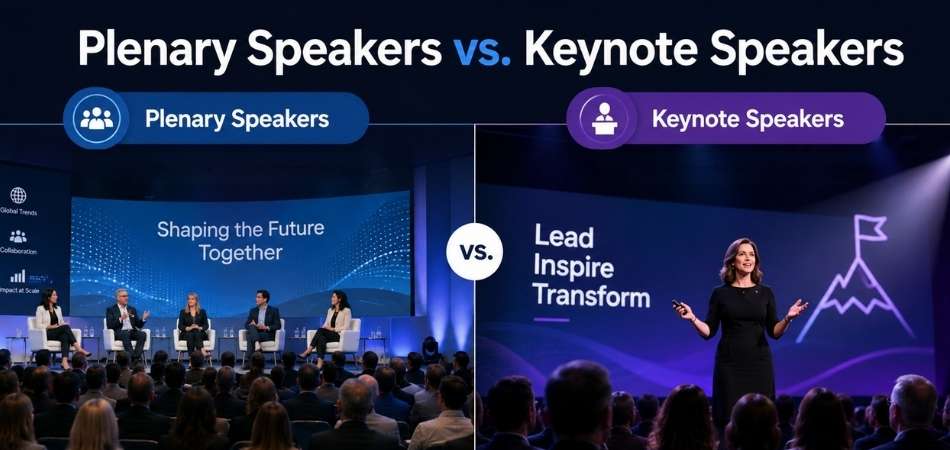
Here’s the short answer: A plenary speaker addresses all attendees in a general session held throughout a conference — not just at the opening or closing — with the primary purpose of educating or updating the audience on a core topic. A keynote speaker, in contrast, typically appears at the opening or closing of an event to motivate, inspire, or set the tone. For example, at a medical conference, a leading researcher may deliver a plenary talk on new treatment guidelines for all delegates, while a renowned physician delivers the opening keynote address to energize attendees. Both address the full audience, but their roles, timing, and goals differ significantly.

Think about how a scientific conference or academic conference is structured. The plenary session sits inside the main program as a substantive educational block — something a continuing medical education (CME) event might require to meet accreditation standards. The keynote, by contrast, is often the moment the World Economic Forum or a TED Talk-style event builds its entire marketing campaign around. One informs. The other ignites. And the honorarium each commands can reflect that difference dramatically.

By the time you finish reading this guide, you’ll know exactly how to tell these two speaker types apart, which one actually fits your event’s purpose and timeline, what a realistic speaker fee looks like for each, and — if you’re on the other side of the table — what it takes to become either one yourself.

Plenary Speakers vs. Keynote Speakers Differences & Roles

Plenary Speaker vs Keynote Speaker — Quick Comparison at a Glance

These two roles get mixed up constantly — even by experienced event organizers. The table below breaks down the core differences so you can make a clean decision when building your conference program.

FactorPlenary SpeakerKeynote Speaker
RoleAddresses the full conference body on a topic central to the entire event themeSets the tone or energy for a specific segment — often the opening or closing
Session typePlenary session — all attendees required or expected to attendKeynote address — typically the marquee slot, but not always mandatory
TimingUsually mid-conference; can anchor any full-assembly momentAlmost always opens the event (or closes it)
PurposeShare authoritative findings, frameworks, or perspectives relevant to every attendeeInspire, energize, or frame the big narrative arc of the event
AudienceEntire conference — no breakouts, no competing sessions running simultaneouslyEntire conference at opening/closing; occasionally a single-track audience
Content styleOften academic or technical; common at medical conferences, scientific conferences, and academic conferences with CME requirementsMore narrative-driven; think TED Talk format rather than research paper
Who typically fills the roleSenior researcher, department head, policy leader, or invited speaker with domain authorityCelebrity expert, industry thought leader, or high-profile name sourced through a speaker bureau
Speaker fee / honorariumVaries widely — academic conferences often pay an honorarium plus travel; corporate events pay market ratesGenerally higher, especially for names with National Speakers Association (NSA) credentials or World Economic Forum exposure
Booked byConference program committee, often months in advanceEvent organizer or speaker bureau; sometimes the same committee
Flexibility of topicTopic is usually agreed upon collaboratively with the program committeeSpeaker often pitches their signature talk; less negotiation on content

A few things worth pulling out of that table.

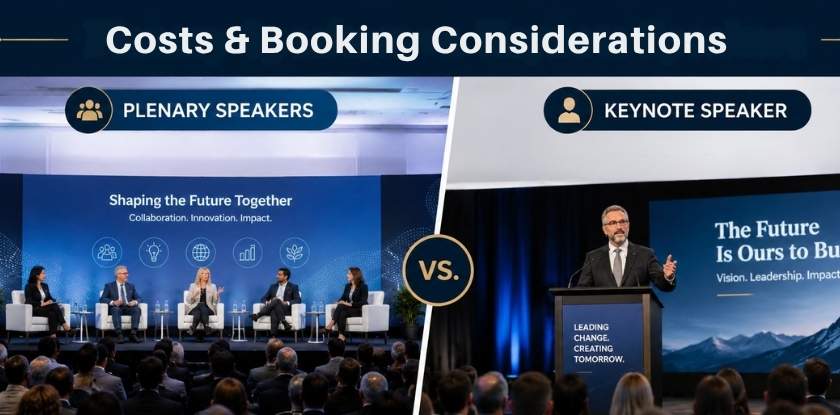
Payment gap is real. A plenary speaker at an academic conference might receive a $500–$1,500 honorarium plus covered travel. A keynote speaker for the same event’s opening night — especially if they’re a known name — could command $10,000 to $50,000+. That gap reflects demand and marketability, not necessarily expertise.

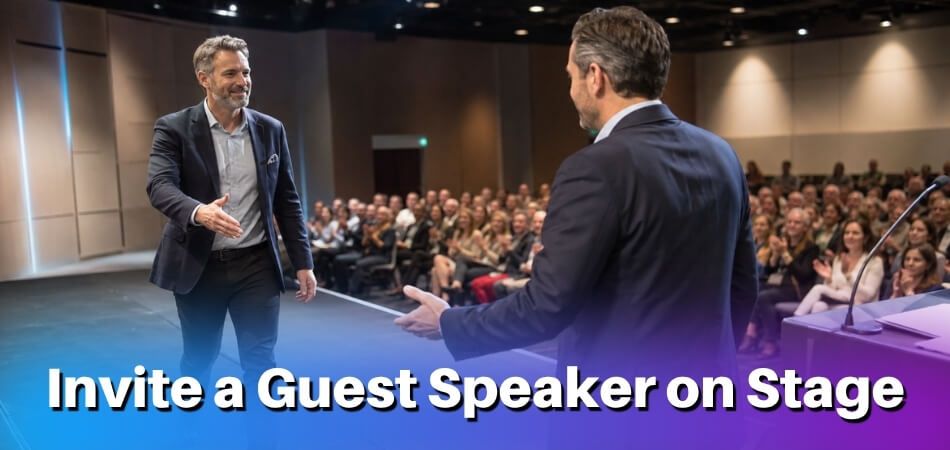
The session chair distinction matters too. In a plenary session, a session chair typically introduces the speaker and manages Q&A. Keynote addresses often skip the formal Q&A entirely — the speaker finishes, takes a bow, and the program moves on.

Panel speakers, guest speakers, and invited speakers sit outside both categories. They fill breakout slots or specialized tracks. Don’t conflate them with plenary or keynote roles when you’re drafting your conference program — the expectations, contracts, and logistics are different enough to cause real headaches if you blur the lines early.

Who Is a Plenary Speaker and What Is Their Role?

A plenary speaker presents to the entire conference audience — not a breakout room, not a subset of attendees. Everyone in the building is expected to be there.

Who Is a Plenary Speaker and What Is Their Role?

What Is a Plenary Session and Where Does It Take Place?

A plenary session is a full-assembly meeting. Every registered attendee is invited, and usually expected, to attend. You won’t find competing sessions running at the same time — the conference program committee deliberately clears the schedule so nothing pulls people away.

These sessions typically happen in the largest venue space available: a main auditorium, a convention hall ballroom, or a theater-style room that seats the full crowd. At a medical conference like a major cardiology or oncology annual meeting, that can mean 3,000 to 10,000 people in one room. At a smaller academic conference, it might be 200 people in the only lecture hall big enough to hold everyone.

Plenary sessions are usually scheduled at deliberate points in the program — early morning on day one, right after lunch when attendance tends to dip, or at the formal close of the event. The session chair introduces the speaker, manages time, and often moderates any Q&A afterward.

The word “plenary” comes from the Latin plenus, meaning full. That’s exactly what it means in practice: full attendance, full stage, no competing tracks.

How Does a Plenary Speaker Differ from Other Speakers at a Conference?

The distinction matters more than most organizers give it credit for.

A panel speaker shares the stage with three or four others, gets maybe 10-15 minutes of structured talk time, and spends a good chunk of the session responding to moderator questions. Their reach is limited — panel sessions almost always run in parallel with other sessions, so only a fraction of attendees show up.

An invited speaker is a broader term. Someone can be invited to present in a breakout session, a workshop, or a symposium. Being “invited” signals they didn’t submit an abstract and go through the standard selection process, but it says nothing about the size or format of the platform they’re getting.

A guest speaker is hazier still — the term gets used interchangeably with invited speaker at many events, and it can mean anything from a 20-minute slot in a small workshop to a featured address.

The plenary speaker, by contrast, commands the main stage with no competition. Their talk shapes how attendees think about the conference as a whole. In scientific conference and continuing medical education (CME) contexts, the plenary session is often where the most significant new data or policy positions get announced first — before they hit journals or press releases.

That visibility comes with real expectations. A plenary speaker usually has a longer slot (45 to 90 minutes is common), a higher speaker fee or honorarium, and a stronger obligation to deliver content that’s genuinely relevant to the entire audience — not just one subspecialty or research niche.

If you’ve ever watched a World Economic Forum main-stage session or a major National Speakers Association (NSA) conference keynote, you’ve seen what a plenary format looks and feels like. It’s high-stakes presenting. The room is full, the livestream is running, and there’s nowhere to hide if the content doesn’t land.

Who Is a Keynote Speaker and What Is Their Role?

A keynote speaker sets the tone. That’s the short version. The longer version is that they’re typically the public face of an event — the name on the promotional flyer, the reason some attendees registered in the first place. Where a plenary speaker is often chosen by a conference program committee for their academic or clinical expertise, a keynote speaker is chosen as much for their ability to communicate ideas to a broad audience as for what they actually know.

Keynote speakers show up across every type of event imaginable — corporate conferences, academic conferences, medical conferences, product launches, and TEDx events. The format varies, but the job stays roughly the same: open or close a conference with something memorable. They’re not there to present research findings slide by slide. They’re there to give people a frame for everything else that follows — or a send-off that sticks.

The Purpose and Timing of a Keynote Speech

Timing matters more here than most event organizers realize. A keynote address almost always runs at a high-traffic moment: first thing on day one, right after a major lunch break, or at the closing session. These slots are chosen deliberately because attendance is highest and attention hasn’t yet fractured into a dozen parallel breakout rooms.

The purpose isn’t depth. It’s direction. A strong keynote gives the audience a shared reference point — a story, a framework, or a provocation — that other sessions can build on. Think of how TED Talk speakers frame a single idea with enough clarity that the audience leaves able to explain it to someone else that evening. That’s the target.

Keynote speeches typically run 30 to 60 minutes, sometimes with a Q&A tacked on, sometimes without. At something like the World Economic Forum, a keynote might run shorter and sharper, followed by moderated discussion. At a large medical conference seeking continuing medical education (CME) credit hours, the keynote might be structured more formally, with disclosed conflicts of interest and a defined learning objective — but it still leads the program rather than sitting inside a technical track.

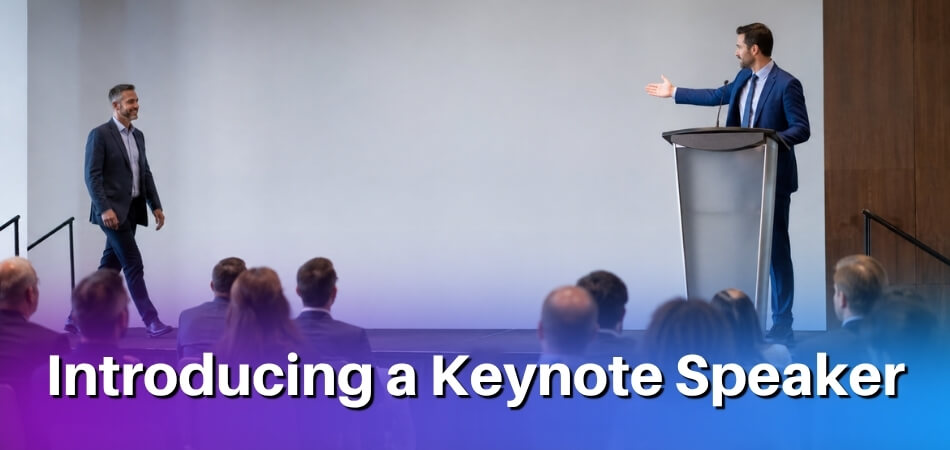
From a logistics standpoint, the keynote slot usually means a main stage, full AV setup, and a session chair or MC to introduce the speaker. The keynote speaker rarely has to fight for the room’s attention — the schedule does that for them.

Keynote Speaker vs Guest Speaker — Is There a Difference?

Yes, though the line blurs depending on who’s using the terms. In practice, “guest speaker” is a looser label. A guest speaker is anyone invited from outside the organizing body to present. That could be a keynote speaker, an invited speaker on a panel, or someone brought in for a single breakout session. The title doesn’t tell you much about role or prominence.

A keynote speaker, by contrast, carries a specific programmatic expectation. They’re booked for a featured slot, not slotted into a track. They usually command a higher speaker fee — often negotiated through a speaker bureau or directly with the National Speakers Association (NSA) member — and their name is typically used in event marketing before the program is even finalized.

Here’s a concrete way to think about it: if the event flyer lists the person by name before the conference title, they’re probably functioning as a keynote speaker. If they’re listed in the program as a “guest speaker” for Session 4B on Wednesday afternoon, they’re an invited or guest speaker — valuable, but not the draw.

The payment difference reflects this. A guest speaker at an academic conference might receive a modest honorarium plus travel. A keynote speaker at a large corporate or medical conference can command anywhere from $5,000 to well over $50,000, depending on their profile. Both are “guests” in the literal sense. They’re not the same role.

Plenary Speaker vs Keynote Speaker — A Detailed Side-by-Side Comparison

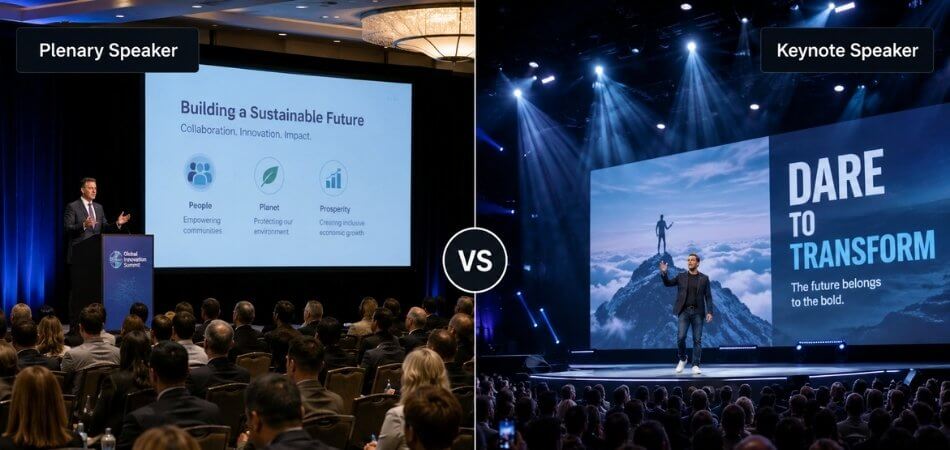
Plenary Speaker vs Keynote Speaker

Purpose and Content: Education and Updates vs Motivation and Inspiration

The content a plenary speaker delivers and the content a keynote speaker delivers are built around very different goals — even when the two roles look similar from the back of a room.

A plenary speaker is there to inform. At an academic conference, a scientific conference, or a medical conference, the plenary session is where attendees expect to hear the current state of a field. Think a leading cardiologist presenting updated clinical guidelines to 800 physicians at a continuing medical education (CME) event. The content is dense, sourced, and often peer-reviewed adjacent. It’s not there to fire people up. It’s there to bring the whole room to the same knowledge baseline before breakout sessions begin.

A keynote address works differently. The goal is usually emotional before it’s intellectual. A keynote speaker at a sales conference or a corporate retreat is trying to shift how the audience feels — about a challenge, about their industry, about what’s possible. TED Talks operate on this same logic. The best keynote speakers are storytellers first, subject experts second.

That distinction matters when you’re building a conference program. A plenary speaker who doesn’t go deep enough on content disappoints academics. A keynote speaker who delivers a straight lecture loses a general audience in twenty minutes.

Neither is better. They’re solving different problems.

Timing and Placement Within a Conference Program

Placement tells you a lot about what each role is actually for.

Plenary sessions are almost always scheduled so that the entire conference attendance is present — typically the first morning slot, or immediately after a major break when everyone reconvenes. The session chair introduces the speaker, the room fills to capacity, and nothing else is running in parallel. That’s the structural definition of a plenary: no competing sessions, everyone attends.

Keynote addresses tend to bookend the event. Opening keynotes set the tone on day one. Closing keynotes send attendees home with something to think about. At multi-day events like those organized around the World Economic Forum model, you might see a keynote at the start of each day — but each one is a self-contained address, not part of a coordinated curriculum.

Here’s where it gets slightly complicated: the conference program committee at some events schedules a keynote within a plenary slot. That’s not wrong, but it does create the conflation that confuses organizers. When that happens, the session looks like a plenary (mandatory, full attendance) but the content is keynote-style (motivational, broad). Both terms get used, often interchangeably, and that’s where the confusion starts.

If you’re working with a speaker bureau to book talent, clarify which structure you actually need before you discuss names. The framing changes which speakers are even appropriate.

Plenary vs Keynote at Academic Conferences — Key Distinctions

In a corporate or association event, the line between plenary and keynote gets blurry fast. At a true academic conference — think a large scientific society meeting or a specialty medical conference — the distinction is much sharper and more consistently applied.

At those events, a plenary speaker is almost always a domain expert. They might be an invited speaker nominated by the program committee specifically because of recent published research or a major clinical finding. Their talk is peer-selected. The honorarium, if there is one, is often modest — sometimes just travel reimbursement — because the invitation itself carries professional prestige.

A keynote speaker at the same conference is a different kind of hire. They might be a science communicator, a former practitioner who now speaks professionally, or occasionally a high-profile figure from outside the discipline who brings a cross-sector perspective. The speaker fee is usually higher. The audience expectation is different. Nobody in the room expects a keynote speaker to present data the way a plenary speaker would.

One practical difference worth knowing: at academic and medical conferences, plenary sessions frequently carry CME credit. The content has to meet accreditation standards, which means the speaker’s financial disclosures, conflicts of interest, and educational objectives all go through a formal review process. A keynote address at the same event almost never carries CME credit, because the content format doesn’t fit the accreditation criteria.

If you’re an event organizer working on a scientific or medical conference, that CME distinction alone should drive which slot you assign to which type of speaker. It’s not just a scheduling preference — it’s a compliance issue.

Do Plenary Speakers Get Paid — And How Much?

The short answer is: it depends heavily on the event type, the speaker’s profile, and whether the conference is academic or commercial. Those three factors do more to determine pay than almost anything else.

Do Plenary Speakers Get Paid — And How Much?

Plenary Speaker Payment Structure Explained

At academic conferences — think scientific conferences, medical conferences, or large society meetings — plenary speakers are often paid an honorarium rather than a full professional speaker fee. That honorarium might be $500, it might be $2,000, and occasionally it’s nothing at all beyond travel reimbursement and hotel accommodation.

Why so little? Because academic plenary slots carry significant prestige. Being selected by a conference program committee to address the full assembly is itself a career credential. Many researchers accept the invitation partly for the visibility and the CV line, not the check.

That said, the picture shifts when you move outside academia. A plenary speaker at a large industry summit or a corporate conference can command anywhere from $5,000 to $25,000 or more, depending on their name recognition and the size of the organizing body’s budget. Some senior figures in fields like medicine or finance — especially those with continuing medical education (CME) accreditation requirements attached to their talk — are compensated at the higher end of that range because their expertise directly justifies the event’s regulatory credibility.

One thing to know: plenary speakers are rarely represented by a speaker bureau. Most are approached directly by the event organizer or through academic networks. That means there’s no bureau commission factored into the fee, which sometimes keeps costs lower — but also means payment terms can be informal and inconsistent.

Keynote Speaker Payment Structure Explained

Keynote speakers, by contrast, are far more likely to operate as professional speakers. Many are listed with a speaker bureau, have a published fee range on their website, and negotiate contracts with specific deliverables attached — pre-event calls, Q&A sessions, customized slide decks, social media promotion.

The fee range here is wide. A regional business conference might pay a keynote speaker $3,000 to $7,500. A national association event could run $15,000 to $40,000. Celebrity keynotes at major corporate events — the kind you’d see at something adjacent to the World Economic Forum or a Fortune 500 leadership summit — routinely exceed $100,000.

The National Speakers Association (NSA) classifies professional speakers into fee tiers, and many bureaus use similar brackets. If you’re booking through a bureau, expect to add 25–30% on top of the speaker’s base fee as commission. That’s standard.

Keynote speakers also tend to have more structured contracts. Cancellation clauses, travel requirements, AV specs, exclusivity windows — it’s a professional transaction, not an academic courtesy.

Plenary Speaker vs Keynote Speaker Pay — A Direct Comparison

Here’s the practical reality if you’re an event organizer trying to budget:

FactorPlenary SpeakerKeynote Speaker
Typical fee range$0–$25,000$3,000–$100,000+
Paid via honorarium?UsuallyRarely
Bureau involvementUncommonCommon
Contract formalityLow to moderateHigh
Fee driverAcademic prestige, topic expertiseBrand, audience draw, speaking career

The biggest practical difference isn’t just the dollar amount — it’s the nature of the transaction. Booking a plenary speaker at an academic conference feels more like extending a professional invitation. Booking a keynote speaker for a commercial event is closer to hiring a vendor. Both are legitimate, but you need to approach them differently.

If your budget is tight and your audience is primarily peers in a specialized field, a plenary speaker model works well and won’t break the bank. If you need someone who can sell tickets, open a conference with energy, or represent your brand’s positioning — and you have the budget — a professional keynote speaker is worth the higher cost. Just make sure you’re comparing the right thing. A $20,000 keynote speaker at a 2,000-person industry conference has a very different cost-per-impact ratio than that same fee paid for a 200-person academic session chair talk.

How Long Is a Plenary Talk and Why?

Most plenary talks run between 45 and 60 minutes. Some conferences push that to 75 minutes for particularly senior speakers or highly technical topics. Rarely shorter than 30 minutes — if it’s shorter, it’s probably not really a plenary session in the traditional sense.

The length isn’t arbitrary. It reflects what a plenary session is actually supposed to do.

The Logic Behind the Time Slot

Plenary sessions are designed to bring the entire conference audience into one room. That alone creates logistical pressure. You’ve got attendees coming from different parallel tracks, people who just landed at the venue, and a program committee that needs to reset the energy of the event. Forty-five to sixty minutes gives the speaker enough runway to actually build an argument — not just present bullet points — and gives the audience time to settle in and absorb something substantive.

At an academic conference or scientific conference, the plenary speaker is often expected to synthesize a broad area of research, not just report on one study. That kind of intellectual scope takes time. You can’t meaningfully contextualize five years of work in 20 minutes.

Medical conferences add another layer. Many CME (continuing medical education) events require a minimum session length for credits to count. Plenary talks at these events often run a full hour partly because the accreditation framework demands it.

What Actually Fills the Time

A well-structured plenary talk isn’t padded. The breakdown usually looks something like this:

  • 5–10 minutes: Scene-setting — why this topic matters right now, for this audience
  • 30–40 minutes: Core content delivery
  • 5–10 minutes: Implications, open questions, or a call to action
  • 5–10 minutes: Q&A, sometimes moderated by the session chair

That Q&A segment is worth flagging. Many conference program committees build it into the official time slot; others treat it as a bonus if time allows. Either way, it’s part of what separates a plenary from a recorded lecture you’d watch alone.

Why It’s Usually Longer Than a Keynote

Keynote addresses tend to run 30 to 45 minutes, especially at industry events and corporate conferences. TED Talks famously cap at 18 minutes — deliberately short to force clarity and compression. The World Economic Forum runs tighter sessions too, given how densely packed the schedule is.

Plenary talks at research-heavy events simply have different expectations. The audience is there to think, not just to be inspired. Speakers are often invited scholars or senior researchers, not professional speakers booked through a speaker bureau. They’re not polished performers optimizing for emotional impact in 20 minutes. They’re domain experts, and those experts need space to do the actual work of explaining something complex.

That said, longer doesn’t mean better. A 60-minute plenary that loses the room at minute 25 is worse than a tight 40-minute talk that lands cleanly. The best plenary speakers — the ones who get invited back — treat the time like a constraint to work within, not a blank check.

Plenary Speaker vs Invited Speaker vs Panel Speaker — What Is the Difference?

These three roles get mixed up constantly — even by experienced conference program committees. They’re not interchangeable, and using the wrong term in your conference program or speaker contract can create real confusion about expectations, format, and pay.

What Is an Invited Speaker?

An invited speaker is someone the organizing committee specifically recruits to present at a session — but that session might be a breakout, a symposium, a workshop, or even a plenary. The “invited” part describes how they were selected, not the format of their talk.

What Is a Keynote Speaker?

At an academic conference or medical conference, you’ll often see the conference program list certain presenters as “invited speakers” to distinguish them from people who submitted abstracts and got accepted through the standard review process. The invited speaker was hand-picked. That’s the distinction.

So a plenary speaker is almost always an invited speaker. But an invited speaker is not automatically a plenary speaker. They might be speaking to 80 people in a breakout room at 9 a.m. while the plenary hall is filling up for someone else.

Payment varies widely here. Some invited speakers receive a full honorarium through a speaker bureau arrangement. Others — especially at smaller scientific conferences — get nothing more than waived registration and maybe a travel stipend. Always clarify this upfront in writing.

How Is a Panel Speaker Different from a Plenary Speaker?

A panel speaker shares a stage with two to five other people and typically speaks for 8 to 15 minutes before the group moves into moderated discussion. A plenary speaker owns the room alone, often for 45 to 60 minutes, with no interruption until Q&A.

That difference in format changes everything — preparation, audience expectations, the speaker’s fee, all of it.

Panel speakers respond. They react to other panelists, answer moderator questions, and sometimes push back on what a colleague just said. The session chair or moderator controls the flow. A plenary speaker, by contrast, controls their own narrative from start to finish.

At something like a World Economic Forum-style event, you’ll see both formats on the same day. A morning plenary might feature one high-profile speaker giving a 50-minute address to the entire delegate body. That afternoon, four experts sit on a panel in the same room and debate a narrower issue for 90 minutes, with audience questions woven in.

The speaker fee gap is real too. Panel speakers at most conferences — even prestigious ones — receive a smaller honorarium than plenary or keynote speakers, if they receive one at all. Some panelists are simply there because the topic is their specialty and the exposure matters to them professionally. Plenary speakers are usually contracted, sometimes through a speaker bureau, with a negotiated fee that reflects solo billing.

One practical note for event organizers: if you’re inviting someone prominent and you’re still deciding whether to slot them as a plenary speaker or a panelist, have that conversation early. Agreeing to speak and then being moved to a panel can feel like a demotion to the speaker — especially if they’ve been marketed as a featured presenter in your early promotional materials.

Qualifications and Preparation Required to Become a Plenary Speaker

What Background and Expertise Do You Need?

There’s no formal certification that makes someone a plenary speaker. No badge, no exam. What a conference program committee actually looks for is a combination of demonstrated expertise, credibility within the field, and — honestly — name recognition.

At an academic conference or scientific conference, that usually means a strong publication record, a history of funded research, or a position at a well-regarded institution. For a medical conference with continuing medical education (CME) credits attached, you’ll also need documented clinical or research credentials that satisfy the accrediting body’s requirements. A speaker bureau won’t pitch you to a CME event if your background doesn’t hold up to that scrutiny.

Industry conferences weight things differently. Here, thought leadership, real-world results, and the ability to draw an audience matter more than peer-reviewed output. A CEO who scaled a company from 10 to 10,000 employees has something to say to a room of 800 people — the committee knows that.

Speaking experience counts too. Plenary sessions don’t accommodate people who are still figuring out how to work a room. Most plenary speakers have already given invited speaker talks, keynote addresses at smaller events, or TEDx presentations. That track record signals you can hold a large audience for 45 to 60 minutes without losing them halfway through.

One thing that gets overlooked: relevance to the specific event theme. Being a decorated researcher in molecular biology doesn’t automatically make you the right fit for a health policy plenary. The session chair and program committee are matching expertise to the conversation the conference is trying to have that year.

How to Position Yourself as a Plenary Speaker

Start smaller than you think you need to. Accept invited speaker slots. Say yes to panel speaker opportunities even when the room is only 80 people. Every one of those appearances builds a record that a program committee can point to when justifying an invitation.

Get your name into the right circles. The National Speakers Association (NSA) has resources and a community, but more practically — attend the conferences you want to speak at. Meet the people who organize them. Program committees don’t just search databases; they think of people they’ve seen, heard about, or been recommended.

Build a visible body of work. Published papers, a book, a widely-cited report, a column in a trade publication — anything that establishes what you’re known for. When a conference chair Googles you, there should be a clear, consistent story about your expertise.

Your speaker one-sheet and speaker reel need to be current and honest. A video clip of a real presentation — not a studio-produced highlight reel that bears no resemblance to how you actually speak — is what bureaus and committees want to see. Keep it under three minutes. Show your ability to communicate with a real audience.

Consider working with a speaker bureau once you have enough of a track record to make it worthwhile. Bureaus actively pitch speakers to event organizers, which puts your name in front of people who might never have found you otherwise. That said, bureaus typically take 20–30% of the speaker fee, so the math only makes sense once your honorarium is high enough to absorb that cut.

One direct piece of advice: if a plenary invitation comes with a lower honorarium than you’d normally accept, think carefully before turning it down on money alone. The right plenary slot — at a World Economic Forum-adjacent event or a flagship scientific conference in your discipline — can be worth more in visibility and future opportunities than the fee itself.

When Should You Choose a Plenary Speaker vs a Keynote Speaker? — A Decision Guide for Event Organizers

The honest answer is that most events don’t need to agonize over this. The format of your conference usually makes the choice obvious once you know what each role actually does. But there are genuine decision points, especially if you’re building a program from scratch or your event sits somewhere between a traditional academic conference and a professional summit.

When Should You Choose a Plenary Speaker vs a Keynote Speaker

Here’s a practical breakdown.

Choose a Plenary Speaker When Your Conference Has a Unified Technical Audience

If you’re running a medical conference, a scientific conference, or any multi-track academic event where attendees share a professional baseline, plenary sessions are the right structure. The plenary speaker addresses everyone at once — no breakout rooms, no competing sessions. That format only works when a single talk is genuinely relevant to the full room.

At a continuing medical education (CME) event, for example, a plenary speaker might present the latest clinical trial data that every physician in the room needs to hear, regardless of their specialty track. That’s the whole point. You’re not trying to inspire them. You’re informing them about something that changes practice.

If your audience is fragmented — attendees from wildly different industries, seniority levels, or interest areas — a plenary session becomes awkward fast. Don’t force it.

Choose a Keynote Speaker When You Need Energy, Not Just Information

Keynote speakers open or close events. They set tone. A strong keynote address at a corporate conference can shift the energy in a room before a single breakout session begins. That’s a specific job, and it’s different from presenting research findings or policy updates.

The World Economic Forum uses keynote-style addresses to open major sessions precisely because global business audiences need orientation — context about where things are headed — before diving into specifics. Same logic applies to a mid-size trade association conference with 800 attendees. You want someone who can hold a non-specialist room and give people a frame for the two days ahead.

If your program committee is still debating whether to open with a “motivational” speaker or a “content” speaker, you’re really debating keynote versus plenary. A keynote speaker can be motivational or substantive — but they’re always performing for a broad audience. A plenary speaker is delivering substance to a specialized one.

The Budget Question Is Real

Keynote speakers — especially those listed through a speaker bureau or with recognizable names from TED Talk appearances or major media — typically charge higher fees than plenary speakers. A seasoned plenary speaker at an academic conference might receive an honorarium of $1,500–$5,000 plus travel. A keynote speaker at a corporate summit can run $20,000–$100,000+, depending on their profile.

That spread matters. If your event budget is tight, a respected invited speaker from within your field can deliver a plenary talk that your audience values enormously — without the speaker fee attached to a high-profile name. The National Speakers Association (NSA) has publicly noted that name recognition and fee are not always correlated with actual impact in the room. Worth keeping in mind when you’re fielding pressure to book a “big name” for the keynote slot.

Quick Decision Framework

Run through these four questions before you finalize the booking:

  1. Is the entire audience professionally qualified to engage with technical content? Yes → plenary speaker. Mixed general audience → keynote speaker.
  2. Is this session at the start or end of your program, setting the tone for everything else? Yes → keynote. Mid-conference, all-hands content session → plenary.
  3. Do you need inspiration and narrative, or information and expertise? Narrative + inspiration → keynote. Data, findings, field updates → plenary.
  4. What’s the session structure? Solo, main-stage, no competing sessions → either format works, but plenary if specialist audience. You have breakout tracks around it → probably a keynote to open.

When You Might Need Both

Plenty of large conferences — think a multi-day scientific conference or an annual association meeting with 2,000+ attendees — use both. A keynote speaker opens Day 1 to set context for a broad audience. Plenary sessions on Day 2 and Day 3 bring the full group together for field-specific content between the breakout tracks. The session chair for each plenary manages time and Q&A differently than the emcee for the keynote.

If that’s your situation, book them independently. The briefing you send each speaker, the prep call, the AV requirements, the timing expectations — all of it differs. Treating a plenary speaker like a keynote (or vice versa) is how you end up with a mismatch between the speaker’s preparation and what the room actually needs.

The conference program committee should lock in the session structure before reaching out to any speaker. That order matters. Structure first, then speaker. Not the other way around.

Frequently Asked Questions (FAQ)

Is a plenary speaker the same as a keynote speaker?

No, they’re not the same — though people use the terms interchangeably all the time. A keynote speaker typically opens or closes an event and sets the emotional or thematic tone. A plenary speaker presents to the full conference audience during a plenary session, which can happen at any point in the program. The overlap happens because some conferences book one person to do both jobs. But structurally, the roles are different.

Can one person be both the plenary speaker and the keynote speaker?

Yes, and it happens regularly — especially at smaller academic conferences where the budget doesn’t stretch to multiple high-profile names. A researcher might deliver the opening keynote address and then chair or present a plenary session the following morning. That said, at large events like those associated with the World Economic Forum or major medical conferences with continuing medical education (CME) requirements, these roles are usually filled by different people.

Do plenary speakers get paid more than keynote speakers?

Not automatically. Pay depends on the speaker’s profile, the event budget, and whether the booking came through a speaker bureau or directly from the conference program committee. A well-known keynote speaker pulled from the National Speakers Association (NSA) roster can command far more than an academic plenary speaker who receives only a modest honorarium and travel reimbursement. The title of the role doesn’t set the fee — the speaker’s reputation does.

How long is a typical plenary talk?

Usually 45 to 60 minutes, including Q&A. Some scientific conferences run them shorter — around 30 minutes — particularly when multiple plenary speakers are scheduled in a single morning block. TED Talks are capped at 18 minutes, which is technically a keynote-style format, not a traditional plenary. If you’re a session chair, build in buffer time. Plenary sessions that run over create scheduling chaos for the rest of the day.

What’s the difference between a plenary speaker and an invited speaker?

An invited speaker is asked to present in a specific track or breakout session — their audience is a subset of the full conference. A plenary speaker presents to everyone at once. The invited speaker label is common at scientific and medical conferences where the program committee selects specialists to cover particular topics. It’s a meaningful distinction in academic circles, even if it sounds minor.

Do you need a PhD or academic title to be a plenary speaker?

At academic and scientific conferences, yes — almost always. The plenary speaker slot at those events typically goes to a recognized researcher, a department head, or someone with significant published work in the field. At corporate or industry conferences, the bar is different. Relevant experience, industry standing, or a compelling story can be enough. Context matters a lot here.

Should event organizers always book a keynote speaker?

Not necessarily. If your event is a specialized professional conference — say, a regional medical conference with a tight CME agenda — a strong plenary speaker lineup might serve your audience better than a polished keynote. Keynote speakers work well when you need energy, a shared narrative, or to appeal to a broad mixed audience. If your attendees are all specialists there for the content, lean toward plenary. Know your crowd first.

Where do you find qualified plenary or keynote speakers?

Speaker bureaus are the most common route for keynote speakers. For plenary speakers at academic or scientific conferences, the conference program committee usually handles outreach directly — often through professional networks, past conference programs, or nominations from the organizing committee. Guest speaker invitations at that level are relationship-driven, not catalog-driven.

Final Thoughts: Choose the Right Speaker and Build a Successful Event

Getting this decision wrong is more common than most event organizers admit. A brilliant researcher who’s perfect for a plenary session at a scientific conference can fall completely flat as a keynote speaker for a mixed-audience industry summit. And a high-energy keynote speaker who’s great at inspiring a crowd might feel out of place opening a medical conference where the program committee expects depth, credentials, and clinical relevance.

So here’s the short version: plenary speakers hold a room together. They address everyone, they carry authority, and they set an intellectual or thematic standard for the whole event. Keynote speakers set an emotional tone. They’re often the first impression — the speaker who gets people excited to be there.

Both matter. They just do different jobs.

A Few Practical Things to Keep in Mind

If you’re working with a speaker bureau, be specific about which role you’re filling. Bureaus represent speakers for both functions, but the pitch — and the price — can differ significantly. A keynote speaker pulled from the corporate circuit might charge $20,000–$50,000 or more. A plenary speaker at an academic conference might receive a modest honorarium of $500–$2,000 plus travel. Neither figure is wrong. They reflect completely different contexts.

For continuing medical education (CME) events and similar regulated conferences, your plenary speaker selection also carries compliance weight. Accreditation bodies care about independence and qualifications. That’s not an issue you want to discover two weeks before the event.

If your conference has both a keynote address and plenary sessions — which many larger events do — make sure the speakers know how their roles differ. Session chairs can help with that, but it starts with your communication during the planning phase.

Don’t Let Budget Drive the Wrong Choice

It’s tempting to pick whoever fits the budget. That’s not always the right call. A cheaper invited speaker filling a plenary slot because the budget ran short will leave your audience feeling like something’s missing — even if they can’t name exactly what.

The National Speakers Association (NSA) has resources that can help you understand speaker tiers and what’s reasonable to expect at each level. Use them.

The Bottom Line

Pick a plenary speaker when you need intellectual authority and whole-audience continuity. Pick a keynote speaker when you need energy, narrative, and a strong opening or closing moment. Pick both if your event is large enough to justify it — but make sure the two complement rather than compete with each other.

Your speakers are often the thing attendees remember long after the conference program is recycled. That’s worth getting right.

Leave a Comment

Your email address will not be published. Required fields are marked *

Shopping Cart
Scroll to Top