Why Is Canada Visitor Visa Taking So Long?

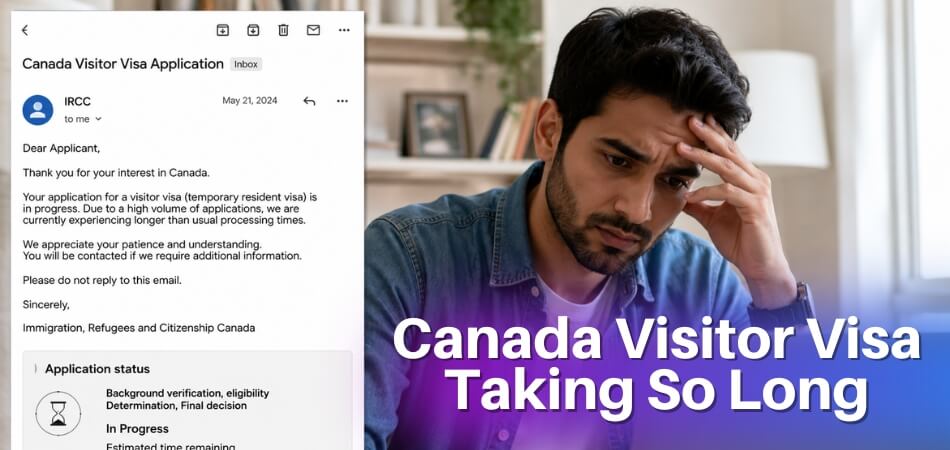
IRCC says your Canada visitor visa should take around 38 days to process. You submitted your application over three months ago. Your IRCC secure account still shows “in progress,” you’ve heard nothing from the Visa Application Centre, and you’re starting to wonder if something went wrong — or if your application has simply vanished into a black hole. You’re not alone, and you’re not imagining it.

The honest answer is that the official processing time posted on the IRCC website and the reality experienced by applicants from countries like Bangladesh, India, Pakistan, and even the United Kingdom are often worlds apart. Temporary Resident Visa processing can stretch from weeks to many months depending on factors that IRCC never advertises upfront — biometrics delays, background checks, medical examinations, application volume surges, and where your application falls in a country-specific processing queue. Knowing why your visa is delayed is the first step to understanding what you can actually do about it.

This article breaks down every real-world reason your Canada Visitor Visa (Temporary Resident Visa) is taking longer than expected — no vague reassurances, just specific causes explained clearly.

Canada visitor visas take longer than IRCC’s official processing time for several interconnected reasons. High global application volumes and a persistent post-COVID immigration backlog have stretched IRCC’s capacity significantly, particularly for applicants from high-demand countries like India, Bangladesh, and Pakistan where processing queues are longer by nationality. Biometrics collection delays at VFS Global and VAC locations can add weeks before an application even enters the review stage. Incomplete documentation, inconsistencies in the application, or a procedural fairness letter requesting additional information can pause processing entirely until the applicant responds. Background checks and security screening run independently and have no fixed timeline, while applicants flagged for a medical examination by a panel physician face additional unpredictable delays. When all of these factors overlap — which they frequently do — an application that IRCC estimates will take 38 days can realistically take four to six months or longer.

Why Is Your Canada Visitor Visa Taking So Long — The Short Answer

Here’s the blunt reality: IRCC’s posted processing time is an estimate, not a guarantee. It’s calculated from the last 80% of completed applications — which means it’s already a historical average by the time you’re reading it. Your application doesn’t get processed in that timeframe just because the website says so.

Why Is Canada Visitor Visa Taking So Long

Right now, the short answer has three parts.

The backlog is real. Post-COVID immigration surge left IRCC drowning in applications. Visitor visas, study permits, work permits — everything piled up at once. They’ve been digging out ever since, and the queue is still long.

Where you’re applying from matters enormously. A Temporary Resident Visa application from the United States or United Kingdom typically moves faster than one from Bangladesh, India, or Pakistan. That’s not speculation — it reflects visa office workload, staffing levels, and the volume of applications each post handles. Applicants from high-volume countries like India and Pakistan are competing in a much larger queue.

Your specific file may need extra work. Biometrics collection delays, a medical examination by a panel physician, background check or security screening flags, or even a small documentation gap can quietly pause your application for weeks without any visible update in your IRCC secure account.

Most people checking the IRCC official processing time assume their clock starts the day they submit. It doesn’t always. If your biometrics hadn’t been collected yet, or if VFS Global or a VAC (Visa Application Centre) had a processing lag on their end, your application may not have even entered the queue when you think it did.

There’s also something most applicants don’t know about: GCMS Notes — the Global Case Management System records. If you pull your GCMS notes, you can actually see what stage your application is at, whether a note has been added by an officer, and if anything is holding it up. It’s one of the only ways to get a real picture when the online portal just says “in progress.”

The sections below break down each of these delays in detail — because “it’s taking long” usually has a specific, identifiable reason.

Reason 1 — Extremely High Application Volume, Especially Post-COVID Surge

The single biggest reason your Canada visitor visa is sitting in a queue right now is sheer volume. IRCC is processing more applications than at almost any point in its history, and the backlog built up during COVID hasn’t fully cleared — it’s just shifted shape.

Here’s what actually happened. Between 2020 and 2022, visa offices around the world either shut down entirely or ran at reduced capacity. Biometrics collection at VAC locations through VFS Global stopped in many countries. Medical exams at panel physicians were paused or severely delayed. The entire system essentially froze for large chunks of two years.

When restrictions lifted, millions of people who had deferred travel plans applied at roughly the same time. That wave hit an IRCC infrastructure that was still catching up. The result was a processing backlog that the official IRCC processing time estimates genuinely could not account for.

The Numbers Tell the Story

IRCC has publicly acknowledged receiving record application volumes in 2022 and 2023. Visitor visa (Temporary Resident Visa) applications alone ran into the millions annually. Some specific nationalities saw particularly sharp spikes — India, Pakistan, Bangladesh, and the Philippines among them, largely driven by family visits, tourism, and diaspora travel that had been pent up for years.

By mid-2023, IRCC was sitting on millions of pending applications across all streams. Visitor visas compete for processing resources with student permits, work permits, permanent residence files, and citizenship applications — all of which also surged post-COVID.

Why This Directly Affects You

If you applied from Bangladesh, India, or Pakistan, your visa office is handling some of the world’s highest application counts. There’s a processing queue by nationality, and certain visa offices are simply more stretched than others. A UK or US citizen might see their visitor visa processed in a few weeks because the volume from those countries is comparatively low and the approval rate is high, meaning less manual review per file.

Your file isn’t being ignored. It’s in a very long line.

IRCC’s Official Processing Time Is an Estimate — Not a Guarantee

The number you see on the IRCC website — sometimes listed as a few weeks, sometimes several months — is a rolling average based on recently completed applications. It does not reflect current queue depth. It doesn’t account for a spike that happened last month. If the processing time says 43 days and you’re at day 60, you haven’t been skipped. The estimate is just behind the actual reality.

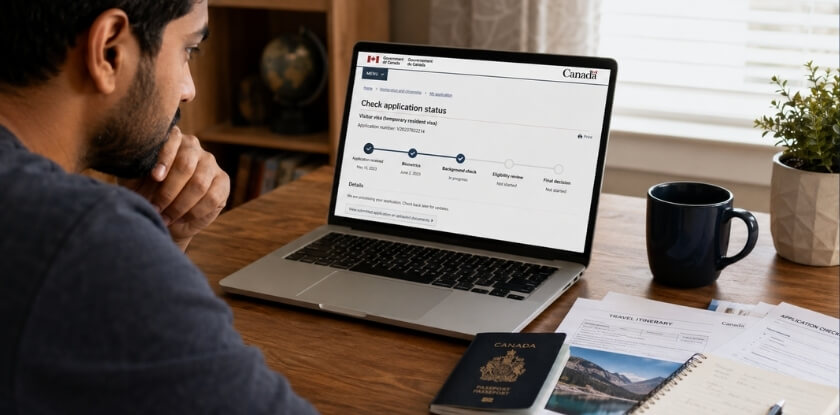
Check your IRCC secure account for status updates. If it still says “in progress,” the system hasn’t timed out on your file — it’s still moving through the queue.

Reason 2 — Delays in Biometrics Appointments

Where Biometrics Must Be Completed and Why It Creates a Bottleneck

Most Canada Visitor Visa applicants outside Canada are required to give biometrics — fingerprints and a photo — before IRCC will process their application any further. This isn’t optional. Until your biometrics are collected and confirmed in IRCC’s system, your file essentially sits in a holding pattern.

The catch is that you can’t give biometrics at just any government office. You have to go to a designated Visa Application Centre (VAC), which in most countries is operated by VFS Global under contract. IRCC doesn’t collect biometrics directly. So there’s a third party in the middle of your application, and that third party has limited appointment slots, varying staff levels, and no obligation to move at the pace you need.

For applicants from countries like Bangladesh, Pakistan, India, and several African nations, there may only be one or two VAC locations in the entire country. If you’re not in Dhaka, Karachi, Delhi, or Lagos, you’re potentially looking at travel just to reach a biometrics collection point — before the actual visa processing has even started.

And here’s the thing people miss: IRCC’s published processing time clock doesn’t start until biometrics are received. So if it takes you three weeks just to get a VAC appointment, those three weeks don’t count against the official estimate. They’re invisible in the timeline — but very visible in your calendar.

How Long It Currently Takes to Get a VFS Global or VAC Appointment

It varies a lot by country. In some locations, appointments are available within a week. In others, you’re waiting four to eight weeks just to get through the door.

How Long It Currently Takes to Get a VFS Global or VAC Appointment

Bangladesh applicants have reported waits of three to six weeks for a VFS Global appointment in Dhaka during peak periods, particularly around summer and the end of the year when visitor visa demand spikes. Pakistan applicants in cities outside Karachi or Islamabad sometimes face even longer waits because they have fewer centres available. India has more VAC locations, but sheer volume means popular centres in Mumbai and Delhi can book up fast.

Even in the UK and the US, where you’d expect things to move quickly, VFS Global appointment availability isn’t always immediate. UK applicants applying for a Canadian Temporary Resident Visa have seen wait times stretch to two to three weeks, especially in London.

The practical effect on your application is significant. Say IRCC’s current processing time for your country is listed at 39 days on the official processing time tool. If you spend 30 of those days just waiting for and then attending your biometrics appointment, you’ve used up most of your buffer before your file has been touched by an officer.

One thing you can do: submit your online application through your IRCC secure account as soon as possible, pay the fee, and request your Biometric Instruction Letter (BIL) immediately. Don’t wait until your plans are firm. The BIL has a 30-day validity for booking your appointment, so move on it fast once it arrives.

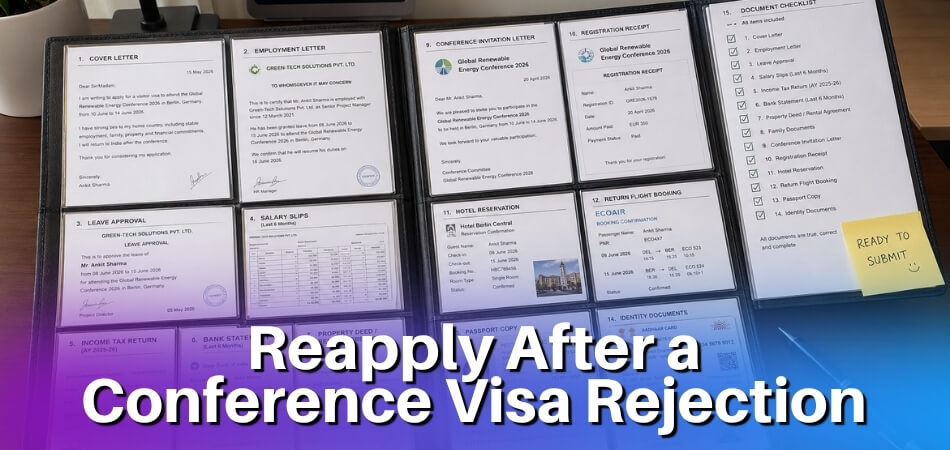
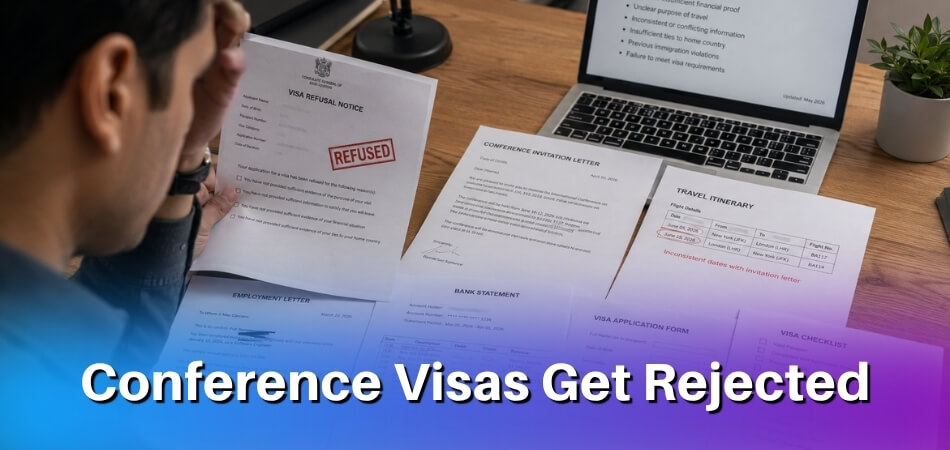
Reason 3 — Incomplete or Inconsistent Documentation

Your application file is only as strong as what you put in it. And if something’s missing, wrong, or contradicts information elsewhere in your package, your file doesn’t just get a gentle nudge — it stalls. Sometimes for weeks. Sometimes indefinitely, until you catch the problem yourself or IRCC reaches out.

Which Missing Documents Cause Your File to Stall

There’s no single magic document that triggers a hold. It’s usually a combination of gaps, and IRCC officers notice them fast.

The most common culprits:

  • Bank statements that don’t cover enough months. IRCC generally wants to see 3 to 6 months of financial history. Submitting one month’s statement, or a screenshot from a mobile app, often isn’t enough. Officers want to see a pattern — regular income, stable balance, no sudden large deposits right before you applied (which raises a red flag about fund parking).
  • Missing property or employment proof. Especially for applicants from Bangladesh, Pakistan, and India, officers are looking for strong ties to your home country. If you’re employed but didn’t include an employer letter, salary slips, or an NOC (No Objection Certificate), your file looks incomplete. Same goes for property ownership documents if you mentioned owning land or a home.
  • Inconsistencies between forms. Say your application says you’re employed, but your bank statements show irregular deposits with no clear employer credits. That mismatch doesn’t get corrected automatically — it creates doubt. The officer might sit on the file waiting for more context, or outright refuse.
  • Missing travel history documentation. Prior visas to the US, UK, or Schengen countries strengthen your application. But if you mention previous travel and don’t include copies of those visas or entry/exit stamps, the claim goes unverified.
  • Incomplete or unsigned IMM 5257 form. Yes, this still happens. A missed signature, a skipped field, a date format error — any of these can cause the whole application to be returned or put on hold before it even enters the processing queue.

One thing applicants from countries like Bangladesh often underestimate: officers processing files from high-volume visa offices are looking at thousands of applications. They’re not going to hunt for missing information. If it’s not there, the application either stalls or gets refused.

What Happens If IRCC Requests Additional Documents

This is where processing times can quietly double — or triple.

If an officer reviews your file and needs more information, they’ll send what’s called a procedural fairness letter, or simply an additional document request through your IRCC secure account. You’ll get a notification, but only if you’re checking regularly. Applicants who don’t check their IRCC online account for weeks at a time can miss these requests entirely, and the clock keeps running.

The request typically gives you a deadline — usually 30 days, though it can vary. If you miss it, the officer may make a decision based on what’s already in your file. That rarely ends well.

Here’s the part that slows things down the most: once you respond, your file goes back into the queue. It doesn’t jump to the front. The officer who initially reviewed it may not even be the one who picks it up again. You could be waiting another 4 to 8 weeks just for the follow-up review, on top of however long you’d already waited.

Some applicants pull their GCMS Notes (Global Case Management System) through an Access to Information request to understand exactly where their file is stuck. It’s not instant — GCMS notes themselves can take 30 days to arrive — but they show you officer notes, flags on your file, and whether a request was sent that you might have missed.

If IRCC asks for something, respond immediately, send everything they asked for (not just part of it), and keep checking your account. Every day you delay your response is a day added to your wait.

Reason 4 — Background Checks and Medical Examinations

These two steps can quietly add weeks — sometimes months — to your processing time, and IRCC won’t always tell you it’s happening.

When IRCC Initiates a Background Check

Every Canada Visitor Visa application goes through some level of security screening. That’s standard. But for certain applicants, IRCC triggers a deeper background check, and that’s where timelines go sideways.

Who gets flagged for additional screening? It’s not random. IRCC looks at your country of origin, your travel history, any prior refused applications, gaps in your employment or residence history, and whether your name or date of birth matches anything in security databases shared between Canada and its Five Eyes partners (the US, UK, Australia, and New Zealand).

Applicants from Bangladesh, Pakistan, and certain other countries statistically see longer processing times partly because of more intensive security screening on average. That’s not speculation — IRCC’s own processing time data broken down by visa office shows clear differences.

If your application gets flagged, it goes to a secondary review. You won’t get a specific notification saying “your background check is underway.” Your IRCC secure account will just sit there showing “in progress.” That’s it. Days turn into weeks, weeks into months.

There’s no way to speed this up. Calling IRCC won’t help. Submitting a webform inquiry usually gets you a copy-paste response about processing times. The one thing that can give you actual insight is ordering your GCMS Notes — the Global Case Management System file that shows exactly where your application sits and what notes the officer has added. It costs $5 through Access to Information, takes a few weeks to arrive, but it tells you if a background check is actively holding things up.

One more thing worth knowing: if you’ve previously been refused a visa to Canada, the US, UK, or Australia, that history can trigger a longer review. Be honest about it on your application — inconsistencies between what you declare and what shows up in database checks are a fast way to get refused outright.

When a Medical Exam Is Required and How Long It Takes

Not every visitor visa applicant needs a medical examination. But if you do, plan for it to add at least 3 to 8 weeks to your total wait time, sometimes more depending on where you live and how quickly you can get an appointment with a designated panel physician.

IRCC requires a medical exam if you’re planning to stay in Canada for more than six months, or if you’ve lived or worked in certain countries for six months or more in the year before you apply. The list of countries that trigger this requirement is long and includes parts of Africa, Asia, Latin America, and the Caribbean. You can check the current list on the IRCC website — it’s updated periodically.

The process works like this. IRCC sends you a request through your online account asking you to complete an upfront medical exam (or, in some cases, a Temporary Resident Permit medical). You then need to book an appointment with a panel physician — these are doctors specifically authorized by IRCC to conduct immigration medicals. They’re not your regular GP. The results go directly from the panel physician to IRCC; you don’t submit them yourself.

Turnaround from the physician’s office to IRCC is usually 4 to 7 business days once the exam is done. But booking the appointment can take 1 to 3 weeks depending on your location. In cities with high applicant volumes — like Dhaka, Karachi, Mumbai, or Lagos — panel physician slots fill up fast.

Here’s the part that frustrates people: IRCC only requests a medical exam after they’ve already reviewed other parts of your file. So by the time you get that request, you’ve already been waiting. And then the clock essentially resets while you complete the medical and they process the results.

If you think you might need a medical based on your travel history or intended length of stay, you can do an upfront medical exam before IRCC asks for one. It won’t guarantee faster processing, but it removes one potential bottleneck from the middle of the process. Talk to a regulated immigration consultant (RCIC) if you’re unsure whether you qualify for upfront medicals — it’s a legitimate strategy, not a workaround.

Reason 5 — Separate Processing Queues Based on Country of Origin

Not all Canada visitor visa applications go through the same processing pipeline. IRCC sorts applications into different queues partly based on the visa office responsible for your country, the volume of applications coming from that region, and the level of risk assessment required for applicants from specific nationalities. This isn’t a secret — it’s just rarely explained clearly.

Separate Processing Queues Based on Country of Origin

Why Applications from Bangladesh, India, and Pakistan Take Longer

The visa offices handling South Asian applications — particularly those covering Bangladesh, India, and Pakistan — are processing some of the highest volumes in the world. India alone accounts for a massive chunk of global Canadian immigration applications each year. Add Bangladesh and Pakistan into the mix, and you’re looking at offices that are perpetually backlogged.

It’s not just volume, though. Applications from these countries tend to require more rigorous scrutiny. That includes deeper background checks, more thorough financial verification, and in many cases, medical examinations ordered more routinely than in other regions. IRCC officers are also checking more carefully for ties to home country — employment stability, family situation, property ownership — because refusal rates from these regions historically run higher.

For Bangladesh visa applicants specifically, most applications are processed through the Canadian High Commission in Dhaka or routed through a regional hub. Either way, you’re in a queue with tens of thousands of other applicants. The biometrics step also adds time, since VAC (Visa Application Centre) appointments managed by VFS Global in cities like Dhaka can be booked out weeks in advance during peak periods.

Pakistan applicants face a similar situation. The Islamabad visa office handles a significant caseload, and security screening — which is more detailed for applicants from certain countries — adds processing time that doesn’t show up in IRCC’s published numbers.

GCMS Notes can sometimes reveal what stage an application is stuck at. If you’ve requested your notes and see entries around background or security checks sitting without movement for weeks, that’s the queue you’re in — and there’s no shortcut out of it.

Why Processing Is Comparatively Faster from the UK or USA

Applicants from the United Kingdom and the United States tend to see significantly faster turnarounds. There are a few concrete reasons for this.

First, Canada has longstanding intelligence-sharing arrangements with both countries through alliances like Five Eyes. Background checks for UK and US applicants can be cross-referenced much faster using shared databases, which cuts down security screening time substantially.

Second, the volume of visitor visa applications from these countries is smaller relative to South Asia, and the refusal rates are lower. That means officers spend less time on detailed financial and ties-to-home-country verification. Many UK applicants don’t even need a visitor visa — they’re visa-exempt and travel on an eTA instead. So the pool of UK nationals actually applying for a Temporary Resident Visa is quite small.

US citizens are also visa-exempt for short visits. But for those from either country who do need a TRV — perhaps because they hold a different passport — the processing environment they’re in is simply less congested.

This isn’t IRCC treating applicants unfairly by design. It’s the operational reality of how immigration risk assessment works globally. A smaller volume of applications plus faster security clearance equals faster processing. That’s the math. If you’re applying from Bangladesh, India, or Pakistan, building in extra time isn’t pessimism — it’s just practical planning.

Use GCMS Notes to Find Out Exactly Where Your Application Is Stuck

If your Canada visitor visa has been sitting in processing for weeks past the IRCC official processing time and you have no idea why, GCMS Notes are the closest thing to an honest answer you’re going to get.Use GCMS Notes to Find Out Exactly Where Your Application Is Stuck

GCMS stands for Global Case Management System. It’s the internal database IRCC uses to track every visa and immigration application. Officers log notes in there — what they’ve reviewed, what flags came up, whether they’ve requested additional checks, and sometimes exactly which step is causing the hold-up. You don’t get automatic access to this. But you can request it.

How to Request Your GCMS Notes

You submit an Access to Information and Privacy (ATIP) request through the Government of Canada’s ATIP online portal. There’s no fee for a personal GCMS notes request — you’re asking for your own information. Once submitted, IRCC is legally required to respond within 30 days, though realistically it often takes 30 to 45 days.

When the notes arrive, they come as a PDF. Expect bureaucratic formatting, redactions, and abbreviations you’ll need to decode. But buried in there you’ll find the status codes and officer remarks that actually tell you something.

What to Look for in the Notes

A few specific things to check:

  • “In Process” vs. “Decision Made” — If the notes show “Decision Made” but your IRCC secure account still says “In Progress,” there’s a lag in the portal update. Your approval or refusal may already exist in the system.
  • Eligibility stage vs. Admissibility stage — These are separate review steps. If your file is stuck in admissibility, that usually means a background check or security screening is still running. Eligibility holds are more often tied to documentation or financial concerns.
  • “Referred to” entries — If you see a referral to CSIS, CBSA, or a local visa office, that explains the delay. These referrals add significant time and there’s no way to speed them up from your end.
  • “Additional documents requested” — This should have triggered a procedural fairness letter sent to you. If you never received it, that’s a separate problem worth addressing immediately.

When GCMS Notes Are Especially Useful

For applicants from Bangladesh, India, or Pakistan, processing queues are longer and officer notes tend to reflect more detailed scrutiny around ties to home country, employment verification, and travel history. GCMS notes will often show you precisely which element triggered a second look.

If you used VFS Global or a VAC to submit your application, the notes can also confirm whether your biometrics were properly linked to the file — a surprisingly common technical gap that stalls applications without any notification.

A Practical Note on Third-Party Services

You don’t need to pay a consultant to request GCMS notes. Some immigration consultants charge $50–$150 to do something you can do yourself in about 20 minutes on the ATIP portal. That said, if you’ve received notes and can’t make sense of the codes, paying a regulated immigration consultant to interpret them is a reasonable use of money. Reading GCMS output is a skill — the requesting part isn’t.

One limitation: GCMS notes show you the past, not the future. They tell you where things stood as of the date the notes were generated. If your application moved forward after that date, the notes won’t reflect it. So treat them as a snapshot, not a live tracker.

Steps You Can Take Right Now to Help Reduce Your Processing Time

You can’t speed up IRCC’s queue. But you can absolutely avoid the mistakes that cause avoidable delays — and that difference can be weeks or even months.

Submit a Complete Application the First Time

This sounds obvious. It isn’t, based on how many applications get returned or flagged for missing documents.

Before you submit, go through IRCC’s official document checklist for your specific situation — not a third-party checklist from a forum post from 2021. Checklists change. Pull the current one directly from Canada.ca.

Pay close attention to:

  • Financial proof — bank statements should cover at least 3–6 months, not just the last 30 days
  • Travel history — include previous visas and stamps even if not explicitly asked
  • Ties to your home country — employment letter, property documents, family responsibilities. Weak ties documentation is one of the most common soft reasons for delays or refusals
  • Purpose of visit — a clear, specific explanation beats a vague “tourism” statement every time

If something doesn’t apply to you, include a signed explanation saying so. Don’t leave gaps and assume the officer will figure it out.

Book Your Biometrics Appointment Immediately

Don’t wait until everything else is sorted. The moment you have your Biometric Instruction Letter (BIL), book your appointment at a VAC or designated VFS Global location right away.

Biometrics slots fill up fast in high-volume cities — especially in Bangladesh, India, and Pakistan where demand is consistently heavy. A two-week delay in booking your biometrics slot can push your entire application back by the same amount.

If you’ve given biometrics within the last 10 years for a previous Canadian application, they may already be on file. Check before you book — you might not need to go at all.

Use a Panel Physician Immediately If a Medical Exam Is Required

Not every visitor visa requires a medical exam, but if yours does — usually because you’re visiting for more than 6 months or coming from a designated country — don’t sit on it.

IRCC will send you a request through your IRCC secure account. Act on it within days, not weeks. Panel physicians are the only ones IRCC accepts. Use the official panel physician finder on Canada.ca to locate one near you. Results go directly to IRCC from the physician, so there’s no paperwork you need to forward.

Monitor Your IRCC Account Actively

Officers communicate through your IRCC online portal account. If they need something — additional documents, a procedural fairness letter, anything — it shows up there.

Check it every few days. Not once a week. Missing a document request and responding late is one of the most preventable causes of extended processing times.

Also make sure your email notifications from IRCC are not going to spam. It happens more than people realize.

Respond to Any Additional Document Requests Fast

If you receive a request for additional documents, you typically have a set deadline — often 30 days. Respond well before that deadline.

A fast, complete response keeps your file moving. A slow or partial response puts your file back at the bottom of the review pile.

Request GCMS Notes If You’re Past the Official Processing Time

If your application has been pending longer than IRCC’s stated processing time for your nationality and application type, request your GCMS Notes. You can do this through an Access to Information and Privacy (ATIP) request — it costs $5 CAD and can be submitted online.

GCMS Notes will show you the actual status of your file — whether it’s in security screening, waiting for biometrics, flagged for additional review, or just sitting in a processing queue. It won’t fix your application, but it tells you what’s actually happening so you can respond accordingly rather than waiting blind.

Know When to Contact IRCC Directly

IRCC’s standard advice is to wait until the official processing time has passed before making inquiries. Once you’re past that window, you can submit a web form inquiry through Canada.ca.

Keep your inquiry short and factual. Include your application number, UCI number, and the date you submitted. Don’t send multiple inquiries — it doesn’t help and it doesn’t flag your file as urgent.

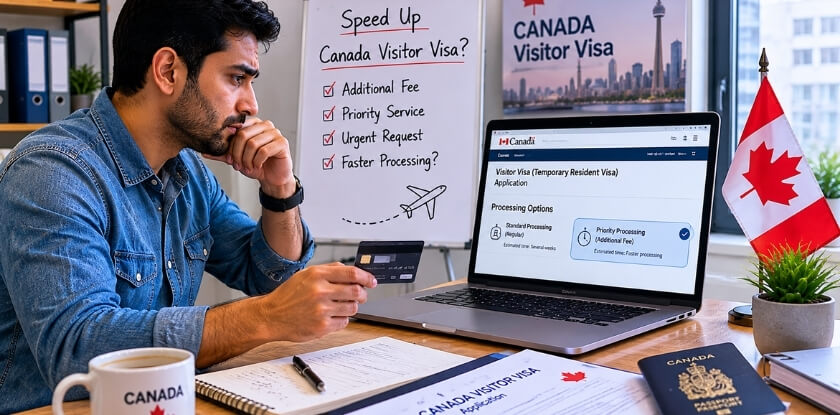
If you have a legitimate urgent need — a medical emergency, a funeral, a business commitment with hard dates — IRCC does have a process for urgent processing requests. That’s a separate path with its own documentation requirements.

Current Processing Times by Country — Bangladesh, India, UK, and USA

IRCC publishes official processing times on their website, and right now the stated timeframe for a Canada visitor visa sits around 14 to 49 days depending on where you’re applying from. That number is calculated based on 80% of recently completed applications. What it doesn’t tell you is that your application might land in the slower 20% — and there’s no warning label attached.

Current Processing Times by Country — Bangladesh, India, UK, and USA

Here’s a country-by-country breakdown of what applicants are actually experiencing right now.

Bangladesh

This is one of the most delayed categories. Bangladesh applicants are frequently reporting wait times of 4 to 8 months, sometimes longer. IRCC processes applications from Bangladesh through a relatively small officer pool compared to the volume of applications coming in.

The Dhaka VAC operated by VFS Global handles biometrics collection, but the bottleneck isn’t usually there — it’s the actual visa officer review happening at the visa processing centre. Applications from Bangladesh also face a higher rate of additional document requests, which adds weeks or months to the timeline. If you’re applying from Bangladesh and your application has been sitting for 90+ days, it’s not unusual. Pull GCMS Notes. You’ll likely see the application is still in “in process” status with no officer assigned yet.

India

India sends more visitor visa applications to Canada than almost any other country. The sheer volume is the primary driver of delays. Mumbai and Chandigarh VAC locations collect biometrics for most Indian applicants, and that part tends to move quickly — but applications then enter a queue that’s genuinely overloaded.

Typical real-world processing times right now: 2 to 5 months. Some applicants report faster outcomes, especially those applying online with clean documentation. Paper applications go slower. Indian passport holders with previous Canadian visas or strong travel history may see faster approvals, but there’s no guarantee.

One specific issue for Indian applicants: if you’ve been asked for a medical examination by a IRCC-approved panel physician, add at least 4 to 6 weeks to whatever estimate you had in mind.

United Kingdom

UK applicants generally have a smoother experience. The official IRCC processing time for UK-based applications tends to sit closer to 14 days, and many applicants do see decisions within that window.

That said, it’s not automatic. UK applicants who have recently traveled to certain countries, or whose background check triggers a secondary security screening, can still see delays stretching to 6 to 10 weeks. UK residents who are not British citizens — for example, someone living in the UK on an Indian or Pakistani passport — will be processed under their country of citizenship, not their country of residence. That’s a critical distinction. Your residence address doesn’t determine your processing queue. Your passport nationality does.

United States

US-based applicants also tend to fall into the faster processing bracket. Canada and the US share immigration data under various bilateral agreements, which means background and security checks can move quicker. Real-world processing times for US citizen applicants are often under 3 weeks when applying online.

The complication shows up for applicants who are in the US on temporary status — F1 students, H1B workers, green card holders from countries like Bangladesh, India, or Pakistan. Again, your passport nationality is what IRCC processes you under, not your US visa status. A Bangladeshi national on an F1 student visa applying from New York gets processed in the same queue as someone applying directly from Dhaka. Processing times are similar. Don’t assume a US address gives you a faster queue.

A Quick Reference

Country of PassportTypical Real-World Wait (Visitor Visa)
Bangladesh4–8 months
India2–5 months
Pakistan3–7 months
United Kingdom2–6 weeks
United States2–4 weeks

These aren’t official IRCC figures — they reflect what applicants are consistently reporting in 2024 and early 2025 across immigration forums, Reddit threads, and community groups. Individual cases vary. An application with complications can blow past any of these estimates.

If your application is outside these ranges, that’s when GCMS Notes becomes worth ordering — it gives you the actual processing notes from inside the system and tells you whether your file is stalled, under review, or waiting on a specific step like security screening.

Frequently Asked Questions

How long is Canada visitor visa taking right now?

It depends heavily on where you’re applying from. IRCC’s website shows an “estimated processing time,” but that number is calculated from recently completed applications — not the ones currently sitting in the queue. Right now, applicants from Bangladesh and Pakistan are commonly waiting 6 to 12 months. India is anywhere from 3 to 8 months. UK and US applicants tend to see faster results, often 4 to 8 weeks, though that’s not guaranteed either.

Check the IRCC processing time tool directly, and look at the date your application was acknowledged, not when you submitted it.

Is my application stuck or just processing?

Probably just processing. The IRCC online account shows very limited status updates — “received,” “in progress,” “decision made” — and “in progress” can sit there for months without meaning anything is wrong. If you want real detail, order your GCMS Notes. They’ll show you exactly which stage the file is at, whether a background check is pending, or if an officer has even touched it yet.

What does “in progress” actually mean on my IRCC account?

It means the application has been opened by IRCC. That’s about it. It doesn’t mean an officer is actively reviewing it. It doesn’t mean a decision is coming soon. Files can sit in “in progress” for 6+ months while waiting to be assigned or while background checks run in the background.

Will contacting IRCC speed things up?

No. Genuinely, no. IRCC agents can only confirm what you already see in your account. They can’t push a file forward. The only reason to contact IRCC is if your application has exceeded the official processing time significantly, or if your travel date is imminent and urgent. Even then, responses are slow and often templated.

Does applying online vs. paper affect speed?

Yes. Online applications through the IRCC secure account are processed faster on average. Paper applications submitted through a VAC or VFS Global location typically take longer because they involve physical handling, scanning, and mailing before they even enter the system. If you have a choice, go online.

My biometrics are done. Why is it still taking so long?

Biometrics is just one step. After that, your application still needs to be assigned to an officer, your background check needs to clear, your documents need to be reviewed, and if anything flags — travel history, financial ties, employment gaps — it may be sent for additional review. Completing biometrics means one hurdle is cleared. It doesn’t mean the finish line is close.

I got a procedural fairness letter. What does that mean?

It means an officer reviewed your file and has concerns — usually about misrepresentation, missing context, or something in your background. This is not a refusal. It’s a formal chance for you to respond before a final decision is made. Take it seriously. Respond clearly, with supporting documents, before the deadline they give you. Ignoring it or submitting a weak response will almost certainly result in a refusal.

Can I travel to Canada while my visitor visa is being processed?

No. You can’t enter Canada on a visitor visa that hasn’t been approved yet. If you’re already in Canada on a different status, that’s a separate situation. But if you’re waiting for a new TRV from outside Canada, you wait until it’s approved and the physical visa (or eTA confirmation) is in hand.

Should I reapply if my application is taking too long?

Almost never a good idea unless your previous application was refused. Submitting a new application while one is already in the queue doesn’t speed things up — it creates two files, can cause confusion, and doesn’t jump the line. If your situation has genuinely changed (new job, new financials), talk to an immigration consultant before reapplying. Otherwise, wait it out.

Where can I check how long other people from my country are waiting?

A few places worth checking: the IRCC processing time tool on the official website, Reddit’s r/ImmigrationCanada community (genuinely useful for real-world timelines), and Facebook groups organized by country of origin. Just treat anecdotal data as rough reference, not gospel — every application is different.

Conclusion — Should You Keep Waiting or Take Action?

Honestly? It depends on where your application actually stands.

If you submitted everything correctly, your biometrics are done, and you’re still within two or three weeks of the IRCC official processing time for your country — wait. Don’t flood the IRCC web form with status requests, don’t rebook through VFS Global unnecessarily, and don’t start panicking yet. The system is slow. That’s just the reality right now, especially post-COVID when application volumes haven’t really come back down.

But if you’re sitting well past the posted processing time — we’re talking 30, 60, sometimes 90+ days beyond what IRCC shows on their website — that’s when you need to stop being passive.

Start with GCMS Notes. Request them through a third-party service or an immigration consultant if you’re not in Canada. Those notes will tell you exactly which stage your application is stuck at — whether it’s still in the processing queue, flagged for a background check, waiting on medical results from a panel physician, or something else entirely. That one document changes everything. You stop guessing and start knowing.

If the GCMS Notes show your application has been sitting at the same stage for an unusually long time with no movement, you have a few options. You can submit a web form inquiry directly through your IRCC secure account. You can contact your local MP’s office if you’re in Canada. If you received a procedural fairness letter and didn’t respond properly, that’s likely your bottleneck — address it immediately with documentation and a clear written explanation.

For applicants from Bangladesh, India, or Pakistan specifically — the processing queues run longer, and the additional scrutiny on financial documents and travel history is real. That’s not opinion, it shows up repeatedly in GCMS notes pulled by applicants from those countries. If you’re in this group, getting professional help reviewing your file before you do anything else is probably worth the cost.

There’s no magic fix here. Canada’s immigration backlog isn’t clearing overnight, IRCC hasn’t dramatically increased processing capacity, and the Temporary Resident Visa process has more variables than most people realize when they first apply.

What you can control is whether your file is complete, accurate, and properly documented. What you can’t control is the queue.

Know the difference. Act on the first. Be patient about the second — but only up to a point.

Leave a Comment

Your email address will not be published. Required fields are marked *

Shopping Cart
Scroll to Top