
Counting slides is the usual way presenters prepare for a short slot, but the number that really decides whether you finish on time is the word count of your script. Slides and pages follow separate logic, and mixing them up is a quick way to run over or end awkwardly early. This guide turns 15 minutes into a page count, then shows how it shifts by field, spacing and slot length, and how to handle slides and questions without sacrificing the paper itself.
Quick answer: A 15-minute conference paper is usually about 7 to 8 double-spaced pages, or roughly 1,800 to 2,200 words at a speaking pace of 120 to 150 words per minute. Single-spaced, the same text fills about 4 pages. Slide-heavy talks need fewer words, so read your script aloud with a timer and check your conference’s call for its own limit.
How Many Pages Is a 15-Minute Conference Paper?
A 15-minute paper runs about 7 to 8 double-spaced pages, and the exact figure depends on two things: how fast you speak and how the document is formatted. Both move the number more than most presenters expect.
The Word-Per-Minute Rule Explained
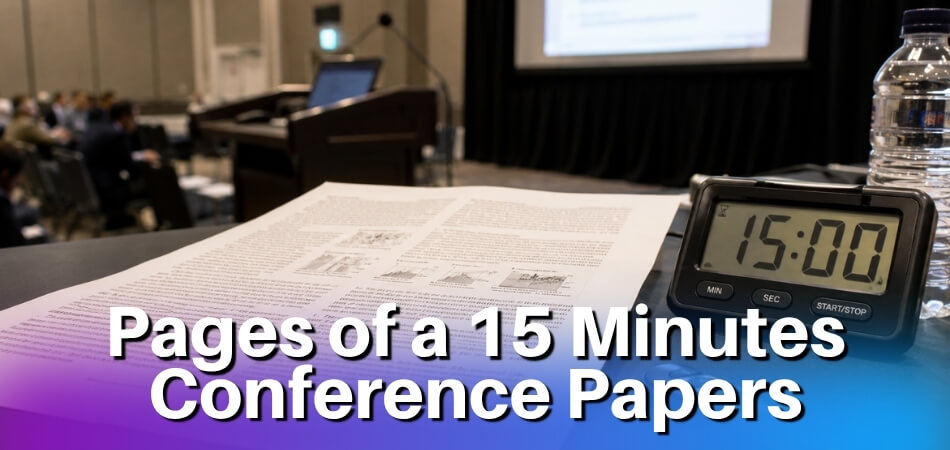
Academic presenters typically speak at 120 to 150 words per minute when reading from a prepared script. At 130 words per minute, 15 minutes holds roughly 1,950 words. At 150, you are looking at about 2,250. Published presenter guidance gives a similar rule in pages. The BYU English Symposium describes its 15-minute slot as around 7 pages of text, and a presenter guide hosted by the University of Glasgow puts a 15-minute talk at seven to eight pages and asks for no more than eight double-spaced. Another conference session-planning page counts about two minutes per double-spaced page, or about 7.5 pages for 15 minutes. Treat these as a starting point and confirm them with your own voice.
Humanities speakers tend toward the slower end. They pause for emphasis, read quotations carefully and let arguments breathe. STEM and social science speakers often run faster, with denser technical content and less rhetorical variation.
A 10-minute paper, by the same logic, targets around 1,300 to 1,500 words, and a 20-minute paper needs about 2,400 to 3,000 words. The rule scales cleanly across those slots. Speech-length calculators that use 110 to 160 words per minute give roughly 1,650 to 2,400 words for 15 minutes, and they note that slides and pauses push real delivery toward the lower end. Treat every figure here as a rule of thumb, not a standard.
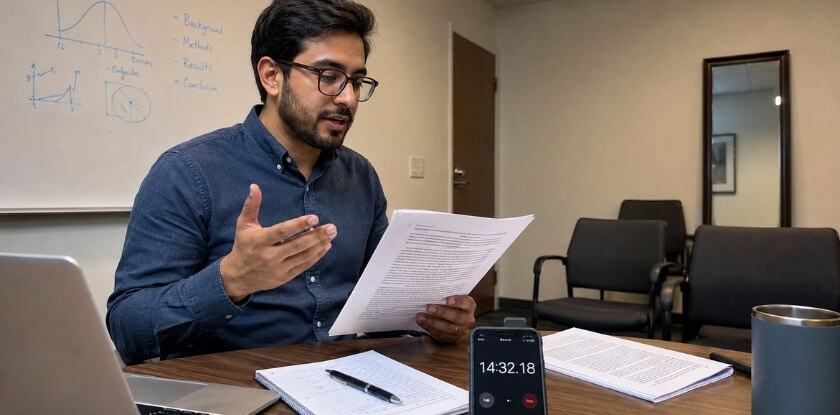
The one check that matters most is to read the paper aloud with a timer before the conference, not silently. Silent reading tends to be faster than your real delivery, so a draft that looks right on the page may run over the slot when spoken.
Double-Spaced vs Single-Spaced Page Count
The same 2,000-word paper looks very different depending on formatting, which matters when you work from a printed script at the podium.
Double-spaced formatting is the standard for most humanities and social science conference papers. At 12-point Times New Roman with one-inch margins, 2,000 words fills roughly 7 to 8 pages and 2,500 words about 9 to 10. Many presenters hold this format at the podium because the wider spacing makes it easier to find your place when you look up.
Single-spaced formatting compresses the same content. A 2,000-word paper drops to about 4 pages and a 2,500-word paper to about 5. Some STEM and technical conferences use single-spaced proceedings formats, which changes how the written paper looks in print but not the spoken word count you need.
An 8-page double-spaced paper and a 4-page single-spaced paper can therefore be the same 15-minute talk. The format shifts the visual weight, not the scope. If you are preparing a presentation script rather than a publication-ready manuscript, double spacing is the more useful choice, because the white space gives you room to mark pauses, cues and slide changes.
Page Count by Discipline (STEM vs Humanities vs Social Sciences)
The same 15 minutes lands at different page counts by field: STEM papers are usually shortest on the page, humanities papers fullest, and social sciences sit between them. The gap comes from how each field uses spoken time, including the density of slides, the role of equations and whether the audience follows a derivation or a narrative argument.
STEM Disciplines
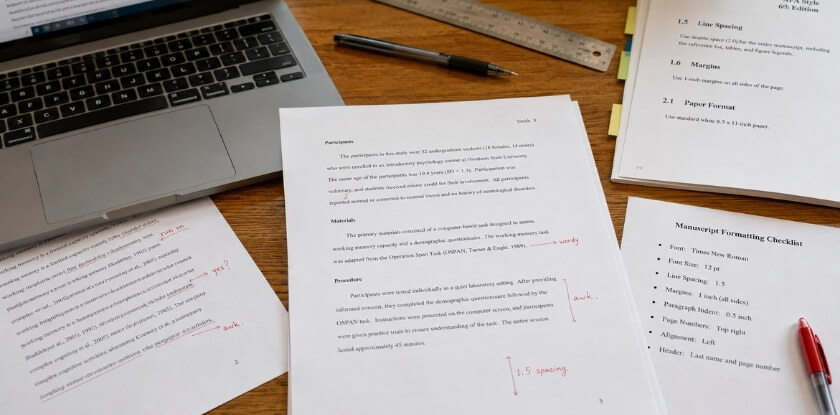
In STEM fields, a 15-minute paper typically runs 6 to 8 pages double-spaced, or roughly 3 to 4 pages single-spaced. That sounds short, but much of the time in physics, engineering or computer science goes on figures, diagrams and equations, which take far longer to explain aloud than they take up on a page.
A computational paper might have three dense methodology paragraphs that eat five minutes of talk time while filling less than a page in print. Slide count tends to be higher in STEM, often 12 to 15 for a 15-minute slot, which compresses the written prose further. Word count usually falls between 1,500 and 2,000 for a full written version. Presenters who write out the whole paper often have to cut heavily in rehearsal, because the visual material adds time that a word count does not capture.
Humanities Disciplines
Humanities presenters in history, literature or philosophy commonly read from a written paper rather than work from slides, so the page count maps almost directly onto the talk time.
Many humanities scholars read at a deliberate 120 words per minute to allow for emphasis, which pulls the target closer to 1,800 words. That is 7 to 8 double-spaced pages, or roughly 4 single-spaced. The audience follows a prose argument rather than a series of charts, so there is little visual material to budget for.
Social Sciences Disciplines
A sociology or political science paper might include data tables and regression output but still centre the talk on an interpretive argument. The written paper typically runs 6 to 9 double-spaced pages, depending on how much quantitative material sits in the body.
Presenters who lean toward qualitative methods, such as ethnography, discourse analysis and interview studies, follow humanities norms more closely, with fuller prose. Presenters of statistical findings often write shorter prose and let the tables carry more of the argument, which pulls the page count toward the STEM range.
Quick Reference by Discipline
| Discipline | Typical Word Count | Double-Spaced Pages | Single-Spaced Pages |
| STEM | 1,500–2,000 words | 6–8 pages | 3–4 pages |
| Humanities | 1,800–2,000 words | 7–8 pages | 4 pages |
| Social Sciences | 1,600–2,200 words | 6–9 pages | 3–5 pages |
These ranges are rough guides, not rules, and they assume a 15-minute paper with a separate Q&A afterwards. If your conference builds Q&A into the 15 minutes, subtract those minutes from your writing target. At 120 to 150 words per minute, each minute removed takes out roughly 120 to 150 words.
How 15-Minute Papers Compare to 10 and 20-Minute Papers
The three most common slots are 10, 15 and 20 minutes, and they call for different structures as well as different lengths: about 4 to 5, 7 to 8 and 8 to 10 double-spaced pages.
The 10-Minute Paper
At 10 minutes you have roughly 1,300 to 1,500 words, or 4 to 5 double-spaced pages. There is no room for an extended literature review or multi-part methodology. Presenters who do this well choose one sharp argument and build the whole talk around it: one claim, the key evidence and a brief implication. Slide count sits around 8 to 10, and Q&A is often absorbed into a broader panel discussion.
The 15-Minute Paper
Fifteen minutes is a common paper slot in STEM, humanities and social sciences, though programmes differ. At 125 to 150 words per minute it holds about 1,875 to 2,250 words, so you can include a proper introduction, a developed argument with evidence and a substantive conclusion. You are no longer choosing between methodology and findings, though there is still no room for every nuance. If a 5-minute Q&A follows, plan to stop at about 14 minutes to give yourself a clean handover.
The 20-Minute Paper
At 20 minutes the word count rises to about 2,400 to 3,000, or 9 to 10 double-spaced pages. Delivery needs slack, so aim for the lower end of that range.
A 20-minute slot is near the longer end of regular paper slots, before keynote or invited-lecture territory. The extra time allows a more thorough engagement with existing literature, a layered argument with sub-points or a detailed walk through your data. In the humanities this is where scholars present a book chapter or major article in progress, and in STEM it allows a fuller methods section. Backup slides become genuinely useful here, since listeners ask more detailed questions after hearing more detailed claims.
Page Count Comparison at a Glance
| Slot | Words | Double-Spaced Pages | Slides |
| 10-minute paper | 1,300–1,500 | 4–5 | 8–10 |
| 15-minute paper | 1,800–2,250 | 7–8 | 10–15 |
| 20-minute paper | 2,500–3,000 | 8–10 | 15–20 |
These ranges assume a measured pace of 125 to 150 words per minute. Nervous speakers sometimes talk faster, so a script can come out short, which is one more reason to record yourself once during rehearsal.
What Changes Between Slots Besides Length
- Depth of argumentation. A 10-minute paper makes one point well. A 15-minute paper can carry two or three related points that build toward a conclusion. A 20-minute paper can sustain a multi-layered argument.
- Literature engagement. At 10 minutes you name two or three sources and move on. At 15 you can briefly position your work in an existing conversation. At 20 there is room for a proper literature review subsection.
- Timing pressure. The shorter the slot, the more a single overlong paragraph can derail the paper. A 15-minute paper has some flexibility, but running to 17 or 18 minutes in a tightly scheduled session creates real problems for the chair and the speakers who follow.
If you have a 15-minute slot but your draft reads like a 20-minute paper, the fix is structural, not cosmetic. Cut a whole section rather than trimming a sentence from every paragraph. The paper needs a different shape, not just fewer words.
What a 15-Minute Conference Paper Should Contain
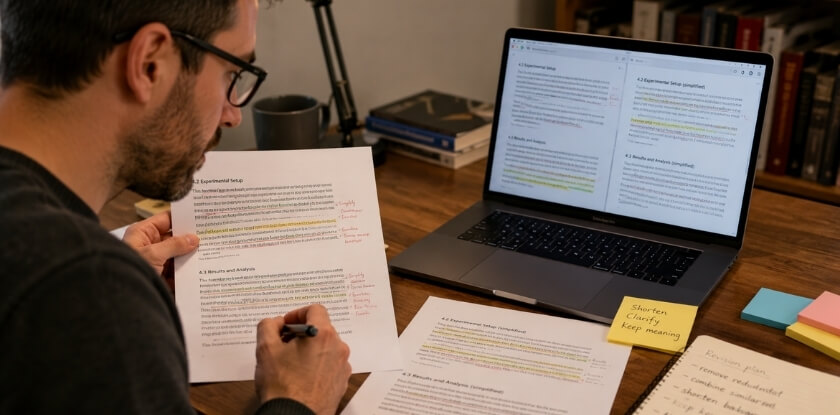
A 15-minute paper has four jobs to do in about 1,800 to 2,200 spoken words: set up the question briefly, make the argument, state the finding and point to what comes next. It is not a trimmed journal article, and an easy mistake is spending too long on background and running out of time before the findings.
| Part | Rough share of time | Approximate words |
| Introduction and question | 1 to 2 minutes | 150–300 |
| Body (method, evidence, argument) | 10 to 11 minutes | 1,400–1,600 |
| Conclusion | 90 seconds to 2 minutes | 200–250 |
Abstract
The abstract is usually 150 to 300 words and is submitted well before the conference, often months ahead; check the call for the exact limit. Its job is to get the paper accepted and to give attendees enough information to decide whether to come to your session.
Keep it to three things: the question or problem, how you approached it and what you found. STEM fields often use a structured format with labelled fields (background, methods, results, conclusions), while humanities and social sciences more often use a flowing paragraph. Either way, it should stand on its own without referring to figures or sources. Where you can, write it as a result (“this paper argues…”) rather than a promise (“this paper will argue…”), because it then reads as a finding rather than a plan.
Body Structure
The body holds most of your words, roughly 1,400 to 1,600, and it has to move efficiently.
In STEM, the body typically follows the introduction, methods, results and discussion arc. You do not need to present all your data. Choose the findings that most directly support your central claim, since the audience can read the full paper later.
In the humanities and social sciences, the body usually builds a sustained interpretive argument. Three focused points work better orally than five lighter ones. Each needs a clear claim, a piece of evidence and a brief explanation of why it matters, which is roughly one to two double-spaced pages per point.
The introduction should be shorter than you think. Aim for one to two minutes, and treat three as the ceiling, or your analysis gets squeezed.
Conclusion and References
The conclusion should take about 90 seconds to two minutes, roughly 200 to 250 words. Your audience has listened for 12 or 13 minutes and does not need a full recap. State the main finding, explain its significance in a sentence or two and point toward what comes next: a limitation, an open question or future work. That last gesture opens the Q&A naturally instead of closing the conversation.
References appear at the end of the written paper but are rarely read aloud. In the spoken version you cite verbally as needed (“as Smith and colleagues found in 2019…”) and let the written list do the formal work. Follow your conference’s citation style.
Whether references count toward a page limit depends on the conference, so read the call. Some count only the main text, while others include references, tables and appendices in the total.
How Many Slides for a 15-Minute Talk?
Aim for about 10 to 15 slides. Presenters misjudge this in both directions, cramming in 30 slides and racing through them or building 8 and running out of material.
A common rule of thumb is one slide per minute. It holds as long as you are not reading dense bullet points off each slide or pausing for a long demonstration. If each slide carries a lot of explanatory weight, budget more time per slide and cut the total.
How to Structure Your Slide Deck
A 15-minute deck is not a dump of your written text onto slides. It has a shape.
Title and context. Your opening slide introduces the paper, and you spend 60 to 90 seconds on your name, affiliation and the central question. Do not burn two or three slides on setup.
The problem or gap. One or two slides establishing what you are responding to. Audiences want to know why the paper exists before they hear what it argues.
Methods or framework. In STEM and social sciences, this gets a slide or two. In the humanities it is often folded into the argument itself.
Main argument and evidence. This is where most slides live, typically six to eight covering your core findings, examples or analysis.
Conclusion. One slide. State what you demonstrated and why it matters. Do not introduce new material.
References. One slide of key citations. You will not read it aloud; it is there for the audience to photograph or consult during Q&A.
Backup Slides
Build two or three backup slides and keep them after the references slide. If someone asks about methodology, a specific data point or an alternative interpretation you anticipated, you can pull up a slide instead of fumbling through a verbal explanation. It signals that you know your work thoroughly.
What to Avoid
Never let the slide count drive the pacing, because the argument does. Do not mirror your paper on your slides. Slides support the spoken argument and do not replace it. Avoid heavy text slides: if you are pasting paragraphs onto a slide, the talk has not been translated from the page yet, and each slide should carry one idea.
Also resist adding slides when the timing feels tight. The answer to running long is cutting content from the talk itself, and a 15-minute paper with 22 slides usually ends with an apology and a skipped conclusion.
After the Paper: Q&A Session Tips
Plan for a short exchange, because some 15-minute slots include questions and others add them on top, so prepare for it as part of the talk. A sharp exchange can strengthen your credibility more than the paper itself.
Know Your Time Window
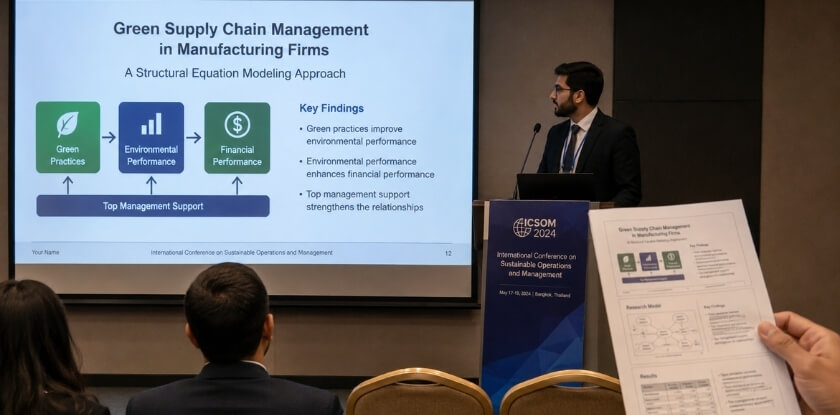
Schedules vary, and published rules show how much. CHI 2022 gave each paper presenter a 15-minute slot and asked for a live talk of 10 minutes, saving 5 minutes for questions. ICAD 2023 gave 15 minutes to each presentation and added 5 minutes of Q&A after it. CAA 2025 allotted a 15-minute slot and counted around 2 minutes per presentation as Q&A and transition time together. Some conferences also pool the questions at the end of a panel. Check the programme in advance, because the window you get may be shorter than you expect.
Prepare for Questions You Do Not Know Are Coming
Reread your methodology. Audiences in STEM and social sciences usually probe methods first, such as sample size, controls and instrumentation. Have a short, confident answer ready.
Think about your biggest limitation. Most presenters know the weakest part of their own work. Naming it briefly and honestly in the conclusion often deflects a hostile question before it forms.
Keep backup slides ready. Extra data, a fuller methodology diagram or a comparison table gives you something concrete to point to when a question gets specific.
Handling Questions in the Room
Listen to the full question before you respond. Cutting in early usually means answering a slightly different question, which reads as evasive even when it is not.
Restate the question briefly. This helps the rest of the audience follow and gives you a few seconds to organise your answer.
Keep answers short. In a 5-minute window, a two-minute answer to the first question leaves no room for anyone else. Aim for 45 to 60 seconds.
Say when you do not know. “I haven’t tested that yet” or “that is outside the scope of this paper” is a perfectly reasonable answer. Speculating beyond your data is riskier than acknowledging a gap.
When a Question Is Hard or Hostile
If someone challenges a core assumption, stay calm and treat it as a genuine intellectual exchange. Acknowledge what is valid in the critique, say where you disagree and why, and keep it brief. The chair will usually step in if things run long. If a question is genuinely unclear, ask for clarification, since answering a question you misunderstood wastes everyone’s time.
After the Session
Follow up on any questions you could not fully answer. The best conversations often happen afterwards, when someone approaches you informally, and that is often where real collaboration begins.
Common Mistakes That Blow the 15-Minute Limit
Running over rarely means a presenter is unprepared. It usually comes from a handful of fixable habits, and the table below pairs each with its remedy before the detail.
| Mistake | Fix |
| Writing too much, cutting too late | Draft for the time slot, not for the full paper |
| Planning at 150 words per minute | Plan for about 120 and keep a buffer |
| Ignoring pauses and transitions | Subtract 60 to 90 seconds from the script |
| Treating Q&A as extra time | Finish at 14 minutes and stop |
| No clear ending | Write your last two sentences first |
Writing Too Much and Cutting Too Late
This is the first habit to fix. A presenter drafts a 5,000-word paper, realises the slot is 15 minutes, and tries to read a compressed version at speed. It does not work. The length exists for a reason: roughly 1,800 to 2,500 words depending on discipline and pace.
Draft for the time slot, not the page count. If your full written paper is longer, the talk is a separate, curated document rather than a speed-read of the original. Reading it aloud with a stopwatch at least twice before the day shows how long it really takes, since a paragraph can take noticeably longer when spoken clearly than it does in your head.
Misjudging Words Per Minute
Presenters may assume they speak fast and plan accordingly, then slow down when pausing for emphasis or looking up for eye contact.
Build your buffer into the draft. Writing to the slower pace gives a margin that survives pauses and slide changes. The safer calculation protects you: about 1,800 words rather than 2,250.
Count the pauses. Transitions, clicking to a new slide and a beat after a key finding are invisible in a word count but real in a live talk. Together they can cost 60 to 90 seconds.
Spending Too Long on the Introduction
A five-minute introduction leaves only ten minutes for findings, and the audience at an academic conference already has domain knowledge. Take one or two minutes to state the problem, the research question and why it matters, then move into method and findings. If the abstract was solid and attendees read it beforehand, they already know the broad context.
Overloading the Slides
Slide count matters, but density matters just as much. A presenter who explains a complex table, reads out bullet points and narrates findings at once will run long, and every slide that needs extended explanation borrows time from somewhere else. One idea per slide. If you spend more than 90 seconds on a single slide, it is either doing too much work or the point needs to be cut.
Treating the Q&A Session as Extra Time
Some presenters plan a 17 or 18-minute talk, thinking they can finish in the Q&A. The session chair has to step in, and the other panellists suffer. The question time belongs to the audience, so if you did not say it in your 15 minutes, do not try to finish the thought during questions.
End with time to spare. A talk that finishes at 14 minutes is a professional courtesy. One that finishes at 16 minutes is a problem for everyone on the panel.
Not Having a Clear Stopping Point
Papers without a firm conclusion trail off, because nothing signals to you or the audience that the paper is done. A concrete conclusion slide solves this. When you reach it, the content ends and the handover to questions begins.
Write your last two sentences before anything else. Knowing exactly how you end keeps you from adding “one more thing” at the point where you feel the urge.
Talk Length vs Submission Page Limits
The pages you read aloud and the pages you submit are two different things: a talk script of 7 to 8 pages is not the same as the full-paper limit a conference sets for submissions. Many authors confuse the two and either over-write the script or under-write the submission.
From our experience at MS International: For our conferences, full papers normally run between four and twelve pages including tables, figures, references and appendices, and submissions follow the conference template in APA format. Review is double-blind, with decisions usually in about 10 working days. After acceptance, authors must complete author registration before presenting. Accepted papers presented in person may be considered for conference proceedings where applicable. The work must not be published or under review elsewhere. The length of the speaking slot differs by conference and session, so confirm it in your programme and rehearse to that time, not to the submission page count.
FAQ
The page count of a 15-minute paper depends on spacing, reading speed, slide count and discipline, plus whether Q&A comes out of your time and how the structure differs from a 20-minute paper.
What is the usual page length for a talk this short?
About 7 to 8 pages double-spaced, or roughly 1,800 to 2,200 words. STEM papers tend to sit at the lower end, and humanities papers closer to the top. Always read the script aloud with a timer, because pace varies.
How many words per minute should I aim for when reading aloud?
Aim for 120 to 150 words per minute, and plan for the lower end if the text is dense or you use slides. That is a rule of thumb, so practise with a timer, because your actual pace may differ.
Can I submit a single-spaced paper for a 15-minute slot?
Only if the call or style guide allows it, and the talk length does not change. Set single-spaced, the same script runs about 4 pages instead of the double-spaced length, so check which format the conference expects.
Is a conference paper the same as a white paper?
No. A white paper is a standalone policy or research document for a broader audience, often without a fixed presentation slot. A conference paper is written to be delivered aloud at a conference.
How many words is a 15-minute presentation?
Plan for about 1,800 to 2,200 words, and a little fewer if you rely on slides. At 130 words per minute the arithmetic gives 1,950.
How many slides should I prepare?
About 10 to 15, following the one-slide-per-minute guideline. Add one or two backup slides for anticipated questions and keep them after the main deck.
What happens if my paper runs long during the talk?
The chair will likely cut you off, often before your conclusion, so the audience misses your key findings. Time the full read-through at least twice before the conference.
Do I need to write a separate abstract?
Yes, in almost all cases. The abstract is submitted before the conference as part of the proposal, usually at 150 to 300 words, and is separate from the paper. Check the call for the exact limit.
How does a 15-minute paper differ structurally from a 20-minute one?
The structure of introduction, argument and conclusion stays the same. A 20-minute paper gives more room for methodology or evidence. For a 15-minute paper, cuts usually come from background and literature review.
Should I include Q&A time within my 15 minutes?
It depends on the conference. CHI 2022 kept 5 of each 15-minute slot for questions, while ICAD 2023 added 5 minutes of Q&A after each 15-minute talk. Check the programme, and if Q&A is inside the slot, cut those minutes from your script.
Do page counts vary by discipline?
Yes. Data-heavy STEM papers often sit at 6 to 7 double-spaced pages, while humanities and social science papers that rely on sustained argument frequently reach 8 pages or more.
Final Thoughts
A 15-minute paper rewards preparation more than talent. Get the length right at roughly 7 to 8 double-spaced pages for most fields, time your read-alouds at home, and you walk in knowing the material fits. Use the norms of your discipline rather than fighting them, and when in doubt, read the conference guidelines one more time.